Staycations – Yay or Nay?

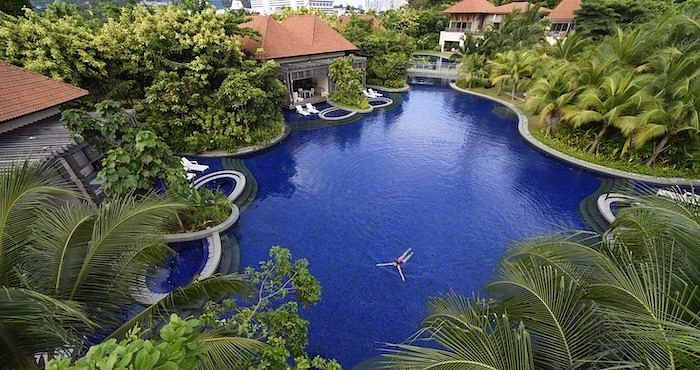
Staycations, which usually means staying in a hotel or resort which is either in your own town or city and does not involving travel. The traditional meaning does not even include overnight accommodation, but today’s definition does include an overnight stay. Most people replicate a traditional vacation, with a defined start and end date, just without getting on a plane or travelling far from their own town or city. The word is a a portmanteau of stay (meaning stay-at-home) and vacation.

Staycations achieved popularity in the US. during the financial crisis of 2007–2010 and in the UK in 2009 as a weak pound sterling made overseas holidays significantly more expensive. Staycations have been popular in Singapore for many years now and especially in the last decade or so. Today, the staycation holiday has become popular worldwide due to travel restrictions caused by the COVID-19 pandemic.

The earliest reference to the term staycation came from a 2003 article by Terry Massey in The Sun News. The word became widely used in the United States during May 2008 as the summer travel season began with petrol prices reaching record highs, leading many people to cut back on expenses including travel. Merriam-Webster cites the earliest use in the Cincinnati Enquirer on  July 18, 1944 and the term was added to the 2009 version of the Merriam–Webster’s Collegiate Dictionary.

So why do people take staycations? Most people take staycations for many reasons.

Staycations are easy. You avoid the hassle of actually going on a holiday by bypassing flights, tickets and the other inconvienances and get straight to enjoying your holiday. There’s also no hassle of packing and unpacking, sometimes multiple times, no jet lag and long drives and endless waiting at airports.

Staycations are also cheaper than a holiday. A hotel accommodation is not just the only cost in a holiday. You have to also factor in transportation costs, food and other living expenses in the destination make any holiday, especially for a family an expensive affair.

Staycations can be quite the experience. You can choose different accommodation, based on your budget and experience life differently, maybe even altering your mood and making you feel you are not in your own city.

Staycations benefit the economy. Staycations benefit local businesses who get customers from locals and boost local economy. Especially in times like this when many cities are in a lockdown and both domestic and international tourism is severely impacted, a staycation can mean a full house for the hotel and the difference between the hotel staying in business and closing down forever.

Staycations are good for the environment. Air travel’s environmental impact is significant. By avoiding travel, a staycation may reduce the carbon emissions associated with travel greatly.

Staycations start earlier and go for longer. Without the hassle of travel, your staycation starts the minute you drive into the hotel which may be less than an hour’s drive from home. Again, since you don’t need to travel back home, you can stay as long as you want, coming home just when you need to.

Staycations allow you to experience affordable luxury. When you travel traditionally, because of budgetary considerations, you may not be able to spend as much on accommodation as you like. But with a staycation, you can afford accommodation at a higher price point than what you would be able to afford at another place and enjoy luxury that otherwise you would not be able to afford.

But contrary to all that I wrote above, I feel a staycation is a waste of your money. Why?

A room in a good hotel in Singapore does not come cheap and is a minimum of $200 per room per night. With this amount, I can easily get a couple of tickets to a southeast Asian destination in say Malaysia, Thailand or even Cambodia.

Here’s what I think I would do with $200 which would be spent in one night in a mid-sized hotel in Singapore. I prefer to sleep in my own bed, so that’s accommodation taken care of. With the money, I don’t have to lift a finger in my own home for a day by ordering food and even a cleaner to come a couple of hours to clean my home. In addition, this money can pay for entertainment like a streaming subscription for year which I can enjoy for a long time. The money will also pay for the entrance fee to local attractions which I have not visited in many years like the Singapore Zoo, Night Safari and River Safari as well as the Art Science Museum, Singapore Flyer, Gardens By The Bay, Marina Bay Sands and Sentosa with the Universal Studios. I can do atleast a few of these attractions with the money I would spend staying one night in a hotel.

So this is why staycations are a Nay from me and I would probably not do a staycation, but rather spend money on experiences. What about you? Are staycations a Yay or a Nay? I would love to read your opinion.

My Singapore Journey

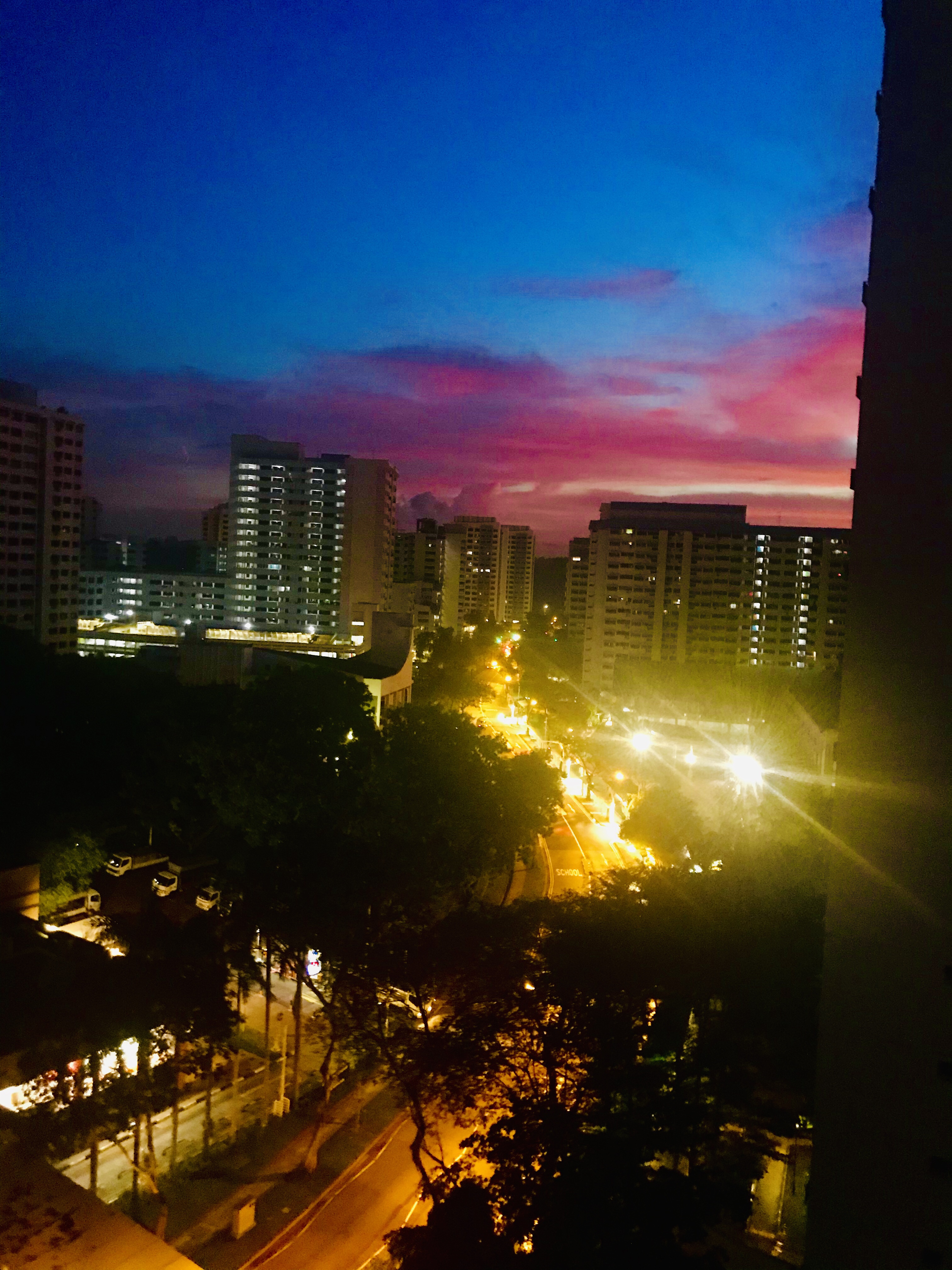
Yesterday was Singapore’s 55th National Day and as I reminisced about my twenty odd years here, I thought back on my journey in Singapore.

I have written about my journey to become a Singaporean last year, but this post will be slightly different. 2020 is my twentieth year in Singapore and as I have mentioned previously, I could have become a Singaporean about two to three years after I got my Permanent Residency given that S is native Singaporean and BB & GG were already born who are also citizens by birth. But I wanted to make sure I was taking the right decision. When I first came to Singapore, I was quite happy with my permanent residency status and had no intention at that point to renounce my Indian citizenship. I was very proud to have been born in India, especially Mumbai (and till today, I proudly call Bombay my hometown) and since I was actually getting some of the benefits which I would have not gotten if BB & GG were not Singaporeans, there was no real hurry for me to take the next step.

As I grew used to staying in Singapore, it slowly started becoming home to me. In fact I remember a conversation with the officer at the Immigration & Checkpoints Authority when I went to get my passport stamped with my re-entry permit who was doing the stamping. She asked me why I didn’t apply for citizenship since I am married to a Singaporean and my children are also locals. I should have no problems with my application according to her. I responded saying I didn’t feel Singaporean yet and so will wait before I take such a decision. That feeling came about fifteen years into living in Singapore. I can still remember when I finally acknowledged to myself it was time to become a Singaporean not just in spirit, but officially too. I was returning back from a business trip and when the plane landed in Changi airport, the pilot (or co-pilot) said the usual welcome dialogue which SIA usually has which has something to the effect of “Welcome to Singapore and for Singaporeans and Permanent Residents, welcome home”, I realised that Singapore was indeed home for me. I also completed a new rite of passage as a Singaporean recently when I voted in the recent general elections which happened last month.

When the sight of Changi airport’s control towers says you are now home, when Singlish seems as normal as Hindi and Marathi, when Majulah Singapura means as much to you as Jana Gana Mana, it means that Singapore has become home to me now. Even though it took me about fifteen years to come to this realisation, I decided that was the time to take things to the next level and make Singapore officially my home. BB & GG were, I think, the most excited when I took this decision. I have not travelled much, especially regionally after getting my red passport, but I look forward to exploring more countries in the region. I can remember trips to Thailand and Cambodia where I had to rush to get my visa on arrival stamped in my passport while S and the children either waited for me or went ahead to collect the baggage because they had Singapore passports which ensured that they just walk out. Or even work trips where I had to get visas every single time and my colleagues usually had to wait for me before we went to collect our baggage. Pre COVID, we used to drive down to Malaysia, specifically Johor Bahru quite often to buy groceries and shop and crossing the causeway without needing a visa was so convienient.

Happy birthday Singapore! Prosper and flourish for years to come…

What’s a National Day, without a National Day song? I’ve shared my favourite NDP song, Home by Kit Chan last year, so here’s this year’s song sung by Nathan Hartano.

In My Hands Today…

Singapore Sapphire – A.M. Stuart

This image has an empty alt attribute; its file name is 43172299._SY475_.jpg

Singapore 1910: Desperate for a fresh start and to distance herself from her tragic past, Harriet Gordon finds herself in Singapore at the height of colonial rule. Hoping to gain some financial independence, she advertises her services as a personal secretary.

It is unfortunate that she should discover her first client, Sir Oswald Newbold–explorer, mine magnate and president of the exclusive Explorers and Geographers’ Club–dead with a knife in his throat.

When Inspector Robert Curran is put on the case, he realizes that he has an unusual witness in Harriet. Harriet’s keen eye for detail and strong sense of duty interests him, as does her distrust of the police and her traumatic past, which she is at pains to keep secret from the gossips of Singapore society.

When a second body is dragged from the canal, Harriet feels compelled to help with the case. She and Curran are soon drawn into a complex web of stolen gemstones and a mysterious gang of thieves who have no qualms about killing again to protect their secrets.Open publish panel

In My Hands Today…

Rain Tree – Mahita Vas

Singapore, on the cusp of Independence.

In the midst of fear and uncertainty, a spirited young woman must choose between an education and her baby. When Ani is forcibly married, her dreams of becoming a teacher are shattered. Employed as a servant at Rain Tree, a colonial home, she indulges in English novels in her spare time.

When Ani is widowed soon after, she befriends her Chinese colleagues who shield her from her bigoted mistress. Ani learns that her husband has left her a horrifying debt, one she must keep secret to safeguard her job and dignity. Falling in love with a house guest brings temporary respite. And ramifications — Ani bears his child after he returns to England.

To keep her baby, Ani must leave the security of Rain Tree. With chronic unemployment, a housing shortage and impending Independence, Ani realises that without an education, life will be unbearable. With an illegitimate baby, life will be impossible. To alter her destiny, sacrifices must be made. But at what price? Rain Tree weaves a story of loyalty and hope with lessons on love unlike what Ani has learnt from English novels.