Family Footprints: An Unforgettable Italian Adventure – Part 1

It’s been a couple of months since I came back from my epic spring trip. So, it’s high time I wrote a trip report, and that’s what this, along with a few more posts, will be all about.

To recap, six of us cousins and sisters planned on a trip together this spring. We’d been planning this trip for a long time, and it finally came together in May. How are we related? We’re all first cousins, our mums are sisters, and we’ve been quite close all our lives. When we were younger, because of the age gap, maybe we could not be as close as we wanted to, but as adults, we have maintained a closeness and know all the highs and lows of each other’s lives.

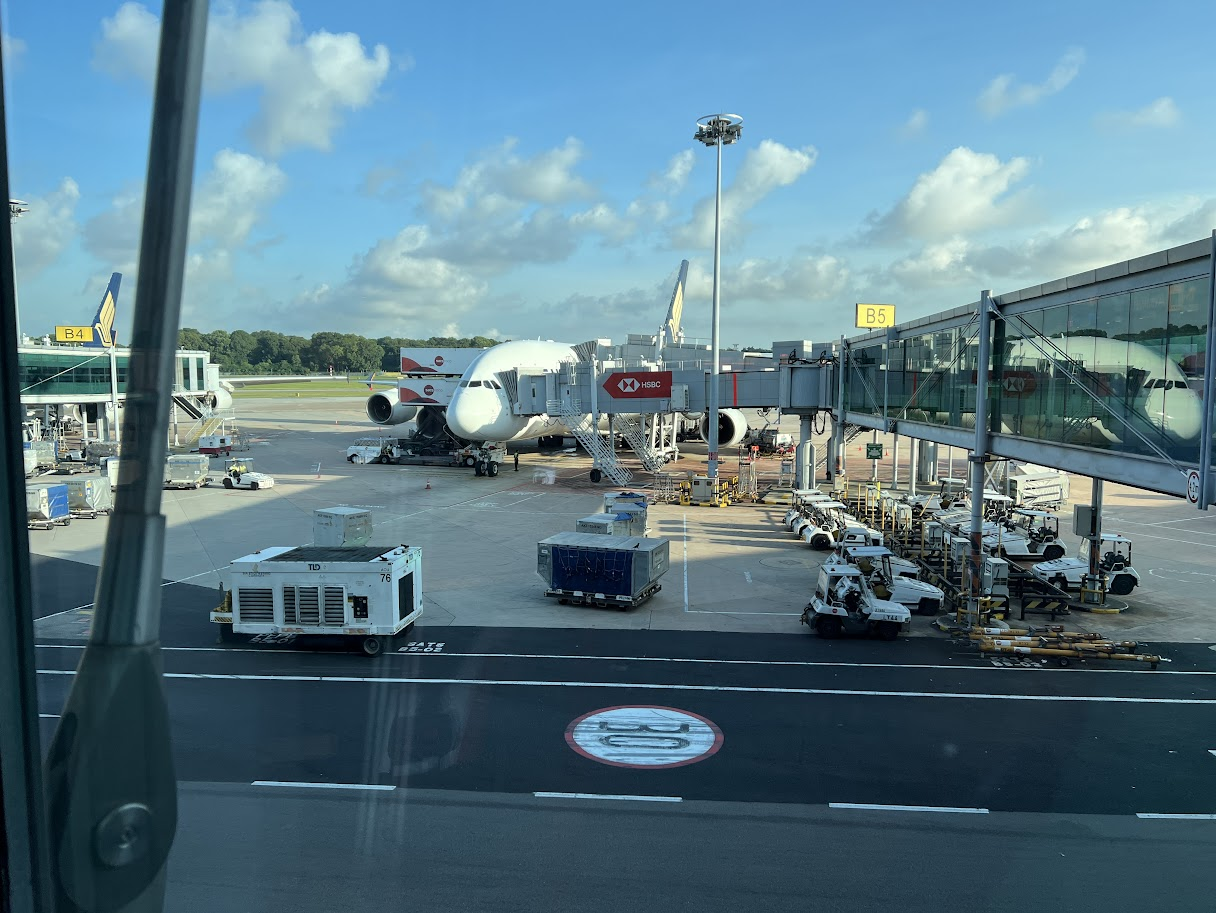
My home for the 13 odd hours to London

The Planning
After going back and forth on locations, we finally zeroed in on Italy. Mainly because it checked all boxes, including being vegetarian and vegan-friendly. Our base would be London, where two of my cousins lived, and the others would travel to Europe. We flew in from North America and Asia. Once the location was decided, I decided to spend some days before the trip in London. I decided to travel about five days before we were supposed to fly out to continental Europe, and I was the first to arrive.

I flew Singapore’s flagship airline, Singapore Airlines. My options were nonstop flights to London or transiting in the Middle East. I decided to go the nonstop route since it was a 13-hour flight, and this would be my first long-haul flight, and I don’t do very well during flights. Even on flights to India, after about two hours, I start getting impatient and just want to land. So I rationalised that a nonstop flight would be faster, hence, it would be easier on me. Next came the choice of the airline. My choices were Singapore Airlines, which, at the time I booked my tickets, had four daily flights to Singapore, British Airways, which had two daily flights and Qantas Airlines, which had one daily flight, all flying into London Heathrow. I think Singapore Airlines also had one flight to London Gatwick, but since Heathrow was closer to my sister’s house, I didn’t look at this option. I next looked at ticket prices and all three airlines had similar prices, within $100-150 of each other. Since I have been a KrisFlyer member, and this trip would give me miles, it was a no-brainer for me to choose SIA. I booked a day flight out to London, which meant I took the flight that left Singapore around 9 am and landed in London around 3:45 pm, local time. My return flight was a late evening flight which left London at 8:30 pm, landing in Singapore the next day around 5 pm. This meant I reached London late enough that I don’t crash with jetlag and can sleep after an early dinner to be able to sightsee the next day, and the return flight meant I had almost the entire day after landing from Italy to spend more time with my sisters.

I also offered to plan the itinerary of the trip. The cousin I was staying with is an intrepid traveller, and between her practical know-how and my planning skills, we were able to plan the trip. We decided to go to three cities, Rome, Florence and Venice. We stayed in Rome for three nights, spent two nights in Florence and stayed overnight in Venice. All travel between Italian cities was conducted using their high-speed trains. We flew out of London Gatwick to Rome and from Venice into London Heathrow.

My almost 14-hour flight from Singapore to London Heathrow was uneventful. The aircraft was an A380, which meant about 500 people across multiple classes were flying together on two levels. I had booked the cheapest ticket, which came with 25 kg of checked-in baggage and 7 kg of carry-on luggage. While booking the ticket, I wanted to book the exit row seat, which came in at SGD 150 per seat per leg, but was dissuaded by my sister, who said this would open up during check-in. She was wrong. A month or so after I booked my ticket, those seats were snapped up, and I regretted not purchasing them when I could. Since I was a solo passenger and maybe because of my frequent flyer membership, I got an aisle seat (thank god) next to a lovely couple who were travelling from New Zealand to London. So at least I was able to move around during the flight. Since my flight was a day flight and we were flying west, chasing the sun, I felt the flight was boring!

I had pre-loaded my phone and tablet with entertainment and books, and also used the in-flight entertainment system, but as I mentioned earlier, I get bored easily onboard. So the walking around really helped. I could not sleep because I was well-rested and also excited, though I think I did take a couple of small naps during the flight.

Buckingham Palace

London
We landed in London on time, and immigration was a breeze. Singapore citizens need an ETA or Electronic Travel Authorisation instead of a visa, which I had gotten a week before my trip. I needed to download the UK ETA app on my phone and apply for the ETA by scanning my passport’s biometrics into it. It cost about GBP 16 or SGD 30, and approval came in less than five minutes after the application. The ETA is valid for two years, and I can stay in the UK for tourism purposes for six months at a time. So, because I had the ETA, all I needed to do was scan my passport at border control, and I was officially in the UK!

My sister picked me up from the airport, and after meeting her family, we went for a walk around 8 pm, and the sun was still shining! I laboured on till dinner and bedtime because I wanted to be fresh for the next day, my first day in London. I had about 2.5 days to explore London, after which the others would land and our trip would officially begin.

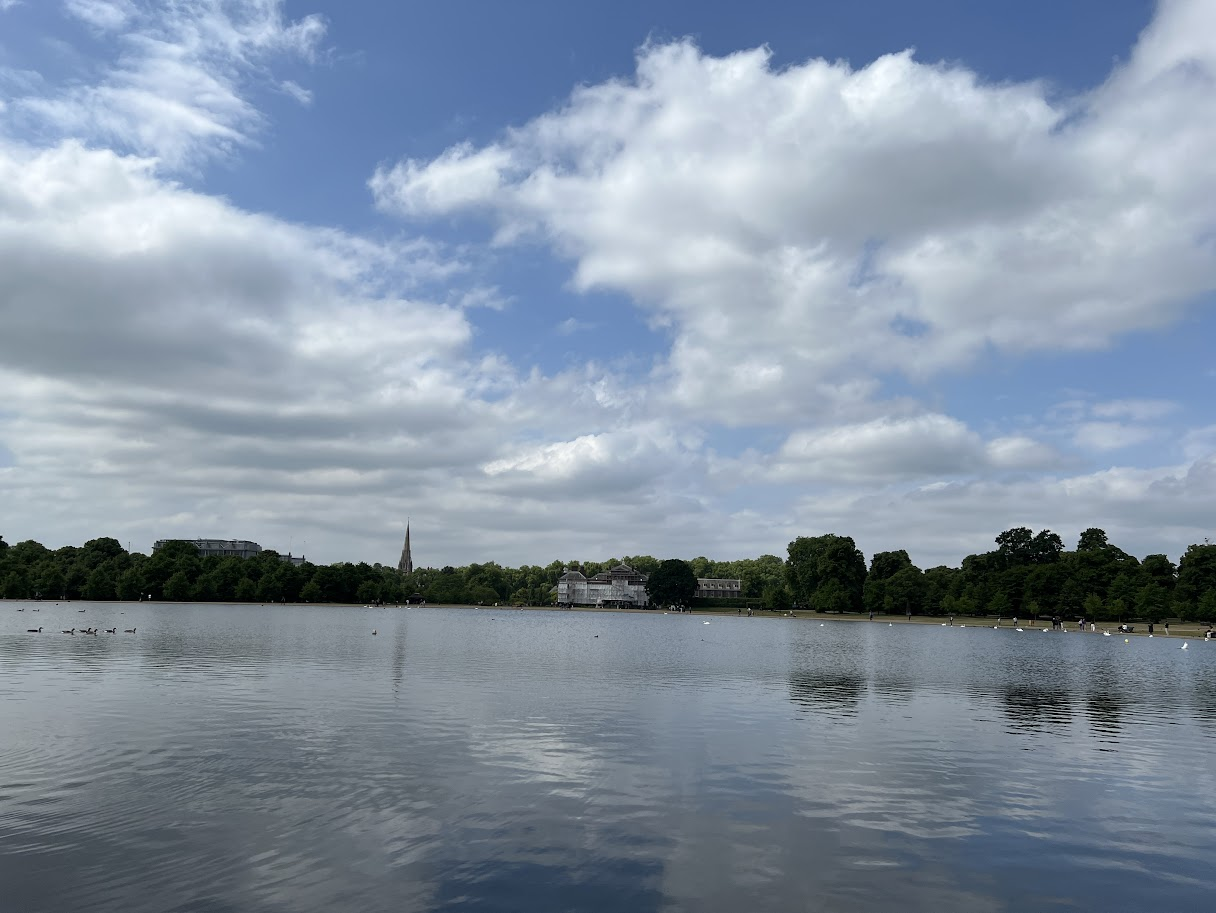
On my first full day in London, we left the house early and headed to Hyde Park. My sister lives on the outer edge of zone 1, walking distance from a tube station, so that was our mode of transport. After walking across Hyde Park, I checked out the Serpentine lake and saw Kensington Palace from outside, and then sat for a while in Kensington Gardens before walking out of the park.

Serpentine Lake at Hyde Park

Our next stop was the Victoria & Albert Museum. This museum has been on my visit list for years. When I was in my late teens or early twenties, the V&A Museum had a travelling show they took to many cities around the world, including Mumbai. I think this was to celebrate a milestone year in the museum’s history. I went to the museum twice, once alone and once with my sister, and this cousin and her sister. I was entranced and knew whenever I go to London, I had to visit the museum. And to my good fortune, my sister also enjoys museums and just the week before she had gotten membership to the V&A. This meant, in addition to the free exhibits, we could also check out their special exhibit, which was an exhibit showcasing Cartier’s jewellery over the years, which was out of the world.

After spending a few delightful hours at the museum, we went back to Hyde Park because my sister had to run some errands. We then walked to Buckingham Palace and saw it from the outside. Then walked across St James’ Park, where we spent some time admiring the views and then home. I had walked more than 23,000 steps and was feeling jet lagged at this point.

Tower of London

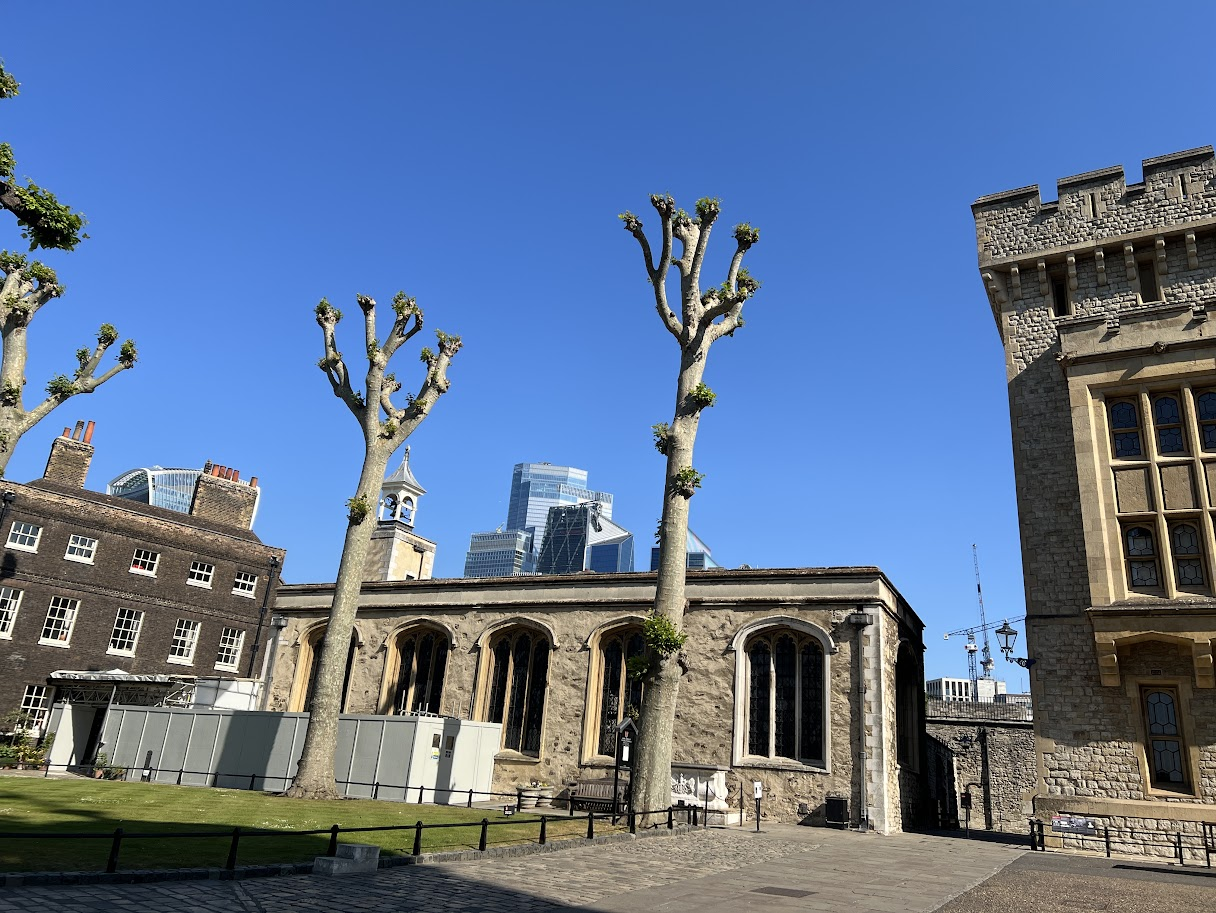
On the next day, we left home bright and early to go and visit the Tower of London. I had prebooked a slot for us for 9:30 am. The Tower of London is phenomenal. If there is only one attraction you want to pay for in London, it should be this. Rising on the north bank of the Thames, the Tower of London began in 1078 when William the Conqueror ordered the White Tower, a stark stone keep meant to cow newly conquered Londoners and guard the capital. Over nine tumultuous centuries, it expanded into a concentric fortress, royal palace, menagerie, mint, and, most famously, a high-security prison. Its walls echo with tales of intrigue and tragedy: Anne Boleyn’s final walk, Guy Fawkes’s interrogation, and the mysterious disappearance of the “Princes in the Tower.” The Tower is a UNESCO World Heritage Site today and one of Britain’s most popular museums and tourist attractions.

I wanted to see the crown jewels and especially the Koh-i-Noor diamond, but to be honest, the diamond felt a bit underwhelming to me. Maybe because of the diamond’s history, I expected it to be much more, but it didn’t speak to me like I thought it would. We also joined a Yeoman Warder’s tour, but because of the crowd, we couldn’t hear much, so left the tour less than 10 minutes after joining it.

Tower Bridge

After the Tower of London, we walked to the Tower Bridge and took some photos before our next destination, a quaint church close to the Tower Bridge called St Dubstan of the East. Set within the ruins of a Wren church, St Dunstan in the East Church Garden is a green oasis with benches and a fountain with greenery draping the historic walls. The church was originally built around 1100, a new south aisle was added in 1391 and it was repaired in 1631. It was severely damaged in 1666 by the Great Fire of London. The Church was again severely damaged in the Blitz of 1941. Wren’s tower and steeple survived the bombing. During the reorganisation of the Anglican Church after World War II, it was decided not to rebuild St Dunstan’s. In 1967, the City of London decided to turn the remains into a public garden, which opened in 1970. When we were there, it was lunchtime and we found many office workers having lunch there. I wish there were someplace like this when I worked full-time, so I could also have a breather during lunch in cool and sylvan surroundings.

St Dunstan of the East

Our next destination was a place that was GG’s wish, Leadenhall Market. A huge Harry Potter fan, Leadenhall Market is where the first film of the series, Harry Potter and the Philosopher’s Stone, was partly filmed. Leadenhall Market was used to represent the area of London leading to the popular wizarding pub The Leaky Cauldron and was the inspiration for the magical shopping street Diagon Alley. It’s a charming, airy market in the heart of the city with shops, boutiques and restaurants with stunning architecture dating back to the 14th century.

City of London from Sky Garden

We were hungry at this point, and our next stop was perfect for lunch. We went to London’s highest public garden, the Sky Garden, to take in 360-degree views of the city’s iconic skyline as well as have lunch at one of the restaurants in the space. Access to the Sky Garden is free of charge, but spaces are limited and visits must be booked in advance. Here we were joined by others in the family, and it was lovely to see all the sights in the city centre with the Thames flowing past, and then have a yummy lunch.

Post lunch, we wandered across the London Bridge and walked to Borough Market. This is one of the largest and oldest food markets in London, with a market on the site dating back to at least the 12th century. The present buildings were built in the 1850s, and today the market mainly sells speciality foods to the general public. After having some dessert here, we hopped into the tube to Greenwich to take an uber for an exciting trip.

The financial district from the Uber Boat

At Greenwich, we walked down to the pier to take an Uber boat down the Thames. The only option available at that point was a boat to the Westminster Pier, so we hopped into that. It was a nice way to see London by the river, and I enjoyed the trip, soaking in the sights that I would otherwise not see. The trip took about 30-40 minutes, and we were able to pay using the same cards that we used on the tube and bus. After disembarking from the boat, we wandered around Westminster and then took the tube home.

St Paul’s Cathedral

On my third day in London, the first thing we did was to return to the airport to pick up my sister. After she came home and freshened up, we went out. Our destination was the St Paul’s Cathedral. Dominating the skyline with its gleaming dome, St Paul’s Cathedral is the masterpiece Sir Christopher Wren raised after the Great Fire of 1666, and was completed in 1710. Outside, its soaring 365-ft silhouette draws the eye, while inside, a serene Baroque nave draws the eye up to a coffered dome inspired by St Peter’s in Rome. Whisper along the interior of the Whispering Gallery to test the acoustics, then climb to the Golden Gallery for panoramic views of the Thames, the Shard and Tower Bridge. In the crypt, Admiral Nelson, the Duke of Wellington and Sir Winston Churchill lie. The cathedral hosted the funerals of Diana’s maternal grandmother, state services after the Blitz, and the wedding of Prince Charles and Lady Diana in 1981. The stairs going up are a killer to the knees, but the views from the top are spectacular.

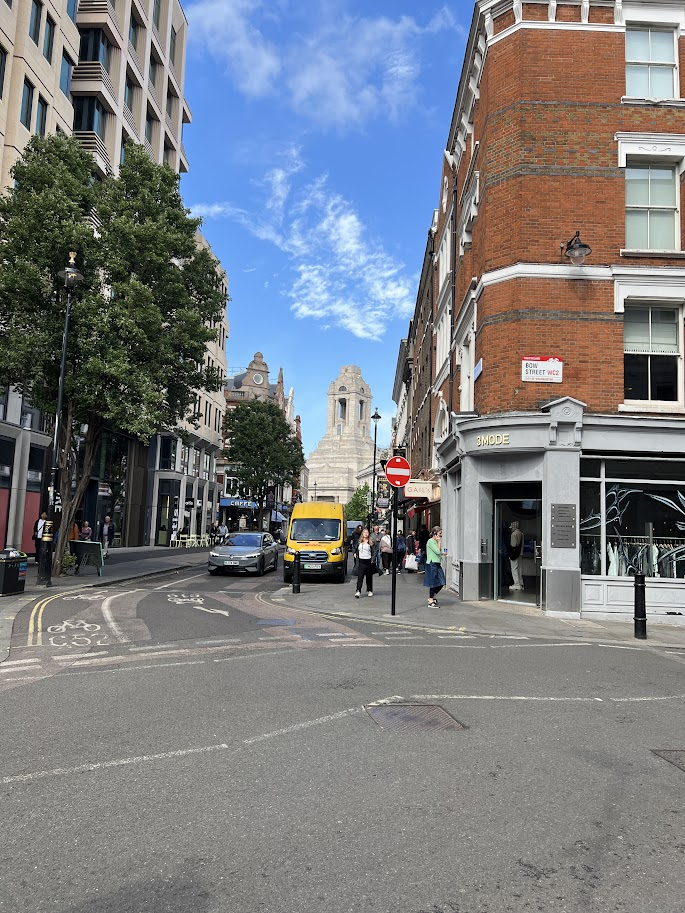
After lunch at a Greek restaurant, my first time, we took the tube to Covent Garden, walked around the theatre district a bit, and then went to Europe’s largest shopping centre, Westfield, for some retail therapy and dinner. And that was pretty much the end of my London sojourn.

The Theatre District, somewhere near Covent Garden

The next day was spent travelling to both London Heathrow and Gatwick to pick up the last two who landed almost at the same time. So we had a mini road trip before our big trip. In the evening, we all trooped to the last sister’s place, who lived a bit further away, but closer to Gatwick which was from where we were supposed to board our flight to Rome. After a scrumptious dinner, we woke up early on flight day. The taxi to drop us at the airport was supposed to pick us up at 5:30 am, so we had an early start.

The next three parts will be all about our Italian adventure, so keep watching this space!

In My Hands Today…

World Travel: An Irreverent Guide – Anthony Bourdain, Laurie Woolever

Anthony Bourdain saw more of the world than nearly anyone. His travels took him from the hidden pockets of his hometown of New York to a tribal longhouse in Borneo, from cosmopolitan Buenos Aires, Paris, and Shanghai to Tanzania’s utter beauty and the stunning desert solitude of Oman’s Empty Quarter—and many places beyond.

In World Travel, a life of experience is collected into an entertaining, practical, fun and frank travel guide that gives readers an introduction to some of his favourite places—in his own words. Featuring essential advice on how to get there, what to eat, where to stay and, in some cases, what to avoid, World Travel provides essential context that will help readers further appreciate the reasons why Bourdain found a place enchanting and memorable.

Supplementing Bourdain’s words are a handful of essays by friends, colleagues, and family that tell even deeper stories about a place, including sardonic accounts of travelling with Bourdain by his brother, Christopher; a guide to Chicago’s best cheap eats by legendary music producer Steve Albini, and more. Additionally, each chapter includes illustrations by Wesley Allsbrook.

For veteran travellers, armchair enthusiasts, and those in between, World Travel offers a chance to experience the world like Anthony Bourdain.

Poem: Wings of Wanderlust

Source

Travel is more than just a journey; it is a feeling, a rush of excitement, and a gateway to new adventures. When plans are made, the heart begins to race with anticipation. The thrill of discovering unfamiliar landscapes, tasting new cuisines, and immersing in unknown cultures fills every step with wonder. A holiday is not just an escape; it’s an opportunity to embrace the world’s endless possibilities.

Wings of Wanderlust

The suitcase lies open, a promise untold,
Of adventures ahead, both thrilling and bold.
Maps unfold and dreams take flight,
The heart beats faster with wanderlust’s light.

The countdown begins, excitement takes hold,
A new place awaits its stories of old.
What sights will I see? What paths will I tread?
What colours and flavours will dance in my head?

The airport hums with its vibrant sound,
A gateway to wonders, the world unbound.
Each boarding pass holds a treasure in store,
A chance to discover, to learn, to explore.

The mountains call with their towering grace,
The ocean’s whisper of an endless embrace.
The streets of a city, alive and unknown,
Each step is a story, each corner my own.

I’ll taste the spices, hear songs from afar,
Chase sunsets that shimmer like a guiding star.
Feel cultures unfold in the warmth of a smile,
Find a home in the world, if just for a while.

Oh, the joy of travel, the freedom it brings,
The soul takes flight on its wandering wings.
For every journey writes a tale that stays,
A cherished memory for endless days.

Travel Bucket List: Nepal – Part 17

Shivpuri National Park
Established in 2002, Shivapuri Nagarjun National Park is Nepal’s ninth national park, located in Nepal and was established in 2002. It is located in the country’s mid-hills on the northern fringe of the Kathmandu Valley and named after Shivapuri Peak at 2,732 m. It covers an area of 159 sq km.

The area has always been an important water catchment area, supplying the Kathmandu Valley with several hundred thousand cubic litres of water daily. In 1976, the area was established as a protected watershed and wildlife reserve. In 2002, it was gazetted as Shivapuri National Park, initially covering 144 sq km and in 2009 was extended by the Nagarjun Forest Reserve covering 15 sq km. The park includes some historical and religious sites, and a popular hiking route. The park is located in a transition zone between subtropical and temperate climates.

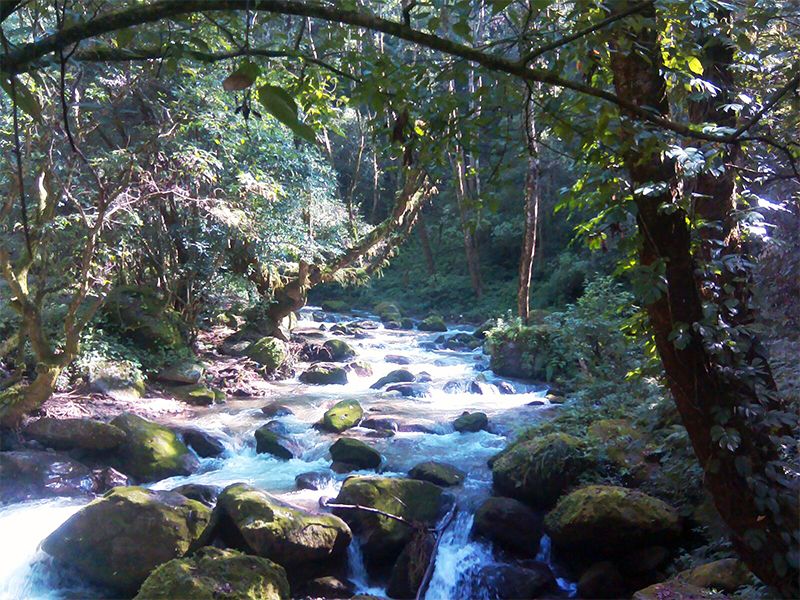
Nestled within the national park is the Tibetan nunnery called Nagi Gumpha with stunning views of the valleys below. The trek through the national park will take one through dark green forests. Mostly a cool, shaded trek, the sunlight occasionally makes its way through the canopy of broad-leaved oak trees and creates limelight on the ground. For those who love mountain biking, there are routes for them as well. Bikes can be hired from the towns downhill, no matter which route one follows.

The national park is open daily from 7 am to 5 pm. Entry fees are NPR 50 for Nepali citizens, NPR 300 for SAARC citizens, and NPR 500 for others. Those travelling in a motorbike need to pay NPR 30, while a minibus, bus or truck will cost NPR 500, and a car, jeep, taxi, or van will set one back by NPR 300. For Nepalis, the cost of a mountain bike is NPR 100, while for foreigners, it is NPR 1000.

Chitwan National Park
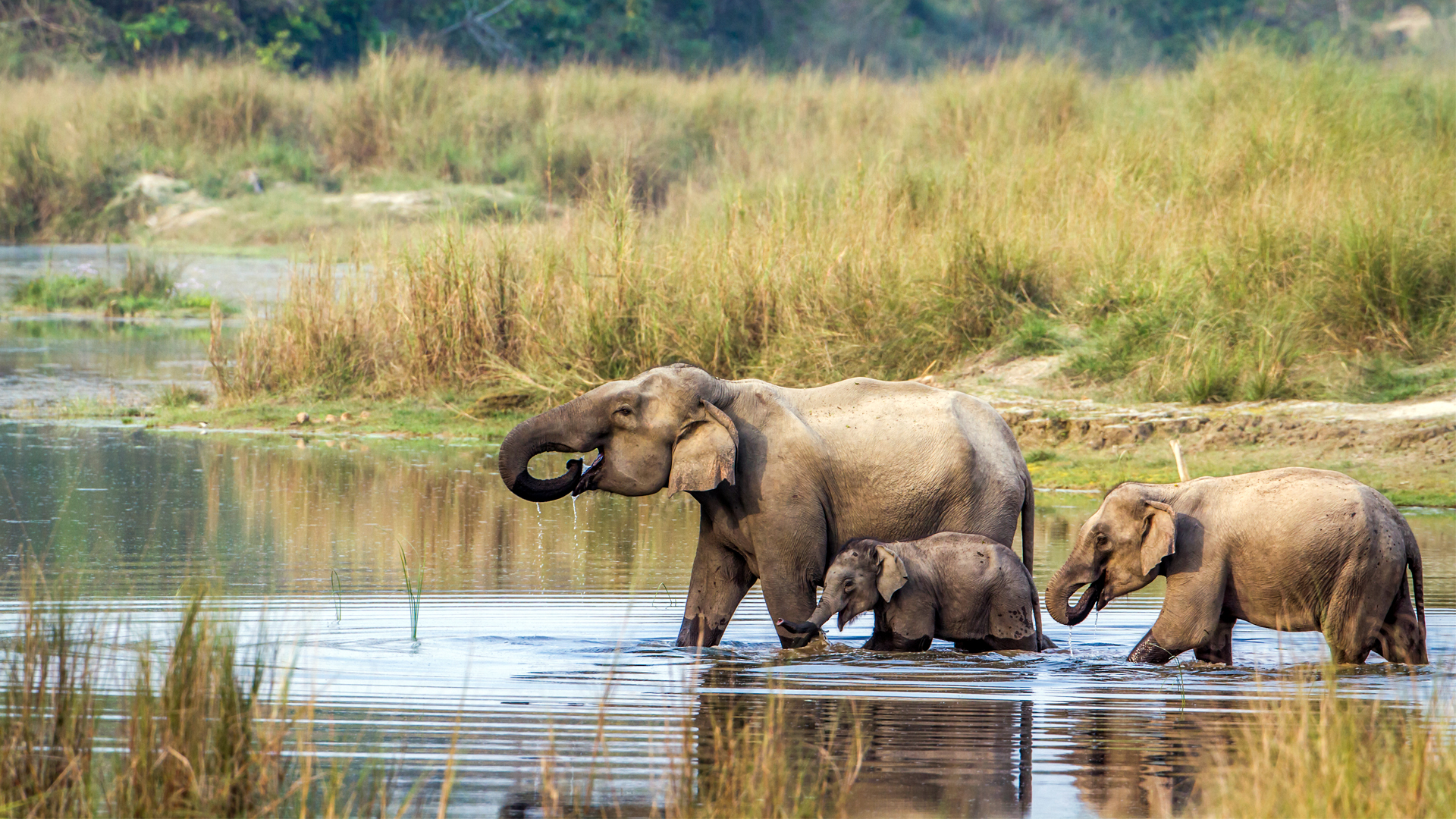
Nepal’s first national park, Chitwan National Park was established in 1973 as the Royal Chitwan National Park and was granted the status of a World Heritage Site in 1984. It covers an area of 952.63 sq km in the subtropical Inner Terai lowlands of south-central Nepal in Nawalpur, Chitwan, Makwanpur and Parsa districts. It ranges in elevation from about 100 m in the river valleys to 815 m in the Sivalik Hills.

In the north and west of the protected area, the Narayani-Rapti river system forms a natural boundary to human settlements. Adjacent to the east of Chitwan National Park is Parsa National Park, contiguous in the south is the Indian Tiger Reserve Valmiki National Park. The coherent protected area of 2,075 sq km represents the Tiger Conservation Unit (TCU) Chitwan-Parsa-Valmiki, which covers a 3,549 sq km huge block of alluvial grasslands and subtropical moist deciduous forests.

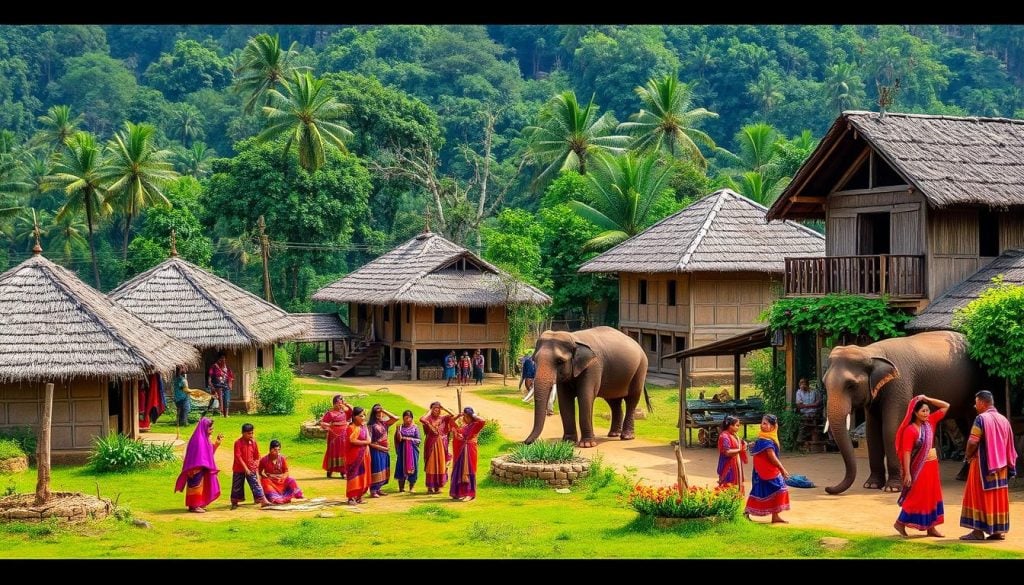
Apart from its biodiversity, Chitwan National Park provides a unique opportunity for cultural exploration. The indigenous Tharu community, residing harmoniously for centuries, shares their traditions and lifestyle through cultural performances, showcasing their music, dance, and art. The convergence of natural wonders and cultural richness makes Chitwan a captivating destination, offering an unparalleled glimpse into Nepal’s heritage and wildlife conservation efforts. Easily accessible via road from Kathmandu or Pokhara, Chitwan National Park remains a cherished destination, drawing global travellers with its captivating blend of nature, conservation, and cultural richness.

There are seven entrance gates to the park. Located near Sauraha, the Sauraha Gate offers entry to the eastern section of the park and is one of the primary entry points for visitors. Situated near the village of Meghauli, the Meghauli Gate provides access to the western part of the park and is ideal for visitors staying in nearby lodges or resorts. Serving as the headquarters of the park, Kasara Gate offers entry to the central region and houses park administrative offices and visitor facilities. Situated in the eastern section of the park, the Kalika Gate serves as another access point for visitors exploring this part of Chitwan. Positioned in the northern section of the park, Lothar Gate allows entry to the northern areas and offers access to distinct wildlife habitats. Located on the park’s northeastern side, Khoria Gate provides access to areas close to the convergence of the Narayani and Rapti rivers. Positioned northeast of the park, Kumroj Gate offers entry to parts near the Kumroj Community Forest.

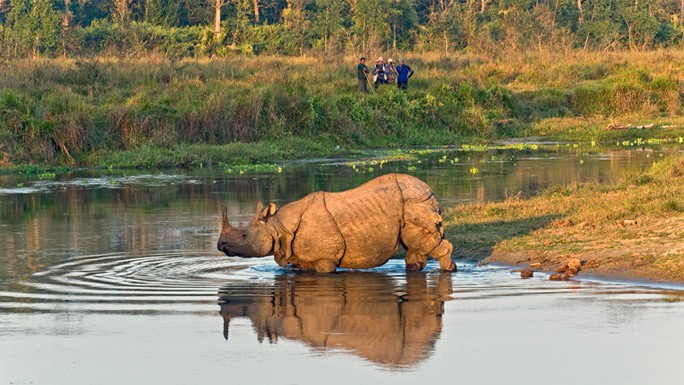
Since the end of the 19th century, Chitwan used to be a favourite hunting ground for Nepal’s ruling class during the cool winter seasons. Until the 1950s, the journey from Kathmandu to Nepal’s south was arduous as the area could only be reached by foot and took several weeks. Comfortable camps were set up for the feudal big game hunters and their entourage, where they stayed for a couple of months shooting hundreds of tigers, rhinoceroses, elephants, leopards and sloth bears. In 1950, Chitwan’s forest and grasslands extended over more than 2,600 sq km and were home to about 800 rhinos. When poor farmers from the mid-hills moved to the Chitwan Valley in search of arable land, the area was subsequently opened for settlement, and poaching of wildlife became rampant. In 1957, the country’s first conservation law ensured the protection of rhinos and their habitat. Research on Chitwan was conducted by Edward Pritchard Gee between 1959 and 1963.

By the end of the 1960s, 70% of Chitwan’s jungles had been cleared, malaria eradicated using DDT, thousands of people had settled there, and only 95 rhinos remained. The dramatic decline of the rhino population and the extent of poaching prompted the government to institute the Gaida Gasti – a rhino reconnaissance patrol of 130 armed men and a network of guard posts all over Chitwan. To prevent the extinction of rhinos, the Chitwan National Park was gazetted in December 1970, with borders delineated the following year and established in 1973, initially encompassing an area of 544 sq km. In 1977, the park was enlarged to its present area of 952.63 sq km. In 1997, a buffer zone of 766.1 sq km was added to the north and west of the Narayani-Rapti river system, and between the south-eastern boundary of the park and the international border to India.

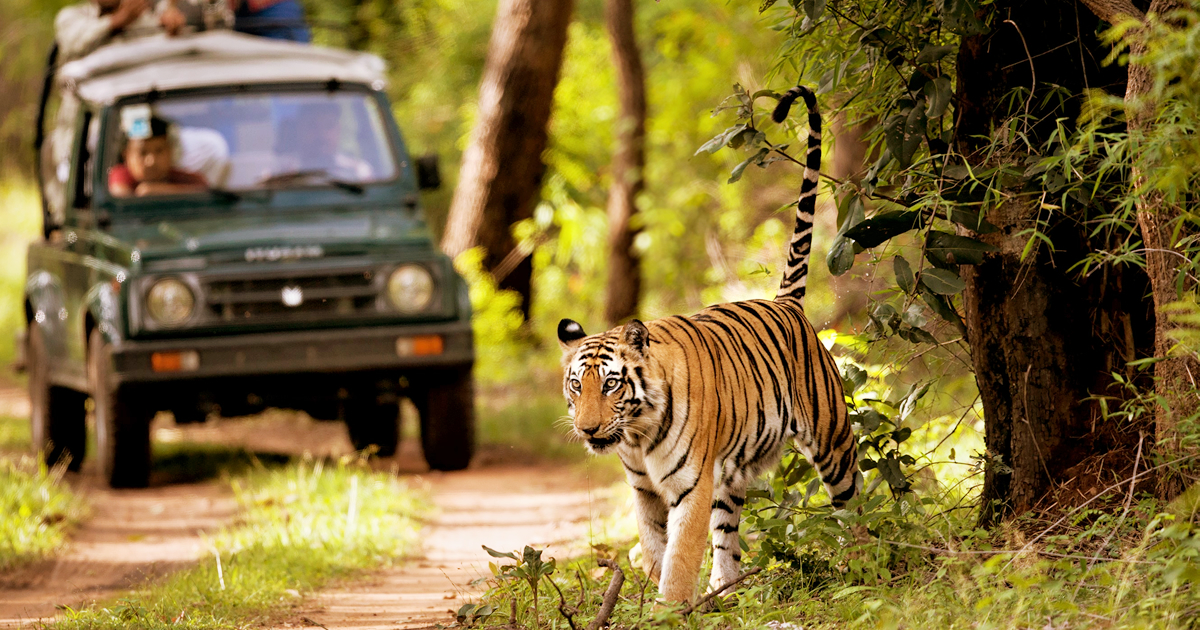
Jeep safaris in Chitwan National Park provide a thrilling opportunity to explore the wilderness and witness diverse wildlife. It is available twice a day, early morning and late afternoon. Early morning safari is the best time to spot Bengal Tigers and Rhinoceros. The most popular safari route is the Narayani River Route. Experienced guides lead the safari, offering insights into the park’s flora and fauna. Visitors have the chance to spot rhinoceros, deer, monkeys, and various bird species. The elephant-back ride offer a unique way to traverse the park’s terrain and observe wildlife from a different perspective. It generally last for about 1-2 hours, guided by trained mahouts or elephant handlers. Riding atop elephants, visitors can explore deeper into the jungle, increasing the chances of spotting larger animals like rhinos, sloth bears, and even tigers if lucky.

Canoe trips along the Rapti or Narayani River allow visitors to witness aquatic wildlife and birds. Canoe rides usually span 1-2 hours, led by experienced guides. Traveling silently along the river, visitors can spot crocodiles, waterfowl, and other river-dwelling creatures, offering a serene and picturesque experience. Nature walks in Chitwan National Park are guided tours led by experienced naturalists or park guides. Typically last from 1 to 3 hours, allowing visitors to explore specific trails within the park. Led by knowledgeable guides, nature walks offer close encounters with smaller wildlife, insects, and diverse plant species. Guides share insights into the park’s flora, fauna, medicinal plants, and their ecological significance. Visitors learn about animal tracks, bird calls, and the intricate balance of the park’s ecosystems.

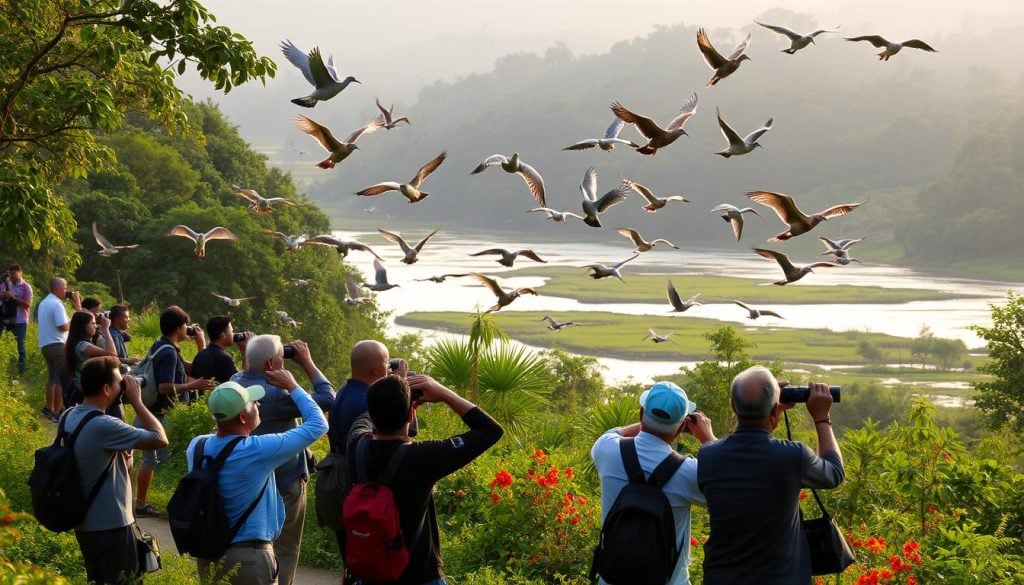
Chitwan is a paradise for birdwatchers, home to over 550 bird species, both resident and migratory. The duration varies based on visitors’ preferences, but birdwatching can span from early mornings to late afternoons. Visitors can spot a diverse range of birds, including kingfishers, hornbills, woodpeckers, peafowl, and endangered species like Bengal florican and great hornbill. Cultural visits involve engaging with the indigenous Tharu community, known for their distinct culture, traditions, and lifestyle. Guided tours to Tharu villages offer insights into their daily life, agriculture, craftsmanship, and unique architectural styles. Explore local houses, learn about their customs, and interact with villagers to understand their traditions and practices.

It would be really unfair to come to Chitwan National Park and not visit the village of Tharus, the original residents of this place. The village can be explored on foot or one can go the traditional way and take the famous ox-cart ride. One should take a guide along to explain the nuances of everyday Tharu lives, their past and present and their culture. The Tharu Cultural Museum serves the community and houses the evolution of the Tharu people from the olden days to the present, a tale told through old and new photographs, documents, weapons, potteries and other things they have used over the years. There are handicraft shops outside, from where one can buy small souvenirs to remember the lovely trip.

The shared jeep safari runs from 12:30 to 5:30 pm with rest timing changing with season and availability of vehicles. Private jeep safari timings are between 6 am and 6 pm. The elephant safari happens in the morning, mid-morning, and evening and is for 90 minutes. Canoeing can be done from 7:30 to 9:30 am while the elephant breeding centre is open from 6 am to 6 pm. The safari can be booked from any local tour operator, the park’s headquarters in Sauraha, or one’s hotel. The cost of the safari varies depending on the duration and number of participants. It is inaccessible in monsoon between June and September and during this time only the buffer zone is open to visit. Washroom facilities are available at the Gharial Breeding Conservation Centre

Entry fees to the park is 2000 NPR for foreigners, 150 NPR for locals, 1000 NPR for SAARC citizens and free for children below the age of 10. The Jeep Safari costs 2500 NPR per person for the shared jeep safari and NPR 4000 per person for a full-day safari. The elephant safari for two people costs NPR 2500 per elephant for foreigners, NPR 200 for locals and NPR 1000 for SAARC citizens. The Elephant Breeding Center entry fee is NPR 100 for foreigners, NPR 25 for locals, and NPR 50 for SAARC passport holders. If one is interested in bathing elephants, it will be NPR 200 per person. A half-day canoe ride will cost NPR 1400 while the full-day canoe ride will set one back by NPR 1800 per person.

Sagarmatha National Park
Established in 1976, Sagarmatha National Park is located in eastern Nepal and encompasses an area of 1,148 sq km. It ranges in elevation from 2,845 to 8,848 m and includes Mount Everest. In the north, it shares the international border with Qomolangma National Nature Preserve in Tibet Autonomous Region. In the east, it is adjacent to Makalu Barun National Park, and in the south it extends to the Dudh Kosi River and is part of the Sacred Himalayan Landscape.

The UNESCO World Heritage Site has other important peaks apart from Mount Everest like Lhotse, Cho Oyu, Pumori, Ama Dablam, Thamserku, Kwangde, Kangtaiga and Gyachyung Kang. It is also a preservation site for rare species of animals and birds, like the red panda and snow leopard. The wildlife sanctuary stretches over 1100 sq km and is recognised as an eminent bird sanctuary by Bird Life International, making it a highly important tourist attraction for people who enjoy mountaineering and bird watching. Sagarmatha National Park became the country’s first national park that was inscribed as a Natural World Heritage Site in 1979. In January 2002, a Buffer Zone comprising 275 sq km was added.

The park contains the upper catchment areas of the Dudh Kosi and Bhotekoshi rivers and the Gokyo Lakes. It ranges in elevation from 2,845 m at Monjo to the top of Mount Everest at 8,848 m. Barren land above 5,000 m comprises 69% of the park while 28% is grazing land and the remaining 3% is forested. Climatic zones span from temperate and subalpine above 3,000 m to alpine above 4,000 m, which is the upper limit of vegetation growth. The nival zone begins at 5,000 m.

Visitors can indulge in various outdoor activities apart from sightseeing and enjoying the scenic beauty of the National Park. One of the most popular routes to trek along is the Everest Base Camp where tourists can visit the various landmarks within the Park while also enjoying the culturally rich Sherpa villages along the way. The trek lasts for 9-12 days and needs special permissions. Otherwise, there are plenty of other trails that are loved by most trek enthusiasts, which is usually guided by local Sherpas. Mount Taboche is a 6500 m high peak and is a scenic spot that tourists hike up to through Khumbu Valley amongst the Himalayas. The highest point on the Everest Base Camp trek is Kala Patthar, which isn’t classified as a mountain but the peak offers a spectacular view of the sunrise and a close look at the Mount Everest. Another peak on the same trail is Mount Ama Dablam, which translates to “mother’s necklace” in the local language, and has a particular structure which makes it stand out from the other peaks, and is usually hiked up by those who are trained as hikers and have technical equipment for the same. Khumjung Village is located at a height of 4000 m near Mount Khumbila and is known for the Scott Fischer memorial and the school that was built in 1961 by Sir Edmund Hillary’s Himalayan Trust.

Mount Manaslu
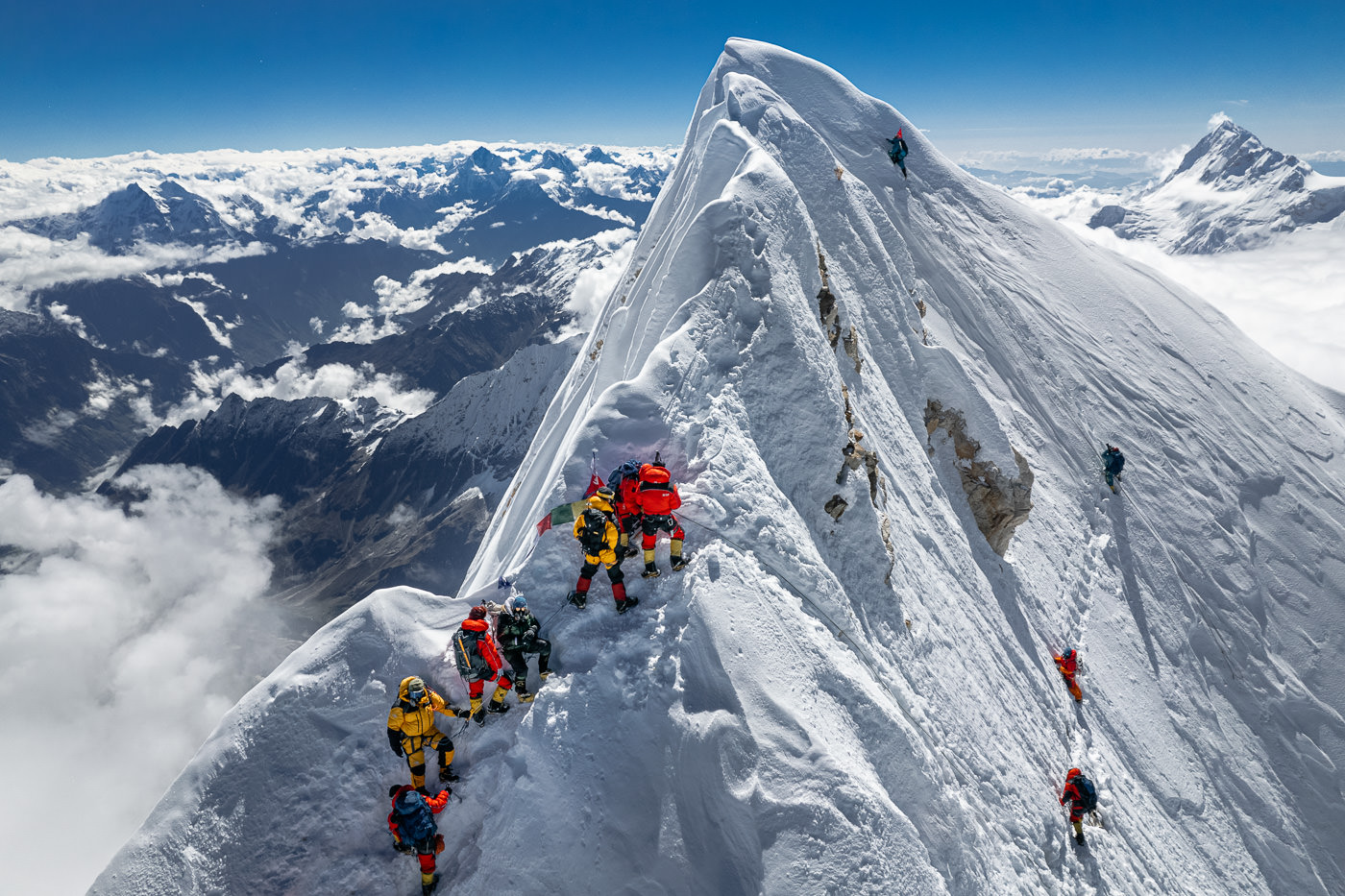
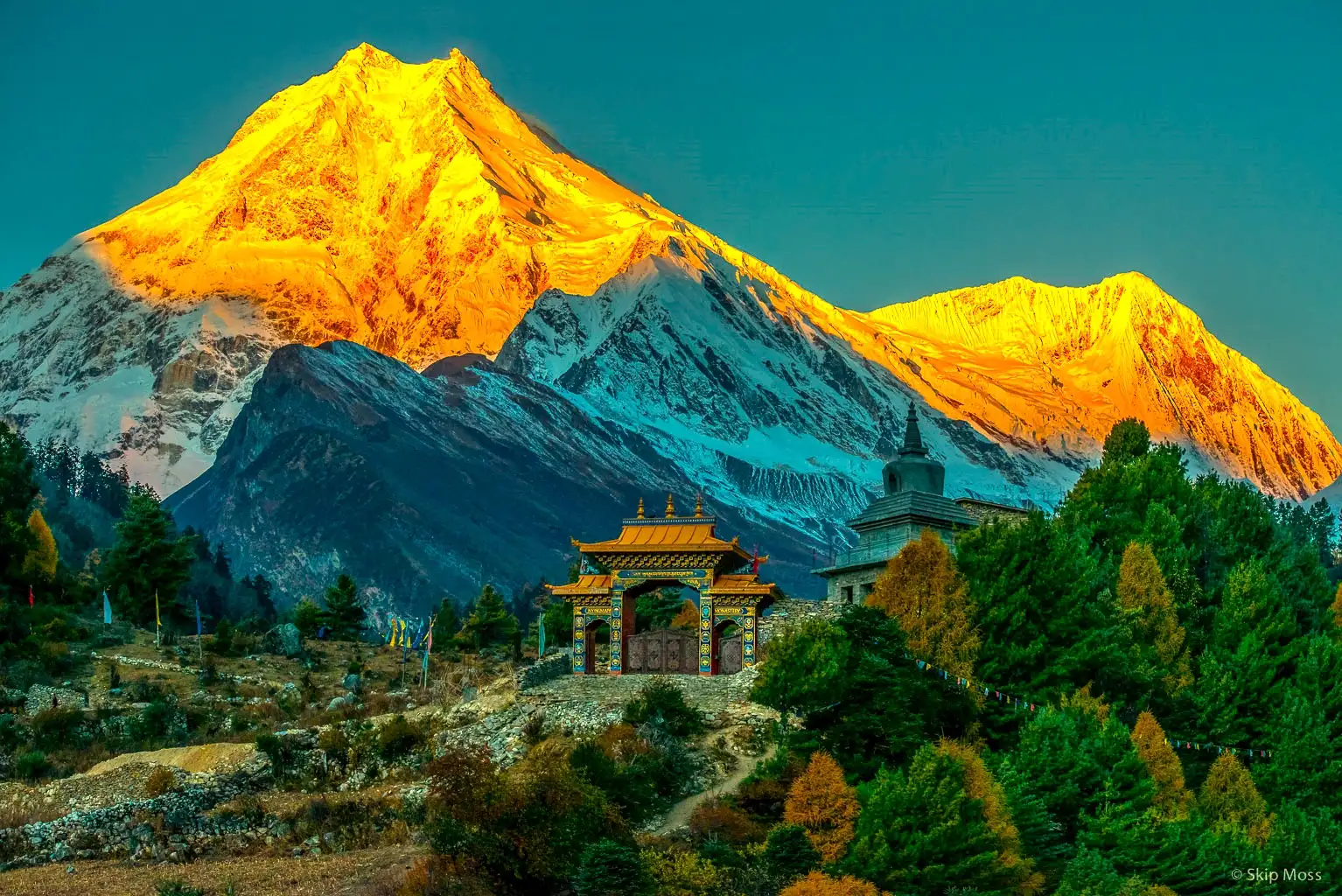
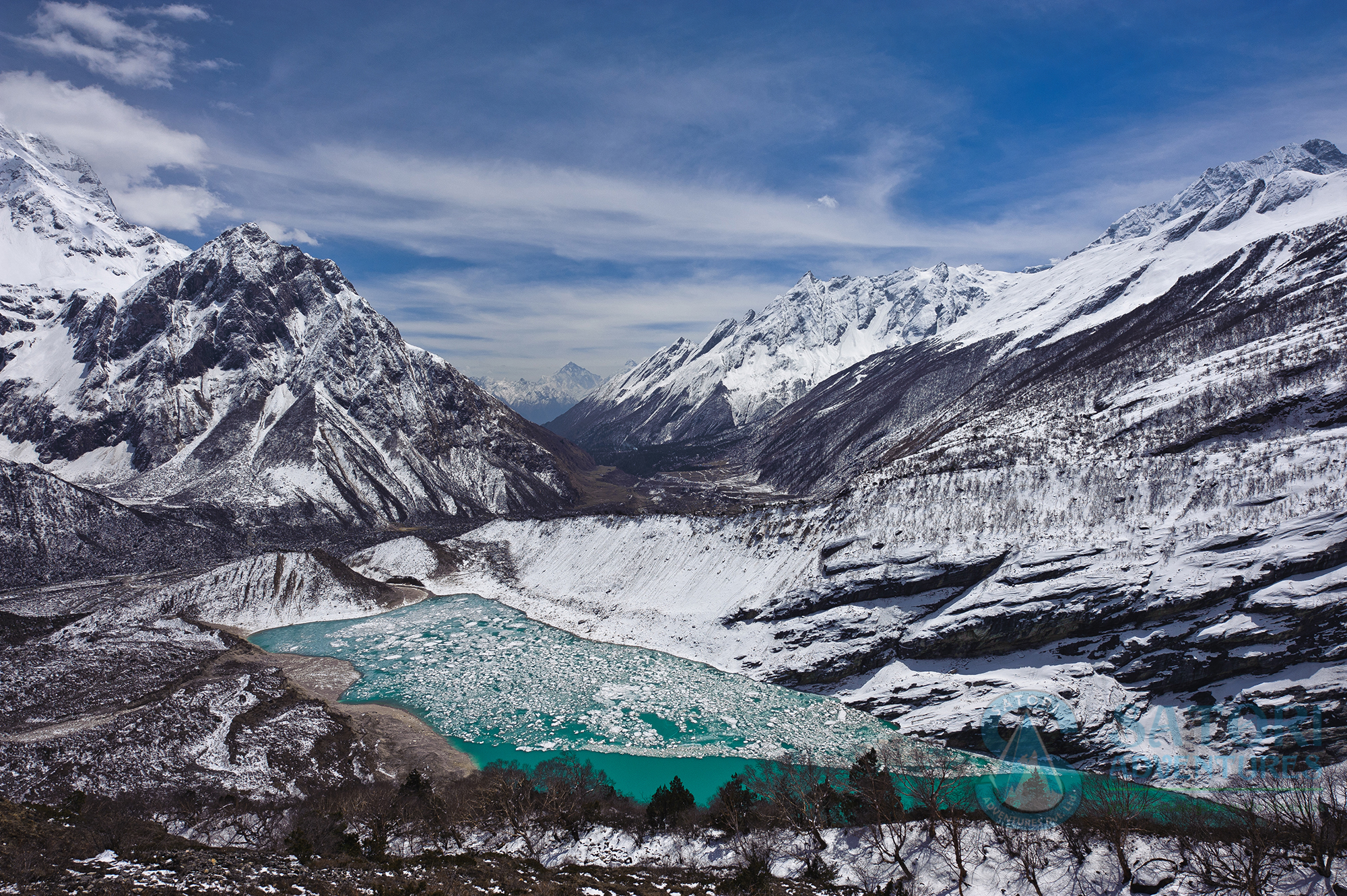
Also known as Kutang Kutan I in Tibetan, the meaning of which is a flat place, Mount Manaslu is the eighth-highest mountain in the world at 8,163 m above sea level. It is in the Mansiri Himal, part of the Nepalese Himalayas, in west-central Nepal. Manaslu means “mountain of the spirit” and the word is derived from the Sanskrit word manasa, meaning “intellect” or “soul”. Set in the northern Himalayan range, Manaslu is a serrated “wall of snow and ice hanging in the sky”. The three sides of the mountain fall in steps to terraces down below, which are sparsely inhabited with agricultural operations practised on the land. Apart from climbing Manaslu, trekking is popular in this mountain region, as part of the Manaslu Circuit, a notable path for trekkers in Nepal. A glacial saddle known as Larkya La, with an elevation of 5,106 m lies north of Manaslu and is bounded on the east by the Ganesh Himal and the Buri Gandaki River gorge, on the west by the deep fissures of the Marysyangdi Khola with its Annapurna range of hills, and to the south is the Gorkha town at the foot of the hill. There are six established trek routes to the peak, and the south face is reportedly the most difficult for climbing.

The Manaslu region offers a variety of trekking options. The popular Manaslu trekking route of 177 km skirts the Manaslu massif over the pass down to Annapurna. The Nepalese Government only permitted trekking on this circuit in 1991. The trekking trail follows an ancient salt-trading route along the Budhi Gandaki River. The trek requires a Manaslu Restricted Area Permit and a Manaslu Conservation Area Permit. The restricted area permit costs USD 100 per week in autumn and USD 70 per week in other seasons, whereas the conservation area permit costs USD 30 all year round. Trekkers are required to travel in a group of at least two persons with a registered guide. The trek lies on the newly developed Great Himalayan Trail. En route, 10 peaks over 6,500 m are visible, including a few over 7,000 m. The trekking route is through mountainous terrain prone to the consequences of monsoon rainfall, landslides, and landfalls. Hypothermia and altitude sickness, as well as encounters with passing yaks, are common. Trekking to Manaslu is thus a test of endurance. The highest point reached along the trek route is Larkya La at an elevation of 5,106 m. The Manaslu Conservation Area Project (MCAP) was established in 1997 with the primary objective of achieving conservation and sustainable management of the delimited area, which also includes Manaslu.

There are two ethnicities mainly inhabiting this region; Nubri and Tsum. The branching off of the river at Chhikur divides these two ethnic domains. While Nubri has been frequently visited since Nepal opened itself for tourism in 1950, Tsum still retains much of its traditional culture, art, and tradition. In the central hills of the region, Gurungs are the main ethnic group who have joined the Gurkha regiments in large numbers. Closer to Tibet, the Bhutias, also spelled Bhotias, akin to the Sherpa group, of Tibetan ethnicity dominate the scene with their flat-roofed houses, and are Buddhists. The region is dotted with austere monasteries, mani walls, chortens and other Buddhist religious landmarks.

The best season to hike the circuit is spring between March and May, just before the monsoon season begins. During this period, one can expect dry trails, stable weather, excellent visibility, and long trekking days. Similarly, autumn between September and November is another good season for the circuit, following the monsoon season.

Nepal has always been on my travel bucket list because of its proximity to India and the fact that it is mostly Hindu. I remember my grandparents visiting Kathmandu and the Pashupathinath temple in the late seventies, and after hearing stories about the country, I have always wanted to visit it. Now, after finishing this series, I want to visit the mystical country in the lap of the Himalayas more than ever.

In My Hands Today…

Unlost: A journey of self-discovery and the healing power of the wild outdoors – Gail Muller

Gail Muller was told she’d be in a wheelchair by the age of forty. At forty-one she set out to hike one of the world’s toughest treks, The Appalachian Trail – a 2,200-mile journey that would help her reclaim her life and heal her mind and body. An inspiring, moving and uplifting memoir for fans of Cheryl Strayed’s Wild and Elizabeth Gilbert’s Eat, Pray, Love.

As Gail took her first steps through the wilderness of the USA, she had no idea what lay ahead of her, but she knew she felt burnout from city life, lost and broken – ready to heal a mind and body that she had battled with for so long.

From the resilience-building mountain climbs, painful injuries and harsh reality of braving the raw elements, to the unexpected friendships forged with other hikers and the kindness of strangers offering food and shelter – with every step, Gail started to let go of a past dominated by chronic pain and reconnected with herself in a way she’d never been able to before.

A love letter to the healing power of the wild outdoors and an incredible testament to the strength of the human spirit, Gail’s story is for anyone who has ever felt stuck in a rut, lost or scared. She shows us that even in our darkest times, it’s possible to find our inner grit, face our fears and feel hopeful.