World Blood Donor Day

Blood is what regulates the human body and without blood in our systems, we will not be able to live and breathe. It is thicker than water, and feels a bit sticky. The temperature of blood in the body is 38° C, which is about one degree higher than body temperature. Blood has three important functions:Blood plays an important role in regulating the body’s systems as well as supplying oxygen and nutrients to tissues, removing waste, transporting hormones and other signals throughout the body. Composed of plasma, red blood cells, white blood cells and platelets, the main function of blood is to regulate the pH of the body and the core body temperature. The amount of blood a person has in his body depends mostly on his size and weight.

Blood is an important resource, both for planned treatments and urgent interventions. It can help patients suffering from life-threatening conditions live longer and with a higher quality of life, and supports complex medical and surgical procedures. Blood is also vital for treating the wounded during emergencies of all kinds (natural disasters, accidents, armed conflicts, etc.) and has an essential, life-saving role in maternal and perinatal care.

There’s no end to the benefits of donating blood for those who need it. Blood is needed to save lives in times of emergencies and to sustain the lives of those with medical conditions, like leukemia, thalassaemia and bleeding disorders, as well as patients who are undergoing major surgeries. For many patients, blood donors are their lifeline. One unit of blood can save three lives!

It turns out that donating blood doesn’t just benefit recipients. There are health benefits for donors, too, on top of the benefits that come from helping others. Donating blood has benefits for your emotional and physical health. According to a report by the Mental Health Foundation, helping others can reduce stress, improve your emotional well-being, benefit your physical health, help get rid of negative feelings as well as provide a sense of belonging and reduce isolation.

For those who have a rare blood group, it is all the more important they donate blood. I am one of those individuals. My blood group is B-ve and I am the only person in my family to have this blood group. In fact, I was so convinced that the result was wrong the first time I did the test to determine thhe blood type, that I did multiple tests to confirm the fact that my group was so different from the rest of my family. B negative is one of the rarest blood groups with around 3-4% of the population having this group. S and the children are O positive and because of this, I had to take multiple injections when I was pregnant so that my body does not reject the children’s positive blood group. I used to donate blood and also had a card from the local Red Cross which stated my blood group and to not do any transfusion if I needed it unless the check the blood which will be transferred into my body, but I lost it when my wallet got nicked some years back. These days, even though I want to, because of my diabetes, I am unable to donate blood. S on the other hand, is an enthusiastic donor and donates multiple times a year.

Yesterday was World Blood Donor Day. The event serves to raise awareness of the need for safe blood and blood products and to thank blood donors for their life-saving gifts of blood.

A blood service that gives patients access to safe blood and blood products in sufficient quantity is a key component of an effective health system. Ensuring safe and sufficient blood supplies requires the development of a nationally coordinated blood transfusion service based on voluntary non-remunerated blood donations. However, in many countries, blood services face the challenge of making sufficient blood available, while also ensuring its quality and safety.

The need for safe blood is universal. Safe blood is critical both for treatments and urgent interventions. It can help patients suffering from life-threatening conditions live longer and with a higher quality of life and supports complex medical and surgical procedures. Blood is also vital for treating the wounded during emergencies of all kinds (natural disasters, accidents, armed conflicts, etc.) and has an essential, life-saving role in maternal and neonatal care.

But access to safe blood is still a privilege of the few. Most low- and middle-income countries struggle to make safe blood available because donations are low and equipment to test blood is scarce. Globally, 42% of blood is collected in high-income countries, which are home to only 16% of the world’s population.

An adequate supply of safe blood can only be assured through regular donations by voluntary unpaid blood donors. This is why the World Health Assembly in 2005 designated a special day to thank blood donors and encourage more people to give blood freely. World Blood Donor Day takes place every year on 14 June. As well as thanking blood donors, it is a day to raise awareness about the global need for safe blood and how everyone can contribute.

The campaign theme for this year’s World Blood Donor Day is “Safe blood saves lives” with the slogan “Give blood and make the world a healthier place”. The idea is to focus on the contribution an individual giver can make to improve health for others in the community. Blood donations are needed all over the world to ensure individuals and communities have access to safe and quality-assured blood and blood products in both normal and emergency situations. Through the campaign, we call on more people all over the world to become life-savers by volunteering to donate blood regularly.

The objectives of this year’s campaign are to celebrate and thank individuals who donate blood and encourage more people to start donating; to raise wider awareness of the urgent need to increase the availability of safe blood for use wherever and whenever it is needed to save life; to demonstrate the need for universal access to safe blood transfusion and provide advocacy on its role in the provision of effective health care and in achieving universal health coverage; and to mobilise support at national, regional and global levels among governments and development partners to invest in, strengthen and sustain national blood programmes.

The day and the theme are also a call to action for governments, national health authorities and national blood transfusion services to provide adequate resources and put in place systems and infrastructures to increase the collection of blood from voluntary, non-remunerated blood donors; to provide quality donor care; to promote and implement appropriate clinical use of blood; and to set up systems for the oversight and surveillance on the whole chain of blood transfusion.

Are you a blood donor, if yes, here’s a huge shoutout to you and if no, please consider giving some blood to someone who needs it, if you are physically able to.
Global Day of Parents

sarvatIrthamayI maataa sarvadevamayaH pitaa
maataraM pitaraM tasmaat sarvayatnena pUjayet

Mother is (the embodiment) of all pilgrimages, father is (the embodiment) of all deities. Hence, mother and father are to be revered with all efforts.

Old Sanskrit Shloka

Parents are the bedrock of society. Without parents to nurture a child, physically, mentally, spiritually, socially and psychologically, we may well have been living in isolation! They say a parent a born along with the child and so the importance of a parent in the child’s life, especially in the early years can’t be emphasised enough.

Being a parent is the most important job in the world. The first 1,000 days of life is a once-in-a-lifetime opportunity to build a baby’s brain and shape a child’s ability to learn and grow. Parents want to give their children the best they can. Yet, many have no choice but to work long hours, often away from home, to support their families. Parents need time to give their child the best start in life. Parenting is probably one of the most fulfilling, if not the most demanding job we will ever have! The responsibility to care for another tiny human being who depends on you and your partner for their very survival is immense, but it is something we humans do so quite instinctively. After all, the urge to procreate is in our DNA, though there are exceptions to the rule.

A parent is a child’s first hero. A girl’s first love is her father and when she looks for partners as she grows up, she will look for a man like her father if she has been brought up in a loving environment and the opposite of her father if her father had been abusive growing up. Likewise, for a boy, his mother is the first woman in his life. He will probably look for a woman like her when he is looking to get into a relationship and will most likely compare women he meets with his mother. Again, a loving mother will inspire him to look for similar qualities in his partner and an abusive and non-maternal mother figure will make him look for someone with the exact opposite qualities.

Parents nurture their children throughout their lives, guiding them, sometimes invisibly. They play multiple roles in their children’s lives – as teachers, as coaches, as psychologists, as friends and as parents.

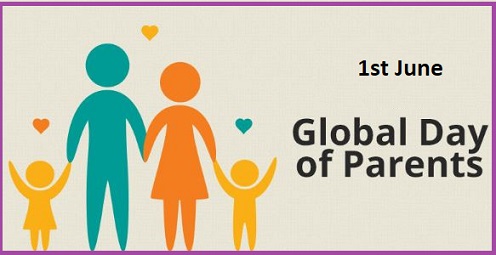
Because parents such a huge role in everybody’s lives the United Nations decided to observe June 1, that today as the Global Day of Parents. This day was proclaimed in 2012 and honours parents throughout the world. The Global Day provides an opportunity to appreciate all parents in all parts of the world for their selfless commitment to children and their lifelong sacrifice towards nurturing this relationship.

Emphasising the critical role of parents in the rearing of children, the Global Day of Parents recognises also that the family has the primary responsibility for the nurturing and protection of children. For the full and harmonious development of their personality, children should grow up in a family environment and in an atmosphere of happiness, love and understanding.

The central goals of the 2030 Agenda for Sustainable Development adopted by the world leaders in 2015, focus on ending poverty, promoting shared economic prosperity, social development and people’s well-being while protecting the environment. Families remain at the centre of social life ensuring the well-being of their members, educating and socializing children and youth and caring for young and old.

In particular, family-oriented policies can contribute to the achievement of Sustainable Development Goals 1 to 5 relating to doing away with poverty and hunger; ensuring healthy lives and promoting of well-being for all ages; ensuring educational opportunities throughout the lifespan and achieving gender equality.

So why celebrate such a day? Days like this reminds us to respect others. As a child, you are taught to respect others, especially our elders, but I believe that you have to respect everyone, irrespective of the fact that they are older than you. Our parents have been with us through thick and thin and have been there for us in every stage of our life. A parental unit is not just a mother or a father, it is the two individuals who have brought you to life, so a day like this showcases the other parent who may not be taking an active interest in their child’s life, but on days like this, they can spend some time with their child or vice versa and learn from each other. Parenting is like playing a game of tag. It is hard going it alone and so when you are a parental unit, you have to recognise that both partners play an equal part in bringing up their children.

So take some time today to talk to your parentsm, your first teacher and nurturer and tell them how much you love them and appreciate all that they have gone through to bring you up to be the person you are today. And if you are a parent yourself, give yourself a pat on the back for a job well done!

International Day of Families

Today is the International Day of Families. The day was proclaimed by the UN General Assembly in 1993 and reflects the importance the international community attaches to families. The International Day of Families provides an opportunity to promote awareness of issues relating to families and to increase knowledge of the social, economic and demographic processes affecting families.

Families—both traditional and non-traditional—are the foundation of society. Some of the most formative years of our lives are spent growing up with our families, so they should be celebrated! A parent is the the first and most important teacher in every child’s life. There’s an Indian adage in Sanskrit which goes, “Mata, Pita, Guru, Daivam”. This shows the four most important people in a person’s life – their mother, father, followed by their teacher and finally the divine or God. So the first teacher for a child is his or her mother who is responsible for giving him life and sustaining him. So the importance of family starts at birth and stays constant throughout life. As children grow into their teens and early adulthood, families can be a bedrock of support during times of change. Families meet a child’s physical and emotional needs, model good values to them, provide them with sustenance and protection, advocate for them and offer guidance in all areas of their lives.

Although families all over the world have transformed greatly over the past decades in terms of their structure and as a result of global trends and demographic changes, the United Nations still recognizes the family as the basic unit of society. This day provides an opportunity to promote awareness of issues relating to families and to increase knowledge of the social, economic and demographic processes affecting them. It has inspired a series of awareness-raising events, including national family days. In many countries, this day is an opportunity to highlight different areas of interest and importance to families.

Families are both beneficiaries but most importantly the agents of development. The role of families in development was recognized by the World Summit for Social Development in its Copenhagen Declaration. The message of Copenhagen still rings true after a quarter century of development: “The goals and objectives of social development require continuous efforts to reduce and eliminate major sources of social distress and instability for the family and for society.” Then, governments pledged to “place particular focus on and give priority attention to the fight against the world-wide conditions that pose severe threats to the health, safety, peace, security and well-being of our people”.

The Copenhagen Declaration recognized that the family was the basic unit of society and acknowledged that it plays a key role in development and is entitled to receive comprehensive protection and support. Governments further recognized that the family should be strengthened, with attention to the rights, capabilities and responsibilities of its members. It is important to remind us that the Declaration also recognized that “in different cultural, political and social systems various forms of family exist”.

This year, the 25th anniversary of the World Summit for Social Development, is probably one of the most challenging times globally with the COVID-19 panademic making everything topsy-turvy. We now know that governments world over have to put into place social policies protecting the most vulnerable individuals and families. It is the families who bear the brunt of the crisis, sheltering their members from harm, caring for out of school children and at the same time continuing their work responsibilities. Families become the hub of intergenerational interactions that support us in the crisis. Under economic duress poverty deepens. In times of uncertainty stress increases often resulting in growing violence against women and children. That is why the support for vulnerable families, those who lost income, those in inadequate housing, those with young children, older persons and persons with disabilities is imperative now more than ever. So the theme this year is “Families in Development: Copenhagen & Beijing + 25”.

This year’s celebration of the International Day of Families reminds us that the goals of Copenhagen are still relevant in the rapidly changing world. The World Social Summit as well as the International Year of the Family and its follow-up processes have served as catalysts for integrating a family perspective into overall social policy making. Further advancement of family policy in the context of the 2030 Agenda for Sustainable Development depends on how well issues of family policy are integrated into the overall development planning at national levels. It is imperative that such policies effectively respond to the numerous challenges faced by families in a rapidly changing world now facing an unprecedented global health and social crisis.

How can you observe this day? Today, you can’t get out of the home, so since it’s a day for family, spend more time with your family and today reflect what family means to you. Family can also mean the family you choose – your friends and extended family who love and accept you no matter what.

The International Day of Families is important because it highlights the importance of family in society. A stronger family leads to a stronger community and help each member in the family lead fulfilling lives while caring for each other. Not all families look like yours, but they are also a family. This day bring that reality in focus and helps us understand that different families exist. Finally this day is an opportunity to have conversations with your own family, those serious conversations with your children and significant other which you may have been postponing.

So how will you celebrate this day? Will you have ‘that’ conversation with your family and if yes, which one will that be?

World Book and Copyright Day

Also known as World Book Day and or International Day of the Book, the World Book and Copyright Day is an annual event organized by the United Nations Educational, Scientific and Cultural Organization or UNESCO to promote reading, publishing, and copyright. World Book Day was first celebrated on 23 April 1995, and continues to be recognized on that day. A related event in the United Kingdom and Ireland is observed in March.

I have written in detail about the event previously here, here and here, so just pop by there for more information on the history of this day.

World Book and Copyright Day is a celebration to promote the enjoyment of books and reading. Each year, on 23 April, celebrations take place all over the world to recognize the scope of books – a link between the past and the future, a bridge between generations and across cultures. On this occasion, UNESCO and the international organizations representing the three major sectors of the book industry – publishers, booksellers and libraries, select the World Book Capital for a year to maintain, through its own initiatives, the impetus of the Day’s celebrations.

The 2020 World Book Capital or WBC is Kuala Lumpur, Malaysia. Kuala Lumpur or KL as it is known in the region, was selected on the recommendation by the World Book capital Advisory Committee, comprising representatives of the International Publishers Association (IPA), the International Federation of Library Associations (IFLA) and UNESCO based on applications received from cities all over the world. To know more, here’s the link to the website of the Kuala Lumpur World Book Capital. Previous World Book Capitals have been Sharjah in 2019, Athens in 2018, Conakry in 2017 and Wroclaw in 2016. UNESCO is also accepting applications for the World Book Capital for 2022 and the deadline for the same is Thursday 25 June 2020 in case anyone is interested for their city to become the WBC. The application form and more information is available on the UNESCO website.

Why April 23? It is because 23 April is a symbolic date in world literature. It is the date on which several prominent authors, William Shakespeare, Miguel Cervantes and Inca Garcilaso de la Vega all died. Therefore this date was a natural choice for UNESCO at its 1995 General Conference, held in Paris, to pay a world-wide tribute to books and authors on this date, encouraging everyone to access books.

Today with schools and other institues of learning closed because of the panademic caused by Covid-19, and people having to limit their time spent outside their homes, it is all the more important that all of us continue to read, to leverage the immense power that books wield and expand their horizons. Books are the best medium to stimulate our minds and creativity, while ensuring we stay inside.

For parents, please take time to read on your own or with your children not just in April, but throughout the year. With your children, celebrate the importance of reading, foster your children’s growth as readers and promote a lifelong love of literature.

Books allow you to travel distances, go to worlds not available on this earth and have zany adventures, all from the comfort of your chair, sofa or bed. Books are the best ways to allow your imagination to soar and combat the lonliness that most of us are feeling right now.

As someone who loves reading, I can’t emphasise books enough. Today when electronic gadgets affect our minds to the extent that we get bored in a matter of minutes, a good book, which can capture and sustain our interest for a few hours is invaluable. We read and then we grow our minds, our thinking not only becomes critical, we also become open to other view points.

From a parents perspective, reading is essential for a child’s mental well-being. I remember dragging myself down to our community library about 15 days post partum, armed with BB & GG’s birth certificates to get them their own library cards. I also used to borrow books for them on a weekly basis until they were old enough to borrow their own books.

A 2019 study published in the US found that parents who regularly read with their toddlers were less likely to be overly harsh with them and the children more likely to be better behaved. Of course, we all know that a child who reads performs better academically. A European study published earlier this year in February suggested that children and teens who read a good quality book daily may benefit from improved academic performance at school. Reading naturally improves your language and it doesn’t just have to be English, but yes, that’s the language that has the biggest benefit because we generally tend to read more in this language. But if you want to improve any langague, read more in that language and see how your spoken and written skills bloom. Reading can also improve children’s receptive language skills. A British study which reviewed 40 years of reading intervention studies from the US, South Africa, Canada, Israel and China, found that children who were read to at a young age showed improved receptive language skills, which is the ability to understand information. The children who were read to also showed smaller but still positive improvements in their expressive language, which is how a child puts their thoughts into words such as vocabulary and grammar, and pre-reading skills, such as how words are structured.

So there you have it, the benefits of reading and what a good book does to you. So spend this time where we are quarantined, locked down or just advised not to venture out with a good book and read together as a family! Sit in a comfortable position, grab a good book, have some hot coffee or tea next to you with some snacks and read away! Aah, bliss!!!

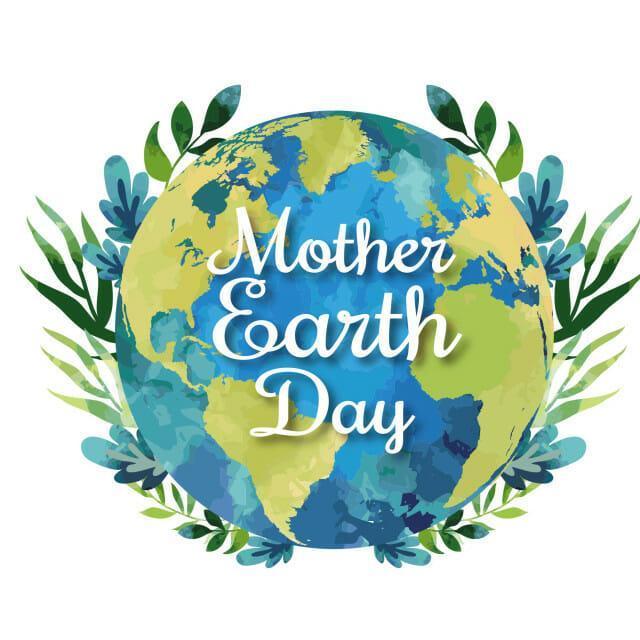
International Mother Earth Day

Our planet is at a turning point. The massive global migration underway now from countryside to cities demands huge investments in energy, water, materials, waste, food distribution and transportation. At the same time, we are dealing with the fight against carbon emissions, climate change, air pollutants, marine debris and contaminated ground water.

Today, the 22nd of April is celebrated as International Mother Earth Day. This day is a globally celebrated holiday that often extends into Earth Week – a full seven days of events focused on green awareness. Typically on April 22 men, women, and children around the world will collect garbage, plant trees, clean up coral reefs, show movies, sign petitions, and plan for a better future for our planet.

Mother Earth is a common expression for the planet Earth in a number of countries and regions, which reflects the interdependence that exists among human beings, other living species and the planet we all inhabit. The Earth and its ecosystems are our home. In order to achieve a just balance among the economic, social, and environmental needs of present and future generations, it is necessary to promote harmony with nature and the Earth.

Source

International Mother Earth Day is celebrated to remind each of us that the Earth and its ecosystems provide us with life and sustenance. It promotes the view that the Earth as an entity sustains all living things found in nature. Shared responsibilities and inclusiveness is at the heart of this day which allows us to rebuild man’s troubled and fractured relationship with nature. This cause can also unite people across nations as it is a common cause not dependant on existing strife and enemity. Today, more than ever, we need to remember what the Earth does for us and what we have given back to the Earth.

This Day also recognizes a collective responsibility, as called for in the 1992 Rio Declaration, to promote harmony with nature and the Earth, to achieve a just balance among the economic, social and environmental needs of present and future generations of humanity. The International Mother Earth Day provides an opportunity to raise public awareness around the world to the challenges regarding the well-being of the planet and all the life it supports.

The United Nations designated 22 April as International Mother Earth Day through a resolution adopted in 2009, joining civic groups that celebrated Earth Day earlier. The resolution recognises that “the Earth and its ecosystems are our home” and that “it is necessary to promote harmony with nature and the Earth.” The term Mother Earth is used because it “reflects the interdependence that exists among human beings, other living species and the planet we all inhabit”

In fact, the original roots go back to 1970 with the first American protests against air pollution due to amounts of leaded gas through massive and inefficient automobiles and irresponsible industries. Environmental protection was not a priority of the political agenda. Soon awareness of environment grew and the movement went global, especially during the nineties, with more than 140 countries joining the initiative through different environmental platforms. In 1992, the Rio Declaration on Environment and Development, and the Statement of principles for the Sustainable Management of Forests were adopted by more than 178 Governments at the Rio de Janeiro Earth Summit, the first major conference in which Sustainable Development was the main issue discussed by member states.

Today many companies are implementing strategic ecological thinking as part of their strategy to be responsible global businesses. How can all of us be ecological warriors in our own small ways?

We should avoid driving and take public transportation when we leave our homes. Organisations should also allow employees to work remotely, which is what is happening in a huge way today. I really hope that once organisations see how effective remote working is, they do this even after we beat Covid-19 and lockdowns across the world are lifted. Building authorities across the world should look and mandate green materials when building or renovating. Everyone should avoid printing unnecessarily and if you do need to print anything, print it on both sides of the paper and also use paper that has been certified as being made from recycled paper. Recycle and upcycle everything you can including paper, clothes, bottles and cans. Save energy by turning off computers monitors, printers, copiers and lights at the end of each working day in your workplace and all switches which are not being used at home. You should also remove plugs when not needed. If you are using airconditioning, make sure you don’t keep the thermostat lower than 24 or 25 degrees celcius and also use a timer to maximise efficiency.

Did you know?
Recycling one aluminum can saves enough electricity to run a TV for 3 hours
Recycling one glass bottle or jar saves enough electricity to light a 100-watt bulb for four hours
Recycling one ton of plastic saves the equivalent of 1,000–2,000 gallons of petrol
More than 30 million trees are cut down to produce a year’s supply of newspapers
Recycling a pound of steel saves enough energy to light a 60-watt light bulb for 26 hours.
One drip per second from a faucet wastes 540 gallons of water a year.
It takes between 400 and 500 years for a Styrofoam cup to decompose. It takes an orange peel six months to decompose.
Using recycled glass uses 40% less energy than making products from all new materials.

A ton of paper made from recycled paper saves:
7,000 gallons of water
Between 17 and 31 trees
60 pounds of air pollutants

There’s an old Cree Indian proverb which is very apt here as an ending to this post – Only after the last tree has been cut down; Only after the last river has been poisoned; Only after the last fish has been caught; Only then can you find that money can’t be eaten. Remember we don’t have a Planet B!