2026 Week 27 Update

I can’t believe we are looking at the second half of 2026! The older I grow, the faster the days and years seem to fly by. The first half of 2026 has felt less like a series of dramatic milestones and more like the steady construction of a life that is gradually becoming more intentional. It has been a season of building foundations rather than chasing quick wins. Professionally, there have been new responsibilities, meaningful collaborations, creative projects, and the quiet satisfaction that comes from seeing ideas slowly take shape. Much of the work has happened behind the scenes, planting seeds whose results may only become visible much later. Creatively, this has been one of my busiest periods in years. Writing has remained a constant thread, whether through reflections, photography, long-form articles, or exploring new ideas. Along the way, I’ve discovered that creativity isn’t always about waiting for inspiration. More often, it’s about showing up consistently and allowing small acts of creation to accumulate into something meaningful.

Personally, this year has been one of balance. Balancing ambition with patience, work with rest, and looking ahead while staying present. It has also been a reminder that life keeps evolving. Family roles continue to change, routines shift, and time seems to move faster with each passing month. There have been moments of excitement, moments of uncertainty, and moments of quiet reflection, each contributing something valuable. Perhaps the greatest lesson these six months have taught me is that progress rarely arrives with fanfare. It is found in the conversations that strengthen relationships, the habits that become second nature, the courage to try something new, and the willingness to keep going even when the destination isn’t yet visible.

As I look toward the second half of the year, I do so with a sense of quiet optimism. There is still much to learn, much to create, and many chapters yet to be written. If the first half of 2026 has been about laying strong foundations, perhaps the months ahead will be about building upon them, one thoughtful step at a time.

Today’s quote by the 26th President of the United States, Theodore Roosevelt, highlights the powerful role that belief plays in achieving any goal. Before we take the first step, before we learn a new skill or overcome a challenge, we first need to believe that success is possible. Without that belief, we often give up before we’ve even begun. Roosevelt isn’t suggesting that confidence alone guarantees success. Belief is not a substitute for hard work, preparation, or perseverance. Instead, he is pointing out that self-belief removes one of the greatest obstacles we face: the doubt that tells us we are not capable. When we believe in ourselves, we are far more likely to take action, persist through setbacks, and remain committed when progress is slow.

The quote also reminds us that many limitations begin in the mind. Fear of failure, fear of criticism, or fear of not being good enough can prevent us from trying at all. Self-belief doesn’t eliminate those fears, but it gives us the courage to move forward despite them. Every achievement begins with the willingness to say, “I think I can do this.” There is also an important lesson about momentum. Once we believe something is within reach, our actions begin to align with that belief. We seek opportunities, develop skills, and notice possibilities we might otherwise have ignored. In that sense, belief truly does put us “halfway there” because it transforms intention into action.

Today’s quote from the Bhagavad Gita comes from chapter 2.14 and is about enduring what comes and goes. One of the most comforting truths in the Bhagavad Gita is also one of the simplest: everything passes. When life is going well, we often wish the moment would last forever. When life becomes difficult, we fear that our pain will never end. Yet Krishna reminds Arjuna that both joy and sorrow are temporary visitors. They arrive, stay for a while, and eventually leave.

This does not mean we should ignore our feelings or pretend that suffering does not hurt. It simply means that we should not build our identity around temporary experiences. A difficult season is not our entire life. A moment of success is not our permanent reality. Much of our anxiety comes from treating passing circumstances as if they will last forever. The Gita invites us to take a longer view. The challenge is not to eliminate discomfort but to learn how to endure it with patience and dignity.

Like the changing seasons, life moves through cycles. By remembering this, we become less overwhelmed by hardship and less attached to fleeting pleasures. We learn to trust that what comes will go, and that we have the strength to remain standing through it all.

And this week, the most important thing I learnt was to give yourself time. Clarity will set in, and it will all make sense why things had to happen the way they did. You will begin to see that there is a lot of good in your life despite the challenges and disappointments, and you’ll remember how much you still have to be grateful for. When you stop fixating on what didn’t go as planned, you move more quickly toward the outcomes that are truly meant for you. You will find a way to thrive through this painful chapter, and you will attract such abundant gifts that you’ll realize that you can always trust the process completely.

And on that note, here’s to a fantastic second half of 2026, may the rest of the year bring what each of us want in our hearts!

2026 Week 26 Update

Johann Wolfgang von Goethe was a German poet, novelist, playwright, scientist, and philosopher, widely regarded as one of the greatest literary figures in history. Best known for works such as Faust and The Sorrows of Young Werther, Goethe explored themes of human potential, creativity, nature, and personal growth. His writings continue to inspire readers with their timeless insights into the human experience. This quote speaks to the transformative power of self-trust. Many of us spend a great deal of our lives looking outward for answers, seeking approval, advice, or reassurance before making decisions. While guidance from others can be valuable, Goethe reminds us that the most important compass we possess is within ourselves.

Trusting yourself does not mean believing you will always be right. It means having confidence that, whatever happens, you can learn, adapt, and find your way forward. Self-trust is built through experience. It grows every time you make a difficult decision, recover from a setback, or discover strengths you didn’t know you had. Over time, you begin to realise that uncertainty is not something to fear, but something you are capable of navigating. The quote also suggests that much of life’s confusion comes not from a lack of answers, but from doubting our own judgment. When we constantly question ourselves or compare our path with others, we become disconnected from our values and intuition. Trusting yourself brings clarity because your choices become aligned with who you truly are, rather than with who you think you should be.

This doesn’t mean life suddenly becomes easy. Challenges remain, mistakes still happen, and unexpected turns are inevitable. But with self-trust, you approach them differently. You stop waiting for certainty and start living with confidence that you can handle whatever comes next.

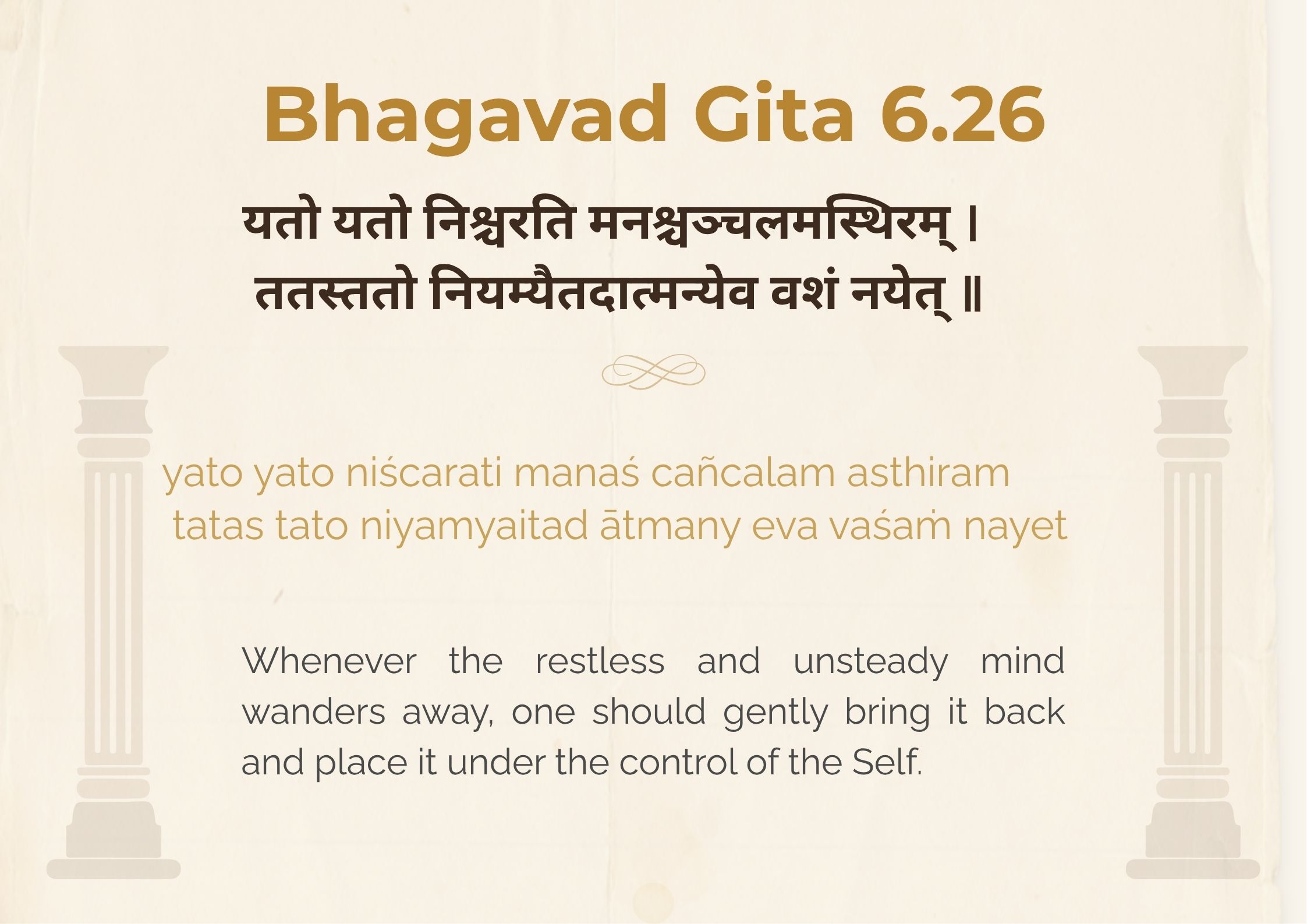
This week, the Bhagavad Gita in verse 2.50 tells us that knowledge must culminate in action.The Gita does not end clarity in contemplation. It directs it into conduct. Yoga is skill in action. Wisdom refines execution, it purifies motive, it sharpens discernment in decision. Clarity is not withdrawal from responsibility, it is precision within it. June closes where it must, not in abstraction, but in competent action guided by understanding.

This week was a super productive week and there seems to be small slice of happy news. BB may be getting his first big boy job. While university has been postponed for a couple of years for him, it is not off the table. GG will end her six month internship this month and then, it’s back to school for her last year. As for me, work and writing keeps me busy.

This week I learnt that when you attach yourself to a particular label, you limit yourself. Don’t forget that we are constantly evolving. We have many dimensions. These labels limit what is possible for you. A few years down the line, you may feel like a completely different person. Practice observing your thoughts and stories you believe about yourself. When an unhelpful thought pops up in your mind, you have to choose not to believe it. It will lose all power over you if you don’t give your attention to it. Allow beautiful, new possibilities to be fulfilled by yourself.

And on that note, have a beautiful week, and a wonderful month of July!

2026 Week 25 Update

Today is Father’s Day, a time to honour the fathers and father figures who have shaped our lives through their guidance, sacrifice, and unwavering support. Often, their love is expressed not through grand declarations but through countless everyday acts of care, responsibility, and presence. Whether they are still with us or live on in our memories, Father’s Day offers an opportunity to pause, reflect, and appreciate the role they have played in helping us become who we are. Sometimes the greatest gift we can give is simply our gratitude, our time, and the acknowledgement that their efforts mattered more than they may ever know. To all the fathers and father figures reading this, here’s wishing you a very happy Father’s Day!

This week’s quote is by American motivational author and founder of Hay House Publishing, Louise Hay, best known for her bestselling book You Can Heal Your Life, which explored the connection between thoughts, beliefs, and well-being. The quote reflects a powerful philosophy of openness, trust, and active participation in life. At its heart, the quote suggests that our attitude toward life influences what we experience. When we approach life with curiosity, optimism, and a willingness to engage, we often become more receptive to opportunities, relationships, and personal growth. Saying “yes to life” does not mean agreeing with everything that happens or pretending that difficulties do not exist. Rather, it means choosing not to close ourselves off because of fear, disappointment, or past setbacks. It is about meeting life with an open heart instead of a defensive one. When we say yes to learning, change, new experiences, and even uncertainty, we expand our world and allow new possibilities to enter.

The quote also highlights the connection between mindset and perception. Two people can encounter the same situation and experience it very differently. Someone who approaches life with openness is more likely to notice opportunities, solutions, and moments of joy. In contrast, someone who expects disappointment may overlook those same possibilities. In this sense, life often reflects back the energy and attention we bring to it. There is also a gentle reminder here about trust. Not everything will go according to plan, but saying yes to life means believing that even challenges can teach us something valuable. It is a commitment to participation rather than withdrawal.

In verse 4.40 of the Bhagavad Gita, the Gita is not sentimental about doubt. Unresolved, habitual doubt paralyses action and fractures stability. This is not a condemnation of inquiry. It is a warning against indecision rooted in fear. Discernment clarifies; doubt immobilises. Knowledge dispels hesitation. It does not amplify it. Clarity demands commitment.

This week I learned that rushing down a path that isn’t meant for you is futile. However, in stillness, we reconnect with what truly aligns with our soul. From that space, you can cultivate a sense of relaxed awareness. The best outcomes will always unfold in their own time. They cannot be forced or rushed. Rather than obsessing over what could be, use this waiting season to uncover hidden strengths. Embrace gratitude, and make space for the lessons that come along the way. You are always connected to the goodness of life.

This week felt like one of steady progress rather than dramatic breakthroughs. There were conversations to be had, ideas to refine, relationships to nurture, and plans gradually taking shape. Some days moved quickly, filled with activity and momentum, while others invited a slower pace and a chance to reflect. It was the kind of week that reminded me that meaningful progress often happens quietly, built through small actions repeated consistently rather than grand gestures. There was also a sense of looking ahead. Mid-year is approaching, and with it comes the natural urge to take stock of where we are, what is working, and what deserves more attention in the months to come. Not everything is settled, and not every effort has produced visible results yet, but there is value in trusting the process and continuing to show up. As the week draws to a close, perhaps the theme is appreciation: for progress that is unfolding, for relationships that sustain us, and for the people who have quietly helped guide us along the way.

2026 Week 24 Update

This week, Richard Bach, an American writer and former pilot best known for his inspirational novella Jonathan Livingston Seagull, gives us a quote that is a thought-provoking observation about the stories we tell ourselves. It suggests that our own beliefs often reinforce the limits we experience. When we repeatedly tell ourselves that we can’t do something, aren’t capable enough, aren’t talented enough, or that success is meant for other people, we begin to accept those ideas as facts. In doing so, we unintentionally create the very boundaries that hold us back.

The keyword here is argue. Bach isn’t talking about simply having limitations; everyone has them. He is referring to the habit of defending them. When we justify why we can’t change, why we can’t learn, or why something is impossible, we strengthen those mental barriers. Over time, they become part of our identity. This doesn’t mean that positive thinking alone can overcome every obstacle. Real-world constraints exist. However, Bach is highlighting how often the first obstacle is internal rather than external. Before we test our abilities, we may have already decided what is and isn’t possible. That mindset can become a self-fulfilling prophecy.

The quote encourages curiosity over certainty. Instead of saying, “I can’t do this,” we might ask, “What if I could?” Instead of assuming failure, we might allow room for growth. Many achievements begin when people stop defending their limitations and start challenging them. Ultimately, Bach reminds us that while we may not control every circumstance, we do have influence over the beliefs that shape our actions. And sometimes, changing those beliefs is the first step toward changing our lives.

This week felt like one of quiet transitions and gentle reminders about what truly matters. Professionally, there was a sense of laying foundations, nurturing relationships, and moving a few important pieces into place. Not every effort produced an immediate result, but there was steady forward motion, the kind that often goes unnoticed until you look back and realise how much ground has been covered.

Personally, the week carried a softer, more reflective tone. There was time spent adjusting to changing rhythms, appreciating familiar routines, and recognising how life continues to evolve in ways both large and small. One thought that surfaced repeatedly was how the relationship between parents and children changes over time. There comes a stage when the people who once cared for every aspect of our lives begin to need a little more care themselves. It’s a quiet role reversal that arrives gradually, often without announcement.

Caring for ageing parents can be both a privilege and a responsibility. It asks for patience, presence, and an understanding that time has become precious. The conversations may be familiar, the concerns repeated, the routines unchanged, yet there is value in showing up, listening, and being available. These moments rarely make headlines in our lives, but they are often among the most meaningful.

Perhaps that was the theme of this week: recognising that a life well lived is built not only through achievements and ambitions, but also through the people we continue to care for along the way. Sometimes progress looks like moving forward. Sometimes it looks like staying connected to what matters most.

This week, verse 4.39 from the Bhagavad Gita teaches us that knowledge requires qualification, faith, discipline, and focused effort. Wisdom does not settle in a restless mind, and pace here is not withdrawal from life. It is the result of right understanding. Ignorance agitates, but knowledge stabilises. Clarity and calm are not separate outcomes; they are linked.

This week I learned that you might not see the outcomes yet, but that doesn’t mean they’re not taking shape. Every moment of gratitude strengthens your trust. Trust that you are attracting experiences meant to make your heart sing. What isn’t happening now doesn’t mean it never will. Great things can happen in the most unlikely ways. A small change in your perspective can catapult your life in a new direction. There is still hope for the future. Trust in the greater flow of your life. Cultivate goodness within you. So much of life is beyond our control.

And on that note, take care and see you soon. Keep smiling!

2026 Week 23 Update

This quote by the author of one of my favourite books, “The God of Small Things,” Arundhati Roy is a powerful expression of hope in times of uncertainty. At first glance, it may seem poetic and abstract, but at its heart lies a profound belief that change is possible, even when the evidence is not yet visible. Roy personifies the future as a living presence, describing a better world as “she” — something already emerging, not merely imagined. The quote suggests that progress often happens quietly, beneath the surface of headlines and daily frustrations. While it may seem that injustice, conflict, and division dominate the world, there are also countless unseen acts of kindness, courage, creativity, and resistance taking place every day. These are the early signs of that “other world” making its way into existence.

The phrase “On a quiet day, I can hear her breathing” is especially striking. It implies that hope is easiest to detect when we step back from the noise and pay attention. Change rarely arrives all at once. It grows gradually through individuals, communities, and ideas that challenge the status quo. The future begins long before it becomes obvious. The quote is also a reminder against cynicism. It acknowledges that the world is imperfect but refuses to accept that things must remain that way. Hope, in Roy’s view, is not passive optimism. It is the conviction that human beings can imagine and create something better.

The first few days of June have felt less like a dramatic new beginning and more like a continuation of several stories already in motion. There has been work to advance, conversations to follow up on, plans to refine, and opportunities that are still taking shape rather than fully revealing themselves. Much of the week has been spent balancing the practical demands of the present with hopes for the future. There has also been a noticeable thread of transition running through these days. Some long-term decisions have moved closer to completion, bringing a sense of satisfaction and anticipation. At the same time, other areas remain in that familiar space between effort and outcome, where patience is required because the next chapter has not yet fully unfolded. Family life has continued its quiet evolution too. The people closest to you are increasingly living their own lives, pursuing their own paths and responsibilities, creating that mixture of pride, affection, and occasional nostalgia that accompanies changing seasons of life.

Professionally, there has been a recurring theme of building rather than harvesting. Much of the work has involved laying foundations, strengthening relationships, creating systems, and investing effort whose rewards may not be visible immediately. It has been a week that required faith in the process. Personally, there has been a growing awareness that 2026 is moving quickly. The first half of the year is nearly behind you. There is a sense of taking stock: What has worked? What needs adjusting? What deserves more attention during the months ahead?

Perhaps the best way to describe this week is that it has been about quiet momentum. Not spectacular breakthroughs. Not major crises. Just the steady accumulation of actions, decisions, and conversations that, taken together, are gradually shaping the rest of the year. And sometimes, those are the weeks that matter most, even if they don’t feel remarkable while you’re living them.

This week, in verse 4.38, we learn that knowledge in the Gita is not information; it is purification. It removes confusion, illusion, and misidentification. It clears the fog that makes the transient appear permanent. Clarity does not arrive through intensity. It arrives through steady discipline and time. Knowledge is not borrowed. It is realised. The month begins here, with the reminder that understanding transforms more deeply than emotion.

In this week’s motivation, uncertainty challenges the illusion of control we cling to. Yes, it’s uncomfortable, but within that discomfort lies the seeds of growth. These moments teach us how to navigate unease with intention and awareness. Though it may feel like this season of waiting is taking so much from you, it is actually equipping you with unshakeable strength that only grows with time. You’re building an arsenal of tools to navigate uncomfortable thoughts and emotions. You’re learning to better respond to unexpected situations.

That’s all I have for this week. Take care and keep smiling!