Train Travels

There’s something special about travelling by train. While I have travelled quite a bit in India, I have not travelled by train outside of India, so this blog post will be about train travel within India.

The Indian Railways is the world’s largest railway network by size, with a route length of 95,981 km as of March 2019 and is the word’s eighth largest employer employing about 1.4 million employees as of 2015. It runs more than 20,000 passenger trains daily, on both long-distance and suburban routes, from 7,321 stations across India.

The railways, a product of British colonisation has been in India since 16 April 1853 when the first passenger train ran between Bori Bunder and Thane between downtown and the suburban Mumbai of today. Today Bori Bunder is the majestic Chatrapati Shivaji Maharaj Terminus or CSMT, which locals still fondly call VT Station or Victoria Terminus in honour of the Empress of India, Queen Victoria.

As of 31 March 2019, the Indian Railways has electrified 50% of the route kilometers and 46% of the total running track. The first line to be electrified was between what is today the CSMT station and Kurla station in Mumbai’s suburban rail network way back in 1925.

The longest train route on the Indian Railways is the Dibrugarh to Kanyakumari Vivek express which covers India lengthwise from Dibrugarh in the north-east in the state of Assam to India’s mainland tip of Kanyakumari in the southern state of Tamil Nadu. The train covers a distance of about 4,282 kms in approximately 80 hours or roughly three and a half days, traversing eight Indian states. It crosses the states of Assam, Bihar, Nagaland, West Bengal, Jharkhand, Odisha, Andhra Pradesh, Tamil Nadu & Kerala. Another long distance train which also covers a distance of 4282 km is the Dibrugarh to Okha Weekly Border Service which travels across the breadth of India, from the East from Dibrugarh in Assam to India’s western borders, ending at Okha in the western state of Gujarat. Both these trains are currently tied for the 24th longest running trains in the world. The longest running train in the world today is the train that runs from Moscow in Russia to Pyongyang in North Korea. This train travels a distance of 10,267 km and if you travel from Moscow to Pyongyang, you will take approximately 206 hours or about 8.5 days!

Another interesting train on the Indian Railways route is the Navyug Express, a weekly train which runs from Mangalore Central in the south Indian state of Karnataka to the holy city of Katra which houses the very revered Mata Vaishno Devi shrine in the northern Union Territory of Jammu & Kashmir. This train takes about 68 hrs to cover a distance of 3,685 km and in this process covers about 14 states and union territories of India, viz. Jammu & Kashmir, Punjab , Haryana, Delhi, Uttar Pradesh, Madhya Pradesh, Maharashtra, Puducherry(Mahe), Telangana, Andhra Pradesh, Tamil Nadu, Kerala & Karnataka.

What I find most fascinating is that parts of India I never thought possible to connect have been connected by train and this connection is an end-to-end connection. For example the train which plies the route from Sri Ganganagar in Rajasthan to Tiruchirapalli in Tamil Nadu. Both are not big metro cities and the fact that there exists a demand for a fully airconditioned train, the Humsafar Express between these two cities is a measure of how popular and engraved the Indian Railways in the psyche of the Indian traveller.
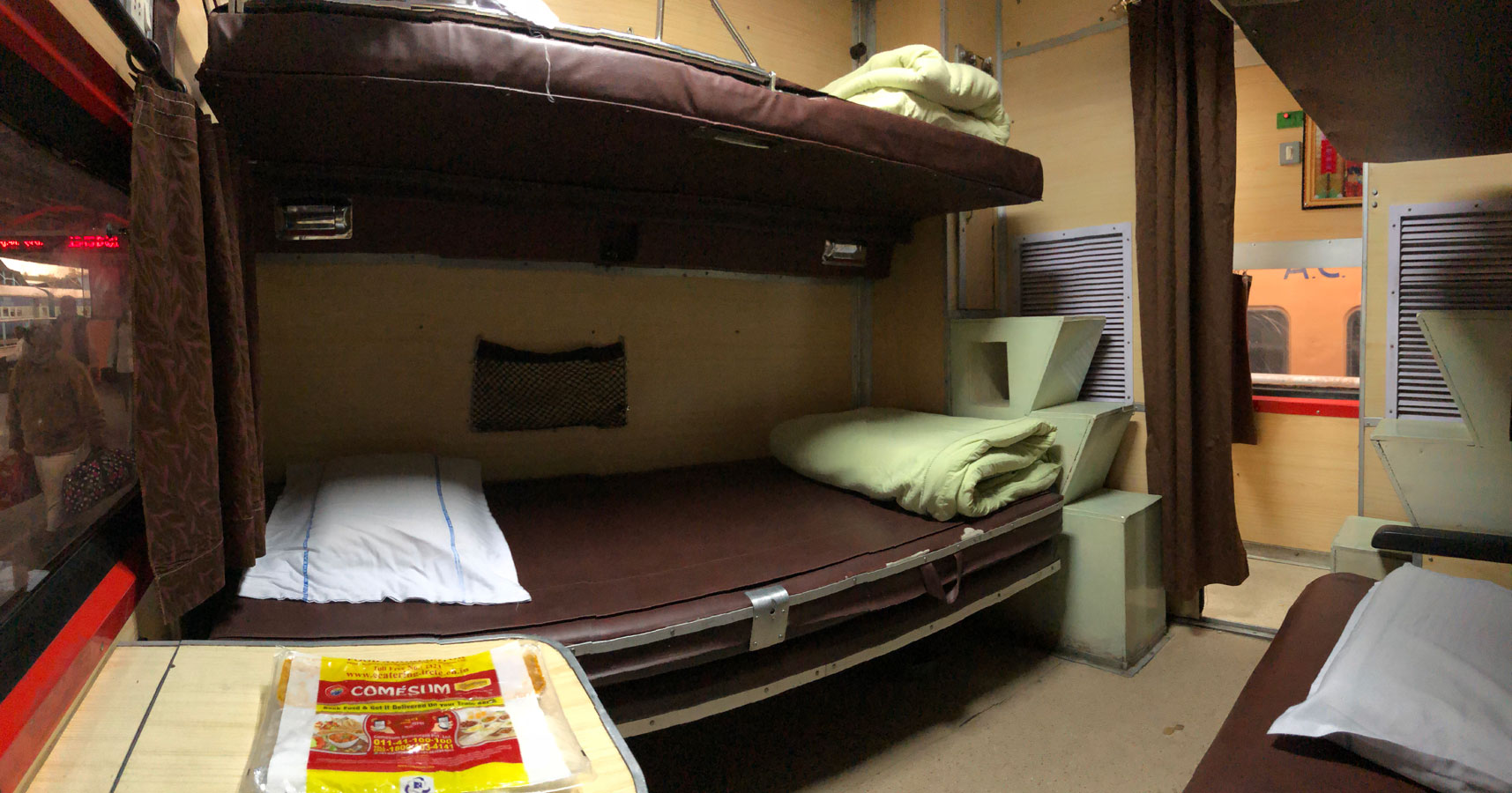
Source This is the closest I could find which corresponds to my memory of a coupe from the 70s

I have numerous memories of travelling by train. In my childhood, most summer holidays would be spent in Bangalore with my paternal grandparents and at some point when my maternal grandparents moved to Chennai, we would first travel to Chennai, spend a couple of weeks there and then take an overnight train to Bangalore to spend the rest of the holidays with my other set of grandparents.

I don’t have much memory of my first train travel, but have some fuzzy flashes. This was way back in the seventies and I must have been around three years old. I was travelling with my parents and my sister who must have been a toddler at that point to New Delhi. I do remember travelling in a coupe compartment. A coupe is first class compartment at a time when there was probably no air conditioning in the train. Today’s coupes are first class airconditioned compartments. My memory is very fuzzy for this trip, but if I think hard, I have flashes of memory of being in a closed compartment with my parents and sister and can see the scenary flying by.
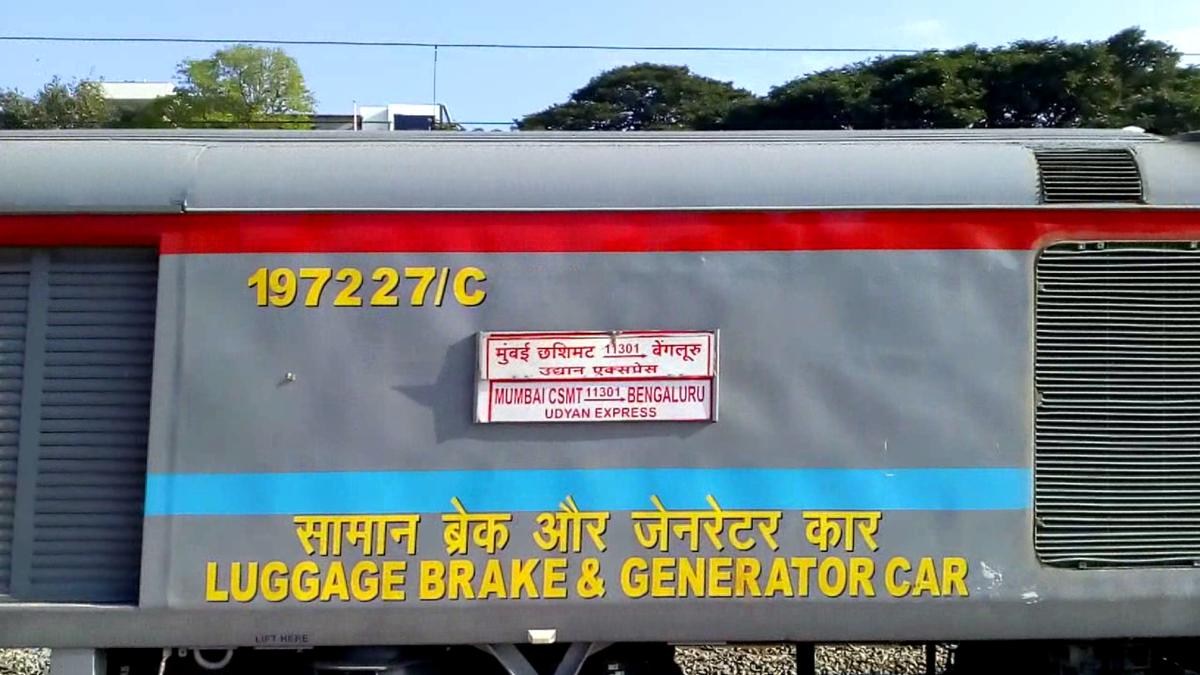
My biggest memories, however, are of the Udyan Express which is superfast train running between Mumbai’s CSMT and Bangalore’s City stations. The name is because Bangalore is called a Garden City and is famous for all the green spaces in the city, Udyan meaning ‘garden’ in pretty much all Indian languages. The train is probably 30 odd years old and I remember travelling from the time it started. Before this train started, there was no end-to-end service between Mumbai and Bangalore and you had to take trains on the Mumbai-Chennai route and get down in a station called Guntakal and then transfer to another train which took you all the way to Bangalore. I think this route between Guntakal and Bangalore used to be meter gauge while the Mumbai-Chennai route used to be broad gauge.

Once, when we were young adults, my sister and I travelled alone to Bangalore. We took what was a fairly new train then whose name escapes me now. That train used the Konkan Railway route and took a coastal route to get to Bangalore. I have searched quite a bit for the name of this train, but maybe this train has been either discontinued or merged with another train. I remember it being a very scenic route with lots of greenery and we passed many smaller towns and cities, unlike the Udyan Express which used to pass through mostly farmland and barren parts of Maharahtra, Andhra Pradesh and Karnataka. If anyone knows what is the name of this train, please put it in the comments below, I would love to know.
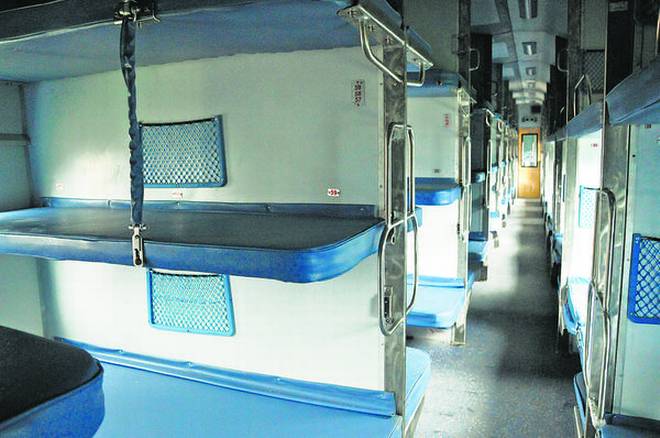
I loved travelling in the second class sleeper compartment where the windows would be bitterly fought with my sister. Both would want the window seat and if we were lucky to travel nice travelling companions, we would both get a window seat, otherwise, it would be up to my mother to play referee. The second class sleeper has six seats with three across each side and then across the aisle, two more seats. Most years, we would go ahead of my father who would join us later during the holidays. Also the sleeper class berths meant that the middle berth pulled out from the back rest of the lower berth and this also used to be a point of contention between us. After a few years, I started disliking the middle berth and used to want to sleep in the lower berth and my mum used to take the middle berth with my sister ensconcing herself in the top berth where she could sleep to her heart’s content.

I can’t sleep while travelling, so I was my family’s guard at night. Everytime the train stopped, my sleep would break and I would wake up. Because there was no airconditioning in the sleeper class, we would sleep with the windows open and a steel slatted cover over it. This, because there used to be heavy thefts in this class as the door used to not be locked and anyone can enter the compartment anytime of the day or night. The camadarie that you used to find in those days travelling by the sleeper class can’t be found today. We used to make friends during the 24 hours it would take to get to our destination and there are times when those fleeting friendships used to be continued. This is a time without any smart devices, not even mobile phones, remember and the only way to pass the time during the trip was to talk to people and share stories about your lives. We also didn’t have a lot of access to books and we would purchase a few magazines to read during the journey. Then you hope that your co-passengers would also have some reading material with them which you would then exchange to read. We would also play a lot of card games as well as games like anthakshari or similar games. And then when your destination arrives, you would smile at your new friends, promise to keep in touch and more often than not, slowly glide out of their lives.

My last train trip in India was this year during my India trip where we did back-to-back two trips, both overnight. The first was from Chennai to Thanjavur and the second from Mayiladuthurai to Bengaluru. Both trips were in AC 2 tier and this trip made me realise that I am growing old, I prefer my luxuries, slight as they are. The children were absolutlely fascinated by these short train trips and have been asking me when we can do this again. One train I absolutely want to travel in and in first class no less, is the Rajdhani Express which connects Mumbai to New Delhi. Rajdhani which means capital was meant to be a series of passenger trains which connect state capitals to India’s capital of New Delhi. This series of trains gets the highest priority in the Indian Railways network and is also considered as prestigious and premium, so when this train travels, it is not allowed to stop at any signals, other lesser important trains get shunted to the nearest station to wait and to make way for the Rajdhani to fly past. We were planning a trip this December, but with COVID-19, this is not possible and given how dire things are, I really don’t know when we can travel on the Rajdhani.

Something I love doing is watching train videos on YouTube. There are many people who patiently stand on the doorstep and share with the world their train journeys and each time I watch these videos, I am reminded of how much I love train travel. I also think if I was still living in India and younger, would I also be like one of these vloggers?

Travel is such a fascinating thing and you learn so much when you are out of your comfort zone. Train travel on the other hand, is a great equaliser, you meet such a diverse group of people in your travels that like it or not, there is some learning every single trip.
An Ode to Mangoes

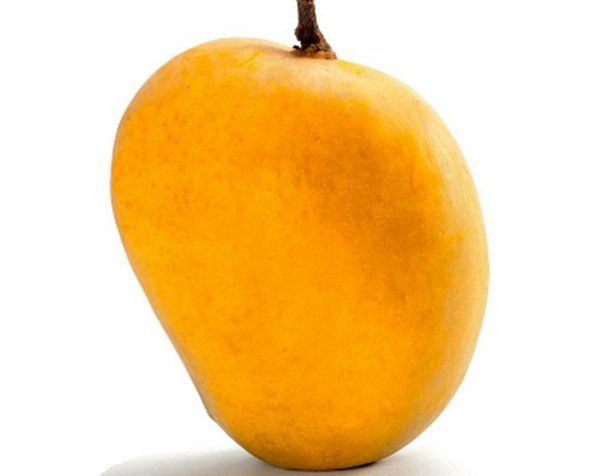
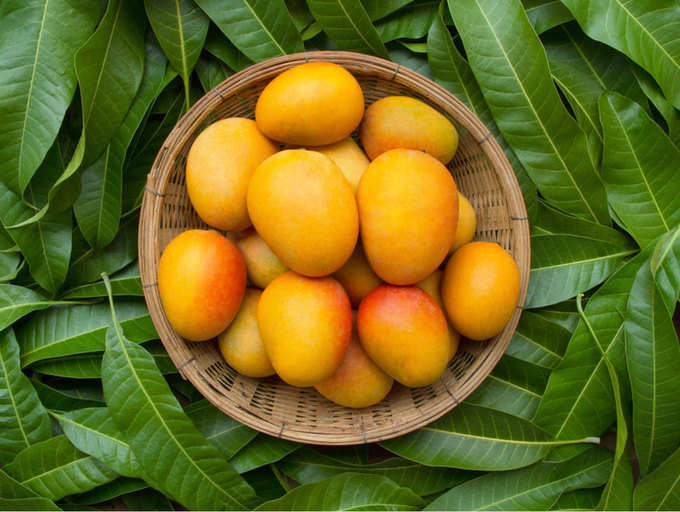
When it is the month of May, it is mango season in Mumbai. And not just any ordinary mango, it’s the time for the king of mangoes – the Alphonso Mango, lovingly called Hapus in Maharashtra. The months of April to early June, just before the first rains hit the state, the aroma of these mangoes are everywhere in the city, you just can’t escape the fruit.

Scientifically known as Mangifera indica, mangoes have been grown in India for thousands of years and produces around 40% of the world’s production of the fruit. Over 1,000 varieties grow in India, each one celebrated and defended in its region, from the bright orange Kesar of Gujarat to the small green Langra of Uttar Pradesh. But the Alphonso mango is special and unlike any found in the country. The fruit is named after the Portuguese general and military expert, Afonso de Albuquerque who helped establish Portuguese colonies in India. Grating on mango trees to produce varieties like the Alphonso was also introduced by the Portuguese. The Alphonso mango is also one of the most expensive varieties of mango, and is grown mainly in western India, particulary in the Ratnagiri district of the Konkan region in Maharashtra. The fruit is highly prized for its aroma and fragrance, taste and the beautiful colour of sunset it takes on when fully ripe. It is heavily traded both domestically as well as internationally and many cartons of the fruit are packed to be sent to the Middle East, Europe, North America and South and Southeast Asia.

Of the thousands of cultivars of mango in India, there are several different varieties of Alphonso. The best and most expensive are grown on the small Natwarlal plantation in Ratnagiri, and are hand-harvested. It is this variety that’s most widely exported. The fruit was shipped to London for the Queen’s coronation in 1953 from Mumbai’s legendary Crawford Market, renowned for its Alphonso stalls in season. A few years back, the famous mangoes from the Konkan region in Maharashtra were given Geographical Indication or GI tags which means this tag specifies the geographical location, which could be a town, city, region or even a country, a product is created. This means that when you buy a mango which is GI tagged, you are sure you are buying an Alphonso mango or Hapus!

A seasonal fruit, the Alphonso mango is available from around mid-April through the end of June, though once it starts raining, the balance produce starts flooding the market and prices also drop. The fruit is best eaten when the weather is hot and dry, in the peak summer months. The Alphonso has a beautiful mango shape and each fruit a quite large, weighing between 150 to 300 grams per fruit. The skin of a fully ripe Alphonso mango turns a bright golden-yellow with a tinge of red which spreads across the top of the fruit. The flesh of the fruit is a beautiful dark saffron colour and is rich, creamy, smooth and buttery with a delicate non-fibrous and juicy pulp.

Mangoes are a powerhouse of vitamins and minerals containing over 20 different vitamins and minerals. 1 serving of mango which is roughly ¾ of a cup provides you with the following amounts of your daily requirements – 50% of vitamin C, 8% vitamin A, 8% of vitamin B6, 15% of folate, 15% of copper as well as 7% of your daily fibre requirements.

Growing up, at home in Mumbai, everybody with the exception of me was a huge mango fan. While I can eat one fruit per day or so, my parents, grandparents and sister can polish off a few fruits each. I was the exception to the rule pretty much everywhere because most people I knew were mango or rather hapus aficiandos. I preferred the raw mango which is this tart and sometimes sour fruit which is so yummy with a lashing of salt and red chilli powder. During my childhood, we used to get boxes of the fruit and other than eating the fruit itself, my mother would puree the pulp and this puree would be used to flavour milkshakes and also my father and sister would dunk their chapatis and puris in this puree. So during the summer months, each night before bed, my mother would make a few glasses of mango milkshake for those who desired it (not me!).

My paternal grandparents moved to Bangalore when I was quite young and each year, we would travel to Bangalore for our summer holidays. We would mostly travel in the last few days of April or the first few days of May, depending on when my school would officially end. In my school, students had to go back to school to collect their year-end reports and so we would only travel out of Mumbai after that day, which would usually be the day after the results. A week or so before the trip, which would be by train, my mother would get in touch with her regular mango-walla to order a big box of mangoes for my grandmother who loved Hapus and could not readily find it in Bangalore those days. This is more than 30-35 years back, so the Bangalore of those days is very, very different from the Bengaluru of today. The mango-walla uncle would pack the mangoes which would be around four to five dozens in a big wooden box and layer the mangoes in beds of straw. He would have chosen unripe mangoes in varying stages of ripeness so that all 50-60 mangoes ripen at different times and we don’t have a glut of ripe mangoes to finish off at the same time. We would then take this box, along with a mango pickle made of baby unripe mangoes which was my mother’s signature pickle and which my grandfather loved along with our luggage and travel the roughly 1,150 km to Bangalore. In Bangalore, some of the Alphonso mangoes would be distributed among friends and the rest eaten as it is or made into puree, milkshakes or even used in sweets. I remember one year, my sister and I planted an Alphonso mango seed in the hope that it will become a mango tree. But we planted it too close to the boundary wall between our home and that of our neighbour and so the next year when we went looking for the tree we were sure would have come up by then, we were told they had to pluck it out and throw it. I remember both of us being so disappointed at this news.

Another memory I have about mangoes is a trip to Chennai during the summers. We were at an aunt’s house and they had a fully grown mango tree. The tree was full of unripe mangoes and the women in the house had decided they get the mangoes plucked and make mango pickle out of it. But we children plus my uncle had a different idea. One afternoon, while the women were taking a nap and we were playing board games, the uncle managed to pluck quite a few of the mangoes and after sneaking into the kitchen to get plates, a knife, some salt and red chilli powder, we had a raw mango party! Of course the expected outcome happened – all of us, including my uncle got roundly scolded for eating mangoes that was destined for a pickle, but we didn’t regret it one bit.

Mangoes are considered heaty and the rule in my house used to be a cup of milk after every mango eating session. I hate drinking milk, so sometimes, I do wonder if my indifference to mangoes was because of this rule. The next generation, aka GG & BB also love mangoes, BB more than GG I think because his go-to drink at an Indian restaurant is the Mango Lassi. So all said and done, I still love the Alphonso mango and during this season, even in Singapore, I try to purchase a carton of this precious fruit so that the children (and S and me) can take part in a ritual that goes back to my childhood.

Global Day of Parents

sarvatIrthamayI maataa sarvadevamayaH pitaa
maataraM pitaraM tasmaat sarvayatnena pUjayet

Mother is (the embodiment) of all pilgrimages, father is (the embodiment) of all deities. Hence, mother and father are to be revered with all efforts.

Old Sanskrit Shloka

Parents are the bedrock of society. Without parents to nurture a child, physically, mentally, spiritually, socially and psychologically, we may well have been living in isolation! They say a parent a born along with the child and so the importance of a parent in the child’s life, especially in the early years can’t be emphasised enough.

Being a parent is the most important job in the world. The first 1,000 days of life is a once-in-a-lifetime opportunity to build a baby’s brain and shape a child’s ability to learn and grow. Parents want to give their children the best they can. Yet, many have no choice but to work long hours, often away from home, to support their families. Parents need time to give their child the best start in life. Parenting is probably one of the most fulfilling, if not the most demanding job we will ever have! The responsibility to care for another tiny human being who depends on you and your partner for their very survival is immense, but it is something we humans do so quite instinctively. After all, the urge to procreate is in our DNA, though there are exceptions to the rule.

A parent is a child’s first hero. A girl’s first love is her father and when she looks for partners as she grows up, she will look for a man like her father if she has been brought up in a loving environment and the opposite of her father if her father had been abusive growing up. Likewise, for a boy, his mother is the first woman in his life. He will probably look for a woman like her when he is looking to get into a relationship and will most likely compare women he meets with his mother. Again, a loving mother will inspire him to look for similar qualities in his partner and an abusive and non-maternal mother figure will make him look for someone with the exact opposite qualities.

Parents nurture their children throughout their lives, guiding them, sometimes invisibly. They play multiple roles in their children’s lives – as teachers, as coaches, as psychologists, as friends and as parents.

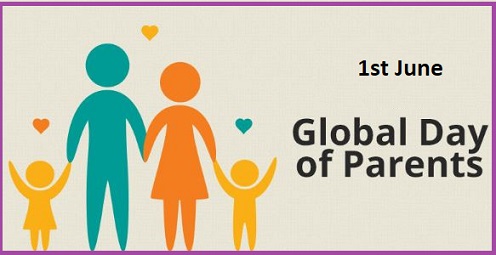
Because parents such a huge role in everybody’s lives the United Nations decided to observe June 1, that today as the Global Day of Parents. This day was proclaimed in 2012 and honours parents throughout the world. The Global Day provides an opportunity to appreciate all parents in all parts of the world for their selfless commitment to children and their lifelong sacrifice towards nurturing this relationship.

Emphasising the critical role of parents in the rearing of children, the Global Day of Parents recognises also that the family has the primary responsibility for the nurturing and protection of children. For the full and harmonious development of their personality, children should grow up in a family environment and in an atmosphere of happiness, love and understanding.

The central goals of the 2030 Agenda for Sustainable Development adopted by the world leaders in 2015, focus on ending poverty, promoting shared economic prosperity, social development and people’s well-being while protecting the environment. Families remain at the centre of social life ensuring the well-being of their members, educating and socializing children and youth and caring for young and old.

In particular, family-oriented policies can contribute to the achievement of Sustainable Development Goals 1 to 5 relating to doing away with poverty and hunger; ensuring healthy lives and promoting of well-being for all ages; ensuring educational opportunities throughout the lifespan and achieving gender equality.

So why celebrate such a day? Days like this reminds us to respect others. As a child, you are taught to respect others, especially our elders, but I believe that you have to respect everyone, irrespective of the fact that they are older than you. Our parents have been with us through thick and thin and have been there for us in every stage of our life. A parental unit is not just a mother or a father, it is the two individuals who have brought you to life, so a day like this showcases the other parent who may not be taking an active interest in their child’s life, but on days like this, they can spend some time with their child or vice versa and learn from each other. Parenting is like playing a game of tag. It is hard going it alone and so when you are a parental unit, you have to recognise that both partners play an equal part in bringing up their children.

So take some time today to talk to your parentsm, your first teacher and nurturer and tell them how much you love them and appreciate all that they have gone through to bring you up to be the person you are today. And if you are a parent yourself, give yourself a pat on the back for a job well done!

Poem: The Rainbow

World over things are getting slightly better, but we are still not out of the wood yet. There will be a new normal when things start going back to normal (or as normal as it can be) and the world we know would have changed completely. This panademic is a defining moment for all of us. Yet, in all this misery, we have seen moments of hope, resilience and how far the human spirit can go.

A rainbow has been seen for centuries as a symbol of hope, a promise from the greater power that things will get better

The Rainbow

When things seem to be at rock bottom,
When you feel broken and numb,

When nothing in life feels like it is going your way
When you feel bound, sad and gray

That is when you step outside to get some fresh air
To think, to feel and maybe say a little prayer

Then you look up and see the aftermath of the rain
The sun peeking out of the clouds and the you feel hope ignite within you again

You see the sky light up in a huge smile, you see a rainbow,
And you know that things will be fine, your face now has that glow

Follow that rainbow, follow your deepest wish,
You will get there one day, your life’s race will reach the line that says finish

The symbol of hope, of a new beginning
This rainbow is a sign that will make your heart sing!

International Day of Families

Today is the International Day of Families. The day was proclaimed by the UN General Assembly in 1993 and reflects the importance the international community attaches to families. The International Day of Families provides an opportunity to promote awareness of issues relating to families and to increase knowledge of the social, economic and demographic processes affecting families.

Families—both traditional and non-traditional—are the foundation of society. Some of the most formative years of our lives are spent growing up with our families, so they should be celebrated! A parent is the the first and most important teacher in every child’s life. There’s an Indian adage in Sanskrit which goes, “Mata, Pita, Guru, Daivam”. This shows the four most important people in a person’s life – their mother, father, followed by their teacher and finally the divine or God. So the first teacher for a child is his or her mother who is responsible for giving him life and sustaining him. So the importance of family starts at birth and stays constant throughout life. As children grow into their teens and early adulthood, families can be a bedrock of support during times of change. Families meet a child’s physical and emotional needs, model good values to them, provide them with sustenance and protection, advocate for them and offer guidance in all areas of their lives.

Although families all over the world have transformed greatly over the past decades in terms of their structure and as a result of global trends and demographic changes, the United Nations still recognizes the family as the basic unit of society. This day provides an opportunity to promote awareness of issues relating to families and to increase knowledge of the social, economic and demographic processes affecting them. It has inspired a series of awareness-raising events, including national family days. In many countries, this day is an opportunity to highlight different areas of interest and importance to families.

Families are both beneficiaries but most importantly the agents of development. The role of families in development was recognized by the World Summit for Social Development in its Copenhagen Declaration. The message of Copenhagen still rings true after a quarter century of development: “The goals and objectives of social development require continuous efforts to reduce and eliminate major sources of social distress and instability for the family and for society.” Then, governments pledged to “place particular focus on and give priority attention to the fight against the world-wide conditions that pose severe threats to the health, safety, peace, security and well-being of our people”.

The Copenhagen Declaration recognized that the family was the basic unit of society and acknowledged that it plays a key role in development and is entitled to receive comprehensive protection and support. Governments further recognized that the family should be strengthened, with attention to the rights, capabilities and responsibilities of its members. It is important to remind us that the Declaration also recognized that “in different cultural, political and social systems various forms of family exist”.

This year, the 25th anniversary of the World Summit for Social Development, is probably one of the most challenging times globally with the COVID-19 panademic making everything topsy-turvy. We now know that governments world over have to put into place social policies protecting the most vulnerable individuals and families. It is the families who bear the brunt of the crisis, sheltering their members from harm, caring for out of school children and at the same time continuing their work responsibilities. Families become the hub of intergenerational interactions that support us in the crisis. Under economic duress poverty deepens. In times of uncertainty stress increases often resulting in growing violence against women and children. That is why the support for vulnerable families, those who lost income, those in inadequate housing, those with young children, older persons and persons with disabilities is imperative now more than ever. So the theme this year is “Families in Development: Copenhagen & Beijing + 25”.

This year’s celebration of the International Day of Families reminds us that the goals of Copenhagen are still relevant in the rapidly changing world. The World Social Summit as well as the International Year of the Family and its follow-up processes have served as catalysts for integrating a family perspective into overall social policy making. Further advancement of family policy in the context of the 2030 Agenda for Sustainable Development depends on how well issues of family policy are integrated into the overall development planning at national levels. It is imperative that such policies effectively respond to the numerous challenges faced by families in a rapidly changing world now facing an unprecedented global health and social crisis.

How can you observe this day? Today, you can’t get out of the home, so since it’s a day for family, spend more time with your family and today reflect what family means to you. Family can also mean the family you choose – your friends and extended family who love and accept you no matter what.

The International Day of Families is important because it highlights the importance of family in society. A stronger family leads to a stronger community and help each member in the family lead fulfilling lives while caring for each other. Not all families look like yours, but they are also a family. This day bring that reality in focus and helps us understand that different families exist. Finally this day is an opportunity to have conversations with your own family, those serious conversations with your children and significant other which you may have been postponing.

So how will you celebrate this day? Will you have ‘that’ conversation with your family and if yes, which one will that be?