Looking Back at 2021

Today 2021 will end and with this, we all have finished yet another year filled with uncertainties in a world that is so different from just two years back.

2021 was an extension of 2020 and we continued to be masked and take steps to protect ourselves. This year, the adults in the house got both doses of the COVID vaccination as well as the booster shot. The children also got both their vaccine doses, and are scheduled to get their booster shots in January. Masking has become a way of the way here and everyone has their preferred type of mask, whether disposable or reusable.

BB and GG are in the second year of their course and it looks like they will continue to finish their course without really experiencing poly life. GG is doing pretty well in school and I am super impressed with her work ethic and dedication so she can realise her dreams. She will also start her industrial attachment or internship in the first half of 2022 and we are hoping the company she gets placed in will be right for her. She is also working towards graduating with a minor in Japanese, a language and culture she loves, so that’s another thing I am super proud of about her. BB has not had the career successes he used to have and I suspect he has finally realised this. He seems to have taken a hard look and I hope that in 2022, he will finally pull up his pants and work towards realising his dreams. He will go for his industrial attachment in the last few months of 2022, so that is something to look forward to. And then in 2023, he will enlist to spend the next two years serving his country as a National Serviceman.

GG had some serious medical issues this year which came out of nowhere. But I am glad it hit us when it did, otherwise, we would not have known about it and it would have created some serious issues for her as she grew older. She is currently under treatment for hypothyroidism. We went to see a doctor for something else and a blood test was ordered as part of the routine testing. And it was so serious that we got a call from that hospital just a few hours after we were back home to come back to see a doctor. And after we went back to the hospital, we were sent to the Accident & Emergency of a bigger hospital because this hospital did not have the resources to check her further and decide the most appropriate treatment. So off we went and GG was warded overnight so they could do a more comprehensive blood test. And now she will be on medication for probably the rest of her life. So far her numbers have improved, but have not reached normal levels, so we are seeing the endocrinologist frequently who is monitoring her closely. I suppose once the levels reach normal levels, we will see the doctor less frequently. She has been quite good with taking her medication, even waking up super early to take the medicine before going back to bed so she can have breakfast at a normal time.

Speaking of health, my diabetes has been pretty stable this year with no great spikes. I would like the numbers to reduce a bit more and this is something I will be working towards next year. I attribute this to the walking I have been doing all year. I have mentioned every month this year about my plan to walk the distance from my home in Singapore to my home in Mumbai. Well, that plan has changed slightly and the distance has increased. After lockdowns and the reality of living alone hit them, my parents will finally be moving out of Mumbai to a retirement community near Bengaluru early next year. I am hoping that I can make one last trip to bid my dear city goodbye, so watch this space to see if I make it. Given how the various COVID variants are wrecking holiday plans, I don’t want to say anything at this point, so I don’t jinx it, but I am trying my best to go there, say goodbye and help move my parents to their new home. We will be renting at first and once they are settled there, if they find a suitable place, they will most likely purchase it. This move became necessary because they found it hard to live alone, especially during the pandemic. Where they will be moving, my mum’s sister is currently living and another cousin also has a home there and spends at least a week a month there. Her other sister and mum also live in the same city and so they will have family around. And the most important thing, according to my sister and me is that they will have access to medical attention 24/7, so we, who don’t live in the same country can breathe easy.

Now to my steps for this year. So as I mentioned the previous plan was to walk from my home in Singapore to my home in Mumbai, which is a distance of about 6700 km. Now the plan has changed a bit. After reaching Mumbai, I will continue and walk until I reach my parent’s new home near Bengaluru, which adds another 1000 km to this journey, making my journey now about 7800 km. I will do this journey in two years because I can’t walk this distance in one year (though Google Maps tells me that it will take 1500 hours of walking or about 150 days or five months of walking 10 hours daily to achieve it). My first leg in 2021 has brought me in spitting distance of the Indian border. I am less than 200 km from the Indo-Myanmar Friendship Bridge at Moreh, Manipur which is the land border between India and Myanmar. I will spend the next year walking across India and reaching Mumbai first, before moving on to reach Bengaluru by the end of 2022. This year I have walked more than five million steps, having walked more than 3,200 kilometres. This year, I had step goals for each month starting from 10,000 steps a day going to 15,000 steps a day for each month, increasing the goal incrementally each month. And out of 365 days, I didn’t hit my daily targets only 25 days which makes me have walked my target steps 93% of this year. This is something I am super proud of as I didn’t think I had it in me to walk consistently for the full year. My goal for 2022 is to not miss a single daily goal.

I hit my reading goals for this year by October and have exceeded them as of the end of the month. My initial goal was to read 75 books this year, but I managed to read 90 books, exceeding my goal by 20%. My goal for next year will probably remain the same, but I will try to read 100 books in 2022. I also want to read more non-fiction in 2022 because I tend to gravitate towards fiction more and I want to get out of this comfort zone.

Source

So this was what we did and achieved in 2021. I am still meditating and have been consistently meditating since April 2021. Meditation has become such a part of my life, I feel something is off if I am not able to meditate in the morning.

Here’s wishing you and your loved ones a wonderful 2022, one filled with love, laughter and successes. I am also wishing for a COVID-free world in 2022, one where borders are not closed and travel, friendship and gatherings go back to pre-COVID levels. Hopefully, a cure is found sooner than later and the virus becomes endemic so we can all go back to our lives.

Happy New Year and have a fabulous 2022
International Migrants Day

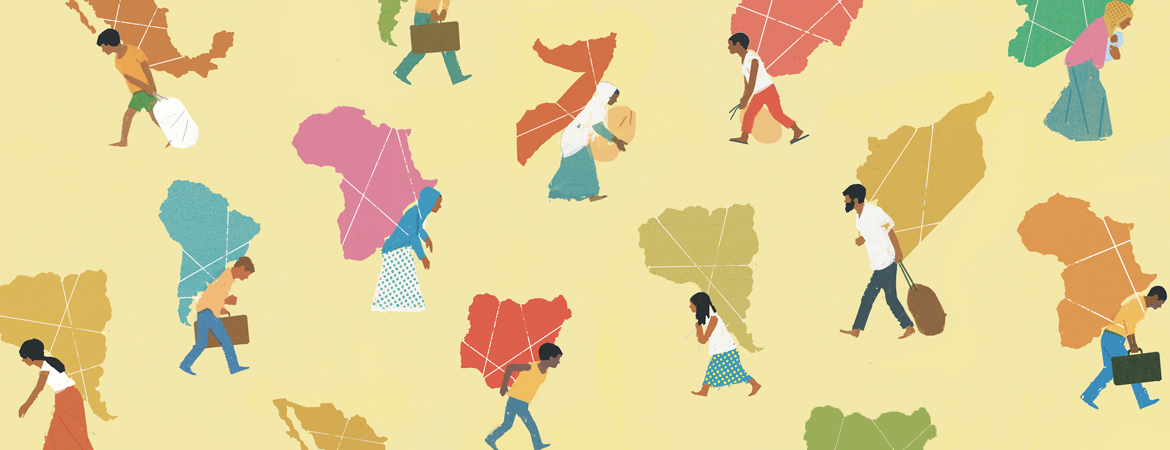
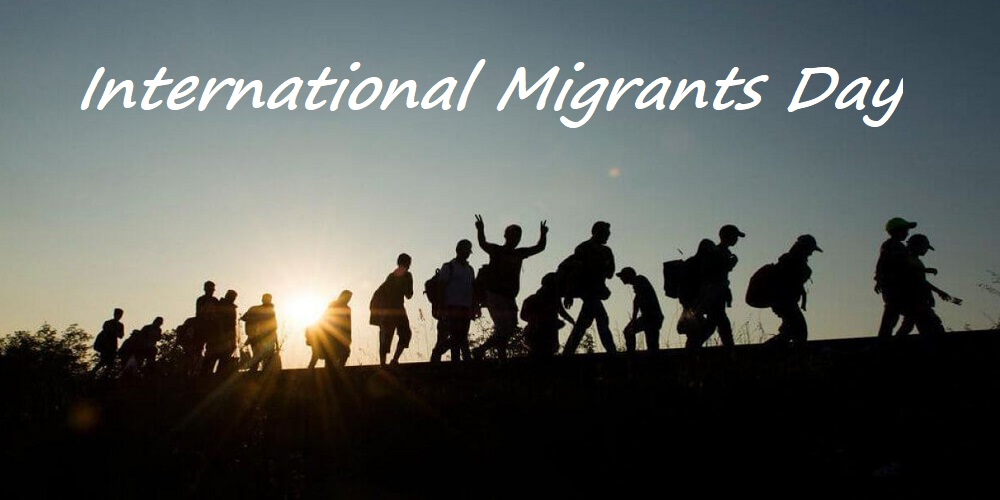
On Saturday, the world will commemorate another International Migrants Day amidst the pandemic. Celebrated since 2000, the International Migrants Day highlights the contributions made by the roughly 272 million migrants, including more than 41 million internally displaced persons, and the challenges they face.

In 1997, Filipino and other Asian migrant organizations began celebrating and promoting 18 December as the International Day of Solidarity with Migrants and the date was chosen because it was on 18 December 1990 that the UN adopted the International Convention on the Protection of the Rights of All Migrant Workers and Members of Their Families.

Since the earliest times, humanity has been on the move. Some people move in search of work or economic opportunities, to join family, or to study. Others move to escape conflict, persecution, terrorism, or human rights violations. Still others move in response to the adverse effects of climate change, natural disasters, or other environmental factors. Migration has been a courageous expression of the individual’s will to overcome adversity and to live a better life. Today, globalisation, together with advances in communications and transportation, has greatly increased the number of people, who have the desire and the capacity to move to other places, but has created challenges and opportunities for societies throughout the world. It also has served to underscore the clear linkage between migration and development, as well as the opportunities it provides for co-development, that is, the concerted improvement of economic and social conditions at both origin and destination.

Today, more people than ever live in a country other than the one in which they were born. According to the IOM World Migration Report 2020, as of June 2019 the number of international migrants was estimated to be almost 272 million globally, 51 million more than in 2010. Nearly two thirds were labour migrants. International migrants comprised 3.5% of the global population in 2019. This compared to 2.8% in 2000 and 2.3% in 1980. While many individuals migrate out of choice, many others migrate out of necessity. According to UNHCR, the number of globally forcibly displaced people worldwide was 79.5 million at the end of 2019, of which 26 million were refugees, 45.7 million people were internally displaced, 4.2 million were asylum-seekers, and 3.6 million were Venezuelans displaced abroad.

Migration draws increasing attention in the world nowadays. Migration is a global phenomenon driven by many forces. These start with aspirations for dignity, safety and peace. The decision to leave home is always extreme, and, too often, the beginning of a dangerous, sometimes fatal journey. The lure of a well-paid job in a wealthy country is a powerful driver of international migration. The attraction has intensified as income differentials among countries continue to grow. This holds true not only regarding the large and growing differentials between high and low-income countries, but also with regard to the more dynamic and the less dynamic developing countries.

Many advanced and dynamic economies need migrant workers to fill jobs that cannot be outsourced and that do not find local workers willing to take them at going wages. Population ageing also underlies this growing demand, as it gives rise to deficits of workers relative to dependants. And as younger generations become better educated, fewer in their ranks are content with low-paid and physically demanding jobs. Migration may reduce wages or lead to higher unemployment among low-skilled workers in advanced economies, many of whom are themselves migrants who arrived in earlier waves. However, most migrants complement the skills of domestic workers instead of competing with them. By performing tasks that either would go undone or cost more, migrants allow citizens to perform other, more productive and better-paid jobs. They also maintain viable economic activities that, in their absence, would be outsourced. By enlarging the labour force and the pool of consumers and by contributing their entrepreneurial capacities, migrants boost economic growth in receiving countries.

At the point of origin, deeper poverty does not lead automatically to higher migration. The poorest people generally do not have the resources to bear the costs and risks of international migration. International migrants are usually drawn from middle-income households. However, when migrants establish themselves abroad, they help friends and relatives to follow and, in the process, the costs and risks of migration fall, making it possible for poorer people, though not for the poorest, to join the stream. Low-skilled migration has the largest potential to reduce the depth and severity of poverty in communities of origin. Mounting evidence indicates that international migration is usually positive both for countries of origin and of destination. Its potential benefits are larger than the potential gains from freer international trade, particularly for developing countries.

Contrary to what some may believe, migrants play a vital role in the global economy. Studies show that immigrants bring growth and innovation in both the countries they come from, and in those they move to. Most advanced nations face a demographic time-bomb as their aging populations and low birth rates mean that they will have to rely on immigrants to drive and sustain economic growth. It is, therefore, in the best interests of these developed nations to support a safe and orderly migration.

So if you have any migrants who live or work near you, take some time and actually get to know them, their hopes and aspirations and who they really are. They are far away from their family and friends in an unknown land just to make a living. Among the migrant workers in our midst could be teachers, authors, poets and businessmen who for reasons beyond our knowledge are forced to do hard labour. So the least we can do is smile and ask them about themselves.

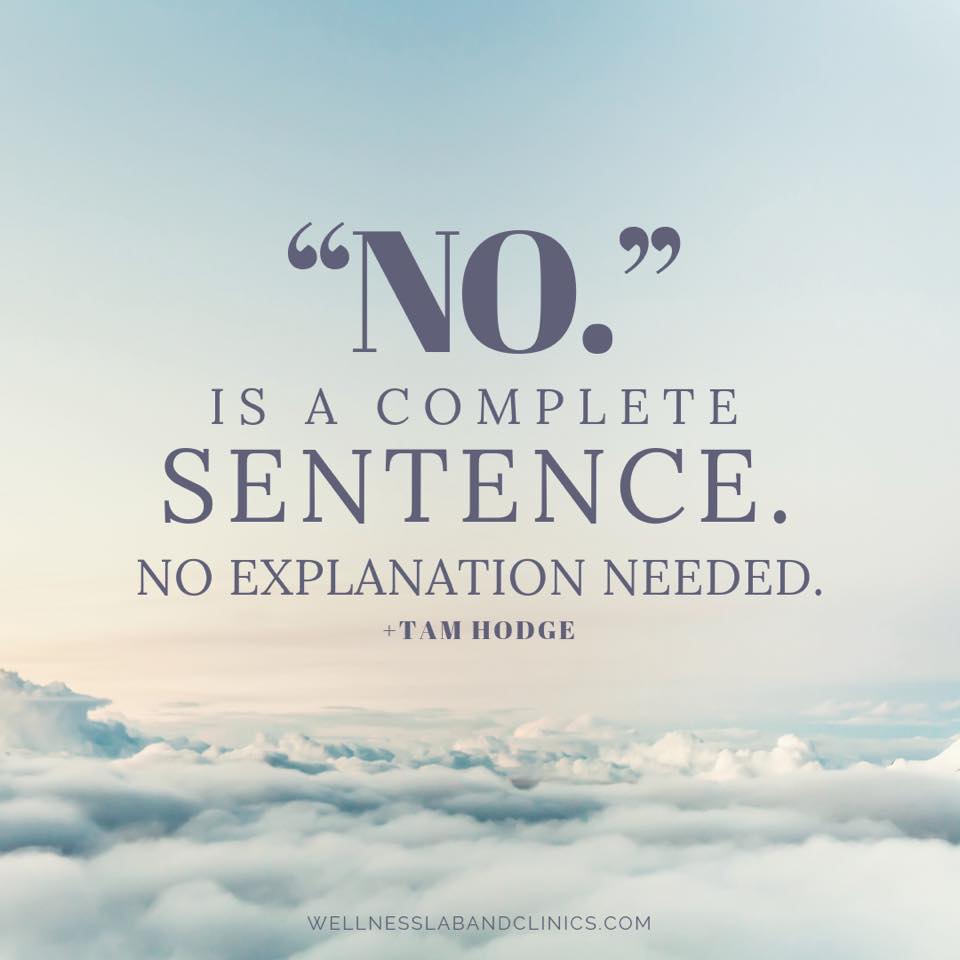
No is a complete sentence

Source

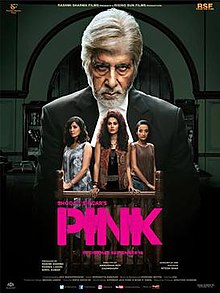
A few months back, I finally saw the Bollywood film, Pink. This film, which is a Hindi language legal thriller about three women who are sexually assaulted and who are then portrayed to be culprits and women of loose character because they live alone, away from their families, dress in not conservative clothes, drink and date. One sentence from the film, uttered by the lawyer Deepak Sehgal, played by Amitabh Bachchan stood out in my mind and the sentence is the title of my post; “No is a complete sentence”

If you think about it, No is indeed a complete sentence. It’s okay to say it whenever we need to, without fear or guilt. Yet many of us find it hard to say no because our boundaries have become so eroded that we scarcely know where we stop and other people begin. We don’t need to justify our actions when we refuse someone’s request. At work, at home and in any situation, when people ask us for help, we usually find it very hard to refuse the request or command. Hence, reluctantly even, we agree to help because we feel guilty in refusing. If we don’t know how to say no to things, then saying yes loses meaning. By saying yes to everything that is asked of us, we are setting ourselves up for failure at some point or the other.

Our need for connection is what instils fear of saying no, because we believe that it will make the people on the other end upset, creating a barrier in our relationship with them. Saying no can also cause cognitive dissonance in us — that uncomfortable feeling in our solar plexus and mind when our actions don’t match up with our words, values, and morals. When we believe ourselves to be a helpful, kind person above all else, and then choose to say no to something helpful and kind, it causes this feeling.

As if this was not enough, our culture places an unrealistic value on the pursuit of busyness. Society tells us that if we aren’t working on something, anything, we are just wasting time. Thus, if the reason we are saying no is so that we can find time to do something for ourselves or, perhaps, even manage to do nothing at all, we feel unworthy. And even when we finally muster up the courage to say no or I can’t, we then feel obligated to offer up an explanation to justify this unfavourable response. And this is why No is a complete sentence.

Saying the word no when someone asks you to do something, and then not following it up with the why may feel odd and even rude. The charged space that word leaves behind is palpable. But learning to say no and letting it hang out there all alone in its glory is a small kind of superpower. Of course, the person getting the no from you will fire back a why when you decline to do what they are asking you to do. If this happens and you feel that stating no is a complete sentence is a bit harsh, try bundling up your courage with a little vulnerability. When pushed for a reason, you could say something on the lines that you are tired or you have other commitments, but more often than not, just saying no will be very liberating. Of course, you may have to give some explanation if it’s at work and your manager pushes you, but keep it as simple as possible so you don’t get into any complicated explanations.

It’s pretty natural that after years of societal and generational impact, no has a distinctively negative connotation and denotation. The No has to be reframed as not being a negative term and we have to begin to think of no not as a solitary decision but in the context of the positive impact saying no has.

Here is what you need to do when you don’t want to do something: say No. That’s no, period, end of the story. If you want to say, No, thank you, that is acceptable, but don’t add anything else to the sentence. However, if you feel it is rude or abrupt by simply stating no, there are many alternative ways to say no without ever uttering the word. One degree of departure from the word No would be saying I can’t. Two degrees of departure would be saying, I’ll get back to you and buying yourself enough time to give yourself a pep talk so that you can politely decline. Three degrees of departure would be saying yes to something else by creating alternatives, kind of like a reverse mind trick. By doing this, you shift the response from a negative one of something you can’t or won’t do to something positive and something you can or are willing to do.

Learning to say no is sort of like learning how to meditate; it’s a habit that you have to cultivate. The more you say it, the easier it gets. The easier it gets, the less guilty you feel. We need to set up personal boundaries around what we are and aren’t willing to accept for our mental stability. And saying no doesn’t just mean declining invitations or saying no to extra work.

Learning to say no isn’t something you only need to do with other people, it’s something you need to learn to say to yourself. Saying no to yourself means creating personal boundaries that will ultimately contribute to your well-being in the long term. Setting up boundaries means recognizing that other people have boundaries, too. It means asking for consent. No is the magic word to getting your life back. Just remember that it is a complete sentence, and act accordingly. Because if you can’t say no, your Yes doesn’t mean anything.

Poem: There’s Something about a Baby

I love watching baby videos, I mean who doesn’t right. A few months back, I caught this documentary series on Netflix called Babies that explores the science that shows how infants discover life during their very first year. It was so fascinating, but what I realised that I was I kept smiling everytime I saw the babies onscreen. By the time I had finished this series, I knew I had to write this poem.

There’s Something about a Baby

There’s something about a baby
That brings a smile to the face
That pure laugh, that sense of glee
They quickly find a spot in your heart’s special place

Like an angel sent from above
They’re sent to fill your heart with love
To hold and to rock and cuddle and hug tight
To smother with kisses, day and night

There’s something about a baby
That brings forth all of your protective instincts
You want to keep them wrapped up and cozy
Safe from all of the world’s harm within the heart’s precincts

They fill your hearts and home with love and joy
So much so you wonder how you survived before them
Whether it’s a baby girl or baby boy
Their very existence becomes an ode, a poem

There’s something about a baby
That makes you want to guide, cherish and make them grow
Warm and huggable, soft and cuddly
To show them everything that you know

Babies are love, babies are a lovable bundle
Babies are our present, babies are our future
They are sent to us from above, they are our angels
Babies are what makes us who we are

International Civil Aviation Day

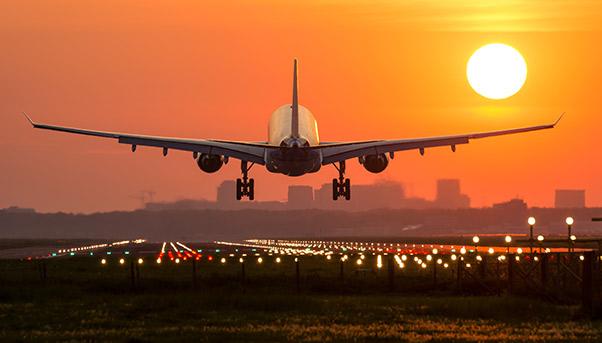
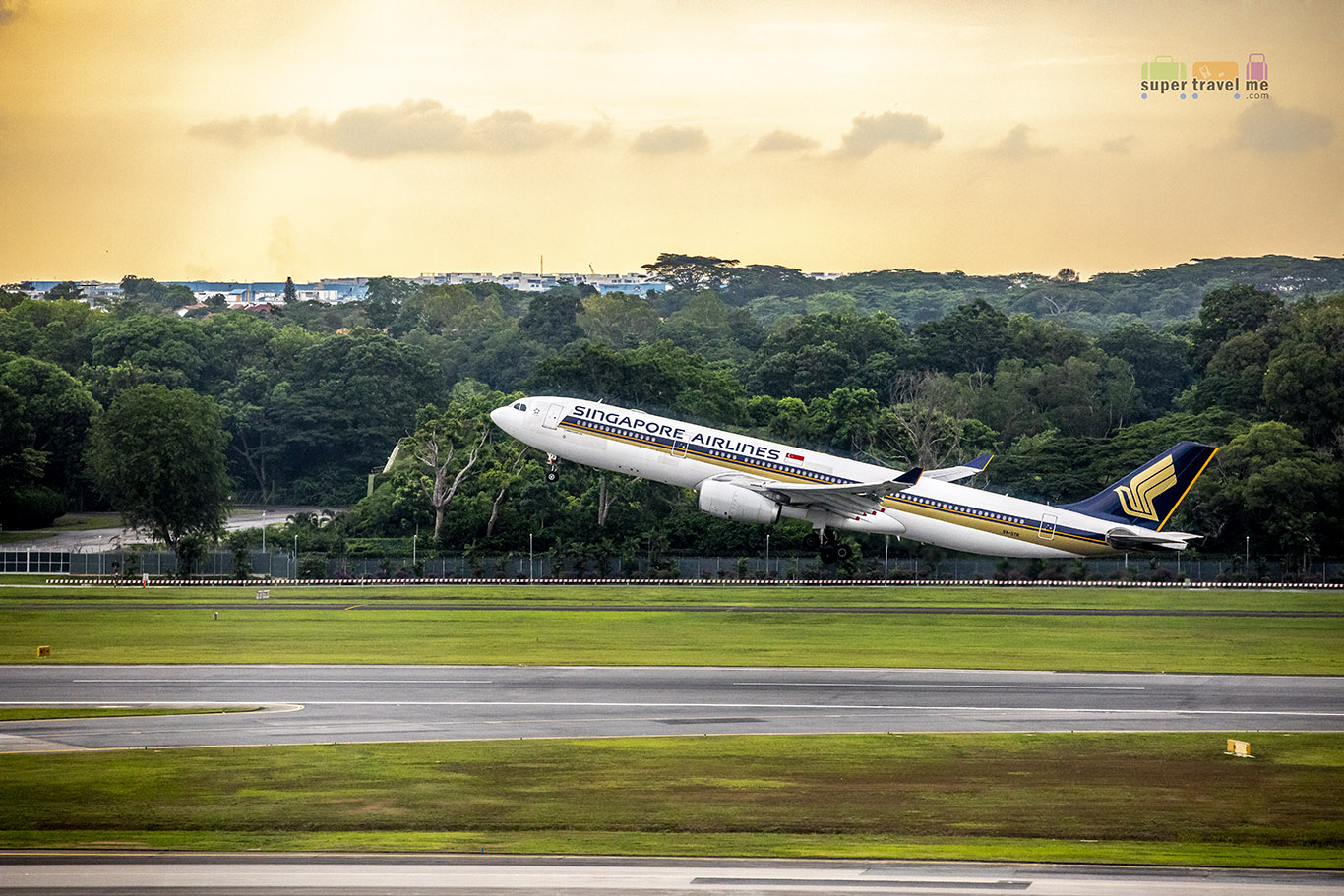
Like most toddlers, BB was fascinated by planes, but unlike most boys, this fascination has carried on as he grew up and has propelled him to his area of study and where he is today. But today, with the airline industry in shambles due to the ongoing pandemic, I wonder if he will continue in this field or will make a pivot, but that’s a topic for another day. So, when I heard about this day devoted to civil aviation, I knew I had to find out more.

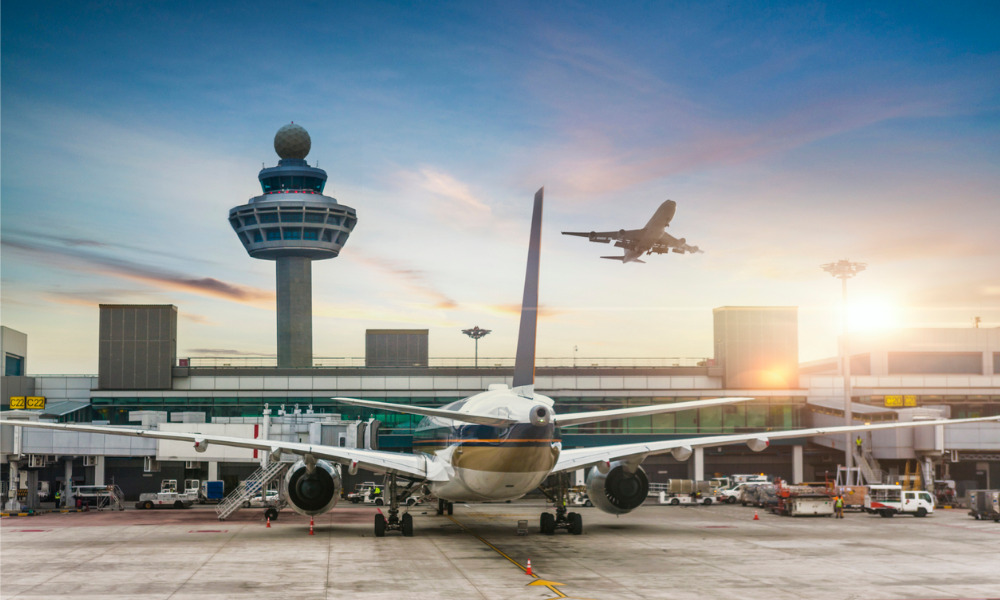
Tomorrow is the International Civil Aviation Day which has been celebrated on 07 December each year since 1994 by the International Civil Aviation Organisation or ICAO. The ICAO is an autonomous UN Body accountable for keeping up with the safety standards of international aviation. The date was chosen because December 07 1994 was the 50th anniversary of the signing of the Convention on International Civil Aviation. The Convention on International Civil Aviation, also known more popularly as the Chicago Convention, was signed by delegates from 54 countries. This defining international agreement has since permitted the global civil aviation system to develop peacefully and in a manner benefitting all peoples and nations of the world. The purpose of the day is to recognise the importance of aviation, especially international air travel, to the social and economic development of the world and the day is intended is to help generate and reinforce worldwide awareness of the importance of international civil aviation to the social and economic development of countries, and of the unique role of ICAO in helping countries to cooperate and realise a global rapid transit network at the service of all mankind. The importance of aviation as an engine of global connectivity has never been more relevant to look to international flight as a fundamental enabler of global peace and prosperity.

Seventy-five years after ICAO’s foundation, the International Civil Aviation network carries over four billion passengers annually. The global Air Transport sector supports 65.5 million jobs and USD 2.7 trillion in global economic activity, with over 10 million women and men working within the industry to ensure 120,000 flights and 12 million passengers a day are carried safely to their destinations. The wider supply chain, flow-on impacts and jobs in tourism made possible by air transport show that at least 65.5 million jobs and 3.6 per cent of global economic activity are supported by the aviation industry according to research by the Air Transport Action Group (ATAG).

Civil aviation, which includes all non-military aviation, both private and commercial plays a key role in human affairs. It lets us discover our world’s wondrous geographic and cultural diversity, enables us to learn about and benefit from each other and connects societies through global travel and trade, advancing access to food, education and healthcare. Today COVID-19 has severed international connections by air, cut off businesses from clients, kept tourists from destinations and disproportionately affected the vulnerable, it has also disrupted the operations and finances of airlines and airports worldwide, threatening their capacity to assure the global supply of medicines, vaccines, humanitarian aid and other vital goods. Aviation is also an energy-guzzling industry with emissions from the industry accounting for more than 2% of the global total, ranking it in the top ten emitters, so this time can be spent in thinking of ways to make the industry greener.

Every five years, coinciding with ICAO anniversaries, the ICAO council establishes a special anniversary theme for International Civil Aviation Day. Between these anniversary years, Council representatives select a single theme for the full four-year intervening period. The theme until 2023 is Advancing Innovation for Global Aviation Development. Aviation is an important engine of our world and will be playing a critical role in lifting the world to recovery from COVID-19. It connects us and allows us to meet family and friends and also broaden our horizons and our minds. To everyone in this industry, especially in these trying times, here’s hoping that times change for the better and the skies are once again filled with planes transporting people and goods across the seas and land.