Mumbai Memories

Source

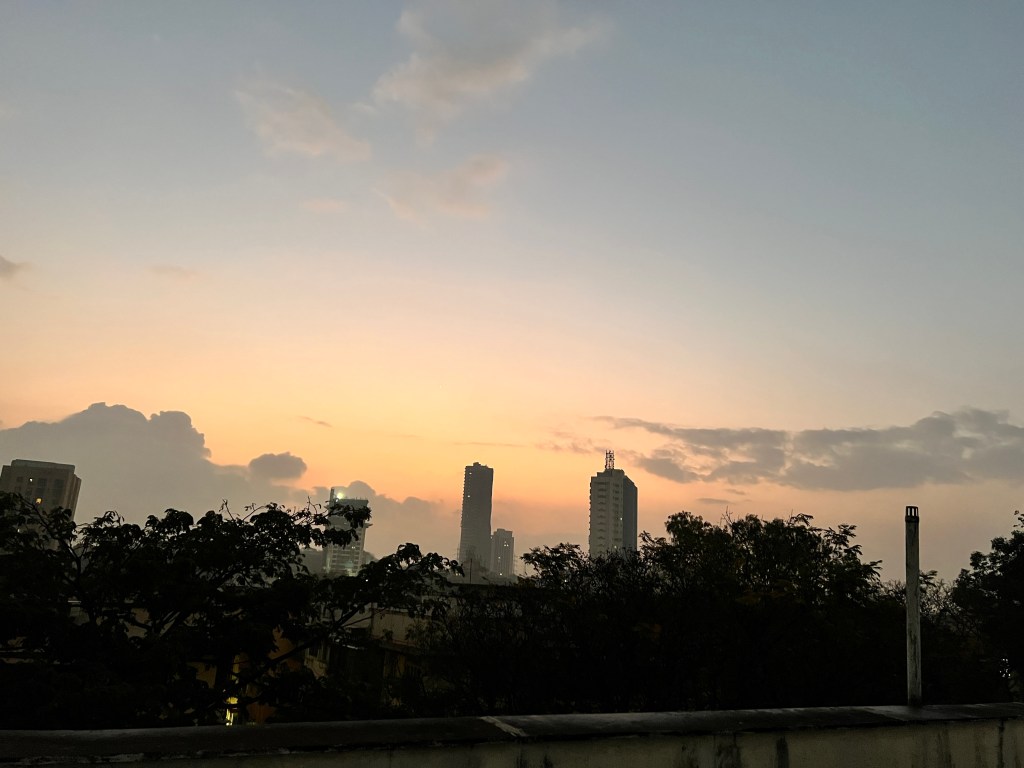
A couple of days back, I was struggling to write something when I chanced upon some writing prompts. One of them stood out for me which said to write about a time when the community came together and displayed solidarity. And since I am in Mumbai right now, this prompt seemed apt to showcase the Mumbai spirit that I have witnessed.

The first experience was during the bomb blasts that shook the city in 1993. This was the first time something like this had happened. On March 12, 1993, a series of bomb blasts brought Mumbai, then known as Bombay, to a wailing stop. Twelve bombs went off within two hours and ten minutes that rocked several parts of the city, killing over 250 people. The explosions were the first large-scale coordinated terror attack to be carried out in the world and were the first terror attack where RDX was used as an explosive. The first bomb exploded in the basement of the Bombay Stock Exchange (BSE), followed by blasts in the Fisherman’s Colony in Mahim causeway, the Air India Building, Zaveri Bazaar, Hotel Juhu Centaur, Plaza Cinema, Hotel Sea Rock, Century Bazaar, Katha Bazaar, Worli and the Passport Office, over the next few hours.

My sister and I were in college then with my sister’s classmates coming from different parts of the city as it was a specialised college. There was chaos in the city and public transportation was shut down and if I remember correctly the city came under curfew. Because of the blasts, telephone exchanges were disabled or rather restricted. We could make calls to only numbers from the same exchange or possibly the next one. Educational institutions and offices all shut down and everyone was asked to go home and stay home. My sister called home in a fix because two of her classmates stayed in different parts of the city, and not at a walkable distance, so they were worried they could not get home. So we asked them to come home and my mum prepared extra food for the girls. They stayed in our home for the next two or three days until their families could pick them up. So how did the community come into the picture? Since we could not call their homes to let them know they were fine in our home, we started a phone chain. We called as many numbers as we could dial and in turn, asked them to try the girls’ numbers or if they could not get through, try to call as many people as they could and ask them, in turn, to try and call the girls homes. Everybody we called and they in turn called did this phone chain and by the end of the day, the parents of the girls knew about their whereabouts. This was the first time I saw what everyone always talks about the spirit of the city. Years later when I was working at my first job, I learnt from the old-time staff there that a bomb had blasted just meters away and they told me how they found burnt and charred pieces of flesh just outside the office complex. Everyone ran outside when heard the blast and tried to help as much as possible, both in terms of getting medical aid to those who needed it as well as food and water.

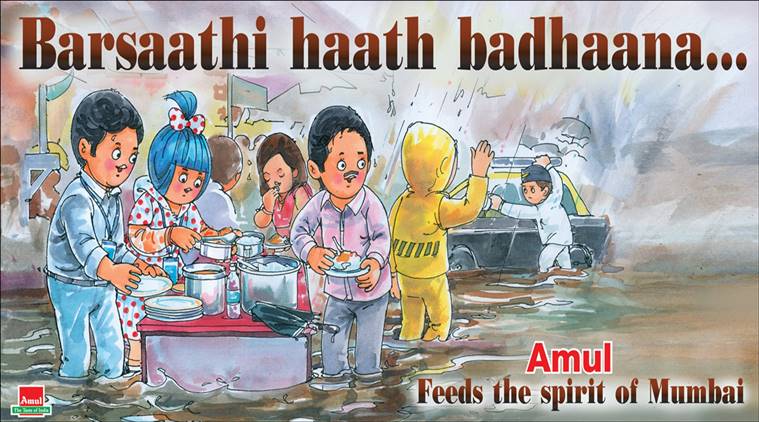
The next episode is a compilation of how people helped each other during the monsoon floodings that affect Mumbai every year. Since Mumbai is more or less reclaimed low lying land with an antiquated sewage system, inherited from the British during their rule, flooding during the monsoon season is par on course. The first one was in one of my first years of working. It had been raining for the whole day and by the time it was time to go home, the situation had become dire. I got on the bus and for some reason, fell asleep. When I woke up about 30 minutes later, I found that we were barely 10 minutes into a 30-minute journey and the bus had completely stopped. After waiting for another 10 minutes, I decided to just get off the bus and start walking. After walking for a while on a bridge, we realised that the bottom of the bridge was flooded and to add insult to the injury, there were open potholes. But then as we reached the bottom of the bridge, we found people from the nearby buildings helping those walking and walked them through the potholes, holding the hands of the elderly and those who had difficulty in walking. There were also women from the area with pots of hot tea and biscuits passing them around to the people. This was the pur Bombay spirit in action.

Another time was yet again when the rains played havoc in the city. This was either in 1999 or 2000 and I was working out of a small office of our company in south Mumbai. As before, it had started raining and the others in the office wanted to go back home. As the seniormost person in the office, I had to call the head office to get permission to leave around 2 pm. They gave us that permission after an hour after checking the situation. My sister who was also working close by suggested we take a taxi to get home and so we did. But because many areas of the city were waterlogged, we could only get as far as Dadar West, near Plaza to those who know the place. The taxi refused to move further because of the flooding and so we had to get out and walk. I remember at Khodadad Circle, the water was as high as my waist and I am not a very short person. Walking or rather wading in waist-deep water is pretty hard and by the time we got out of that area, we were exhausted. But there were so many people looking out for others during that hour-long walk that it didn’t feel so bad. A cousin who was doing an internship was stuck in Dadar station because the trains stopped running. After waiting for hours for the trains to restart, she finally called my mother and came to our home because there was no way she would make it to her house in one of the northern suburbs. Another friend who also lived in a far-flung suburb tried to get a lift from a colleague to get to a point from where she could go home was stuck in traffic for almost 7 hours with the car not moving an inch. Some people in the buildings nearby then came down and asked women and children to come up to their homes to spend the night because it would not be safe and that’s how she spent the night.
Source

I could go on and on about stories about how Mumbai’s people are super resilient and always come together, especially when there is a tragedy, but I think these stories showcase this wonderful city with a heart of gold. Mumbai is my hometown and even though I no longer live here, it will always be home and have a very special place in my heart.

In My Hands Today…

Half Lion: How P.V. Narasimha Rao Transformed India – Vinay Sitapati

When P.V. Narasimha Rao became the unlikely prime minister of India in 1991, he inherited a nation adrift, violent insurgencies, and economic crisis. Despite being unloved by his people, mistrusted by his party, and ruling under the shadow of 10 Janpath, Rao transformed the economy and ushered India into the global arena.

With exclusive access to Rao’s never-before-seen personal papers and diaries, this definitive biography provides new revelations on the Indian economy, nuclear programme, foreign policy and the Babri Masjid. Tracing his early life from a small town in Telangana through his years in power, and finally, his humiliation in retirement, it never loses sight of the inner man, his difficult childhood, his corruption and love affairs, and his lingering loneliness. Meticulously researched and brutally honest, this landmark political biography is a must-read for anyone interested in knowing about the man responsible for transforming India.

Pet Peeves: Small irritations that can really annoy

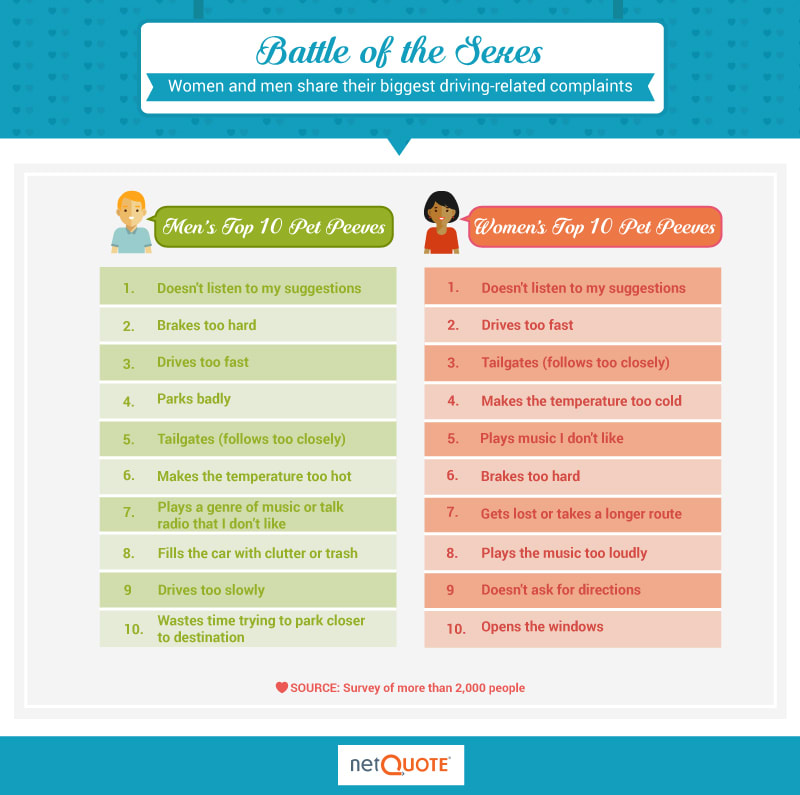
You are in a restaurant or café and suddenly the person at the table next to you starts eating their food with loud noises. You instantly get triggered and irritated. That’s a pet peeve!

So what is a pet peeve? A pet peeve, pet aversion, or pet hate is a minor annoyance that an individual finds particularly irritating to them, to a greater degree than would be expected based on the experience of others. Pet peeves aren’t things that are so inappropriate and rude that they necessarily warrant taking action, but they’re generally bothersome in a way that will make one roll their eyes in frustration. While pet peeves are essentially trivial, hence the name, they are an evolutionary remnant of human beings’ survival skills. The feeling one gets when they are peeved was the body’s way of alerting a person to danger in the past, that something is wrong, triggering a flight response. They’re not as life-threatening anymore in modern society, but the discomfort remains.

The noun peeve, meaning an annoyance, is believed to have originated in the United States early in the twentieth century, derived by back-formation from the adjective peevish, meaning “ornery or ill-tempered”, which dates from the late 14th century. The term pet peeve was introduced to a wide readership in the single-panel comic strip The Little Pet Peeve in the Chicago Tribune during the period 1916–1920 and was created by the cartoonist Frank King, who also created the long-running Gasoline Alley strip. King’s “little pet peeves” were humorous critiques of generally thoughtless behaviours and nuisance frustrations.

In their book Annoying: The Science of What Bugs Us, Joe Palca and Florence Lichtman explore the history of research behind pet peeves. According to the authors, the three U’s are how we identify annoyances. The three Us are Unpleasant, which is the annoying stimulus is something we don’t like, Unpredictable because we have no way of determining when the annoying stimulus will happen and Uncertain Duration because it is repetitive and will continue for an indefinite amount of time.

The three types of annoyances are social annoyances which are caused by the violation of social norms, environmental annoyances which come from the sounds and smells of our environment and interpersonal annoyances that are caused by individuals around us, especially those with interact with frequently.

But why do we become annoyed in the first place? The truth is science hasn’t quite figured it out. According to some scientists, it could be a remnant of the evolutionary response where our brains are shocked into a focus mode when we become annoyed and we become more aware of our surroundings and pay greater attention to the stimulus that is annoying us which is nature’s way of protecting us, something that ancient man needed more than today’s humans.

Everyone has some pet peeve or the other and here is a compilation of some of the most irritating habits that trigger most people and includes some of my pet peeves.

  • Loud chewing, people chewing with their mouths open or generally making any noises while eating.
  • Chronic lateness. As someone who is always on time, this tells me that my time is not as important as theirs. Of course, sometimes things happen, but if they don’t let me know they are late, it is even more irritating.
  • People who shuffle their feet while walking
  • The screeching of fingernails on a blackboard.
  • People who block the entrance to the train or bus and do not allow others to board or alight.
  • Those who cough or sneeze without covering their mouths.
  • People that clip their nails at work, while sitting at their desks.
  • People who walk slowly or stop suddenly in the middle of the sidewalk.
  • People who cut queues. This is not an issue in Singapore, but when I am in India, this makes me want to grit my teeth in frustration.
  • People who take ages to get through airport security and don’t know the rules even today.
  • People who stand on the left side of an escalator. Right is for standing! Left for walking!
  • Misspelling my name when it’s right there in the email staring you in the face.
  • Online stores that charge for shipping.
  • People who talk over you when you’re still in the middle of the sentence.
  • Passive-aggressive behaviour. If you have something you want to say, just say it.
  • People on public transport who will not use their headphones and instead choose to let the whole bus or train carriage their choice of music or personal conversations.
  • When people repeatedly hit the elevator button, as if that’ll make the elevator arrive sooner.
  • The reply-all that asks to be taken off of an email thread.
  • Receiving emails from a colleague with the boss copied.
  • People who abbreviate things that don’t need to be shortened.
  • Excessive public displays of affection.
  • Micro-Management at work
  • Staring at someone’s Phone
  • Standing too close to another person.
  • Talking to someone who has headphones on
  • Cracking knuckles.
  • Pushy salespeople and especially those salespeople who accost you while one is walking.
  • Being constantly pessimistic.
  • Looking at the phone during a conversation.
  • Leaving the toilet seat up.

In a perfect world, everyone would be mindful of their actions and habits not to be annoying. Sadly, some people don’t care about others and continue with their irritating ways. Instead of perpetually complaining, there are measures you can do to keep pet peeves from affecting your mood and disposition. The first thing you can do is admit what is bothersome. Being in denial and dismissive about what’s wrong will only delay the inevitable anger and frustration. It’s better to take the bull by the horns and be honest, even if it’s with yourself. Next, you can address the source of the pet peeve and open the lines of communication. This is important if the person who annoys you is someone you live or work closely with. Remember to be kind and polite when telling them. Sometimes, people are unaware of their quirks and are willing to accommodate your request. Lastly, you can choose to accept the situation that you can’t control everything. Take deep breaths when it happens or remove yourself from the area. Don’t let a simple pet peeve ruin your day.

So what are your pet peeves? Did they make my list?

2022 Week 03 Update

Namaskar and hello from Mumbai! I landed in Mumbai late last week after more than two years on what is my last trip to my childhood home. I am here to help my parents clear up the house they have lived together for fifty years and where my father and his parents and siblings have lived for more than seventy years and move them to their new home in a different state. My mother’s sister also stays in the same place they will be living in, so there’s some relief for me and my sister in case of any emergencies. The place is also equipped with a nurse on call 24/7 and in cases of medical emergencies, they have an ambulance that will take the patient to a nearby hospital with which they have a tie-up. Any trips after this to Mumbai will be as a visitor and one where I will either live in a hotel or someone else’s home. As my flight landed in Mumbai, I felt both happiness and sadness.

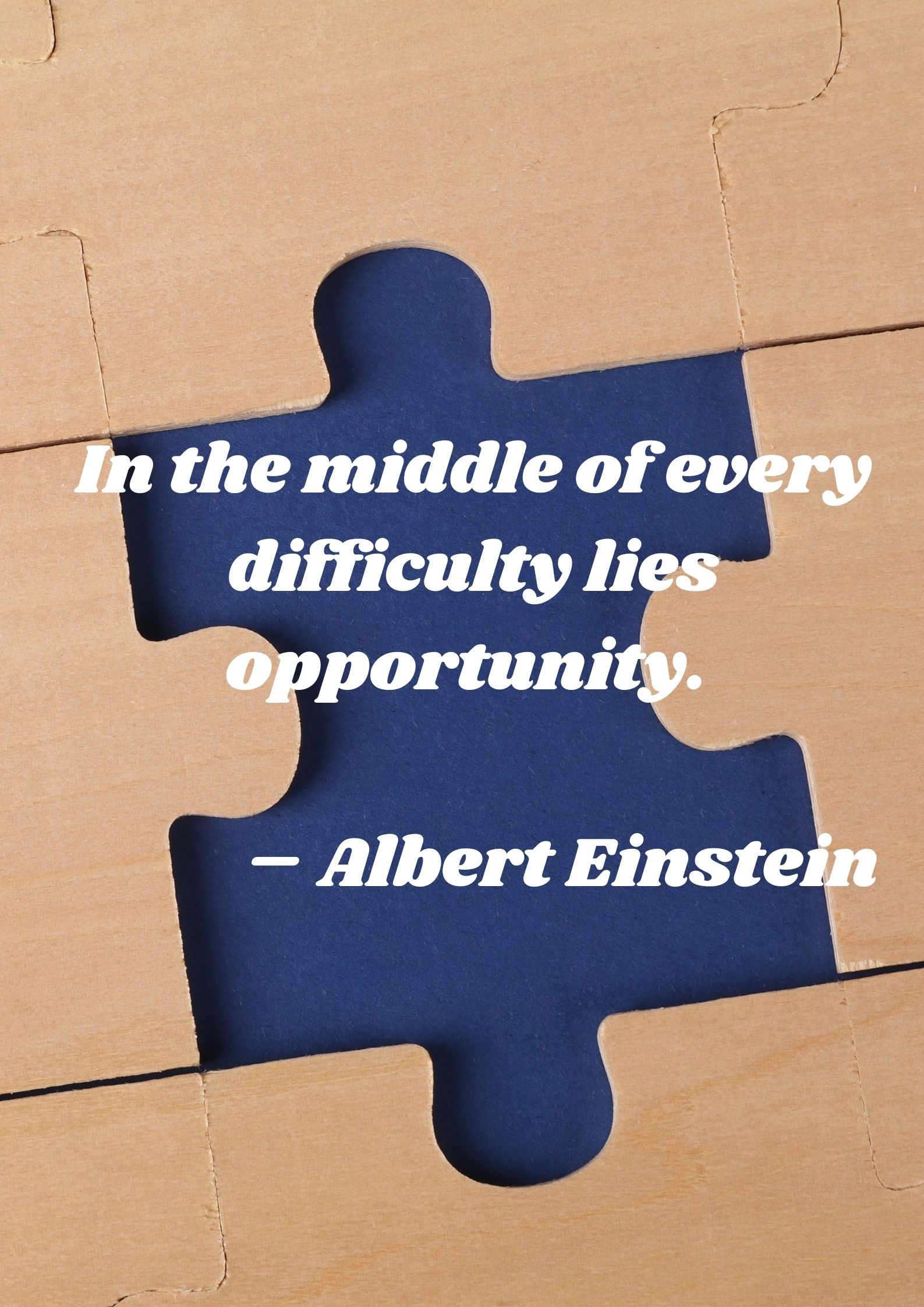
As the world is trying to battle COVID, today’s quote from Albert Einstein is so apt. Einstein says that amid every difficulty lies an opportunity. This is part of a larger quote attributed to him which says Out of clutter, find simplicity. From discord, find harmony. In the middle of difficulty, lies opportunity. What this means is that when one is in trouble and difficulty, in the middle of problems, if we find the core of the issue we are facing, that will give us the key to that issue. It also means that when one faces challenges, one has a greater possibility of growth and understanding. If things are easy, one does not change one’s preconceptions or alter one’s view of life.

So take care and stay safe. I hope to remain safe and COVID-free during my time in India, so I can return home without any complications. Please get vaccinated if you still are unvaccinated and get the booster shots if eligible as this has proven to help with the virus.

In My Hands Today…

Genghis Khan and the Making of the Modern World – Jack Weatherford

The name Genghis Khan often conjures the image of a relentless, bloodthirsty barbarian on horseback leading a ruthless band of nomadic warriors in the looting of the civilized world. But the surprising truth is that Genghis Khan was a visionary leader whose conquests joined backward Europe with the flourishing cultures of Asia to trigger a global awakening, an unprecedented explosion of technologies, trade, and ideas. In Genghis Khan and the Making of the Modern World, Jack Weatherford, the only Western scholar ever to be allowed into the Mongols’ “Great Taboo”—Genghis Khan’s homeland and forbidden burial site—tracks the astonishing story of Genghis Khan and his descendants, and their conquest and transformation of the world.

Fighting his way to power on the remote steppes of Mongolia, Genghis Khan developed revolutionary military strategies and weaponry that emphasized rapid attack and siege warfare, which he then brilliantly used to overwhelm opposing armies in Asia, break the back of the Islamic world, and render the armored knights of Europe obsolete. Under Genghis Khan, the Mongol army never numbered more than 100,000 warriors, yet it subjugated more lands and people in twenty-five years than the Romans conquered in four hundred. With an empire that stretched from Siberia to India, from Vietnam to Hungary, and from Korea to the Balkans, the Mongols dramatically redrew the map of the globe, connecting disparate kingdoms into a new world order.

But contrary to popular wisdom, Weatherford reveals that the Mongols were not just masters of conquest, but possessed a genius for progressive and benevolent rule. On every level and from any perspective, the scale and scope of Genghis Khan’s accomplishments challenge the limits of imagination. Genghis Khan was an innovative leader, the first ruler in many conquered countries to put the power of law above his own power, encourage religious freedom, create public schools, grant diplomatic immunity, abolish torture, and institute free trade. The trade routes he created became lucrative pathways for commerce, but also for ideas, technologies, and expertise that transformed the way people lived. The Mongols introduced the first international paper currency and postal system and developed and spread revolutionary technologies like printing, the cannon, compass, and abacus. They took local foods and products like lemons, carrots, noodles, tea, rugs, playing cards, and pants and turned them into staples of life around the world. The Mongols were the architects of a new way of life at a pivotal time in history.

In Genghis Khan and the Making of the Modern World, Jack Weatherford resurrects the true history of Genghis Khan, from the story of his relentless rise through Mongol tribal culture to the waging of his devastatingly successful wars and the explosion of civilization that the Mongol Empire unleashed. This dazzling work of revisionist history doesn’t just paint an unprecedented portrait of a great leader and his legacy, but challenges us to reconsider how the modern world was made.