

Thiruooragam Temple, Kanchipuram, Tamil Nadu
In Kanchipuram, where many Divya Desams sit close together within the sacred rhythm of the town, Thiruooragam stands with a story that reaches far beyond its walls. The presiding deity here is Ulagalantha Perumal, a towering form of Vishnu representing the moment when the Lord measured the worlds. The goddess is Amudhavalli Thayar. The name Thiruooragam itself is associated with the place where the Lord manifested in a form so vast that the entire universe seemed to rest within his stride. Unlike many temples where the deity stands in a composed posture, the image here captures a moment of expansion. One foot stands firmly on the ground while the other rises upward, reminding devotees of the cosmic act that reshaped the balance of power between gods and kings.
The legend behind this temple comes from the well-known Vamana avatar. The demon king Mahabali had grown powerful and generous, ruling his kingdom with confidence and pride. Although he was not cruel, his growing influence unsettled the gods, who feared that the balance of the universe was shifting too far in one direction. Vishnu appeared before Mahabali as Vamana, a small Brahmin boy, and asked for three steps of land as alms. Mahabali, amused by the modest request, agreed without hesitation. In that instant, the boy transformed into Trivikrama, the vast cosmic form. With the first step, he covered the earth, with the second, he spanned the heavens, and there was no space left for the third. Realising the divine presence before him, Mahabali bowed his head and offered it for the final step. In that moment, the Lord did not merely claim the worlds; he restored balance.
Inside the temple, the image of Ulagalantha Perumal reflects that exact moment. The idol is unusually tall, filling the sanctum in a way that immediately commands attention. One leg is lifted high, symbolising the stride that measured the heavens. Yet the expression on the deity’s face remains calm, almost compassionate. The form reminds devotees that divine power is not displayed for domination but for restoring harmony. Amudhavalli Thayar’s shrine nearby adds a softer dimension to the temple’s atmosphere. Her presence balances the dramatic form of Trivikrama with reassurance and grace.

Historically, Thiruooragam carries deep roots in the sacred history of Kanchipuram. The temple likely developed during the Pallava period, when the city flourished as a center of both religion and scholarship. Later Chola rulers expanded the structure, strengthening the stone foundations and supporting regular worship through royal patronage. Vijayanagara kings contributed additional mandapams and architectural refinements. Over time, the temple complex also came to house several other Divya Desam shrines within its walls, making it an important spiritual centre for pilgrims visiting Kanchipuram.
Architecturally, the temple reflects the grandeur associated with the Trivikrama form. The sanctum is designed to accommodate the height of the idol, creating a sense of vertical space that draws the eye upward. The gopuram at the entrance rises prominently above the surrounding streets, signaling the temple’s presence from a distance. Inside, the mandapams provide space for rituals and festivals, while the stone pillars carry carvings that reflect centuries of craftsmanship. Despite this scale, the temple does not feel overwhelming. Instead, it feels ordered and balanced, much like the story it represents.
The daily rituals at Thiruooragam follow the Vaishnavite tradition, with worship conducted throughout the day in a steady sequence. Devotees gather in the morning for the first prayers, return for alankaram and offerings, and often visit again in the evening when lamps illuminate the sanctum. During Vaikunta Ekadasi and other major festivals, the temple becomes especially vibrant. Processions carry the deity through the streets, and the sight of Ulagalantha Perumal moving through the town reinforces the image of the Lord whose stride encompassed the universe.
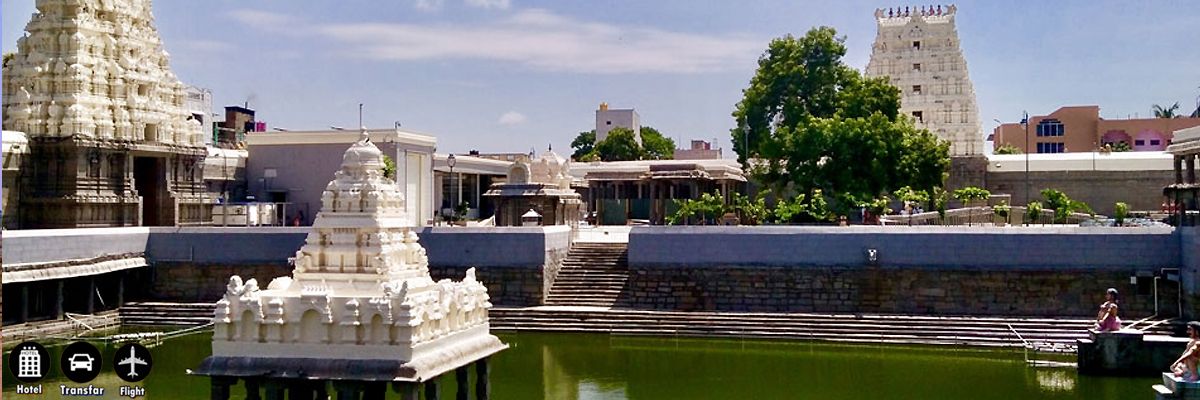
For pilgrims visiting Kanchipuram’s Divya Desams, Thiruooragam often becomes one of the most memorable stops. The moment one steps into the sanctum, the scale of the idol changes the experience. The raised foot creates a sense of motion frozen in time. Standing there, devotees often reflect on the deeper meaning of the story. Mahabali was not destroyed but transformed through surrender. The act of measuring the world became a reminder that humility restores balance where pride once stood.
Culturally, Thiruooragam holds an important place in the hymns of the Alvars. Their verses celebrate the Lord who expanded beyond human comprehension while still remaining compassionate toward those who recognised him. These hymns continue to be recited in the temple, connecting modern worshippers with the devotional voices of the past. The temple also plays a central role in the Divya Desam pilgrimage circuit within Kanchipuram, where several sacred shrines exist within walking distance of one another.
In modern times, Thiruooragam continues to function as a living temple within the city’s spiritual landscape. Renovations have preserved the structure while allowing pilgrims to move through the complex comfortably. Visitors arrive throughout the year, some following the Divya Desam circuit and others drawn by the iconic form of Ulagalantha Perumal. Despite the steady flow of devotees, the sanctum retains its quiet gravity.
Thiruooragam ultimately represents the moment when divine humility revealed infinite power. Ulagalantha Perumal’s raised foot reminds devotees that the universe itself rests within the reach of the divine. Yet the story also carries a deeper lesson. Mahabali’s surrender transformed defeat into grace. In the wider Divya Desam journey, this temple stands as a reminder that true balance emerges when pride gives way to humility, and when the vastness of the divine is recognised in a single step.
Thiruvekka Temple, Kanchipuram, Tamil Nadu
Among the many Divya Desams spread across Kanchipuram, Thiruvekka holds a special place because of the deeply personal relationship it reflects between the devotee and the divine. The presiding deity here is Yathothkari Perumal, also known as Sonna Vannam Seidha Perumal, with Komalavalli Thayar as the goddess. The name Yathothkari comes from a Sanskrit phrase meaning “the one who acts exactly as requested,” while the Tamil name carries the same idea even more clearly: the Lord who did exactly what he was told. In a temple town filled with stories of cosmic acts and philosophical revelations, Thiruvekka speaks about something quieter and more intimate: the moment when devotion becomes so sincere that the divine responds immediately.
The story behind the temple centres on the great Alvar saint Thirumazhisai Alvar and his devoted disciple Kanikaannan. According to tradition, Kanikaannan once refused to praise the local king in the manner expected of court poets. Angered by this refusal, the king banished him from the city. When Thirumazhisai Alvar heard of his disciple’s exile, he refused to remain in the city without him. Standing before the deity in the temple, the Alvar addressed the Lord directly and asked him to roll up his serpent bed and leave the town as well. The request was not dramatic or angry. It was simply spoken with unwavering devotion. And according to the legend, the Lord obeyed. Vishnu rose from his reclining position, folded the serpent couch of Adisesha, and followed the Alvar and his disciple out of Kanchipuram.
As the story goes, the departure of the deity plunged the city into darkness and unrest. Without the Lord’s presence, prosperity and harmony faded quickly. Realising his mistake, the king hurried to seek forgiveness and begged the Alvar to return. Thirumazhisai Alvar then turned once again to the Lord and asked him to come back to the temple. Just as before, the Lord obeyed immediately. Because Vishnu acted exactly according to the devotee’s words, he came to be known as Sonna Vannam Seidha Perumal, the Lord who did as he was told. The temple at Thiruvekka preserves this story not as a display of power but as an expression of deep trust between devotee and deity.
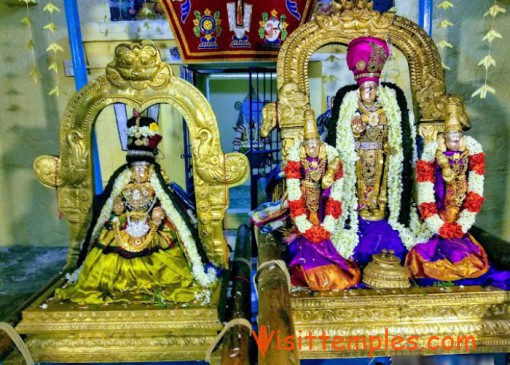
Inside the sanctum, the form of the Lord reflects another unusual feature. Yathothkari Perumal reclines on Adisesha, but unlike most reclining Vishnu idols that face east or west in conventional orientation, this deity lies in a reversed direction. Tradition says this posture reflects the moment when the Lord quickly rose and moved to follow the Alvar, changing position in response to the devotee’s command. The image captures a subtle sense of movement within stillness. Even while resting, the Lord appears ready to respond.
Historically, Thiruvekka is among the oldest Vaishnavite shrines in Kanchipuram. The temple likely originated during the Pallava period, when the city flourished as a centre of art, philosophy and temple building. Later Chola rulers expanded and strengthened the structure, adding stone prakarams and supporting regular rituals. The Vijayanagara period brought further architectural additions, including mandapams and structural reinforcements. Despite these developments, the temple never grew into a monumental scale. Its strength lies in the intimacy of its story rather than the size of its complexity.
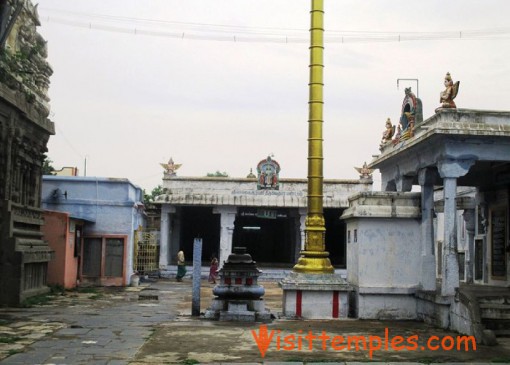
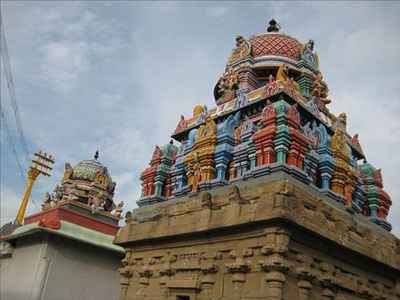
Architecturally, the temple reflects the quiet dignity typical of many Kanchipuram shrines. The entrance gopuram is modest, and the courtyard leads gently toward the sanctum without elaborate distractions. The focus remains firmly on the reclining form of Yathothkari Perumal. Komalavalli Thayar’s shrine adds a gentle warmth to the temple atmosphere. Her presence balances the story of devotion and obedience with compassion and grace.
Daily worship at Thiruvekka follows the Vaishnavite tradition, with rituals unfolding through the day in a steady rhythm. Morning prayers open the temple, followed by alankaram and offerings. Evening aradhanai brings devotees back together as lamps illuminate the sanctum. Festivals such as Vaikunta Ekadasi and the celebrations connected to Thirumazhisai Alvar draw larger gatherings, during which the story of the Alvar and Kanikaannan is retold and remembered.
The pilgrimage experience at Thiruvekka often feels deeply personal. Visitors walking through Kanchipuram’s Divya Desam circuit frequently arrive here after seeing temples associated with cosmic events or philosophical teachings. In contrast, this temple offers a different kind of reflection. Standing before the reclining Lord, devotees often think about the relationship between prayer and response. The story suggests that the divine does not remain distant when devotion is sincere.
Culturally, Thiruvekka holds an important place in the hymns of the Alvars. Thirumazhisai Alvar’s connection with the temple makes it especially significant in the Sri Vaishnavite tradition. His life and poetry emphasise unwavering devotion and the idea that divine grace responds to true faith rather than social position or ritual complexity. The temple, therefore, continues to inspire devotees who believe that sincerity matters more than formality.
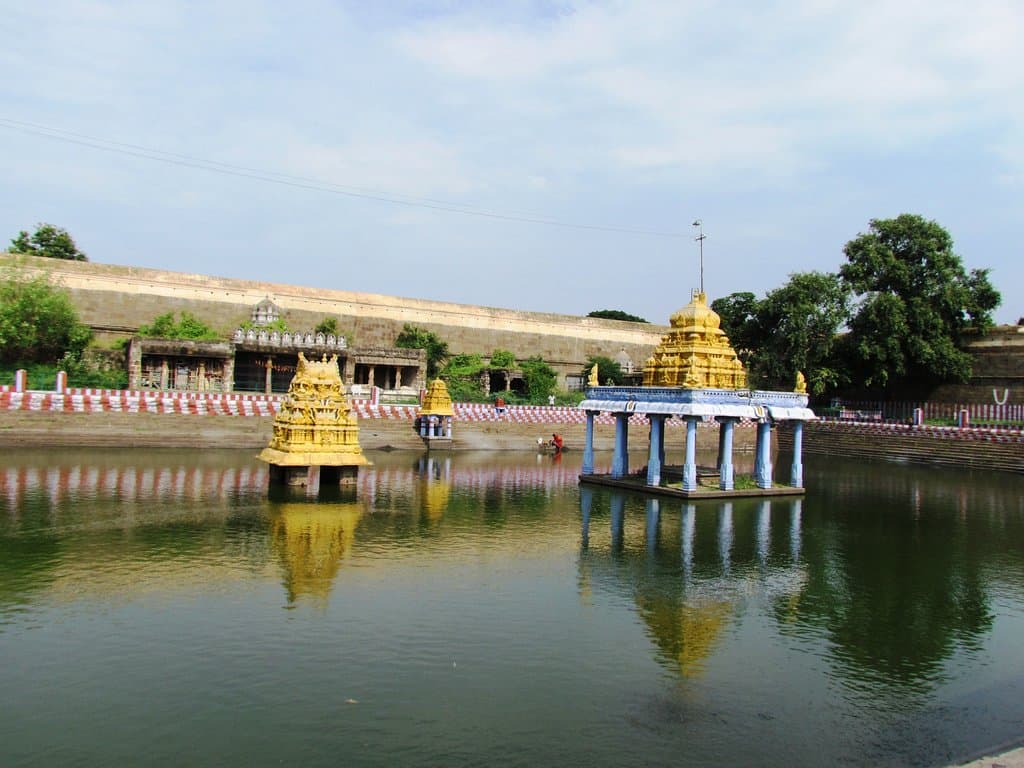
In modern times, Thiruvekka remains an active place of worship within Kanchipuram’s sacred landscape. Pilgrims following the Divya Desam route visit the temple as an essential stop in the town’s spiritual geography. Renovations and careful maintenance have preserved the sanctum and surrounding structures while keeping the atmosphere calm and unhurried.
Thiruvekka ultimately represents the closeness between the divine and the devotee. Yathothkari Perumal is remembered not for a cosmic battle or a dramatic miracle, but for something far more intimate, the moment when the Lord listened to a devotee and responded without hesitation. In the larger journey through the Divya Desams, this temple reminds us that devotion is not always about grandeur. Sometimes it is about a quiet conversation, spoken with faith, and answered with grace.

