Pokhara continues to amaze visitors….
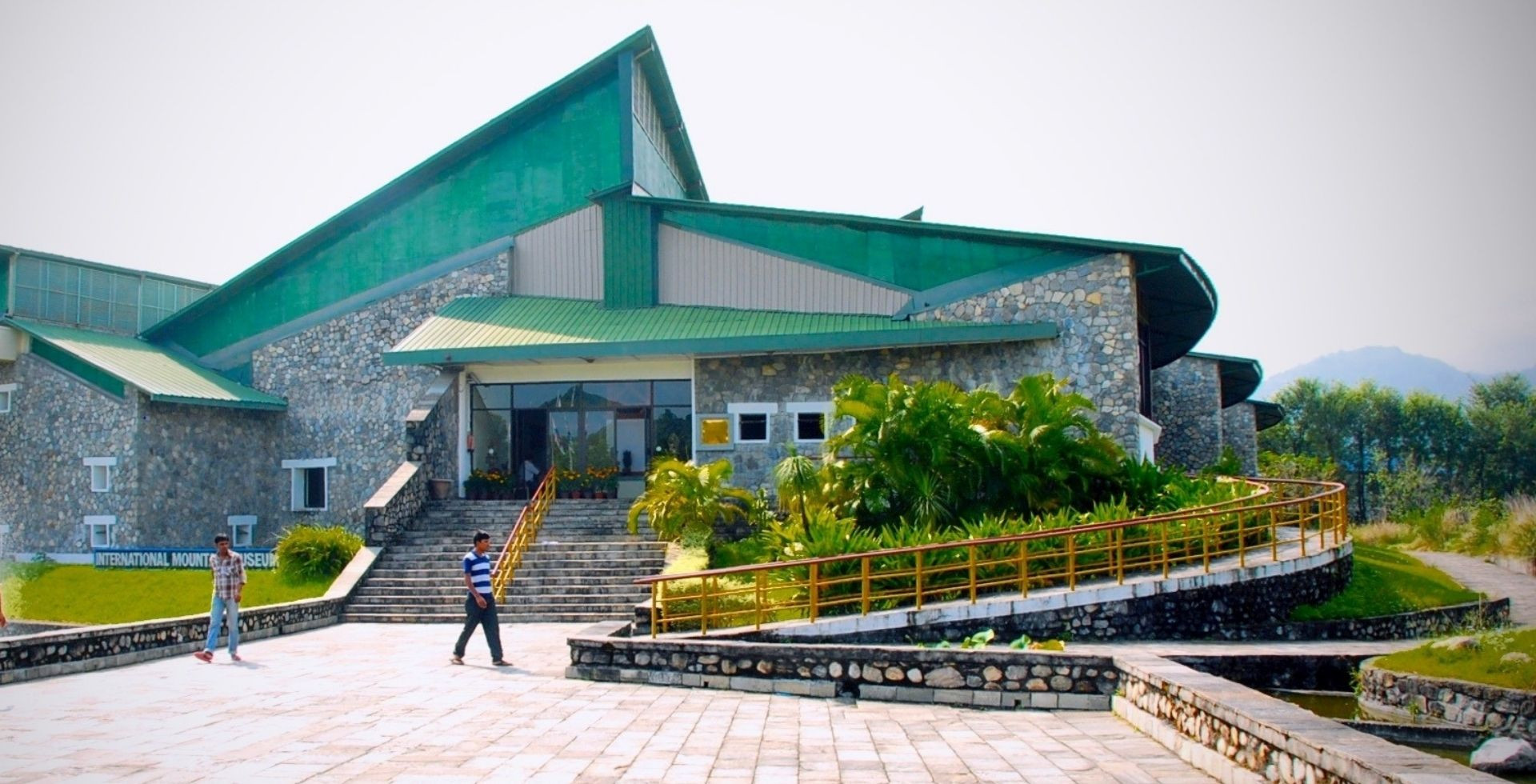
The International Mountain Museum in Pokhara has a stunning collection of artifacts, original gear, stories, and photographs of the mountains, their inhabitants, and the explorers who climbed some of the highest peaks in the world. The museum describes the people living in the Himalayas, the 14 highest peaks, and their most famous expeditions. The museum was established in 1995 by the Nepal Mountaineering Association to maintain a record and document the history, evolution, development, and legendary achievements in mountaineering. Every section of the museum is designed to highlight the commendable accomplishments of famous mountaineers in the majestic Himalayas and around the world. It also includes some exhibits from other mountain areas, such as Slovenia and Japan.
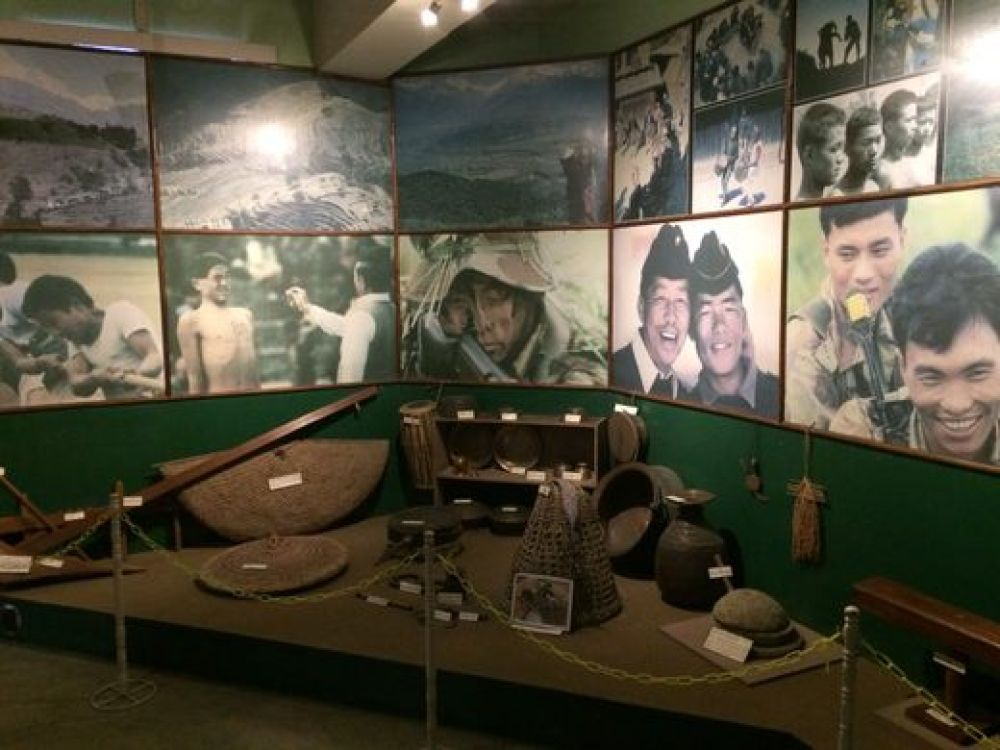
There are three halls that exhibit artefacts arranged in an interesting way to give insights into the traditions of the inhabitants, the biodiversity and geology of the region and information about the mountain peaks and mountaineers who climbed them. The Mountain People Gallery has an impressive display of artefacts arranged systematically. This is the first gallery where one will get to explore the lifestyle, culture and traditions of the inhabitants of the region. Before entering this part of the museum, one is shown a short documentary in the video hall that serves as a prelude to the exhibits in the gallery. The Mountain Gallery is where one can find the geological history and other detailed information on the mountains. Plant and animal replicas, rock samples and photographs from the tallest peaks climbed so far have been exhibited here. The Mountain Activities Gallery is dedicated entirely to the activities on the mountains and has exhibits of apparel, gear, equipment and photographs of the numerous mountain expeditions that took place in the region. Artefacts from the French expedition up the Annapurna led by Maurice Herzog in 1950, the one completed by Junko Tabei, the first woman from Japan to climb Mt. Everest, by Timanishi who was one of the first summiteers to climb Manaslu and the British expeditions to Mount Everest that were carried out between 1921 and 1953 are properly displayed in separate sections in the gallery. A stunning collection of photographs of all the peaks that were conquered by the courageous mountaineers is a must-see here. This section also gives insights into the mythical mammal, Yeti, a humungous brown bear. Stories and photographs of the signs and footprints that the mammal is believed to have left behind are also exhibited.
In the Associates Gallery, there are displays of the socio-economic life of the region. The collection spans across different periods in the past and highlights some important phases. Insights into the plans for the future that will help conserve the biodiversity and evolution of the people in the region can also be found here. This draws quite a few researchers and enthusiasts who seek information to bring about a positive change through their studies and innovations. The museum has a library with an impressive collection of books about the Himalayas and other mountains, achievements of famous mountaineers, books on popular expeditions, regional biodiversity, geology, culture, and traditions. The museum complex also has a Gorkha Village Restaurant that caters to the visitors and serves delicious regional cuisine and a souvenir shop where mementoes and gifts can be purchased. There is a well-maintained garden and lush green lawn with a wall designed to give a first-hand feel to amateur climbers. It has a 9.5 metre tall climbable model of Mount Manaslu and another 21-metre wall that can be climbed. The museum is open daily from 9 am to 5 pm. Entry fee for foreigners is NPR 500, for SAARC nationals, ot is NPR 250, for Nepal citizens, it is NPR 100, students need to pay NPR 50 and those with a resident visa need to pay NPR 250. To access the garden, one needs to pay NPR 30.
Located near Mahendra Pul, the Gorkha Museum is dedicated to commemorating the services of the Gurkha soldiers who joined the British Army in 1815. The museum is open from 8 am to 4:30 pm. Entry fee for foreigners is NPR 200, for SAARC nationals, it is NPR 100, and if one needs to use a camera inside the museum, they need to pay NPR 20.
Established in 1965, the Annapurna Butterfly Museum houses almost all of Nepal’s 660 common, rare and endemic species of butterflies. The collection illustrates their mimicry and camouflage with several charts comparing these species with others found in parts of the Palearctic region. The museum is open from 8 am to 8 pm daily.
The Pokhara Regional Museum is where one can find insights into the ancient culture and history of the Pokhara Valley. With a simple setup and artefacts depicting the tribes, their lifestyle and traditions, the stately museum houses collections that depict the tribal population of the town as well. The modest museum displays models and several valuable antiques from the region. The costumes and accessories exhibited are authentic and give insights into how the earliest tribal population of the region used to dress up. Kitchen and household items include pots, utensils and home decor items that were made with the material sourced from the valleys. Along with the equipment used for agriculture and traps used for fishing, there are religious artefacts and models of houses and some significant events depicted with mannequins for the visitors to get an idea of their traditions and celebrations. Photographs and descriptions have been put up to provide more information. The museum is open from 10 am to 4 pm daily. Entry fees for SAARC nationals is NPR 10, while other foreigners need to pay NPR 30. Camera fees for citizens of SAARC Countries is NPR 70, while for other foreigners, it is NPR 100.
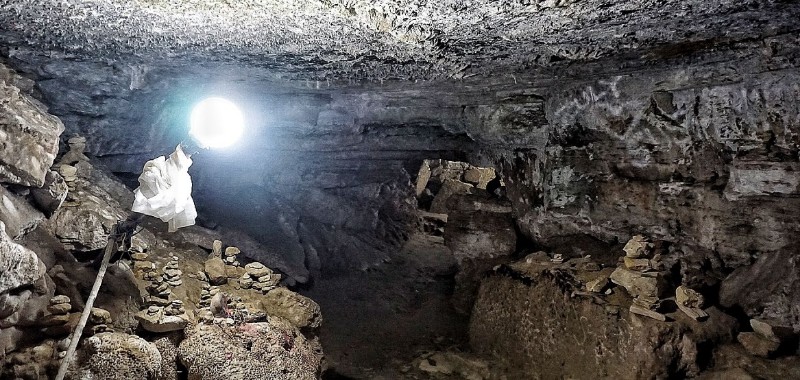
Bat Cave or Chamero Gufa is where one can find thousands of bats. If one’s up for it, they can even explore the complete cave which takes about 10 minutes and wiggle their way through a narrow shaft to reach the surface. The bats here are mostly Horseshoe Bats, which cling upside down on the cool ceilings and dingy caves. This cave could get extremely confined, so those with claustrophobia might want to rethink their visit. The entry fee is around NPR 150, and one will be given a torch along with the entry fee. Guide services are available for NPR 300. There is one exit point of the cave, which is narrow, and the cave can get really slippery, so one should be careful.
Located in Batulechaur, Mahendra cave is a magnificent cave that tourists can explore. The cave is named after King Mahendra Bir Bikram Shah Dev and is a vast natural formation in limestone. Hindus consider the cave sacred and have installed a statue of Lord Shiva, but geographically, this is a cave with calcium salt deposits forming stalactites and stalagmites. The cave was discovered in the mid-1900s by shepherds and has been carefully studied by researchers from the United Kingdom in 1976. The geology & biodiversity of the cave and its surroundings have been documented as a part of the research. The information from the region is deemed necessary for future expeditions and is, to date, used as reference material by scholars. The cave is closed on Tuesdays and on other days is open between 10 am and 4 pm. Entry fee is NPR 100 for foreigners and NPR 50 for a camera.
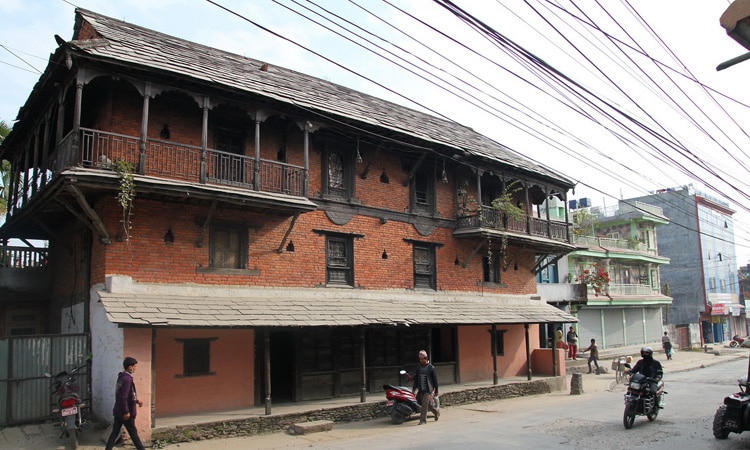
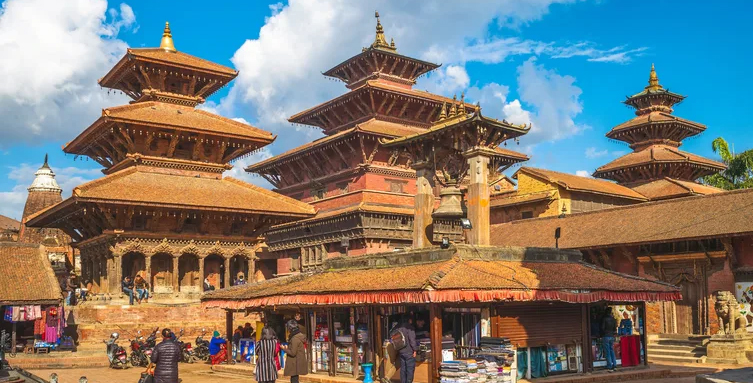
The Old Pokhara Bazaar is a vibrant and historic marketplace showcasing the region’s cultural heritage. One can wander through narrow alleys lined with shops selling authentic Nepalese handicrafts, including handmade pottery, Tibetan rugs, traditional clothing, and intricately crafted jewelry and enjoy traditional Newari and Nepali cuisine at local eateries and street food stalls. The bazaar is known for its ancient Newari architecture with buildings featuring intricately carved wooden windows, brick facades, and pagoda-style rooftops, reflecting the traditional craftsmanship of the Newari community. The bazaar retains its historical charm, providing visitors a glimpse into the region’s past while coexisting with modern developments.
The preferable point to start exploring the bazaar is the Nepal Telecom Building. From here, head to the north-west, crossing some religious shops till they reach an intersection called Nala Mukh. This area is famous for the Newari Houses that are adorned with brickwork and bear beautifully carved wooden windows and doors. On proceeding further, one would reach Bhairab Tole which is one of Pokhara’s significant commercial centres. There is a 200-year-old temple dedicated to Lord Bhimsen here who is considered an important deity of the Newars. He is said to be the one who brings success in trade and commerce and is, therefore, worshipped with great devotion by the traders. A pit stop at this temple to admire its ancient architectural beauty is much advisable.
The region around the Bhimsen temple has some shops selling ceramics and baskets where tourists can spend some time shopping or just observing the authentic products on sale. A little ahead is a small hillock which is famous for another ancient temple, Bindhya Basini Temple. It is dedicated to Goddess Durga who is represented by a Shaligram instead of the usual imposing idol. The traditional two or three-storey buildings with brick and woodwork bearing intricate carvings that still stand tall in this part of the city sort of make the point that the charm of Old Pokhara is still alive and breathing.
The four official Tibetan settlement camps in the city is a small world in itself. These refugee camps were built for the thousands of Tibetan refugees that came to settle in Nepal after the Chinese takeover. They sell beautiful handmade jewellery, trinkets, carving and carpets for the visitors to showcase the beauties of Tibet. This is a popular place where tourists come to buy souvenirs.
Located next to Phewa Lake, Basundhara Park attracts tourists all year round. The park offers boat rides and fishing opportunities on the lake, and visitors can also rent boats and row across the lake on their own. Early morning joggers in the park can also spot birds in the Serene environment of the lake.
Seti River is famous for its deceptive river course and its milky white water. The water cuts a deep gorge right across the mighty Mahabharata range and then runs a deep chasm in the middle of the town. The gorge can be seen from a park in old pokhara close to the Gorkha Museum.
The Upper Seti River is one of Nepal’s best rafting destinations for families and water sports lovers. This river is a hidden gem with energising whitewater rapids of class 3 and 4, lush jungles, waterfalls, and native wildlife. Most rafting trips on the Seti are 90 minutes, priced about NPR 5,700. For whitewater rafting amidst Pokhara’s snow-capped mountains, head to Kali Gandaki River spanning Dhaulagiri and Annapurna Range.
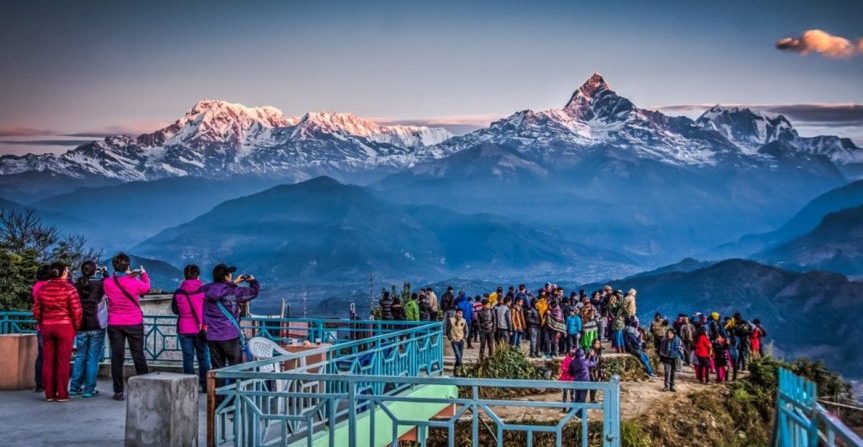
Located on the scenic Sarangkot Mountain, Sarangkot is a village famous for its sunrise and sunset views of Annapurna and the takeoff site for paragliding. The village lies at an elevation of 1600 metres above sea level and is a perfect place to capture a mesmerizing view of the Annapurna, Dhaulagiri, the Manaslu Mountain Ranges and the valley of Pokhara. Located 5 km from Lakeside Pokhara, Sarangkot is also accessible by a trek of 1-1.5 hours. It is also famous for one of the world’s fastest ziplines and the site of an ancient fort connected by a few steps from the main village is a popular viewpoint. A trek along the ridge road that leads to the west of Sarangkot is much advisable to get more stunning views. The dense forestation is home to a variety of flora and fauna. The route, thus, is also famous for bird watching and rejuvenating nature walks.
Although Sarangkot is famous for its panoramic view of the majestic Himalayas, nature walks, treks and hikes through the village, it is also famous for paragliding. The town is located below the ridge, and one needs to climb the steps that lead to the top to witness the scenic mountains and head to the spot where all the paragliding activities takes place. Locals say there once was a fort at the location, hence the name Sarangkot.
Lukla
A small town in the Khumbu Pasang Lhamu rural municipality, Lukla lies in northeastern Nepal. Situated at 2,860 m above sea level, it is a popular place as a gateway for visitors to the Himalayas and Mount Everest, Although Lukla means the place with many goats and sheep, few are found in the area nowadays. Lukla village holds a small airport serving the region. From Lukla, travelers need two days to reach the village of Namche Bazaar, an altitude-acclimatisation stop for those continuing on. What was once a tiny farming community has now become a huge trekkers’ town, since the airport that Lukla houses is the region’s sole airport, and thus all trekkers who visit the region enter and exit from this town only.
The airport has a 527 m single asphalt runway, making it the shortest commercial runway in the world. A flight from Kathmandu to Lukla is just a 40-minute affair. How difficult can that possibly be? Well, those who have been on the flight have described it to be 40 minutes of mountain dodging, and the sensations being the same as that when experienced on a roller coaster. Tthe runway of the Lukla Airport is incredibly tiny, only 1729 feet long. Secondly, Lukla’s elevation with little descent further complicates matters. On one end of the runway is a cliff with the 2,000 feet drop, while the other end has a solid stone wall. This means that the plane will either land or drop off the cliff. In spite of all of this, Lukla is one of the busiest domestic airports in Nepal. Accidents happen rarely, and the airport is considered to be one of the most breathtaking airports in the entire world, with the mighty Himalayas surrounding it and the little flowers bordering the runway making for a picturesque scene.
The small town of Lukla is home to less than five hundred people, but it still houses a large number of trekkers each day. This is because the town is the most popular starting point to further go onto the Everest trekking route, be it for a two-week trek or for a forty day trek to the peak of the Everest.
Dharan
Located in southeastern Nepal, close to the border with India, Dharan is the third most populous city in this region. It is the gateway to the Mahabharat Hills and is one of the biggest pilgrimage locations in Nepal. This low-lying hilly region is extremely clean, colourful and culturally diverse, as well as a centre for football in Nepal, hence it being called a mini-Brazil.
Dharan was the capital town of the lowland Limbuwan kingdom of Morang, ruled by Limbu King Buddhi Karna Raya Khebang. King Buddhikarna Khebang was the descendant of the ruler King Muray Hang Khebang of Phedap Kingdom. Between 1584 and 1774, Dharan-Bijaypur was the capital city of Morang Kingdom of Limbuwan. It was also effective capital of the entire Limbuwan region or the Ten Limbu Kingdoms which was also known as Pallo Kirat . In August 1774, the Gorkha King Prithivi Narayan Shah’s representatives Abhiman Singh Basnet, Parath Bhandari, Kirti Singh Khawas and Bali Baniya met the ministers of Morang state and agreed to come to good terms with the Gorkha Kingdom and accept the Gorkhali king as Maharaja and that in return the kingdom of Gorkha would retain the right of self-government of Limbu rulers in their kingdoms.
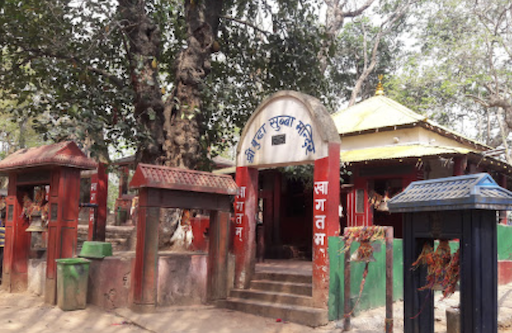
The Budha Subba Temple is a famous religious shrine, mostly for the Eastern Nepalese. The establishment has many folk tales surrounding it, along with many superstitious beliefs. It is best known for being a peaceful location where people can wish for happiness and luck. Young couples in the region believe that tying a colourful string around their trunks and engraving their names on the trees would bring them happiness and long life together. The temple complex also has a couple of souvenir shops. The Buddha Subba Temple has a small car parking facility at the main entrance of the temple complex. The Budha Subba Temple is the tomb of Buddhi Karna Raya Rai, the last Limbu King of Morang; a Nepali district. Buddhi Karna Raya Rai was assassinated by the people working under King Prithvi Narayan Shah, who was at the time the king of Nepal. Shah tricked Buddhi Karna Raya Rai into coming to Bijaypur-Dharan, which was the capital of Morang and the politico-economic centre of East Nepal, under the guise of a negotiation. The folklore surrounding the location says that his spirit still wanders around the tomb and is said to be a friendly and helpful spirit. The Limbu folk even worshipped his soul as it was believed to bring good luck.
The Pindeshwor Temple is dedicated to Lord Shiva and is located in the central region of Dharan, at the base of the Vijayapur Hill. During the auspicious month of Shravan, around the end of July, and on the occasion of Maha Shivratri, the temple particularly witnesses an increase in the number of devotees. The lamp at this temple is always kept burning.
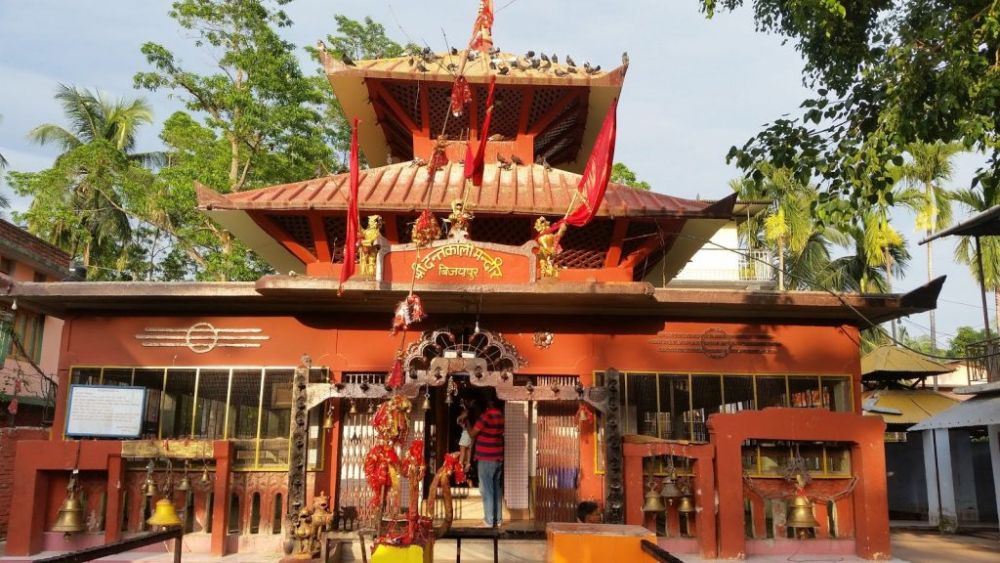
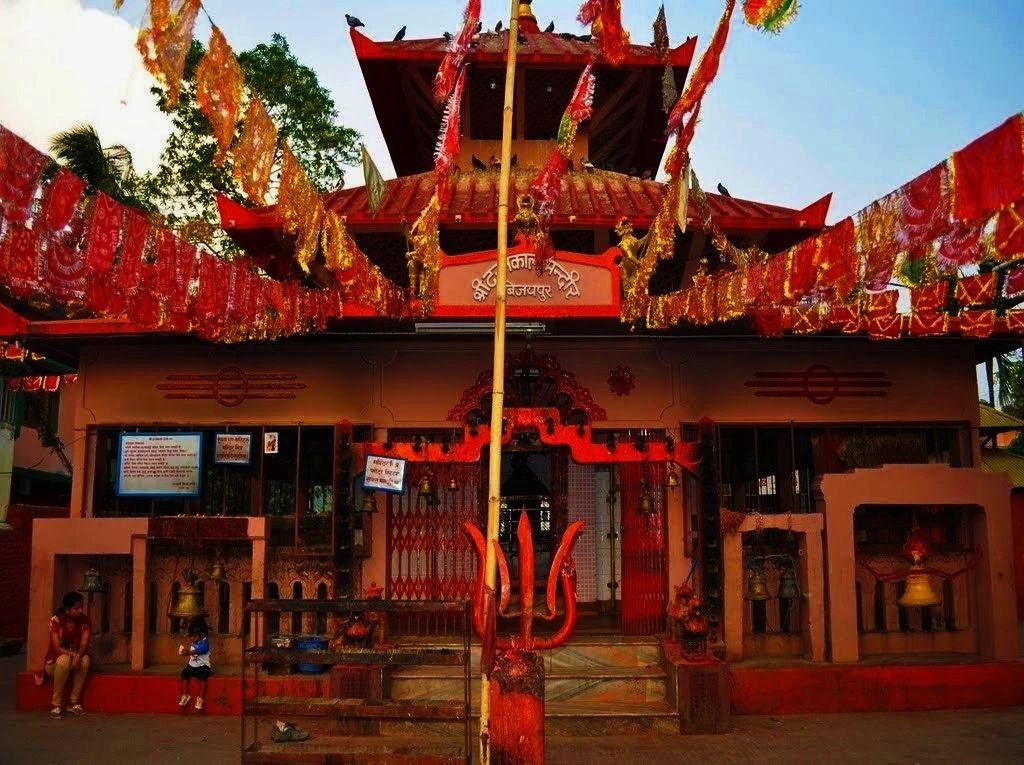
The Dantakali Temple was built in the honour of Goddess Parvati. It is located in Bijayapur village about 3 km from the centre of Dharan. The attraction is also considered to be a significant Shakti Peeth. This temple mainly attracts devotees on the occasion of Dashain, which is an auspicious Hindu festival that celebrates the victory of good over evil. According to a legend, after the passing of Goddess Parvati, Lord Shiva carried her dead body on his shoulder and roamed for days. Decayed parts of the goddess’ carcass fell at several locations. This location, where the Dantakali Temple is built, is believed to house the sacred teeth of Goddess Parvati. Hence the name, Dantakali wherein ‘danta’ means teeth and ‘kali’ signifies the Goddess.
The Pathivara Temple, also known as Mukkumlung, is said to be one of the most significant Hindu temples in Nepal. Situated on the Taplejung hills, the temple offers scenic views of the Mount Kanchenjunga. The members of the Nepal royal family are said to be ardent devotees of the Goddess and come here often to pay their respects. Dedicated to Pathivara Devi, also known as AdiKali, Maha Maya, Maha Rudri among many other divine forms, the Pathivara temple is considered to be one of the holiest temples. Believed to possess supernatural powers, Pathivara Devi is said to fulfil dreams and wishes of devotees. Pathivara, the hill goddess, is believed to be a fierce goddess easily pleased with selfless and straightforward acts of prayer and sacrificial offerings which is the sacrifice of one’s ego and greed. According to local legend, a few local shepherds were moving their sheep when they lost hundreds while grazing where the temple stands today. One day, the shepherds dreamt Pathivara Devi ordering them to carry out the ritualistic sacrifice of a sheep. When the sacrifice was offered, all of a sudden, the lost sheep returned to the temple. Since then, the ritual of offering sacrifices have been significant in this temple.
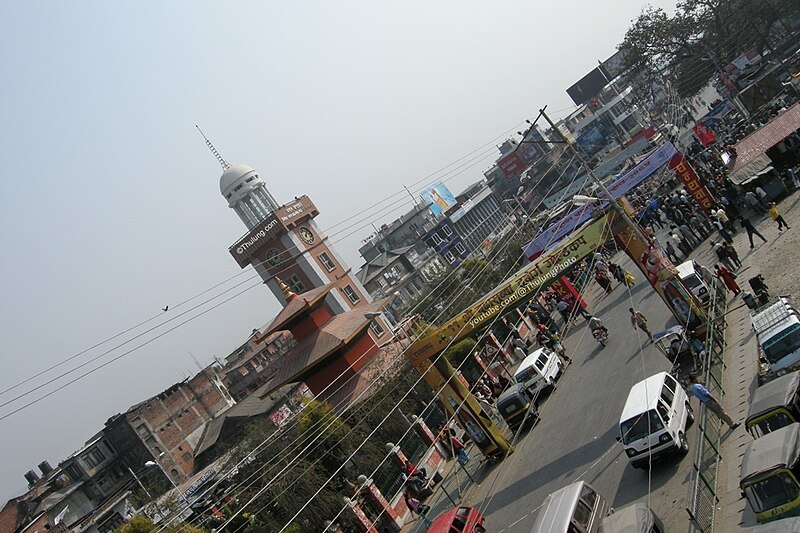
Dharan Clock Tower is a popular tourist attraction built in 1991. Its design closely resembles the Clock Tower of Hong Kong. Locally known as Ghantagha, the clock tower is located in Bhanuchowk and measures approximately 76 feet in height. It stands over a 55 feet tall pedestal which makes it seem even more taller. People visit this Clock Tower for its stunning appearance, architecture and the fabulous view of the city from the top.
Namaste Falls is a popular attraction located in Bhedetar village about 23 km from the city. The Waterfall is mainly known for the namaste it forms as it cascades down the slopes of a rocky hill at the height of 80 metres. The area is quite remote and thus, uninhabited, but offers jaw dropping views of the surroundings. The falls are recognised as a plunge waterfall and is known for the most number of rainbow sightings. Reaching Namaste Falls requires trekking a distance 2 kilometres or so from Bhedetar.
Namje Bazar or Namche Bazar is famous for its weekly market and lodging amidst scenic surroundings and lies at an altitude of over 3500 m. Several major trekking trails pass through the Bazar and is considered as an excellent acclimatisation point. Those heading to the Everest Base Camp often make a pitstop here. The weekly market that makes it a great attraction for tourists is the Tibetan Market, which is operational only on Saturdays.
Keep watching this space for more Nepal towns to explore…