Officially, the Federal Territory of Kuala Lumpur or Wilayah Persekutuan Kuala Lumpur, Kuala Lumpur or KL as it is colloquially known, is a federal territory and the ceremonial, legislative and judicial capital city of Malaysia. It is one of the fastest-growing cities in Asia and the largest city in Malaysia, covering an area of 243 sq. km. Greater Kuala Lumpur, also known as the Klang Valley, is an urban agglomeration of 7.564 million people as of 2018 and is among the fastest-growing metropolitan regions in Southeast Asia, both in population and economic development. Serving as the cultural, financial, and economic centre of Malaysia, the city is also home to the Parliament of Malaysia and the Istana Negara, the official residence of the Yang di-Pertuan Agong or the monarch of Malaysia.
Kuala Lumpur first developed around 1857 as a town serving the tin mines of the region and served as the capital of Selangor from 1880 until 1978. Kuala Lumpur was the founding capital of the Federation of Malaya and its successor, Malaysia. The city remained the seat of the executive and judicial branches of the Malaysian federal government until these were relocated to Putrajaya in early 1999. However, some sections of the political bodies remain in Kuala Lumpur. The city is one of the three federal territories of Malaysia, enclaved within the state of Selangor.
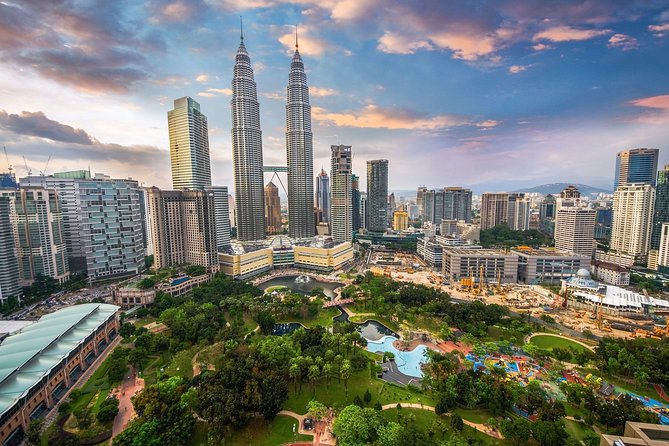
Kuala Lumpur has undergone rapid development in recent decades and is home to the tallest twin buildings in the world, the Petronas Towers, which have since become an iconic symbol of Malaysian development. The sixth most-visited city in the world in 2019, Kuala Lumpur houses three of the world’s ten largest shopping malls, ranks 70th in the world and second in Southeast Asia for the Economist Intelligence Unit’s Global Liveability Ranking and ninth in ASPAC and second in Southeast Asia for KPMG’s Leading Technology Innovation Hub 2021.
Kuala Lumpur’s name means muddy confluence in Malay; where Kuala is the point where two rivers join or an estuary, and lumpur means mud. One suggestion is that it was named after Sungai Lumpur or the muddy river; in the 1820s, a place named Sungei Lumpoor was said to be the most important tin-producing settlement up the Klang River. However, this derivation does not account for the fact that Kuala Lumpur lies at the confluence of Gombak River and Klang River, and therefore should be named Kuala Gombak, since the Kuala is typically named after the river that joins a larger river or the sea. Some have argued that Sungai Lumpur in fact extended down to the confluence and therefore the point where it joined the Klang River would be Kuala Lumpur, although this Sungai Lumpur is said to be another river joining the Klang River 1.5 km upstream from the Gombak confluence, or perhaps located to the north of the Batu Caves area.
It has also been proposed that Kuala Lumpur was originally named Pengkalan Lumpur or muddy landing place, in the same way that Klang was once called Pengkalan Batu or stone landing place, but became corrupted into Kuala Lumpur. Another theory says that it was initially a Cantonese word, lam-pa, meaning flooded jungle or decayed jungle. There is no firm contemporary evidence for these suggestions other than anecdotes. The name may also be a corrupted form of an earlier forgotten name.
Kuala Lumpur was originally a small hamlet of just a few houses and shops at the confluence of the Sungai Gombak and Sungai Klang. Kuala Lumpur became established as a town around 1857, when the Malay Chief of Klang, Raja Abdullah bin Raja Jaafar, aided by his brother Raja Juma’at of Lukut, raised funds from Malaccan Chinese businessmen to hire Chinese miners from Lukut to open new tin mines there. The miners landed at Kuala Lumpur and continued by foot to Ampang, where they opened the first mine. Kuala Lumpur was the furthest point up the Klang River to which supplies could conveniently be brought by boat, and therefore became a collection and dispersal point serving the tin mines.
When the Ampang mines succeeded, and exported the first tin in 1859, Sutan Puasa was already trading near Ampang. The town, spurred on by tin-mining, started to develop around Old Market Square or Medan Pasar, with roads radiating out towards Ampang as well as Pudu and Batu, where miners had also begun to settle in, and Petaling and Damansara. The miners formed gangs and frequently fought over control of the best tin mines. Leaders of the Chinese community were conferred the title of Kapitan Cina by the Malay chief, and Hiu Siew became the first Kapitan of Kuala Lumpur.
Early Kuala Lumpur was a small town that suffered from many social and political problems – the buildings were made of wood and atap which is palm frond thatching. The buildings were prone to catching fire, and due to a lack of proper sanitation the town was plagued with diseases. It also suffered from a constant threat of flooding due to its location. The town became embroiled in the Selangor Civil War in part over control of revenue from the tin mines. Kuala Lumpur was captured in 1872 and burnt to the ground. The war and other setbacks, such as dropping tin prices, led to a slump and a major outbreak of cholera caused many to flee. The slump lasted until late 1879, when rising prices for tin allowed the town to recover. In late 1881, the town was severely flooded, after a fire that had destroyed the entire town in January. Yap Ah Loy, together with Frank Swettenham who was appointed the Resident in 1882, were the two most important figures of early Kuala Lumpur with Swettenham credited with its rapid growth and development and its transformation into a major urban centre.
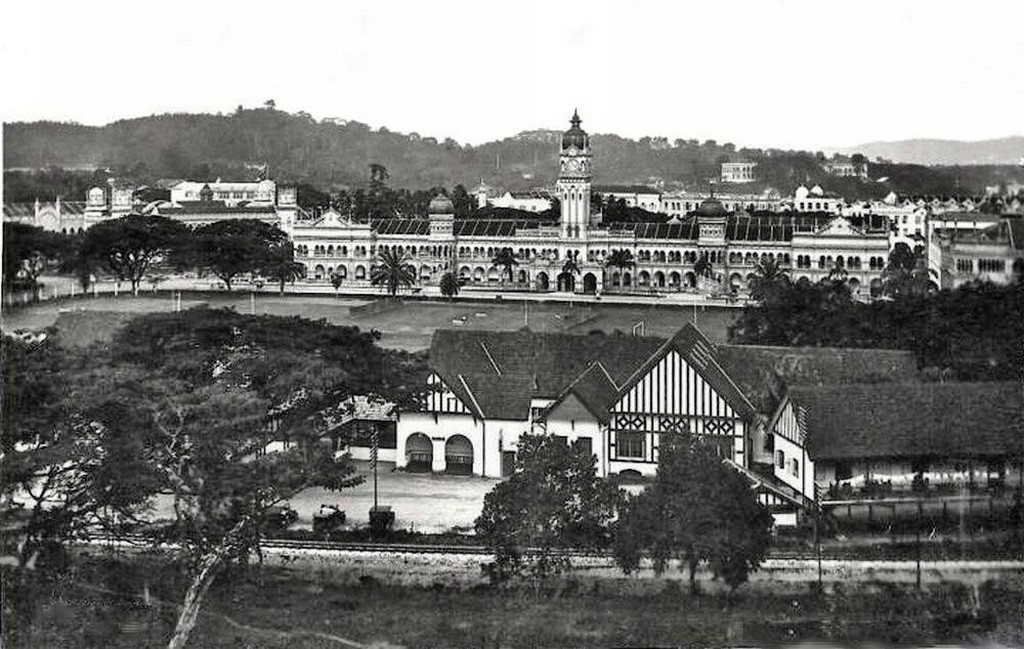
The early Chinese and Malay settled along the east bank of the Klang River, with the Chinese mainly settled around the commercial centre of Market Square and the Malays, and later Indian Chettiars and Muslims, residing in the Java Street area, now Jalan Tun Perak. In 1880, the colonial administration moved the state capital of Selangor from Klang to the more strategically advantageous Kuala Lumpur, and government buildings and living quarters were to the west of the river. Government offices and a new police headquarters were built on Bukit Aman, and the Padang initially created for police training. The Padang, now known as Merdeka Square, would later become the centre of the British administrative offices when the colonial government offices moved to the Sultan Abdul Samad Building in 1897.
Frank Swettenham, on becoming the British Resident, began improving the town by cleaning up the streets. He also stipulated in 1884 that buildings should be constructed of brick and tile so that they would be less flammable, and that the town be rebuilt with wider streets to reduce fire risk. Kapitan Yap Ah Loy bought a sprawling piece of real estate to set up a brick factory for the rebuilding of Kuala Lumpur, the eponymous Brickfields. Demolished atap buildings were replaced with brick and tile buildings, and many of the new brick buildings had five-foot ways and Chinese carpentry work. This resulted in a distinct eclectic shop house architecture typical to this region. Road access was expanded, linking tin mines with the city with the main arterial routes of the present Ampang Road, Pudu Road and Petaling Street. Law reforms were implemented and new legal measures introduced to the assembly.
The construction of a railway line between Kuala Lumpur and Klang, completed in 1886, spurred the growth of the city. As development intensified in the 1880s, putting pressure on sanitation, waste disposal and other health measures. A Sanitary Board created on 14 May 1890 was responsible for sanitation, road upkeep, street lighting, and other functions. This would eventually become the Kuala Lumpur Municipal Council. In 1896, Kuala Lumpur was chosen as the capital of the newly formed Federated Malay States.
Kuala Lumpur expanded considerably in the 20th century. From 0.65 sq km in 1895, it was extended to 20 sq km in 1903 and to 93 sq km in 1948 and to 243 sq km in 1974 as a Federal Territory. The development of a rubber industry in Selangor fuelled by the demand for car tyres in the early 20th century led to a boom, and the population of Kuala Lumpur increased from 30,000 in 1900 to 80,000 in 1920. The commercial activities of Kuala Lumpur had been run to a large extent by Chinese businessmen. During World War II, Kuala Lumpur was captured by the Imperial Japanese Army on 11 January 1942. Despite suffering little damage during the course of the battle, the wartime occupation of the city resulted in significant loss of lives; at least 5,000 Chinese were killed in Kuala Lumpur in just a few weeks of occupation by Japanese forces, and thousands of Indians were sent as forced labour to work on the Burma Railway where many died. They occupied the city until 15 August 1945. Kuala Lumpur grew during the war and continued after the war during the Malayan Emergency between 1948 and 1960, during which Malaya was preoccupied with a communist insurgency and New Villages were established on the outskirts of the city.
On 31 August 1957, the Federation of Malaya gained its independence from British rule. Kuala Lumpur remained the capital after the formation of Malaysia on 16 September 1963 with the Malaysian Houses of Parliament completed at the edge of the Lake Gardens in the same year. Kuala Lumpur achieved city status on 1 February 1972, becoming the first settlement in Malaysia to be granted the status after independence. Later, on 1 February 1974, Kuala Lumpur became a federal territory. Kuala Lumpur was ceded by Selangor to be directly controlled by the central government, and it ceased to be capital of Selangor in 1978 after the city of Shah Alam was declared the new state capital. Putrajaya was declared a Federal Territory on 1 February 2001, as well as the seat of the federal government. The administrative and judicial functions of the government were shifted from Kuala Lumpur to Putrajaya, Kuala Lumpur however still retained its legislative function, and remained the home of the Yang di-Pertuan Agong or the Constitutional King.
From the 1990s onwards, major urban developments in the Klang Valley extended the Kuala Lumpur metropolitan area. This area, known as Greater Kuala Lumpur, extends from the Federal Territory of Kuala Lumpur westward to Port Klang, east to the edge of the Titiwangsa Mountains as well as to the north and south. The area covers other administratively separate towns and cities and is served by the Klang Valley Integrated Transit System. The geography of Kuala Lumpur is characterised by the huge Klang Valley, bordered by the Titiwangsa Mountains in the east, several minor ranges in the north and the south, and the Strait of Malacca in the west.
Kuala Lumpur and its surrounding urban areas form the most industrialised and economically, the fastest-growing region in Malaysia. The city remains the economic and business hub of the country and Kuala Lumpur is a centre for finance, insurance, real estate, media, and the arts in Malaysia. Tourism plays an important role in the city’s service-driven economy.
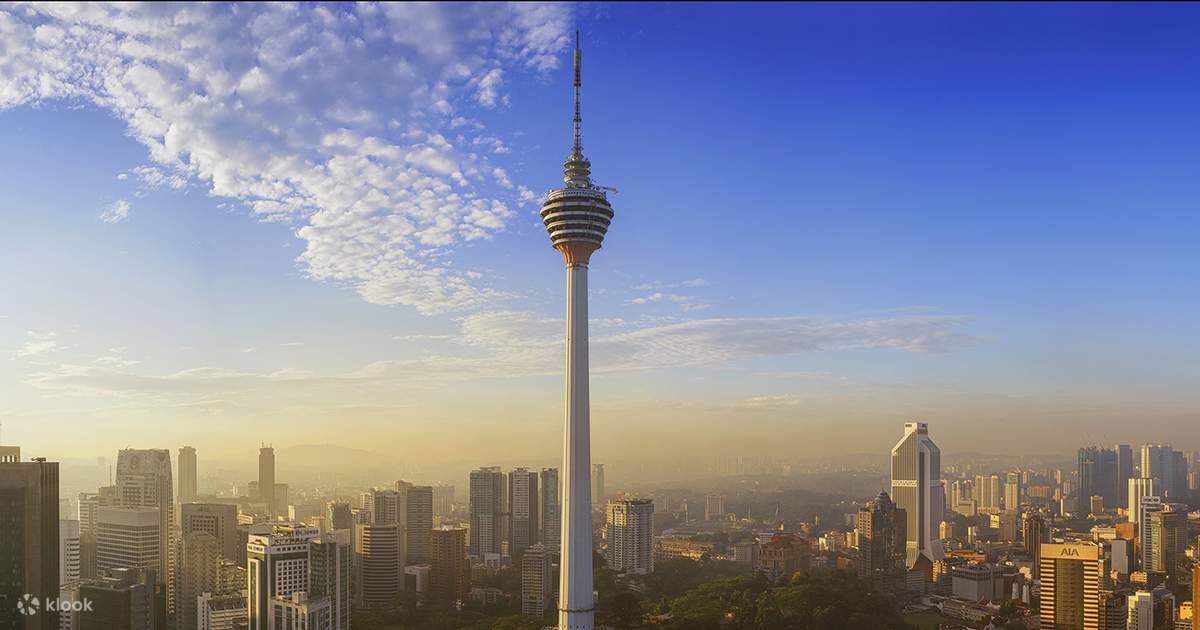
Menara Kula Lumpur, or Kuala Lumpur Tower, located within the Bukit Nanas Forest Reserve, is the tallest telecommunications tower in Southeast Asia and the 7th tallest in the world. The thrilling 360-degree view of Kuala Lumpur skyline from the tower is the main attraction. The six-storey, 421-meter-tall KL Tower is also popular for the revolving restaurant it houses. The tower is the highest viewpoint in the city and acts as the Islamic Falak observatory, which is used to observe the moon during the holy month of Ramadan. The architecture of this building is reflective of Islamic-style Arabic scripts, intricate Islamic tiles, and floral and abstract patterns. Designed by the architect Kumpulan Senireka Sdn. Bhd, the construction took place in three phases over a span of five years. The 421-metre-tall tower was officially inaugurated on October 1, 1996 and has been used for broadcasting purposes ever since.
The base design of Menara KL was meant to symbolize the human journey for perfection in life. The prominent globular pinnacle of the tower has its inspirations rooted to a Malaysian spinning top. The main lobby of the upper ground floor has ornamental glass domes which emit a diamond-like sparkle. To pay homage to the traditional Islamic and Persian architecture and to display its Islamic roots, Muqarnas, a type of corbel has been used as the main decorative element. The roof of the pod is at 355 m and after the placement, the overall height increases to 421 m.
The observation deck at Menara Kuala Lumpur is located at a height of 276 m above ground level and offers a stunning and thrilling view of the city. The Sky Deck is located at a height of 300 m above the ground and offers spectacular views of the city skyline at day and during sunset. Tickets for the Sky Deck, including the Observation Deck and Sky Tower are RM 99 and RM 52 for adults and children between 4 and 12 years. KL Tower is open daily from 10 am to 9 pm.
The Jelutong Tree located in the premise of KL Tower is more than a century old. To conserve the tree, the position of the tower was shifted, and a series of barricades were put up so that the roots of the tree were not harmed during excavation. The tower is lit up, from the ground floor to the top of the antenna mast, with LED lights. Visitors should check the weather forecast before booking the tickets for the observation deck and the sky deck, as in case it rains or drizzles, the open-air sky deck is shut, and visitors can only access the observation deck only. Tickets are non-refundable. Menara Kuala Lumpur is open from 10 am to 9 pm daily.
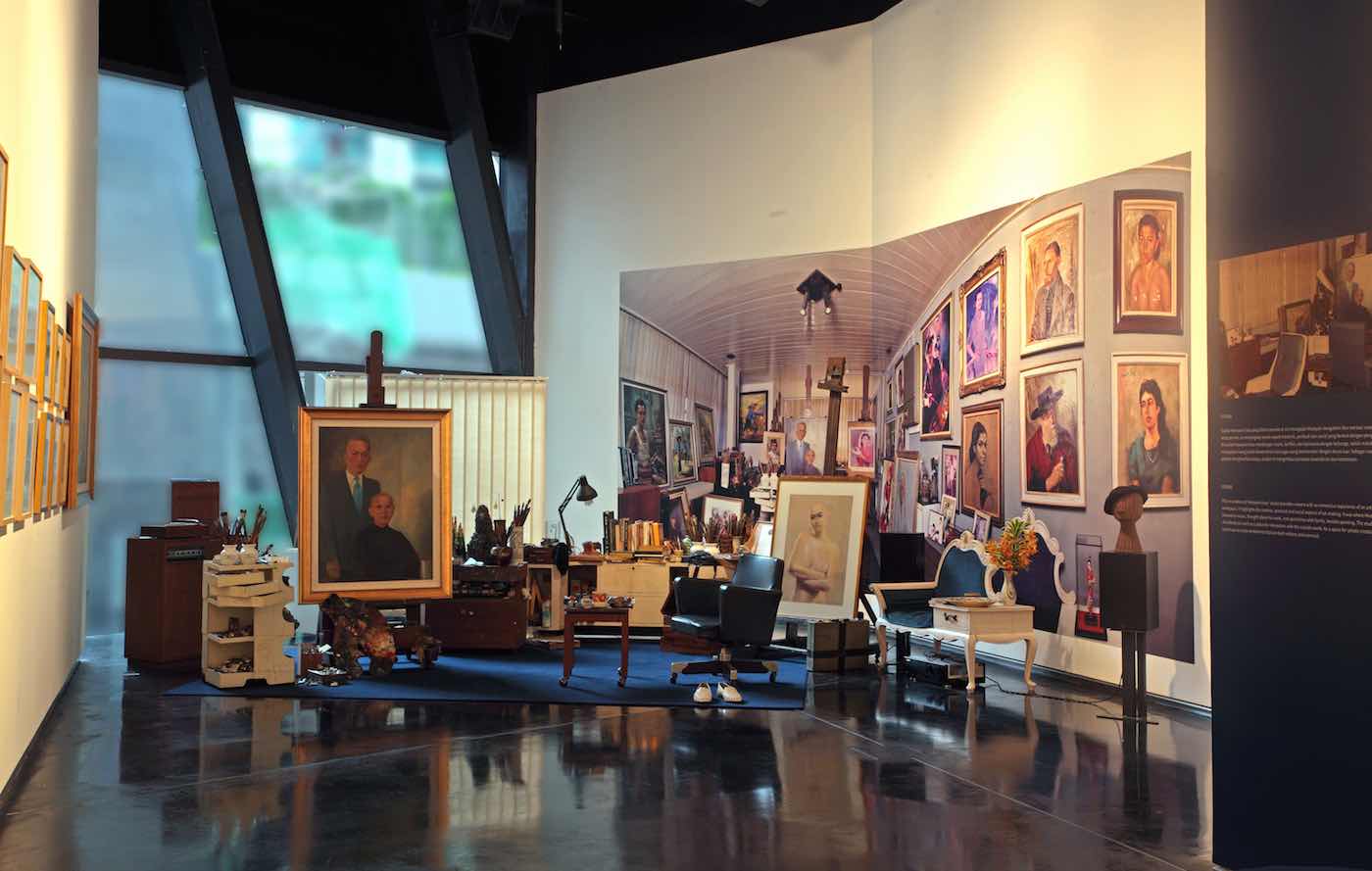
Nestled in the heart of Kuala Lumpur, Ilham Tower is the fourth-tallest structure in Malaysia. The 60-storey tower was designed by Foster+Partners and is a combination of residential as well as commercial spaces. The Ilham Tower houses a 4-star hotel, art gallery, gift shop, food joints and office suites. and is famous for the Ilham Art Gallery, which houses a great collection of contemporary as well as modern art pieces. The tower is open from 11 am to 7 pm between Tuesday and Saturday and is closed on Mondays and public holidays. Guided tours of 30-minute duration are available at 11:30 am on Thursdays and 11 am on Saturdays and are subject to availability.
That’s all about Kuala Lumpur in this part. More coming up next week!









:max_bytes(150000):strip_icc()/GettyImages-635813200-5c3a444946e0fb0001a2a790.jpg)