In My Hands Today…

Are You There, Vodka? It’s Me, Chelsea – Chelsea Handler

When Chelsea Handler needs to get a few things off her chest, she appeals to a higher power – vodka. You would too if you found out that your boyfriend was having an affair with a Peekapoo or if you had to pretend to be honeymooning with your father in order to upgrade to first class. Welcome to Chelsea’s world – a place where absurdity reigns supreme and a quick wit is the best line of defense.

In this hilarious, deliciously skewed collection, Chelsea mines her past for stories about her family, relationships, and career that are at once singular and ridiculous. Whether she’s convincing her third-grade class that she has been tapped to play Goldie Hawn’s daughter in the sequel to Private Benjamin, deciding to be more egalitarian by dating a redhead, or looking out for a foulmouthed, rum-swilling little person who looks just like her… only smaller, Chelsea has a knack for getting herself into the most outrageous situations.

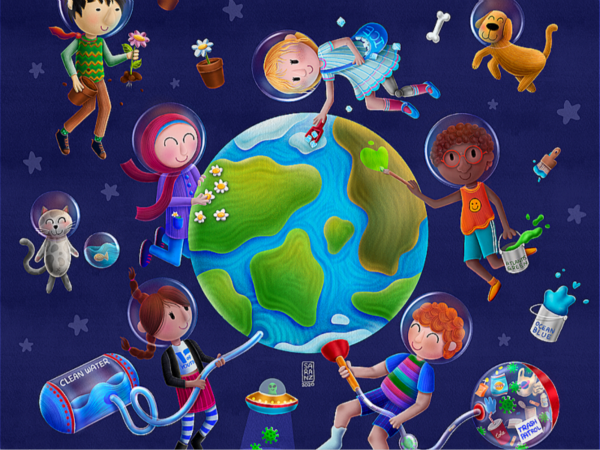
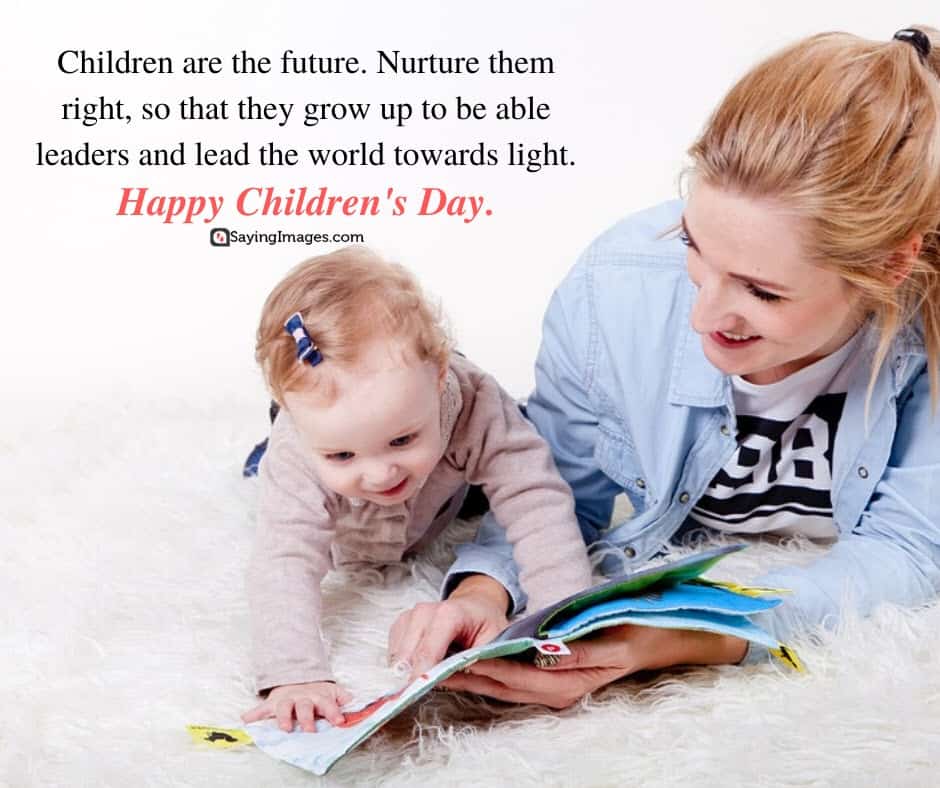
Universal Children’s Day

Celebrated in honour of children, Children’s Day is celebrated and observed on different dates across the world. In 1925, International Children’s Day was first proclaimed in Geneva during the World Conference on Child Welfare. The World Children’s Day is celebrated on 20th November to commemorate the Declaration of the Rights of the Child by the UN General Assembly on 20 November 1959.

The first Children’s Day began on the second Sunday of June in 1857 by Reverend Dr. Charles Leonard, pastor of the Universalist Church of the Redeemer in Chelsea, Massachusetts who held a special service dedicated to, and for the children on a day he named Rose Day, though it was later named Flower Sunday, and then named Children’s Day. Children’s Day was first officially declared a national holiday by the Republic of Turkey in 1920 on 23 April and the day has since then been celebrated nationally since 1920 and the official declaration was made in 1929.

In Singapore, traditionally, 1 October is when the country officially celebrates Children’s Day. Another similar event celebrated annually is Youth Day, which is celebrated on the first Sunday of July every year, and is a school holiday for primary, secondary and junior college students. From 2011, Children’s Day has been celebrated on the first Friday of October.On Children’s Day, Kindergarten and Primary school students get a holiday, while secondary school and junior college students still need to go to school, with teachers often organising special events and activities so the older children could still celebrate.

In India, Children’s Day is celebrated on 14 November as a tribute to the birthday of India’s First Prime Minister, Jawaharlal Nehru. Known as Chacha Nehru among children, Nehru advocated for children to have all-rounded education that would build a better society in the future and considered children as real strength of a nation and foundation of society.. The day is celebrated across the country to increase awareness of the rights, care and education of children. The day has been celebrated since 1956 and before Nehru’s death was celebrated on 20 November, the Universal Children’s Day.

World Children’s Day was first established in 1954 as Universal Children’s Day and is celebrated on 20 November each year to promote international togetherness, awareness among children worldwide, and improving children’s welfare. It was on this day when the in 1959 when the UN General Assembly adopted the Declaration of the Rights of the Child as well as the date in 1989 when the UN General Assembly adopted the Convention on the Rights of the Child.

The theme for this year’s celebration is Unite to reverse the impact of COVID-19 pandemic on children. The theme highlights the principles of the Convention on the Rights of the Child that all children irrespective of their status and situation should enjoy their rights to Survival and Development as enshrined in the Convention on the Rights of the Child (CRC) and the Child Rights Act (CRA) 2003.

Mothers and fathers, teachers, nurses and doctors, government leaders and civil society activists, religious and community elders, corporate moguls and media professionals, as well as young people and children themselves, can play an important part in making World Children’s Day relevant for their societies, communities and nations. The World Children’s Day offers each of us an inspirational entry-point to advocate, promote and celebrate children’s rights, translating into dialogues and actions that will build a better world for children. UNICEF and partners are calling on governments to adopt a Six Point Plan to Protect our Children which include ensuring all children learn, including by closing the digital divide, guaranteeing access to health and nutrition services, and making vaccines affordable and available to every child, supporting and protecting the mental health of children and young people and bring an end to abuse, gender-based violence, and neglect in childhood, increase access to clean water, sanitation and hygiene and address environmental degradation and climate change, reversing the rise in child poverty and ensure an inclusive recovery for all and redoubling efforts to protect and support children and their families living through conflict, disaster and displacement.

So tomorrow, take some time out for the children around you and really talk to them and understand their concerns and issues. You could also sponsor a child under the ageis of many reputable organisations and put a child through school and make their life.

In My Hands Today…

Amsterdam: A History of the World’s Most Liberal City – Russell Shorto

Tourists know Amsterdam as a picturesque city of low-slung brick houses lining tidy canals; student travelers know it for its legal brothels and hash bars; art lovers know it for Rembrandt’s glorious portraits.

But the deeper history of Amsterdam, what makes it one of the most fascinating places on earth, is bound up in its unique geography-the constant battle of its citizens to keep the sea at bay and the democratic philosophy that this enduring struggle fostered. Amsterdam is the font of liberalism, in both its senses. Tolerance for free thinking and free love make it a place where, in the words of one of its mayors, “craziness is a value.” But the city also fostered the deeper meaning of liberalism, one that profoundly influenced America: political and economic freedom. Amsterdam was home not only to religious dissidents and radical thinkers but to the world’s first great global corporation.

In this effortlessly erudite account, Russell Shorto traces the idiosyncratic evolution of Amsterdam, showing how such disparate elements as herring anatomy, naked Anabaptists parading through the streets, and an intimate gathering in a sixteenth-century wine-tasting room had a profound effect on Dutch-and world-history. Weaving in his own experiences of his adopted home, Shorto provides an ever-surprising, intellectually engaging story of Amsterdam from the building of its first canals in the 1300s, through its brutal struggle for independence, its golden age as a vast empire, to its complex present in which its cherished ideals of liberalism are under siege.

Festivals of India: Bhai Dhooj

About 10 days back, on the second day after the festival of lights, Diwali, is the festival of which strengthens the bonds between a brother and sister. Also known as Bhratri Dwitiya, Bhaubeej, Bhai Tika and Bhai Phonta, Bhai Dhooj strengthens the bond of affection between brothers and sisters. There are two Bhai Dooj in Hindu calendar. The first one falls on the Dwitiya Tithi of Chaitra month and is not as popular as the second one which falls two days after Diwali or the second lunar day of Shukla Paksha or the bright fortnight in the calendar month of Kartika. The celebrations are similar to the festival of Raksha Bandhan and on this day, sisters give gifts to their brothers. In the southern part of the country, the day is celebrated as Yama Dwitiya.

The festival is known by different names in different communities. In North India, it is known as Bhai Dooj and is observed during the Diwali festivities, on the second day after Diwali. In Nepal it is known as Bhai Tika, where it is the most important festival after Dashain or Vijaya Dashmi or Dussehra. Observed on the fifth day of the Tihar festival, it is widely celebrated by the Khas people. In West Bengal, Assam, Tripura, Bangladesh, it is known as Bhai Phonta and it takes place every year on the second day after Kali Puja. In western Odisha, it is called Bhai Jiuntia while the Marathi, Gujarati and Konkani-speaking communities in the states of Maharashtra, Goa, Gujarat and Karnataka call it Bhau Beej, Bhav Bij or Bhai Beej. Other names for the festival include Bhatru Dviteeya, Bhatri Ditya or Bhaghini Hastha Bhojanamu in Andhra Pradesh and Telangana.

Another name for the day is Yamadwitheya or Yamadvitiya, after a legendary meeting between Yama the God of Death and his sister Yamuna, the river on the Dwitheya or the second day after new moon. According to a legend, Yamraj’s sister Yamuna tried to get her brother to visit her on many occasions but Yamraj was unable to do so for a long time. When he finally met her, he was greeted with a grand ceremony, offered sweets and had the ceremonial tika placed on his forehead. Being immensely pleased with the love and respect he was showered with, Yamraj gave Yamuna a boon and she in turn asked him to dedicate a day on which he would visit her house each year. Hence, the ritual of siblings visiting each other on this day began to honour the kinship between them.According to another legend, after slaying the evil demon Narakasura, Lord Krishna visited his sister Subhadra who gave him a warm welcome with sweets and flowers. She also affectionately applied tilaka on Krishna’s forehead and some believe this to be the origin of the festival.

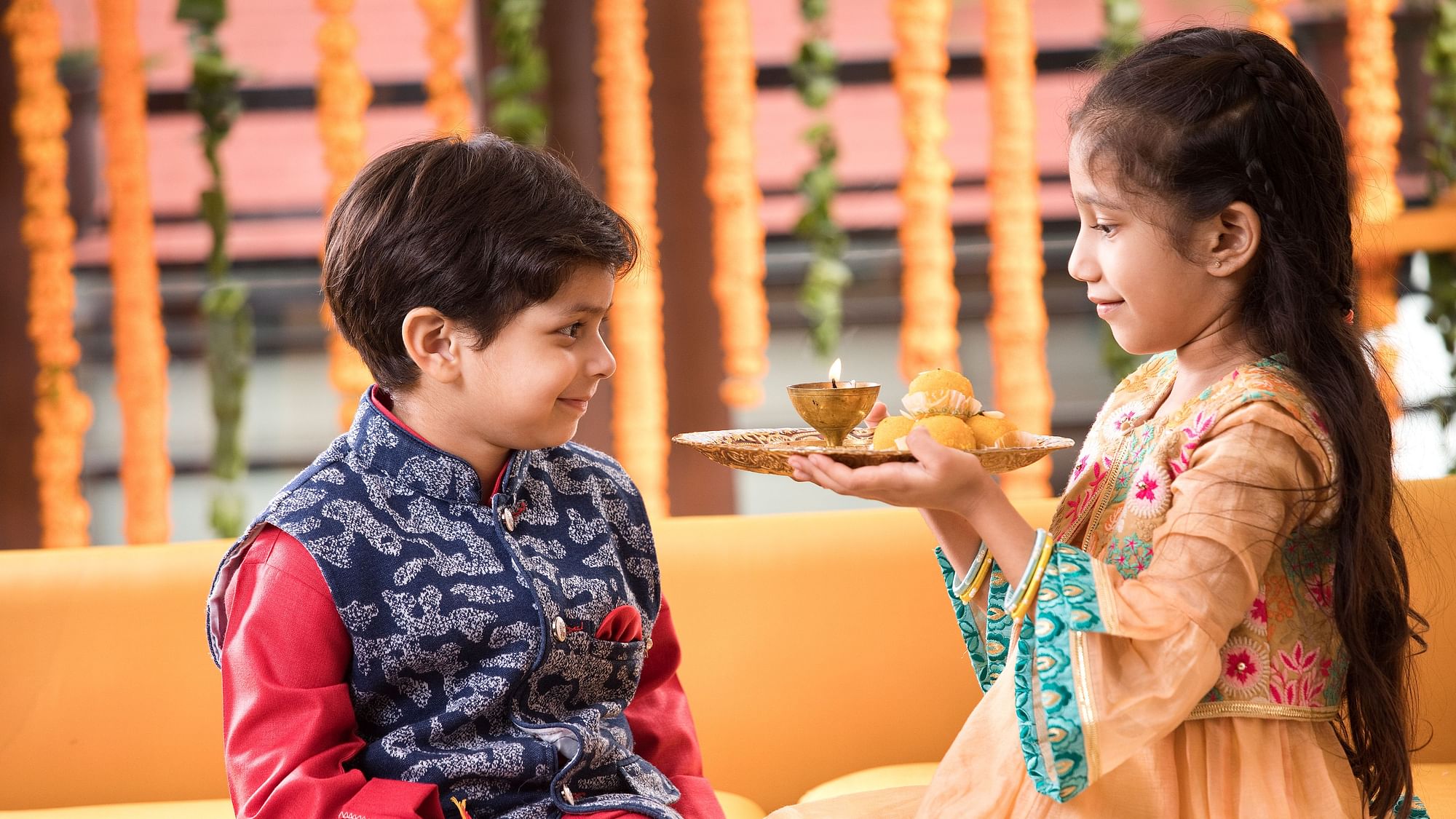
Celebrated like the festival of Raksha Bandhan, but without the tyong of the rakhi on the brother’s wrists, on this day, sisters invite their brothers for a sumptuous meal often including their favourite dishes and sweets. The ceremony signifies the duty of a brother to protect his sister, as well as a sister’s blessings for her brother. Sisters then perform an arti for their brother and apply a red tika on the brother’s forehead. This signifies the sister’s prayers for the long and happy life of her brother and treat them with gifts. In return, elder brothers bless their sisters and treat them with gifts or cash. In Haryana and Maharashtra, women who do not have a brother worship the moon instead and apply henna or mehendi on girls as a tradition. For sisters whose brothers live far away and can’t meet her, send her prayers for the long and happy life of her brother through the Moon God and performs aarti or prayer to the moon. This is the reason why children affectionately call the moon Chandamama where Chanda means the moon and mama means a mother’s brother. In West Bengal, Bhai Phonta is marked with many rituals along with a grand feast arranged for the brothers though it is necessary that, both the brother and sister are more than 5 years of age.

In Nepal, Bhaitika or Bhaitihar is known as the tihar or festival of brothers. On this day, sisters pray to the God of death, Lord Yamra for the long life and prosperity of their brothers. The ritual involves sisters marking the forehead of their brothers with a seven coloured long tika with the rest of the rituals is similar to that performed by Hindus elsewhere.

To all sisters and brothers, hope you had a fabulous festive period!

In My Hands Today…

The Catalyst: How to Change Anyone’s Mind – Jonah Berger

Everyone has something they want to change. Marketers want to change their customers’ minds and leaders want to change organizations. Start-ups want to change industries and nonprofits want to change the world. But change is hard. Often, we persuade and pressure and push, but nothing moves. Could there be a better way?

This book takes a different approach. Successful change agents know it’s not about pushing harder, or providing more information, it’s about being a catalyst. Catalysts remove roadblocks and reduce the barriers to change. Instead of asking, “How could I change someone’s mind?” they ask a different question: “Why haven’t they changed already? What’s stopping them?”

The Catalyst identifies the key barriers to change and how to mitigate them. You’ll learn how catalysts change minds in the toughest of situations: how hostage negotiators get people to come out with their hands up and how marketers get new products to catch on, how leaders transform organizational culture and how activists ignite social movements, how substance abuse counselors get addicts to realize they have a problem, and how political canvassers change deeply rooted political beliefs.

This book is designed for anyone who wants to catalyze change. It provides a powerful way of thinking and a range of techniques that can lead to extraordinary results. Whether you’re trying to change one person, transform an organization, or shift the way an entire industry does business, this book will teach you how to become a catalyst.