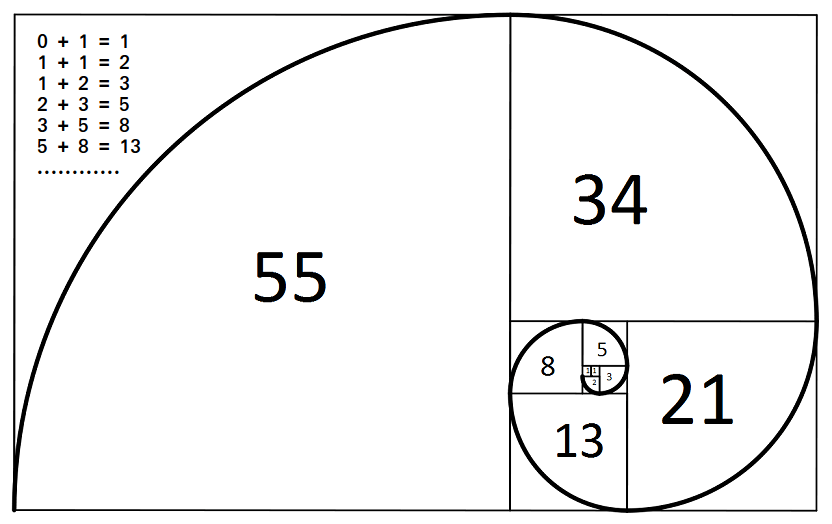
Every year, November 23 is celebrated as Fibonacci Day. And it is because when the date is written in the mm/dd format (11/23), the digits in the date form a Fibonacci Sequence – 0, 1, 1, 2, 3, 5, 8, 13, 21, 34, 55, 89, 144, … A Fibonacci Sequence is a series of numbers where a number is the sum of the two numbers before it. For example: 1, 1, 2, 3…is a Fibonacci sequence. Here, 2 is the sum of the two numbers before it (1+1). Similarly, 3 is the sum of the two numbers before it (1+2) and 5 is the sum of 2 and 3 and so on.
Fibonacci numbers are named after the Italian mathematician Leonardo of Pisa, later known as Fibonacci. In his 1202 book Liber Abaci, Fibonacci introduced the sequence to Western European mathematics, although the sequence had been described earlier in Indian mathematics, as early as 200 BC in work by Pingala on enumerating possible patterns of Sanskrit poetry formed from syllables of two lengths. The numbers are strongly related to the golden ratio: Binet’s formula expresses the nth Fibonacci number in terms of n and the golden ratio, and implies that the ratio of two consecutive Fibonacci numbers tends to the golden ratio as n increases.
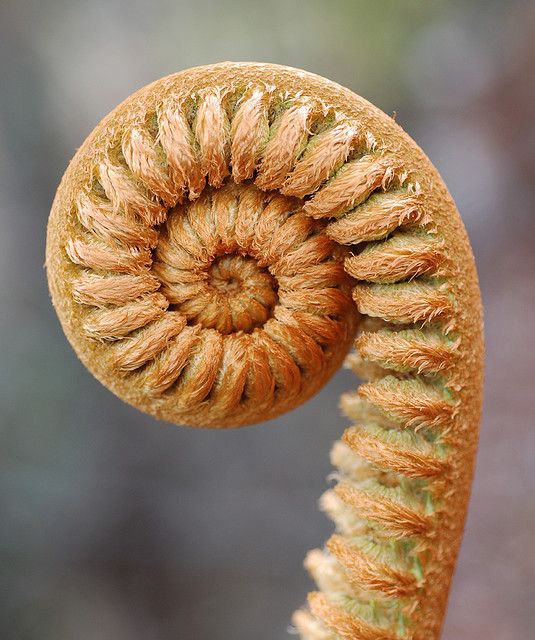
Fibonacci numbers appear unexpectedly often in mathematics, so much so that there is an entire journal dedicated to their study, the Fibonacci Quarterly. Applications of Fibonacci numbers include computer algorithms such as the Fibonacci search technique and the Fibonacci heap data structure, and graphs called Fibonacci cubes used for interconnecting parallel and distributed systems. They also appear in biological settings, such as branching in trees, the arrangement of leaves on a stem, the fruit sprouts of a pineapple, the flowering of an artichoke, an uncurling fern, and the arrangement of a pine cone’s bracts. Computer data storage and processing uses this number sequence today and the sequence is also useful in the trading of stocks and architecture. DNA patterns and hurricanes contain patterns showing this sequence. Math and science classes refer to the Fibonacci sequence as nature’s secret code or nature’s universal rule.
In his book Liber Abaci or The Book of Calculation, written in 1202, Fibonacci used the growth of rabbit population as the basis of the sequence. Fibonacci considers the growth of an idealised, but biologically unrealistic, rabbit population, assuming that a newly born breeding pair of rabbits are put in a field; each breeding pair mates at the age of one month, and at the end of their second month they always produce another pair of rabbits; and rabbits never die, but continue breeding forever. Fibonacci posed the puzzle: how many pairs will there be in one year?
At the end of the first month, they mate, but there is still only 1 pair. At the end of the second month they produce a new pair, so there are 2 pairs in the field. At the end of the third month, the original pair produce a second pair, but the second pair only mate without breeding, so there are 3 pairs in all. At the end of the fourth month, the original pair has produced yet another new pair, and the pair born two months ago also produces their first pair, making 5 pairs. At the end of the nth month, the number of pairs of rabbits is equal to the number of mature pairs, that is, the number of pairs in month n – 2 plus the number of pairs alive last month (month n – 1). The number in the nth month is the nth Fibonacci number. The name Fibonacci Sequence” was first used by the 19th century number theorist Édouard Lucas.
Fibonacci’s book Liber Abaci also introduced the western world to the Hindu-Arabic numeral system we use today which writes numbers as 1,2,3, etc. instead of the Roman numerals I, II, III, etc.
So how can we observe Fibonacci Day? There are many way to do that.
We could watch a video showing the Fibonacci sequence in nature or a video discussing the magic of Fibonacci numbers and the Fibonacci Sequence and its theoretical and practical uses. Or look for items in our home or in nature containing the Fibonacci Sequence. A number of fruits and vegetables, like pineapples, romanesco which is a cross between broccoli and cauliflower display the Fibonacci series.
The Fibonacci Sequence is there everywhere in our lives. If an orange is cut in half, the sections are always a Fibonacci number. The chambers of a nautilus shell, no matter the size of the shell or number of chambers, will be a Fibonacci number. If an apple is cut through its centre, not through its stem, the five-pointed star is another hidden Fibonacci number. Outside, if the petals of flowers and the points of leaves are counted, it will always be a Fibonacci number. And the reason a four-leaf clover is so rare is because four is not a Fibonacci number and they don’t happen often in nature. Music is also filled with Fibonacci numbers with the piano keyboard, keys in an octave all good examples. Check it out!





 Memories and Such