Yesterday, 02 April was the World Autism Awareness Day worldwide and this day has been commemorated since 2008 to raise awareness about people with Autism Spectrum Disorder (ASD) throughout the world. This day brings individual autism organizations together all around the world to aid in things like research, diagnoses, treatment, and acceptance for those affected by this developmental disorder.
Someone in my family recently had their toddler diagnosed with ASD and so this topic is something that is quite close to my heart. When I started researching on this topic, I realised that World Autism Day was close, hence this blog post to showcase and bring more awareness to this developmental disorder.
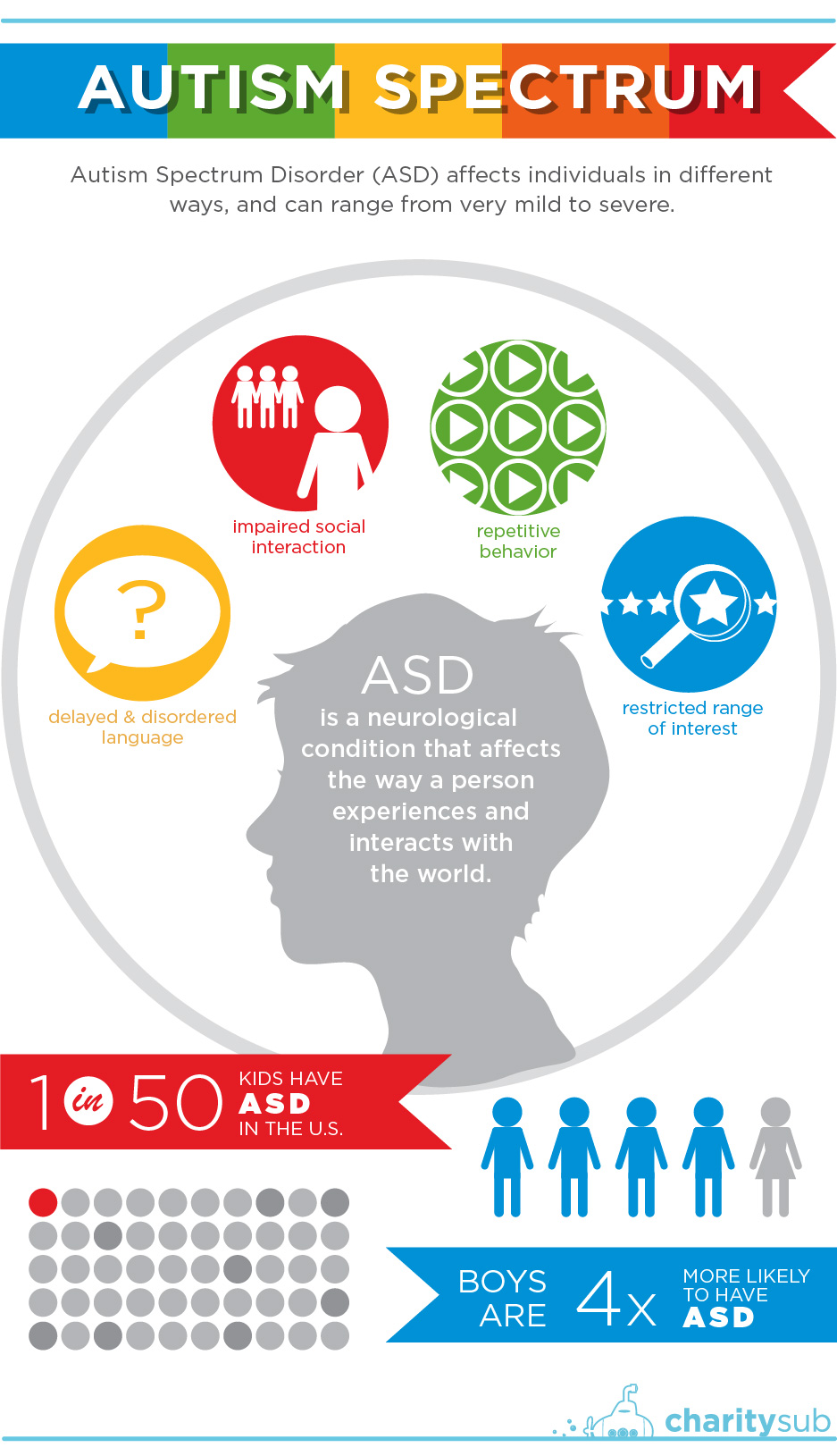
So what actually is Autism Spectrum Disorder or ASD? Autism is a lifelong, developmental disability that affects how a person perceives the world, communicates with and relates to other people, and how they experience the world around them. The spectrum refers to a range of conditions which are characterised by some degree of impaired social behaviour, communication and language and a narrow range of interests and activities that are both unique to the individual and carried our repetitively. Autistic people see, hear and feel the world differently to other people. If you are autistic, you are autistic for life; autism is not an illness or disease and cannot be ‘cured’. Often people feel being autistic is a fundamental aspect of their identity. ASDs begin in childhood and tend to persist into adolescence and adulthood. In most cases the conditions are apparent during the first 5 years of life.
Autism is a spectrum condition. All autistic people share certain difficulties, but being autistic will affect them in different ways. Some autistic people also have learning disabilities, mental health issues or other conditions, meaning people need different levels of support. All people on the autism spectrum learn and develop. With the right sort of support, all can be helped to live a more fulfilling life of their own choosing.
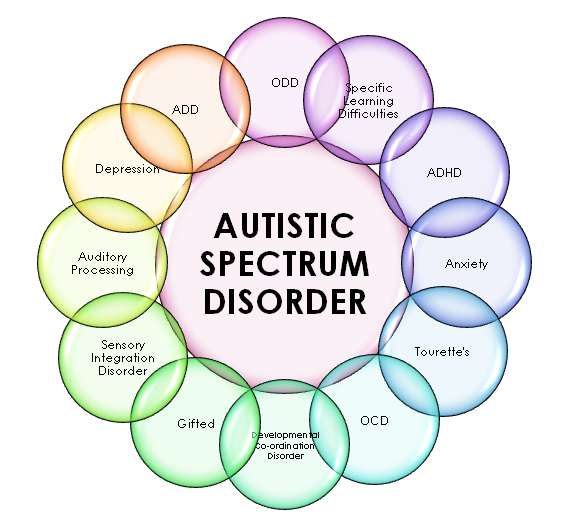
Individuals with ASD often present other co-occurring conditions, including epilepsy, depression, anxiety and attention deficit hyperactivity disorder (ADHD). The level of intellectual functioning in individuals with ASDs is extremely variable, extending from profound impairment to superior levels.
Autism is actually more common than we think. In 2018, the CDC determined that approximately 1 in 59 children is diagnosed with an ASD. It is estimated that worldwide one in 160 children has an ASD, though it may be reported lower in many less developed countries. Autism hits boys harder than girls with 1 in 37 boys and 1 in 151 girls diagnosed with an ASD. Boys are four times more likely to be diagnosed with autism than girls. And most children are still being diagnosed after age 4, though autism can be reliably diagnosed as early as age 2. 31% of children with ASD have an intellectual disability with an intelligence quotient or IQ of below 70, 25% are in the borderline IQ range of between 71-85 and 44% have IQ scores in the average to above average range of more than 85. Autism does not discriminate and affects all ethnic and socioeconomic groups, though minority groups tend to be diagnosed later and less often. If you suspect a child is autistic, please reach out to their healthcare provider as it has been proven that early intervention affords the best opportunity to support healthy development and deliver benefits across the lifespan. Also you can’t detect or even predict autism.
Studies over the last 50 years have shown the prevelance of ASD to be increasing globally. There are many possible explanations for this apparent increase, including improved awareness, expansion of diagnostic criteria, better diagnostic tools and improved reporting.
So what makes someone on the spectrum? Research indicates there are probably many factors which make a child likely to have an ASD including genetic and the environment. If the child is born to older parents, the child is at a higher risk to be on the autisim spectrum. Parents who have a child with ASD have a 2 to 18 percent chance of having a second child who is also affected. Studies have also shown that among identical twins, if one child has autism, the other will be affected about 36 to 95 percent of the time. In non-identical twins, if one child has autism, then the other is affected about 31 percent of the time. Researchers have done extensive research over the last two decades on the link between childhood vaccinations and autism. The results of this research are clear: Vaccines do not cause autism. So please people, if you are on the fence on this, please do your research and do vaccinate your child for the health of them and the community you live in.
Autistic people see the world differently compared to you and me. Some autistic people say the world feels overwhelming and this can cause them considerable anxiety. In particular, understanding and relating to other people, and taking part in everyday family, school, work and social life, can be harder. Other people appear to know, intuitively, how to communicate and interact with each other, yet can also struggle to build rapport with autistic people. Autistic people may wonder why they are ‘different’ and feel their social differences mean people don’t understand them. Autistic people often do not ‘look’ disabled. Some parents of autistic children say that other people simply think their child is naughty, while adults find that they are misunderstood.
The world can seem a very unpredictable and confusing place to autistic people, who often prefer to have a daily routine so that they know what is going to happen every day. They may want to always travel the same way to and from school or work, or eat exactly the same food for breakfast. The use of rules can also be important. It may be difficult for an autistic person to take a different approach to something once they have been taught the ‘right’ way to do it. People on the autism spectrum may not be comfortable with the idea of change, but may be able to cope better if they can prepare for changes in advance.
Many autistic people have intense and highly-focused interests, often from a fairly young age. These can change over time or be lifelong, and can be anything from art or music, to trains or computers. An interest may sometimes be unusual. One autistic person loved collecting rubbish, for example. With encouragement, the person developed an interest in recycling and the environment. Many channel their interest into studying, paid work, volunteering, or other meaningful occupation. Autistic people often report that the pursuit of such interests is fundamental to their wellbeing and happiness.
Autistic people may also experience over- or under-sensitivity to sounds, touch, tastes, smells, light, colours, temperatures or pain. For example, they may find certain background sounds, which other people ignore or block out, unbearably loud or distracting. This can cause anxiety or even physical pain. Or they may be fascinated by lights or spinning objects.
Early diagnosis and intervention can improve learning, communication and social skills, as well as underlying brain development. Intervention during early childhood is important to promote the optimal development and well-being of people with an ASD. Applied behavior analysis (ABA) and therapies based on its principles are the most researched and commonly used behavioral interventions for autism. Many children affected by autism also benefit from other interventions such as speech and occupational therapy. Developmental regression, or loss of skills, such as language and social interests, affects around 1 in 5 children who will go on to be diagnosed with autism and typically occurs between ages 1 and 3.
It is important that, once identified, children with an ASD and their families are offered relevant information, services, referrals, and practical support according to their individual needs. There is no known cure for ASD. Evidence-based psychosocial interventions, however, such as behavioural treatment and skills training programmes for parents and other caregivers, can reduce difficulties in communication and social behaviour, with a positive impact on the person’s well-being and quality of life.
The health-care needs of people with ASD are complex and require a range of integrated services, including health promotion, care, rehabilitation services, and collaboration with other sectors such as education, employment and social care. Interventions for people with ASD and other developmental disorders need to be accompanied by broader actions for making their physical, social, and attitudinal environments more accessible, inclusive and supportive.
Parenting an autistic child is not without challenges. An estimated one-third of people with autism are nonverbal. 31% of children with ASD have an intellectual disability with significant challenges in daily function. Nearly half of those with autism wander or bolt from safety while nearly two-thirds of children with autism between the ages of 6 and 15 have been bullied. Nearly 28 percent of 8-year-olds with ASD have self-injurious behaviors. Head banging, arm biting and skin scratching are among the most common. Drowning remains a leading cause of death for children with autism and accounts for approximately 90 percent of deaths associated with wandering or bolting by those age 14 and younger.
Parents also find that those with ASD also have other medical and mental health issues as autism
can affect the whole body. Attention Deficient Hyperactivity Disorder (ADHD) affects an estimated 30 to 61 percent of children with autism and more than half of children with autism have one or more chronic sleep problems. Anxiety disorders affect an estimated 11 to 40 percent of children and teens on the autism spectrum. Depression affects an estimated 7% of children and 26% of adults with autism while children with autism are nearly eight times more likely to suffer from one or more chronic gastrointestinal disorders than are other children. As many as one-third of people with autism have epilepsy (seizure disorder). Studies suggest that schizophrenia affects between 4 and 35 percent of adults with autism. By contrast, schizophrenia affects an estimated 1.1 percent of the general population. It’s not just in childhood, autism-associated health problems extend across the life span – from young children to senior citizens. Nearly a third (32 percent) of 2 to 5 year olds with autism are overweight and 16 percent are obese. By contrast, less than a quarter (23 percent) of 2 to 5 year olds in the general population are overweight and only 10 percent are medically obese.
ASD also has a social and economic impact. ASDs may significantly limit the capacity of an individual to conduct daily activities and participate in society. ASDs often negatively influence the person’s educational and social attainments as well as employment opportunities. While some individuals with ASD are able to live independently, others have severe disabilities and require life-long care and support. This imposes a significant emotional and economic burden on people with these disorders and their families. Caring for children with a severe form of the condition may be demanding, especially where access to services and support are inadequate. Therefore the empowerment of caregivers is increasingly being recognized as a critical component of care for children with ASD.
Other than a social and economic impact, those with an ASD and their parents and caregivers also suffer from backlash in society. They are often subject to stigma and discrimination in all areas of their lives, including sometimes an unjust deprivation of health care, education and opportunities to engage and participate in their communities. People with ASD have the same health problems that affect the general population. Furthermore, they may have specific health-care needs related to ASD or other co-occurring conditions. They may be more vulnerable to developing chronic noncommunicable conditions because of behavioural risk factors such as physical inactivity and poor dietary preferences, and are at greater risk of violence, injury and abuse. Those with ASD have higher rates of unmet health-care needs compared with the general population. They are also more vulnerable during humanitarian emergencies. A common barrier is created by health-care providers’ inadequate knowledge of ASD and misconceptions.
The theme for the day in 2020 draws attention to issues of concern related to the transition to adulthood, such as the importance of participation in youth culture and the community self-determination and decision-making, access to post-secondary education and employment, and independent living. Becoming an adult is typically equated with becoming a full and equal participant in the social, economic and political life of one’s community. However, the transition to adulthood remains a significant challenge for persons with autism because of the lack of opportunities and support devoted to this phase of their life. As a result, the completion of high school, when education and other supported services provided by some governments tend to cease, has often been likened to “falling off a cliff”.
Wear blue today to support and raise awareness for this developmental disorder. Use social media to promote awareness and talk to the people around you and let them know how they can support those who are on the spectrum within their communities. These individuals, especially the children and young adults deserve your support so they too can become contributing members of our society.





 Memories and Such