In Lisbon in 1904, a young man named Tomás discovers an old journal. It hints at the existence of an extraordinary artifact that—if he can find it—would redefine history. Traveling in one of Europe’s earliest automobiles, he sets out in search of this strange treasure.
Thirty-five years later, a Portuguese pathologist devoted to the murder mysteries of Agatha Christie finds himself at the center of a mystery of his own and drawn into the consequences of Tomás’s quest.
Fifty years on, a Canadian senator takes refuge in his ancestral village in northern Portugal, grieving the loss of his beloved wife. But he arrives with an unusual companion: a chimpanzee. And there the century-old quest will come to an unexpected conclusion.
The High Mountains of Portugal—part quest, part ghost story, part contemporary fable—offers a haunting exploration of great love and great loss. Filled with tenderness, humor, and endless surprise, it takes the reader on a road trip through Portugal in the last century—and through the human soul.
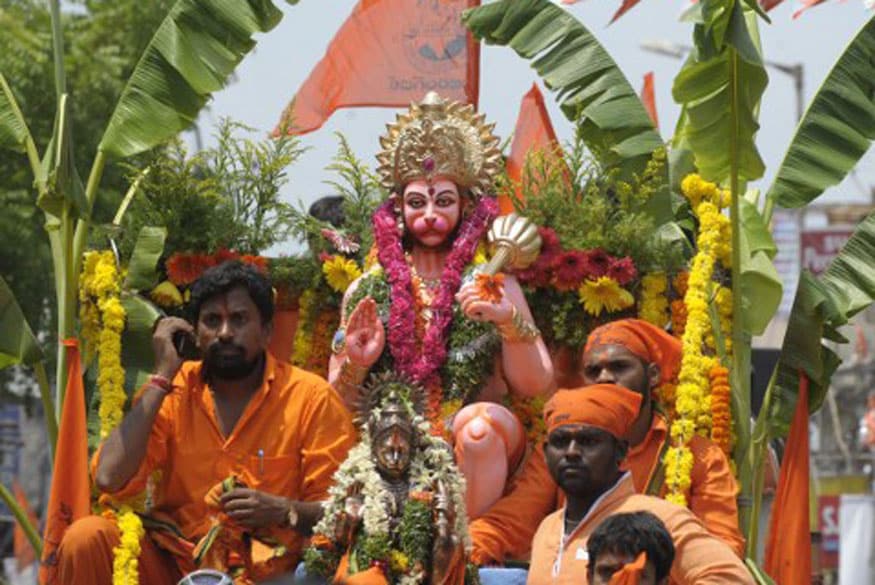
Celebrating the birth of India’s ancient superhero, Hanuman Jayanti is celebrated on different days in different parts of India. In most states of India, the festival is observed either in Chaitra, usually on the day of Chaitra Pournimaa or in Vaishakha, while in a few states like Kerala and Tamil Nadu, it is celebrated in the month Dhanu, also called Margazhi in Tamil. The date of Hanuman Jayanti varies from year to year and across India, various states and communities celebrate it in different times of the year. Communities in South India usually celebrate this festival during the Margazhi month of Moola Nakshathram as that month is believed to be when Hanuman was born. Telangana and Andhra Pradesh, however, celebrate Hanuman Jayanti from Chaitra Purnima to the tenth day of Krishna Paksha in the month of Vaishaka. Maharashtra places the holiday on the full moon day during the month of Chaitra.This year, the festival is celebrated today, the 8th of April, across India, Nepal, Sri Lanka and across the world where his devotees reside.
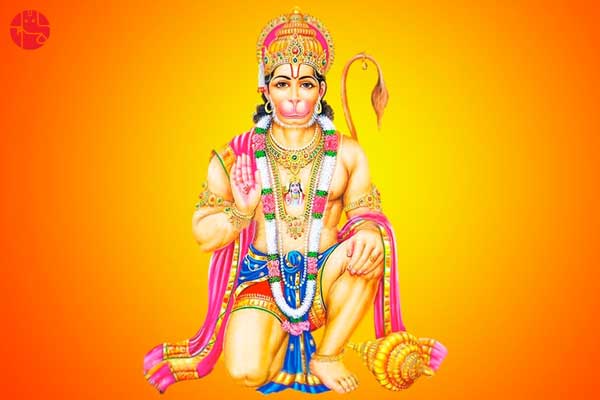
Also known as Sankatmochan, Dukhbhanjan, Maruti Nandan or Pawanputra, Lord Hanuman is an ardent devotee of Lord Sri Rama and is widely known for his unflinching devotion to Sri Rama. He is said to be able to assume any form at will, wield the mace or gada as well as many other celestial weapons, lift and move mountains, dart through the air, seize the clouds and equally rival Garuda in the swiftness of flight. Hanuman is seen as a symbol of strength and energy and also someone to turn to when a devotee is in difficulty.
On Hanuman Jayati, devotees of Lord Hanuman celebrate him and seek his protection and blessings. They flock to temples to worship him and present religious offerings. In return, The devotees receive Prasad or the holy offering by the temple priests as sweets, flowers, coconuts, tilak, sacred ash and holy water. People also celebrate him on this day by reciting various devotional hyms and prayers like the Hanuman Chalisa and reading holy scriptures like the Ramayana and Mahabharata. Lord Hanuman is said to be the epitome of belief, trust and devotion. On this day, devotees pray to imbibe these qualities in their lives and lead a principled life.
Lord Hanuman was born on the Anjaneri mountain. His mother Anjana was an apsara who was born on earth due to a curse. She was redeemed from this curse on giving birth to a son. The Valmiki Ramayana states that his father Kesari was the son of Brihaspati, he was the King of a place named Sumeru. Anjana performed intense prayers lasting 12 long years to Shiva to get a child. Pleased with their devotion, Shiva granted them the son they sought. Hanuman, in another interpretation, is the incarnation or reflection of Shiva himself.
Hanuman is often called the son of the deity Vayu or the Wind God; several different traditions account for the Vayu’s role in Hanuman’s birth. One story mentioned in Eknath’s Bhavartha Ramayana from the 16th century which states that when Anjana was worshiping Shiva, the King Dasharatha of Ayodhya was also performing the ritual of Putrakama yagna in order to have children. As a result, he received some sacred pudding or payasam to be shared by his three wives, leading to the births of Rama, Lakshmana, Bharata, and Shatrughna. By divine ordinance, a kite snatched a fragment of that pudding and dropped it while flying over the forest where Anjana was engaged in worship. Vayu, the Hindu deity of the wind, delivered the falling pudding to the outstretched hands of Anjana, who consumed it. Hanuman was born to her as a result. Another tradition says that Anjana and her husband Kesari prayed Shiva for a child. By Shiva’s direction, Vayu transferred his male energy to Anjana’s womb. Accordingly, Hanuman is identified as the son of the Vayu
Another story of Hanuman’s origins is derived from the Vishnu Purana and Naradeya Purana. Narada, infatuated with a princess, went to his lord Vishnu, to make him look like Vishnu, so that the princess would garland him at swayamvara or the husband-choosing ceremony. He asked for ‘Hari Mukh’ (Hari is another name of Vishnu, and mukh means face). Vishnu instead bestowed him with the face of a vanara. Unaware of this, Narada went to the princess, who burst into laughter at the sight of his ape-like face before all the king’s court. Narada, unable to bear the humiliation, cursed Vishnu, that Vishnu would one day be dependent upon a vanara. Vishnu replied that what he had done was for Narada’s own good, as he would have undermined his own powers if he were to enter matrimony. Vishnu also noted that Hari has the dual Sanskrit meaning of vanara. Upon hearing this, Narada repented for cursing Vishnu. But Vishnu told him not to repent as the curse would act as a boon, for it would lead to the birth of Hanuman, an avatar of Shiva, without whose help Rama (Vishnu’s avatar) could not kill Ravana.
Lord Hanuman is best known for his role in the epic poem and sacred text the Ramayana, which tells the story of the divine Prince Rama. Rama was sent into exile unjustly by his stepmother, Kaikeyi. While in exile, Rama’s wife, Sita, is abducted by the demon Ravana. Much of the epic poem is devoted to Rama’s determined quest to rescue Sita from Ravana. Rama successfully recovers Sita and kills Ravana with the help of the vanara or his monkey army. Rama and Sita return to the kingdom of Ayodhya and usher in a golden age of humanity. Rama, the titular character of the Ramayana, is identified as an incarnation, or avatara, of the god Vishnu.
Hanuman plays a central role in the Ramayana, and his stories are nearly always tied to those of Prince Rama, also called Lord Ram. Even before Hanuman’s birth, it was predicted that he would be a devotee of Lord Ram. After he was born, Hanuman was a trouble maker who, among other feats of mischief, tried to grab the sun from the sky. In response, powerful sages cursed Hanuman and made him forget his magic powers. Hanuman became a loyal servant to Rama and a commander of Rama’s legions of monkeys. The memory of his powers was restored to Hanuman by Jambavan, the king of the bears, and as a result, Hanuman made a giant leap across the strait that lies between India and Sri Lanka, called the Palk Strait today, to steal the medicinal herbs necessary to heal the wounded in Rama’s army. When Hanuman struggled to identify the herbs, he picked up the entire mountain and brought that back to India. Before Hanuman left Sri Lanka, his tail was set on fire. Hanuman, however, used this fire to burn Sri Lanka to the ground.
Hanuman is held up as the embodiment of loyalty and devotion and these admirable traits are recognized year round at temples dedicated to Hanuman and given special attention during Hanuman Jayanti. During Hanuman Jayanti, Hindus take an early morning holy bath and either attend temples dedicated to Hanuman or perform puja at home if they have their own shrine dedicated to Hanuman. The Hanuman Chalisa is read in order to conquer evil spirits and provide mental peace to those reading and listening. People apply red powder to their foreheads in an echo of how Hanuman covered his whole body in sindoor to ensure Rama’s immortality. There is an interesting legend to why Hanuman covered his body with Sindoor. As per the legend, when Lord Hanuman found Sri Sita applying sindhūr to her forehead, He questioned her and she replied that doing so would ensure a long life for her husband, Lord Sri Rama. Lord Hanuman then proceeded to smear his entire body with sindhūr, thus ensuring Lord Sri Rama’s immortality.
Hanuman is also celebrated as a symbol of devotion, strength, magical powers and energy and also as the 11th Rudra avatara of the great god Shiva. Many devotees pray to Hanuman to be blessed with bravery, intelligence and loyalty like that which Hanuman displayed.
Hanuman is a popular god among Hindus, and his temples are often filled with monkeys who know that humans cannot harm them so long as they are on temple grounds. Hindus, however, are not the only ones who recognize Hanuman. Hanuman also appears in Buddhism, Sikhism and Jainism as well as in Indian pop culture.
Hanuman has been honored for millennia, and that fact has not changed in the modern age. Thousands still flock to his temples and wear sindoor in recognition of his devotion to Rama. Hanuman himself would likely be pleased with this. There is, after all, something perfect about the determined loyalty of Hindus to the god who was known for his faithfulness.
Here’s the divine voice of the late singer M.S. Subbalakshmi reciting the Hanuman Chalisa to end this blog post!
At forty, Sylvie Schiffer has everything: a gorgeous house, two perfect children, a successful husband with a lucrative business. Everything but what she wants most: passion and romance.
With the twins off to college, Sylvie thinks her marriage is about to bloom, until she discovers that her husband, Bob, is already seeding the garden–with a woman named Marla!
When Sylvie confronts Marla, she gets the shock–and inspiration—of her life. Except for ten years and fifteen pounds, she and Marla could be twins. But all is not bliss even for Marla.
Though she has the best of love–romantic presents, hot sex, candlelit dinners–she lacks the one thing she wants most: a husband of her own. Going beyond revenge, Sylvie hatches a brilliant, hilarious, and daringly outrageous scheme that just might fulfill both their wildest dreams…or leave them with nothing but two broken hearts.
The word ‘health’ comes from the old English ‘hale’ which means ‘whole’ or ‘complete’. The World Health Organisation or WHO has given an international definition of health: “Health is a state of complete physical, mental and social well-being and not merely the absence of disease or infirmity.”
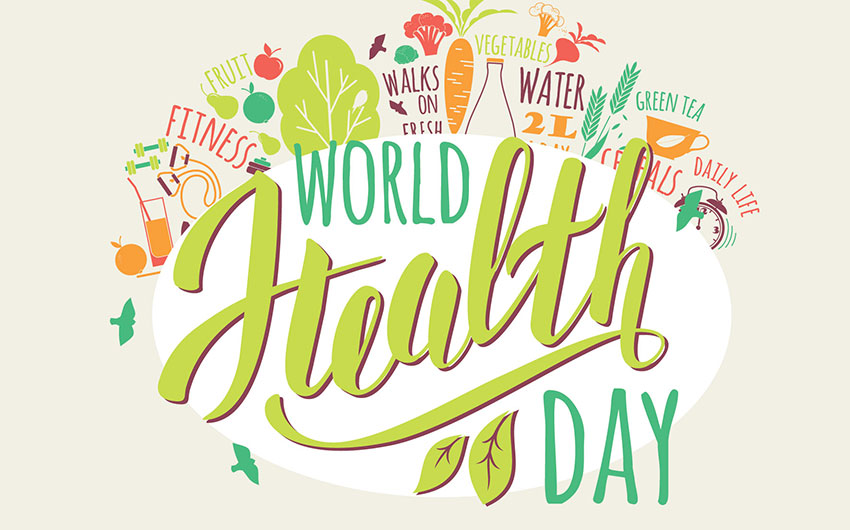
Tomorrow, April 07 marks the celebration of World Health Day. A global health awareness day, this day, held to mark the founding of the World Health Organisation is celebrated every year and is aimed to create awareness of a specific health theme to highlight a priority area of concern for the WHO. On this day, the WHO organizes international, regional and local events on the Day related to a particular theme. World Health Day is acknowledged by various governments and non-governmental organizations with interests in public health issues, who also organize activities and highlight their support in media reports, such as the Global Health Council. The World Health Day is one of eight official global health campaigns marked by WHO, along with World Tuberculosis Day, World Immunization Week, World Malaria Day, World No Tobacco Day, World AIDS Day, World Blood Donor Day, and World Hepatitis Day. Over the past 50 years this has brought to light important health issues such as mental health, maternal and child care, and climate change. The celebration is marked by activities which extend beyond the day itself and serves as an opportunity to focus worldwide attention on these important aspects of global health.
Why is health important? The way the body works depends on a person’s health. The body is designed to deal with everyday obstacles in order to be able to live life to the full, but poor health makes these everyday obstacles become larger and more difficult to overcome. For some the odds of leading a healthy life are stacked against them from the start. Health is important to everything a person does. Poor health affects people differently.
Health is also often thought of in terms of illnesses which endanger it like AIDs, Malaria and Tuberculosis – three of the most devastating diseases and today we could probably include Covid-19 which is has been the deadliest disease our generation has seen which has now been called a pandemic as it has extended over pretty much all continents with the exception of Antartica. The world we live in is a world that is increasingly interconnected and though this brings many benefits it also brings responsibility. Health is a shared responsibility, which means ensuring equal access to essential healthcare and collective action to health threats in different countries to look after those that are sick and to stop deseases from spreading.
The theme for the 2020 edition is a focus on health support staff with the theme being “Support Nurses and Midwives”. World Health Day 2020 will shine a light on the vital role played by nurses and midwives in providing health care around the world, and call for a strengthening of the nursing and midwifery workforce. There was supposed to be “dawn to dusk” advocacy events held around the world to mark World Health Day, but given the conditions we now live in and with health workers globally being streteched thin, I doubt if this is possible. There was supposed to be the launch of the first ever State of the World’s Nursing Report 2020, a report which will provide a global picture of the nursing workforce and support evidence-based planning to optimise the contributions of this workforce to improve health and wellbeing for all. This report will provide a global picture of the nursing workforce and support evidence-based planning to optimize the contributions of this workforce to improve health and wellbeing for all and to make meaningful progress toward UHC and the SDGs. The report will set the agenda for data collection, policy dialogue, research and advocacy, and investment in the health workforce for generations to come. A similar report on the Midwifery workforce will be launched in 2021.
The WHO has also designated 2020 as the Year of the Nurse and the Midwife and the 2020 theme follows this. Nurses and midwives play a vital role in providing health services. These are the people who devote their lives to caring for mothers and children; giving lifesaving immunizations and health advice; looking after older people and generally meeting everyday essential health needs. They are often, the first and only point of care in their communities. The world needs 9 million more nurses and midwives if it is to achieve universal health coverage by 2030. This is why 2020 has been designated the year of the nurse and midwife.
Educating nurses and midwives to international standards makes economic sense. It saves resources by reducing the need for costly and unnecessary interventions and increases quality of care and health for all. Strengthening nursing and midwifery – and ensuring that nurses and midwives are enabled to work to their full potential – is one of the most important things countries can do to achieve universal health coverage and improve health globally. This is especially true in times of epidemics as we are in now. By developing nursing and midwifery, countries can achieve the triple impact of improving health, promoting gender equality and supporting economic growth. Strengthening nursing and midwifery will have the additional benefits of promoting gender equity (SDG5), contributing to economic development (SDG8) and supporting other Sustainable Development Goals.
The goals for World Health Day 2020 include triggering a wave of public appreciation for the work of nurses and midwives and the part they play in delivering health care; raise the profile of nurses and midwives within the health workforce and catalyse support and investment in nurses and midwives.
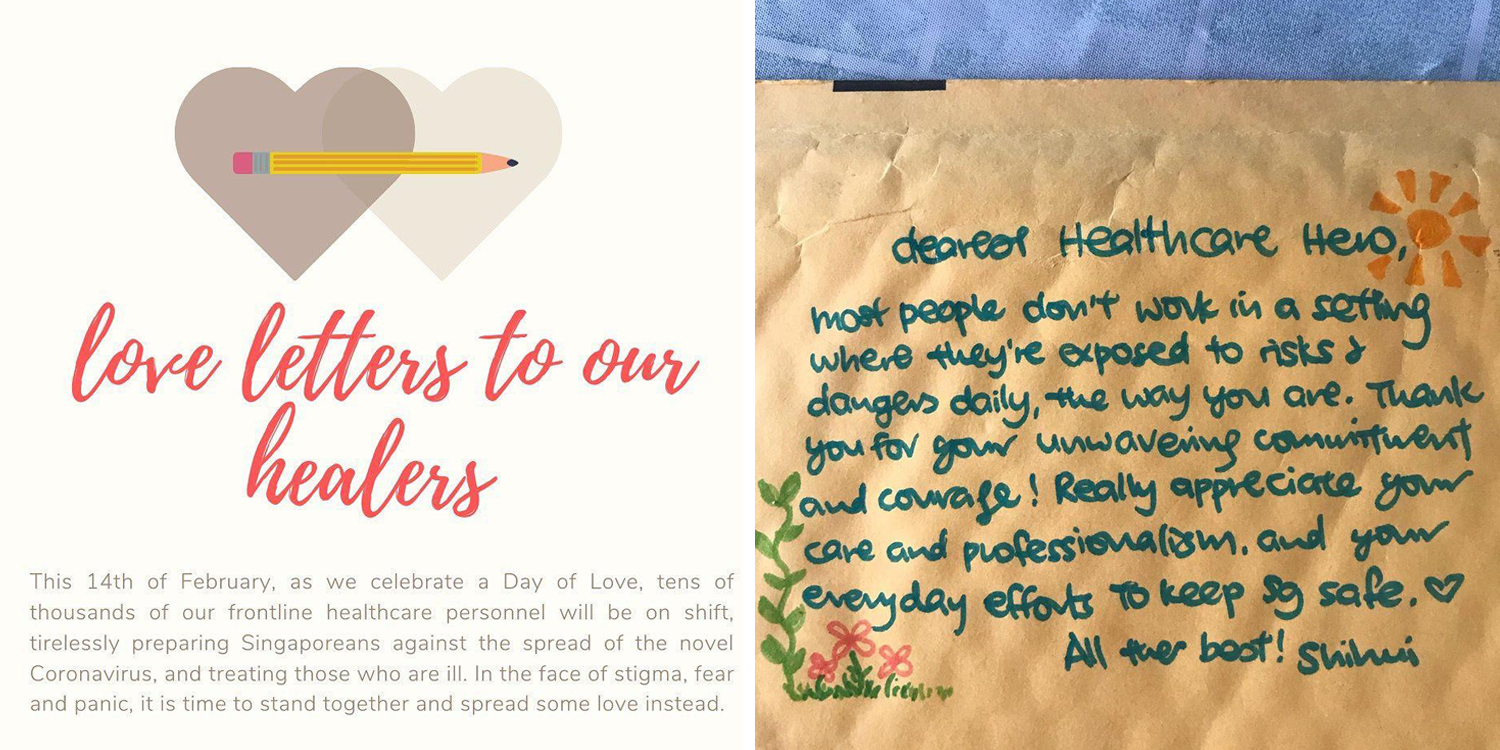
Tomorrow, please remember to thank all healthcare workers in your country. They are risking their lives on a daily basis and in many countries don’t have access to proper preventive personal equipment just so they can save our lives!
We’re now in the month of April and are still at home. On Friday, the Singapore government announced that it was implementing full home based learning for all schools, colleges and institutes of higher learning for about a month and then they will take it from there. BB & GG as well as the other incoming poly freshmen will have to go to school once between now and April 20 when school starts to meet some classmates as well as their mentor and then get set up for e-learning until the time schools open for everyone. I also heard from someone else that all graduation ceremonies have been cancelled and students are understandably very upset about this. But this is something that nobody expected, so we just have to take things in our stride. Pre schools and childcare centres will also be completely closed down during this period.
Workplaces have also been told to close for the next month unless you belong to an essential service. For those parents who can’t afford to work from home or work in a service which can’t be closed down, schools and pre-school centres plus childcare centres will be open for their children who will be supervised there.
Singapore’s Covid-19 postive cases has hit more than 1000 now and unfortunately, 6 people, all elderly, have died from the virus so far.
I have also been quite worried about my parents who are alone in India. Because of the lockdown they are unable to get out of the house, especially since they are amongst the most vulnerable group. Luckily there are some NGOs who are helping the elderly who live alone as well as an ex-helper of my mum who will send her husband with the necessities they need when my mum calls her.
With so much negativity in this world today, it is getting increasingly hard to stay positive. It is hard, but think of happier times, watch funny videos, support your neighbours, especially the vulnerable and take advantage of the extra time you now have to do something you have always wanted to do, but never found the time to do.
Take care folks and stay healthy. Don’t leave your homes unless absolutely necessary and stay safe!






 Memories and Such