

In the modern workplace, visibility is key to career advancement. Being noticed for your contributions, ideas, and efforts can open doors to new opportunities, promotions, and recognition. However, many young adults entering the workforce struggle with making themselves visible, especially in environments where competition is high or where they feel overshadowed by more experienced colleagues.
Why is workplace visibility important? Visibility ensures that your efforts are acknowledged. When you’re visible at work, managers and colleagues recognise your value to the team. This recognition can lead to rewards such as promotions, bonuses, or leadership opportunities. Being visible can fast-track your career growth. Employers are more likely to consider individuals who consistently demonstrate their skills and make an impact when assigning high-profile projects or leadership roles. Visibility fosters stronger relationships with colleagues and supervisors. When people know who you are and what you contribute, they’re more likely to collaborate with you and advocate for your success. Visibility helps establish your credibility and expertise in your field. By showcasing your knowledge and skills, you position yourself as a reliable and valuable team member. Lastly, when you’re visible at work, opportunities often come your way organically, whether it’s being invited to join important projects, representing the company at events, or taking on new responsibilities.

What challenges do young adults face on the way to becoming visible?
- Lack of confidence: Entering the workforce can be intimidating, especially when surrounded by more experienced colleagues. Young professionals may doubt their abilities or hesitate to speak up.
- Fear of rejection: The fear of being judged or rejected can prevent young adults from sharing ideas or seeking recognition.
- Workplace hierarchies: In hierarchical workplaces, junior employees may feel overshadowed by senior staff or believe their contributions are less valued.
- Introversion: Introverted individuals may find it challenging to assert themselves in group settings or actively seek visibility.
- Unclear goals: Without clear career goals, young adults may struggle to identify how they want to be seen or recognised at work.
So how can you become more visible at work? Becoming visible at work doesn’t mean being loud or attention-seeking; it’s about demonstrating value and building meaningful connections within your organisation. Here are strategies young professionals can use:
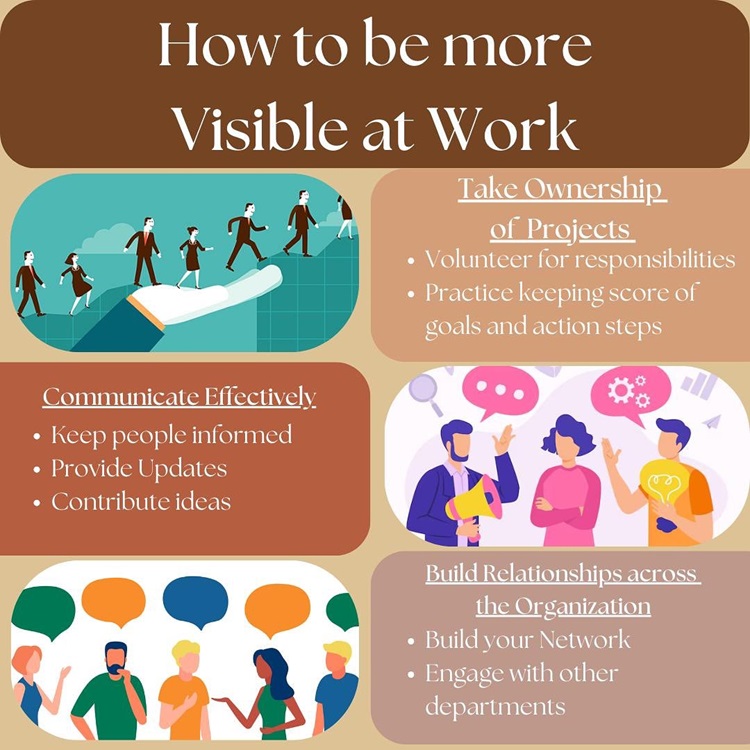
Excel in your role: The foundation of workplace visibility is performing well in your job. Consistently delivering high-quality work ensures that people notice your contributions. Meet deadlines and always complete tasks on time, and exceed expectations when possible. Take the initiative and volunteer for projects or responsibilities that align with your skills and interests. Pay attention to detail and ensure accuracy and thoroughness in everything you do, whether it’s crafting a report or organising a presentation.
Communicate effectively: Effective communication is crucial for making yourself known at work. Speak up in meetings and share ideas confidently during discussions or brainstorming sessions. Ask questions, show curiosity, and be engaged by asking thoughtful questions about projects or company goals. Provide updates and keep supervisors informed about your progress on tasks or projects without waiting for them to ask.
Build relationships: Networking within your organisation is essential for visibility. Connect with colleagues by building rapport with coworkers across departments. Engage with supervisors and schedule one-on-one meetings with your manager to discuss goals, feedback, and career development. Participate in social events by attending company gatherings or team-building activities to strengthen relationships outside work tasks.

Showcase your expertise: Demonstrating your knowledge and skills helps establish credibility. Share knowledge and offer insights during meetings or discussions based on your expertise. Volunteer for training sessions by leading workshops or training sessions on topics you’re skilled in. Contribute ideas by suggesting innovative solutions or improvements that add value to the organisation.
Take ownership: Taking ownership of tasks shows initiative and accountability. Lead projects and volunteer to take charge of small projects or assignments. Solve problems by identifying challenges within the workplace and propose actionable solutions. Follow through and ensure that any task you take is completed successfully and professionally.
Develop a personal brand: Creating a personal brand helps distinguish yourself from others in the workplace. Identify your strengths and reflect on what makes you unique, whether it’s creativity, technical skills, or problem-solving abilities. Be consistent and ensure that your actions align with the values and strengths you want to be known for. Leverage social media by using professional platforms like LinkedIn to share achievements, articles, or insights related to your field.
Seek feedback: Feedback provides valuable insights into how others perceive you and where you can improve. Ask for constructive criticism by regularly seeking feedback from supervisors about your performance. Implement suggestions and show that you value feedback by acting on recommendations for improvement. Request recognition and if appropriate, ask managers for public acknowledgment of successful projects or contributions.
Network beyond your team: Visibility isn’t limited to your immediate team; building connections across the organisation broadens your reach. Collaborate across departments and volunteer for cross-departmental projects that expose you to new teams. Attend company-wide meetings and participate actively in meetings involving multiple teams or divisions. Introduce yourself, and don’t hesitate to introduce yourself to senior leaders during events or casual interactions.
Stay positive: A positive attitude contributes significantly to workplace visibility. Be approachable and maintain an optimistic demeanor that encourages colleagues to engage with you. Support others and celebrate coworkers’ successes, and offer help when needed. Handle criticism gracefully and accept constructive criticism with humility, using it as an opportunity for growth.
Document your achievements: Keeping track of accomplishments ensures that they don’t go unnoticed during performance reviews or promotions discussions. Maintain a portfolio by creating a portfolio showcasing successful projects, reports, presentations, or other contributions. Highlight results and quantify achievements where possible (e.g., “Increased sales by 20%”). Share success stories so you can discuss accomplishments during one-on-one meetings with supervisors.

Introverted individuals often face unique challenges in becoming visible at work but can leverage their strengths effectively. Focus on one-on-one interactions and build relationships through individual conversations rather than large group settings. Prepare ahead of time and plan talking points before meetings so you feel confident sharing ideas when opportunities arise. Leverage written communication by using emails or reports as tools for showcasing ideas clearly without needing verbal presentations. Play to your strengths and highlight qualities like active listening, thoughtfulness, and analytical thinking during discussions or problem-solving sessions. Choose strategic opportunities and participate selectively in activities where visibility aligns with comfort levels such as leading small projects rather than public speaking engagements.
While striving for visibility is important, certain behaviours can undermine efforts. Don’t overpromise with delivering, and avoid taking on too many tasks if it compromises quality; focus on delivering consistent results instead of spreading yourself thin. Don’t seek attention excessively because visibility should stem from genuine contributions rather than attention-seeking behavior that detracts from professionalism. Don’t ignore feedback by dismissing constructive criticism, as your growth can be hindered; embrace feedback as an opportunity for improvement instead. Don’t neglect relationships by focusing solely on tasks while ignoring interpersonal connections limits long-term visibility potential within organisations.
Becoming more visible at work is not about shouting louder than everyone else: it’s about consistently demonstrating value while building meaningful relationships! By excelling in their roles, communicating effectively, showcasing their expertise, and developing personal brands, young adults will position themselves favorably within competitive workplaces. Remember, it’s not merely about being seen; it’s about ensuring that what others see reflects authenticity and professionalism. Embrace these strategies today and watch as new opportunities unfold tomorrow!








 Memories and Such