Festivals of India: Ganga Sagar Mela

The Ganga Sagar Mela is one of India’s grandest and most spiritually charged festivals, taking place at the holy confluence of the Ganges River and the Bay of Bengal on Sagar Island, West Bengal. The festival attracts millions of devotees, saints, and tourists who gather to seek purification, find salvation, and celebrate.

The Ganga Sagar Mela is deeply rooted in Hindu mythology and legendary stories that have been passed down over millennia. The saga begins with King Sagar, whose 60,000 sons were cursed and reduced to ashes by Sage Kapil after mistaking him for a thief during their quest for a sacrificial horse. The souls of these princes could not attain moksha or liberation, leading their descendant King Bhagirath to undertake intense penance to bring the river Ganga from the heavens to earth. However, Ganga’s descent was so powerful that it threatened to destroy the earth. Lord Shiva agreed to absorb her mighty force in his matted locks or jata, allowing her to flow gently onto the world. Ganga finally touched earth at Gangotri, but it was at Sagar Island, where her waters merge with the Bay of Bengal, that Bhagirath was able to perform the necessary rites and liberate the souls of his ancestors. This epic tale is the heart of Ganga Sagar’s spiritual significance, and the location itself derives its name from King Sagar. The Ganges River is also called Bhagirathi in honour of King Bhagirath’s perseverance and devotion.

Various stories and beliefs enhance the festival’s allure. Local myth holds that a bath in the Ganga Sagar during Makar Sankranti washes away one’s sins and bestows salvation. It is believed that the Kapil Muni temple marks the exact spot where Sage Kapil meditated and the fateful incident with King Sagar’s sons occurred. The Mahabharata also references the importance of bathing at Ganga Sagar for spiritual merit, further entrenching its sacred reputation.

The Mela is celebrated with vital Hindu rituals, vibrant displays of spirituality, and a remarkable atmosphere of devotion. The central ritual is the holy dip, the Ganga Snan, in the river at sunrise on Makar Sankranti, which usually falls on 14 or 15 January each year. Pilgrims believe that submerging themselves in the sacred waters cleanses their souls and removes accumulated karma, paving the way for moksha. The dip is followed by prayers and offerings to Lord Surya, the Sun God and to the river goddess herself. After the bath, devotees visit the Kapil Muni Temple to offer prayers and seek blessings. Special pujas and arati ceremonies are conducted in the temple, commemorating Sage Kapil’s role in the legend. Other notable rituals include the lighting of diyas or oil lamps and the chanting of Sanskrit hymns at the riverbanks.

The festival attracts an immense number of ascetics, sadhus, and yogis, who set up camps and perform devotional chants, bhajans, and spiritual discourses. The presence of Naga sadhus, ascetic warriors, often draws attention due to their austere practices and distinctive appearance. Ganga Sagar Mela is not just a religious gathering; it’s a vibrant cultural fair with stalls selling offerings, handicrafts, spiritual artefacts, and local cuisine. The fairgrounds are abuzz with devotional songs, dance, and performances, showcasing the cultural heritage of Bengal. Charity and almsgiving, or daan, is considered highly auspicious, and devotees distribute food, clothing, and basic commodities to the needy. The observance of Shraddhas, which are the rituals for ancestors, by priests and devotees are an echo of Bhagirath’s original rites.

In recent years, Ganga Sagar Mela has grown exponentially, now welcoming millions, making it the second-largest Hindu festival after the Kumbh Mela. Local government and organisations facilitate safe logistics, tent accommodation, security, and healthcare for the multitude of pilgrims. Special transport arrangements, temporary shelters, and emergency medical services ensure smoother experiences amid the surge of crowds.

The festival is a magnificent tapestry of faith, unity, and tradition, representing the enduring power of mythology in the modern age. The Ganga Sagar Mela celebrates liberation from the cycle of reincarnation, a fundamental concept in Hindu philosophy. It demonstrates the profound relationship between the spiritual and the physical in Hindu belief: “the act of pilgrimage, communal worship, and the connection to ancient legends come alive every year”. The gathering is also an expression of cultural diversity, as devotees of every background, nationality, and sect converge at Sagar Island.

While the Ganga Sagar Mela itself is the centrepiece, the surrounding area offers further sites of interest. The Kapil Muni Temple is where pilgrims pay homage to the ancient sage, and many meditate there, seeking spiritual tranquillity. Sagar Lighthouse and Port is a scenic landmark providing views of the confluence and the crowds. The Ramakrishna Mission Ashram is a centre for spiritual study and service while the island’s serene beaches are a haven for reflection and relaxation amid the spiritual fervour.

The Ganga Sagar Mela continues to cement its role as a cornerstone of spiritual unity and celebration in India. The myths and legends surrounding the event infuse the gathering with sacred meaning, while its rituals offer avenues for purification, devotion, and the hope of eternal liberation. Each year, as millions gather at Sagar Island, ancient stories are relived, traditions are renewed, and faith is reaffirmed—making the Ganga Sagar Mela an unforgettable tapestry of myth, ritual, and communal spirit.

In My Hands Today…

Proto: How One Ancient Language Went Global – Laura Spinney

As the planet emerged from the last ice age, a language was born between Europe and Asia, by the Black Sea. This ancient tongue, which we call Proto-Indo-European, soon exploded out of its cradle, changing and fragmenting as it went, until its offspring were spoken from Scotland to China. Today, those descendants constitute the world’s largest language family, the thread that connects disparate languages, such as Dante’s Inferno and the Rig Veda, to the love poetry of Rumi and The Lord of the Rings. Indo-European languages are spoken by nearly half of the world’s population. How did this happen?

Laura Spinney set out to answer that question, retracing the Indo-European odyssey across continents and millennia. With her we travel the length of the steppe, navigating the Caucasus, the silk roads and the Hindu Kush. We follow in the footsteps of nomads and monks, Amazon warriors and lion kings – the ancient peoples who spread these languages far and wide. In the present, Spinney meets the scientists on a thrilling mission to retrieve those lost the linguists, archaeologists and geneticists who have reconstructed this ancient diaspora. What they have learned has vital implications for our modern world, as people and their languages are on the move again. Proto is a revelatory portrait of world history in its own words.

Beat the Quit: Outsmarting Quitters Day and Winning at Resolutions

Quitters Day, observed on the second Friday of January, has become a cultural milestone that spotlights a common challenge: keeping New Year’s resolutions.

What Is Quitters Day? Quitters Day refers to the day when most people give up on their New Year’s resolutions, typically falling on the second Friday of January. Coined through analysis of data from fitness apps such as Strava, this day marks the point at which enthusiasm for ambitious goals starts to diminish and the realities of daily life set in. While the name may seem tongue-in-cheek, Quitters Day represents a genuine phenomenon rooted in human behaviour and motivation.

The concept of setting goals for the new year dates back roughly 4,000 years to the ancient Babylonians, who made promises to gods at the start of their calendar year (which began in spring, not January). With time, this tradition evolved and became a global practice, with January 1 serving as a symbolic reset for millions.

Quitters Day’s specific origin is data-driven: In 2019, Strava analysed 800 million activities logged by users and found that most give up on their resolutions by the second Friday of January. Recognising a sharp drop-off in goal-oriented activity, Strava dubbed this day “Quitters Day.” Since then, the day has been covered by major media and wellness advocates as an opportunity not to mock, but to encourage reflection, refocusing, and resilience.

Why do we quit? The psychology behind giving up
Most people start the year with ambitious resolutions: lose weight, get fit, save money, or eat healthier, but the drive and novelty quickly dwindle as daily routines and challenges resume. Studies show that up to 80% of New Year’s resolutions fail by February, and only about 6% of people persist through the year.

Common psychological barriers include:

  • Overambition: Setting unrealistic or overly broad goals leads to discouragement when progress is slow or setbacks occur.
  • Loss of motivation: The initial excitement wears off after a few weeks, making routines feel burdensome.
  • Lack of social support: Isolation makes it harder to stick to challenging habits, while support systems strengthen accountability.
  • Neglecting process: Focusing solely on outcomes rather than the daily habits that produce results can undermine motivation and adaptability.

Strategies to stay on track
Defeating Quitters Day and making resolutions last throughout the year is possible with intentional preparation, realistic goals, and proactive strategies. Below are proven tips and tricks:

  • Be picky with resolutions: Choose one or two meaningful goals rather than a long list. This prevents overwhelm and sets the stage for success. Being specific with resolutions, such as “go to the gym thrice a week” rather than “get fit,” also helps clarify the path forward.
  • Plan and prepare: Effective planning includes scheduling time for your goal, anticipating possible setbacks, and breaking down your resolution into smaller, actionable steps. For example, if quitting smoking is the target, research average timelines and expected withdrawal symptoms, and get support ready for tough moments.
  • Focus on process, not just outcomes: Success comes from developing daily habits rather than chasing distant results. Emphasise routines and create a supportive environment that fosters your goals: keep healthy snacks handy if you’re seeking to eat better, lay out workout clothes in advance for exercise objectives, and use reminders to keep commitments top-of-mind.
  • Create a supportive social network: Studies highlight that accountability and support strengthen the likelihood of sustaining habits. Join online communities, fitness groups, or simply share your goals with a friend or partner who can encourage and motivate you. Being part of a tribe lightens the emotional load and transforms challenges into collective endeavours.
  • Track progress and celebrate wins: Monitor your efforts and celebrate even the smallest successes. Use journals, apps, or planners to record achievements, reflect on setbacks, and measure growth over time. Small milestones, like completing a workout or resisting a craving, reinforce positive behaviour and keep motivation high.
  • Stay flexible and resilient: Anticipate setbacks and view them as learning opportunities, not failures. Life will disrupt routines and present temptations, but developing strategies for getting back on track is crucial. Recommit to your goal for a day, then a week; incremental recommitments compound into lasting habits.
  • Make goals specific and measurable: Use the SMART framework, which stands for specific, clear, and concrete goals; measurable and trackable outcomes; achievable and realistic expectations; relevant and personally meaningful; and time-bound deadlines or schedules set. Instead of “exercise more,” try “run 2 miles on Monday, Wednesday, and Friday for 2 months,” a goal you can monitor and adjust.
  • Keep a written commitment: Write goals down and revisit them regularly. People who articulate their objectives are significantly more likely to achieve them. Posting notes, using digital reminders, or sharing commitments on social media can raise accountability and reinforce intentions.
  • Embrace positive self-talk: Replacing negative inner dialogues (“I’ll never stick with this”) with encouraging ones (“I’ve made it this far; I can continue”) helps maintain persistence. Visualise success, use affirmations, and focus on progress rather than perfection.
  • Return after slipping up: Missed workouts or momentary lapses don’t equal failure. View setbacks as inevitable and temporary. Instead, recommit immediately, focusing on short intervals, day by day or week by week, until momentum returns.

Countless individuals have turned around their Quitters Day experiences by leveraging these strategies. For example, some have found that exercise adherence improves dramatically when joining group classes or training with a partner. Others report that food journaling, regular reflection, and celebrating tiny victories create positive reinforcement loops that sustain motivation long-term.

From quitting to thriving
Quitters Day puts a spotlight on a widespread challenge but also creates opportunities for growth, reflection, and renewed determination. Use Quitters Day as a checkpoint: reassess, adapt your approach, and recommit with fresh energy and smarter tactics.

Success with New Year’s resolutions is not about avoiding setbacks but developing resilience, adaptability, and self-compassion in how goals are pursued. Each stumble can be a step toward long-term change if met with persistence and strategic adjustments.

Actionable Tips
Success with New Year’s resolutions relies on building strong habits and choosing achievable objectives. Start by setting realistic goals, focusing on just one or two key changes rather than tackling an overwhelming list. This approach streamlines attention and energy, making progress more attainable. Planning is pivotal; break goals into smaller, actionable steps and anticipate obstacles, preparing solutions in advance to boost follow-through.

Instead of placing all focus on future outcomes, prioritise the everyday processes that lead to change. Daily routines and thoughtful adjustments become the true drivers of long-term success, while building a supportive network elevates commitment and accountability. Whether teaming up with a friend or joining a group, sharing your goals increases motivation and helps overcome challenges.

Tracking progress and celebrating wins along the way reinforce good habits and maintain inspiration. Even small milestones warrant recognition, fostering positive momentum. By embracing setbacks and remaining flexible, recommitting after slips, individuals cultivate resilience and the capacity for growth. To further enhance commitment, write down goals in visible places and revisit them regularly; this practice helps reinforce intentions and clarifies priorities.

Positive self-talk is another powerful tool. Encouraging affirmations and a constructive mindset shape persistence as obstacles arise. Ultimately, returning to your aim after setbacks and narrowing your focus to short-term intervals helps regain momentum, proving that sustainable improvement is founded on resilience, adaptability, and self-compassion.

If the second Friday in January finds motivation waning and old habits creeping back, remember: Quitters Day isn’t an endpoint, but an invitation to pause, regroup, and press forward. With realistic planning, focus on process, enduring support, and flexibility, every resolution can become a sustainable new reality.

2026 Week 02 Update

It’s the second week of January, and it’s the time when New Year’s resolutions typically start to slacken. So my advice to you all is to stay the course. Try and stay with your resolutions for January, and you’ll soon see it becoming second nature.

Today’s quote by Marie Ray, a writer and poet whose work often explored themes of presence, creativity, and the urgency of living authentically, is a gentle but firm reminder of life’s urgency. It speaks to how easily we postpone the things that matter, convincing ourselves there will be more time later. More clarity. More courage. A better moment. Ray cuts through that illusion. There is no endless runway ahead of us. There is only now. The quote balances beauty with truth. Calling the present moment “sparkling like a star” reminds us how precious and alive it is. At the same time, describing it as “melting like a snowflake” highlights how fleeting it can be. The moment you notice it, it’s already slipping away. This isn’t meant to create panic, but awareness. When you truly grasp how temporary each moment is, procrastination starts to feel costly.

Ray isn’t asking for reckless action or dramatic leaps. She’s pointing toward honest movement. Start where you are. Do the small version of the thing you keep delaying. Write the first paragraph. Make the call. Say the truth. Choose the life-aligned option instead of the safe one. Waiting for certainty often becomes a way of avoiding responsibility for our own happiness. At its core, the quote is about presence and courage. When you act now, you honour both the fragility and the brilliance of being alive. You stop living as though time is guaranteed and start living as though this moment matters. Because it does.

Life is ongoing, and while 2025 did not end the way I hoped it would, 2026 has begun with hope and the promise of a better year. GG has started her internship and is thriving in her chosen field. This is a graduation requirement, but she still has a few courses that she will take this semester. BB is at home, trying to figure out what he wants to do next. He is also applying for university and will get his driver’s license while waiting.

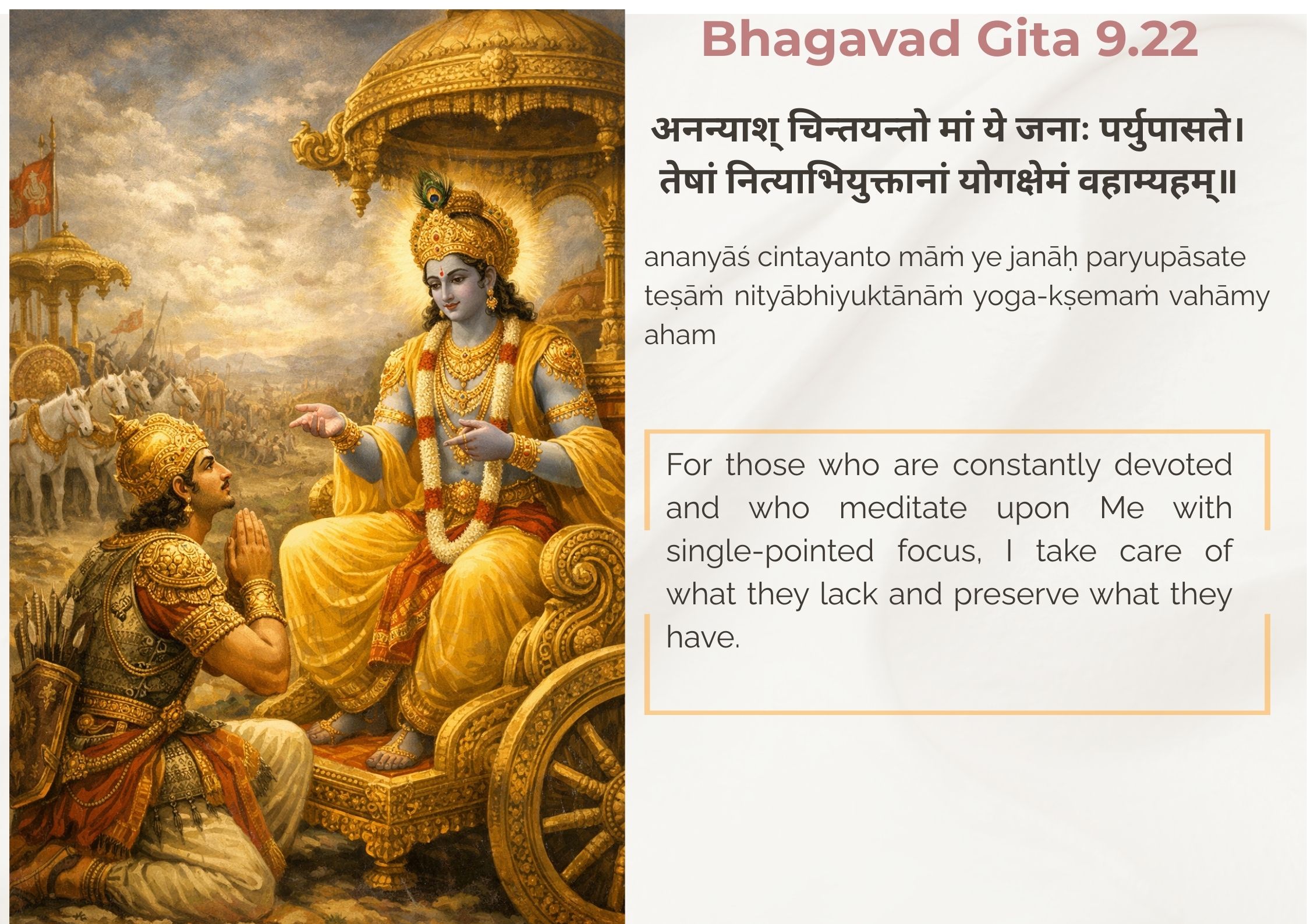
Today’s verse slices straight through comparison culture. The Gita makes it clear: you can win someone else’s race and still lose your life’s meaning. Your dharma isn’t your job title, your résumé, or your social status. It’s your inner compass, your natural blend of talents, tendencies, and temperament. When you imitate someone else’s path because it looks safer, shinier, or socially approved, you lose the steady foundation that comes from authenticity. Imitation always carries anxiety, because you’re operating with borrowed choices.

Following your own path, even clumsily, is the only route to growth that actually transforms you. Imperfection becomes a teacher, not a threat. Fear dissolves because you’re not pretending anymore. This verse is a reminder that your life is not supposed to look like anyone else’s timeline. Your dharma is not mass-produced. It is handcrafted by your story, your struggles, and your strengths. Live it. Even messily, especially messily. That’s where real progress begins.

And in the same vein, the light within you can never be extinguished. This inner source of power guides you through even the darkest moments of your life, allowing you to choose love and trust over fear. On the days you feel lost, remind yourself that this light is your constant source of strength, and nothing can ever take away what lives at your core. You have the power to endure and rise after even the fiercest storms. No setback or obstacle has the power to keep you from what is inherently yours. What belongs to you cannot be lost; it will always come back to you.

With those words, here’s to a beautiful second half of January!

In My Hands Today…

Persians: The Age of the Great Kings – Lloyd Llewellyn-Jones

The Achaemenid Persian kings ruled over the largest empire of antiquity, stretching from Libya to the steppes of Asia and from Ethiopia to Pakistan. From the palace-city of Persepolis, Cyrus the Great, Darius, Xerxes, and their heirs reigned supreme for centuries until the conquests of Alexander of Macedon brought the empire to a swift and unexpected end in the late 330s BCE.

In Persians, historian Lloyd Llewellyn-Jones tells the epic story of this dynasty and the world it ruled. Drawing on Iranian inscriptions, cuneiform tablets, art, and archaeology, he shows how the Achaemenid Persian Empire was the world’s first superpower—one built, despite its imperial ambition, on cooperation and tolerance. This is the definitive history of the Achaemenid dynasty and its legacies in modern-day Iran, a book that completely reshapes our understanding of the ancient world.