I’ve been blogging for some time now, but have never gotten nominated for an award, so when bibliofiles nominated me for the Miranda Sings award, I was quite thrilled! Thanks, bibliofiles13 for this nomination.
I’ve not yet heard about this award, but googled Miranda Sings and got to learn about this character. Seems to be an interesting show and a funny character and hopefully I will be able to catch more of this soon! Have you seen this show before? I’d love to know what you think of it.
RULES
Announce your win with a post, and link the blogger who nominated you.
Include the featured image on your blog post.
Nominate 10 bloggers (or as many as you can think of) and link your awardees in the post.
List 7 things you love about yourself. (This can be about your appearance, your personality, your achievements, etc.)
Don’t use negative connotation (i.e. Don’t say things like – “I’m prettier than an average person.” or “People have told me I’m smart.” You are pretty. You are smart.)
Seven Things I love about myself
I am an incredibly loyal person and give my all to my loved ones and friends.
I am a very moral person and have very high standards with which I judge people. When people do not live up to my expectations, I tend to avoid such people.
I am a huge reader, I can read pretty much anything and everything. I have been known to read the wrappers in which produce comes wrapped in.
I love that I am a good cook and am able to make yummy and tasty meals for my family.
I consider myself a decent writer and hope that sometime in the future, I may have a second career in writing.
I am a good mum and put my children before anything and anyone else. I can also be a tiger mum at times.
I always see the glass as half filled rather than half empty. I try to be positive all the time and look at the brighter side of life all the time.
So there’s seven things about me. I nominate the following bloggers for the award:
Another sort of boring week for me! My parents landed in Singapore and it’s been a week of spending time with them.
Other than that, I’m back to my usual routine of looking for a new job. I’ve sent some applications, but none have bitten so far. I really hope that I am more successful this time around and don’t have to wait so long to get another position.
I am also prepping for the biggest festival in the Hindu calendar – Deepavali or Diwali as it is called in the northern parts of India! We’ve started cleaning the house and my mum and I have started deciding on what to make (sweets and savouries) for the festival. The children still have exams going on and once it ends (by the end of this week), I’ll take them shopping to buy new clothes.
Have a wonderful week folks! Hope that next week I have more to share….
Impostor syndrome (also known as impostor phenomenon or fraud syndrome or the impostor experience) is a concept describing individuals who are marked by an inability to internalize their accomplishments and a persistent fear of being exposed as a “fraud”. The term was coined in 1978 by clinical psychologists Pauline R. Clance and Suzanne A. Imes. Despite external evidence of their competence, those exhibiting the syndrome remain convinced that they are frauds and do not deserve the success they have achieved. Proof of success is dismissed as luck, timing, or as a result of deceiving others into thinking they are more intelligent and competent than they believe themselves to be. While early research focused on the prevalence among high-achieving women, impostor syndrome has been found to affect both men and women, in roughly equal numbers
We’ve all been there, done that – convinced we’ve gotten a job or a project because we’ve faked it or perhaps you are getting an award for something and all you can hear in your head is a voice telling you that you will soon be outed for being a fraud! This is nothing but classic imposter syndrome and today’s post is all about that. Why this particular syndrome you may ask? Well, it’s because I am convinced I am 100% guilty of perpetuating this on myself.
Initially, it was thought that more women than men suffered from imposter syndrome, but later it was found to affect both sexes equally. When you are afflicted, you very strongly internally believe that you are not intelligent and you got (insert activity here) by luck or fluke and so you are so incompetent and unworthy of the activity that you will soon be outed as a fraud. I strongly suspect that this is what happened to me in my last position and this is why we parted ways so soon.
The most common symptoms are negative self-talk; a need to constantly check and re-check work; shying away from attention in the workplace; and forms of overcompensation like staying late at work or not setting appropriate boundaries around workload. Internally, people struggling with the syndrome experience persistent feelings of self-doubt and fear being found out as phoney. They over-internalize and blame themselves for failures, even when other factors played a role.
I particularly feel more women than men, especially Asians, suffer from this syndrome as we are generally conditioned to not take credit for our work and also diminish it when we get complimented for anything we do. As I was researching this post, I realised a lot of famous people, both men and women also had moments when they felt they were a complete fraud and it was just time till people figured them out for what they thought they were!
So when you get these pangs, here are some of the things you can do to overcome it:
Accept that you are in this position because you did something that caused people to put you there. Learn to internalise your success and own it. Be proud of your achievements.
Focus on what you bring to the table. When you are a perfectionist, the chances of you believing that you are a fraud is very high because you set such high standards for yourself. Loosen up a bit and learn to accept that sometimes you need not be the best in everything you do. Hyper-competitive people (me included) see every little thing in life as a competition and this is what causes you immense grief where when you can’t attain the lofty self-goal you have set for yourself, you fall down to the depths and think you are a complete failure. So learn to let go, it will make life easier for you in the long run.
Stop comparing yourself to others. This is probably the most important point in overcoming this syndrome. As author Iyanla Vanzant once said, “Comparison is an act of violence against the self”, when you compare and measure yourself against someone, usually more successful than yourself, you start to internalise all your failures (against the said person) and this, in turn, makes you less confident about your own abilities and does not let you celebrate successes.
Celebrate success. When you get complimented for anything, accept it gracefully and with a smile. Most of us, and especially those of us who have internalised this syndrome. The normal reaction to a compliment is to brush it aside as something inconsequential, but the truth is that when someone compliments you for something, it’s because they appreciate what you have done, so accept it and internalise it.
Journal regularly. As an addendum to the previous point, it may help to keep a success journal which highlights all your successes. You could also add in the compliments and kudos you receive, be it work or play and when you need affirmations, all you need to do is go to your journal and read it. Personally, I would prefer to have something online or in the cloud, like perhaps Google Docs so I can access it anywhere and anytime. But if you prefer a physical notebook to record successes, then go ahead and buy the prettiest book you can find!
I am going to practice what I have just preached and start doing all these points so that I sooner than later overcome my sense of being a fraud all the time. What about you? Do you have any more tips that I can use? Please comment below.
I am ending this post with some TED Talks on how we can overcome our sense of being imposters.
What happened this week was a reminder to me to keep listening to my intuition or gut! I am going to put it here, maybe someone reading it can advise me?
This week, almost exactly three months and a couple of weeks to the date I joined the organisation, I was let go! It was quite uncanny that almost immediately after I finished doing the signature event and helped them move office. I was asking HR about my confirmation which was due to happen in three months when my reporting manager called me for a meeting with HR and said they will not be confirming me. I was shell-shocked! It took me around four days to come out of that shock and then think back to all the red flags and that’s when I realised what my gut was telling me all along!
The red flags in order of appearance were: having only one interview before an offer more an a month later (which almost never happens, and knowing the CEO as I do now, it seemed very strange since this person was personally arranging the stationary cupboard when we moved, this after someone else did the job first). The next came the week I joined – I had to chase manager for a week before they would sit down with me for a chat to discuss the role, which was extremely vague. Then after that, at the end of month one and during all of month two, I kept chasing for a one-on-one, which would either be ignored or if scheduled, would be cancelled at the last minute (after I have prepped for it). I kind of gave up during the third month, when I knew it would never happen. Other red flags included pinpointing at every small mistake I did (others could do bigger mistakes and it was inadvertent, but not me) and making sure I was always under stress. I was never given the time to learn the new environment I was in and the processes they followed, I used to joke to myself that the role needed psychic abilities in addition to the ones advertised. In fact, the biggest red flag was that I had no real experience in the role; I had done similar roles, but nothing like what was expected of me. I actually wanted to ask the manager during the exit process why I was hired but kept quiet because I didn’t want to burn bridges.
I was super unhappy there and from the first month itself, I was looking to leave. I have actually psyched myself that I should stay a year for it to look good on my CV but looks like the forces above me had a different opinion. I now believe that this was a God-sent opportunity to get out while I still retained my sanity.
So what now? I restart my job search again, this time with a hope that something good comes up and soon! An organisation where I can stay for a long time and be proud to be a part of.
My parents are here for a few months and I am looking forward to spending time with them. Thanks for reading my rant and have a blessed week everyone!
Gosh, what a week! It started off quite badly for me (with a ticking off from my manager) and ended well (I think). But it took a very hard toll on me physically, I needed more than the next few days to physically recover from the three intense days – two of the signature event and one of packing the office!
For the event which was in the planning stage for the good part of a year, it was really surprising to me that speakers were finalised only a week before and a lot of arrangements left to the night before. We slept past 1 pm most days and this, coupled with the amount of time I was on my feet made my feet swell up, which made walking a real pain and torture!
I am now seriously reconsidering if this position and organisation is a right fit for me. I don’t think I can take many such days and especially since I am getting older and this is something, someone who is much younger can do a better job than me!
This time though, I want to make sure the next organisation is the right fit, so I will take my time and also am thinking of getting professional help for this. More details later as I firm them up.
I am really hoping this week is much milder than the previous week and I have some time to myself. I am also excited for the weekend which will come as it means my parents will be here to spend a couple of months with us! It also means I need to start planning our year-end holidays!


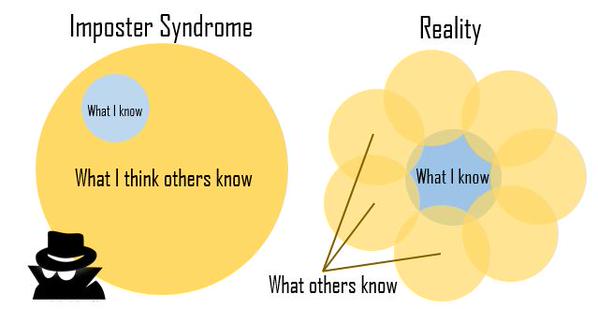
 We’ve all been there, done that – convinced we’ve gotten a job or a project because we’ve faked it or perhaps you are getting an award for something and all you can hear in your head is a voice telling you that you will soon be outed for being a fraud! This is nothing but classic imposter syndrome and today’s post is all about that. Why this particular syndrome you may ask? Well, it’s because I am convinced I am 100% guilty of perpetuating this on myself.
 The most common symptoms are negative self-talk; a need to constantly check and re-check work; shying away from attention in the workplace; and forms of overcompensation like staying late at work or not setting appropriate boundaries around workload. Internally, people struggling with the syndrome experience persistent feelings of self-doubt and fear being found out as phoney. They over-internalize and blame themselves for failures, even when other factors played a role.
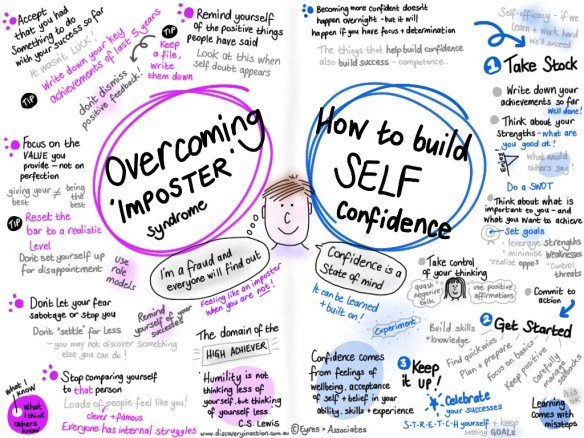 Accept that you are in this position because you did something that caused people to put you there. Learn to internalise your success and own it. Be proud of your achievements.
