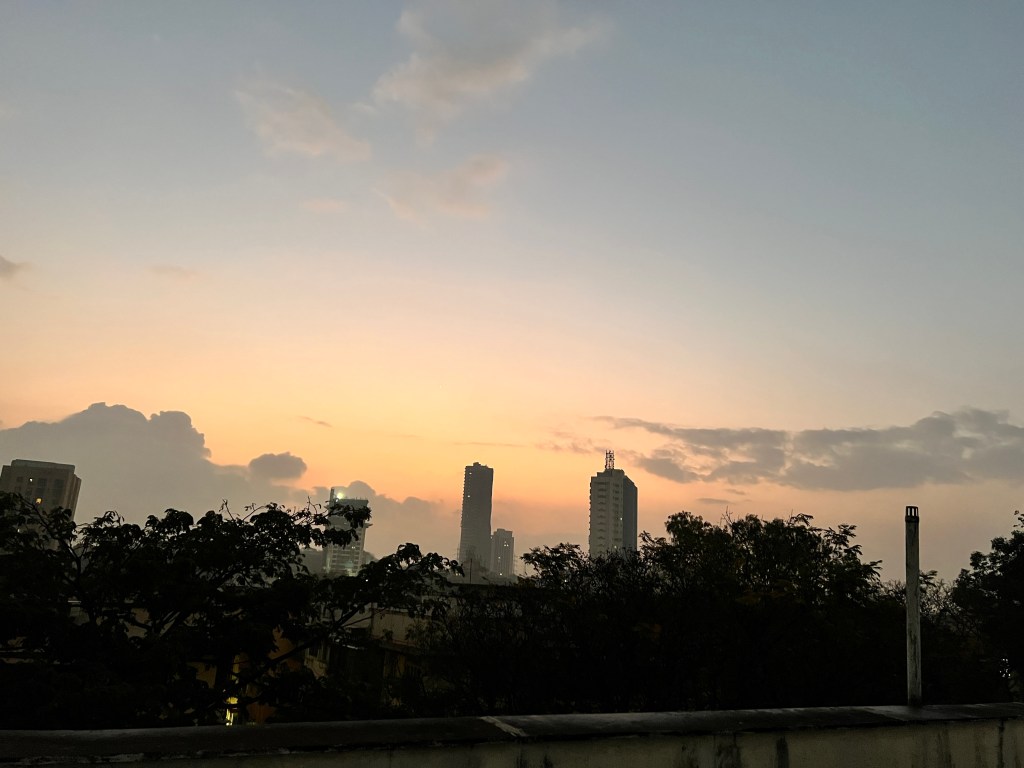
Namaskar and hello from Mumbai! I landed in Mumbai late last week after more than two years on what is my last trip to my childhood home. I am here to help my parents clear up the house they have lived together for fifty years and where my father and his parents and siblings have lived for more than seventy years and move them to their new home in a different state. My mother’s sister also stays in the same place they will be living in, so there’s some relief for me and my sister in case of any emergencies. The place is also equipped with a nurse on call 24/7 and in cases of medical emergencies, they have an ambulance that will take the patient to a nearby hospital with which they have a tie-up. Any trips after this to Mumbai will be as a visitor and one where I will either live in a hotel or someone else’s home. As my flight landed in Mumbai, I felt both happiness and sadness.
As the world is trying to battle COVID, today’s quote from Albert Einstein is so apt. Einstein says that amid every difficulty lies an opportunity. This is part of a larger quote attributed to him which says Out of clutter, find simplicity. From discord, find harmony. In the middle of difficulty, lies opportunity. What this means is that when one is in trouble and difficulty, in the middle of problems, if we find the core of the issue we are facing, that will give us the key to that issue. It also means that when one faces challenges, one has a greater possibility of growth and understanding. If things are easy, one does not change one’s preconceptions or alter one’s view of life.
So take care and stay safe. I hope to remain safe and COVID-free during my time in India, so I can return home without any complications. Please get vaccinated if you still are unvaccinated and get the booster shots if eligible as this has proven to help with the virus.
The Aminidivi group of islands, consisting of Androth, Amini, Kadmat, Kiltan, Chetlath, and Bitra came under the rule of Tipu Sultan in 1787 and passed to British control after the Third Anglo-Mysore War and were attached to South Canara. The rest of the islands came under the suzerainty of the Arakkal family of Cannanore in return for a payment of annual tribute which the British took over for nonpayment of arrears and were attached to the Malabar district of the Madras Presidency during the British Raj. On 1 November 1956, during the reorganization of Indian states, the Lakshadweep islands were separated from Malabar district and organised into a separate union territory for administrative purposes with the new territory called Laccadive, Minicoy, and Amindivi Islands before adopting the name Lakshadweep Islands on 1 November 1973.
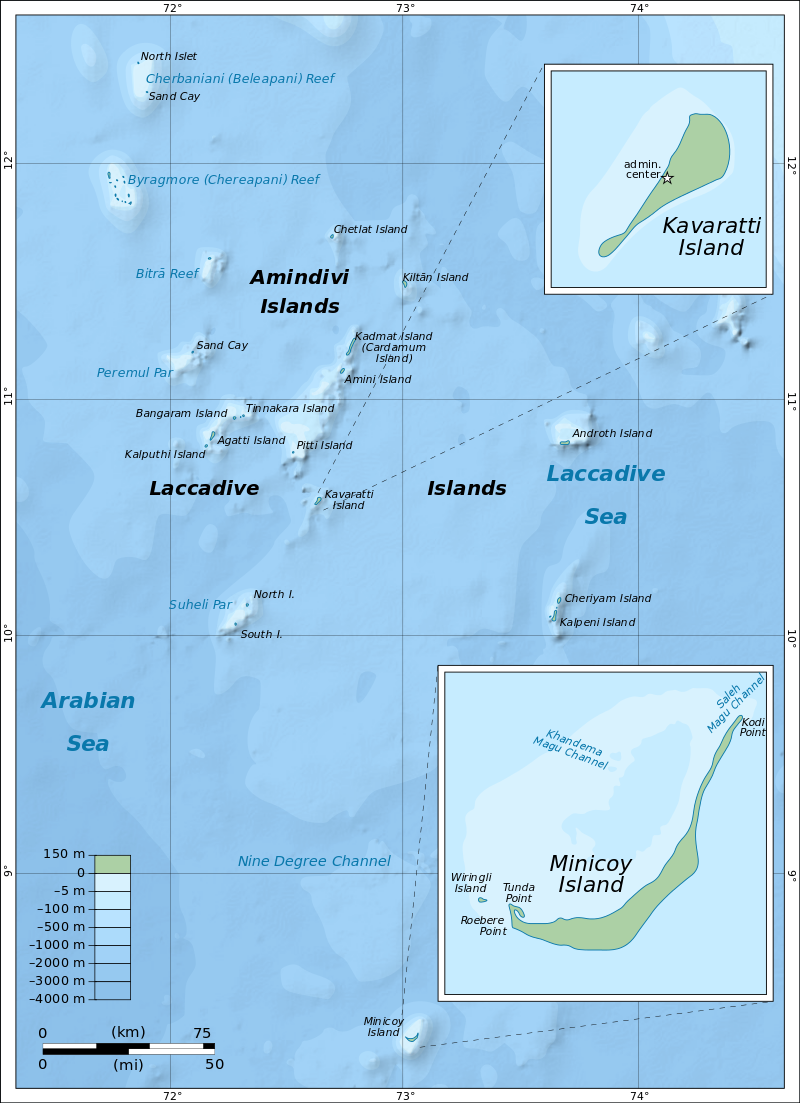
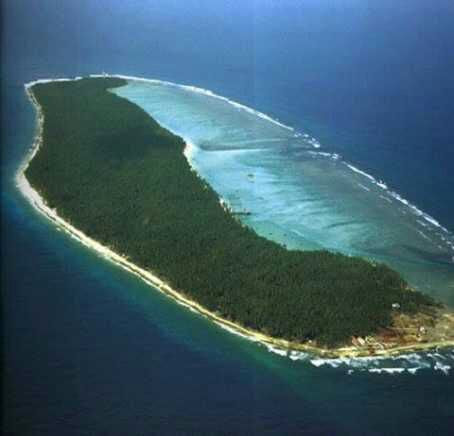
The Aminidivi subgroup of islands consisting of Amini, Keltan, Chetlat, Kadamat, Bitra, and Perumal Par and the Laccadive subgroup of islands which comprises mainly of Androth, Kalpeni, Kavaratti, Pitti, and Suheli Par, have a submarine connection between them through Pitti Bank. Together with Minicoy Island, a lonely atoll located at the southern end of the 200-km-broad Nine Degree Channel, they form the Coral Islands of India in the Arabian Sea. All these islands have been built up by corals and have fringing coral reefs very close to their shores. Two banks further north, Angria Bank and Adas Bank are not considered part of the group. The Aminidivi Islands, are one of the three island subgroups in Lakshadweep and is the northern group of the Lakshadweep, separated from the Laccadive Islands subgroup roughly by the 11th parallel north. The islands of Amini, Kiltan, Chetlat, Kadmat and Bitra are inhabited with Islam being the main religion of the islanders. The islands were inhabited from ancient times by people of nearby Kerala to which were added later people of Arab descent. In the mid 16th century all the inhabited islands of the Lakshadweep were conferred as the jagir or estate of the ruling family of the Cannanore or Arakkal Kingdom by the Chirakkal or Kolattiri Raja in order to grant them protection from the Portuguese. In the latter quarter of the 18th century, the islands of the Amindivi group revolted owing to the rigours of the enforcement of the monopoly of the coir rope trade and following the uprising, the northern islands put themselves under the rule of the Kingdom of Mysore in 1784, then ruled by Tippu Sultan. The southern group of the Cannanore Islands, however, remained loyal to the Arakkal Kingdom. In 1792, as a consequence of the Third Anglo-Mysore War and the defeat of Tippu Sultan, the Amindivi Islands came under the East India Company rule following the treaty of Srirangapatna.
Cora Divh, also called Coradeeve or Little Bassas de Pedro Bank, is a submerged bank or sunken atoll and is the third largest feature of Lakshadweep, after Bassas de Pedro and Sesostris Bank. It is also the northernmost feature. Cora Divh has no emergent cays or islands and is covered by sand, coral rubble and broken shells.
Sesostris Bank is a submerged bank or sunken atoll and is the second largest feature of Lakshadweep and one of the northernmost features, after Cora Divh and Bassas de Pedro and is named after the steam frigate INS Sesostris of the Indian Navy.
Bassas de Pedro, also known as Manjappar or Pedro Bank, is a submerged bank or sunken atoll which is the largest feature of Lakshadweep. It is also one of the northernmost features, second only to Cora Divh and is in the shape of an arch open to the east with widths ranging from 15 km in the north to 33 km in the south. Its southern end is 63 km east of North Cay of Cherbaniani Reef, the closest land feature. There are no emergent cays or islands and the bank is steep-to, smooth with minor undulations in topography, and composed of sand, shells, and decayed coral. The water on the bank is not discolored.
Cherbaniani Reef, also known as Beleapani Reef and Valiyapanniyam in Malayalam, is a coral atoll and is the northwesternmost feature of Lakshadweep with a roughly oval shape. The 14 km long coral reef that encloses the lagoon has three small uninhabited islands on it composed of accumulated coral sand, shingle, cuttle-bones and sea shells. There are many land hermit crabs under the boulders and among the detritus and the atoll used to be a breeding ground for pelagic birds, including the sooty tern and brown noddy, formerly found in great numbers.
North Islet has a small mosque built and maintained by local fishermen from Bitra, Chetlat, Kiltan and Agatti islands. The fishermen came here and camp for fishing during the period between both monsoons. Lakshadweep islanders from Chetlat and Bitra sometimes visit the islands to collect guano for the gardens of the inhabited islands, gathering eggs, dumping garbage and disturbing the nestlings of pelagic birds in the process. The beaches are strewn with marine litter.
Byramgore Reef, also known as Chereapani Reef is a coral atoll whose northern part is submerged. There are a few sandbanks on the reefs, but little land is above the surface at high tide. The atoll is visited by birds, including the lesser crested tern and greater crested tern.
Chetlat Island is a coral island whose local history says that islanders were cruelly treated by Portuguese seafarers in the past. Coir twisting was the traditional occupation of the islanders and average Chetlat coir used to be equal to first-class coir of the other islands in Lakshadweep. One of the populated islands of the archipelago, Chetlat is located 37 km to the northwest of Kiltan Island and the reef and lagoon are located to the west of the island with a small scale yearly growing sand spit on the northern point of the island. Chetlat is the sole inhabited island of the township of Chetlat Island and the inhabitants are engaged in very small scale farming and fishing which are mainly for the island consumption. There is a small jetty on the west coast and a helipad on southpoint.
Bitra, also known as Bitra Par, is a coral atoll where prior to the 20th century, islanders from Kiltan and Chetlat visited to collect the eggs of birds breeding there. Until 1945, when a woman from Chetlat made this island her home, there were no attempts to settle this island permanently. There is a small shrine dedicated to an old Arab saint by the name of Malik Mulla who was buried on the island which has become a pilgrimage site. The atoll of Bitra encompasses two islands, the main Bitra Island is located at the northern end of the coral reef and the small south cay is located on the southern part. Bitra is the smallest of the populated islands of Lakshadweep with the main island having a small jetty on the south shore and a helipad on the westpoint. The inhabitants on the island are engaged in very small scale farming and fishing which are mainly for the island consumption.
Kiltan or Kilthan Island is a coral island which was settled during the early periods of immigration to the Lakshadweep islands, part of an international trade route between the Persian Gulf and Ceylon. It is also home of the Sufi saint Shaikh Ahmed Naqshabanthi. Kiltan is one of the populated islands of Lakshadweep with the reef and lagoon located to the west of the island and is also crossed by the 73rd meridian east through its landmark known as Kulikkara which is a tomb of a Lady venerated by the natives.
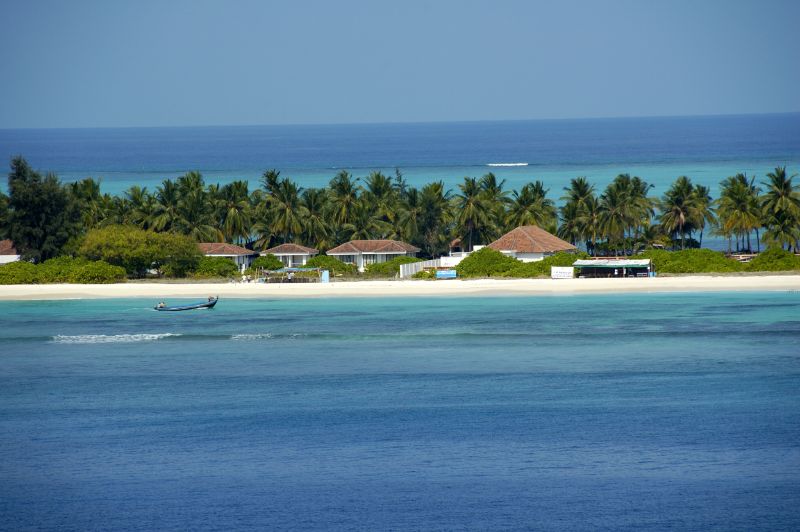
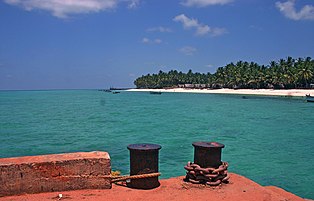
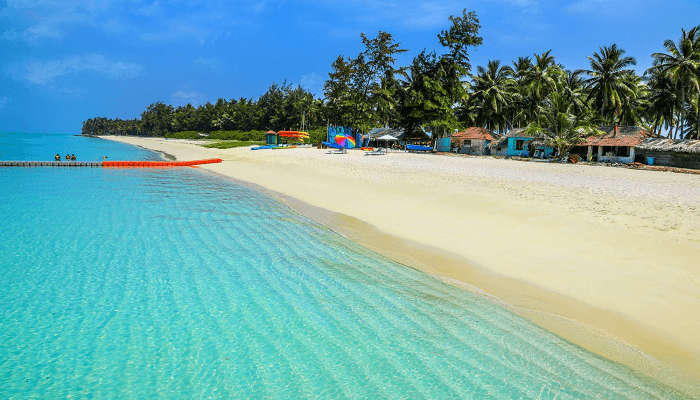
Kadmat Island, also known as Cardamom Island, is a coral island with seagrass and marine turtles which nest here. The island has been notified as a marine protected area for ensuring the conservation of the island’s animals, plants, organism and other resources. The only inhabited village on the island is Kadmat, which has fishing as the main economic activity with agriculture limited to 5% of the land area. Tourism is allowed even for non-Indians and the attractions are kayaking, snorkeling and leisure trips by a glass-bottomed boat for scuba diving. Kadmat Island is the central most island of the archipelago and is in the shape of a tear drop and is the longest island in the Amindivi group. There is an airport on nearby Agatti Island, in which flights operate from Cochin. From Agatti, it is a two and half hours boat ride to Kadmat. Ferry services also operate from Cochin on the coast of Kerala but involves a journey of 16 hours.
In 1960, a hoard of coins were unearthed and examined, revealing that the island has been inhabited since at least the year 200 and the island is known to have traded with the Romans, as in 1948 a Roman coin was found in a quarry on the island. Kadmat Island offers a host of activities to its guests which is why it is thronged by thousands of tourists every year. Some of the most popular activities and things to do on the island are scuba diving, kayaking, snorkelling and paragliding. One can also just sit and sun soak and admire the beautiful surroundings and use some of the many amazing spa and massage services available here.
Spread over 100 metres and surrounded by beautiful blue lagoon and shimmery white sand, Kadmat Beach is not only one of the most gorgeous beaches in the region but also, one of the most visited. One can relax on a hammock, sunbathe on the shores, stroll along the seashare and watch some of its many mesmerising sunrises and sunsets. Kayaking is another popular activity here due to the pristine nature, mostly untouched and uncommercialised with crystal clear waters. There are glass bottom boats available which can be hired for the views.
The best time to visit Kadmat Island is during the winters and early summers, between the months of October and May when there are cool sea breezes blowing, and the climate is pleasant. It is better to avoid summers and monsoons due to the high heat and humidity.
Elikalpeni Bank is a submerged bank or sunken atoll and is the easternmost geographic feature of the archipelago.
Perumal Par, also known as Peremul Par, is an uninhabited coral atoll very similar in appearance to the Cherbaniani Reef further north. It has a large lagoon devoid of islands in the encircling reef, except for 3 small sandy islets located at the eastern area. Terns of different species visit this atoll. There is some damage to the corals caused by Acanthaster planci crown-of-thorns starfish that was observed in the 1990s. Its surrounding waters are a good fishing area for baitfish and is often visited by fishermen from the inhabited islands nearby as well as tourists from the nearby Bangaram Island resort who often make excursions to this lonely atoll.
Amini Island was one of the first islands in the archipelago to be inhabited. The artisans on this island are known for making walking sticks out of coconut shells and tortoise shells as well as carved stone and coral motifs. The channel between Amini Island and Cardamom Island is safe and deep. The Amini Island Light is shown on the south point of the island. The island is oval with the long axis oriented northeast-southwest. It lies at the northeastern extremity of Pitti Bank, 42 km from the small, uninhabited Pitti Island which is not to be confused with the Pitti Islet of Kalpeni Atoll, which is located at the opposite southwestern extremity of the bank. Pitti Bank, also oriented along a northeast-southwest axis, is 49 km long and may be considered a largely submerged and sunken atoll with just the two islands Amini and Pitti remaining at its opposite ends. Kadmat island, although just 5 km northeast of Amini Island, is separated from it by a deep channel and thus forms a separate geographical unit.
In the next part, we will explore the Laccadive subgroup of the Lakshwadweep archipelago.
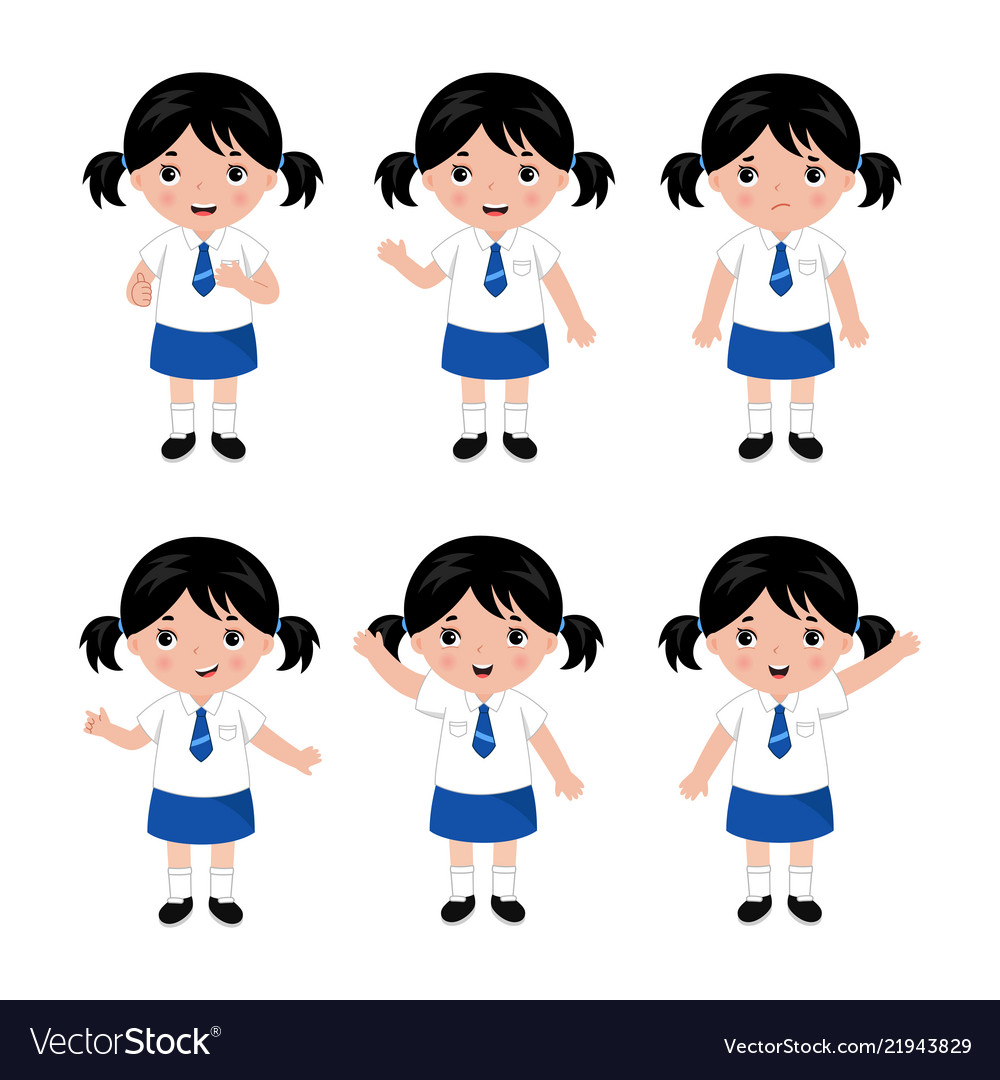
As you now I studied in JB Vachha High School. What you don’t know was that my paternal grandparents were strictly against me and then my sister attending this school. They wanted me to attend the nearby South Indian school which was my father, his siblings and all his cousins alma mater. But my mother stood strong and in the face of intense opposition, went ahead and got me enrolled into my school. Amma, my mother, used to see my neighbours and other girls in our neighbourhood wear the blue and white uniform on their way to school and insisted her daughters also should be in the same school.
The biggest objection my grandparents had was that my father’s alma mater offered Tamil as the mother tongue language and this was not offered in my school, which offered French as the second language. They worried, and probably rightly, that if we didn’t learn the language of our ancestors, we would no longer be good Tamil girls. But amma had her way and we started school in the school of her choice.
The other day, I was thinking what if amma did not get her way and me and my sister ended up in the school of my grandparents choice? Actually I don’t have to look too far to see this, as I did have friends in the building and in the neighbourhood who did go to the school. I would say, we would be fluent in Tamil, which today, we can only speak, but can’t read or write. And this in turn, would have made me get BB & GG to take Tamil as their mother tongue language instead of Hindi which they took.
It’s quite likely that we would be slightly more conservative and not have too many friends from other community groups. In our school, we developed a more liberal mindset and because our classmates came from not only different strata of society, but also from different communities, we learnt to be able to have a live and let live attitude.
And the most important thing, according to me is our school is a girls school while the other school is a co-ed school. And if I think back, with the exception of our physical education teacher, a music teacher and some peons in the school, all our teachers and staff were women. This means that while in school, we had no filter! We spoke what we wanted, especially when teachers were not around and because there were no boys, we spoke about things that may have been either taboo or spoken in a hush-hush way in a co-ed school. Remember, this was the eighties India where the country was still in the throes of socialism and liberalisation was still at least four-five years away. The con, atleast for me was that I was unconfortable with boys, until I entered graduate school because my degree programme also had a higer percentage of girls compared to boys and so I barely interacted with them. Being in a single sex school does allow the school to tailor the teaching style according to the students and my school also offered a whole suite of extra curricular activities which in that day and age, hardly any school offered. Of course, the bulk of these extra curricular activities were geared towards making us good moms and housewives, but still in that India, when we used to speak with our friends and family from other schools, they barely had anything more than a library and physical education period. We used to have music, dance, cookery, laundry, stiching, embroidery, girl guides, social service and typing. I am probably missing some, but in hindsight, all these are things that probably would have made more sense half a century back.
If my amma had not had her way, I would not be the person I am today and because we spent a good portion of our early lives in school, we spent 12 to 13 years in the same school, the school and its ethos and philosophy have moulded us. For this I am so very thankful that amma took a stand and ensured she gave us the opportunities going to this school offered us.
So how did your school mould you? I would love to hear in the comments below.
Believed to be Persian in origin, Spinach had spread across Europe by the 12th century and is a storehouse of nutrients and antioxidents. Belonging to the amaranth family and related to beets and quinoa, spinach is well known for its nutritional qualities and has always been regarded as a plant with remarkable abilities to restore energy, increase vitality and improve the quality of the blood. Rich in iron which plays a central role in the function of red blood cells which help in transporting oxygen around the body, in energy production and DNA synthesis, spinach is also an excellent source of vitamin K, vitamin A, vitamin C and folate as well as being a good source of manganese, magnesium, iron and vitamin B2. Eating spinach may benefit eye health, reduce oxidative stress, help prevent cancer, and reduce blood pressure levels.
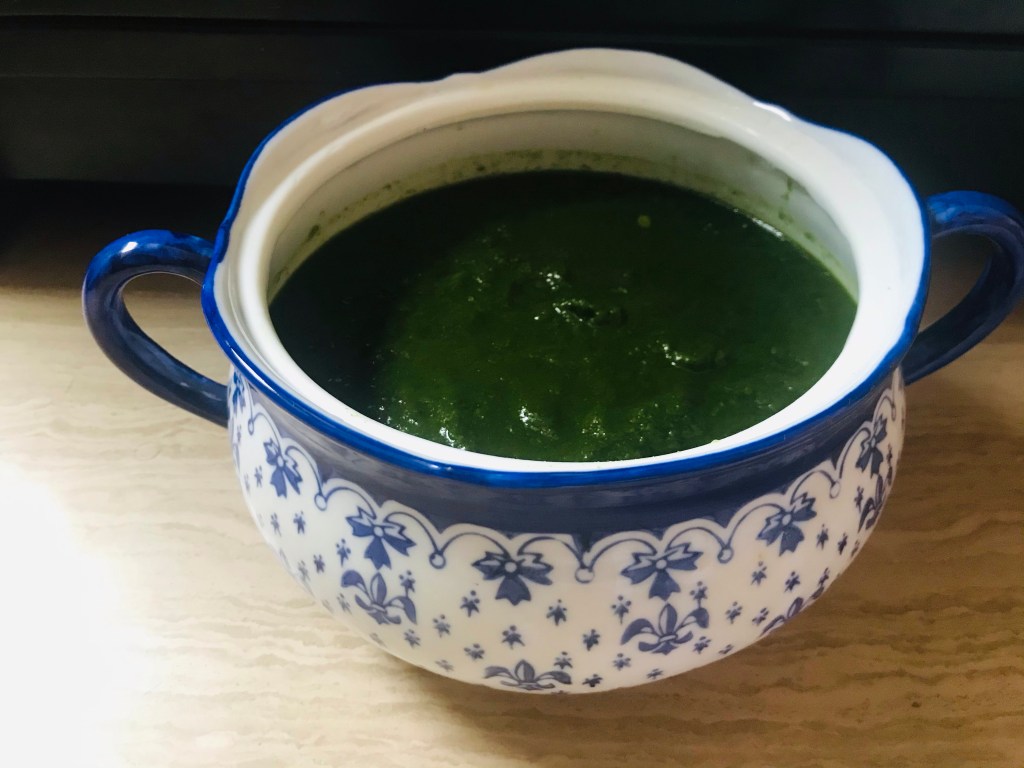
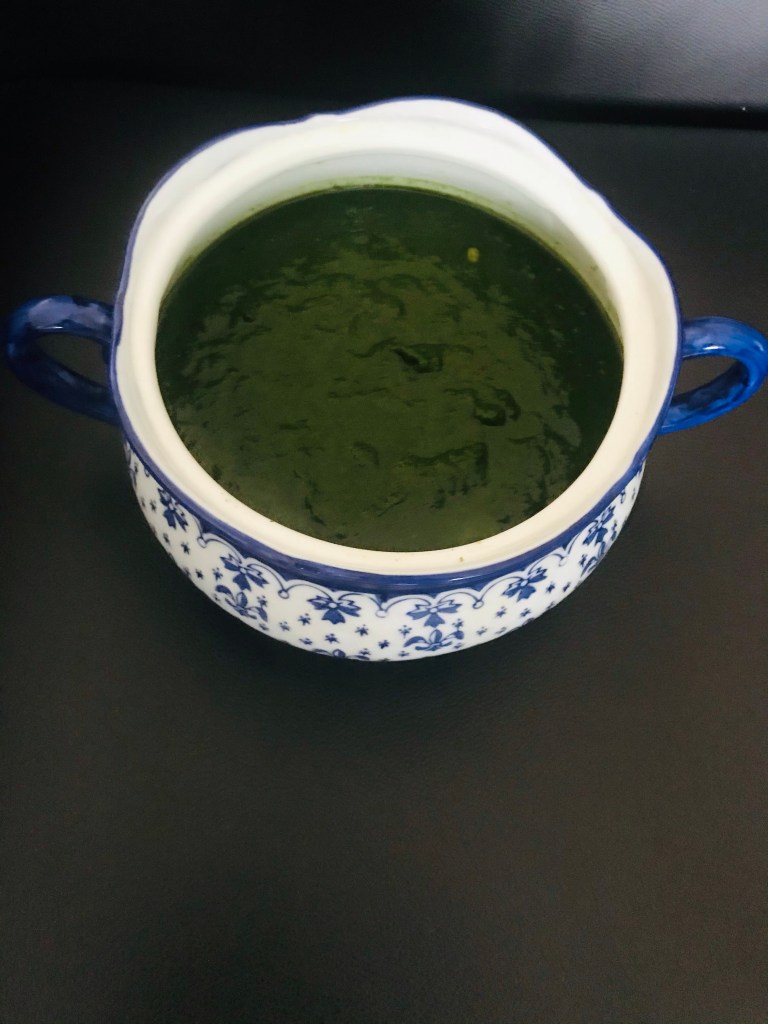
My go-to recipes for spinach are usually Spinach Dal, Palak Paneer or Mor Keerai. But the other day, I had a some fresh spinach and a hankering for a good old-fashioned Masiyal which is a coarse blended paste of spinach mixed with a minimum of spices. This masiyal is a very healthy dish and is common in Tamil cooking and most households will have their own version of this dish. The version I make is the tambram version which does not use onions and garlic and is also very satvic in nature. This is a very quick recipe if you have spinach handy and can be made in 15-20 minutes and with other greens also.
Keerai Masiyal aka Spinach Mash
Ingredients:
2 cups chopped spinach
4 small green chillies
1 tsp oil or ghee
1 tsp mustard seeds
1 tsp broken urad dal
¼ tsp asafoetida
1 tsp sugar
2 dried red chillies
Salt to taste
Method:
Chop the spinach and wash them in a large pan and drain.
Heat 1-2 cups of water and salt slightly. When the water boils, add the chopped spinach and the green chillies.
Let it boil till the spinach is cooked, which should not take long, about 5-6 minutes. Remove and drain the spinach and transfer it to a bowl with cold water. This will help preserve the colour of the spinach.
Once the spinach is cool, blend to a coarse paste and keep aside. You can also use a handheld blender or a buttermilk churn to blend the spinach. You can keep the texture as smooth or coarse as you like. Remove this to the pan and keep aside.
Heat the ghee or oil in a small skillet. When it warms, add the mustard seeds and let them pop. Once the mustard seeds pop, add the urad dal, asafoetida and broken dried red chillies and stir until the urad dal is a nice golden colour. Pour this seasoning over the blended spinach.
Reheat the spinach and check for seasoning and add the sugar, if you are using it. Let it come to a boil and remove from the gas. Serve hot with rice and a sambar or kozambu of your choice.
A couple of weeks back, in our class WhatsApp chat, we started talking about our school days and the conversation veered towards our sports day. I enjoyed that conversation so much that I decided to take a trip down memory lane to reminisce about those days.
Our school sports day was the highlight of the second term, which happened after the Diwali holidays in the second term. The main sports day would happen sometime in December/early January before the class X students had their prelims.
Our school was divided into four houses and this was only for the secondary section. Unlike other schools, we didn’t have house named for flowers, national leaders or even landmarks. Since my school is a Parsi school, our houses were named for ancient Persian princesses. Selection of students to the different houses was completely random and we’ve tried to think of the various ways they may have done the choosing, but other than randomness, we have never been able to figure it out. In one family, you would have sisters in different houses, as it was in my house and also in my neighbour’s place where all the sisters were in different houses. I was in the green house while my sister was in the yellow house. As part of our school uniform, along with our school badge which was pinned on the top left of our uniform, above our hearts, we had to pin our house badge to the left of the school badge.
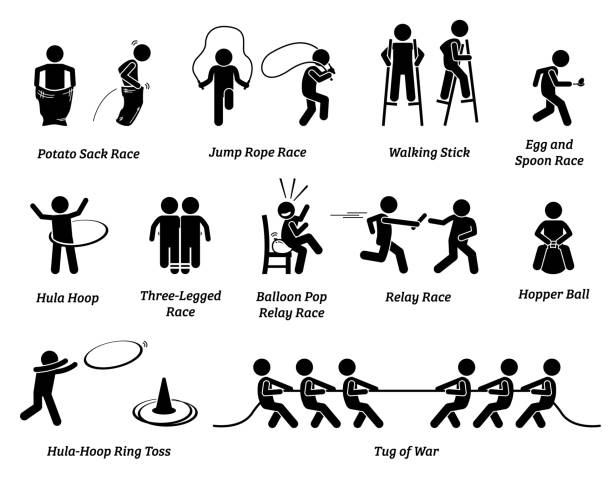
For a few months before the actual day, we would have what was known as indoor games as well as sports for which the school did not have the facilities to play and which needed to be played at a nearby gymkhana. These included sports like carrom, chess, badminton and table tennis. We also had some games like square ball and volley ball, which we played in our school grounds, competing with each other. The sports day was held in a small stadium not very close to the school, but in a centrally located area. A month or so before the actual sports day, we all trooped to the stadium for our heats. This was usually a half day and those of us who were not so inclined, used that half day to just chill and gossip with friends and cheer those who are competing. For children in the primary and kindergarten sections, they had their heats in a small garden behind the school.
In the days leading to the sports day, while the other events were held, we would anxiously keep track of the wins of each house and at the same time start the practice for the march past. Usually the class five students will be super eager to take part in the march past and would audition for the same. By the time we reached class eight, it was the other way around – we had to be forced to go down and take part. The march past contingent was made up of one girl who would carry the placard with the name of the house followed by the house captain who carried the house flag who would be followed by the march past contingent made up of 30 girls in 10 rows of three girls each. Every one on the field will be in white shorts and the school shirt which was our PE uniform and anyone representing a house will have a length of silk ribbon in the colour of the house stitched down both sides of their shorts.
The primary, kindergarten sections and any guests and parents sit together, but the secondary girls sit in their houses. This means that we would get very noisy, especially when we are cheering for our team and booing the opposition. The day’s finale was the march past and the house which scored the highest number of points aka the winner for the year had the honour of leading the march past. During my school years, it had always been the green house which led the march past with usually the red house coming second, the blue house at third position and the yellow house bringing up the rear. And usually, it would be the yellow house which would win the march past trophy. I only remember one year when I was probably in class 6, when there was a three-way tie for first position. Green, red and blue houses all tied and there was a toss to determine who would lead the march past and who would walk in second. I remember red house winning the toss and the captain of the house, who later became famous, was screaming and jumping with joy, because under her captaincy, the red house led the march past.
Our sports day would always be on a Sunday afternoon and would usually start around 2 pm and end around 6ish in the evening. We would go home tired but happy that day, especially since the next day used to be school holiday to help us (and more likely the teachers) recuperate from a hectic day.
This blog post was a blast to write as memories all kept flooding in and I wrote this post with a huge smile on my face. For most of us, our school days are the golden days which we remember fondly, with all the bad parts edited out. Maybe it’s our way of keeping our innocent and young years in our heart?