
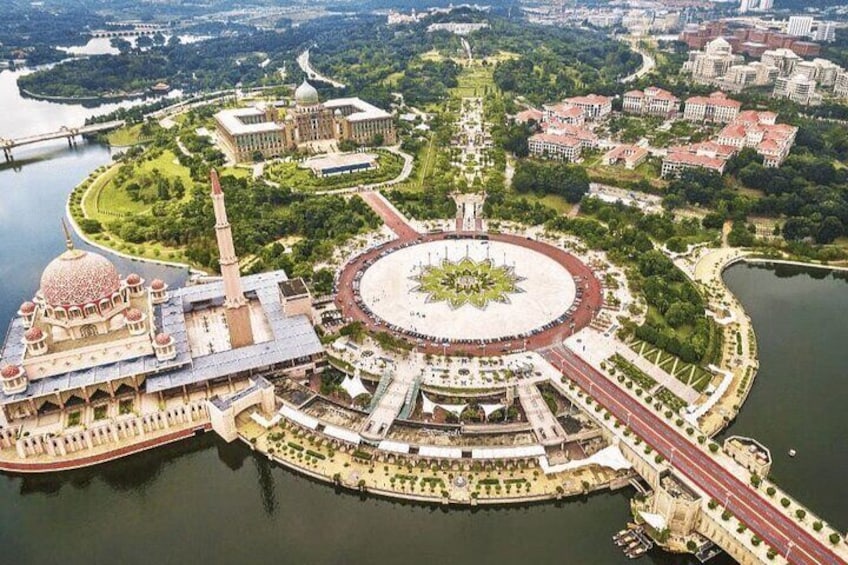
Putrajaya, officially the Federal Territory of Putrajaya or Wilayah Persekutuan Putrajaya in Malay, is the administrative and judicial capital of Malaysia. The seat of the federal government was moved in 1999 from Kuala Lumpur to Putrajaya because of overcrowding and congestion in the former, while the seat of the judiciary of Malaysia was later moved to Putrajaya in 2003. Kuala Lumpur remains Malaysia’s national capital city per the constitution and is still the seat of the head of state, the Yang di-Pertuan Agong, and the national legislature, the Parliament of Malaysia, as well as being the country’s commercial and financial centre.
The establishment of Putrajaya was the idea of then-Prime Minister Mahathir Mohamad. The development of Putrajaya began in August 1995 and it was completed at an estimated cost of US$8.1 billion. On February 1, 2001, Putrajaya became Malaysia’s third federal territory, after Kuala Lumpur in 1974 and Labuan in 1984. Putrajaya is also a part of MSC Malaysia, a special economic zone that covers the Klang Valley.
Putrajaya was named after the first Prime Minister of Malaysia, Tunku Abdul Rahman Putra Al-Haj; the territory is entirely enclaved within the Sepang District of the state of Selangor. The etymology of the city is derived from the Sanskrit language, which was then adopted into Malay; Putra means son and Jaya means success or victory; hence, Putrajaya means victorious men or people.

Prang Besar, or Perang Besar, which is Malay for Great War, was founded in 1921 on land that was jungle as a rubber plantation by British veterans of World War I, hence the name. Its land area of 800 acres expanded to 8,000 acres and it was merged with surrounding estates, including the Estet Raja Alang, Estet Galloway and Estet Bukit Prang. Until 1975, what is today Putrajaya, along with adjacent Cyberjaya, was under the administration of Hulu Langat in the Kajang district.
The vision of a new Federal Government Administrative Centre to replace Kuala Lumpur as the administrative capital emerged in the late 1980s, during the tenure of Malaysia’s fourth prime minister, Mahathir bin Mohamad. A new city adjacent to Kuala Lumpur was envisioned, where the government would systematically locate its government offices within an efficient administrative hub; as opposed to the past where government offices were previously scattered across the congested Kuala Lumpur. The new city was proposed to be located between Kuala Lumpur and the new Kuala Lumpur International Airport (KLIA). Two areas were proposed: Prang Besar and Janda Baik of Pahang. The new name Putrajaya was chosen for the site.
The federal government negotiated with the state of Selangor on the prospect of another federal territory. In the mid-1990s, the federal government paid a substantial amount of money to Selangor for approximately 45.8 sq km of land in Prang Besar, Selangor. As a result of this land purchase, Selangor now surrounds two federal territories within its borders: Kuala Lumpur and Putrajaya.
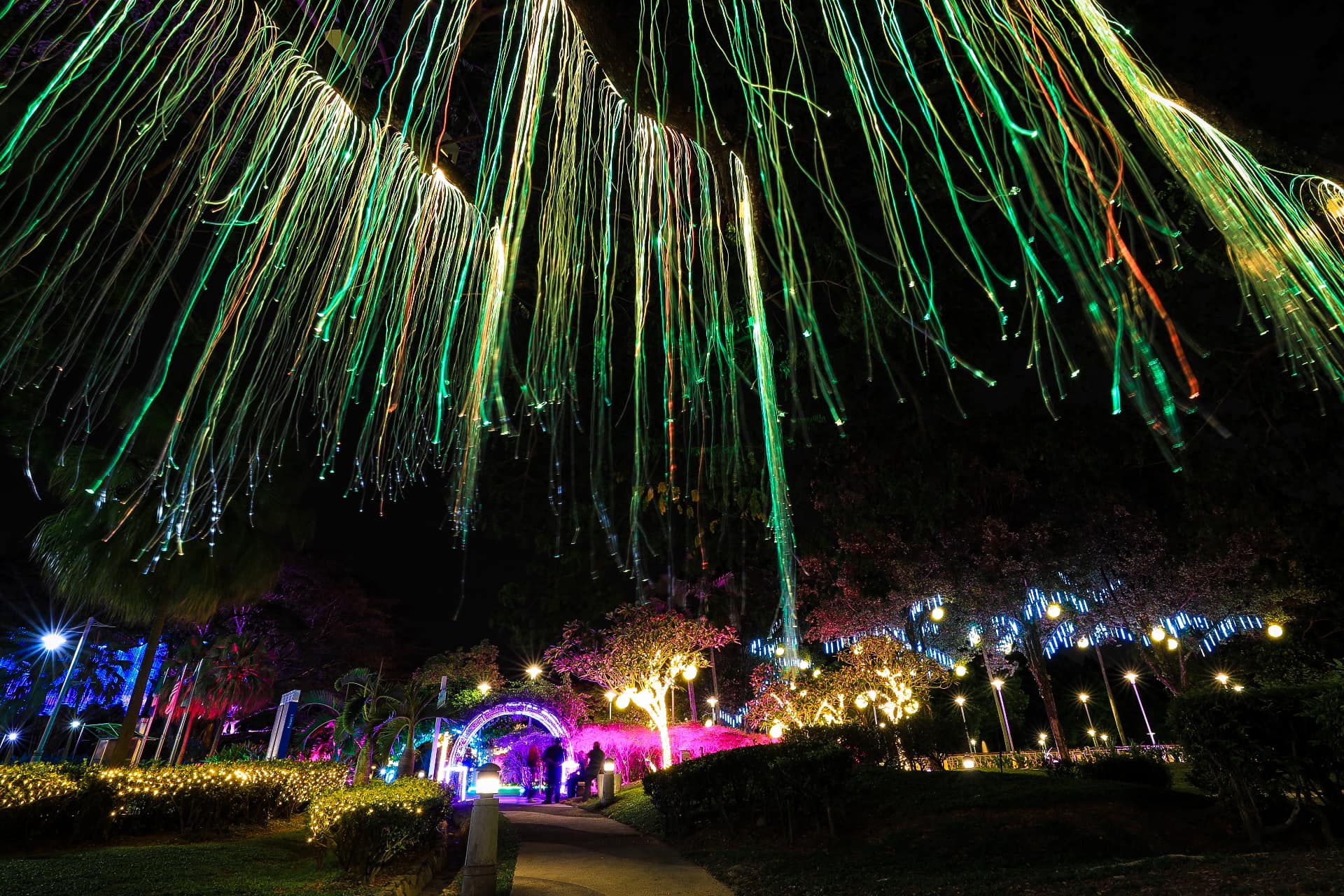
Planned as a garden city and intelligent city, 38% of the area is green space, in which the natural landscape is enhanced. The plan incorporated a network of open spaces and wide boulevards. Construction began in August 1995; it was Malaysia’s biggest project and one of Southeast Asia’s largest, with an estimated final cost of US$8.1 billion. The entire project was designed and constructed by Malaysian companies, with only 10% of imported materials.
The Asian Financial Crisis of 1997/1998 somewhat slowed the development of Putrajaya. 300 members of the Prime Minister’s office staff moved there in 1999, and the remaining government servants moved in 2005. On 1 February 2001, the city was formally transferred to the federal government and declared Malaysia’s third federal territory.
In 2002, a rail line called KLIA Transit was opened, linking Putrajaya to KLIA in Sepang. The construction of the Putrajaya Monorail, which was intended to be the city’s metro system, was suspended owing to high costs. One of the monorail suspension bridges in Putrajaya remains unused. In April 2013, the Putrajaya government signed a letter of intent or LOI with the government of Sejong City in South Korea to mark cooperation between the two cities. As of 2012, all of Malaysia’s governmental ministries had relocated to Putrajaya.
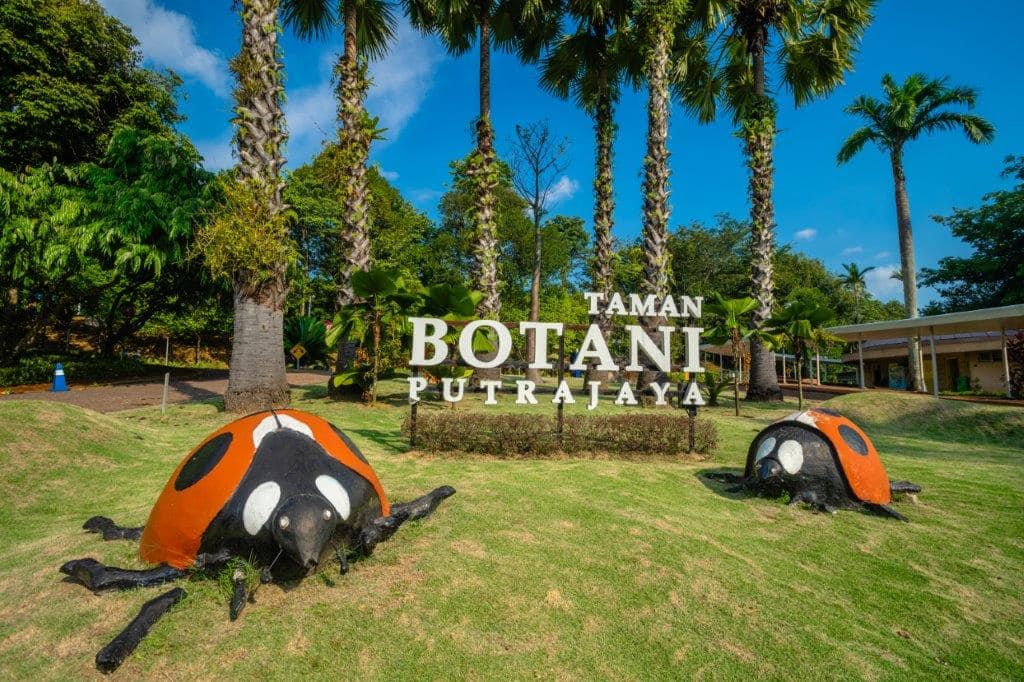
Referred to locally as Taman Botani, Putrajaya Botanical Garden is the biggest botanical garden in Malaysia, located in the northern section of Precinct 1. A haven for nature lovers and avid cyclists, it serves as a perfect picnic spot. The Botanical Garden is divided into 3 different sections: the flowers, ornamental plants, and the preservation and research centre. The garden features five landmarks: the Explorer’s Trail, Floral Gardens, Sun Garden, Palm Hill, and the Lakeside, which serve as the main points of attraction. There is also a seafood restaurant and gift shop onsite and bicycles and paddle boats are available on rent.
The Explorer’s Trail comprises three main attractions: Canopy Bridge, Heliconia Trail, and Vine Garden. The 170-meter-long Canopy Bridge runs over a valley featuring rainforest trees and tropical plants. The Heliconia Trail lets you explore a variety of species of Heliconia, the bright-coloured flowering plants. At the Vine Garden, one can explore a variety of climber plants, including Sandpiper Vine and King’s Mantle. Experience the unique landscaping of the Putrajaya Botanical Garden by visiting the Floral Garden, which features ficus shades, a rain shelter, and a Bougainvillea tunnel. Here, one can explore the flowering plants collected from different parts of the world like Africa and Tropical America. Head to the Sun Garden to enjoy a walk through the Orchid Path and learn the ancient art of time-telling using the sundial. Trek through Palm Hill at the Putrajaya Botanical Garden to explore more than 50 species of palm trees. Here you can learn about different species, like mangrove fan palm.

The Lakeside is where one can experience relaxation amidst a serene lake and beautiful landscape. Visitors can hire boats here, enjoy the Hibiscus walk, and relax in the Fern Garden. The garden is closed on Tuesdays and Fridays, it is open from 9 to 11 am and again between 2 to 5 pm. On other days it is open from 9 am to 12 noon and from 2 to 5 pm. Entry is free.
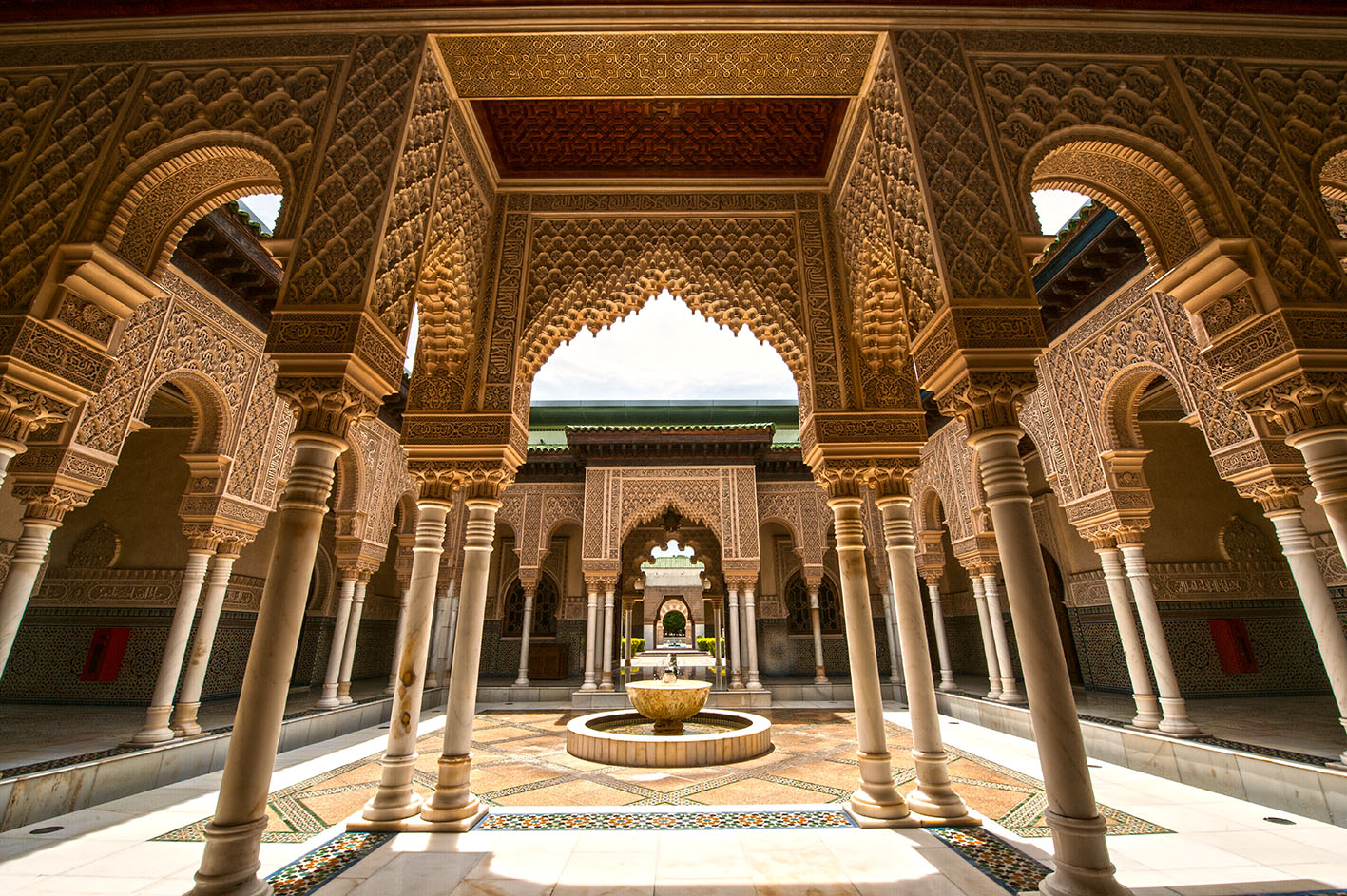
The Moroccan Pavilion is a fine replica of the palaces in Morocco, designed to showcase the cultural exchange between Malaysia and Morocco with the locals calling it Astaka Morocco. The uniqueness of the place is the Moorish architecture evident in the intricate craftsmanship depicted in the ceilings, pillars and walls of the pavilion. It is a must-visit for visitors and is a photographer’s delight. The design and construction of the Moroccan Pavilion is very detailed, with intricate carvings on the walls adorned with Islamic calligraphy, as well as, with four different galleries that provide an insight into four of Morocco’s oldest cities. The pavilion is surrounded by landscaped gardens and is tucked away in the corner of the botanical garden, alongside a lake. Photography is allowed only in the outer corridors, even though visitors can wander inside. The pavilion is open from 7 am to 7 pm and has an entry fee of RM 3 for adults and RM 1 for students.

The Putrajaya Wetlands Park, also known as Taman Wetlands, is well known as the largest artificially constructed freshwater wetlands. The park itself spreads across a large area of 138 hectares and houses some of the rarest indigenous species of regional flora and fauna. The lush green foliage and the rainforest act as the green lungs of the city. With more than 100 species of birds residing in Putrajaya Wetland Park, it also emerges as one of the most popular birdwatching sites in the city. The mini nature trails and the signature botanical garden cum nursery allow the more adventurous visitors to go around and explore the park freely and give them the perfect escape from the busy city life.
The mini nature trails enable the visitors to explore the wetlands through the pebbled pathways which are flanked by the rainforest on either side. The nature trails lead to the botanical garden cum nursery which lets visitors learn more about the different indigenous flowering plants and Japanese bonsai. At the nursery, visitors get a heavy discount on any of the seasonal plants they choose to buy along with a specially prepared packet of seeds and organic fertilizers. Bird-watching spots are scattered across a huge area and these spots are ideal to see the rarest of the bird species and learn more about their natural habitat. With the proper permission of the forest authorities, a limited number of visitors are allowed to feed the birds at the special feeding centres. The elderly and specially-abled visitors can also enjoy the natural beauty while relaxing in the smartly structured alcoves at the special care booths. The wetland park is open from 9 am to 5 pm on all days except Monday when it is closed.

Putrajaya Equestrian Park is a 70-acre equestrian centre located in Precinct 5. The park features a polo field, a grandstand, a paddock, and a dressage arena and is home to many ponies and horses. The park plays host to several international and national equestrian shows and competitions such as the FEI World Cup Qualifier and Premier Cup Series Horse Show. The centre also has a public horse riding school offering various coaching packages for different age groups and levels. One can even go on a fun ride on these beautiful ponies and horses. The park also offers personal photoshoots with these majestic animals. A group riding lesson with an instructor for a minimum of two riders for 45 minutes will cost RM 60 while a private lesson with an instructor for 45 minutes will cost RM 70. Renting a horse for 45 minutes will cost RM 50 while a 20-minute pony ride will set one back by RM 20. Escorted hacking for a minimum of two riders costs RM 60. The Riding School is open from 7:45 to 11:45 am and then from 4:15 to 7:15 pm. The riding school is closed every Monday.

Anjung Floria located in Jalan Tuanku Abdul Rahman is a beautifully designed garden. Pebbled paths, mini bridges, and lush vegetation sprout throughout the garden alongside the incredibly vibrant range of flowers. What makes Anjung Floria unique is the countless flower festivals hosted throughout the year along with the numerous zones offered by it – starting with the Magical Gardens and The Magic of Bonsai and Suiseki Exhibition to the Musical Gardens, Tropical Magic ina Glass and the Secret Theme Garden, followed by the Royal Garden, the Designer Garden, the Tea Party Garden and the magnificent Annual International Orchid Competition which allows visitors to check out some of the rare, imported orchids from different parts of the world. Anjung Floria is open daily between 9 am and 11 pm.

Within Anjung Floria, lies the China-Malaysia Friendship Garden stands as a symbol of the strong bilateral ties between Malaysia and China and was designed in the Lingnan architectural style. This style originates in the Guangdong province of China. The park was established in 2014 to mark the relationship between China and Malaysia on its 40th anniversary and is in proximity to the Seri Saujana Bridge in the core of Putrajaya. It is graced with bonsai trees, a pagoda, rocks, and ponds. There are also stones decorated all over the garden and some Chinese calligraphy and artwork. The China-Malaysia Friendship Garden is open daily from 6:30 am to 7 pm.

Taman Warisan Pertanian, or the Agriculture Heritage Park, is an agricultural heritage park located at Precinct 16. With an eclectic range of tropical fruits and over 180 crops, the agricultural park is frequented by those interested in horticulture. The park is a haven of tropical fruits and is divided into different sections with different crops, commercial and otherwise. An Agro Bazaar is held every month on weekends where they sell items like fruits, potted plants, and pet rabbits. The popular cafe- Kajang Haji Samuri Sate located here attracts a lot of visitors to Taman Warison Pertanian. The Agriculture Square holds exhibitions frequently. Jom makan Buah is an event held every year in July where one can eat as much fruit as they want at just RM 10. A buggy can be hired to explore the garden for RM 4 per person. For multiple people, a six-seater can be hired for RM 20 and an eight-seater for RM 25. The main park is open from 8:30 am to 5:30 pm every day and is closed on Fridays from 12:15 to 2:45 pm for prayers. The food court is open daily from 7 am to 11 pm. Entry fee to the main park is RM 12 and free for children below 12.

Putrajaya Lake, located right at the heart of the city, is one of the biggest man-made lakes in Malaysia. Spanning across an area of 650 hectares, it is popular for water sports and recreational activities. The main function of the lake is to act as a natural cooling system for this region, especially during the drier and more humid months of the year. It also enables a greater trade route by connecting various neighbouring cities to Putrajaya. The famous Putra Mosque and Millenium Monument are located on its shores.
Over the years, Putrajaya Lake has served as an important centre for many international water sporting activities starting from the F1 Powerboat World Championship in 2004, the 2005 Asian Canoeing Championship followed by the Red Bull Air Races in 2014, and the SEA Games – 29 in 2017.

Built across the Putrajaya Lake, Seri Wawasan Bridge is one of the most prominent bridges in Putrajaya, known for its futuristic style of architecture. It is marvellously designed as a sailing ship and looks stunning at night with a vibrant display of colours. Also known as Bridge No. 9. Seri Wawasan Bridge is a trademark of the city and represents the city. The bridge is visible even from afar and the ideal time to visit it is during the sunset or night hours. The bridge also makes for great photographs and offers a fantastic view of the lake with the city in the backdrop. The bridge is a cable-stayed bridge with a main span of 165m which is supported by 30 pairs of forwarding stay cables. It is 240 m long and connects Precincts 2 and 8 of the city. It carries dual three-lane carriage wages and has a total width of 37m. The bridge has been built using the latest technology and is an architectural marvel for visitors all over the world. It has a separate walkway for pedestrians as well as a cycling track for cyclists.

Seri Perdana, located in Precinct 10, is the official residence of the Prime Minister of Malaysia. This lavishly built structure covers an area of around 42.5 acres with the architecture and layout being heavily influenced by the traditional Malay, Muslim, and European styles. With multiple tours of the palatial residence conducted throughout the day and a special interactive session held once a day with the government officials at Seri Perdana, visitors get a highly insightful view of Malaysian society and their beliefs and practices. The flower garden just behind Seri Perdana displays a huge variety of roses and hibiscuses which leads into the mini children’s park. Attached to the residential block is the Prime Minister’s office which leaves the visitors filled with awe. Both local visitors as well as foreigners must carry some form of identity proof preferably the passports issued by their respective countries. Visitors are not allowed to carry any bags, cameras or phones inside the complex. Personal vehicles are not permitted inside the complex without a special permit from the Seri Perdana Management. Food, drinks, cigarettes, and lighters are not allowed inside the premises and a heavy fine is imposed.
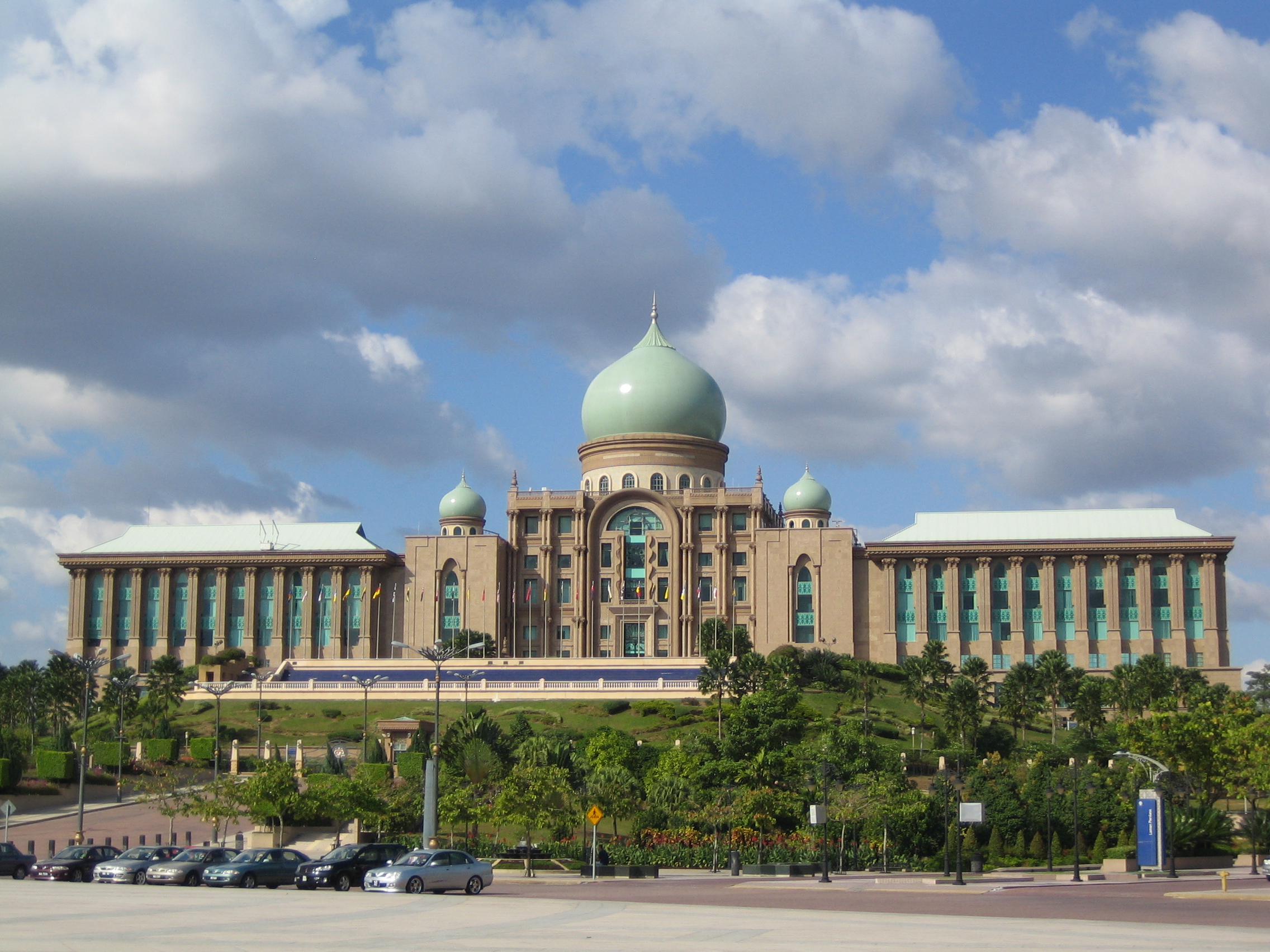
Perdana Putra is the office complex of the Prime Minister of Malaysia located on top of the main hillock of Putrajaya. This beautifully planned complex houses various sections of the government like the Prime Minister’s office, Deputy Prime Minister’s office, Small Meeting Hall, Large Meeting Hall, View Point, VIP room plus banquet hall, Delegation room, National Security as well as the National Economic cabinet. The magnificent exterior of Perdana Putra matches up with the grandiose of its interior. With multiple guided tours and interactive sessions, the visitors get to know more about the workings of the government and realize its ideals.
The design and structure of Perdana Putra have been heavily influenced by the traditional Malay, Muslim and European architectural styles and incorporates many Islamic and Mughal patterns and textures. It is built 50 meters above the ground level atop the main hillock. The onion-shaped main dome which is glazed with green mosaic tiles and surrounded by four smaller domes to celebrate the country’s Islamic influence, the stone water jet carvings and the wrought iron pillars combine to convey the strong beliefs, rich history and just nature of the nation. Visitors are expected to be dressed up appropriately for the visit. Malaysians are expected to produce any one form of identity proof while entering Perdana Puta and the non-Malaysians are expected to produce their passports.
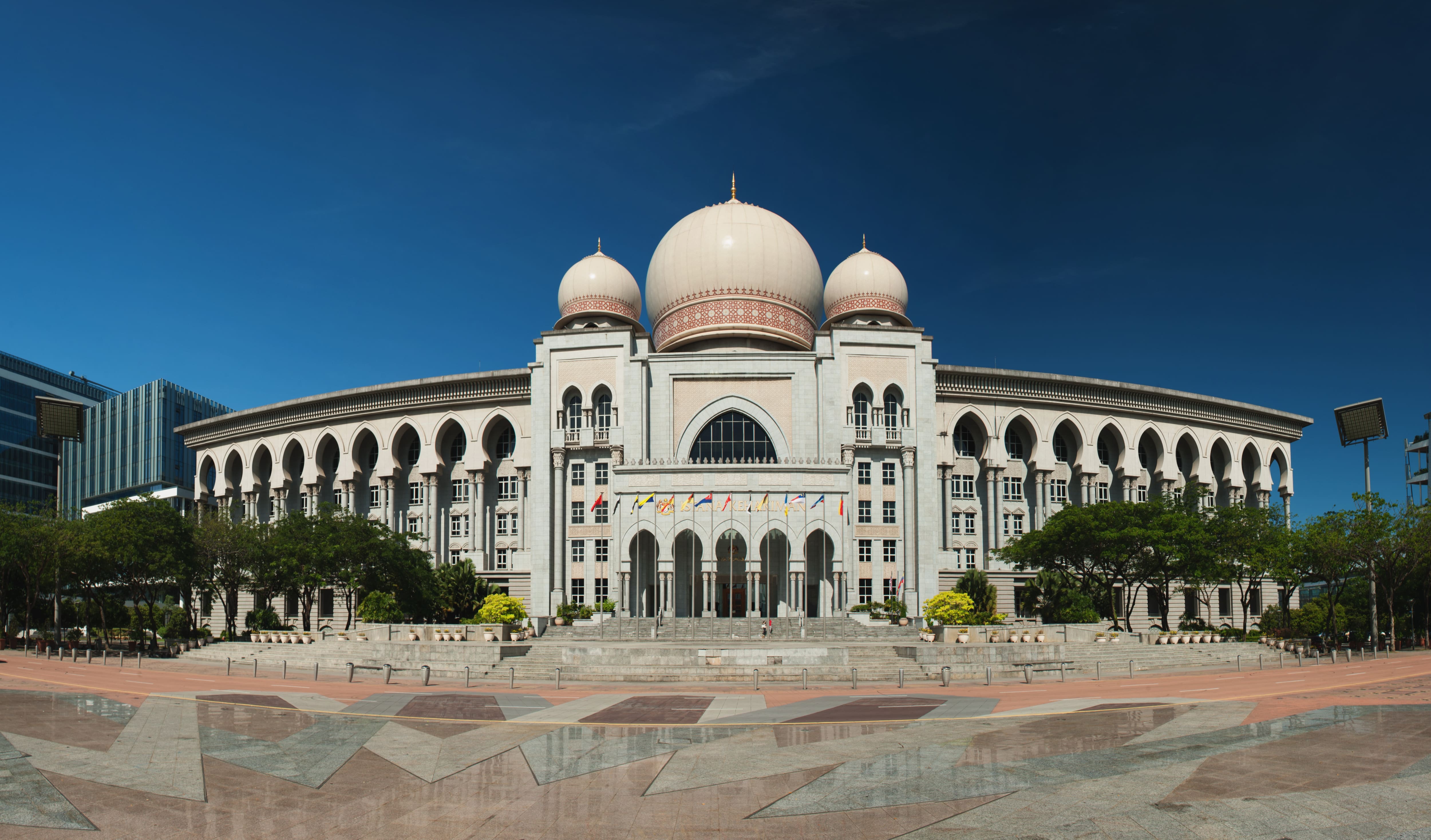
The Palace of Justice or Istana Kehakiman is a grand palace inaugurated in 2004. It is styled in Islamic, Moorish, Palladian, and Neoclassical styles of architecture. The Palace of Justice is a five-level building that houses courts, both federal and appeal, government offices, a library, and a museum depicting the judicial system of Malaysia. The interiors of the building have a massive cavity on the roof which is beautifully designed to depict the colours of Malaysia interestingly. A grand library full of books and a museum with judicial antiques are present on the ground floor of the building. The first floor houses Federal and appeal courts followed by judges’ chambers on the fourth and fifth floor. The major stunner located inside the Palace of Justice is a small yet vibrant museum named the Justice Museum. Among the beautiful masterpieces, visitors can spot Batu Bersurat which is a stone from 1303 with carved inscriptions in the Jawi script. There are ancient pillories and handcuffs along with wigs and robes used by the judges and a wall dedicated to the history of the Malaysian justice system with photos of erstwhile Chief Justices of Malaysia. The museum is open on weekdays from 9 am to 5 pm and has free admission.
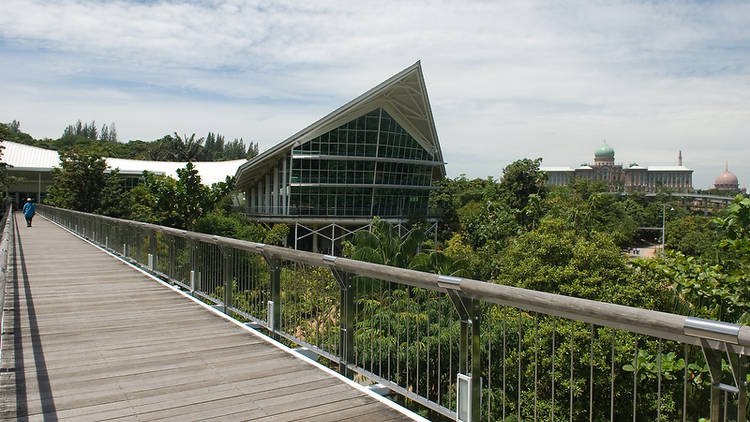
The Natural History Museum gives a deep insight into the natural Malaysian heritage. The museum houses a ginormous variety of plant, animal, rock, fossil as well as mineral specimens. Interesting facts and trivia about these species are also displayed inside the museum. It also houses specimens of endangered plants and animals, some of which are on the verge of extinction. The ground floor of the museum houses a huge collection of Malaysian mammals as well as a 40-foot-long skeleton of the Bryde’s Whale which is the main attraction of the museum. One can also visit the insect room which houses a plethora of specimen species. The museum is open daily from 9 am to 5 pm. It is closed on Eid Al Fitr and Eid Al Adha. Entry fees are RM 2 for Malaysians and RM 5 for foreigners.

The National Heroes Square is a war memorial also known as Dataran Pahlawan Negara in Malay. It comprises the main square, the Malaysian War Memorial Pavilion, and the Malaysian Armed Forces and Police Museum. Located in Precinct 1, every year Warriors Day in Malaysia is celebrated in National Heroes Square.

The second National Monument to be built in Putrajaya, the 68-meter tall Millennium Monument is located on a 25-hectare park in Precinct 2. It looks like a huge pencil from standing from a distance and on viewing it from above, it looks like a hibiscus flower. The monument which is similar in appearance to the Washington Monument in Washington DC, is shaped like an obelisk with engravings marking important milestones in the history of the nation and was opened in August 2005 to the public. There is a multi-level platform around the base of the column where tourists can walk up to enter the obelisk. One can go through the beautiful series of engraved glass panels on the way and learn some key events relevant to the history of Malaysia in chronological order. Another worth admiring feature about it is the time capsule on the base of the monument concealing a message from the former PM, Tun Dr Mahathi bin Mohammad.
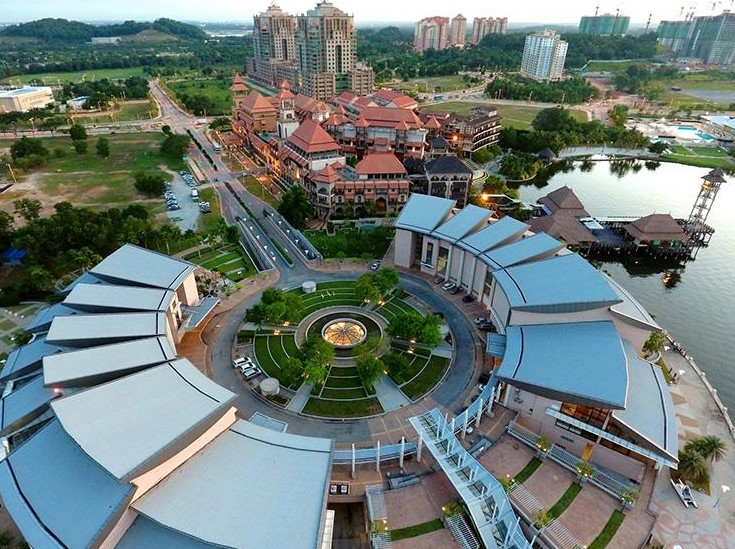
Marina Putrajaya, formerly known as Maritime Centre, is a leisure and sports complex situated by the Putrajaya Lakeside at Precinct 5. The complex is a popular extreme water sports & training centre for sports enthusiasts. The marina has held various famous events like Magic of the Night and Putrajaya Red Bull International Air Race Championship. It also houses a gymnasium and aerobic hall which charges RM 20 per hour and personal coaching lessons are provided at RM 65 per session. It is also home to Putrajaya’s only public indoor swimming pool which charges RM 5 per session for adults and RM 3 per session for children. Training classes by certified instructors start from RM 180 per month. The Steam and sauna room can be accessed for RM 15 per 45 minutes. Two tables each for Snooker and Pool are available on the first floor of the east wing building which costs RM 12 per hour for Snooker and RM 10 per hour for the Pool table. Two squash courts are also available at RM 15 per hour. There is also a Karaoke Room that can accommodate 15 persons at a time and is available at RM 50 per hour. Marina services and facilities include wet berthing, slipway, jetties, boat, and equipment storage. The Dragon Boat Training program is quite popular among agencies and corporations and is open between 9 am and 6 pm. The Musical Fountain at Marina Putrajaya is an impressive water show with the fountains dancing in sync with the music beats along with colourful shining lights. The spectacular patterns that the fountains create are a treat to the eyes. This show is held every evening during the weekend. The marina is open from 9 am to 9:45 pm every day.

In Cruise Tasik one can cruise around Putrajaya Lake. Apart from the sightseeing tours on the day cruise or Perahu Boat, one can also hire a private charter boat, either a double-decker or a single-deck cruise. The day cruise costs RM 50 for adults and RM 35 for children and takes place at 1, 2:15, 3:30, 4:45, 6, and 7:15 pm. Early Bird Cruises cost RM 25 for adults and RM 18 for children and starts from 10 am for 30 minutes. Private Charter can be hired either as Kelah and Sebarau which are double-decker or Daun and Belimbing which are single-decker air conditioned cruises to tour around Putrajaya Lake. It costs RM 3000 for the Kelah and Sebarau for the 1st hour and then RM 1800 for every subsequent hour. Daun and Belimbing cost RM 2000 for 1st hour and RM 1200 for every subsequent hour. A dinner cruise costs between RM 130 to RM 170 per person.
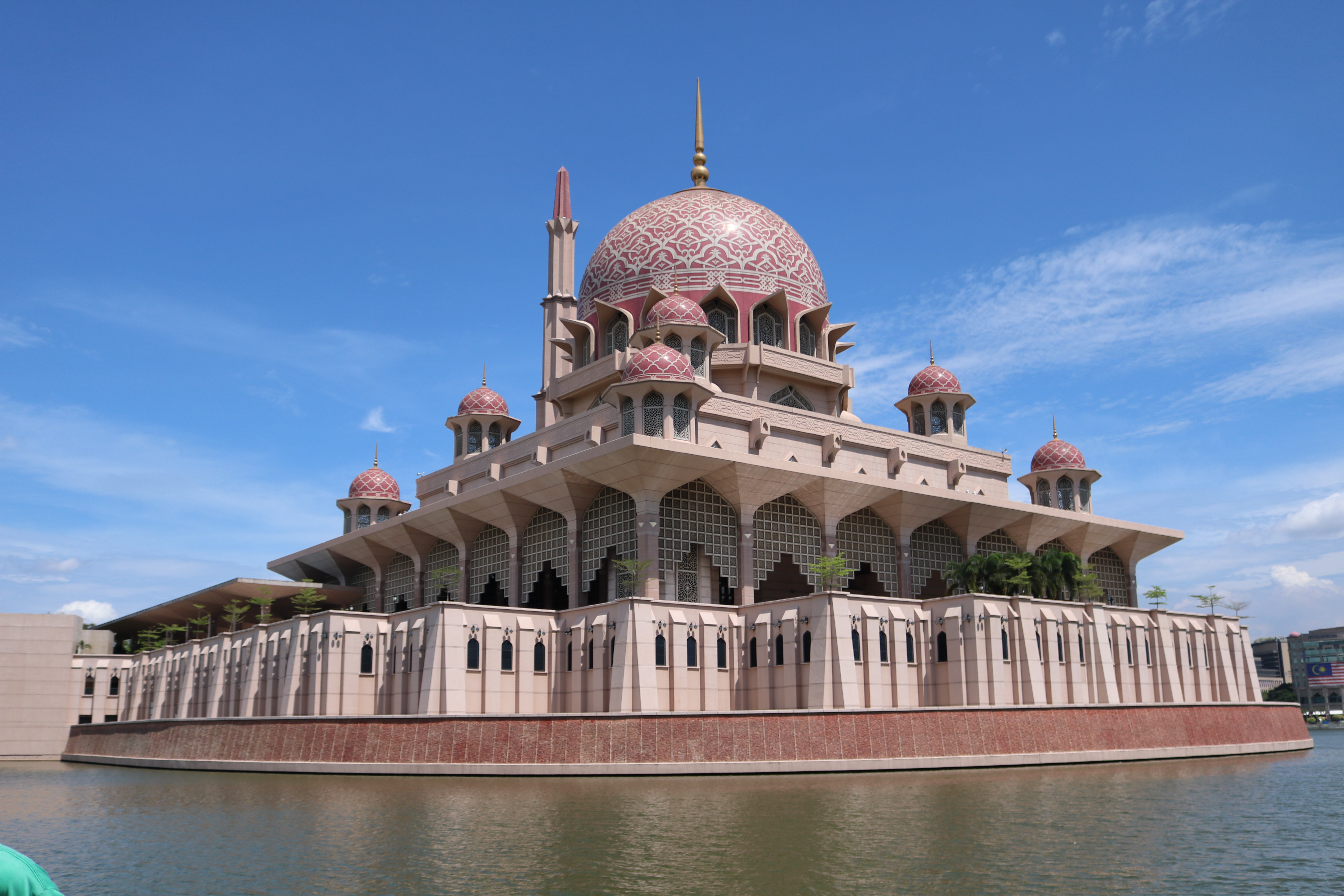
The principal mosque of Putrajaya, the Putra Mosque faces the Putrajaya Lake, and because of the rose-tinted colour of the building, it is also known as the Pink Mosque. The mosque’s architecture is an assortment of Malaysian, Persian, and Arabic-Islamic architectural designs. Made of rose-pink granite, the 116-meter tall minaret resembles that of the Sheikh Omar mosque in Baghdad. The design of the basement wall is inspired from the King Hassan mosque in Casablanca, Morocco. Consisting of a courtyard and a prayer hall, the Putra Mosque has a capacity of 15,000 people with up to 10,000 in the prayer hall and 5,000 in the courtyard. Other noteworthy features include cengal woodwork in the mosque and Islamic calligraphy on the mimba and the mehrab. On Fridays, the mosque is open from 3 to 4 pm and 5:30 to 6 pm while on other days, it is open from 9 am to 12:30 pm, 2 to 4 pm and 5:30 to 6 pm.
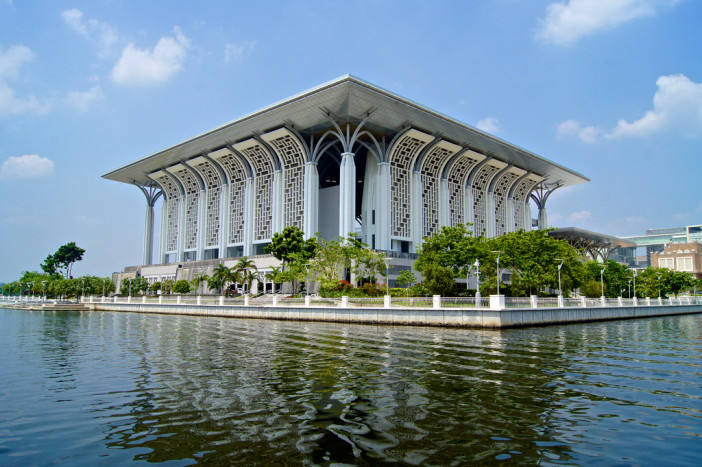
The Tuanku Mizan Zainal Abidin Mosque is the largest and the second principal mosque in Putrajaya. Also known as the Iron Mosque, the mosque is strikingly modern in terms of both aesthetics and complexity of design and technology used and looks beautiful at night when it is lit up. The stunning mosque reflects German and Chinese styles of architecture. Approximately 70% of the structure is made of steel giving it a sleek modern metallic look, hence the Iron Mosque name. Inside, the walls have a woven mesh design which looks spectacular. There are verses from the Quran engraved on German glass sheets which are placed in a way that light does not reflect on them. This gives the impression of the verses drifting in the air which looks splendid. There is natural air conditioning called Gas District Cooling in the mosque which keeps the building cool even without fans and air conditioners. Unlike other mosques, Tuanku Mizan Zainal Abidin Mosque does not have minarets. On Fridays, the mosque is open from 3 to 4 pm and then again between 5:30 to 6 pm. On other days, it is open from 9 am to 12:30 pm, 2 to 4 pm, and 5:30 to 6 pm.
That’s all for Putrajaya and look out for our next Malaysian state next week, the state of Perak.






 Memories and Such