Kuala Selangor
The largest town of the district, Kuala Selangor, lies in northwestern Selangor. The name Kuala Selangor means Estuary of the Selangor River. The town was the capital of the Sultanate of Selangor during its early years in the 18th century, which was relocated to Jugra in the Kuala Langat region in 1827, and then Klang in the 1870s.
Kuala Selangor town is located at the estuary of the Selangor River, where it drains into the Strait of Malacca. It is located 55 km north-west of downtown Kuala Lumpur, and 42 km north-west of Shah Alam, the capital of Selangor.
Kampung Kuantan is well known for its fireflies. Some people believe that these fireflies are only available at two places in the world and one of them is Kampung Kuantan. In the early 1970s, a local businessman saw the commercial potential of the fireflies. Today, the firefly adventure is handled by the Kuala Selangor District Council and has expanded with the addition of 27 small boats for visitors.
The unique firefly tour along the Selangor River allows visitors to get a magical view of the shimmering fireflies residing in the Berembang Trees flanking both sides of the river. The ticket price for the tour is RM 15 per person. The boat ride starts at 7 pm with the last boat departing at 8:30 pm and each ride goes on for around 40 minutes.
Kuala Selangor Nature Park was opened in 1987. With an area of 296 hectares, it is divided into two main parts: a 201-hectare tropical rainforest, and a swamp forest. The park is under the management of the Malaysia Nature Lovers Association, which ensures the natural environment of the park is preserved without any habitat damage.
Also known as Taman Alam, the park and forest is home to the Silvery Lutung Monkey, an endangered primate species, and are also breeding grounds for diverse marine life. The Kampung Kuantan Firefly Park, famous for fireflies, is one of the three places along with Pasir Penambang and Kampung Bukit Belimbing where one can witness fireflies. Visitors get to travel on a sampan, a traditional wooden boat to witness fireflies nearby.
The park, as part of the Selangor River estuary, is home to several large bird species and was a breeding ground of an endangered milky stork species before the program was suspended. An abandoned aviary still stands in the middle of the park. In 1997, Kuala Selangor Nature Park was recognised as a nature reserve for conservation and ecotourism and recognised as an Important Bird Area (IBA) by Birdlife International.
There are two trails and one walkway in the park, known as the Main Trail traversing the secondary forest, the Bund Trail encircling the lake and the Mangrove Walkway extending into the mangrove forest. These last approximately 15 minutes, 75 minutes and 55 minutes to walk respectively. Two watch towers provide views of the area, and birds and other animals can be seen from the top of the watch tower platform. There are some gazebos for rest in the park. The Park Interpretive Centre is open seven days a week including public holidays, from 9 am to 6 pm. Visitors can purchase admission tickets and souvenirs, reserve a room of accommodation, and get information about the park. Entrance fees are RM4 for adults, RM1 for children or students between 7 and 16, RM2 for senior citizens above 60 and MNS members and free for children under 6. Visitors can request to stay in the park. There are A-frame huts, chalets, dormitories, and a hostel for large groups of people. A camping site for campers is also available here upon booking.
Melawati Hill or Bukit Melawati, famous for panoramic sunsets, the silvered-lutung monkeys, and long-tailed macaque monkeys, Redang beach for its sunrise, sunsets, and migratory birds, and Remis beach are famous natural attractions to visit. Another notable attraction in Kuala Selangor is the Sasaran Sky Mirror. A growing site in terms of popularity, it is a sandbank that emerges for a few hours in the morning, only on certain dates based on the lunar month, to produce a mirror-like reflection of the sky in the water which is worth the time and visit.
A shallow-water sandbank, Sasaran Beach is located in the middle of the Malacca Sea. About 3.2 k,m from the famous fishing village of Jeram. Only accessible during low tides, the beach is extremely popular among photographers for its phenomena of picture-perfect spot Sky Mirror, where the natural reflection of the entire sky is visible on the shallow placid water. The beach is usually submerged in water during high tide days and can be reached with the help of a tour guide boat ride. Filled with seagulls and marine life the beach has ample sea clams. Dolphins can also be spotted on the beach and the beautiful seascape is often compared to the Salar de Uyuni salt flats of Bolivia. On the new moon and full moon day of every month as per the lunar calendar, Sasaran Beach witnesses a picturesque sky mirror on the stretch of the sand bar. At the perfect tide day, water becomes shallow along the coast of the beach reflecting the sky in perfect symmetry and blend. Visitors can not spot the Sky mirror themselves as it is situated along the open sea around 30 minutes away from Kuala Selangor; hence it is recommended to book a tour guide. The tour to 00 Sasaran Beach and sky mirror along with food and boat costs around RM 70 to RM 100. The charge for the tour for Malaysians is RM 80 while others pay RM 100. The tour, which is best visited on the 1st and 15th day of each month as per the lunar calendar takes about four to five days to complete.
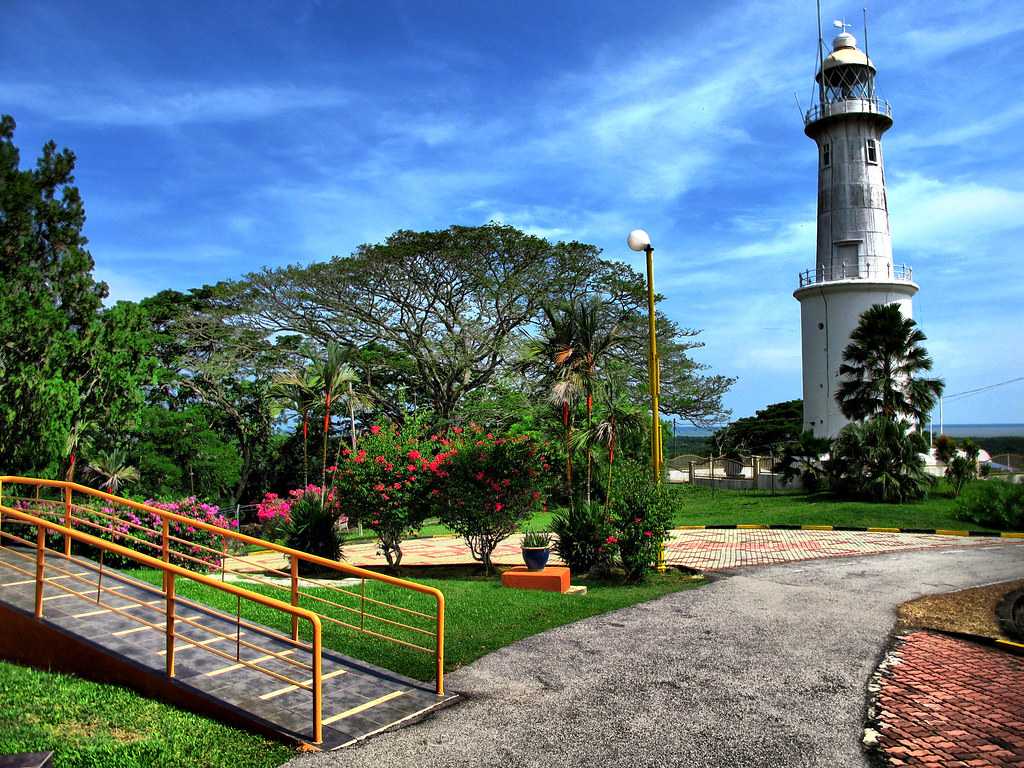
A great place to enjoy sunsets, the Altingsburg Lighthouse and its surrounding area offer a panoramic view of the Straits of Malacca. Though the lighthouse is out of bounds, it is located on Melawati Hill and is of Dutch origin.
The Kuala Selangor Historical Museum is based in the Bukit Melawati area, an hour away from Kuala Lumpur, Malaysia. Once the official residence of the District Officer, it showcases a vast collection of archaeological artefacts. The museum is located at the top of the hills offering fantastic views of town. There are unpaid guided tours available to explore the museum. The museum offers a great depth of knowledge in the early lives of the people and the administration of Kuala Selangor. There is a showcase of weapons, flags, etc. depicting the history of Kuala Selangor. It describes the rich kingdoms, affluent kings and the people there. The museum regularly hosts activities like eagle-feeding and coaster rides. Plenty of resident monkeys can be seen surrounding the museum.
The front of the Kuala Selangor Historical Museum has intense defence structures over the hills to guard the Melaka Strait, cannons, a lighthouse to direct the ships in the sea, and the Malaysian flag. The park outside has breathtaking views of the Strait of Melaka. The museum is open between 9:30 am and 5:30 pm.
The Kuala Selangor Museum or the Sultan Alam Shah Museum, based near the Altingsburg Lighthouse, displays many artefacts, historical objects and relics, tombstones, weapons, and possessions from the Selangor Civil War. It is primarily focused on defining the power struggle between the State Sultanate, British and Dutch armies from 1867 to 1874. The museum is open from 9:30 am to 5:30 pm
Also known as the Virgin’s Grave or Keramat Rubiah, Makam Keramat Anak Dara is a shrine constructed to pay homage to a young girl by her parents. Placed on a small rocky hill of Kuala Selangor, Makam Keramat Anak Dara lies beside Lake Shima, popular for fishing and filled with lush green trees. The grave structure is entirely made of white marble padlocked in a gate. The grave can be reached by stepping on a steep wooden staircase. At the entrance of the shrine is a signboard with the folk tale about a young girl, Siti Aishah, who disappeared a night before her forced marriage. Her parents never found the girl but found her clothes hanging on the tree, so decided to build Makam Keramat Anak Dara to pay homage to their daughter.
Tanjung Keramat Fort is a historical attraction situated in Kampung Tanjung Keramat, a small village near the Selangor River. Also known as Bukit Belanda or Dutch Hill, the fort is situated on the hillock next to Lake Shima. The Fort was constructed by Sultan Ibrahim in 1830 to create a defensive position. However, the Dutch captured the fort and renamed it Fort Utrecht. The fort has a large rock on the entrance. Visitors can also take a look at the poisoned well inside the fort which was once filled with latex and bamboo juice and used to punish the guilty during the reign of Sultan Ibrahim. Cannons and large weapons from the 17th century and a picturesque garden surrounding the fort invite visitors to walk around. The fort is open at all times and is free to enter.
The Sri Shakti Temple, popularly known as the Sri Shakti Devasthanam is a magnificent Hindu temple established in the Bukit Rotan village. The only temple in the world with 51 Shakti illustrations crafted all over an acre of land, the temple is built keeping all the Hindu scriptures in mind, with sculptural technique, and Thundu Pattirippu Pathroba Pathram. The entrance is 18 feet high and is chiselled with lions, elephants, and other intricate sculptures and designs. The five-storeyed temple is crafted on 96 pillars which depicts the 96 Hinduism principles. The main deity of Goddess Shakti along with her 51 avatars is placed in the main hall, with architecture with different shlokas, and a massive brass bell in between.
The main highlight of the temple is the sanctum sanctorum which was constructed in eight phases. The sanctum sanctorum of the wall is decorated with 64 Sri Chakras and 64 Navratanas. Apart from this, four pillars depicting the four Vedas are embedded inside. The entrance of the temple is through a tower known as the Raja Gopuram which is 80 feet tall and crafted with elephant and lion motifs. The temple is encircled by a lush green beautiful garden where one can spot some herbs and traditional trees. The temple is open between 5:30 am and 12:30 pm and between 4:30 and 9:30 pm.
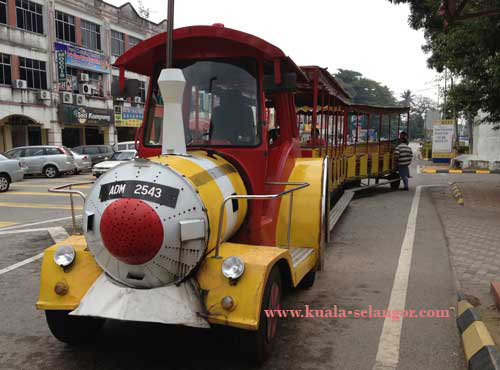
The Bukit Melawati Tram Ride is a splendid tourist tram facility enabling travel to Melawati Hill. The tram service has its pick-up point at the beautiful nature park. It offers some great views of Kuala Selangor as one goes uphill. It is mostly available on weekends and public holidays as one can drive up the hill on weekdays. Tickets are available at the tourist booth in front of the car park with a map outside for visitors to explore Kuala Selangor and its surroundings. The trams arrive and depart frequently, therefore the waiting time is just a few minutes. The tram makes pitstops at the Kota Malawati or Melawati Fort on the way to hop on or off with some shops and restaurants. The tram ride is a fun way to explore this area and get to the hilltop if visitors don’t enjoy hiking. It is an enjoyable experience for children. The destination hill has panoramic views of the Melaka Strait. The tram ride also leads up to a freshwater fish park that is included in the ticket and has a variety of fish present there. The fees for the tram ride are RM 5 per adult and RM 3 per child.
Nestled on the Melawati Hill in Kuala Selangor, the Melawati Fort is regarded as one of the highest hilltops in the area. Its history dates back to the late 1700s, during the reign of Sultan Ibrahim. Sultan Ibrahim built the Melawati Fort to protect the area from foreign invaders. The Fort offers a panoramic view of the beautiful Melawati River and the mangroves encircling it. The canons that were installed by the ruler stand tall to date. The fort also houses ancient gravesites and a flat stone that was used during beheadings. During the visit, one can catch a glimpse of several silver-leaf monkeys. The fort is open between 9:30 am and 4:30 pm and entry is free.
Sepang
Pekan Sepang is a small border town, famous for the Sepang International Circuit which lies in the western part of the town, where the Malaysian F1 Grand Prix and the Malaysian MotoGP Grand Prix are held. Malaysia’s largest airport Kuala Lumpur International Airport in the western part of the town.
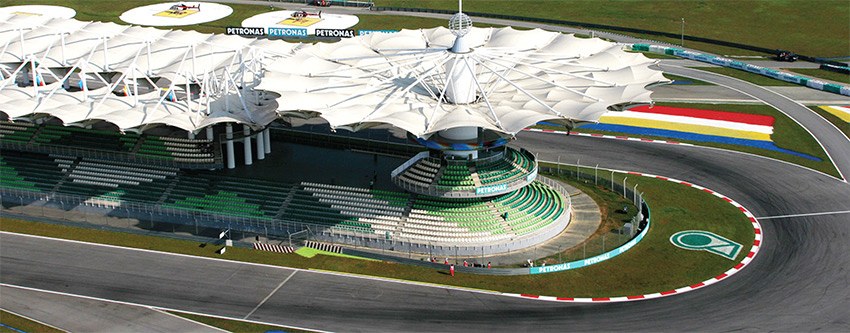
The Sepang International Circuit is a motorsport race track, located approximately 45 km south of Kuala Lumpur, and close to the Kuala Lumpur International Airport. It hosted the Formula One Malaysian Grand Prix between 1999 and 2017 and is also the venue for the Malaysian Motorcycle Grand Prix, the Malaysia Merdeka Endurance Race and other major motorsport events.
The circuit was designed by German designer Hermann Tilke, who would subsequently design other circuits in Shanghai, Sakhir, Istanbul, Marina Bay and Yas Marina. The Sepang International Circuit was constructed between 1997 and 1999 close to Putrajaya, the then-newly founded administrative capital of the country, with the intent of hosting the Malaysian Grand Prix. The Malaysian climate means the circuit is known for its unpredictable humid tropical weather, varying from clear furnace-hot days to tropical rainstorms. The track was completely resurfaced in 2016 with the support of Italian designer Dromo, with several corners reprofiled to emphasise mechanical, rather than aerodynamic grip. Notably, the final corner was raised by approximately 1 m, which officials claimed would force drivers to take a later apex and explore different racing lines through the hairpin.
The main circuit, normally raced in a clockwise direction, is 5.543 km long, and is noted for its sweeping corners and wide straights. The layout is quite unusual, with a 0.927 km long back straight separated from the pit straight by just one very tight hairpin. Other configurations of the Sepang circuit can also be used. The north circuit is also raced in a clockwise direction. It is the first half of the main circuit. The course turns back towards the pit straight after turn 6 and is 2.706 km long in total. The south circuit is the other half of the racecourse. The back straight of the main circuit becomes the pit straight when the south circuit is in use, and joins onto turn 8 of the main circuit to form a hairpin turn. Also run clockwise, this circuit is 2.609 km in length. The Sepang International Circuit also features kart racing and motocross facilities.
Located in the Chiling Fish Sanctuary, a fisheries research project undertaken by the Selangor State Fisheries Department, the Chiling Waterfall is famous for swimming and an adventurous jungle trek.
Composed of three breathtaking separate vertical waterfalls, the falls sit 400 m above sea level on the way to Fraser Hills and tumbles onto a plunge pool with colourful fish. It is bordered by a boulder resembling a Chinese guardian lion amidst wild orchids and bamboo. The trek leads one to the main lower falls. The upper fall is relatively quiet and a good place for a family picnic. The adventurous 2-km trek along the river to Chiling Waterfall starts from the Sanctuary Admin Office at the entrance and involves crossing the river six times. At some points of the trek, one will have to wade through the river to cross it. In total, it will take around one hour to reach the waterfall. The falls are open from 8 am to 6 pm only on Fridays, Saturdays and Sundays and costs RM 1 per person.
The Paya Indah Wetlands is a wildlife sanctuary located in Dengkil town near Kuala Langat and is one of the best places in Malaysia to relax in the lap of nature. Stretched over an area of 450 hectares, the wetlands are divided into three major zones namely Conservation & Research Zone, Educational Zone, and Recreational Zone. The wetlands are home to 210 species of birds and animals and flora and fauna. The Paya Indah wetlands have a lot of activities to offer like animal feeding, cycling, kayaking, trekking, and bird watching. Visitors can also enjoy some cultural events held regularly in the Terengganu Malaysian show house of the Paya Indah wetlands. The Department of Wildlife & National Parks also has many accommodation sights like chalets, hostels, and camps for visitors to stay on pre-booking. Bird watching is free in Paya Indah wetlands between 7:30 am and 7 pm. Visitors can feed hippopotamus, crocodiles, pelicans, and porcupines under expert guidance. Daily feedings include Hippopotamus feeding at 10 am, pelican feeding at 10:30 am and porcupine feeding at 11:30 am while on weekends, visitors can feed crocodiles on weekends at 11 am. At the Paya Indah Lookout Tower, visitors can get a 360-degree view of the wetlands while the Typha Lake welcomes anglers and costs RM 10 per rod between 8 am and 6:30 pm every day, except Fridays. One can also rent a bicycle and explore the wetland park in a single go. Bicycles are rented with a charge of RM 5 for 2 hours and tricycles charges are RM 3 for 2 hours. Kayaks can be hired for lake tours either in groups or solo. Kayak charges vary from RM 6 to RM 7 for an hour. And this ends our Selangor visit. I didn’t realise how much this state has to offer and now I am seriously thinking of going there the next time we travel to Malayia. Our next state will be the Federal territories of Kuala Lumpur and Putra Jaya, both of which are enclosed within Selangor.
And that’s the end of our visit to Selangor. Our next state is the Federal Territories of Kuala Lumpur and Putrajaya, so watch this space!