In My Hands Today…

The Case of the Man who Died Laughing (Vish Puri #2) – Tarquin Hall

Murder is no laughing matter. Yet a prominent Indian scientist dies in a fit of giggles when a Hindu goddess appears from a mist and plunges a sword into his chest.

The only one laughing now is the main suspect, a powerful guru named Maharaj Swami, who seems to have done away with his most vocal critic.

Vish Puri, India’s Most Private Investigator, master of disguise and lover of all things fried and spicy, doesn’t believe the murder is a supernatural occurrence, and proving who really killed Dr. Suresh Jha will require all the detective’s earthly faculties. To get at the truth, he and his team of undercover operatives—Facecream, Tubelight, and Flush—travel from the slum where India’s hereditary magicians must be persuaded to reveal their secrets to the holy city of Haridwar on the Ganges.

How did the murder weapon miraculously crumble into ash? Will Maharaj Swami have the last laugh? And perhaps more important, why is Puri’s wife, Rumpi, chasing petty criminals with his Mummy-ji when she should be at home making his rotis?

Stopping only to indulge his ample Punjabi appetite, Puri uncovers a web of spirituality, science, and sin unique in the annals of crime.

In My Hands Today…

The Painter of Signs – R.K. Narayan

For Raman the sign painter, life is a familiar and satisfying routine. A man of simple, rational ways, he lives with his pious aunt and prides himself on his creative work. But all that changes when he meets Daisy, a thrillingly independent young woman who wishes to bring birth control to the area. Hired to create signs for her clinics, Raman finds himself smitten by a love he cannot understand, much less avoid-and soon realizes that life isn’t so routine anymore. Set in R. K. Narayan’s fictional city of Malgudi, The Painter of Signs is a wry, bittersweet treasure

In My Hands Today…

The Forbidden Daughter – Shobhan Bantwal

Set in the sensual richness of India, Shobhan Bantwal’s gripping new novel asks: Where can a woman turn when her life’s greatest blessing is seen as a curse? It’s a girl! For most young couples, news of their unborn child’s gender brings joyful anticipation. Not so for Isha Tilak and her husband, Nikhil. They already have a beloved daughter, but Nikhil’s parents, hard-wired to favor male children above all, coldly reject little Priya at every turn. Vain and selfish, they see female grandchildren as burdens, and would just as soon never meet the one growing in Isha’s belly. Even the obstetrician agrees, going so far as to suggest the unthinkable, throwing Nikhil into a rage–and changing Isha’s life forever. . .

When Nikhil is discovered brutally murdered, Isha is convinced it had something to do with his reaction to the doctor’s hideous “solution” to their problem. Alone, grief-stricken, and relentlessly oppressed by in-laws who believe her baby is a bad omen, Isha sets out on her own. Born into a privileged class, Isha doesn’t know the first thing about fending for herself, but to protect her precious daughters, she will learn. And she will cling to the hope given to her by a strange old mystic: that her baby will arrive on the auspicious night of Kojagari Purnima, the full harvest moon, and be a gift from Lakshmi, the goddess of well-being. Isha and her girls will need all the blessings they can get, for the greatest dang

In My Hands Today…

The Sleeping Dictionary – Sujata Massey

In 1930, a great ocean wave blots out a Bengali village, leaving only one survivor, a young girl. As a maidservant in a British boarding school, Pom is renamed Sarah and discovers her gift for languages. Her private dreams almost die when she arrives in Kharagpur and is recruited into a secretive, decadent world. Eventually, she lands in Calcutta, renames herself Kamala, and creates a new life rich in books and friends. But although success and even love seem within reach, she remains trapped by what she is . . . and is not.

As India struggles to throw off imperial rule, Kamala uses her hard-won skills for secrecy, languages, and reading the unspoken gestures of those around her to fight for her country’s freedom and her own happiness.

My Home State: Maharashtra


Growing up, in Mumbai, May 1st was always celebrated as Maharashtra Day, the day my home state of Maharashtra, of which Mumbai is the capital came into existence. So I thought it is only appropriate that today’s post be all about Maharashtra.
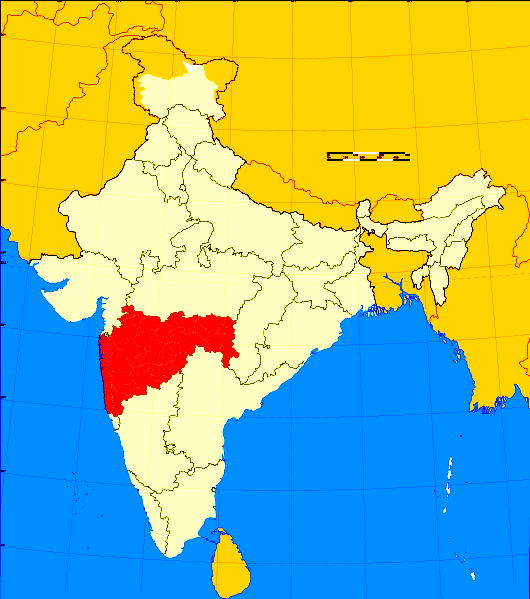
Maharashtra, which means ‘Great State‘ lies in the western part of India with the states of Gujarat and Madhya Pradesh to the north, Chattisgarh to the east, Andhra Pradesh, Karnataka and Goa to the south and the Arabian Sea to the west. Mumbai, the capital city is the country’s financial capital, though some may debate this claim in recent years and the state is also home to Bollywood!

Maharashtra is one of the wealthiest and the most developed states in India, contributing around a quarter of the country’s industrial output and GDP. This is also the second most populous state in India with almost 10% of India’s population in the state. His probably does not take the migrant population into account, so the actual numbers may be a bit higher. This is also the state with the longest road network in the country and the first train service in India and in fact continental Asia ran between Mumbai and Thane (a Mumbai suburb of sorts) on 16 April 1853. The headquarters of Central Railways, Chatrapti Shivaji Terminus aka CST is the busiest railway station in India, serving as a terminal for both long-distance trains and commuter trains of the Mumbai Suburban Railway.

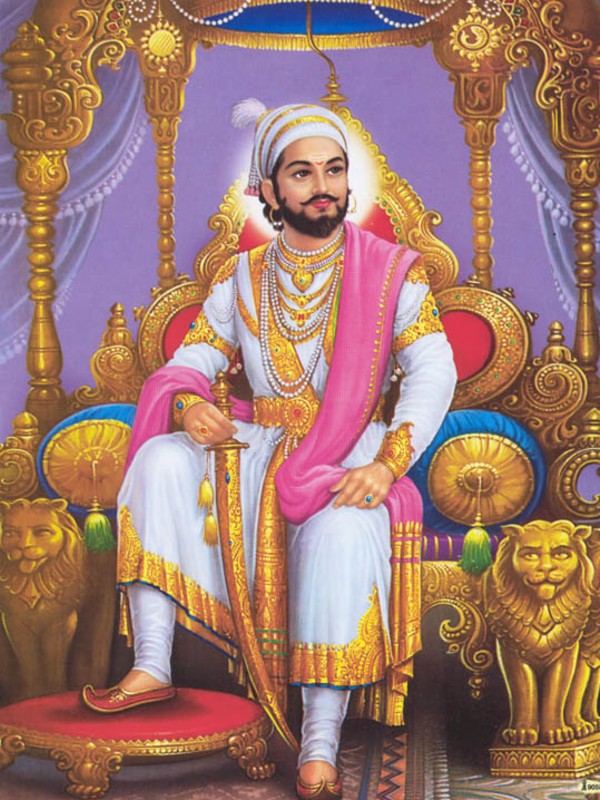
One of the greatest Maratha warriors is Chatrapati Shivaji Maharaj who, along with his father Shahaji Bhosle is credited with the establishment of the independent Maratha Empire which defeated the Mughals conquered large territories in northern and central parts of the Indian subcontinent. The Third Anglo-Maratha war (1817–1818) led to the end of the Maratha Empire and East India Company ruled the country in 1819.

The British governed western Maharashtra as part of the Bombay Presidency, which spanned an area from Karachi in Pakistan to northern Deccan. A number of the Maratha states persisted as princely states, retaining autonomy in return for acknowledging British suzerainty. At the beginning of the 20th century, the struggle for independence took shape, led by nationalist extremists like Bal Gangadhar Tilak and Vinayak Damodar Savarkar and the moderates like Justice Mahadev Govind Ranade, Gopal Krishna Gokhale, Pherozeshah Mehta and Dadabhai Naoroji who were all born in this region.

The ultimatum to the British during the Quit India Movement was given in Mumbai, and culminated in the transfer of power and independence in 1947. After India’s independence, the Deccan States, including Kolhapur were integrated into Bombay State, which was created from the former Bombay Presidency in 1950.

In 1956, the States Reorganisation Act reorganised the Indian states along linguistic lines, and Bombay Presidency State was enlarged by the addition of the predominantly Marathi-speaking regions of Marathwada (Aurangabad Division) from erstwhile Hyderabad state and Vidarbha region from the Central Provinces and Berar. The southernmost part of Bombay State was ceded to Mysore. From 1954–1955 the people of Maharashtra strongly protested against bilingual Bombay state and the Mahagujarat Movement was started, seeking a separate Gujarat state.

Due to the mass protests and 105 deaths, by both linguistic groups, the Union government enacted the Bombay Reorganisation Act on 25 April 1960 which came into effect on 01 May 1960 leading to the formation of the states of Maharashtra and Gujrat by dividing the erstwhile Bombay state.

I can go on and on I guess, but this should be a good starting point for someone who is interested in the state of Maharashtra. One of these days, I’ll do a similar post on Mumbai…