Deeply rooted in Mizo culture, the Chapchar Kut Festival has an origin story dating back centuries. Rooted in centuries-old customs and folklore, this annual extravaganza captivates the senses with its colourful pageantry, lively performances, and spirit of camaraderie.
The festival traces its origins to ancient times when the Mizo tribespeople celebrated the arrival of spring and the onset of the agricultural season. As the winter frost receded and the land bloomed with new life, communities gathered to give thanks for the bountiful harvest and seek blessings for the year ahead.
The festival began around 1450–1700 in the village of Suaipui. The festival apparently originated when the hunters came back to the village empty-handed. To make up for the disappointment, the village chief proposed an impromptu feast with rice, beer and meat. Since then, every year, the festival has been repeated in the village of Suaipui and gradually spread to other villages. Thus, the Chapchar Kut was born—a celebration of resilience and community spirit. The festival originally served as a thanksgiving to the gods because during the clearing of forests on hill slopes for jhum cultivation or the shifting of agriculture, the people needed divine protection. Chapchar Kut marked the end of this arduous process, and the Mizo community expressed gratitude for their safety.
Chapchar Kut was first revived in 1962 on a grand scale in Aizawl; however, it was discouraged when it was felt that it did not adhere to Christian values and rekindled pre-Christian cultural practices like the drinking of rice beer. However, it was revived once again in 1973 on a mass scale, sans animistic practice and the Cheraw dance. Even the church, which had been critical of the festival, no longer objected to the festival as it felt that traditional culture was disappearing. Chapchar Kut is now held annually in the month of March. People dance, perform skits, and play musical instruments to celebrate their beloved festival, with the aim of fostering camaraderie among the people.
In the early days, Chapchar Kut was a lively affair with plenty of drinking and eating. Young men and women danced through the night, celebrating life and unity, with women adorning themselves in traditional attire, including the Vakiria, a traditional Mizo shawl. The Chai dance traces its origins to this festival. Today, Chapchar Kut aligns with the drying period for trees and bamboo felled during jhum cultivation. The festival provides a well-deserved break for shifting cultivators.
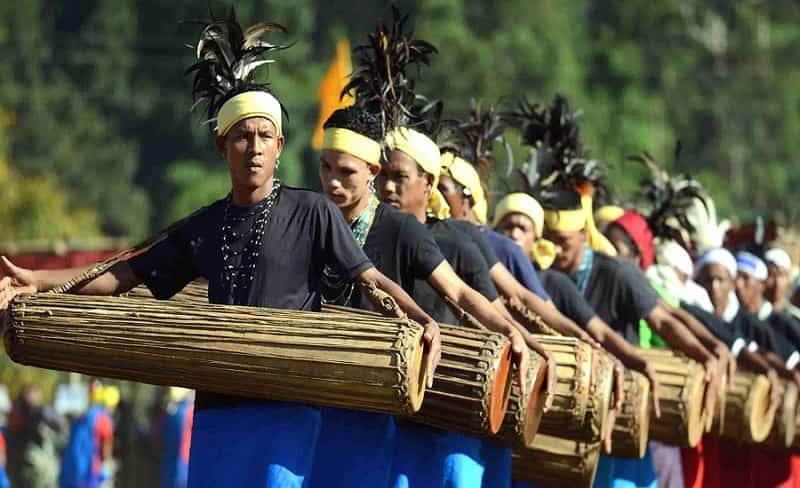
The Chapchar Kut Festival is marked by meticulous preparations and elaborate rituals that reflect the rich cultural tapestry of Mizoram. Weeks in advance, communities come together to clean and decorate their villages, weaving intricate patterns of bamboo and banana leaves to adorn their homes and public spaces. The festival provides an opportunity for Mizo men and women to showcase their traditional attire and finery, with vibrant costumes and elaborate headdresses adding to the spectacle of the occasion. From intricately woven shawls to ornate jewellery adorned with semi-precious stones, every garment tells a story of craftsmanship and cultural pride. Central to the Chapchar Kut Festival is the pulsating rhythm of music and dance, as performers take to the stage to showcase their talent and skill. Traditional instruments such as the khuang or the drum, the tuium or the flute, and the dawte or the gong set the beat for energetic performances that captivate audiences and evoke the spirit of celebration and joy.
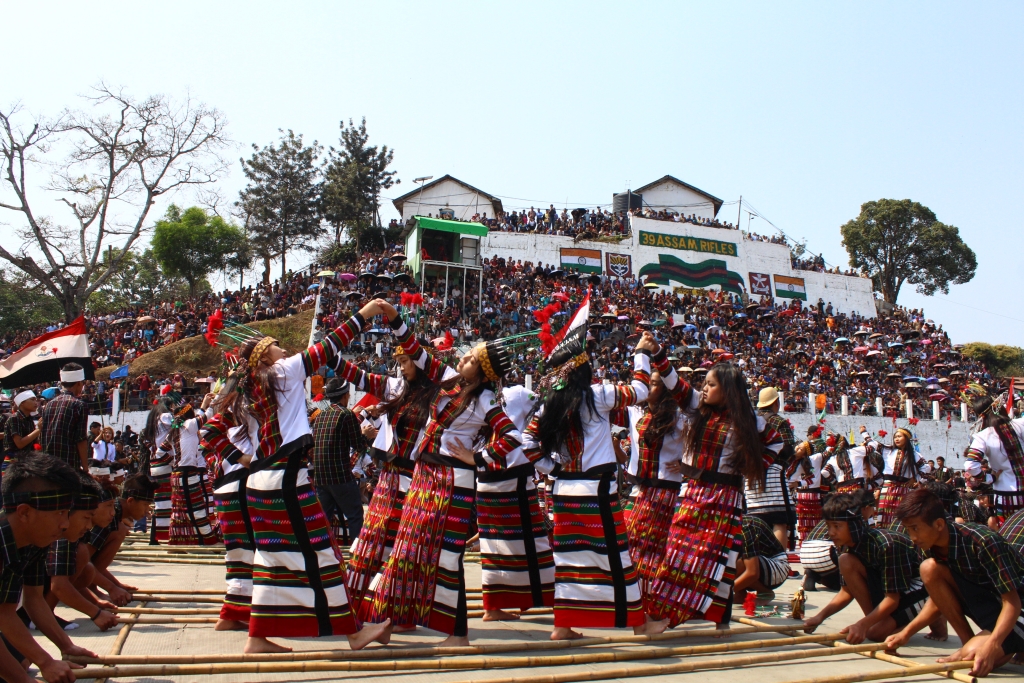
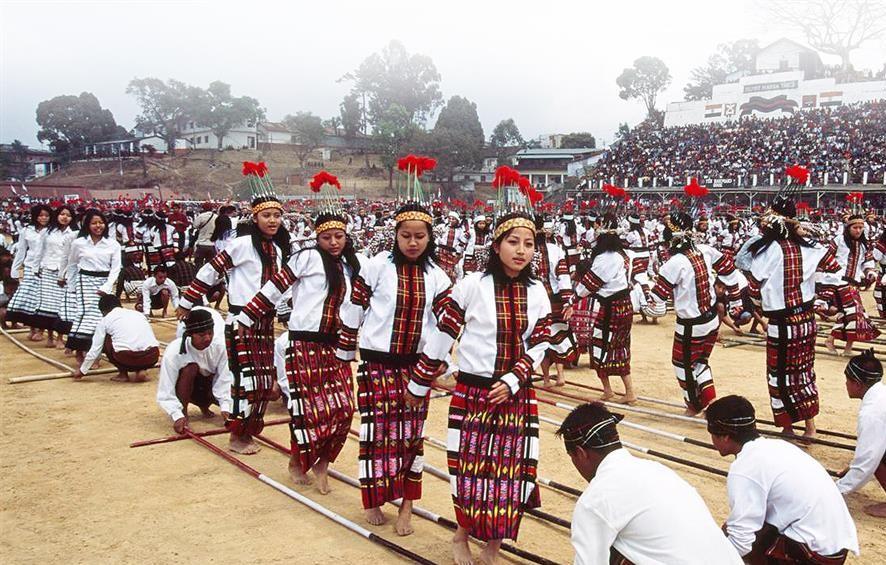
Key activities of the festival include the Chhawnghnawh, a pre-Christian custom where boiled eggs are playfully stuffed into each other’s mouths. The Cheraw dance takes centre stage, accompanied by other traditional dances like the Khuallam, the Chheihlam, and the Chai. The Chapchar Kut Run, a spirited race celebrating physical fitness, is also held during the festival. As a nod to the Mizo heritage, traditional games and a costume parade is the highlights of the festival.
A highlight of the Chapchar Kut Festival is the Thangchhuah or traditional bamboo dance, where men and women form intricate patterns and formations as they dance to the rhythmic beat of drums and gongs. The dance symbolizes unity, harmony, and collective endeavour—a reflection of the communal spirit that defines Mizo culture. Food plays a central role in Chapchar Kut celebrations, with elaborate feasts and communal meals bringing families and communities together in a spirit of camaraderie and conviviality. Traditional delicacies such as bai, a rice-based dish, vawksa rep, smoked meat, and sa-um, fermented bamboo shoot, are prepared with love and shared with neighbours and guests.
As part of the festival festivities, cultural exhibitions, and competitions are organized to showcase the diverse traditions and talents of the Mizo people. From traditional crafts and artwork to indigenous games and sports, these events provide a platform for artisans, performers, and athletes to showcase their skills and creativity.
While the Chapchar Kut Festival remains deeply rooted in tradition, it also reflects the evolving dynamics of contemporary Mizoram. Today, the festival serves as a catalyst for community engagement, social cohesion, and intergenerational dialogue, fostering a sense of belonging and pride among Mizo youth and elders alike.
In recent years, the Chapchar Kut Festival has emerged as a major tourist attraction, drawing visitors from across India and around the world to experience the vibrant colours, sights, and sounds of Mizoram’s cultural extravaganza. The festival offers a unique opportunity for cultural exchange and mutual understanding, as visitors immerse themselves in the customs and traditions of the Mizo people.
As Mizoram grapples with environmental challenges such as deforestation and climate change, efforts are underway to integrate principles of sustainability and conservation into the Chapchar Kut Festival. Initiatives such as tree planting drives, waste management programs, and eco-friendly practices aim to minimize the festival’s ecological footprint while preserving the natural beauty and biodiversity of the region.







 Memories and Such