Travel Bucket List: India – Odisha Part 3

Moving on to more Odisha towns after the break last week, today’s places include
Puri
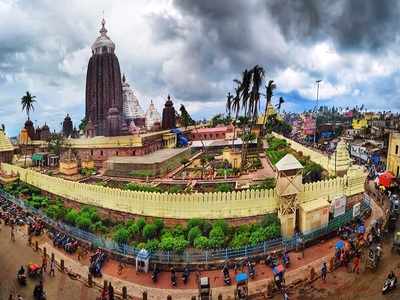
When you think of Odisha, the first thing that comes to mind is the Jaganath Temple at Puri and the annual Rathyatra. This ancient city is among the original Char Dhams that hold significance in the Hindu religion. The Char Dhams or four abodes are a set of four pilgrimage sites and Hindus believes that visiting these sites helps achieve Moksha or salvation. The four places are Badrinath, Dwaraka, Puri and Rameswaram, one on each nodal points in India. Hindus believe that one should visit these places a t least once in one’s lifetime. The highlight of Puri is the Chariot festival or the Rath Yatra which takes place during the months of June-July and should not be missed. Known as the resting place of Lord Shiva, this ancient city dates back to 3rd century BC.
Sri Jagannath Temple
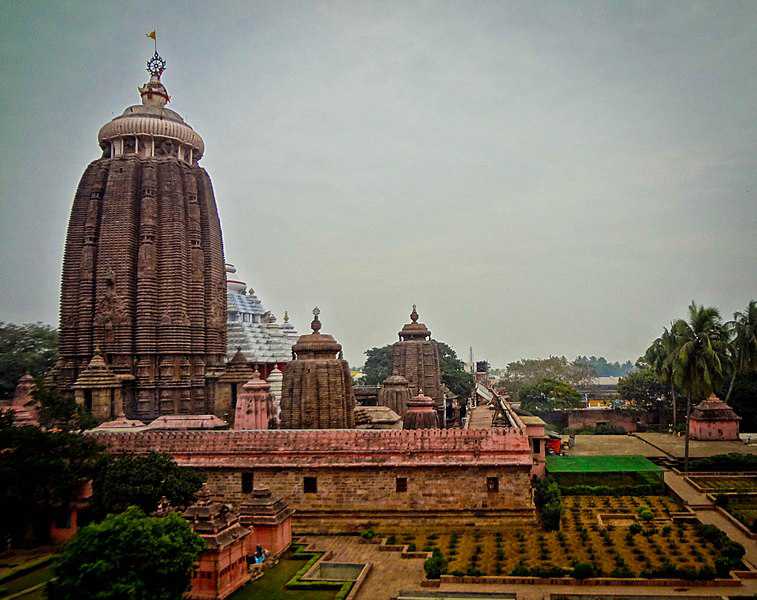
The Jagannath Temple was built in the 11th century by King Indradyumna. The present temple was rebuilt from the 10th century onwards, on the site of an earlier temple, and begun by King Anantavarman Chodaganga Deva, first of the Eastern Ganga dynasty. The earthly abode of Lord Jagannath, a form of Lord Vishnu, this temple is part of the Char Dham sites and is a very holy pilgrimage site for Hindus. The complex with it’s rich Oriyan architechture consists of the main shrine plys many minor temples. The four gates are beautifully designed with intricate carvings. This temple is famous for its annual Ratha yatra, or chariot festival, in which the three principal deities are pulled on huge and elaborately decorated temple cars. These gave their name to the English term ‘Juggernaut’. Unlike the stone and metal icons found in most Hindu temples, the image of Jagannath is made of wood and is ceremoniously replaced every twelve or nineteen years by an exact replica. The Mahaprasad in the temple is scrumptious and is something that should not be missed. In one of the largest kitchens of India, the lip-smacking food is cooked in earthen pots for thousands every day and offered to devotees.

Source

The Jagannath Rath Yatra is a festival much loved in the state and is dedicated to Lord Jagannath i.e. Lord Krishna, his sister Goddess Subhadra and his elder brother Lord Balabhadra. Commonly known as Gundicha Yatra, Dasavatara, Chariot Festival or Navadina Yatra, it is celebrated every year in the month of June or July. During the Rath Yatra, between 400-500 thousand devotees flock to Puri to get a glimse of the Lord as it is believed that those who manage to get a glimpse of the idols will have a prosperous year ahead. The Yatra begins when three richly decorated chariots resembling temple structures are pulled through the streets of Badadanda in Puri. Devotees from all over the world help pull the Lords’ chariots along with the priests. This is considered to be a pious deed, and people even risk their lives in the huge crowd for the chance to serve the Lord. This is the only day when devotees who are not allowed in the temple premises, such as non-Hindus and foreigners, can get their glimpse of the deities. The huge processions accompanying the chariots play devotional songs. The Ratha carts themselves are some approximately 45 feet (14 m) high and are pulled by the thousands who congregate at Puri for this annual event. There are three main chariots carrying three deities that are a part of the celebration. All the three chariots are made of wood and decorated by local artists. Lord Jagannath’s chariot is the biggest of the three having 16 massive wheels and a height of 44 feet. While Lord Balabhadra’s chariot has 14 wheels and a height of 43 feet followed by Goddess Subhadra’s chariot having 12 wheels and a height of 42 feet. Lord Balaram’s chariot is pulled first, then Goddess Subhadra’s followed by Lord Jagannath’s.

This festival has also been mentioned in the Puranas of Hinduism including Padma, Brahma, and Skanda Purana. The Rath Yatra is organized every year due to the belief that every year Lord Krishna visits his birth place Mathura for a few days. In order to fulfil the wishes of the Lord, every year this yatra is conducted with its starting point being Jagannath Temple. The procession’s last destination is the Gundicha Temple, where the wishes of Kanha are fulfilled. Once the raths reach the Gundicha Temple, the deities reside at the temple for a period of nine days where pilgrims are allowed darshan before taking it back to Puri in the same way. The return journey is called the Bahuda Yatra. On the way back, the procession halts at the Mausi Maa Temple (their aunt’s abode) where the deities are served with Poda Pitha (a kind of a sweet pancake). It is a said to be a poor man’s food which was a favourite of Lord Jagannath. The Jagannath Rath Yatra is one of the grandest and oldest festivals celebrated in India every year. The Jagannath Rath Yatra for 202o is scheduled for 23rd June.

Situated near the Jagannath Temple, the Lakshmi Temple is a very important temple owing to the beliefs around the history of this structure. It is believed that the marriage of Lord Shiva and Goddess Parvati happened on the sixth day of the fortnight of Jyeshta and they were invited to this temple by Goddess Lakshmi.
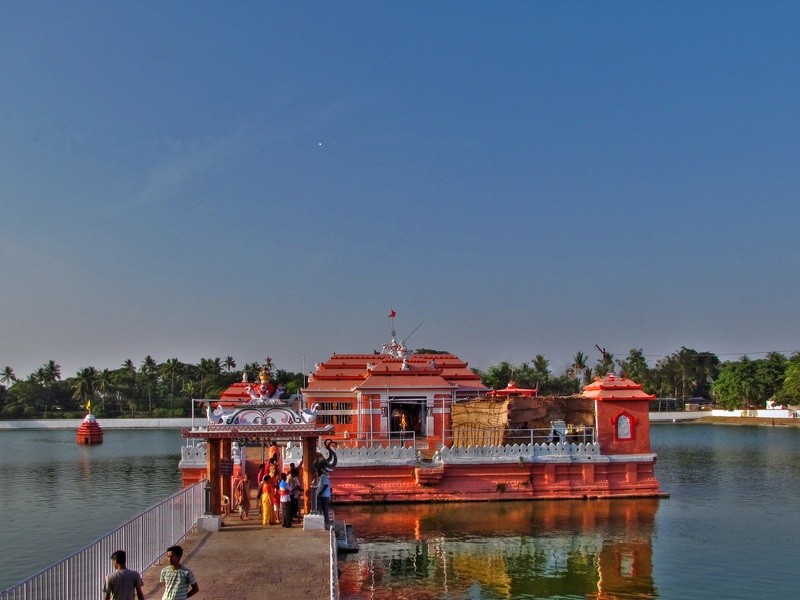
The Narendra Tank is one of the largest tanks in Odisha and is believed to have been built during the 15th century. This tank is considered holy and has a lot of small and big temples surrounding it. There is an island in the middle of the lake with a small temple called Chandana Mandapa.
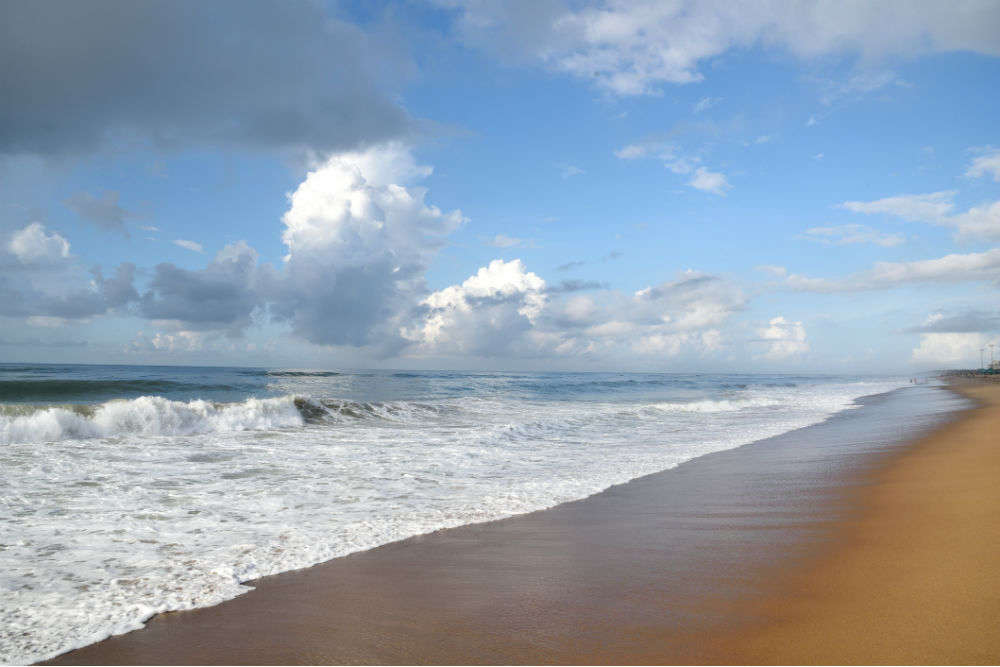
Puri Beach is one of the finest coastlines in East India, bordering the Bay of Bengal and is located at a distance of 35 km from the Konark Sun Temple. It is often flocked by devotees visiting the beach for a purification dip who come to Puri to pay their homage to Lord Jagannath. The beach is also renowned for the sand sculptures made by internationally known sand artist Sudarshan Patnaik. The sculptures are usually inspired by the art covering the temple walls or other mythological character or episodes. Adorned with fine golden sand and gushing waves, Puri Beach is quite renowned for its peaceful and calm surroundings. The stretch on the Chakratirtha side is much more tranquil and pleasant for a long stroll.

Baripada
At a distance of 256 km from Bhubabeshwar and located closer to Kolkata than the state capital, Baripada is one of the cultural centres of Odisha, situated in the Mayurbhanj district. Its Rath Yatra is considered the biggest and oldest after Puri and thus Baripada is also known as Dwitiya Srikhetra or Second Puri. It is host to the world famous Car Festival (Rathyatra) which allows only women to pull the Rath of Maa Subhadra and gathers huge crowds. In this place, you can see some of the oldest temples in the state. The town also has its own dance form which is quite famous, known as the Chhau dance. Every year in mid April, there is a Chhau dance festival called Chaitra Parva festival for which people come from far and wide to witness. The Chhau dance is a dance form which is indigenous to the region and which has been inscribed in the UNESCO’s Representative List of the Intangible Cultural Heritage of Humanity list in 2010.
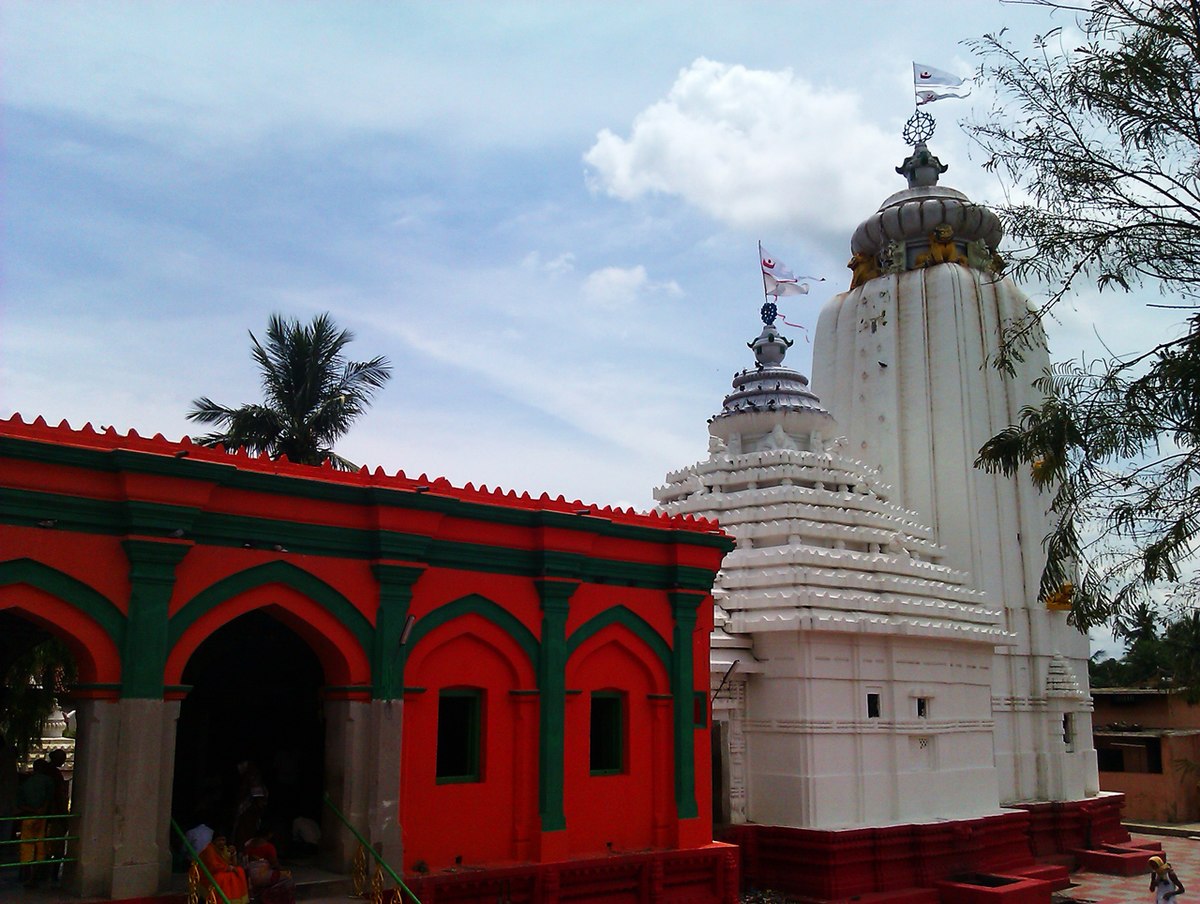
The Sri Jagannath Temple which is dedicated to the Lord of the Universe, or Lord Jagannath witnesses an inflow of a large number of pilgrims throughout the year. The temple is also known as the second Srikhetra of Orissa and boasts of being one of the oldest temples of Orissa. The Rathyatra that takes place here is also a grand affair and is the second largest after the Puri Rath Yatra. At the same time, the rituals and practices that are followed at the temple are unique and revolutionary. In the Baripada Rathyatra, women devotees are given more priority, and they are allowed to pull Maa Subhadra Ratha. This distinguishing feature separates the Sri Jagannath Temple from the remaining ones and attracts a large number of female worshippers from neighbouring areas as well. This temple which is also locally known as Bada Jagannath, is a beautiful 700-year-old structure believed to have been built by Raja Harihara Bhanja, who was also the founder of the capital city.

At the Jwala Mukhi Temple, there is a blue burning flame is kindled as Goddess Jwala, the goddess of light or fire. The dome of this temple is made of gold which was gifted by Akbar, the Mughal emperor. The temple is situated in lush green surroundings and is a good visit to not only soothe your senses but also your soul.
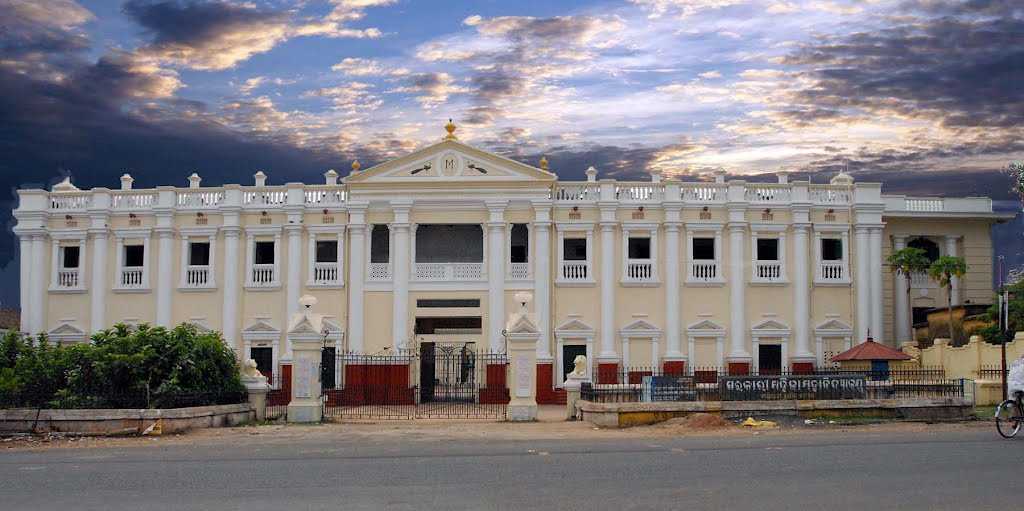
The Palace of Mayur Bhanj is a beautiful massive white building which depicts an amazing fusion of engineering and architecture and is one of the landmarks of the town. This beautiful palace belonged to the Maharajas of Mayurbhanj which was a princely state during British Raj but was sold to the Orissa government after the independence by the last ruler of Bhanj dynasty. The palace, however needs a lot of renovation and is now divided into two colleges.
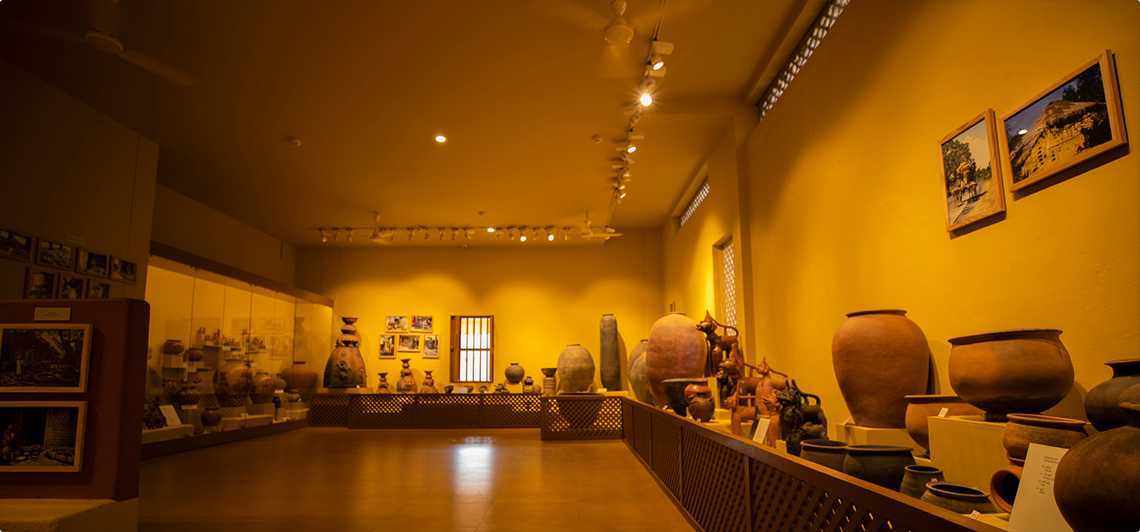
At the Baripada Museum get stunned by the some of the rarest artifacts here, like stone sculptures, historical documents, terracotta art pieces and other aesthetic commodities. The musem also has a library which has guide books about the history of the artifacts.

Source

Sambalpur
Known for its natural splendours, Sambalpur’s landscape is dotted with numerous waterfalls and plush green forests that beckon photography buffs, nature lovers, and adventure enthusiasts. Sambalpur is the gateway to the western part of Odisha and is the biggest city of this region. It abounds in rivers, hills, lush green forests and wildlife. The place also has a flourishing textile and handloom industry popular for its unique patterns and style, especially the Sambalpuri style of Saree. In addition to that, Sambalpur has a flourishing tribal life with an exquisite folk song and dance culture. Sambalpur got its name from Devi Samaleswari who is the main goddess of the region. One can also visit wildlife parks here to enjoy the beauty of nature that Sambalpur has in plenty. The area is known for the world famous Hirakud Dam which is the main attraction for the tourists here.

Source

The Samaleswari temple is located on the banks of Mahanadi and is dedicated to Devi Samaleswari also known as Jagannath Adishakti, Mahalaxmi and Mahasawarswati. The name of the city is derived from this goddess, Samaleswari as she is the main goddess of the region. On the bank of the river Mahanadi the mother goddess Samaleswari is worshipped from ancient times as Jagatjanani, Adishakti, Mahalaxmi and Mahasaraswati. The temple is of Sandhara order. These types of temples have a square sanctum enclosed by a gallery of pillars meant for Pradakshina. The Idol of Shree Shree Samalai Devi consists of a large block of Granite rock with an inverted, trunk like projection at the bottom. A shallow cut on her ‘Baraha’ like face symbolises her mouth. Traditional Sambalpuri nose ornament of pure gold hangs down from her imaginary nose. Among the varieties of festivals observed before the goddess throughout the year, three festivals are observed prominently. The first two are navaratra puja during the months of March and April and during the months of September and October. Among these two navaratra pujas which are nine days of continuous worship of the goddess, the second one is observed with a great splendour and devotion. The third festival which is said to be the chief festival of the whole western Odisha region is ‘Nuakhai’. In this festival, the farmers offer the first produce from their lands to the goddess before using it for his personal use.
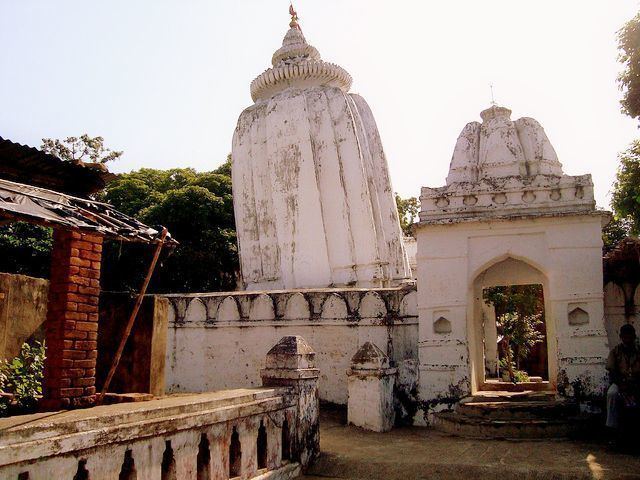
The Leaning Temple of Huma, dedicated to Lord Shiva was built in the 17th century and is the only leaning temple in the world. In this temple, only the top is leaning while the pinnacle is perpendicular to the ground. It is said that the reason for this could be either earthquake or the flood current in the river Mahanadi. There is a huge gathering specially during Shivratri festival during March.

The Ghanteswari Temple owes its name to the number of bells that hang in the temple premises. Rows of tiny bells that jingle at the slightest touch form the barricades on either side of the entrance to the temple. The steps leading to the temple are framed by bells all around. A gateway has thousands of bells hung in place by devotees. Within the inner sanctum, bells adorn every possible surface. Bunches of bells adorn the doorway to the inner sanctum sanctorum. The sheer number of bells is because devotees who have had their wishes and requests fulfilled by the Goddess, hang a bell in the premises. The bells in the temple helped navigate boats in unruly weather conditions when the shore was not clearly visible. It served the purpose of a lighthouse.

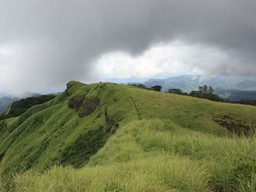
Constructed across the Mahanadi River the Hirakud Dam is the longest human-made dam in India. Stretching between the Burla and Hirakud hills, the dam is over 56km long was built in the year 1956. The dam irrigates 7,500,000 hectares of land and also generates hydroelectricity. One of the major attractions here is a drive-through road that you takes you 21km over the dam allowing one to admire nature’s bounty. Another striking feature of the dam is the wide expanse of the view that it offers from the Gandhi and Nehru Minarets that are located towards the Northern Facade of the dam. It is also a fantastic site for birdwatching as it is surrounded by abundant water and trees on all sides. Situated near the dam is a hill called Budharaja hill, which is well-known for the Budharaja Temple at its peak. Dedicated to Lord Shiva, this temple offers breathtaking views of the dam.
Source

Cattle Island is a submerged hill in the Hirakud reservoir. The island was a developed village prior to the construction of the Hirakud Dam. Once the dam reached completion, the villagers living in the surrounding area were asked to evacuate. The villagers when relocating left a few domesticated cattle behind which were a part of the livestock they owned. The cattle over time bred and created a wild species of cattle for which humans are the alien species. Nearly all the cattle are white or cream coloured, lending an ethereal quality to the entire island. The cattle, being wild, are significantly larger and more ferocious than their domestic counterparts. They are believed to be blindly fast and protective of their land. Attempts made by man to capture these wild beasts have been in vain so far. Visit the island to see the remnants of a village recaptured and fiercely protected by nature.

Vikramkhol is a rock shelter or cave dating back to the Mesolithic period (between 3000 and 4000 BC). The caves have some form of inscriptions or art engraved into the walls of the cave. Located 81 km outside Sambalpur within a forested area, the caves are believed to be 37 m long and nearly 8 m high. These caves are not very easy to get to as paved roads have not been put down in an attempt to preserve the area.
Rourkela
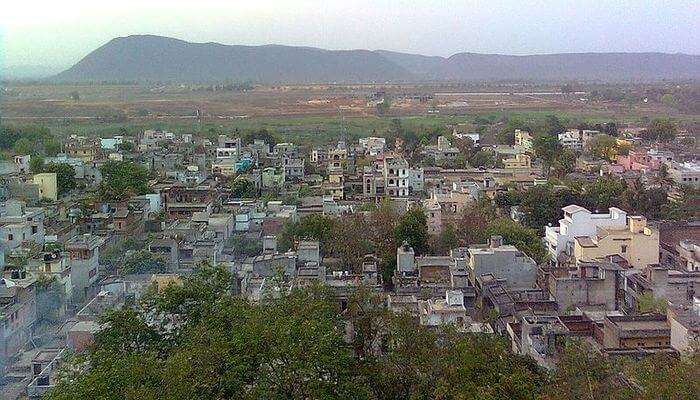
Known as ‘Steel City of India’, Rourkela is one of the largest cities of Odisha as well as its commercial capital. The stands nestled amongst natural surroundings, endowed with hills and enriched by rivers. This city is a part of the tribal hub of the Sundargarh district. This city came into focus for having the Rourkela Steel Plant, which introduced CCTV to the continent of Asia for the first time in 1984. It also holds great religious significance due to its prominence in epics like the Ramayana and Mahabharata.

15km from NH215 near Lahunipara is this beautiful surprise of nature. Falling from steep mountain from a height of 244 meters, the Kandahar Falls it emerges like the edge of the sword and hence is named so. These falls are the highest in Odisha. It is not easy to locate Khandadhar, but once here, you can feel your long and mostly uncomfortable journey was worth it.

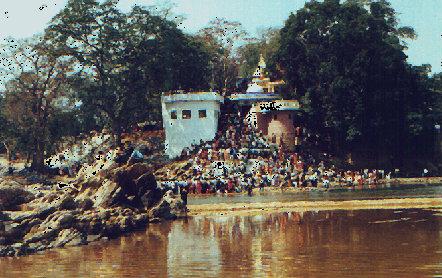
By the NH23 towards Rajamunda, on the banks of Brahmani about 45 km from Rourkela is the small village of Darjingis. This is a local favourite picnic spot because the river bed at this point is a beautiful golden hue which makes the river glisten like gold. Darjin has a lovely Inspection Bungalow with an amazing garden that faces the river. Another popular spot is Deoghar which is three km ahead of Darjing.
Source

Earlier known as Parasara Munda, Vedavyas is regarded as a tirtha stal or holy place. It is situated at a place where the waters of rivers Koel, Shankha and Saraswati unite. Because of this, the place is also known as Tridhara Sangaam. Situated at a distance of about 9 km from the city of Rourkela, this place holds historic significance. The Gurukula and Vedic Ashram system of education is a well-known feature of this place. Legend says that the great saint, Maharishi Vyas had scripted the greatest Hindu epic, the Mahabharata, at this very spot. Here one can enjoy a tour of the Vyas Caves which can be toured using boats.

27km away from Rourkela and 25 km from Vedavyas, Ghogar is a gorge on the river Ib. There is also a naturally formed Shivalinga, made of black granite, this Shiva linga is extensively preached by the followers. The temple in this gorge has a history which can be traced back at least five centuries. The temple was constructed by the king of Sundargarh Raghunath Sekhar Deo. The uniqueness of the temple is that till date it is the priests appointed by the people of Bhuyan community that perform worship here.

In My Hands Today…

Other Waters – Eleni N. Gage

This image has an empty alt attribute; its file name is 12160865.jpg

Maya is an accomplished psychiatry resident with a supportive boyfriend, loving family, and bustling New York social life. When her grandmother dies in India, a family squabble over property ignites a curse that drifts across continents and threatens Maya’s life.

Or so her father says – Maya (being a modern woman, an American, and a doctor) doesn’t believe in curses, Brahman, or otherwise. But then a series of calamities befalls her family, her career and relationship both falter, and Maya starts to worry. She hopes a trip back to India with her best friend, Heidi, will enable her to remove the curse, save her family, and put her own life back in order.

Thus begins a journey into Maya’s parallel worlds – New York and an India filled with loving and annoying relatives, vivid colors, and superstitious customs she doesn’t, and does, believe in. But her time in India isn’t just a visit “home” or a chance to explore the strengthening and suffocating bonds of family, it’s also the beginning of a cathartic quest toward forging one identity out of two cultues as Maya learns unexpected lessons about life and love.

Travel Bucket List – India: Odisha Part 2

After reading about the history and geography of Odisha as well as it’s capital city of Bhubaneshwar, let’s move on to to some of the other cities in the state.

Cuttack
The cultural capital of Odisha and the state’s former capital and its second largest city, is known as an ancient pilgrim centre. This place has forts, museums, lakes, and islands for your viewing pleasure. Make sure you check out the local silver handicrafts which Cuttack is famous for.

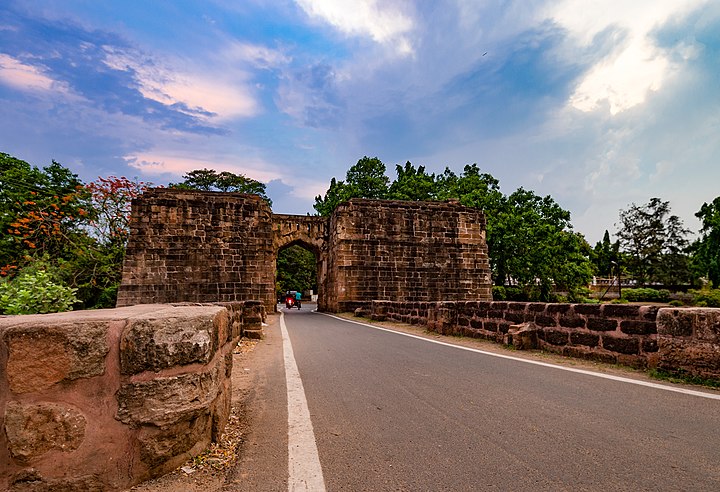
The Barbati Fort is a well known fort with carved gateway. Located around 8 km away from the city on the banks of the river Mahanadi, it is a 14th century fort built covering an area of about 102 acres during the Ganga dynasty. The way the fort has been buit means that it provides a beautiful and spectacular view of the modern Cuttack city. It is the earthen mound of the 9 storeyed palace. The monument was built with fortification to protect from enemy attacks. There is a also a temple dedicated to the Katak Chandi in the fort.

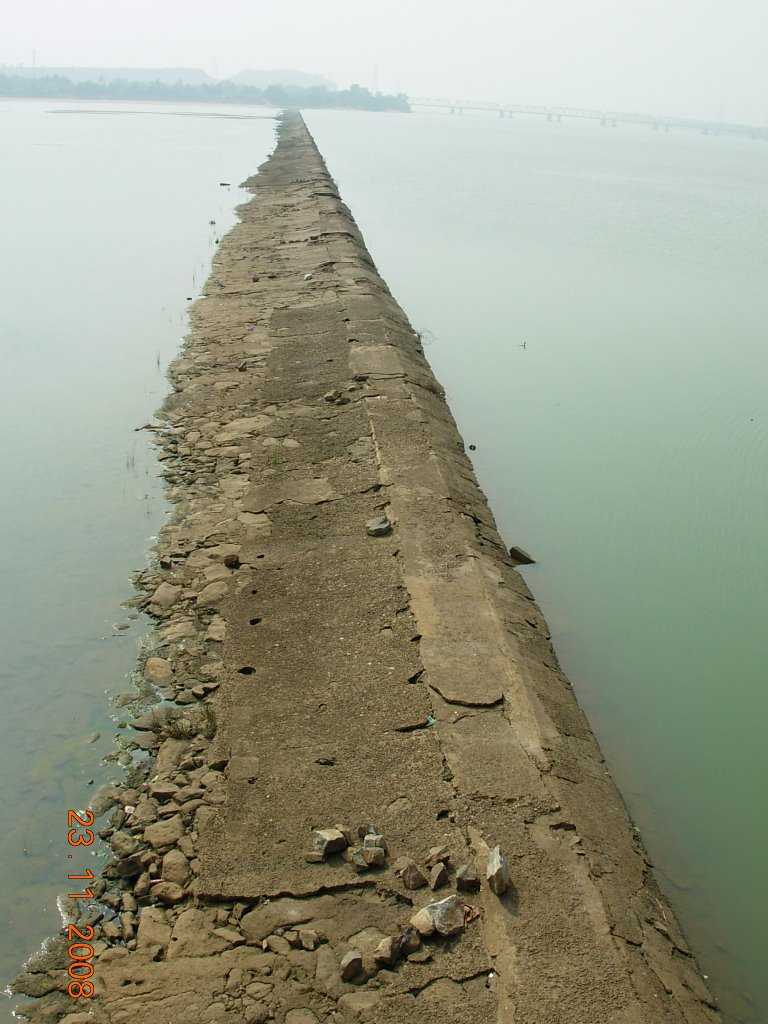
Situated on the banks of Kathjuri River, Stone Revetment is an engineering marvel created in the 11th century. These stone walls are constructed so as to obstruct flood water from entering the city. Remember this was built at a time when there was zero technology as we know today, hence is a brilliant example of the technical skills and logical thinking of the ancient Oriyans.

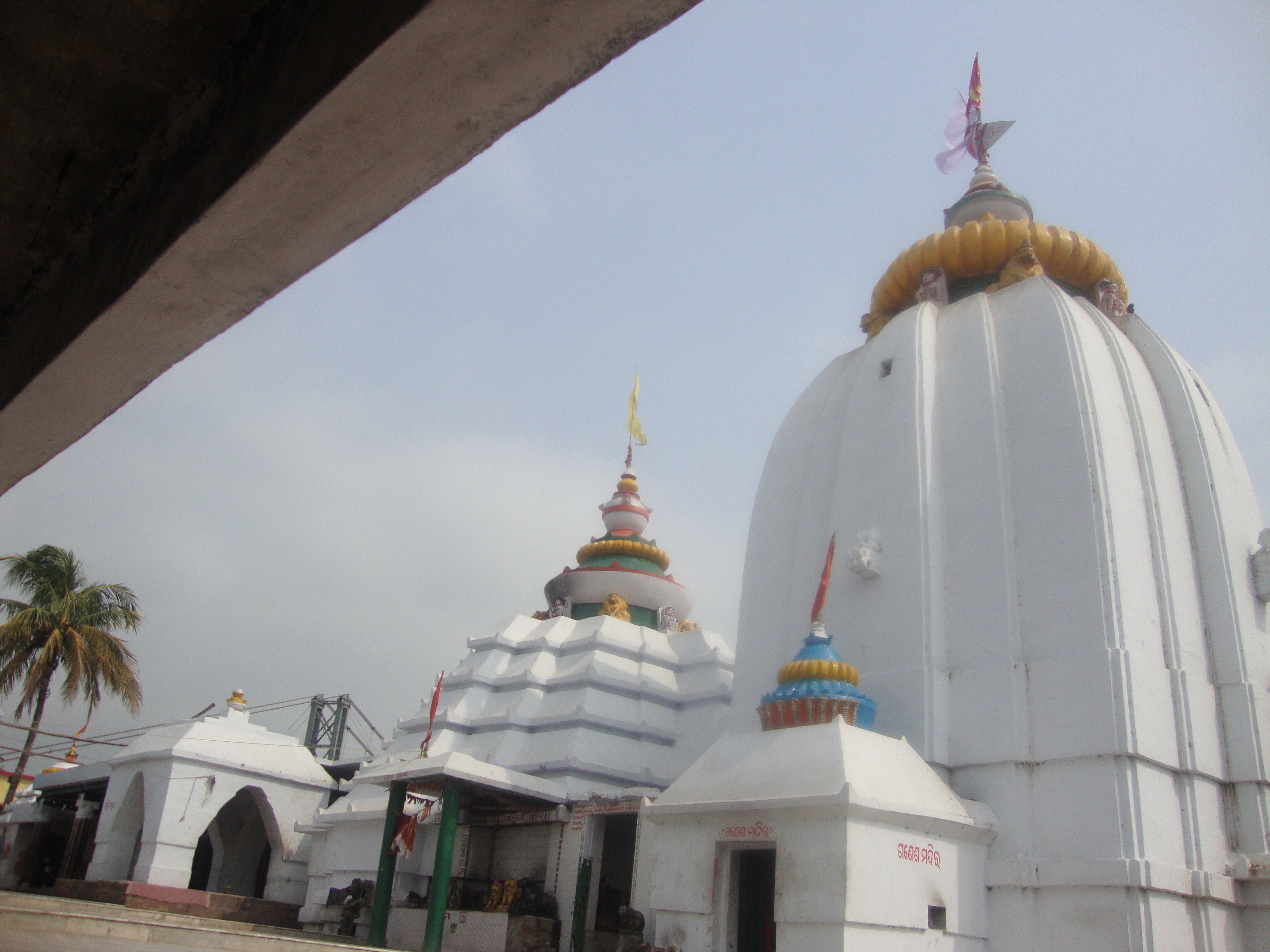
Dedicated to Lord Shiva, the Dhabaleshwar temple is located 37 km away from the main city. It lies on a river island on the river Mahanadi and serves as a popular weekend getaway for locals. This temple, established in 10th century is an important pilgrimage centre and provides a beautiful scenic spot with a serene ambience. You reach this temple from Cuttack using ferries ferries. There is also a foot-over bridge which people can use by paying a nominal fee.

The Odisha State Maritime Museum, overlooking the Mahanadi River, focuses on Odisha’s centuries-old maritime history of boat-building and trade, particularly with Bali, Indonesia. The displays walk you through the Kalingas’ maritime activities, rituals and tools, while the boat shed features river-boat, raft and coracle models from different parts of India. The Jobra workshop gallery introduces the world of sluice gates and boat repair, and an aquarium entertains visitors with marine life from Odisha and the Amazon River.

Rayagada
A district with a rich history and distinct culture, Rayagada has, over the years, mingled with the local tribal culture. This district has many historical places to visit and is known for its cuisine, crafts and handmade products. Located in the south-eastern border of the state close to Andhra radish, this area has not been commercialised with tourists so is still underrated and an undiscovered gem. This district offers dense forests, historical monuments, a peek into the lifestyle of tribal populations and authentic food. Rayagada has been inhabited since before the Mauryan empire controlled this region and has been an essential part of most empires due to its abundant natural resources.

An avatar of Goddess Durga, Majhighariani is accepted as the prime, most important deity in this region. The name originates from the placement of Shakti’s temple in the middle of the fourteenth-century Silavansi king Viswanath Dev’s palace and translates to the one seated in the central room. The Maa Majhighariani temple attracts worshippers from all over the state and the country, especially Madhya Pradesh, Andhra Pradesh and Chhattisgarh. The temple is open from 6 am to 1 pm and then reopens again from 4 pm till 9 pm. While entry is free, to arrange a special darshan can cost Rs. 20, or Rs. 100 for the VVIP darshan. Sundays and Wednesdays witness a more massive footfall, while evenings are generally much less crowded. The festival of Chaitra Parva, which falls in April, is the most crucial time of the year for worshippers of Shiva and Majhighariani, which is also the time this temple is the most crowded. Durga Pooja and Shivratri also see an abundant influx of pilgrims. From the Rayagada railway station, it is a short 20 minute drive away.

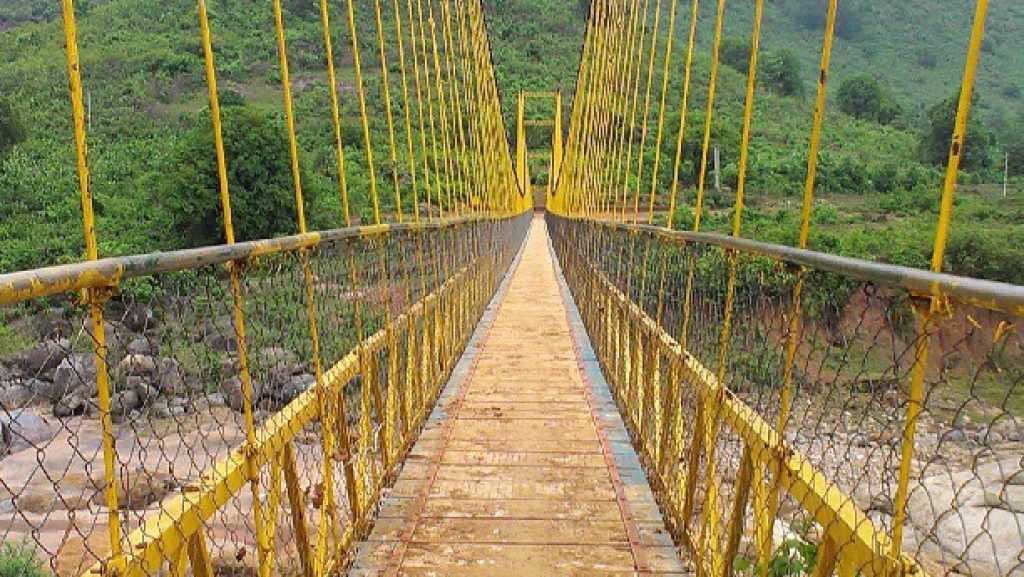
The Hanging bridge in the Chekaguda village is the second of its kind in Orissa. Built in 2012, the 151 meters long suspended bridge has brought about 20,000-odd tribal villagers residing in nine panchayats located at the outskirt of the town, closer to the central city, by bridging the two shores of the Nagavali river. Also called the Jhula Bridge, given its construction, it is accessible only by pedestrians, as no vehicles are allowed to go through it. The Nagavali river has since become a tourist spot, and the bridge a tourist attraction, as families come to enjoy the serene environment of the river, the mountains around the valley, and the relative peace. The bridge is accessible all year round without any entry or crossing fee. The bridge is about 3 kms west of the Rayagada railway station, and it takes about 15 minutes to reach there by road.

Chatikona is a small tribal village located around 40 kms north of Rayagada. It is surrounded by the Niyamgiri hills and offers tourists wonderful natural beauty complete with lush green foliage and a fantastic waterfall. Chatikona is a Dongria Kondh tribal village, and one can get to see marketplaces full of tribal arts and handicrafts. The Chatikona Falls attracts a large number of tourists and picnickers, and the Shiva temple near it draws pilgrims from all over Odisha, especially during the period of Shivratri, when it can be very crowded. While it is an all-weather destination, it is advised to skip the rainy seasons as well as the Shivratri month to avoid congestion. There is no entry fee to view the falls. Chatikona is rather easily accessible by road and if you want to take the train, the nearest railway station is Bissamcuttack.

A pilgrim and tourist spot which is slightly further away, around 134 km north-east from the main town of Rayagada, Minajhola is a beautiful confluence of nature and religion. It houses a Shiva temple; at the meeting of 3 state rivers: Vamsadhara, Chauladhua, and Phalaphalia, where the idol is in the form of a fish called Minaketan, hence the name. It is a major pilgrim spot, given that Shivratri here is celebrated with much gusto. Due to its natural beauty, Manijhola attracts a lot of tourists also, to see the confluence of rivers, bathe in them, and picnic along the shore. The road to Minajhola is not very friendly and all-weather and the nearest railway station is Rayagada.

Located around 25 kms from the main town of Rayagada, the Laxminarayan Temple was built by the the Indian Metals and Ferro Alloys Ltd., near their factory in Therubali. It was built around 2004 as a place of worship of Vishnu and Laxmi, but also houses Jagannath, Hanuman, Balabhadra, and Shiva idols. Visitors abound from all over, especially more so for Shivratri festivities. A few kilometres further toward Paikapada, one can witness over one lakh Shivling at the Paikapada shrine. These two temples are also crowded during the Jagannath Rath Yatra season that takes place in the humid month of July. The Laxminarayan Temple is usually more crowded on Tuesdays.

Located just 3 kms from Rayagada, Hatipathar is a picnic spot much loved by tourists. It is named so because the Nagavali river flows here through a deep-cut valley, and the two boulders atop these waterfalls look like elephants perched on a hill. October to February are the best time to visit these falls, as temperatures are cooler and rainy season has passed. Surrounded by dense forests, these falls make for the perfect tea-time picnic spots for family and friends.

Daringbadi
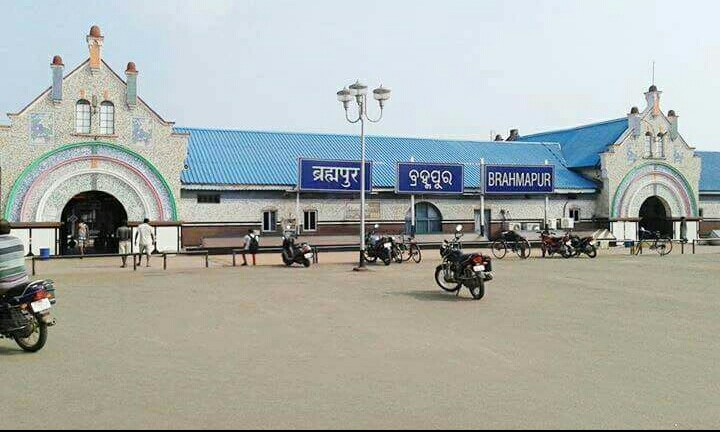
If you are wondering if Odisha has any hill stations, then Daringbadi is the place to go to. Hidden a state famous for beaches and temples, this hill station lies peacefully at an elevation of 3000 feet waiting to be explored. Replete with pine trees, coffee gardens and splendid valleys, Daringbadi is known as the “Kashmir of Odisha”. A place where you can stay in quaint cottages amidst trees and valleys, the weather is inviting – beating the heat in summers and offering snow in the winter. The place does not only have verdant and thick forests, but is also bountiful in flora and fauna. The best part about this hill station is that you can visit this place throughout the year. The nearest railhead is at Brahmapur from where one can take the bus to the city. This town can be visited anytime of the year, though if you want to catch snow, then check the weather reports between December to February and go around this period when snow is predicted. The key attractions here are the Doluri River, Putudi Waterfalls, Dasingbadi waterfalls, Badangia waterfalls and Hill view Park.

Berhampur
Also known as Brahmapur, Berhampur close to the eastern coast Brahmapur is known as the home of Lord Brahma and is usually known as the silk city- the city which is famous for the lustrous ikkat silk sarees in different colours and patterns. Bomokei patta, named after the village Bomokei where excellent work out of brass and metal is created also is an attraction to the tourists here. Besides these beautiful handicrafts, handlooms and jewelery this city offers some of the best Papads (popadum), pickles, badis and fruits specially mangoes.

Potagarh fort is also known as “the buried fort” as the length of the wall is somewhere between 18 to 20 feet in height and looks dug. This historic specimen of architecture left with the remains of fort houses and buried tunnel specks, has deep water streams on three sides. This fort is on the the river Rasikulya and the Bay of Bengal. Locals say that the fort is haunted and the story is related to the goddess of the fort attacking the King and the King escaping through the tunnels.

Situated around 30 Km away from the main city the Taratarini temple is recognized to be one of the four major Shakti pitha or centre according to mythological texts of Satyuga. This 6000-year-old temple has historical connections and also finds a mention in the Puranas.

Jeypore
Another under-rated town in Odisha, Jeypore which is located in the southern part of the state, is known for offering spellbinding views of rocky outcrops, picturesque waterfalls, and lush green biosphere reserves. Jeypore is the second largest city after Berhampur of South Odisha and locally is pronounced as ‘Joypur’ is the literal meaning of the town is ‘City of Victory’. The highest peak in the state, Deomali, is a popular picnic spot located not very far from Jeypore. This town is home to about 62 affiliated communities such as Gond, Dhruba, Paraja, Koya.

The Gupteswar Temple meaning ‘Hidden God’ is a temple dedicated to Lord Shiva temple beautifully hidden amidst caves set atop a huge limestone hill, around 55 km away from Jeypore. The main attraction at this temple is a gigantic Shiva Linga which is said to increase in size each year. According to mythology, the lingam was first discovered by Lord Rama when he was roaming in the then Dandakaranya forest with wife Sita and brother Laxman, and later worshipped it calling it ‘Gupteswar’. Pilgrims from all over the country come here during the Sravana period, because the yearly Bol Bam yatra is held at this place. Devotees walk to the Gupteshwar during Bol Bam yatra to bath in the maha kund, and then chant near the Shiva Linga. The prime anniversary, Shivratri is celebrated by the locals at Gupteshwar.

Source

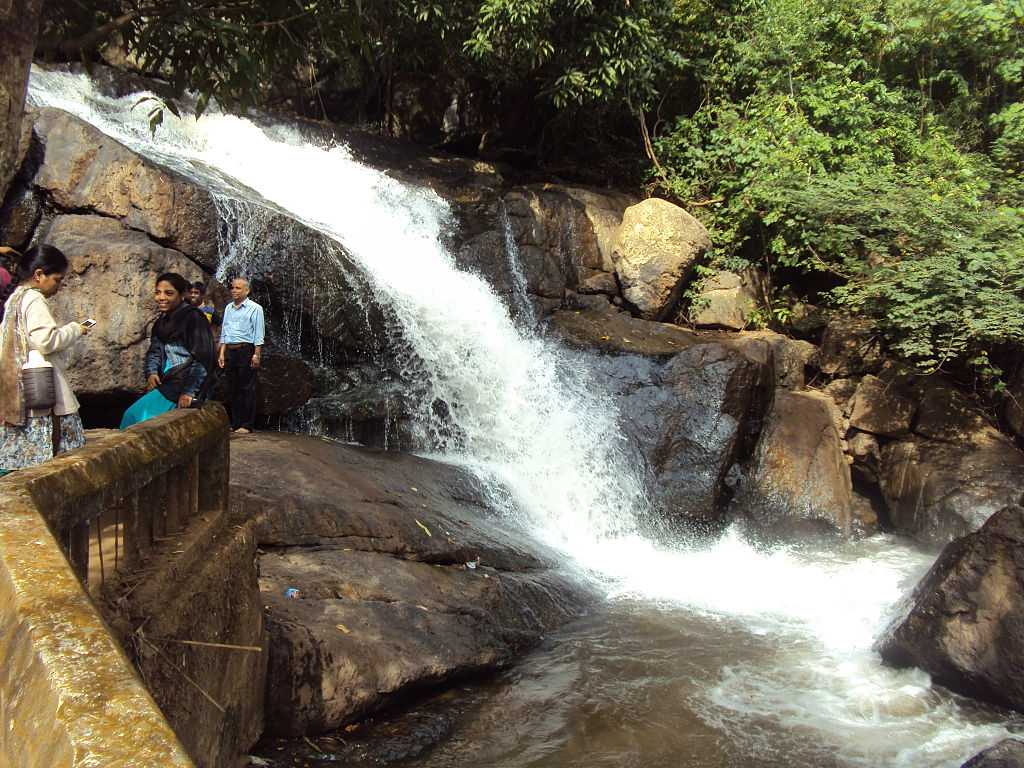
Another famous waterfall, the Bagara waterfall is a favourite picnic spot for locals. You walk along the ravines and densely vegetated slopes of the winding hills and then suddenly come across the Bagara waterfall which falls from three different waterfalls, descending from a height of 30 ft. in the River Kolaban and is milky white in colour. It is a heavenly sight, especially when you are here for a picnic. This waterfall is easily accessible from Jeypore and you can take a bus, taxi or autorickshaw to get there.

The 157.5 metres high glittering waterfall that has been formed by the Machhakund River is known as the Duduma Waterfall. The site of the waterfall abounds in dense deciduous type forests and the beautiful topography made all the more beautiful by the gurgling stream. An enormous hydroelectricity project has been built around the falls and as a consequence a township can now be seen in Duduma. Machhakund is also an important place for pilgrimage and is known as ‘Matsya Tirtha’. These falls are located at a distance of 92 km from Koraput town and can be easily reached from both Koraput and Jeypore. The best time to visit the waterfalls around Jeypore is just after the monsoon season when you can see them in full bloom. September to November is therefore the best time to visit the waterfalls since the streams shrink considerably with the coming of winter.

In My Hands Today…

Selection Day – Aravind Adiga

This image has an empty alt attribute; its file name is 28277145.jpg

Manju is fourteen. He knows he is good at cricket – if not as good as his elder brother Radha. He knows that he fears and resents his domineering and cricket-obsessed father, admires his brilliantly talented brother and is fascinated by CSI and curious and interesting scientific facts. But there are many things, about himself and about the world, that he doesn’t know . . . Everyone around him, it seems, has a clear idea of who Manju should be, except Manju himself.

But when Manju begins to get to know Radha’s great rival, a boy as privileged and confident as Manju is not, everything in Manju’s world begins to change and he is faced by decisions that will challenge both his sense of self and of the world around him.

Festivals of India: Holi

Literally the most colourful of all festivals and the one I am personally not a big fan of, the festival of Holi hearlds the arrival of spring, the end of winter, the blossoming of love, and for many, a festive day to meet others, play and laugh, forget and forgive, and repair broken relationships. The festival also celebrates the beginning of a good spring harvest season. This year, the Holi festivities, which is usually celebrated for a night plus the next day, started yesterday night and today India and especially northern India will be awash in colours.

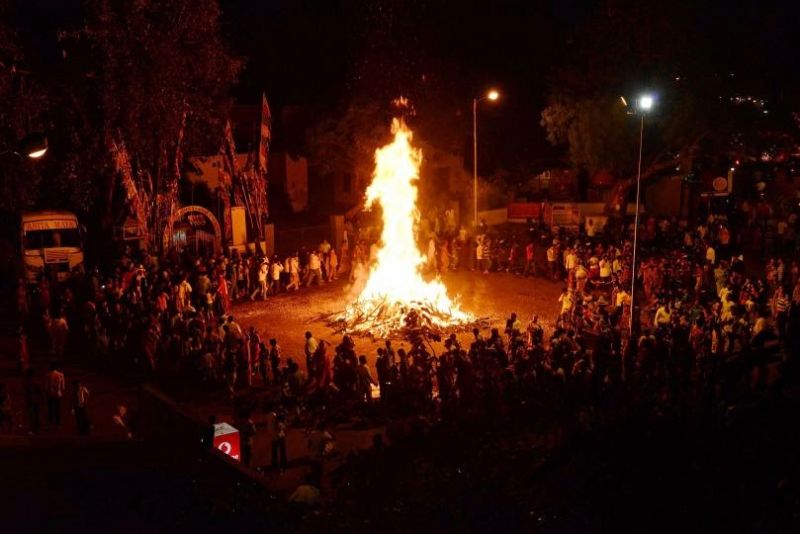
The first evening is known as Holika Dahan (burning of demon holika) or Chhoti Holi (aka small Holi) and the following day as Holi or Rangwali Holi (aka colourful Holi). This festival is an ancient Hindu religious festival which has become popular with non-Hindus as well in many parts of South Asia, as well as people of other communities outside Asia.

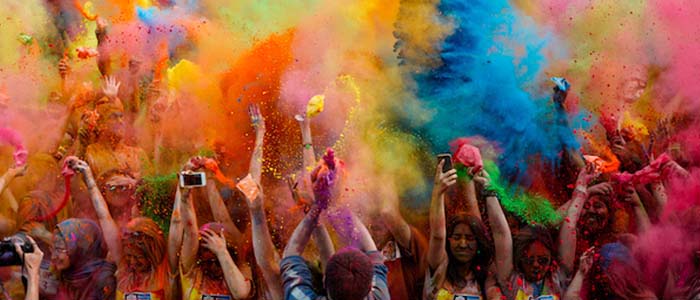
Holi celebrations start on the night before Holi with a Holika Dahan where people gather, perform religious rituals in front of the bonfire, and pray that their internal evil be destroyed the way Holika, the sister of the demon king Hiranyakashipu, was killed in the fire. The next morning is celebrated as Rangwali Holi – a free-for-all festival of colours, where people smear each other with colours and drench each other. Water guns and water-filled balloons are also used to play and colour each other. Anyone and everyone is fair game, friend or stranger, rich or poor, man or woman, children, and elders. The frolic and fight with colours occurs in the open streets, open parks, outside temples and buildings. Groups carry drums and other musical instruments, go from place to place, sing and dance. People visit family, friends and foes to throw coloured powders on each other, laugh and gossip, then share Holi delicacies, food and drinks. Some customary drinks include bhang (made from cannabis), which is intoxicating. In the evening, after sobering up, people dress up and visit friends and family.

There is a symbolic legend to explain why Holi is celebrated as a festival of triumph of good over evil in the honour of Hindu god Vishnu and his follower Prahlada. King Hiranyakashipu, according to a legend found in chapter 7 of Bhagavata Purana, was the king of demonic Asuras, and had earned a boon that gave him five special powers: he could be killed by neither a human being nor an animal, neither indoors nor outdoors, neither at day nor at night, neither by astra (projectile weapons) nor by any shastra (handheld weapons), and neither on land nor in water or air. Hiranyakashipu grew arrogant, thought he was God, and demanded that everyone worship only him. However, Hiranyakashipu’s own son, Prahlada, however, disagreed and was and remained devoted to Lord Vishnu. This infuriated Hiranyakashipu who subjected Prahlada to cruel punishments, none of which affected the boy or his resolve to do what he thought was right. Finally, Holika, Prahlada’s evil aunt, tricked him into sitting on a pyre with her. Holika was wearing a cloak that made her immune to injury from fire, while Prahlada was not. As the fire roared, the cloak flew from Holika and encased Prahlada, who survived while Holika burned. Vishnu, the god who appears as an avatar to restore Dharma in Hindu beliefs, took the form of Narasimha – half human and half lion (which is neither a human nor an animal), at dusk (when it was neither day nor night), took Hiranyakashyapu at a doorstep (which was neither indoors nor outdoors), placed him on his lap (which was neither land, water nor air), and then eviscerated and killed the king with his lion claws (which were neither a handheld weapon nor a launched weapon). The Holika bonfire and Holi signifies the celebration of the symbolic victory of good over evil, of Prahlada over Hiranyakashipu, and of the fire that burned Holika.

In the Braj region of India (Mathura and Agra in the current state of Uttar Pradesh), where the Lord Krishna grew up, the festival is celebrated until Rang Panchmi (which happens around 5-6 days after Holi) in commemoration of the divine love of Radha for Krishna. The festivities officially usher in spring, with Holi celebrated as a festival of love. There is a symbolic myth behind commemorating Krishna as well. As a baby, Krishna developed his characteristic dark skin colour because the she-demon Putana poisoned him with her breast milk. In his youth, Krishna despaired whether the fair-skinned Radha would like him because of his dark skin colour. His mother, tired of his desperation, asks him to approach Radha and ask her to colour his face in any colour she wanted. This she did, and Radha and Krishna became a couple. Ever since, the playful colouring of Radha and Krishna’s face has been commemorated as Holi.

The festival of Holi is celebrated at a time when people are pretty much tired of the gloomy winters and thus have a tendency to feel sleepy and lazy. It’s natural for the body to experience some sluginess due to the changes in temperature. To counteract this, people sing loudly or even speak loudly. Their movements are brisk and their music is loud. All of this helps to rejuvenate the system of the human body. Also, colours when sprayed on the body have a great impact on it. Biologists believe the liquid dye or Abeer penetrates the body and enters into the pores. It has the effect of strengthening the ions in the body and adds health and beauty to it. Of course this is only true for natural colours and not the synthetic colours used today. Another scientific reason for celebrating Holi relates to the tradition of Holika Dahan. The mutation period of winter and spring, induces the growth of bacteria in the atmosphere as well as in the body. When Holika is burnt, temperature rises very high at the bonfire. So when people perform Parikrima (the circumambulation or going around the bonfire) around the fire, the heat from the fire kills the bacteria in the body thus, cleansing it. In the south where winters are not as severe, Holi is rarely celebrated or celebrated in a different way. The day after the burning of Holika people put ash or Vibhuti on their forehead and they would mix sandalwood paste with the young leaves and flowers of the mango tree and consume it to promote good health. Some also believe that play with colours help to promote good health as colours are said to have great impact on our body and our health. Doctors believe that for a healthy body, colours too have an important place besides the other vital elements. Deficiency of a particular colour in our body causes ailment, which can be cured only after supplementing the body with that particular colour.

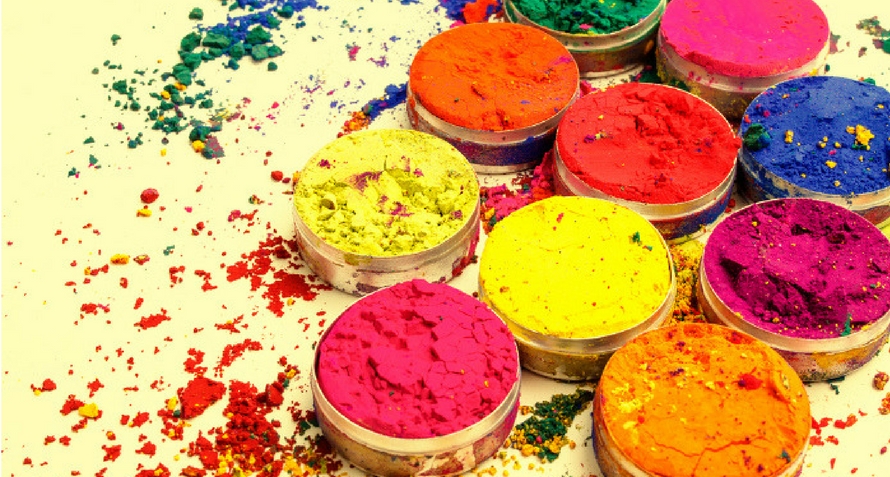
Traditionally Holi used to be played with colours found in nature. Traditional colours, called ‘Gulal’ are known to have medicinal properties since they were usually made of neem, kumkum, turmeric, bilva and other medicinal herbs. The flowers of the palash or flame of the forest trees provide the bright red and orange colours. Powdered fragrant red sandalwood, dried hibiscus flowers, madder tree, radish, and pomegranate are alternate sources and shades of red. Mixing lime with turmeric powder creates an alternate source of orange powder, as does boiling saffron in water. Henna and the dried leaves of gulmohur tree offer a source of green colour. In some areas, the leaves of spring crops and herbs have been used as a source of green pigment. Turmeric powder is the typical source of yellow colour. Sometimes this is mixed with gram or other flour to get the right shade. Bael fruit, amaltas, species of chrysanthemums, and species of marigold are alternate sources of yellow. Indigo plant, Indian berries, species of grapes, blue hibiscus, and jacaranda flowers are traditional sources of blue colour while beetroot is the traditional source of magenta and purple colour. Often these are directly boiled in water to prepare coloured water. Dried tea leaves offer a source of brown coloured water. Certain clays are alternate source of brown while some types of grapes, gooseberry and charcoal offer gray to black colours.

These days however, natural powders are becoming rare and chemically produced industrial dyes have been used to take their place in almost all of urban India. Due to the commercial availability of attractive pigments, slowly the natural colours are replaced by synthetic colours. These colours which more often than not contain questionable chemicals cause mild to severe symptoms of skin irritation and inflammation. Lack of control over the quality and content of these colours is a problem, as they are frequently sold by vendors who do not know their source. I remember friends coming to school, college and work in varying hues, some of which are not found anywhere in nature. Another gripe I have with the synthetic colours is the very weird smell that comes from them which really puts me off. And then let’s talk about the water bombs that contain a mixture of water and these colours which people throw from their homes, balconies and rooftops during this time period. I remember growing up, I used to hate getting out of the house during this time and in Mumbai, this period would typically be examination time, which meant actually getting out more to tuition classes and study sessions. We used to rarely walk alone, preferring to go out in groups so we can look all around us, especially when walking by medium to high rise buildings and preferring to walk in the middle of the road, even if that was not the safest place to walk. So you can see why in the beginning of this post, I said this is not a festival I particularly enjoy.

Happy Holi folks!