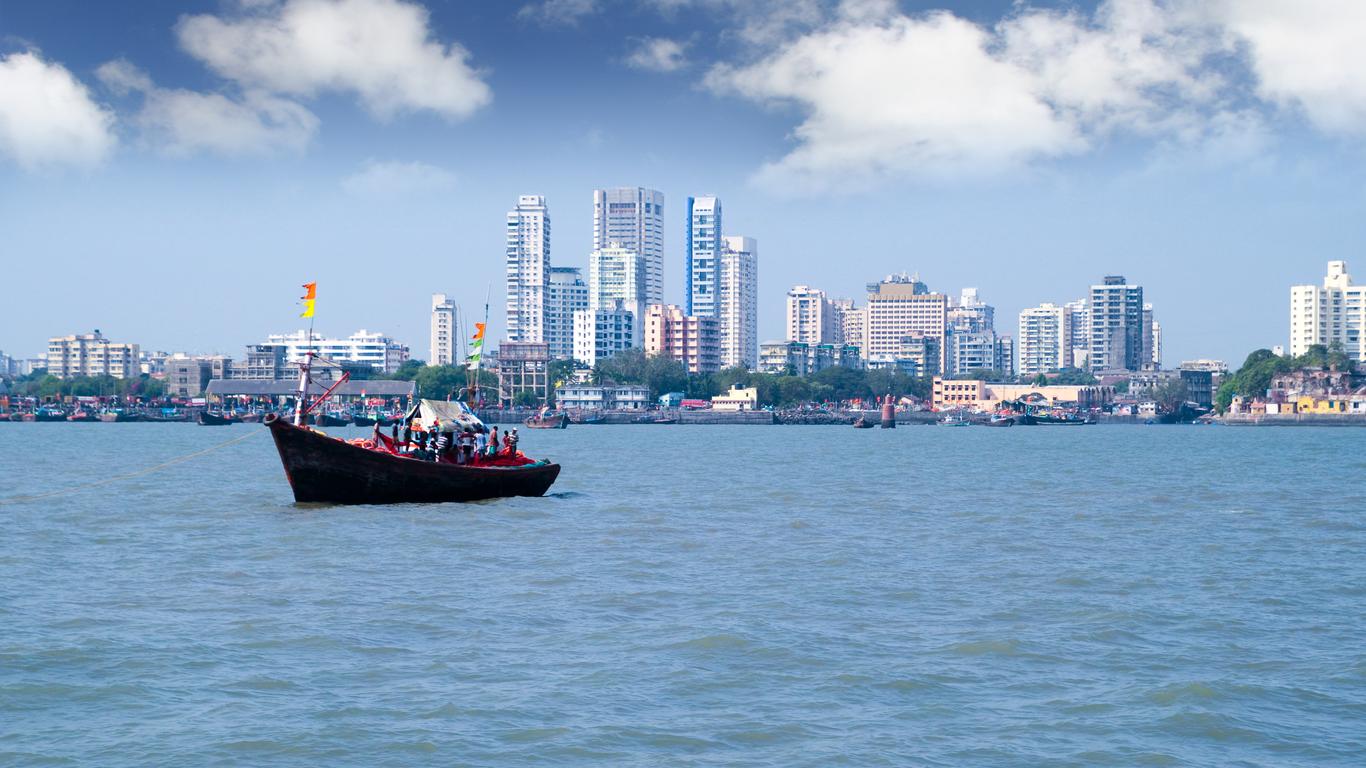
In May, when I went back to India to drop my parents, I made a day trip to Mumbai to do some bank work. The photos below are photos of my beloved city from the air.
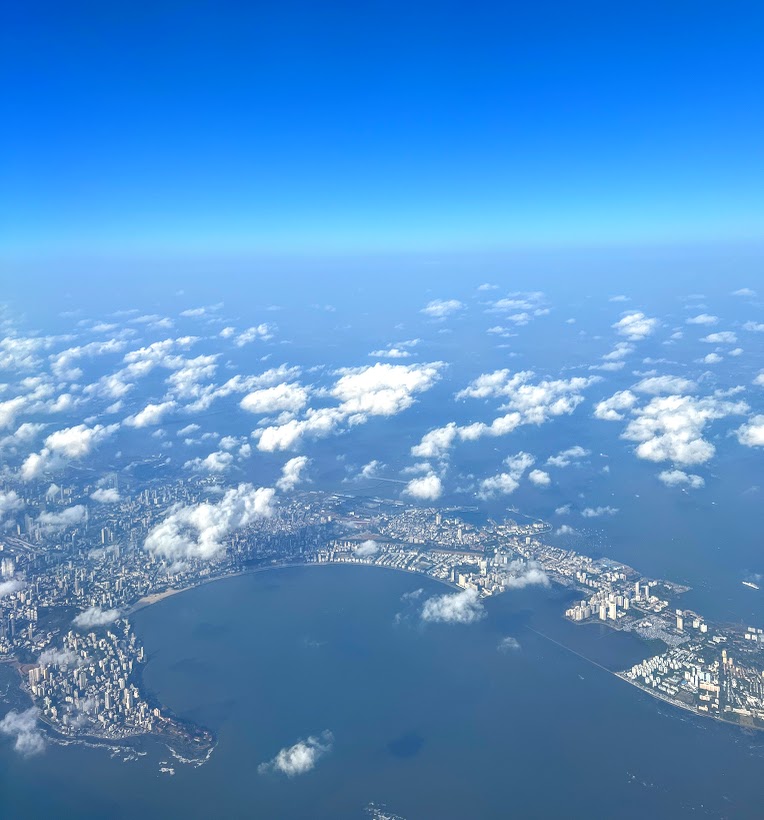


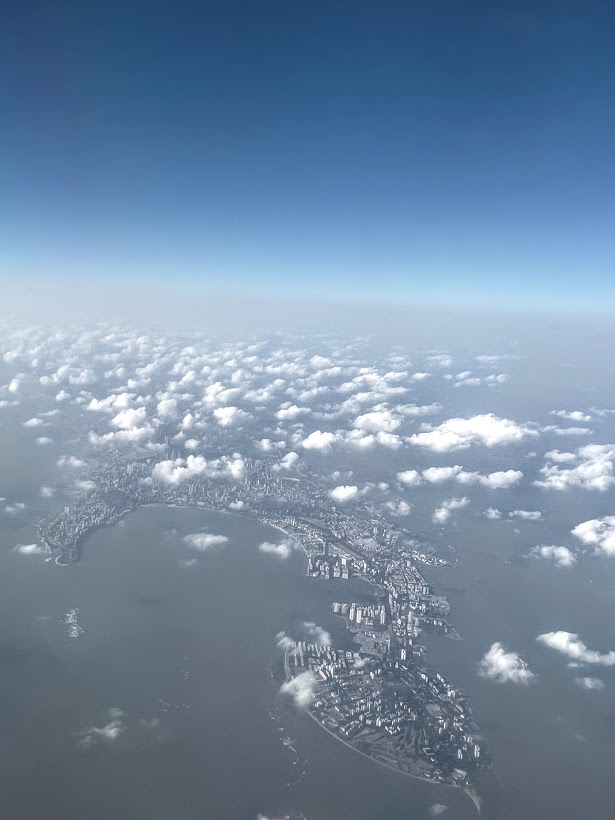

In May, when I went back to India to drop my parents, I made a day trip to Mumbai to do some bank work. The photos below are photos of my beloved city from the air.
Now that things are more or less back to normal, we’re all excited to travel again. A trip we are all looking forward to is our India trip sometime next year before BB enlists for his National Service and GG starts university. So in honour of that upcoming trip, here are some photos while in flight.



After doing a similar post for Singapore, on the occasion of India’s 75th Independence Day, I had to do one for the city of my birth, my beloved Mumbai.
A Mumbai resident is known as a Mumbaikar, though when it used to be Bombay, we called ourselves Bombayites. I guess the change from Bombay to Mumbai meant that the word also changed and became the Marathi Mumbaikar where kar is the Marathi word for a resident.
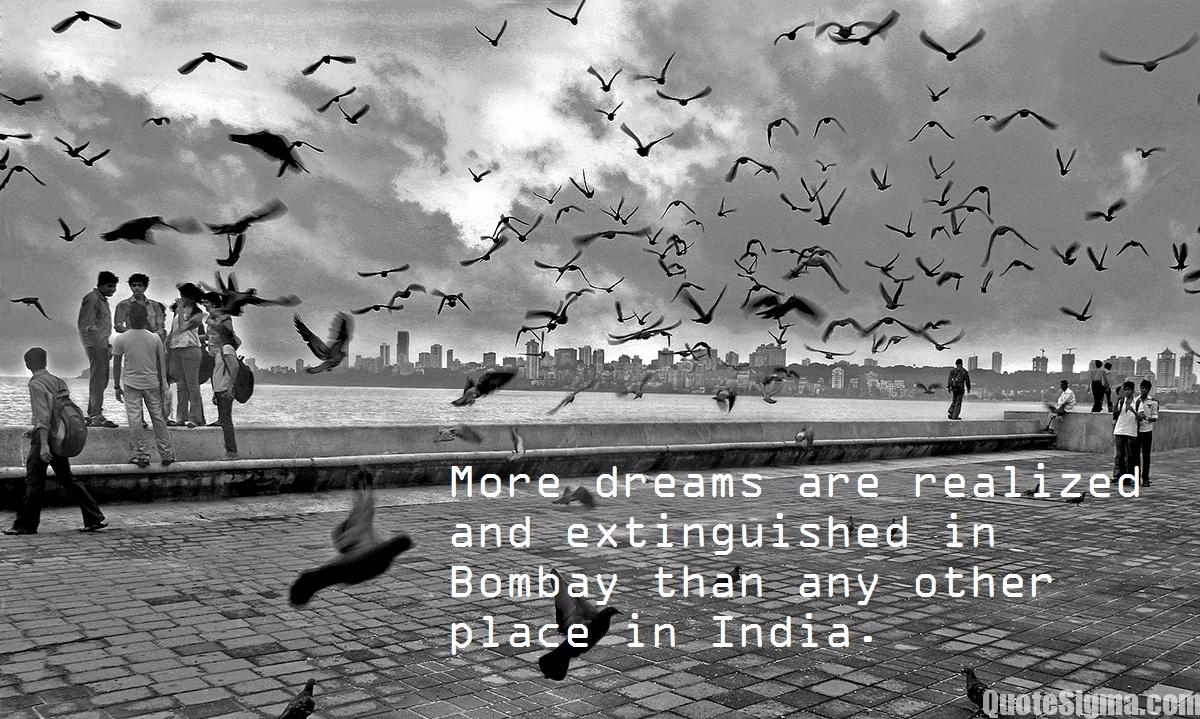
It is said, Mumbai is a city while Bombay is an emotion. Mumbai is full of dreamers and the place where people’s dreams are realised and extinguished. It is said that if one has lived in Bombay and has travelled in the local trains then one can survive in any other city. Officially Mumbai, Bombay is still used interchangeably by many locals.
Mumbaikars live a very fast-paced life and why not, given that the bulk of the population spends a few hours daily just on their commute, whether for school, college or work. I know of friends and colleagues who would spend a minimum of two hours each way on the trains to get to their destination. And speaking of trains, the Mumbai local is the lifeline of the city and if for some reason, trains shut down, the city comes to a standstill. The life of a Mumbaikar, especially one who needs the train to get to work or school revolves around train timings. So their conversations are peppered with train timings and what time to reach the station. And within the train is something that is uniquely Mumbai – the train friends. So what are these train friends? Train friends are those who invariably take the same train as you do daily. Over time, these people become friends. And this is a category of friends who may move outside the train or remain within the train itself.
A Mumbaikar is a perfect amalgamation of pan India. A blend of the North and South and to this is added the Eastern and the Western parts of India which it is already a part of. If you ask a Mumbaikar for directions, you will not be told of the direction in kilometres, but rather the time it will take you to get there. It’s very common to travel long distances to get from one place to the other because unlike other cities, Mumbai is set up in a north-south alignment so this means that long distances are inevitable and this does not faze a Mumbaikar.
Mumbai has one of the highest literacy rates in India, 94.7% which is significantly higher than the country’s average. Though the official state language is Marathi; 16 other major languages are spoken in the city including English. The city is the commercial and entertainment capital of India as well as its most populous city. With a high number of migrants and diverse religious groups, Mumbai is truly a melting pot of cultures. Mumbai can be called the true and first cosmopolitan city of India because this is a city that brings together people of different communities, religions and customs and the city is known for its diversity which can be hard to find elsewhere in India. In any building society, it’s quite easy to see people from many Indian states who live together and celebrate all festivals. The inhabitants of the city can be called a microcosm of India’s population.
The Bambaiya Hindi which is maligned in Bollywood films is a blend of Hindi, Marathi and English. While this brand of Hindi. While the Hindi may not be as pure as what is spoken in Delhi and the northern parts of India, it’s not too bad. What is shown in television and films is an exaggerated version spoken. Neither I nor my family, friends or acquaintances have spoken like this daily.
But at the end of the day, Mumbai has a heart of gold. I have written previously about how the city comes together to help during a calamity or crisis and that is what is important.
A Mumbaikar loves Mumbai, plain and simple and once they identify themselves as a Mumbaikar, they remain one till the end of their lives. I may not travel to Mumbai now as often as I want to, but you can take Mumbai out of my life, but you can’t take the Mumbaikar out of me.
To end this post, an old song which beautifully captures the spirit of Mumbai, though it was Bombay then. This song is from the old classic C.I.D which was released in 1956 and starred Dev Anand and Waheeda Rehman in the leading roles. And this shows you how Bombay was in the fifties, with trams running and wide, uncrowded roads.
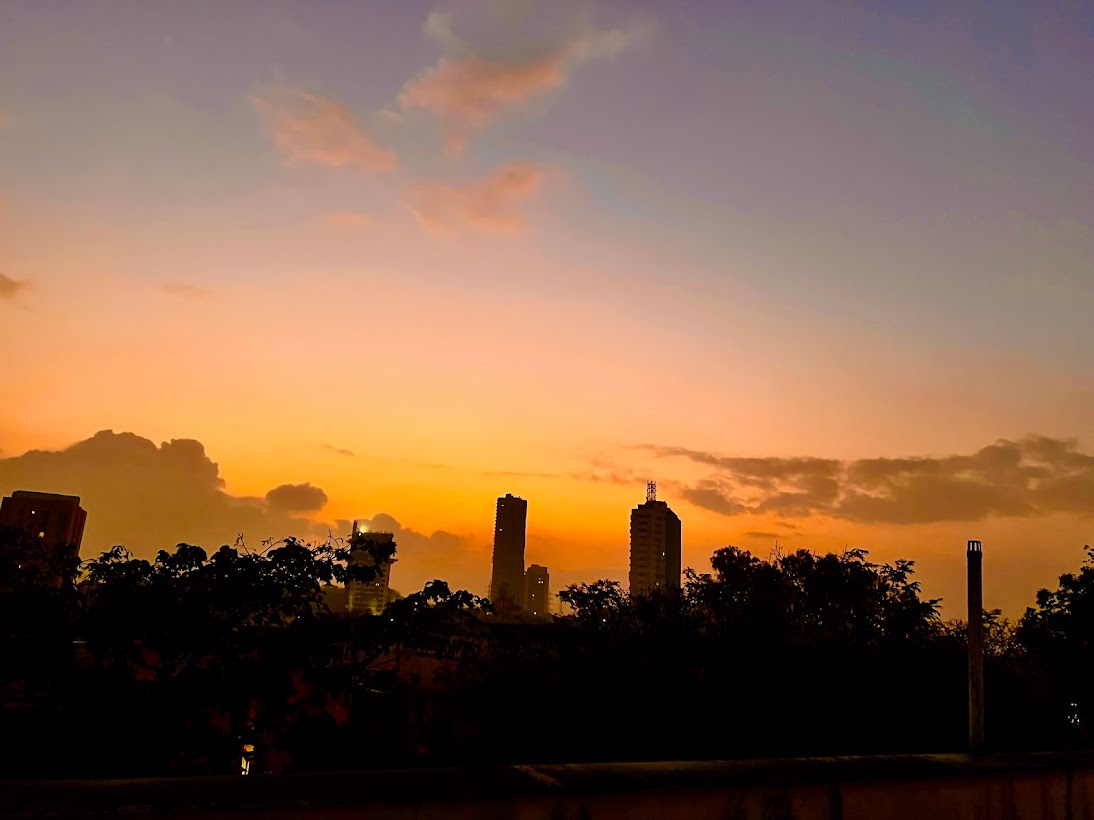
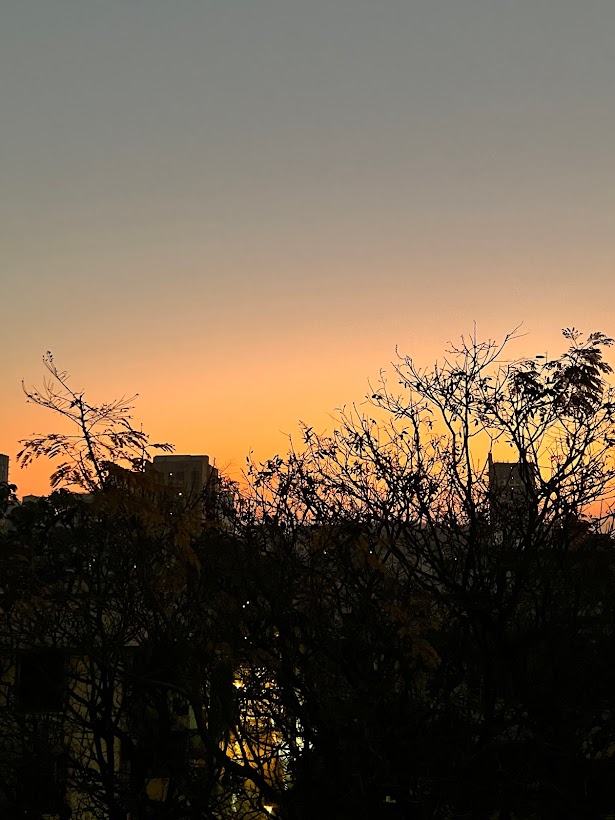
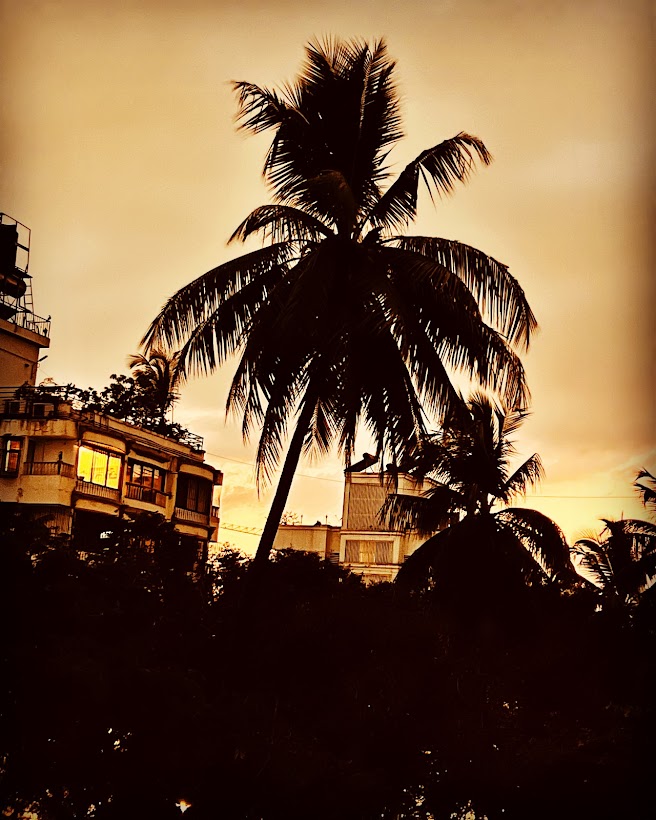
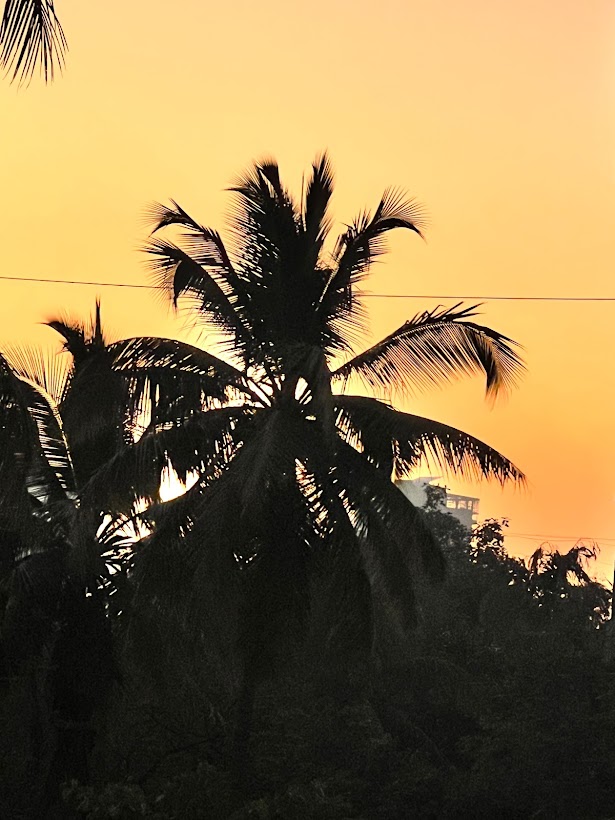
My favourite time of the day is during sunrise and sunset when nature puts out a show for us. During sunrises, the gradual lightening of the sky and the colour pop colours that eventually fade when the sun makes an appearance is something I can watch again and again. And then when the reverse happens in the evening, it’s amazing.
A few months back, when I was in Mumbai, helping my parents wrap up things, I used to walk in the terrace everyday, both mornings and evenings, during sunrise and sunset. Here are some of my favourite photos, almost all of them of the same location, because of well east and west. All the photos have almost no filter and were shot on my phone.


Most of our trips to Mumbai have been evening flights and so there was nothing to see outside. We’ve done day flights regionally, but I can only remember two other daytime flights to Mumbai in the last 20 odd years. Both times, we flew Singapore Airlines and both flights were in wide-bodied planes, perhaps an Airbus. Earlier this year, when I flew to India, I flew Vistara, the airline that was created due to a partnership between Singapore Airlines and the Indian conglomerate, the Tata Group. Vistara uses a smaller aircraft which is single aisle and so probably flies much lower in the air compared to Singapore Airlines flights. So this time around, I enjoyed the flight because I could see the ground while flying. Up until we entered the Bay of Bengal, I enjoyed the scenery below and took many photographs of the journey. This photographic essay is the result of that trip. My apologies if I shared some photos previously.

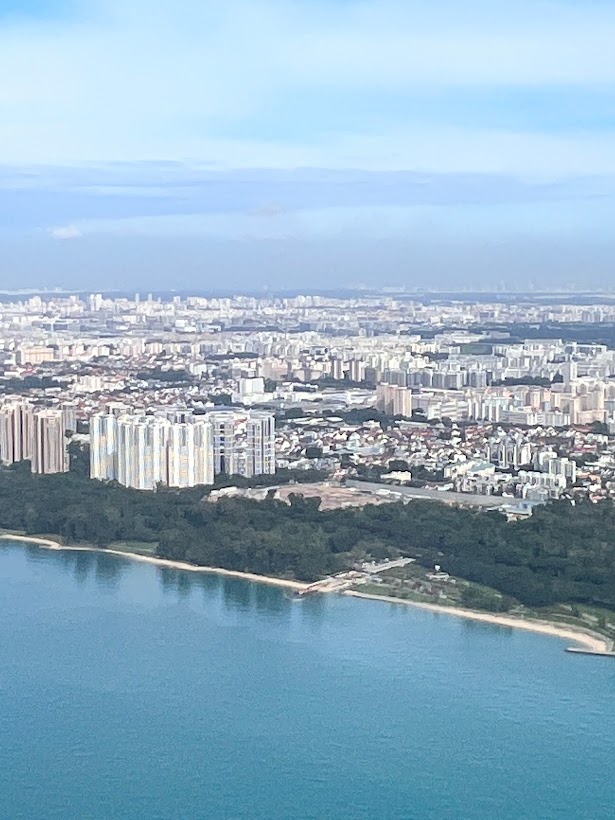
This scene greeted me almost as soon as the plane took off from Singapore’s Changi airport. You can see the buildings of Changi in the left and the National Service Resort & Country Club in the front and centre.

A minute later, this is one of Singapore’s offshore islands, maybe Pulau Ubin or Pulau Tekong.

About 30 minutes into the flight, we were flying over the Malaysian peninsula, probably flying over the North South expressway, on the way to the country’s capital of Kuala Lumpur.

About 45 into the flight, you can clearly see the island of Penang and the famous Penag bridge.

The next island is the island of Langkawi, which lies almost on the border between Malaysia and Thailand. We visited the island more than a decade back and have very fond memories of the place and hope to visit it again soon.

About an hour and 40 minutes into the flight, we flew over the Thai island of Krabi.
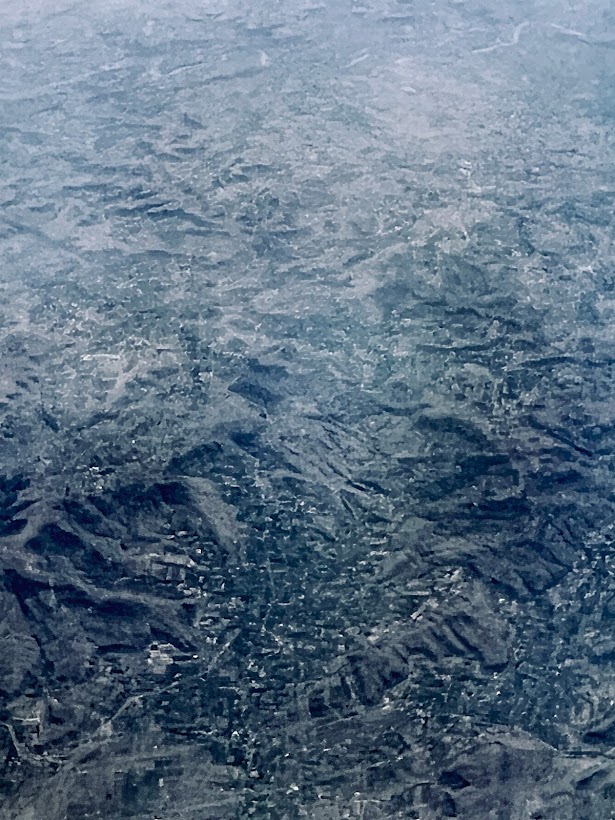
After Thailand, we veered course to fly over the Bay of Bengal and try as I much wanted to, I could not see much out of the window and the next time I saw something interesting, we were flying over Ahmednagar in my home state of Maharashtra, about 20-25 minutes before we landed in Mumbai.
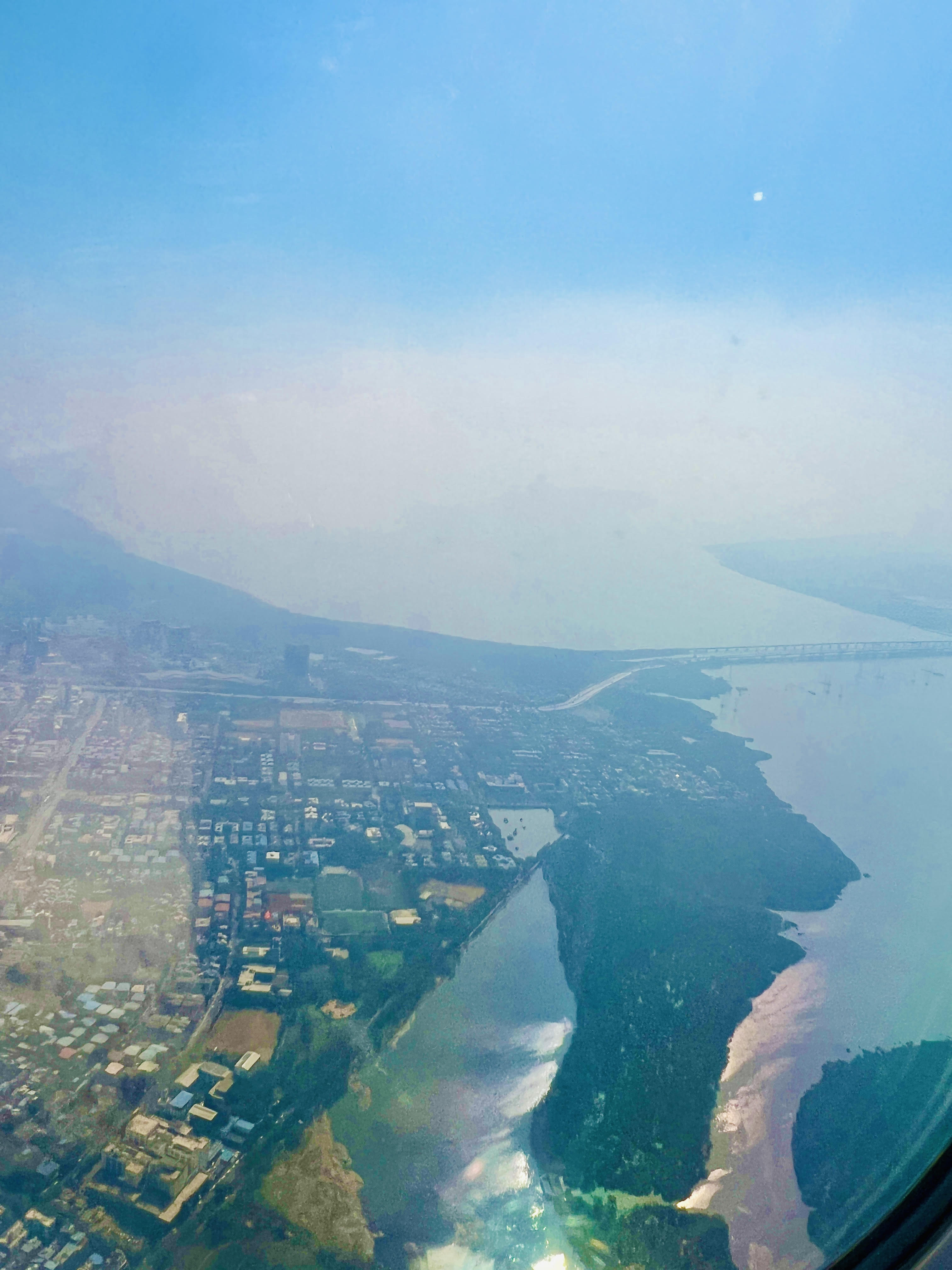
This photo was taken as we approach Chhatrapati Shivaji Maharaj Terminus for landing into Mumbai. This is the Vashi Bridge which seperates Mumbai from Navi Mumbai or New Bombay, the planned city and part of the Mumbai Metropolitan Region (MMR). Seeing the bridge brought back so many Mumbai memories of school trips and seeing the bridge I know we are on the verge of landing into Mumbai.

We were on our descent for landing and this is taken just a couple of minutes before touchdown. This is most likely the Eastern Express Highway in Vikhroli East, a few seconds before landing in Mumbai.

And finally touchdown after flying about 5.5 hours. I was back in the city of my birth after more than two years. But now I doubt I will fly into Bombay anytime soon, but never say never!
I hope you enjoyed this photographic journey as much as I liked searching through the photos I took during the flight and remembered my journey.