Train Journeys

indian-railways-2_660_090318041827I’ve always loved travelling by train. I love the feel of the wind against my face and seeing the landscape rush past me!
My first memory of travelling by train is to Delhi. I must have been around 3-4 years old and I remember travelling in a kind of a coupe for that journey. We were four of us then (my parents, my sister and me) and it was this closed kind of a room that we were in. That’s all I remember of this journey.

The next journey I really remember was when I was around 6 years old on a trip down south. We were supposed to go first to Mysore (as it was then known), then a trip to Bangalore and then finally Chennai to attend a family wedding. Those days, there was no direct train from Mumbai to Bangalore and Mysore and so we took probably a Chennai train and got down in a station in Andhra Pradesh called Guntakal and then changed from the broad gauge line to a narrow gauge line which took us to Bangalore. Then another change of train, most likely a commuter train from Bangalore to Mysore. The trip must have taken around 30-32 hours from Mumbai to Mysore with two transits. Then we came back to Bangalore and then took the Brindavan Express which used to be a double-decker train those days to Chennai. I remember standing on my seat trying to look out of the window since we were seated on the lower level and the windows were higher up.

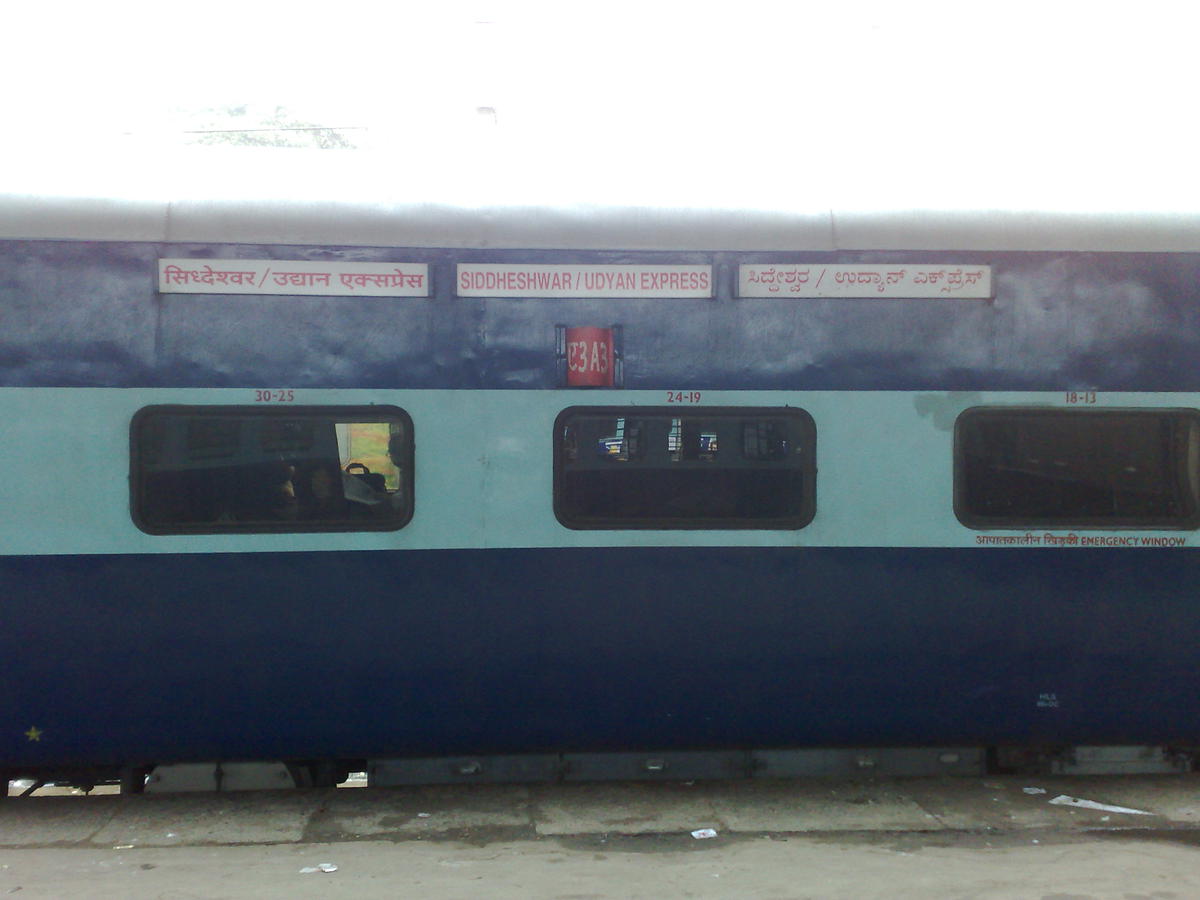
280920132461Around the time I turned 9/10 years old, my paternal grandparents moved to Bangalore for their retirement years and we started travelling there every year on a train that was introduced then: Udyan Express. The first few years, the train left Mumbai around 8 pm and reached Bangalore 24 hours later with the return journey leaving Bangalore at 8 am in the morning and reaching Mumbai at 8 am the next day. After that, they switched the train timings with the train leaving Mumbai in the morning and leaving Bangalore in the evening.
Those were the days before the internet and smartphones were probably just a far-fetched idea in someone’s head. What we had for entertainment was the company of our co-passengers. We spoke and became friends with the eight people in the same bay, shared food and sometimes found common acquaintances and even relatives. Some of these friendships went on to become deeper and stood the test of time, while others were as transient as the train journey. We also couldn’t track the train in real time and relied on our own memory and the ever-present railway timetable to figure out if our train was late or not (more often late than not as it turned out). Frequent passengers knew which station the train would or rather should reach for meal times and what is special about that station. I remember drinking and eating special food at various stations on the way to Bangalore and the frequent cries of the tea vendors during the run at night.

But a train journey was not always nice and rosy. You also had instances of passengers molesting young and vulnerable female passengers, especially at night and of frequent cases of luggage being stolen, especially in the middle of the night. We were also exhorted not to eat or drink anything that a stranger gave you since it could be laced with sedatives and they would then strip you of your belongings when you fell unconscious.

Then when Bangalore was sighted and Bangalore East station was near, it used to be a big rush to gather all our belongings and as soon as the train left Bangalore East station to go and station ourselves near the door. We used to get down at Bangalore Cantt station and it used to be a big rush because the train stopped there just for 3-5 minutes. As soon as the train stopped, we would see our grandparents waiting for us. Then quickly get down and get home for a month-long holiday!

I really enjoyed writing this post and it brought back so many memories of our summer holiday trips to Bangalore. This post was actually triggered when I tried using google maps to chart out the Bombay-Bangalore route and couldn’t find the train and the various stations we used to be so familiar with. I haven’t taken a train ride in a very long time and I am sure any experience today will be significantly different from what I used to experience and have written above. I do hope that one day soon when holidays are no longer rushed, I can once again take the train and relive my childhood and teen years.

Water: The Driving Force of all Nature

quote-the-wars-of-the-twenty-first-century-will-be-fought-over-water-ismail-serageldin-54-11-05

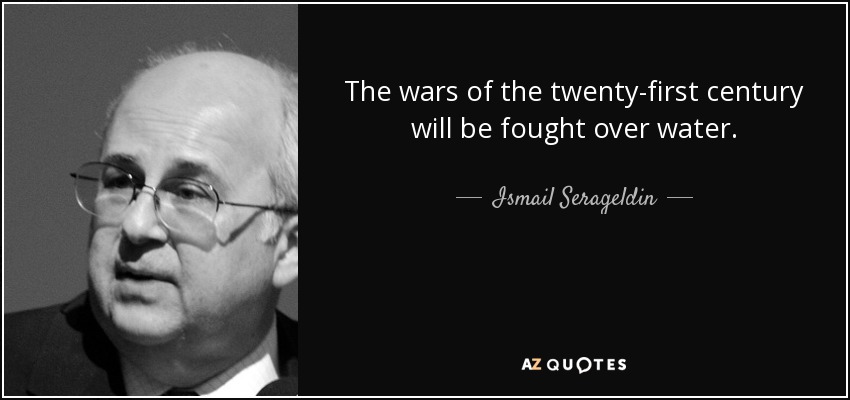
“The wars of the twenty-first century will be fought over water” – Ismail Serageldin

Water, the one thing which human beings can’t survive without for long. The natural resource which, for centuries we have taken for granted and abused mercilessly and one which is precariously close to depletion if we are not careful.

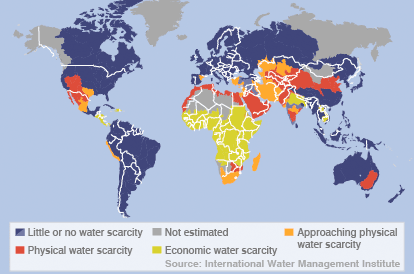
map_showing_global_physical_and_economic_water_scarcity_2006There is a global water crisis going on and challenges to government and non-governmental bodies trying to fix the situation include water scarcity, water pollution, inadequate water supply and the lack of sanitation for billions of people in less developed countries.

Water and related to it, sanitation is an essential human right and so to bring the world’s attention to this dire situation, so that our children and their children have access to a resource which is essential for the survival of the human race, 22 March has been designated as World Water Day.

waterday-logoWorld Water Day is an annual observance day on 22 March to highlight the importance of freshwater. It is also used to advocate for the sustainable management of freshwater resources. World Water Day is celebrated around the world with a variety of events. These can be educational, theatrical, musical or lobbying in nature. The day can also include campaigns to raise money for water projects. The first World Water Day, designated by the United Nations, was commemorated in 1993.

UN-Water selects a theme for each year.The theme for 2018 is “Nature for Water” to encourage people to “look for the answer in nature”. Damaged ecosystems affect the quantity and quality of water available for human consumption. Today, 2.1 billion people live without safe drinking water at home; affecting their health, education and livelihoods. Sustainable Development Goal 6 commits the world to ensure that everyone has access to safe water by 2030, and includes targets for protecting the natural environment and reducing pollution.

The UN World Water Development Report is released each year around World Water Day.

Here in Singapore, most schools celebrate the day by teaching water conservation to the students. For example, some toilets are closed off and students are forced to use a limited number of toilets, or water force is severely curtailed. This is so they get how important water is.

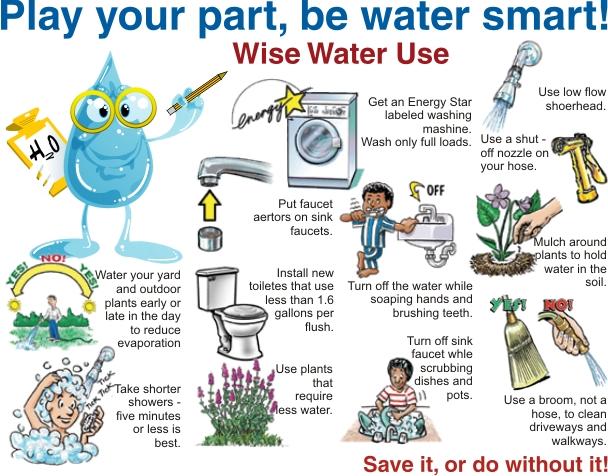
watersavingOn our part, as individuals, we can also take small steps to help conserve water.

  1. Turn off the tap while brushing your teeth. Don’t let all the water go down the drain while you brush! Turn off the tap after you wet your brush, and leave it off until it’s time to rinse.
  2. Turn off the tap while washing your hands. Do you need the water to run while you’re scrubbing your hands? Save a few litres of water and turn the tap off after you wet your hands until you need to rinse.
  3. Fix your leaks. Whether you go DIY or hire a plumber, fixing leaky taps and pipes can mean big water savings.
  4. Take shorter showers. Our shower heads can use as much as 15-20 litres of water per minute. Speed things up in the shower for some serious water savings.
  5. Wash your fruits and vegetables in a pan of water instead of running water from the tap. Collect the water you use while rinsing fruit and vegetables. Use it to water houseplants.

How do you conserve water? Please do comment and share your tips to save water so that we pass on a better earth to our children than what we inherited!


Looking back…..and Facing forward….


As we start the first week of 2018, let me do a short recap of my year that was in 2017 as well as some ideas on how I want this year to work out for me.


2017 started as usual for me, with looking for a job which didn’t materialise until the middle of the year. But what a position it turned out to be! I was bullied in my second week there by a subordinate and that’s when I knew I had to get out. I started looking for positions immediately, but before I could leave, I was asked to leave. I hated it there and so when the shock of having this thrust on me abated, I was really relieved. I attribute this 100% to my manager, who approved decisions I took, but turned around and lied about those decisions, even though it was approved by email! This person is a very strong-willed person with a personality to match and when confronted, I didn’t push back, which was, in retrospect, something I am not very proud of. Anyway, karma worked and what this person did to me was done to them in less than two months time!

The children had good school years. GG did especially well and she managed to move to the better stream (after we managed to convince her school principal that she can do it). She now gets to do the subjects she enjoys and excels in and hopefully will continue to thrive in school. BB, on the other hand, managed to squeeze into his stream of choice by a whisker. I was mentally prepared that he will not get into the pure science stream as his science marks just about made the cut-off marks for the stream and was already psyching him for other science-related subjects, but when the streaming results were declared, both of us did a little jig on seeing his name in the pure science class.


That was 2017, what do I want to do in 2018?


For one, I want to lose 10% of my total body weight as on 01 January. I have checked my weight on Monday (and I am conscious enough of it that I don’t want to reveal it to the whole internet), and will be tracking it with an eagle’s eye!

Continuing on the health theme, my last HbA1C reading put me in the upper end of the acceptable range and I want to bring this down to the lower end and in the healthy range by the end of the year. I have my next test in February, just after the Chinese New Year and so want to have some positive news there.

Other health and beauty related resolutions are to meditate daily for at least 10 minutes, put on a face mask every day for 365 days and clock an average of 10,000 steps daily. These should be fairly doable I think, I just need to be consistent and not give in to laziness and complacency.

I also want to write more this year, both in this blog and elsewhere. I dream of being a published author and want to take steps to achieve this by perhaps submitting a short story. I am going to work on this dream too this year.

On the job front, I am going to be super discerning about where I apply jobs to and even after I interview, I will not accept any position just because I get offered one. I don’t want a repetition of what happened in 2017, so I rather am safe than sorry.

I also want to travel and we’ve already started planning our year-end holiday where I want to explore parts of India I’ve never been to. I also want to do a solo trip, but I am not sure if this will pan out this year, but it’s something I am putting here, in the hope that the universe will let it happen.

So that’s what my plans for 2018 are. What about you? Have you made any plans? Or are you someone who wings it? Do comment below and I’d love to hear from you.

Casual Racism: We are all guilty of this one!

We are all racists at some point in time or the other!

Did the above line shock you? Did you just tell yourself that you are no racist? I am sure all of us believe ourselves to be free from any racist tendencies, but the truth is that we are unconsciously racist at times, even when we say we are not. There’s a term for this sort of racism. This is now called ‘Casual Racism’

So what is casual racism? It’s a subtle form of racism against family or friends when you ridicule them because of who they are when you make assumptions about a group of people because of the way they look or speak and use those assumptions for everyone associated with that group. It’s everyday racism and is so commonplace and normalised that the person who does it, is not even aware that he/she is making comments what may hurt the person being trolled!

So why this topic today? It came up because, over the last few days, an incident shared by a Singaporean Indian has blown up so much over various social media. What happened was this person, who is an actor went to audition for a role in a popular movie franchise which is based on Singapore’s National Service and at the audition was asked to speak with an exaggerated Indian accent (think Apu in the Simpsons). When he commented that the accent he spoke in was how a normal Singaporean Indian spoke, he was told they wanted it to be more Indian and so funny. He took to social media to comment on this and also said he felt like an outsider in his whole country. The truth is that no one in Singapore who is of Indian descent speaks like that and even in India, especially in the bigger cities, people don’t speak with these exaggerated accents and gestures. This may have been true some 40-50 years back, but today most Indians have had an English language education and speak mostly normally (some accent is given because everyone has an accent from where they come).

The incident has been shared many thousands of times and has pretty much polarised the country. On one hand, you have the minorities who speak of having such incidents happen to them constantly and on the other hand, you have the majority slam the actor by saying since it was an acting job, he should just do what the director asks him to do and that he is being sensitive to implied slurs on him because of his race.

But the truth is that living in a multicultural country like Singapore, a minority is always subjected to race-related jokes and other incidents which happen to them on an almost daily basis. So much so, we always just take them into our stride or just shrug them off. I remember, when I first moved to Singapore, people of the majority race (mostly the elderly) would prefer to stand in public transport rather than sit in the empty seat next to me just because I am an Indian and they think all Indians smell! It used to hurt me a lot initially since this was the first time I had been exposed to something like this, but over the years, I’ve built up a shell and have learnt to let it slide.

Least you think India is not racist, let me disabuse you of that notion. Racism exists there too but is much more subtle. There, it’s because of the way a group of people look or speak. So you have the Punjabi Sikh Santa Banta jokes, the notion that all Biharis are thugs and illiterates and that everyone from the northeastern part of India behaves in a certain way.  You also have the bashing of North Indian/UP migrants in Mumbai because some of the locals believe they are out to snatch their jobs and because of India’s obsession with fair skin, people from South India are looked down upon. This is worse for those who come from the African continent to live and work in India and news reports are aplenty for those who want to know more about these instances.

I could go on and on about instances of casual racism, but I need to stop somewhere. Research has shown that racism, and even, or especially casual racism has a range of harmful effects on those targeted, including limiting access to employment, health services and education and reduced workplace productivity and has been linked to mental and physical health problems, particularly depression and anxiety.

So the next time you make an off colour joke or comment or even reduce a group of people to common tendencies, take a minute and think. If the situation was reversed, would you like to be the butt of such jokes or comments?

Here are some links which explain much more about casual  racism:

10 Signs you might be a racistCasual Racism Is Not “Bants”It Stops With Me; Quora

What do you think of such instances of racism? Has something like this happened to you? Please comment and let me know…


Grandmother Tales

grandma09When I woke up this morning, the first thing I thought of today was my paternal grandmother. Somehow I kept thinking about her and thought I should dedicate this post to her.

My paternal grandmother, whom I called ammama was a remarkable lady. Ammama in some Tamil dialects and in Malayalam actually refers to your mum’s mum but I used to use it interchangeably for both my grandmothers!

3eeb889d8100ad16e6837259a7c58518Actually, there’s a story to why I called her ammama. Growing up, it seemed normal to me to call both my grandmothers by this name. I realised that it was different when I heard others call their grandmothers pati which in Tamil means grandmother. But I never really gave it a thought. Following my example, my sister and later other cousins from my maternal side also started calling our maternal grandmother as ammama and used to call their paternal grandma as pati. Years later, probably after I became a mother myself and my mother became a pati, I asked her why I used to call my grandmothers ammama? Her answer actually made me pause because apparently, it was my paternal grandmother who wished that I used this name to call her. I never had the chance to ask her this question, but I guess she must have been quite young when I was born and a streak of vanity in her didn’t want her to officially become a grandmother so young! So by making us call her ammama, she didn’t become a pati, yet we had a unique name to call her.

She was married to my grandfather when she was around 9 years old and came with him to Bombay (as it was then called) sometime in the early 40s. She was not very highly educated, she probably just finished high school, but was a very voracious reader. My dad always tells me that my love for books most likely came from her.

I was also named for her. In Tamil nomenclature, the first born child is usually named after the paternal grandparents (so paternal grandfather for the first born son and grandmother for the first born daughter) and the next child of the same sex is named after the maternal grandparents.  So, though the name I legally go by is not hers, I have her name on my birth certificate and can legally use anytime I want to do. This tradition is to keep family names alive and is probably the reason you see many south Indians with long and unpronounceable names!

In addition to being a reader, or perhaps because she was a reader, she was also very skilled in telling stories. I remember countless nights when I was very young when my sister and I would huddle against her and listen to stories before bedtime. She was the one who introduced mythology to us and would regale us with stories from the Hindu pantheon. She was also quite good at making up stories with the prompts we gave her and now I wish I had recorded those stories to share with BB & GG.

When I was around six years old, she moved away, first to a city in Western India and then to a city in Southern India because of my uncle, who was considerably younger than my father, and who was single then, moved for work. My grandfather had retired by then and so they decided to spend their last years away from the hustle and bustle that Bombay had by then become. They loved the southern city they finally moved to and when my uncle got married and moved away, they decided to stay there permanently. They first rented and then bought their own home there which my ammama lovely restored (the house was being used as student accommodation when they brought it so you can imagine the condition it was in).

We, especially I, waited impatiently for ammama to come to Bombay for their trips and when she was there, I probably forgot my parents completely. It was always ammama this and ammama that for me for the month or two that she was with us. I also used to wait for the summer holidays to come so that I could go to spend time with her. In case you wonder, it was not all a bed of roses with her too! She was very traditional and conservative and I used to chafe at the restrictions she used to put on us, especially some which I never understood since we were girls. For all her conservatism and traditions, she was also quite liberal in her outlook and encouraged my dad to give us far more freedom in terms of what we could do (within reason and boundaries) as compared to other girls around us. Perhaps this stemmed from what her daughter, my aunt went through in life which she didn’t want her grand-daughters to go through too.

3953b704373bafea3e5805627c34ec9f

The last time I spent time with her was when I was starting my class 12 year (equivalent to the A-levels in India). Since the exams would end much earlier, we had made plans before leaving that I would travel alone to be with her for a whole month before my mum and sister came. I was so excited going back to Bombay that I was making plans in the train, a whole year before the trip! She and my tatha were travelling on the same day to another city to attend a wedding and we had gone to the station together. Their train was before ours and so we said our goodbyes at the station. We reached Bombay late at night the next day and the day after that, around 5:30 am, we got a call from one of my dad’s relatives that she had passed away! She had a massive heart attack at the wedding venue and before she could get any medical attention, she passed away!

Writing this last sentence brought tears to my eyes, even now, more than a quarter of a century after the event! My parents rushed back to her town and left us back in Bombay. I never got a chance to say a last goodbye to my beloved ammama, which at some level, still rankles me, even today! When I first started writing this piece, I was happy sharing my memories about my ammama, but the last paragraph made me sad! I am still happy that I have these memories with me, I have friends who have no memory of their grandparents at all!

My maternal grandmother is still alive and healthy for her age and I am glad she is around. My children have and know their great-grandmother and she knows her brood of great-grandchildren!

Writing this post has been difficult, yet cathartic for me. Do you have memories about a favourite grandparent? Do share!