World Book and Copyright Day

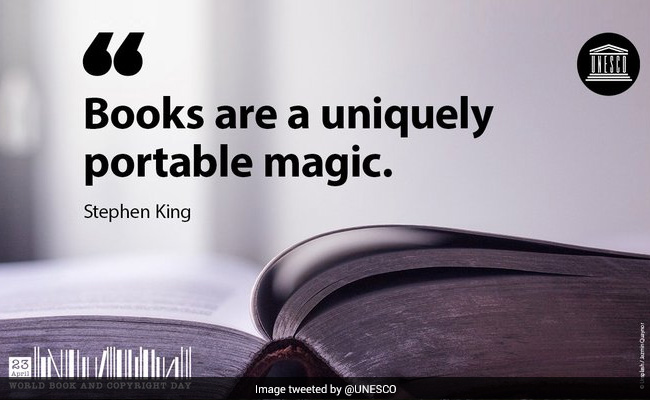
Tomorrow is World Book and Copyright Day. Celebrated annually on April 23rd, the day celebrates the joy of books and reading. It serves as a bridge between the past and the future, connecting generations and cultures. On this day, people across the globe come together to appreciate the role of books in shaping our lives and understanding the world around us.

World Book and Copyright Day was first established by UNESCO in 1995 to be celebrated on April 23rd each year. The date was chosen to honour the passing of prominent authors such as William Shakespeare, Miguel de Cervantes, and Inca Garcilaso de la Vega. This day highlights the importance of books as a source of knowledge, creativity, and cultural enrichment, as well as to promote the publishing industry and protect intellectual property through copyright. It is seen as a link between the past and the future, a bridge between generations and across cultures. While UNESCO coordinates the global celebration, some countries observe World Book Day on different dates, such as the UK and Ireland, which celebrate it on March 2nd.
In the 2024 edition, amidst global challenges and technological advancements, the celebration takes on a renewed significance, emphasising the resilience of literature, the promotion of reading, and the preservation of cultural diversity.

The theme for World Book and Copyright Day 2024 is “Read Your Way.”. This theme emphasises the importance of choice and enjoyment in fostering a love of reading. It encourages both children and adults to find ways to engage with books that resonate with them, regardless of format or genre.

Last year marked the start of the International Decade of Indigenous Languages (2022-2032), where UNESCO prioritises the upholding and promoting linguistic diversity and multilingualism. For the 2024 edition, UNESCO will spotlight indigenous languages. Of the nearly 7,000 existing languages, many are spoken by indigenous peoples who represent the world’s cultural diversity. Recognising oral traditions and various forms of literature, UNESCO aims to celebrate and preserve these languages through books. Literary sessions amplify the Sustainable Development Goals. SDG 5, or gender equality, happens when literature amplifies the voices of countless women, and SDG 10, or reduced inequality, can be fought when books serve as tools to fight against inequalities.

The 2024 edition places a special emphasis on the role of digital innovation in democratizing access to literature. With the proliferation of e-books, audiobooks, and online libraries, readers can now engage with literary content in more accessible and interactive ways. This year’s celebration highlights the opportunities presented by digital platforms to reach broader audiences and promote literacy worldwide. Amidst the digital age, protecting copyright remains crucial for sustaining creativity and ensuring fair compensation for authors and creators. World Book and Copyright Day 2024 reaffirms the importance of copyright laws in safeguarding intellectual property rights and fostering a conducive environment for literary production. It encourages dialogue on copyright issues, piracy prevention, and the equitable distribution of royalties in the digital era. Recognizing the enduring value of reading in fostering imagination, critical thinking, and lifelong learning, World Book and Copyright Day 2024 advocates for initiatives that promote reading culture at all levels of society. From literacy programs in schools to community libraries and book clubs, efforts are underway to cultivate a passion for reading and empower individuals with the skills necessary to navigate the complexities of the modern world.

UNESCO, along with international organizations representing publishers, booksellers, and libraries, selects a World Book Capital each year. The chosen city which holds the title for a year, hosts initiatives and events to promote books, literary culture and reading throughout the year. Strasbourg, in France, has been designated as the World Book Capital for 2024. Strasbourg impressed UNESCO and the World Book Capital Advisory Committee with its strong focus on books to address social tensions and climate change. The city’s program “Reading for the Planet” emphasises books’ role in encouraging discussions about environmental concerns and scientific knowledge, particularly among young people. Strasbourg’s literary heritage and its diverse artistic activities, spanning music, theatre, and illustration, were also commendable. As the twenty-fourth city to bear this title since 2001, Strasbourg follows a distinguished lineage of previous World Book Capitals, including Madrid, Alexandria, Buenos Aires, Kuala Lumpur, and Accra.

Many countries and organisations around the world will organise events and activities to promote reading, publishing, and the protection of intellectual property through copyright. These may include book fairs, author talks, reading challenges, and book donation drives. In Spain, the traditional celebration of Diada de Sant Jordi or Saint Jordi’s Day on April 23rd will coincide with World Book and Copyright Day. This involves the gifting of books and roses. The National Literacy Trust in the UK will provide a range of teaching resources, booklists, and activity ideas to help schools and communities celebrate a love of books and reading. World Book Day is working with 20 libraries in high-deprivation areas to create a legacy around reading, including events to inspire local families.

As we commemorate World Book and Copyright Day 2024, let us reaffirm our commitment to literature as a catalyst for positive change. By embracing diversity, promoting equity, and safeguarding intellectual property rights, we can harness the full potential of literature to build a more inclusive and enlightened society. Through reading, writing, and sharing stories, we contribute to a global culture of creativity, empathy, and mutual understanding.

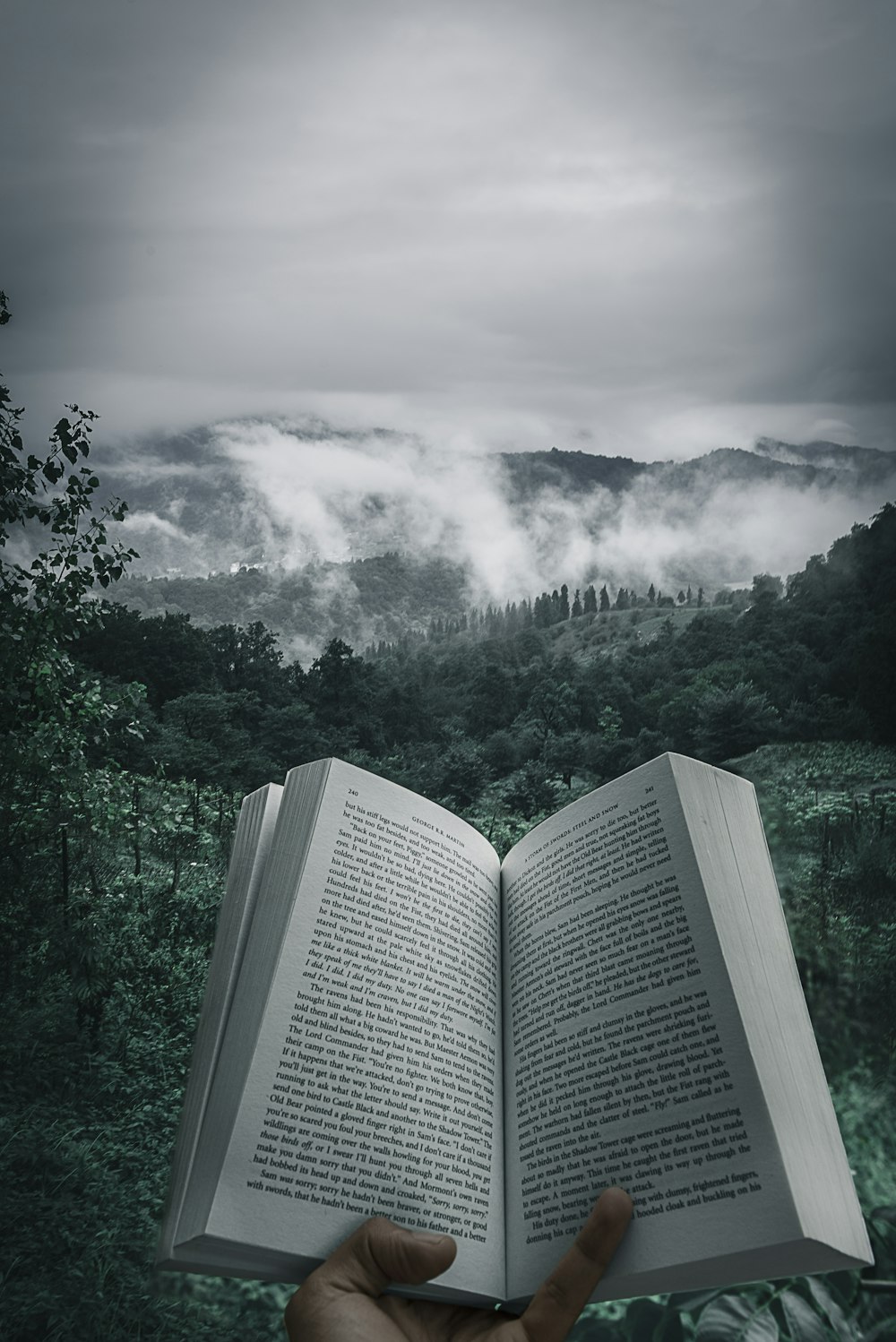
In My Hands Today…

Reader, Come Home: The Reading Brain in a Digital World – Maryanne Wolf

The author of the acclaimed Proust and the Squid follows up with a lively, ambitious, and deeply informative book that considers the future of the reading brain and our capacity for critical thinking, empathy, and reflection as we become increasingly dependent on digital technologies.

A decade ago, Maryanne Wolf’s Proust and the Squid revealed what we know about how the brain learns to read and how reading changes the way we think and feel. Since then, the ways we process written language have changed dramatically with many concerned about both their own changes and that of children. New research on the reading brain chronicles these changes in the brains of children and adults as they learn to read while immersed in a digitally dominated medium.

Drawing deeply on this research, this book comprises a series of letters Wolf writes to us—her beloved readers—to describe her concerns and her hopes about what is happening to the reading brain as it unavoidably changes to adapt to digital mediums. Wolf raises difficult questions, including:

  • Will children learn to incorporate the full range of “deep reading” processes that are at the core of the expert reading brain?
  • Will the mix of a seemingly infinite set of distractions for children’s attention and their quick access to immediate, voluminous information alter their ability to think for themselves?
  • With information at their fingertips, will the next generation learn to build their own storehouse of knowledge, which could impede the ability to make analogies and draw inferences from what they know?
  • Will all these influences, in turn, change the formation in children and the use in adults of “slower” cognitive processes like critical thinking, personal reflection, imagination, and empathy that comprise deep reading and that influence both how we think and how we live our lives?
  • Will the chain of digital influences ultimately influence the use of the critical analytical and empathic capacities necessary for a democratic society?
  • How can we preserve deep reading processes in future iterations of the reading brain?
  • Who are the “good readers” of every epoch?

Concerns about attention span, critical reasoning, and over-reliance on technology are never just about children—Wolf herself has found that, though she is a reading expert, her ability to read deeply has been impacted as she has become, inevitably, increasingly dependent on screens.

Wolf draws on neuroscience, literature, education, technology, and philosophy and blends historical, literary, and scientific facts with down-to-earth examples and warm anecdotes to illuminate complex ideas that culminate in a proposal for a biliterate reading brain. Provocative and intriguing, Reader, Come Home is a roadmap that provides a cautionary but hopeful perspective on the impact of technology on our brains and our most essential intellectual capacities—and what this could mean for our future.

Poem: I am a Reader

As you all know I love books. I am an avid reader, though recently I feel I have not been reading as much as I used to and should do. While thinking about something else to write, I thought of books and this poem came unbidden. Maybe this is my subconscious telling me to read more.

I am a Reader

I am a reader, I live in many worlds
An adventure, romance, crime or thriller
I choose the world I want to go to
What will it be today? What would I choose?

I open the book and settle in with a contented sigh
And soon say to this world a goodbye
As I drown myself in a world full of intrigue and suspense
Heroes full of valour and villains with an air of menace

Or shall I indulge in some heady romance?
Where emotions run deep and the characters rave and rant
Or shall I take a trip to the top of the mountains or the deepest ocean?
Sitting in one place, travelling without a care or caution

I am a reader, there’s a constant movie running in my head
And so when I watch a movie, I am always upset
The film on-screen can never match up to the one in my imagination
I am disappointed yet again, go back to my books and let the magic happen

Books are special, books are magical
With books, there’s never a moment that’s not dull
Books help us know ourselves and let us roam
And all this, from the comfort of our home

So pick up a book and bid now adieu
Let the magic of the written word envelop you
And tell yourself that you too are a reader
An adventurer, a detective, a romantic and most importantly, a dreamer!

My Favourite Books as a Child

I have always loved reading and my earliest memories are either reading or looking for something to read. Growing up in the mid to late seventies and eighties in India meant that other than the school library and maybe friends, access to books was limited. But I still managed to read, sometimes resorting to newspapers and magazines to feed my reading addiction.

I was always reading one to two grades higher than my peers and by the time I was in grade seven and eight, I remember being allowed the read from the adults’ section in my school library. This was a locked cupboard from which teachers and other staff were allowed to borrow books and I started reading books from authors like George Orwell then. I think I was probably the only student at that time who was accorded this privilege.

But this post is about my favourite books I enjoyed as a child, so let’s dive right in.

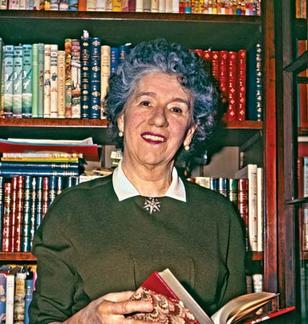
The earliest books I read and loved are those written by Enid Blyton. An English children’s author, Enid Mary Blyton who died in 1968 has written books since the 1930s and whose books have sold more than 600 million copies and have been translated into 90 languages and as of June 2018, is in 4th place for the most translated author.

My first introduction to Blyton’s books was the Faraway Tree series. The stories take place in an enchanted wood in which a gigantic magical tree, the Faraway Tree grows. The tree is so tall that its topmost branches reach into the clouds and it is wide enough to contain small houses carved into its trunk. The wood and the tree are discovered by three children named Jo, Bessie and Fanny, later updated to Joe, Beth and Frannie, who move into a house nearby and go on adventures to the top of the tree along with the inhabitants of the tree, some whom befriend the children. As I am writing this, a memory pops into my head. I must have been five or six and we were travelling down south to my paternal grandmother’s ancestral village to attend a wedding by train. I can still remember the title of the book I was reading, which was The Magic Faraway Tree and the 24-hour journey (at least the time spent in reading) flew past in a jiffy!

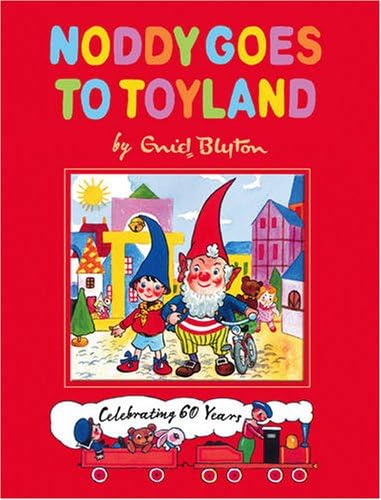
I have also read a few of the Noddy books, but don’t have any great memory of reading them. Noddy was made by a woodcarver in a toy store but runs away after the man begins to make a wooden lion, which scares Noddy. As he wanders through the woods naked, penniless, and homeless, he meets Big Ears, a friendly gnome who decides that Noddy is a toy and takes him to live in Toyland. The other toys can hear him coming by the distinctive Parp Parp sound of his car’s horn and the jingle of the bell on his blue hat. Noddy’s best friends are Big Ears, Tessie Bear, Bumpy Dog, and the Tubby Bears. Noddy has many run-ins with Mr Plod, the local policeman.

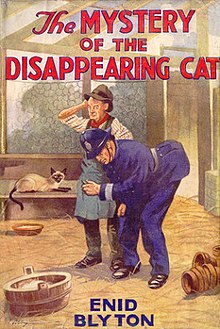
I then graduated to reading Blyton’s mystery books like the Secret Seven, the Five Find-Outers and the Famous Five. Of the three, my favourite was the Five Find-Outers mainly because one of the characters used to disguise himself to solve the case. I read these books more or less during my primary school days.

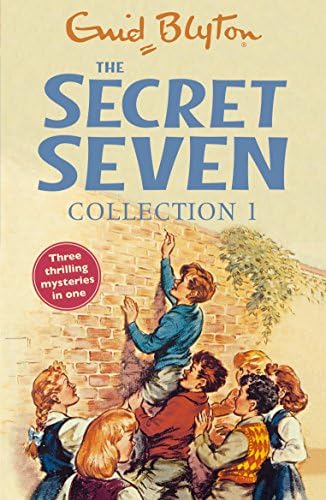
The Secret Seven is a group of child detectives consisting of Peter, the leader, Janet who is Peter’s sister, Pam, Barbara, Jack, Colin and George. Jack’s sister Susie and her best friend Binkie make occasional appearances in the books who they hate the Secret Seven and delight in playing tricks designed to humiliate them, although this is partly fuelled by their almost obsessive desire to belong to the society. Unlike most other Blyton series, this one takes place during the school term time because the characters go to day schools.

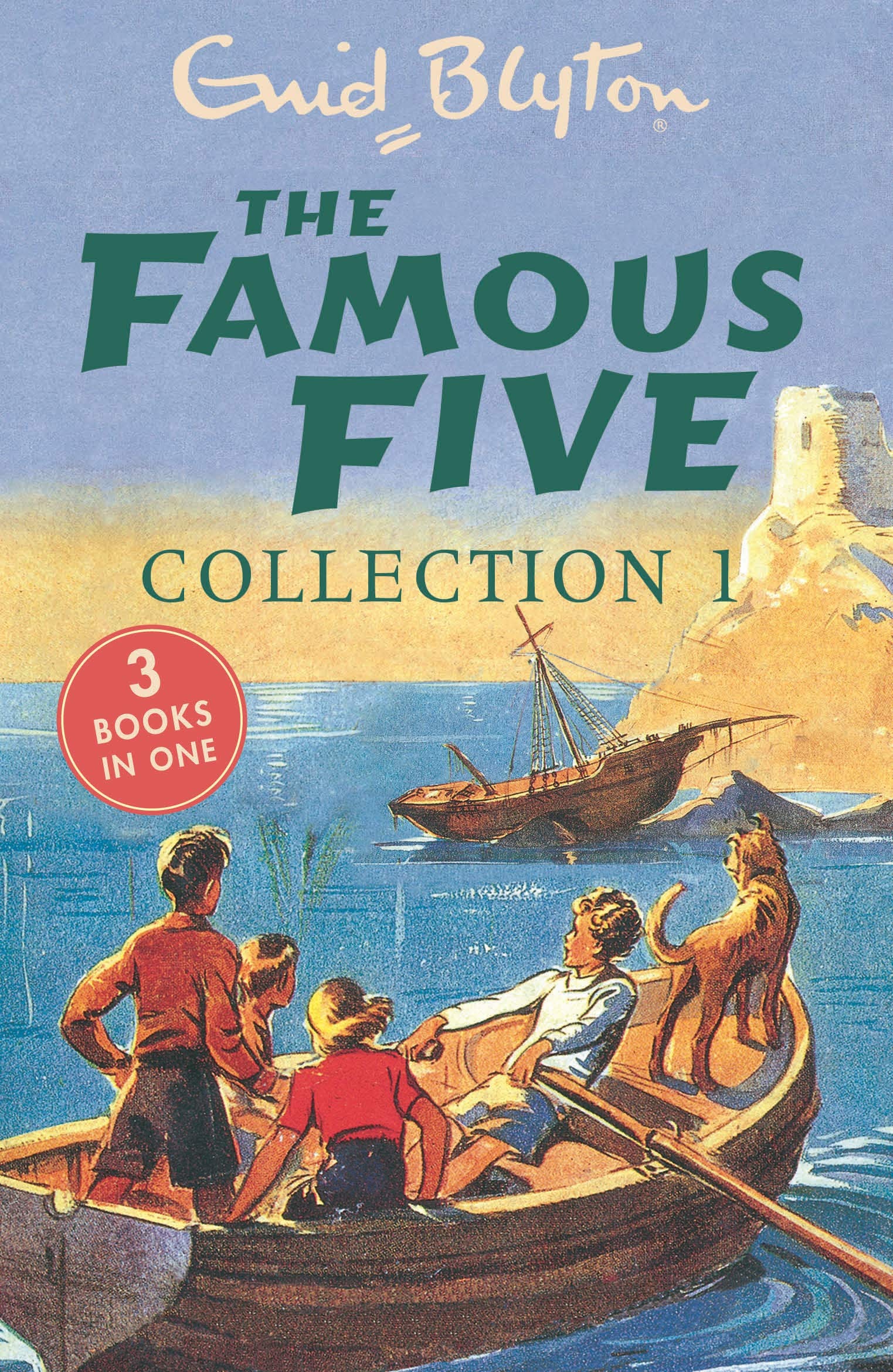
The Famous Five is a series of children’s adventure novels featuring the adventures of a group of young children, Julian, Dick, Anne and Georgina or George and their dog Timmy. The stories take place in the children’s school holidays after they have returned from their respective boarding schools. Each time they meet they get caught up in an adventure, often involving criminals or lost treasure, sometimes close to George’s family home at Kirrin Cottage in Dorset. George’s home and various other houses the children visit or stay in are hundreds of years old and often contain secret passages or smugglers’ tunnels. All the novels have been adapted for television, and several have been adapted as films in various countries.

My favourite, the Five Find-Outers is set in the fictitious village of Peterswood. The children, Larry or Laurence Daykin, Fatty or Frederick Trotteville, the leader of the group, Pip or Philip Hilton, Daisy or Margaret Daykin, Bets or Elizabeth Hilton and Buster, Fatty’s dog, encounter a mystery almost every school holiday, always solving the puzzle before Mr Goon, the unpleasant village policeman, much to his annoyance.

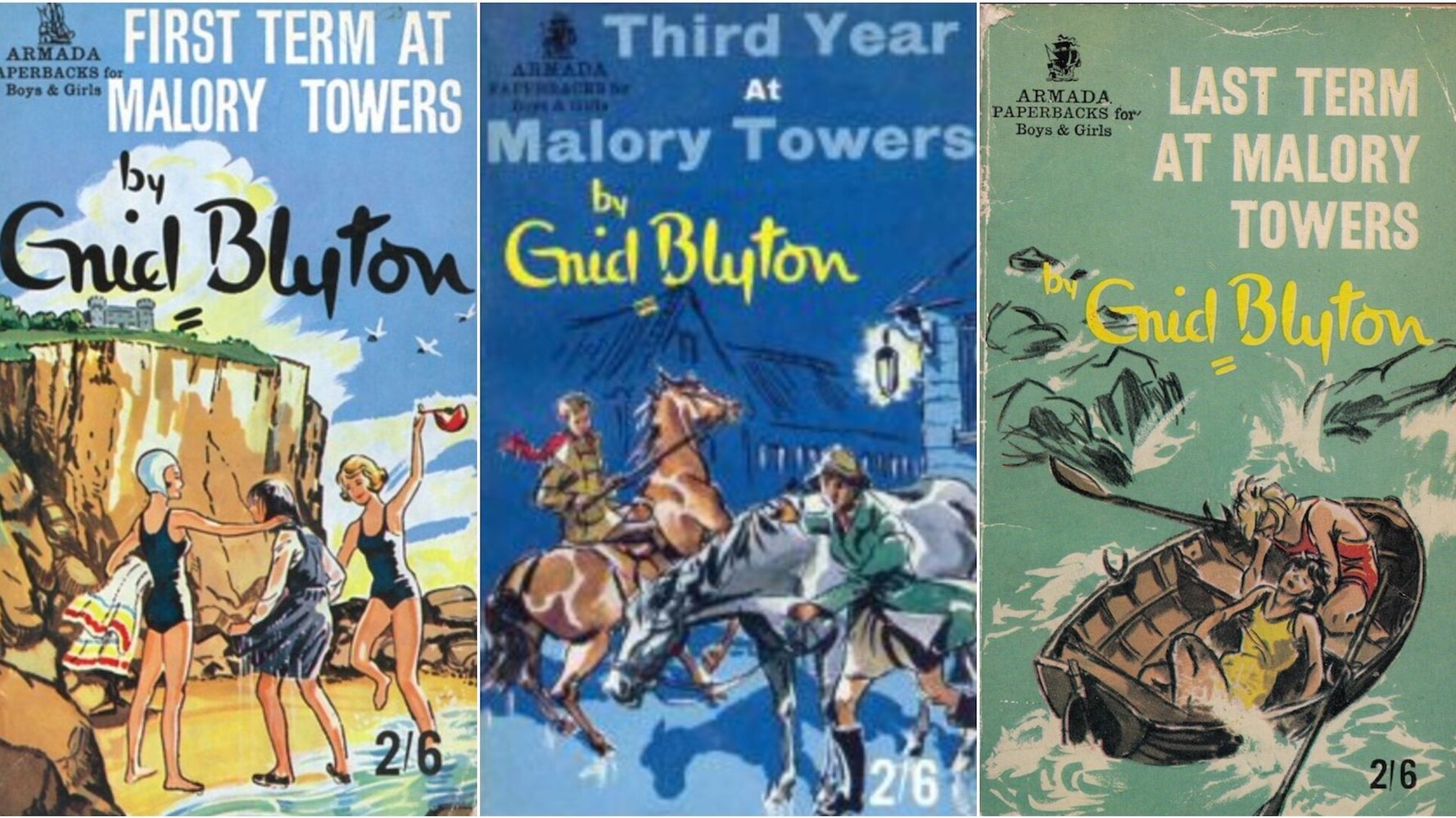
Another set of books written by Enid Blyton I loved were her school series, Malory Towers and St. Clare’s. I have read both the series throughout my school days and when GG was in primary school, I introduced them to her and she was as hooked as I was. Reading these books always made me wish I was in a boarding school with all the fun that the girls had. My friends and I would try to recreate their world in our school.

Malory Towers is a series of six novels based on a girls’ boarding school that Blyton’s daughter attended, Benenden School, which relocated during the war to the Cornish seaside. The series follows the protagonist, Darrell Rivers, on her adventures and experiences in boarding school. Darrell Rivers begins her first year at Malory Towers, a castle-like clifftop boarding school in Cornwall. Determined to do well and make friends, her first term is turbulent and the first book ends with Darrell becoming best friends with Sally Hope. Darrell eventually covers herself in the personal, scholastic and sporting glory that was originally expected of her and is head of the fourth form, games captain of the fifth, and head girl in her final year as well as being a successful lacrosse and tennis player. When she is in the fourth form, her younger sister, Felicity, joins her as a first former at the school. From then up until the last book in the original series, the focus is also on Felicity and the rest of her form. At the end of her school life, Darrell is bound for the University of St Andrews with Sally, Alicia, and her friend Betty. She puts her younger sister Felicity in charge of upholding the standard that she and her classmates set. The second series follows Felicity from the third year to her final term.

St. Clare’s is a series of nine books about a boarding school of the same name. The series follows Patricia or Pat and Isabel O’Sullivan from their first year at St. Clare’s. The series had the girls up to the usual English boarding school antics like the Malory Towers and we aspired to be like them.

Once I had finished the teenage detective books, I moved to slightly older books, and the timeline is roughly the time I was about 10 to about 12-13 years. I read the Nancy Drew and Hardy Boys series almost concurrently and my preference was for Nancy Drew, maybe because I identified with her more. Both series were created by publisher Edward Stratemeyer with the Nancy Drew series created as a female counterpart to the Hardy Boy series.

An American teen, Nancy Drew is a fictional amateur sleuth living in the fictional town of River Heights with her father, attorney Carson Drew, and their housekeeper, Hannah Gruen. Nancy is often assisted in solving mysteries by her two closest friends, cousins Bess Marvin, delicate and feminine and George Fayne, a tomboy and also occasionally joined by her boyfriend Ned Nickerson, a student at Emerson College. Often described as a super girl, Nancy is well-off, attractive, and amazingly talented at everything. The books were ghost-written by several authors and published under the collective pseudonym of Carolyn Keene. Over the decades, the character evolved in response to changes in US culture and tastes. The series was immensely popular worldwide with at least 80 million copies sold and translated into over 45 languages and has been translated into film, television shows and computer games. A cultural icon, Nancy Drew is cited as a formative influence by many women.

The Hardy Boys, brothers Frank and Joe Hardy, who are amateur sleuths, solving cases that stumped their adult counterparts. Frank is eighteen and Joe is seventeen and they live in the city of Bayport on Barmet Bay with their father, detective Fenton Hardy, their mother, Laura Hardy and their Aunt Gertrude. The brothers attend high school in Bayport, where they are in the same grade but school is rarely mentioned in the books and never hinders their solving of mysteries. The books themselves were written by several ghostwriters, most notably Leslie McFarlane, under the collective pseudonym Franklin W. Dixon. This series was also very popular with the books selling more than a million copies annually, and have been translated into more than 25 languages, television shows and video games,

These were the books and series that brought a lot of smiles during my childhood. This was a childhood where there was no internet, no smartphones and computers were large and restricted to offices. So, one of our minimal forms of entertainment was books and probably today’s children would never know the pleasure of just sitting down with a good book and spending hours on it.

Which were your favourite books growing up?

Why I Write

I have always been a voriacious reader, I can’t really remember not having a book in my hand at any point in life. In fact, I was caught in school reading novels, which was not allowed, that’s how much I loved reading. Writing, then, was something I naturally gravitated to. My childhood dream was to become a librarian and a writer, simultaneoiusly! Unfortunately, reality got in the way and I actually studied something else and made a career in another field. But I was always writing.

I am an introvert and have always lived in a world that is unknown to others. I live in my imagination, wrote stories and screenplays in my head and when I was younger, I used to play dress-up and live the lives my favourite characters lived. I was part of the Famous Five and the Five Find-Outers and helped Nancy Drew and the Hardy Boys solve their cases. Closer to home, I was part of the mythological stories my grandmother used to tell us and believe me when I say this – when I was told stories, I could actually see it play out in my head. This is probably why till today, I don’t really like watching a movie when I have already read the book. The movie in my head is way, way better than what I see on screen.  

I remember in the late seventies and ealy eighties of India, as a middle-class family, we didn’t really have access to many books and my school library was my favourite place. In my school, there were two libraries, one for the primary students and the other, bigger one, for older students and the adults. I very quickly outgrew my primary library and would rush to the bigger library every day after quickly gobbling down my lunch. Even now, when I write this down, I can remember, rushing from the bigger library to my class when the bell which signalled the end of lunch ran. The bigger library was in level two of another building which was separated from my primary building by our school gymnasium and so I used to run down one flight of stairs, run across the grounds and run up another flight of stairs to hope to make it to my classroom before the teacher came in. I have slipped and fell during the monsoons, resulting in mud stains on my uniform, which I had to explain twice – once in school and once at home! But I still continued reading and then writing. Even when I moved to the secondary section and became friends with the librarian, I quickly started reading books way above my reading level. I remember borrowing books like 1984 by George Orwell when I was like 12 or 13 and when we used to have our library period, I would get special permission to borrow from the adult section, which was usually locked because I had pretty much read everything else. Even after our library period ended in upper secondary, I continued to borrow books, and think I was the only girl in our level who did something like this.

In school, English composition was my favorite period and when we had our English language paper, the first thing I would do would look at the last question which used to be the composition. I would see the choices and decide what I will be writing about and only then go and work on the rest of the paper and by the time I came to the composition, I had an idea on how I will write the essay.

I write because now, if I don’t, it feels as if something is missing that day in my life. I started blogging more than 10 years back, because earlier this year, WordPress informed me that it was my tenth anniversary on the site. Before WP, I had a blog on Blogspot, on which I wrote for a couple of years, so I think I must be blogging for a good dozen years. After reading this, if you are tempted to look for my blog in Blogspot, don’t bother. It was with a different name, and I can’t even remember it myself.

I write because I have so much inside me that I have to share it to a wider audience. I don’t know if I have shared this previously, but since I blog anonymously, I don’t share anything about this blog beyond you people. Nobody beyond my children (and now my husband) know about this space of mine and any readers who decide to stay on do so, hopefully, because my writing brings some value to them. This is why, even though I don’t have a huge readership, I write daily and cherish each and every reader who decides that they like what they read.

Sometimes I think back and wish, I had probably become a writer professionally, maybe for a publication even. Would I have been happier? I really don’t know. I do have hopes of publishing something, someday. Maybe that is a goal I should work towards and see if I can reach in the next few years. But until then, I will work hard on my craft and continue to write and hone my writing to take it to the next level.

Until then thank you for reading my writing, sometimes which verges on rambles and may seem incoherent. And also because writing is fun!