In My Hands Today…

From Third World to First: The Singapore Story: 1965-2000 – Lee Kuan Yew

Few gave tiny Singapore much chance of survival when it was granted independence in 1965. How is it, then, that today the former British colonial trading post is a thriving Asian metropolis with not only the world’s number one airline, best airport, and busiest port of trade, but also the world’s fourth–highest per capita real income?

The story of that transformation is told here by Singapore’s charismatic, controversial founding father, Lee Kuan Yew. Rising from a legacy of divisive colonialism, the devastation of the Second World War, and general poverty and disorder following the withdrawal of foreign forces, Singapore now is hailed as a city of the future. This miraculous history is dramatically recounted by the man who not only lived through it all but who fearlessly forged ahead and brought about most of these changes.

Delving deep into his own meticulous notes, as well as previously unpublished government papers and official records, Lee details the extraordinary efforts it took for an island city–state in Southeast Asia to survive at that time.

Lee explains how he and his cabinet colleagues finished off the communist threat to the fledgling state’s security and began the arduous process of nation building: forging basic infrastructural roads through a land that still consisted primarily of swamps, creating an army from a hitherto racially and ideologically divided population, stamping out the last vestiges of colonial–era corruption, providing mass public housing, and establishing a national airline and airport.

In this illuminating account, Lee writes frankly about his trenchant approach to political opponents and his often unorthodox views on human rights, democracy, and inherited intelligence, aiming always “to be correct, not politically correct.” Nothing in Singapore escaped his watchful eye: whether choosing shrubs for the greening of the country, restoring the romance of the historic Raffles Hotel, or openly, unabashedly persuading young men to marry women as well educated as themselves. Today’s safe, tidy Singapore bears Lee’s unmistakable stamp, for which he is unapologetic: “If this is a nanny state, I am proud to have fostered one.”

Though Lee’s domestic canvas in Singapore was small, his vigor and talent assured him a larger place in world affairs. With inimitable style, he brings history to life with cogent analyses of some of the greatest strategic issues of recent times and reveals how, over the years, he navigated the shifting tides of relations among America, China, and Taiwan, acting as confidant, sounding board, and messenger for them. He also includes candid, sometimes acerbic pen portraits of his political peers, including the indomitable Margaret Thatcher and Ronald Reagan, the poetry–spouting Jiang Zemin, and ideologues George Bush and Deng Xiaoping.

Lee also lifts the veil on his family life and writes tenderly of his wife and stalwart partner, Kwa Geok Choo, and of their pride in their three children –– particularly the eldest son, Hsien Loong, who is now Singapore’s deputy prime minister.

For more than three decades, Lee Kuan Yew has been praised and vilified in equal measure, and he has established himself as a force impossible to ignore in Asian and international politics. From Third World to First offers readers a compelling glimpse into this visionary’s heart, soul, and mind.

In My Hands Today…

Singapore: A Biography – Mark R. Frost and Yu-Mei Balasingamchow

The cityscape of modern Singapore is in a constant flux, all in the name of development and progress. A sense of the physical past is consequently imited.

This new work, based on research done in collaboration with curators of the National Museum, seeks to invigorate links to Singapore’s past by weaving a cohesive narrative out of fragments of eyewitness accounts, correspondences and descriptions.

Taking readers through the earliest Ming dynasty Chinese accounts of the island, the founding of modern Singapore, its growth as an emporium and port city, the Japanese occupation, and finally self-determination and independence, this book lets the experiences of historical individuals speak to a modern audience, allowing them to reconnect with and find meaning in the past.

Global Smart City Index

The Global Smart City Index was conceived in 2017 by the International Institute for Management Development or IMD and the Singapore University of Technology and Design or SUTD who joined forces to produce a smart city index offering a balanced focus on economic and technological aspects of smart cities on the one hand, and the “humane dimensions” of smart cities which included things like quality of life, environment and inclusiveness on the other. The Smart City Index ranks cities based on economic and technological data, as well as by their citizens’ perceptions of how “smart” their cities are.

The global smart city index consists of two distinct phases and deliverables. In the first phase, a set of case studies of smart cities at different stages of development, providing a diverse international basis of experience, with the purpose of enhancing the realism and pertinence of the model underpinning the index was proposed. In the second phase, a first iteration of the index methodology was defined, leading to a global ranking of smart cities along that index in 2019. The Global Smart City Index in 2020 is the second edition of the rankings. The 2020 rankings’ key findings is on how technology is playing a role in the COVID-19 era in a way that is likely to remain.

For the 2020 rankings, hundreds of citizens from 109 cities were surveyed in April and May 2020 and asked questions on the technological provisions of their city across five key areas: health and safety, mobility, activities, opportunities and governance. According to Bruno Lanvin, President of the IMD Smart City Observatory, “It is of course too early to draw the lessons from COVID. However, it is clear that we are at a critical juncture, where the sanitary crisis is still very much with us, while the economic and social crisis that it will entail has hardly started. This year’s Smart City Index suggests that the cities that have been able to combine technologies, leadership and a strong culture of ‘living and acting together’ should be able to better withstand the most damaging effects of such crises.”

Singapore continued to maintain the top position, as it did in 2019 with Helsinki and Zurich coming in second and third place in 2020. The reason for this was because of Singapore’s performance in a one year period between the last year’s rankings to this year and Singapore’s continued success with prompt responses to an unexpected challenge where other cities have faltered and the city-state acted quickly and decisively. According to Professor Arturo Bris, director of the World Competitiveness Centre at IMD, “It had a clear road map that it followed but remained flexible. The citizens were kept informed and therefore onboard with the decisions and the loss of freedom that these entailed. The Government was in position to provide adequate compensation to those losing out and did this wisely,”.

The survey findings noted that a central pillar of Singapore’s success has been its resilience and promptness when confronted with the unexpected challenges brought by the pandemic. The index also noted that cities with better technology have managed the pandemic better, but also noted that smart cities are not the solution, but technology helps.

The index also noted that cities in India including New Delhi, Mumbai, Hyderabad and Bengaluru, suffered significant drops in the rankings this year which can be attributed to the detrimental effect that the pandemic has had where the technological advancement was not up to date. Indian cities have suffered more from the pandemic because they were not prepared. Also, a common factor behind the drop in all Indian cities is a general decline experienced by all of them in the quality of infrastructure of the cities despite the technological solutions implemented to advancing it. All four cities highlighted air pollution as one of the key areas that they felt their city needed to prioritise on.

For cities like Bangalore and Mumbai, this was closely followed by road congestion while for Delhi and Hyderabad it was basic amenities.

The index also highlighted that “smart” is a relative term and different cities use technology for different things. This is why we see vast differences in the smartness of cities within the same country. They differ in terms of their economies, inequality levels, for example, access to health and policies. Since countries are no longer economic units, mayors and local authorities increasingly have the power to improve the wellbeing of citizens by implementing technology.

Other than Singapore, Taipei is the other Asian city in the top 10, which moved down one notch to eighth place. Helsinki moved up seven places from 8 in 2019 to 2 in 2020, while the tenth city in 2020, New York moved 28 places up from 38 in 2019. My hometown of Mumbai moved down 15 places from 78 in 2019 to 93 in 2020, while Hyderabad, the top Indian city moved down 18 places from 67 in 2019 to 85 in 2020.

The top 10 Global Smart Cities in 2020 are as below with their rank in 2019 in brackets:

  1. Singapore (1)
  2. Helsinki, Finland (8)
  3. Zurich, Switzerland (2)
  4. Auckland, New Zealand (6)
  5. Oslo, Norway (3)
  6. Copenhagen, Denmark (5)
  7. Geneva, Switzerland (4)
  8. Taipei, Taiwan (7)
  9. Amsterdam, The Netherlands (11)
  10. New York, United States (38)

You can download the index as a PDF file and also read in detail the 2020 profiles of all 109 cities surveyed.

Staycations – Yay or Nay?

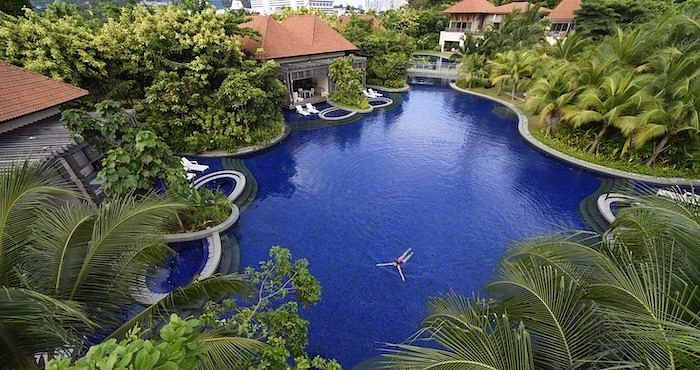
Staycations, which usually means staying in a hotel or resort which is either in your own town or city and does not involving travel. The traditional meaning does not even include overnight accommodation, but today’s definition does include an overnight stay. Most people replicate a traditional vacation, with a defined start and end date, just without getting on a plane or travelling far from their own town or city. The word is a a portmanteau of stay (meaning stay-at-home) and vacation.

Staycations achieved popularity in the US. during the financial crisis of 2007–2010 and in the UK in 2009 as a weak pound sterling made overseas holidays significantly more expensive. Staycations have been popular in Singapore for many years now and especially in the last decade or so. Today, the staycation holiday has become popular worldwide due to travel restrictions caused by the COVID-19 pandemic.

The earliest reference to the term staycation came from a 2003 article by Terry Massey in The Sun News. The word became widely used in the United States during May 2008 as the summer travel season began with petrol prices reaching record highs, leading many people to cut back on expenses including travel. Merriam-Webster cites the earliest use in the Cincinnati Enquirer on  July 18, 1944 and the term was added to the 2009 version of the Merriam–Webster’s Collegiate Dictionary.

So why do people take staycations? Most people take staycations for many reasons.

Staycations are easy. You avoid the hassle of actually going on a holiday by bypassing flights, tickets and the other inconvienances and get straight to enjoying your holiday. There’s also no hassle of packing and unpacking, sometimes multiple times, no jet lag and long drives and endless waiting at airports.

Staycations are also cheaper than a holiday. A hotel accommodation is not just the only cost in a holiday. You have to also factor in transportation costs, food and other living expenses in the destination make any holiday, especially for a family an expensive affair.

Staycations can be quite the experience. You can choose different accommodation, based on your budget and experience life differently, maybe even altering your mood and making you feel you are not in your own city.

Staycations benefit the economy. Staycations benefit local businesses who get customers from locals and boost local economy. Especially in times like this when many cities are in a lockdown and both domestic and international tourism is severely impacted, a staycation can mean a full house for the hotel and the difference between the hotel staying in business and closing down forever.

Staycations are good for the environment. Air travel’s environmental impact is significant. By avoiding travel, a staycation may reduce the carbon emissions associated with travel greatly.

Staycations start earlier and go for longer. Without the hassle of travel, your staycation starts the minute you drive into the hotel which may be less than an hour’s drive from home. Again, since you don’t need to travel back home, you can stay as long as you want, coming home just when you need to.

Staycations allow you to experience affordable luxury. When you travel traditionally, because of budgetary considerations, you may not be able to spend as much on accommodation as you like. But with a staycation, you can afford accommodation at a higher price point than what you would be able to afford at another place and enjoy luxury that otherwise you would not be able to afford.

But contrary to all that I wrote above, I feel a staycation is a waste of your money. Why?

A room in a good hotel in Singapore does not come cheap and is a minimum of $200 per room per night. With this amount, I can easily get a couple of tickets to a southeast Asian destination in say Malaysia, Thailand or even Cambodia.

Here’s what I think I would do with $200 which would be spent in one night in a mid-sized hotel in Singapore. I prefer to sleep in my own bed, so that’s accommodation taken care of. With the money, I don’t have to lift a finger in my own home for a day by ordering food and even a cleaner to come a couple of hours to clean my home. In addition, this money can pay for entertainment like a streaming subscription for year which I can enjoy for a long time. The money will also pay for the entrance fee to local attractions which I have not visited in many years like the Singapore Zoo, Night Safari and River Safari as well as the Art Science Museum, Singapore Flyer, Gardens By The Bay, Marina Bay Sands and Sentosa with the Universal Studios. I can do atleast a few of these attractions with the money I would spend staying one night in a hotel.

So this is why staycations are a Nay from me and I would probably not do a staycation, but rather spend money on experiences. What about you? Are staycations a Yay or a Nay? I would love to read your opinion.

My Singapore Journey

Yesterday was Singapore’s 55th National Day and as I reminisced about my twenty odd years here, I thought back on my journey in Singapore.

I have written about my journey to become a Singaporean last year, but this post will be slightly different. 2020 is my twentieth year in Singapore and as I have mentioned previously, I could have become a Singaporean about two to three years after I got my Permanent Residency given that S is native Singaporean and BB & GG were already born who are also citizens by birth. But I wanted to make sure I was taking the right decision. When I first came to Singapore, I was quite happy with my permanent residency status and had no intention at that point to renounce my Indian citizenship. I was very proud to have been born in India, especially Mumbai (and till today, I proudly call Bombay my hometown) and since I was actually getting some of the benefits which I would have not gotten if BB & GG were not Singaporeans, there was no real hurry for me to take the next step.

As I grew used to staying in Singapore, it slowly started becoming home to me. In fact I remember a conversation with the officer at the Immigration & Checkpoints Authority when I went to get my passport stamped with my re-entry permit who was doing the stamping. She asked me why I didn’t apply for citizenship since I am married to a Singaporean and my children are also locals. I should have no problems with my application according to her. I responded saying I didn’t feel Singaporean yet and so will wait before I take such a decision. That feeling came about fifteen years into living in Singapore. I can still remember when I finally acknowledged to myself it was time to become a Singaporean not just in spirit, but officially too. I was returning back from a business trip and when the plane landed in Changi airport, the pilot (or co-pilot) said the usual welcome dialogue which SIA usually has which has something to the effect of “Welcome to Singapore and for Singaporeans and Permanent Residents, welcome home”, I realised that Singapore was indeed home for me. I also completed a new rite of passage as a Singaporean recently when I voted in the recent general elections which happened last month.

When the sight of Changi airport’s control towers says you are now home, when Singlish seems as normal as Hindi and Marathi, when Majulah Singapura means as much to you as Jana Gana Mana, it means that Singapore has become home to me now. Even though it took me about fifteen years to come to this realisation, I decided that was the time to take things to the next level and make Singapore officially my home. BB & GG were, I think, the most excited when I took this decision. I have not travelled much, especially regionally after getting my red passport, but I look forward to exploring more countries in the region. I can remember trips to Thailand and Cambodia where I had to rush to get my visa on arrival stamped in my passport while S and the children either waited for me or went ahead to collect the baggage because they had Singapore passports which ensured that they just walk out. Or even work trips where I had to get visas every single time and my colleagues usually had to wait for me before we went to collect our baggage. Pre COVID, we used to drive down to Malaysia, specifically Johor Bahru quite often to buy groceries and shop and crossing the causeway without needing a visa was so convienient.

Happy birthday Singapore! Prosper and flourish for years to come…

What’s a National Day, without a National Day song? I’ve shared my favourite NDP song, Home by Kit Chan last year, so here’s this year’s song sung by Nathan Hartano.