Short Story: Kites and Mangoes

9 August, Singapore

You don’t sound Indian,” the boy had said at the kopitiam when Kavya ordered her teh c kosong. He’d grinned, like it was a compliment.

Kavya had smiled tightly, thanked him, and walked away. She was used to it.

Born and raised in Singapore, she knew the National Day Parade theme song by heart and could switch between English, Tamil, and a sprinkle of Mandarin like a linguistic gymnast. But somewhere between “pure” Singaporean and “actual” Indian, she felt like she belonged everywhere and nowhere at once.

She’d grown up visiting temples on weekends, dancing Bharatanatyam at community festivals, and eating prata after tuition class. But whenever she visited Little India, there was always someone who’d ask, “You from here or there?” and she never had a clear answer.

This year, she wanted something more. Something beyond tidy traditions and carefully curated heritage trails. She booked a solo trip to India, to Madurai, the city where her grandmother had been born.

Why now?” Amma had asked, frowning over her glasses.

I want to feel where I come from,” Kavya replied. “I want to be in India on Independence Day.”

Her mother had sighed but said nothing. That night, she slipped an old photograph into Kavya’s bag: a black-and-white picture of a young woman in a half-saree standing in front of the Meenakshi Temple.

11 August, Madurai, India

The heat struck like a drumbeat. Everything in Madurai pulsed: the honks, the temple bells, and the jasmine sellers with their hypnotic chants.

Kavya stayed in a modest homestay just off a street flanked by banana trees and walls stained with old film posters. The house had creaky wooden shutters, a courtyard with a mango tree, and an old woman who insisted Kavya eat second helpings of everything.

The rhythm of life was different here. Slower, louder, more chaotic, and strangely comforting. Kavya spent her mornings walking to temples and her afternoons scribbling in a notebook she carried everywhere. She didn’t know what she was writing—just thoughts, feelings, and fragments of herself.

12 August, Madurai

On her second morning, Kavya heard a ruckus in the alley. She stepped out and saw a girl, barefoot, dust-streaked, and laughing, chasing a runaway calf down the narrow lane. The girl caught it by the rope, scolded it gently in Tamil, and looked up to see Kavya watching.

You look like you’re from here but also… not,” the girl said, grinning.

Kavya laughed. “That’s not the first time I’ve heard that. I’m Singaporean. My grandma was from here.”

Then you’re one of us,” the girl declared. “I’m Meenal. Come. We’re painting flags today. For August 15. Want to help?

Kavya blinked. “Me? I don’t really paint…”

That’s okay. You’ll learn. We’re not picky about strokes, only spirit.

And just like that, she was pulled into a swirling circle of colours, cloth, and conversation.

13 August, Madurai

They sat under a neem tree, painting tiny Indian flags on scraps of cloth. Children swirled around them, cheeks smeared with green and orange.

What’s National Day like in Singapore?” Meenal asked, dabbing white onto a fabric square.

There’s a huge parade. Fireworks. Everyone wears red and white. But… it feels curated. Clean.”

You miss mess?” Meenal teased.

I miss… rawness. My identity feels like a fusion dish sometimes. Indian, but diluted. Singaporean, but never quite full-blooded.

Meenal paused and dipped her brush into green. “Being Indian isn’t about passports. It’s about stories. Smells. The way your body remembers mangoes even when your tongue forgets.”

Kavya looked at her. “You make it sound like poetry.

It is. We’re both translations of something old and beautiful.”

They sat in silence for a while. A small girl brought them sliced raw mango with chilli salt. Kavya bit into it, eyes watering from the tang.

This,” she said, “tastes like my grandmother’s kitchen. I didn’t even know I remembered.”

Meenal smiled. “See? That’s the thing about home. It sneaks up on you.”

14 August, Madurai

That evening, Meenal took her to a rooftop near the temple.

We come here every year to light paper lanterns,” she said. “Some say they carry prayers. Others say they chase away the shadows.”

As the sky dimmed, they lit small lanterns and watched them rise. Kavya stood quietly, fingers curled around her wrist.

My parents wanted me to study engineering. I chose literature instead,” Meenal said suddenly. “They said it was a waste. But I like words. Words are how I remember who I am.”

Kavya looked at her. “You’re lucky you even knew. I feel like I’m always translating what I want, who I am, who people think I should be.”

“Maybe identity isn’t about choosing one version. Maybe it’s about collecting them, like shells. Some smooth, some cracked. But all real.”

15 August, Madurai

The morning was thick with saffron skies and fried vadai. Children marched barefoot with tricolour kites and hand-painted flags. The air buzzed with pride, promise, and powdered colours.

Meenal tugged Kavya to the rooftop.

Here. Yours.

Kavya took the spool and launched her kite into the air.

It wobbled at first, then caught the wind. Higher, stronger.

Below, loudspeakers blared patriotic songs. Kavya felt the strings burn gently against her fingers.

You know,” she said softly, “In Singapore, we sing ‘One People, One Nation, One Singapore.’ But I never understood how to be one thing.”

Meenal grinned. “Maybe we aren’t meant to be one thing. Maybe we’re meant to be many.”

They watched the sky fill with colour. Saffron, white, green, and somewhere, Kavya imagined, red and white too.

I came here to find roots,” she said. “But I think I’ve found mirrors.”

One Week Later, Back in Singapore

Back in Singapore, the sky was cleaner, the traffic neater, and the air-conditioning colder.

On her desk sat a jar of Madurai earth, still smelling faintly of turmeric and dust.

On the wall: two flags. Side by side. Equal in colour, different in rhythm.

She opened her journal and flipped to the back.

A new note from Meenal had arrived by post.

Dear Kavya,

Happy National Day (again)! Mango season starts in March. Your kite is still flying, by the way.

We saved the spot on the rooftop for you.

Kavya smiled and picked up her pen.

Dear Meenal,

Tell the mangoes I’m coming. And this time, I’m bringing chilli salt.

Poem: Wandering on My Own

Solo travel is more than just a journey to distant lands, it is a profound exploration of the self. When you venture out on your own, every step, every encounter, and every quiet moment becomes a lesson in freedom, resilience, and discovery. The road tells stories of unexpected adventures, inner growth, and the courage to embrace solitude. It transforms you, leaving indelible marks on your heart and soul.

Wandering on My Own

In a world vast and wonderfully unknown,
I set forth on paths uniquely my own.
Every step a whisper, every mile a song,
In the dance of solitude, I found where I belong.

The road unfurled like a story untold,
Winding through cities of glimmering gold.
I met strangers who spoke in smiles and dreams,
And learned that freedom flows in silent streams.

Each sunrise painted a canvas of hope,
As I navigated life on my own slope.
No map to follow, just the beat of my heart,
In solo travel, every ending sparks a new start.

Mountains echoed with the courage to rise,
Valleys whispered secrets under open skies.
Every challenge faced, every fear overcome,
Wove a tapestry of strength, a journey well begun.

In quiet moments when the world stood still,
I discovered the power of my own will.
Solo but not lonely, in the silence I found,
A universe within me, vast and profound.

For in the art of wandering, one truth is known—
The greatest adventure is finding your own home.
So I journey on, with courage and delight,
Embracing every sunrise, every star in the night.

Sacred Stones, Spaces and Stories: Shakthipeeta Part 15

Alopi Devi Mandir, Prayagraj, Uttar Pradesh
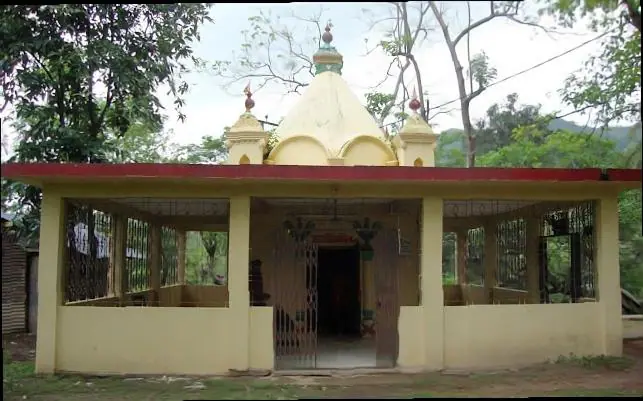
Located in the ancient city of Prayagraj, formerly Allahabad, the Alopi Devi Mandir is dedicated to Goddess Alopi Devi. While the exact date of the establishment of the Alopi Devi Temple is uncertain, the temple’s roots are deeply intertwined with Hindu mythology and the legend of Goddess Sati. The temple’s location in Prayagraj, near the sacred confluence or Sangam of the Ganges, Yamuna, and the mythical Saraswati rivers, adds to its spiritual importance. This proximity to the Sangam has made it a significant pilgrimage site, especially during the Kumbh Mela, the world’s largest religious gathering.

Historical evidence suggests that the area around the temple saw development during the Maratha period. The Maratha warrior Shreenath Mahadji Shinde is credited with developing the Sangam area during his stay in Prayagraj in 1771-1772. Later, in the 1800s, Maharani Baizabai Scindia undertook renovation on the Sangam ghats and temples in Prayagraj.

According to tradition, it is believed that the fingers of Goddess Sati fell here. The name Alopi is significant, meaning disappeared in Hindi. This name is derived from the belief that this is where the last part of Sati’s body fell and disappeared from the earthly realm. The goddess is worshipped as Lalita Devi while the bhairav in this location is known as Bhaveshwar.

What makes the Alopi Devi Mandir truly unique is the absence of a traditional idol or statue. Instead, devotees worship an empty wooden palanquin or cradle or doli. This unconventional form of worship is believed to embody the divine, ever-present spirit of the goddess, offering blessings and protection to those who visit.

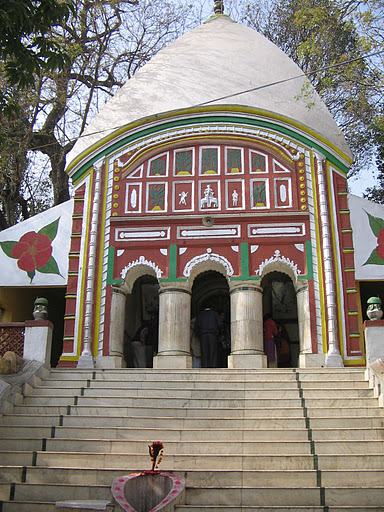
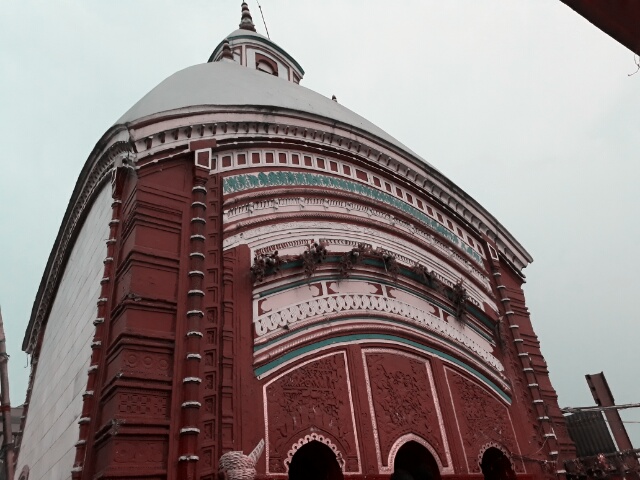
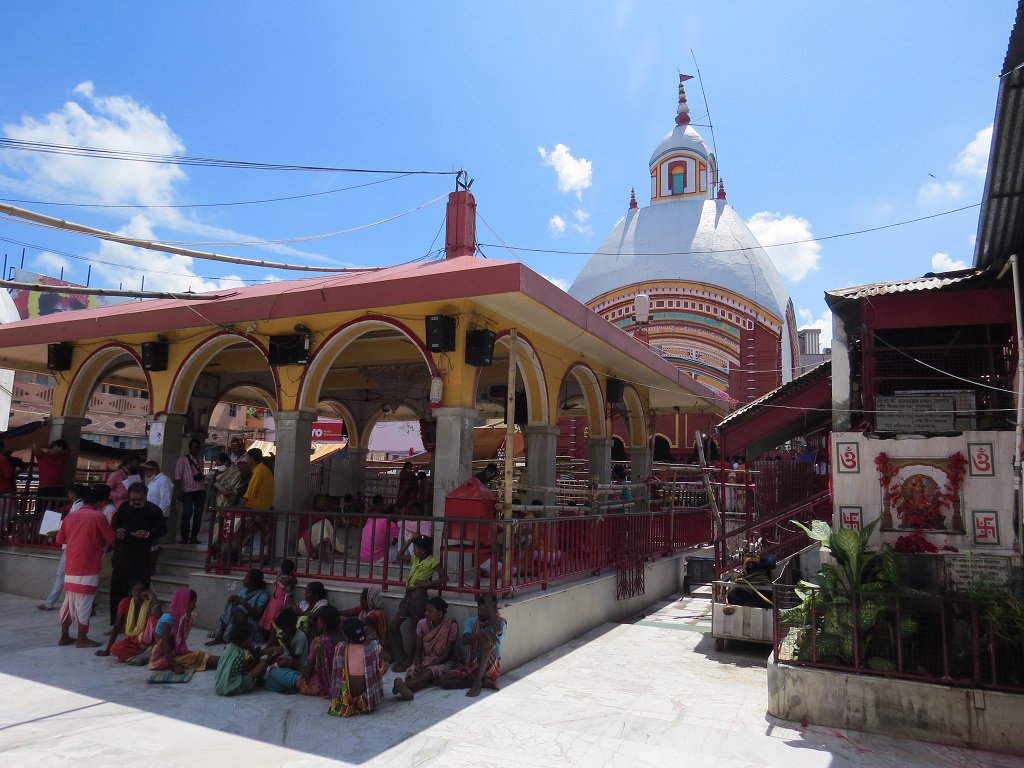
The temple showcases a harmonious blend of Hindu and Islamic architectural styles. It features a rectangular layout with a spacious courtyard surrounded by smaller shrines and pavilions. The temple is dominated by a tall shikhara or tower and a central dome adorned with intricate carvings and vibrant colours. The temple complex includes a sacred pond known as Kund, which holds immense religious significance and is used for various rituals. The temple walls feature intricate stone carvings depicting mythological scenes and divine beings. Its location near the holy confluence of the Ganges, Yamuna, and Saraswati rivers adds to its spiritual significance.

The temple remains open from 7 am to 8 pm. The festival of Navratri is celebrated with special prayers, and rituals. Bhajans or devotional songs are performed, creating an aura of reverence and devotion. During the Maha Kumbh Mela, held every 12 years, the temple sees a significant increase in visitors. The temple is famous among locals for mundan or hair tonsuring ceremonies. Devotees offer prayers and seek blessings, especially for family welfare, protection, and the resolution of personal hardships.

According to local lore, the last remnant of Sati’s body, the palanquin or doli, vanished at this spot – hence the name Alopi, meaning disappeared. Many locals consider Alopi Devi as their guardian deity, believing in her power to protect and bless. Some devotees believe that as the last part of Sati’s body fell here, it makes this temple the holiest among all Shakti Peethas.

The Alopi Devi Mandir, with its blend of myth, history, and living faith invites all who visit to partake in its timeless spiritual journey. The temple’s significance extends beyond its religious importance. It serves as a cultural cornerstone for Prayagraj’s residents, bridging centuries-old mythology with the present. Its unique form of worship, centered around an empty palanquin, offers a profound spiritual experience that sets it apart from other temples in India.

Vishalakshi Temple, Varanasi, Uttar Pradesh
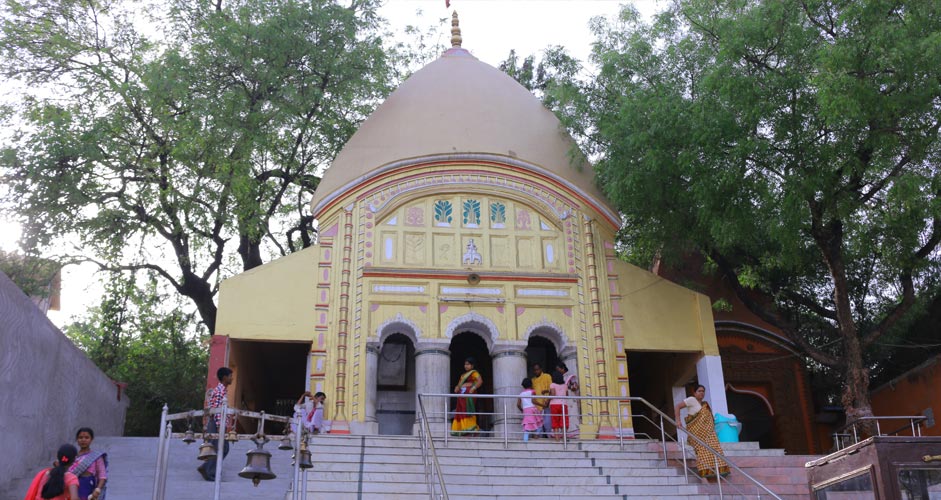
Located in Varanasi, one of India’s most ancient and spiritually significant cities, the Vishalakshi Temple is dedicated to Goddess Vishalakshi, meaning the one with large eyes. Archaeological evidence and ancient texts suggest that this location has been a place of worship for over two millennia. The temple’s importance is mentioned in several ancient Hindu texts, highlighting its longstanding significance in Hindu cosmology.

According to legend, the temple’s origins are tied to a pious devotee named Kaushalya. Her unwavering devotion to Lord Shiva and Goddess Parvati was so intense that it moved the divine couple to grant her a vision. Impressed by her dedication, Goddess Parvati, in her form as Vishalakshi, instructed Kaushalya to build a temple in her name. This temple was to be a place where devotees could seek blessings for wisdom, knowledge, and spiritual insight. It is believed that the earrings or eyes of Goddess Sati fell at this sacred spot.

The temple showcases a unique blend of architectural styles. While the main structure follows the North Indian temple architecture, the entrance features a South Indian-style gopuram or ornate tower. This fusion of styles reflects the temple’s pan-Indian significance. The temple is part of a group of six points in Varanasi that symbolise Shastanga or six-fold yoga. The other five points include the Vishwanath Temple, the holy River Ganges, the Kala Bhairava Temple, the Dhudiraj Temple, dedicated to Lord Ganesha, and the Dandapani temple, dedicated to Lord Shiva.

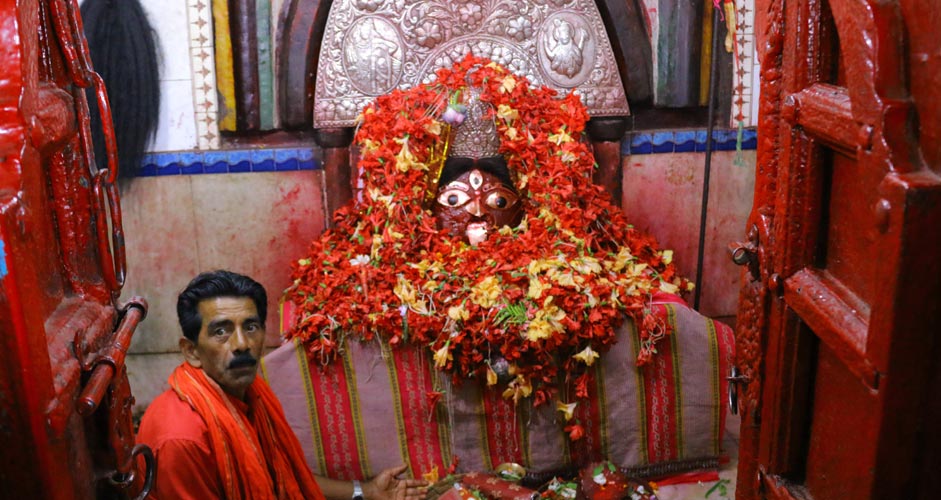
The main deity, Goddess Vishalakshi, is depicted with large, mesmerising eyes, symbolising her all-seeing nature and divine wisdom. The temple houses several sacred objects, including a sculpted horse and an alternative image of Goddess Vishalakshi, which are used during special processions. Inside the temple complex, there is a unique feature where nine statues representing the planetary deities from Vedic astrology are placed upon a platform. These sculptures are regularly worshipped, connecting the celestial with the earthly realm. The bhairav in this temple is worshipped as Kala Bhairaveshwar

The temple follows a strict schedule of daily worship rituals performed by specially trained priests. The morning begins with an aarti, where priests chant hymns and offer flowers, incense, and lamps to the goddess. Devotees traditionally take a bath in the holy waters of the Ganges before offering worship to Goddess Vishalakshi. Devotees bring various offerings to the goddess, including coconuts, sweets, and red saris, which are considered auspicious gifts. Unmarried girls often pray to find a suitable partner, childless couples seek blessings for progeny, and those facing misfortune pray for a change in their circumstances. Given its status as a Shakti Peetha, the temple is also associated with certain Tantric rituals, though these are typically performed by initiated practitioners.

Festivals celebrated at the Vishalakshi Temple include the nine-night Navaratri festival, celebrated twice a year, in spring and autumn which is one of the most important events at the temple. During this time, the temple is elaborately decorated, and special pujas are conducted for the nine forms of the goddess. The Kajali Tij festival, held on the third day of the Hindu month of Bhadrapada, usually in August, is particularly significant for women devotees while the harvest festival, Makar Sankranti that marks the sun’s transit into Capricorn, is celebrated with great fervour at the temple. Ganga Dussehra, celebrating the descent of the Ganges River to Earth, holds special significance due to the temple’s proximity to the river. While not specific to this temple, the celebration of Durga Puja sees increased activity and devotion at the Vishalakshi Temple, given its connection to the divine feminine.

Katyayani Temple, Vrindavan, Uttar Pradesh
Dedicated to Goddess Katyayani, the Katyayani Temple in the holy town of Vrindavan stands as a testament to the enduring power of faith and the rich tapestry of Hindu mythology. The spiritual significance of the temple predates its current structure, with references found in ancient Hindu texts. However, the present temple has a more recent history. It was constructed in 1923 by Yogiraj Swami Keshvanand Brahmachari, a devoted spiritual seeker. Swami Keshvanand spent nearly four decades traversing the Himalayas, meeting spiritual masters under the guidance of his guru, Shri Lahiri Mahasay. During his spiritual journey, he received a divine vision directing him to Vrindavan to fulfil an important spiritual mission – locating and establishing the Peethsthan or sacred site mentioned in the Puranas. The temple was consecrated on a full moon day of the Hindu month of Magh in 1923, which falls in February according to the Gregorian calendar. According to tradition, it is believed that the ringlets of the hair of Goddess Sati fell at this spot, making the temple a Shakti Peetha.

One of the most significant aspects of this temple is that it houses five separate deities representing five different sects or sampradayas of Hinduism. Each idol is worshipped according to its sampradaya’s specific methodology. The deities include Goddess Katyayani from the Shakta sampradaya, Lord Shiva from the Shaiva sampradaya, Lord Laxmi Narayan from the Vaishnava sampradaya, Lord Ganesha from the Ganapatya sampradaya, and Lord Surya from the Surya sampradaya. Additionally, Goddess Jagatdhatri Devi is also worshipped here.

The main idol of Goddess Katyayani is made of Ashtadhatu, an alloy of eight metals. This idol was installed after performing Sanatan Dharm rites by religious scholars from various parts of India, including Varanasi and Bengal. Within the temple, devotees also worship Uchawal Chandrahaas, the sacred sword of the Goddess. This unique aspect adds to the temple’s spiritual significance. The shakti is worshipped as Uma Devi while the bhairav is Bhuteshwar.

The temple showcases a unique blend of architectural styles. The exterior is made of white marble, while large pillars of black stone support the structure. This contrast creates a visually striking appearance. At the entrance to the main courtyard, two golden-colored lion statues stand guard. These lions represent the vahana or vehicle of Goddess Durga.

The temple follows a strict schedule of daily worship rituals performed by specially trained priests. The timings for these pujas are from 7 am to 11 am and between 5:30 to 8 pm. Priests chant the Durga Saptashati, also known as Chandi Path daily, invoking the blessings of the Goddess. The Shodashopachara is one of the most important rituals at the temple, involving sixteen different offerings made to the Goddess. These offerings include flowers, incense, lamps, and food items. Devotees perform Abhishekam, a ritual, which involves bathing the idol of Goddess Katyayani with sacred water, milk, honey, and other auspicious substances. This is believed to purify the idol and invoke the Goddess’s blessings. The recitation of sacred hymns, mantras, and prayers dedicated to Goddess Katyayani is an integral part of the worship here.

The Katyayani Shakti Peeth comes alive with numerous festivals throughout the year, attracting thousands of devotees from across India and beyond. The nine-night Navaratri festival, celebrated twice a year in spring and autumn, is one of the most important events at the temple. During Navaratri, the Durga puja is performed with the chanting of Shatchandi Path. Katyayani Vrat is a special observance dedicated to Goddess Katyayani, where devotees fast and offer prayers to her. The festival of colours, Holi, is celebrated here for five days, continuing a tradition that dates back to the time of Lord Krishna. Basant Panchami, the spring festival is celebrated with great devotion and is dedicated to Shri Chaitanya Mahaprabhu, a famous saint who played a significant role in reviving the spiritual essence of Vrindavan. Krishna Janmashtami marks the birth of Lord Krishna and is celebrated with great fervour. Devotees observe fasts and participate in midnight celebrations. Diwali is another important celebration at the Shakti Peeth.

Several stories and legends are associated with the temple. According to legend, the Gopis of Vrindavan worshipped Goddess Katyayani on the banks of the Yamuna River to receive her blessings and have Lord Krishna as their consort. It is said that the Goddess blessed them, and they attained the supreme state of devotion, performing the Maharaas or Krishna consciousness. In Vrindavan, it is said that the Gopis used to make a statue of Goddess Katyayani out of the sand from the banks of the Yamuna River. They would worship this statue and ask for Lord Krishna to be their husband. This practice is known as Katyayani-vrata and is remembered by devotees even today. There is a popular belief that Goddess Katyayani blesses young unmarried girls who pray to her. It is said that girls who offer prayers at the temple will be blessed with a good husband. The Shrimad Bhagwat Puran mentions that Lord Vishnu directed Yogmaya, his Shakti, to appear in Brij as the daughter of Nandbaba and Yashoda before He himself was to be born there as Krishna avatar for the establishment of Dharma or righteousness in this world.

The Katyayani Shakti Peeth stands as a testament to the enduring power of faith and the rich tapestry of Hindu mythology. As a Shakti Peetha that celebrates the divine feminine in its multiple forms, it continues to captivate the hearts and minds of devotees and scholars alike. The temple’s unique position within Vrindavan, its distinctive rituals, and its historical significance make it a crucial piece in understanding the spiritual landscape of India.

In our modern world, where the role of women and the feminine principle is being reevaluated and celebrated, the Katyayani Shakti Peeth offers a timeless perspective on the power and wisdom of the divine feminine. It reminds us of the importance of balance between masculine and feminine energies, both in spiritual practice and in everyday life.

Mumbai Memories: Mumbai’s Lifelines

Growing up in the 1980s and 1990s in Mumbai, we mostly took the BEST bus and the Mumbai train to school, college, or work.

The red BEST or Brihanmumbai Electric Supply and Transport Undertaking, along with Mumbai’s train lines, are the lifeline and heartbeat of the city. For any Mumbaikar, the memory of the city is incomplete without recalling the daily dramas and quiet moments lived out aboard these iconic buses.

Since its inception in 1873, originally as a horse-drawn tram service, BEST has evolved into one of India’s most extensive bus systems, ferrying millions through the city’s bustling arteries every day. With over 3,800 buses and more than 440 routes, the system stretches far beyond the city’s traditional limits, reaching into the far suburbs like Thane, Navi Mumbai, and Mira-Bhayandar. Whether you’re braving the monsoon or the peak summer heat, the sight of a red double-decker lurching through traffic is a sign of Mumbai’s indomitable spirit. Stepping into a BEST bus is to step into a true cross-section of Mumbai society. Amidst the constant jostle, you hear the familiar clang of coins in the conductor’s pouch as they dispense paper tickets. There’s a heritage to BEST that transcends function. The city even hosts a dedicated BEST Transport Museum at Anik depot, where you can find miniatures and memorabilia tracing the journey from electric trams to today’s modern fleet.

When I was in school, we used to take a school bus and then started walking to school as we grew older. I used to take the bus sometimes when coming or going to tuition, but this was rare. It was only when I started college that I became a regular bus commuter. Every bus had a driver who sat up front and one or two conductors. If it were a single-decker, there would be a single conductor, while a double-decker would have two conductors, one on each deck. These conductors were responsible for collecting fares, giving out tickets and maintaining the decorum of the bus. Even though I had a few buses that would take me to the bus stop nearest my college, I almost always took one particular bus number. College started at 7:30 am, and I would take the bus from my bus stop at 7 am. And because I always took that particular bus, a double-decker where I would always sit in the lower deck, the conductor became a fixture in my life, and I became recognisable to him. We would greet each other, and if I didn’t take the bus for a few days at a time, he would check on me the next time I took the bus. Because of the bus’s timing, it was popular with students as there were multiple schools and colleges on its route. Two stories come to mind about this conductor.

Both stories took place in a three-year time period, when I was doing my degree. In the first instance, I boarded the bus as usual and paid my fare and took my ticket. I don’t know how it is now, but in those days, it used to be a paper ticket with your stop punched. Sometime between taking the ticket and halfway to college, a ticket checker got into the bus and immediately went to the upper deck to check. I checked my bag for my ticket so I could show it to the checker and get down, and that’s when I realised I had dropped my ticket somewhere. I was frantic and started checking my bag, between my books and inside my wallet. I didn’t want to get caught by the ticket checker as the fine would be too much for a poor college student, not to mention the humiliation that went with it. The conductor saw me being agitated and came to ask him what had happened. I mentioned that I couldn’t find my ticket and that the ticket checker was going to come down anytime to check tickets. At that moment, the bus stopped at a scheduled stop and someone started to get down. Immediately, the conductor asked him for his ticket and passed it to me. The fare would be something similar, as this person apparently got in a couple of stops before me and got off two stops before mine. I was thankful to both the conductor and the passenger, and showed the ticket checker my ticket before alighting to go to college.

The second story was also in the same period. My sister had purchased a new watch and I wanted to wear it. After pleading and cajoling her, I finally got permission to wear it to college. I proudly wore it and boarded my bus. The watch was shaped like a bangle, and unknown to me, the clasp was not very secure. I got on the bus and sat in one of the seats that face sideways, close to the entrance of the bus, in the lower deck. The same conductor as the story above was on duty that day. After a few stops, I looked down and to my horror, the watch was missing! I started looking everywhere, below the seat, in my bag and even patted my clothes, but the watch was not to be found. I was almost in tears. I knew not only would my sister blame me for losing her new watch, and rightly so, but my parents would also not let it go. I would hear about this for years to come. Again, the conductor came to my rescue. After asking me what happened and learning about the watch, he got more information from me about how it looked. Then he made an announcement to the lower deck about my lost watch and got everyone to look for it beneath their seats and near them. The whole bus was busy for the next few minutes trying to locate it. Finally, someone found it close to the other end of the bus. It seemed that the watch fell down when I was sitting and got kicked inside the bus as other passengers got in and found seats. Again, I was so thankful to the conductor when I was handed my watch and was able to go to college in a much lighter mood..

I only started taking the train when I started my second job. I used to take a local to Andheri and then a bus to work and the reverse in the evening. Because I only went to the office three days a week (the other days, I used to go to our office in the city, in the opposite direction), I was never a regular, and so I don’t have stories to share.

For every Mumbaikar, the local train is more than transportation; it is the pulse of daily life, dictating schedules, shaping friendships, and weaving together countless stories along the city’s expansive rail corridors. Regular train commuters, especially those travelling long distances, have created communities and train friend is a Mumbai special friendship. Some train friendships have traversed the divide, and these train friends have not only become friends in real life, but in many instances, they have become relatives, having siblings, children or other relatives married to each other or their relatives.

Mumbai’s suburban railway, often lovingly called the “local,” is the oldest and busiest commuter rail system in India and among the world’s top in daily passenger volume, ferrying over 7.5million commuters every single day. First run in 1853, the system stretches across approximately 465km and is divided among six major lines: the Western, Central, Harbour, Trans-Harbour, Vasai Road–Roha, and the Nerul–Uran lines. It connects the heart of Mumbai to distant suburbs like Virar, Dahanu, Kalyan, Khopoli, and Panvel, truly earning the moniker “the city’s lifeline.”

The western line: runs from Churchgate in South Mumbai through posh neighbourhoods northwards, ending at Dahanu Road. This route is a lifeline for thousands who journey from the extended suburbs into the southern business districts each day. The central line begins at Chhatrapati Shivaji Maharaj Terminus (CSMT), branching out at Kalyan toward Kasara and Khopoli, capturing the hustle of commuters travelling to and from eastern and northeastern corridors. The harbour line, which is the one that stops at the station closest to my home, links CSMT to Panvel through Navi Mumbai; less crowded but vital for east-west connectivity, this line opens up the satellite city for daily business and education. The harbour line also has a branch line that connects the central and western lines, branching out after Wadala and moving to the western line at Mahim, and when I used it, it used to end at Andheri. Today, the western branch of the harbour line ends at Goregaon.

Locals run from before dawn with the first training rolling out at 4 am until late at night, with most lines’ last train running at 1 pm, and some services ending even later. The stations are the stages for daily dramas: the surge onto the platform as the train approaches, the precise choreography to catch a footboard, and the silent understanding to make space for one more commuter in the already-packed compartment.

Trains are designated “fast” or “slow,” with the former skipping minor stations to speed up long-distance travel, and the latter stopping at every halt, accommodating the needs of neighbourhoods, both big and small. Special ladies’ compartments offer safe passage for women, while luggage compartments are a godsend for vendors and small traders transporting goods across the city.

Each ride on a Mumbai local imprints memories, sights of the city whizzing past open windows, street vendors plying their trade at major junctions, or quiet philosophical moments watching the city transform in the monsoon. Rail maps stuck to station walls and painted on signboards become sacred: they are, to many, a navigational scripture. The fast local between Churchgate and Virar or the crisscrossing services out of CSMT are more than routes; they are lifelines, their rhythm marking the intervals of a Mumbai day.

What began with simple steam trains in the 19th century now operates as a massive, modern fleet of electrical multiple units (EMUs), seamlessly blending history with the scale demanded by a modern megacity. Indian Railways continues to advance, phasing out old rolling stock for modern, more efficient carriages and electrifying the entire network for speed and sustainability.

BEST buses don’t just move people, they move stories. For years, they have connected the city’s extremes, providing a democratic, affordable way to traverse the chaos and beauty that is Mumbai. It’s hard not to get nostalgic about the local. Even with the rise of metro lines and air-conditioned buses, the Mumbai train network remains unparalleled in its reach and spirit, a thread uniting millions in the great urban tapestry that is Mumbai.

Both the BEST buses and the local train network are more than functional necessities; they are an essential part of Mumbai’s memoryscape: resilient, chaotic, joyful, and eternally moving forward. So if you are ever in Mumbai, maybe you should take a trip in a BEST bus or a local, but be prepared for the chaos and the spirit of the city.

Adulting 101: How to Build and Maintain Healthy Relationships

Relationships are an integral part of human life. Whether they are friendships, romantic partnerships, family bonds, or professional connections, relationships significantly impact our happiness, mental health, and overall well-being. However, building and maintaining healthy relationships requires effort, understanding, and a commitment to mutual respect.

What is a healthy relationship? A healthy relationship fosters mutual respect, trust, communication, and support between individuals. It is characterised by a sense of balance where both parties feel valued and heard. Healthy relationships are not free from conflict but rather manage disagreements constructively without resorting to manipulation or control.

Key characteristics of healthy relationships include the following:

  • Trust: Trust forms the foundation of any strong relationship. It involves being honest with each other and having confidence in one another’s intentions.
  • Respect: Respect means valuing each other’s opinions, boundaries, and individuality.
  • Open communication: Healthy relationships thrive on honest and transparent communication. Both parties should feel comfortable expressing their thoughts and feelings without fear of judgment.
  • Support: A healthy relationship provides emotional support during both good times and bad.
  • Boundaries: Establishing and respecting boundaries ensures that both individuals feel safe and comfortable.
  • Equality: Power dynamics should be balanced in a healthy relationship; decisions should be made collaboratively rather than unilaterally.

Why are healthy relationships important?

  • Mental health benefits: Healthy relationships contribute to better mental health by reducing stress, anxiety, and feelings of loneliness. Being surrounded by supportive people can increase self-esteem and provide a sense of belonging.
  • Physical health benefits: Research has shown that strong social connections can lead to improved physical health outcomes, such as lower blood pressure, reduced risk of heart disease, and stronger immune function.
  • Personal growth: Healthy relationships encourage personal growth by providing constructive feedback and opportunities for self-improvement.
  • Enhanced communication skills: Engaging in healthy relationships helps individuals develop better communication skills that can be applied in various aspects of life.
  • Conflict resolution skills: Navigating challenges in healthy relationships teaches valuable conflict resolution skills that are essential for personal and professional success.

How can someone build healthy relationships? Building healthy relationships requires intentional effort and a willingness to invest time and energy into meaningful connections.

Develop self-awareness: Understanding yourself is the first step in building healthy relationships. Identify your needs and reflect on what you value in a relationship and what you need from others to feel supported. Recognise your strengths and acknowledge your strengths as well as areas where you can improve as a friend or partner. Set personal boundaries and define your limits regarding what behaviours you find acceptable or unacceptable.

Practice active listening: Active listening involves fully focusing on the speaker without interrupting or judging. Show empathy and try to understand the other person’s perspective by putting yourself in their shoes. Ask questions and clarify points if needed to ensure you understand what the other person is saying. Avoid distractions and give the speaker your undivided attention by putting away phones or other distractions.

Communicate openly: Clear communication is essential for building trust. Be honest and share your thoughts and feelings honestly while being mindful of how you express them. Use “I” statements by framing your concerns using “I” statements (e.g., “I feel upset when…”) rather than blaming the other person. Practice assertiveness and express your needs confidently without being aggressive or passive.

Show appreciation: Expressing gratitude strengthens relationships. Acknowledge efforts and let others know you appreciate their actions or support. Celebrate milestones by recognising important events or achievements in each other’s lives.

Build trust gradually: Trust takes time to develop but can be nurtured through consistent actions. Keep promises and follow through on commitments to demonstrate reliability. Be transparent and share information openly to build confidence in your intentions.

So how to maintain healthy relationships? Once established, maintaining healthy relationships requires ongoing effort. Prioritise quality time by spending quality time together, as it strengthens bonds. Schedule regular check-ins and make time for meaningful conversations about each other’s lives. Engage in shared activities and participate in activities you both enjoy to create positive memories. Respect boundaries, as respecting boundaries ensures that both individuals feel comfortable. Ask for consent and always seek permission before crossing personal boundaries. Avoid overstepping limits and be mindful not to push someone into situations they’re uncomfortable with.

Manage conflict constructively because disagreements are inevitable but can be resolved healthily. Stay calm and approach conflicts with a calm demeanor rather than reacting emotionally. Focus on solutions and work together to find solutions rather than dwelling on problems. Apologise when necessary and take responsibility for mistakes sincerely without making excuses. Support each other’s growth to encourage personal development within the relationship. Celebrate achievements and recognise accomplishments and milestones together. Provide constructive feedback and offer feedback that helps the other person grow without being overly critical. Adapt to change because relationships evolve; adapting ensures they remain strong. Be flexible and embrace changes in circumstances or dynamics within the relationship. Reassess goals together and periodically discuss shared goals or expectations as they evolve.

Tips for Building and Maintaining Healthy Relationships

Here are some additional tips for fostering strong connections:

  • Practice forgiveness and let go of grudges or resentment; forgiveness fosters healing within relationships.
  • Be present and focus on being fully present during interactions rather than multitasking or thinking ahead.
  • Celebrate differences and embrace diversity within relationships by appreciating differing viewpoints or experiences.
  • Seek help when needed. If challenges arise that seem insurmountable alone, consider seeking guidance from counselors or therapists specialising in relationship issues!
  • Practice self-care because taking care of yourself physically & emotionally ensures you bring your best self into every interaction.

Building & maintaining healthy relationships is an essential aspect of leading fulfilling lives. By fostering trust, practicing open communication, and respecting boundaries, young adults can cultivate meaningful connections that enrich their lives personally & professionally. Remember, it’s not about perfection but rather progress. With patience & dedication, you’ll find yourself surrounded by supportive individuals who uplift & inspire you every step along life’s journey!