Animal, Vegetable, Miracle: A Year of Food Life – Barbara Kingsolver
Author Barbara Kingsolver and her family abandoned the industrial-food pipeline to live a rural life—vowing that, for one year, they’d only buy food raised in their own neighborhood, grow it themselves, or learn to live without it.
Part memoir, part journalistic investigation, Animal, Vegetable, Miracle is an enthralling narrative that will open your eyes in a hundred new ways to an old truth: You are what you eat.
The ancient Greek poet Archilochus wrote a now-lost parable with the following moral: “The fox knows many things, but the hedgehog knows one big thing.” The general gist of the line is this: Some people see the details in everything they do, like the fox, while others are great at having one singular vision, like the hedgehog. This animal-centric adage is at the heart of a lesson in “On Grand Strategy,” an instruction manual for would-be leaders based on popular seminars by Yale professor John Lewis Gaddis. Taking a cue from a 1953 essay by British-American philosopher Isaiah Berlin, Gaddis discusses how great leaders and thinkers can be categorized as either hedgehogs or foxes. Berlin went so far as to say that this split is “one of the deepest differences [that] divide writers and thinkers, and, it may be, human beings in general.”
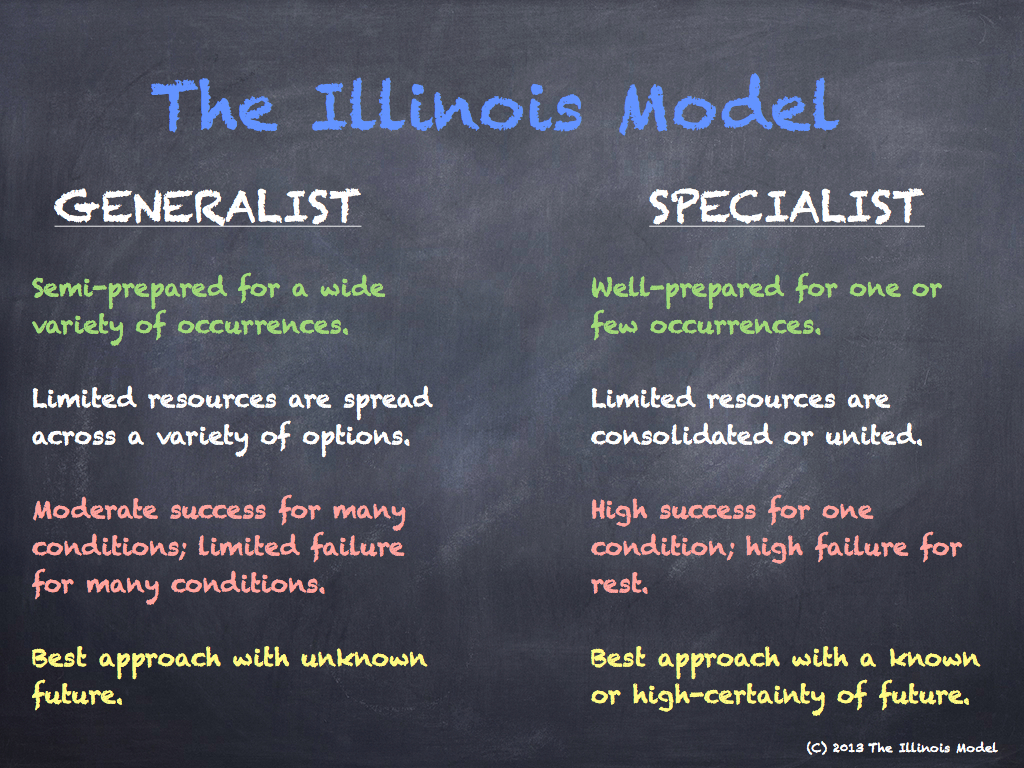
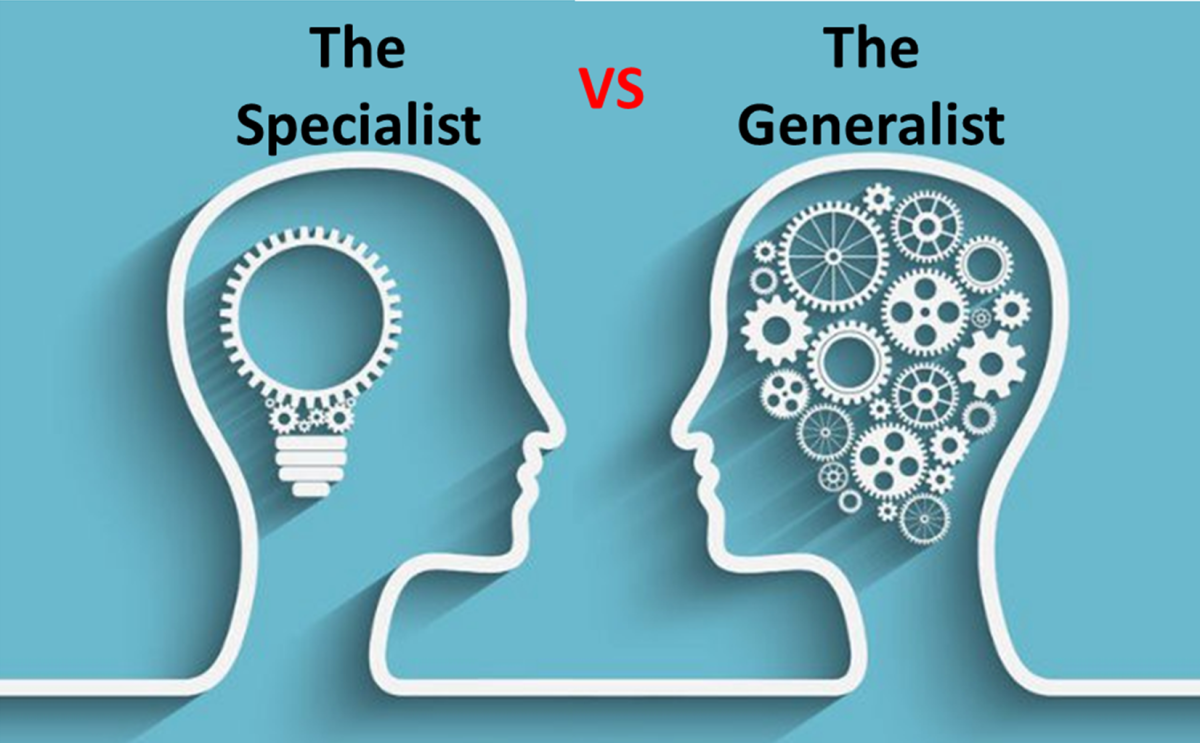
Typically, a generalist is someone who has a broad range of knowledge and skills across multiple fields, while a specialist is someone who has deep knowledge and expertise in a specific field or area. Generalists tend to have a wider range of job opportunities and can adapt to new situations and changing circumstances more easily than specialists. They also tend to have a better understanding of how different fields and disciplines are interconnected and can often see connections and opportunities that specialists might miss. Specialists, on the other hand, tend to have a more in-depth understanding of their field of expertise and can contribute more to projects and teams that require specialized knowledge and skills. They also tend to be more sought after and command higher salaries in their field of expertise. Generalists can understand and see connections between different subjects, while specialists can focus on and solve complex problems within their area of expertise. Generalists are often more adaptable and can work on a wider range of tasks, while specialists have a deeper understanding of their field and can contribute significantly to its advancement.
While a specialist systematically hones skills related to their domain, a generalist seeks to sharpen a wide range of related skills that will prove useful in multiple domains. The proliferation of startups and small businesses has surged the demand for generalists who come with a vast spectrum of knowledge and experience. However, when the requirement is for deep technical knowledge in critical fields, the skills of a specialist are much more marketable. When a company is looking at upscaling operations within its domain, the specialist is more progressive when it comes to creative ideas. Generalists are progressive when it comes to accepting a varied number of clients with different needs and expectations. Owing to their interpersonal skills and a broad-based learning curve, generalists can handle uncertainties efficiently. In terms of transferability, generalists fare better than specialists as their wide range of specialities is easily transferable to different domains. Specialists aren’t able to transfer their domain-related expertise to another field or even to another discipline within the same domain.
Both generalists and specialists have their own advantages and disadvantages, depending on the particular situation and the needs of the employer or organization. It’s also worth mentioning that, while some people may naturally lean towards being a generalist or a specialist, it is also possible to develop skills in both areas through continuous learning and development.
Specialists have expertise in their area of specialisation because they are focused on one domain, which attracts high-paying clients since subject-specific expertise gaps are more difficult to fill. The ability to undertake extensive targeted research and a quality understanding of the domain earn specialists attractive remuneration. Specialists are also more equipped to handle any new technological complexity in the field as they dedicate years to exploring the different facets of the domain. On the other hand, because they are focused on one area of expertise, the lack of diversity within the job profile hinders growth. A specialized portfolio has limited scope for independent expansion. With rapid technological advancements, specialists risk falling behind if they don’t update their skill sets frequently. Specialists usually perform within a narrower domain than generalists. As they dive deeper into their domain, the relevant working fields surrounding them gradually shrink.
Generalists cover several domains and envision the bigger picture as they combine multiple perspectives from different departments. A direct result of being open to a lot of unique challenges is acquiring strong critical thinking skills and this enables generalists to offer actionable insights into their areas of expertise. Their ability to explore various domains and a high multitasking quotient make generalists excel in leadership roles. A large number of skills arm generalists with the capacity to diversify their services which helps them swap career paths easily and give their clients a lot of alternatives to work with. But a lack of specific expertise in any domain puts them on a back foot as they aren’t that competent in niche projects. A high percentage of generalists work across multiple teams and tackle a host of responsibilities, especially if they are in leadership roles. This often leads to psychological burnout. Generalists are also easier to replace owing to their overlapping or vaguely defined work responsibilities and so these positions are prone to lower pay scales as compared to a specialist.
Whether it is better to be a generalist or a specialist depends on the individual’s goals, interests, and circumstances. For some careers, such as medicine or law, specialisation is required to achieve a high level of expertise and be successful in the field. In other fields, a generalist approach can be beneficial, as it allows individuals to have a wider range of skills and knowledge, making them more versatile and adaptable in the face of changing circumstances. In many cases, a combination of both generalist and specialist skills can be advantageous, allowing individuals to understand the broader context of their area of expertise and effectively communicate and apply their knowledge. Ultimately, the choice between being a generalist or a specialist is a personal one and should be based on individual strengths, interests, and career goals.
Some of the questions one needs to ask themselves are if one seeks a diverse breadth of knowledge or if one prefers deep research on any specific topic. Do they change their career perspective often and prefer taking time to find the niche they are interested in? Or have they already determined their career trajectory? One also needs to work out what kind of work ignites their interests and passions and if it requires them to hone different skills or demands specific subject-matter expertise. The ideal workforce of today is a carefully balanced group of specialised generalists who recognise their varied strengths but rely on others’ domain-specific expertise, and generalised specialists who are people with core competencies who also delve into other related areas.
Unbroken: A World War II Story of Survival, Resilience and Redemption – Laura Hillenbrand
On a May afternoon in 1943, an Army Air Forces bomber crashed into the Pacific Ocean and disappeared, leaving only a spray of debris and a slick of oil, gasoline, and blood. Then, on the ocean surface, a face appeared. It was that of a young lieutenant, the plane’s bombardier, who was struggling to a life raft and pulling himself aboard. So began one of the most extraordinary odysseys of the Second World War.
The lieutenant’s name was Louis Zamperini. In boyhood, he’d been a cunning and incorrigible delinquent, breaking into houses, brawling, and fleeing his home to ride the rails. As a teenager, he had channeled his defiance into running, discovering a prodigious talent that had carried him to the Berlin Olympics and within sight of the four-minute mile. But when war had come, the athlete had become an airman, embarking on a journey that led to his doomed flight, a tiny raft, and a drift into the unknown.
Ahead of Zamperini lay thousands of miles of open ocean, leaping sharks, a foundering raft, thirst and starvation, enemy aircraft, and, beyond, a trial even greater. Driven to the limits of endurance, Zamperini would answer desperation with ingenuity; suffering with hope, resolve, and humor; brutality with rebellion. His fate, whether triumph or tragedy, would be suspended on the fraying wire of his will.
Singapore’s budget came out earlier this week, on Valentine’s Day, and the theme for this year’s budget is aptly titled “Moving Forward in a New Era”. With Singapore entering a post-pandemic era amidst high inflation and increased nationalism, Singapore needs to continue exercising financial prudence while supporting Singaporeans. Among the various benefits to Singaporeans, this year includes the $3 billion top-up to the Assurance Package meant to help defray the rising costs of living and the upcoming GST hike in 2024. Benefits have also been given to families, especially young families and senior citizens.
This was BB’s last week of school! He had his project viva this week and was quite happy about how the project ended and how his viva was conducted. GG, on the other hand, still has a week to go with two more exams before she can put a full stop to her polytechnic journey.
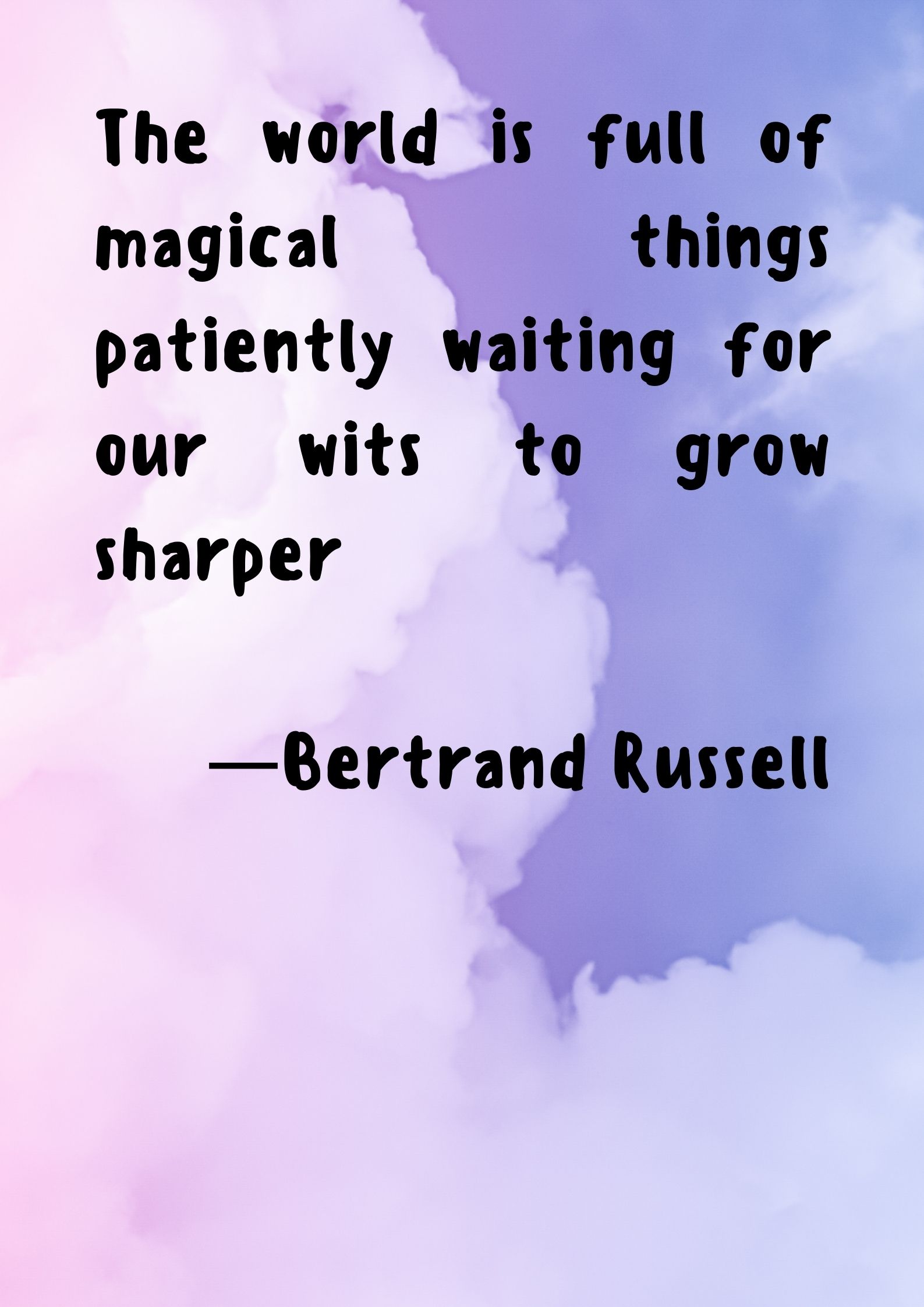
Today’s quote is from the British mathematician, philosopher, logician, and public intellectual, Bertrand Russell. Russell tells us that the world is full of magical things patiently waiting for our wits to grow sharper. What this means is that as we grow older and more mature, we learn to recognise the magic around us. Once we see the possibility of the wonderful things around us, we can’t unsee them and this is the magic of our world.







 Memories and Such