Today is the first working day of the month, so here are some positive thoughts to start the week right, but also the month right!


Today is the first working day of the month, so here are some positive thoughts to start the week right, but also the month right!
Welcome to the month of love, February! This week has been a very low key one for me, one because of the Lunar New Year holidays and also because I fell sick this week. BB brought home a cold from camp last week, infected GG and then it was my turn. Since I turned 50, it’s becoming harder to fight off sickness and infection. I guess its the double whammy of getting old and diabetes has made me more susceptible to infections. But I am a lot better now, so hopefully this coming week, I should be in full form.

Today’s quote is from the English playwright, William Shakespeare, who needs no introduction. The essence of the quote suggests that disappointment and suffering often stem from our expectations. When we expect certain outcomes—whether from people, situations, or life itself—we set ourselves up for potential heartache if reality does not align with our hopes. This idea is particularly relevant in relationships, careers, and personal aspirations. Expectations are natural; they provide motivation, direction, and a sense of purpose. However, when expectations become rigid or unrealistic, they can lead to unnecessary suffering. For example, if someone expects their friends or loved ones to always behave a certain way, they may feel deep disappointment when those expectations are not met. Similarly, in professional settings, expecting rapid success without setbacks can lead to frustration and self-doubt when obstacles arise. This quote encourages us to practice acceptance and flexibility rather than rigid expectations. Instead of expecting life to unfold in a specific way, we can focus on appreciating the present moment and adapting to challenges as they come. By doing so, we reduce the likelihood of unnecessary heartache and cultivate a mindset of gratitude and resilience.
A practical way to apply this wisdom is through **mindfulness**—learning to let go of attachments to outcomes and embracing uncertainty. When we release the need for things to happen in a certain way, we open ourselves to new possibilities and experiences. Rather than being heartbroken over what didn’t happen, we can find joy in what is. In conclusion, while hope and ambition are important, attaching happiness solely to expectations can lead to heartbreak. Instead, by embracing life’s uncertainties, we allow ourselves to grow, learn, and experience genuine contentment.
BB has been home this week, going out for some company events for a couple of days. I hope he enjoyed this break and will go back to camp tonight. GG is super busy with school, assignments, and projects, and even on days she is at home, I barely see her outside of coming out of her room to replenish her water bottle or for meals. Sometimes I need to force her to take a break, but I guess since she is old enough to know better now, I mostly just let her be.
That’s all from me this week. Stay positive, keep smiling, and enjoy February!
Never Saw Me Coming: How I Outsmarted the FBI and the Entire Banking System—and Pocketed $40 Million – Tanya Smith

Tanya Smith fancied herself a folk hero, a kind of Robin Hood, using her powers of persuasion to buck the system and help the poor and needy.
It started innocently enough, with calls to celebrities’ houses with her teenage twin sister. Soon, Tanya realised she could convince utility companies to amend the balances of her friends, relatives and neighbours, clearing their overdue electricity bills with a single phone call. Eventually, as she tested the limits and realized she could get past any gatekeeper, she started to want the actual money herself.
By the time she was 18, Tanya had ‘confiscated’ some $40 million in cash and commodities from US banks, using hacked wire transfers. It didn’t take long before the FBI was on her tail. But when interviewing her, they made clear that they were using her to get to the person actually running things – clearly, she wasn’t smart enough to do this on her own (Black people she was told, rob people, they don’t hack computers).
Thus began a cat and mouse game with the authorities that would drive her to unthinkable limits, breaking the hearts of her parents, putting Tanya’s life in jeopardy, and costing her custody of two children before finally sending her to Federal prison (where she escaped twice) with the longest sentence ever given for a white-collar crime.
In the spirit of true crime narratives like Catch Me If You Can, Molly’s Game, and Ben Mezrich’s Bringing Down the House, Never Saw Me Coming is a gripping caper, but it’s also the deeply personal journey of a young Black woman finding her way in a world that underestimated her brilliance.
Continuing our tour of Kathmandu…
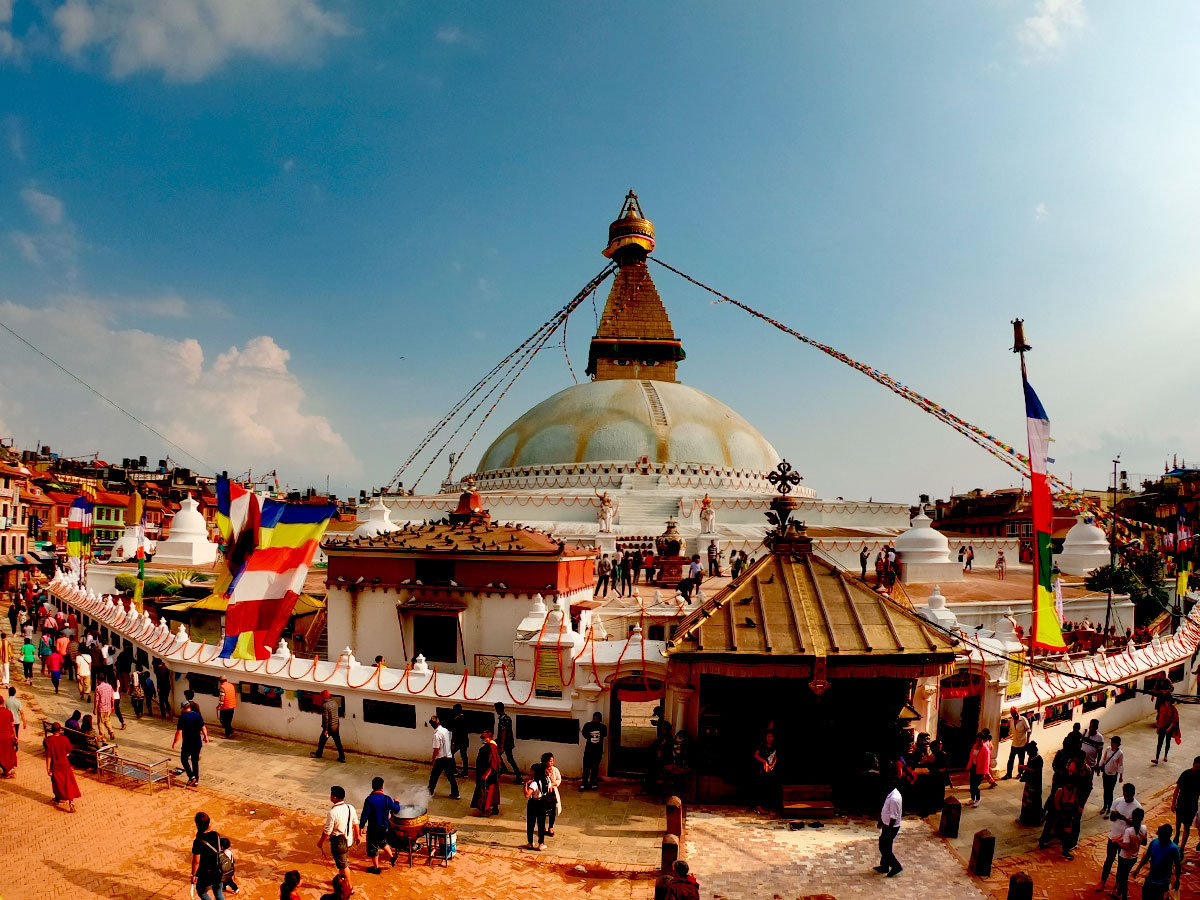
Boudhanath or the Khasa Chaitya, is one of the holiest Buddhist sites in Nepal, and along with the Swayambhunath, is a very popular tourist site. Known as Khāsti by Newars and as Bauddha or Bodhnāth by speakers of Nepali, it lies about 11 km from the centre and northeastern outskirts of Kathmandu. The stupa’s massive mandala makes it one of the largest spherical stupas in Nepal, and the site became a UNESCO World Heritage Site in 1979.
The base of the stupa has 108 small depictions of the Dhyani Buddha Amitabha. It is surrounded with a brick wall with 147 niches, each with four or five prayer wheels engraved with the mantra, Om mani padme hum. At the northern entrance where visitors must pass is a shrine dedicated to Ajima, the goddess of smallpox. Every year the stupa attracts many Tibetan Buddhist pilgrims who perform full body prostrations in the inner lower enclosure, walk around the stupa with prayer wheels, chant, and pray. Thousands of prayer flags are hoisted up from the top of the stupa downwards and dot the perimeter of the complex. The influx of many Tibetan refugees from China has seen the construction of over 50 Tibetan gompas or monasteries around Boudhanath.
Swayambhunath is a Buddhist stupa atop a hillock known as Semgu Hill, in the northwestern part of the city. This is among the oldest religious sites in Nepal. Although the site is considered Buddhist, it is revered by both Buddhists and Hindus. The stupa consists of a dome at the base; above the dome, there is a cubic structure with the eyes of Buddha looking in all four directions. There are pentagonal torans above each of the four sides, with statues engraved on them. Behind and above the torana there are thirteen tiers. Above all the tiers, there is a small space above which lies a gajur. If one climbs the 365 steps to reach the top, they are rewarded with picturesque, panoramic views of Kathmandu.
It is written in the Swayambhu Purana that the entire Kathmandu Valley surrounding the temple used to be filled with a lake which attracted large groups of masters and saints. The Buddha Vipassana was one such saint who visited the lake and threw a lotus seed into the waters. From this seed grew a large and beautiful lotus, in the centre of which appeared a stupa that had risen by itself. Hence the place acquired the name, Swayambhunath, which means the ‘self-existent one’ or ‘self-created’. The Tibetan name for the area stands for sublime trees because of the tree varieties found here.
The temple has a nickname, the Monkey Temple, which has an interesting backstory to it. It is believed that Manjushri, who was the Bodhisattva of Wisdom and Learning, was brought up on the hillock on which the temple stands today. He is said to have grown his hair long, thus inviting head lice to it. Each of these head lice is believed to have transformed into a different monkey, all of which live near the temple at present.
The Swayambhunath Temple has a structure which is a storehouse of symbols. There are statues of the two lions which stand as guards at the entrance of the temple. The stupa comprises of a large, hemispherical dome at the base, which represents the entire world. Statues of the Buddha adorn the bottom of this dome, and prayer wheels, engraved with the chant “Om Mani Padme Hum”, surround the base. At the top of the stairs inside is a vast, iconic lightning bolt, called the Vajra, which is planted on top of a smooth copper base, It represents the dharmadhatu and is in the form of a mandala. Above it is a cubical structure with the eyes of the Lord Buddha painted in all four directions. These eyes symbolise compassion and wisdom. Above each pair of eyes is the third eye of the Buddha, which is said to emit cosmic rays when he preaches. Although it cannot summon the creatures belonging to the lower realms, the third eye relieves their pain and suffering when the Buddha preaches. Drawn like a nose in between the two eyes, is a curly symbol which is similar to a question mark in its appearance. This figure is the Nepali symbol of the numero uno, which is symbolic of the unity of all things on this earth and also signifies the sole way to achieve moksha through the teachings of the Buddha.
On all four sides are engraved the figures of the five Buddhas, known as the Pancha Buddhas, which represents the Buddha in Tantrayana in a metaphorical manner. The Pancha Buddhas engraved on the four sides of the cubical structure are – Vairochana, who is the master of the temple and occupies its core, Ratna Sambhava, who symbolises the cosmic element of sensation and sits facing the south, Amoghsiddhi, who faces north and is representative of the cosmic element of confirmation, Akshobhya, who sits facing the east and signifies consciousness, and Amitabha, representing the cosmic element of name while facing the west.
The pentagonal Toran, with figurines carved in them, are present on top of each of the four sides. Proceeding upwards from the Toran are thirteen tiers. Each tier is representative of each stage of nirvana. It signifies the thirteen steps of spiritual realisation that every sentient being has to go through to achieve enlightenment. The small space above the tiers, called Gajur, enhances the beauty of the stupa. Finally, the fluttering prayer flags believed to carry the prayers of the devotees to heaven, wrap up the beauty of the structure magnificently. Guides can be hired for NPR 100. Entry fees for Nepali citizens is free while SAARC nationals pay NPR 50 and foreigners need to pay NPR 200.
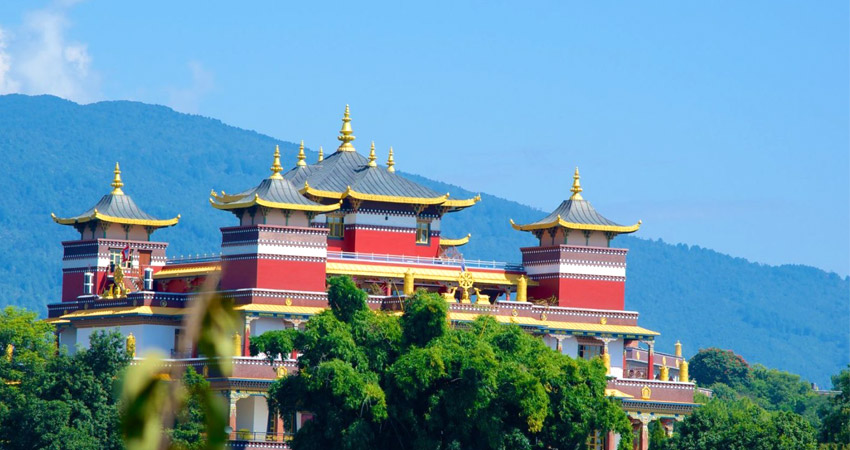
Located on the picturesque Kopan Hills, a 20-minute drive from the city centre on the fringes of Kathmandu, Kopan Monastery is a stunning Tibetan Buddhist monastery established between the late 1960s and early 1970s. One can explore the picturesque and tranquil monastery for a few hours, do a retreat, or join one of the courses. The monastery campus is open to all. The monastery is a well-known tourist attraction and draws people who are interested in learning Tibetan Mahayana Buddhism. One can choose to enroll in a short-term or seven-day course to get a gist of this ancient way of living. The facilities are humble but ensure that everyone leaves feeling calm and composed. They have a cafe where tourists can have a simple and wholesome vegetarian meal before taking a nice long stroll in the monastery gardens. Everyone is welcome to witness the peace, even if it is just for an hour.
Kopan Monastery was established by Thubten Yeshe and Thubten Zopa Rinpoche who were the founders of the Foundation of the Preservation of the Mahayana Tradition. In 1969, they bought a piece of land from a royal astrologer in Nepal and around 1971, opened it as a monastery to teach Mahayana Buddhism to people from all over the world. The courses include the teachings of Buddha Shakyamuni, regular guided meditations, formal and informal discussions and a strict vegetarian diet. In the beginning, there were only 25 monks, but as of today, the monastery is home to over 350 people including the monks, the teachers, lamas and the worker staff. In 1981, two nuns joined the monastery and marked a new beginning in its history. Students practice the teachings of Lord Buddha and Lama Tsong Khapa who is the founder of Gelug lineage. The female students now live in the Khachoe Ghakyil Ling Nunnery which is located a little ahead of the Kopan Monastery.
Other than Buddhist monastic education, the monastery also conducts several Monastic events. The Losar or Tibetan New Year, Monlam or Great Prayer Festival, Tsip Shag or students progressing to a higher class, Sukkor Pooja & Rigjung Debate or the completion of beginner level of study, Yarne and Gaya or the observance of the annual Rains Retreat, Ganden Ngamchoe, a day dedicated to Lama Tsong Khapa and other special days of the Buddha are observed and celebrated with great devotion. The monastery is open between 8 am and 5 pm daily and doesn’t allow visitors between 11 November and 20 December.
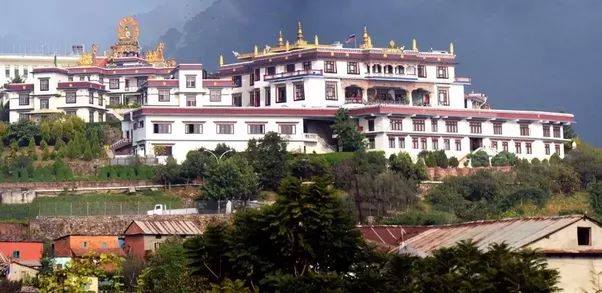
White Monastery or Seto Gomba, is also known as Amitabha Monastery and is located amidst vivid terrain and lush green landscape. This makes sunsets and sunrises a treat to watch. Visitors can observe the whole of the Kathmandu Valley from this place. The soothing atmosphere draws most travellers wanting to soak up some tranquillity after exploring the bustling city of Kathmandu. Tourists can either hire cabs or rent bikes to reach the hilltop; however, some also prefer hiking up the mountain to make their journey even more interesting. This part of the climb is about 1500 m above sea level. There’s a small fee of NPR 40 that needs to be paid at the gate which is guarded by five idols of Gautama Buddha. Locals believe that these statues guard the Valley of Kathmandu. There is parking space available around the gate and visitors need to walk through the spacious pathway to explore the monastery. Entry to the monastery is allowed only on Saturdays for visitors.
Located in the heart of Kathmandu, the Kathesimbhu Stupa is famous for being the copy of the Swayanbhunath Temple. The courtyard, also called the Swayambhunath Complex, is quite a surprise when tourists find it while exploring the region. It comprises of a stunningly grand 16th-century stupa installed in between smaller stupas. The entrance is marked by a concrete gate, and there are no compound walls to the attraction.
The stunning Kathesimbhu Stupa at the centre has a white dome built on a pedestal with a shikhara kind of a structure on the top in gold. The topmost part has something that resembles tassels and is adorned with strings of prayer flags tied from the buildings that surround the dome to the top centre of the stupa. The smaller stupas have beautiful carvings of Gautama Buddha sitting in a meditative posture. There are two temples at the square, one of which is dedicated to the Goddess of smallpox, Hariti while the other is the Drubgon Jangchup Choeling Monastery.
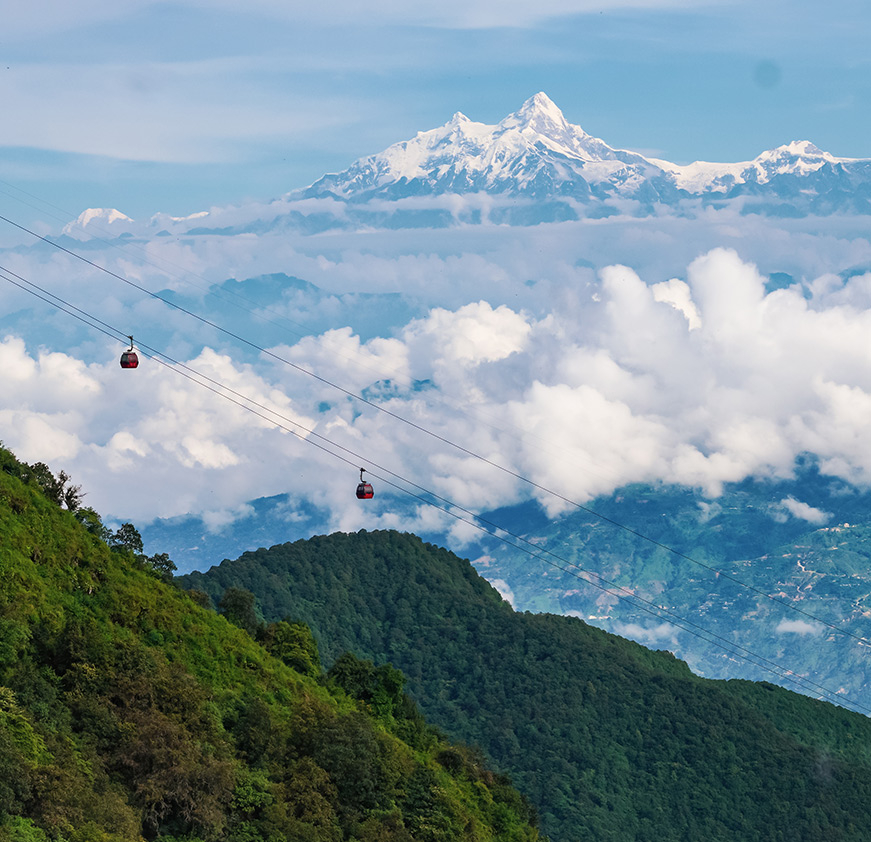
Located in the south-west of the capital city of Kathmandu, Chandragiri Hill is one of Nepal’s most loved day-trip destinations. The main destination of Chandragiri Hill is the mountaintop, from where spectacular views of the great Himalayan mountain ranges can be seen. The foothills of Chandragiri Hills, where the ticket counter for the cable car and refreshment facilities are present, are located in Thankot, a town around an hour’s drive away from Kathmandu.
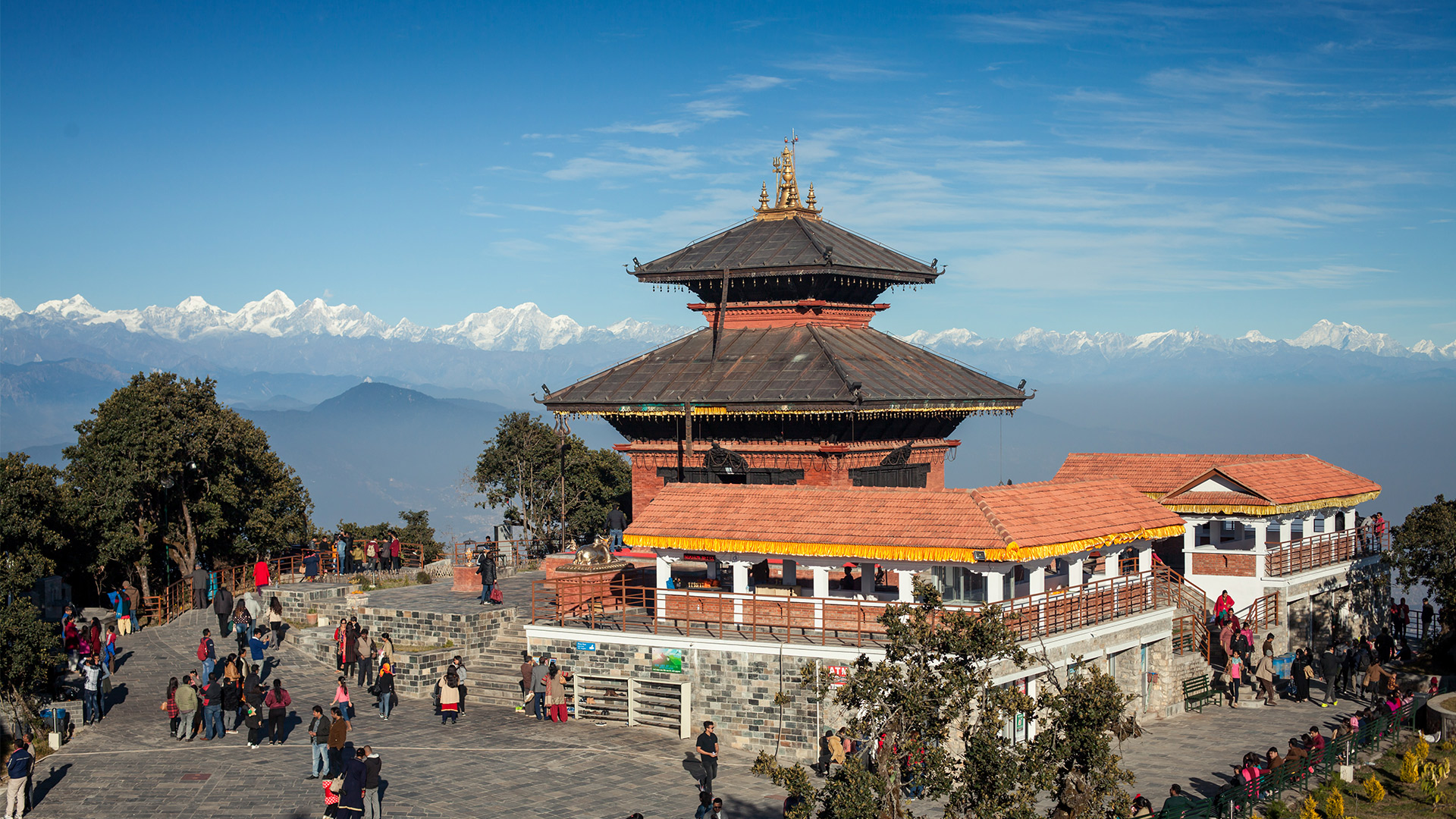
The Bhaleshwar Mahadev Temple stands on Chandragiri Hill. It is said that when Shiva’s consort Sati took her life by jumping into the fire in protest of her father insulting Shiva, the God of destruction carried her corpse all around the world in grief, and the forehead part of the goddess fell right here atop Chandragiri Hill. The temple features two levels in the typical pagoda-influenced Nepali architecture, wooden grid windows, and wall carvings of different gods and goddesses. At the porch of the temple, Shiva’s loyal servant and companion, Nandi Bull, sits.
Outside the temple, one can find a towering statue of King Prithvi Narayan Shah standing against the white mountain peaks in the distance. Legend says that Prithvi Narayan Shah took the first glance of Kathmandu valley from Chandragiri Hill as well before conquering, just like the last Malla king did before having to leave it behind. He had then meditated on the hilltop and got blessings of Bhaleshwar Mahadev for his devotion, which allowed him to annex the Kathmandu Valley. The statue stands with a sword in hand and garland around the neck.
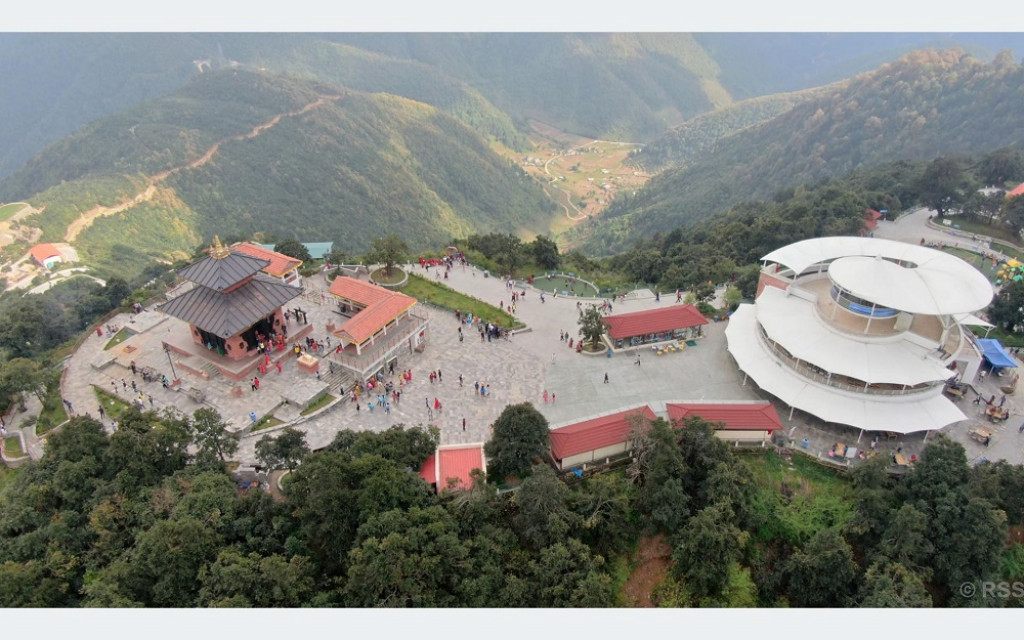
The entire stretch of these mountains ranges is the first thing you will see once you land on the hilltop of Chandragiri Hill. From the west, there is the mighty Annapurna Circuit, then only a gap away Nepal’s favourite Manaslu Himal. Towards the north, the magnificent Ganesh Himal spreads its peaks, and on the east, Langtang Himal Range extends to Gaurishankar Himal in a long stretch. If one is in luck with a clear sky and have a good eye, they might sight the peak of Mount Everest in the distance.
Folklore says that when King Ranajit Malla had to leave his kingdom after being defeated by the Gorkhas, he had wept at the Chandragiri hilltop looking down at his beloved empire one last time. When Prithvi Narayan Shah unified the country and made it the Kingdom of Nepal, he used Chandragiri Hill to be one of the four trade passes. Traders during the olden times would cross Chandragiri and continue further south to head towards the Indian plains.
The old trade routes are replaced now with the Tribhuvan Highway, and Chandragiri hilltop is a major tourist attraction, with an excellent combination of natural beauty and cultural significance. The journey to the summit itself is utmost rewarding with the best way to reach the top of Chandragiri Hill via the cable car. The cable car journey takes about 10 minutes and starts from the foot of the mountain near Thankot and goes uphill for around 2.5 km. The top of the hill is 2500 m above sea level. Ticket prices for a one way ride are NPR 415 for Nepali visitors, INR 415 for SAARC country visitors, UDD 9 for Chinese visitors and USD 13 for all others. For a two way trip, it will cost Nepali visitors NPR 700, SAARC nationals, INR 700, Chinese nationals USD 15 and all others USD 22.
Phulchowki is the highest hill located in the Kathmandu Valley at 2791 m and is known for its hikes. The mountain is covered by a natural garden full of beautiful wild roses, yellow jasmine, iris and other native flowers. It takes a few hours to reach the top and return and is, therefore, much advisable to those who are travelling on a time crunch. The climb through the rough terrain covered with dense forests will be worth it after one reaches the top and gets to see the breathtaking view of the valley.
One needs to travel for about 40 minutes from the city centre to reach the base where the hike begins. The slopes are pretty steep at certain points but are full of scenic views. One needs to climb about 9100 feet to reach the hilltop, but once there, they get to witness the stunning view of the Kathmandu Valley covered with dense forests and the mighty River Bagmati gushing through it.
The National Botanical Garden also lies on the route where hikers can see a variety of regional flora, including some rare species. The dense forestation makes the environment suitable for several bird species, making it a perfect attraction for bird watching. The region is also a natural source of iron ore deposits. As one explores the area, they would see rocks in a bluish-purple colour denoting the iron-rich sediments.
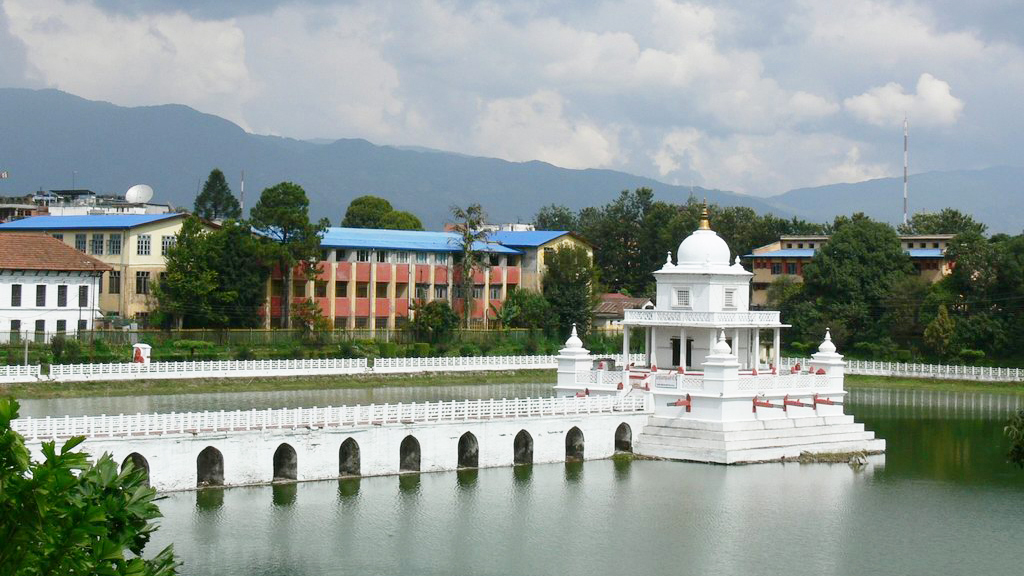
Ranipokhari or Queen’s Pond is a historic artificial pond nestled in the heart of Kathmandu. It was built by King Pratap Malla in 1670 for his beloved queen after she lost her son and could not recover from her loss. A large stone statue of an elephant in the south signifies the image of Pratap Malla and his two sons. The Balgopaleshwor Temple stands still inside the temple above the pond. Rani Pokhari is opened once a year during the final day of Tihar, Bhai Tika, and the Chhath festival. The world’s largest Chhath takes place every year in Ranipokhari. The pond is one of Kathmandu’s most famous landmarks and is known for its religious and aesthetic significance.
Kaiser Library, or Keshar Library, is located in Kathmandu’s Kaiser Mahal and contains over 45,000 books from the personal collection of Field Marshal Kaiser Shumsher Rana. It was established in 1969 and has a wide range of books covering subjects including history, law, art, religion, and philosophy. It was a famous tourist attraction, but after Nepal was struck by an earthquake in 2015, the library took a major hit. Although the ground floor has been restored and opened to the public, the grandeur of the place is more or less lost. One may still visit to check out the collection of books and artifacts that were recovered and restored.
The library originally had gorgeous wooden furniture antique decor with mirrors, portraits, statues, taxidermied animals and weapons on display. It had two floors with huge windows to let enough light and air come in. The seating was well planned with dark wood tables and chairs, and all the books were stacked beautifully in wooden racks. What remains now is just the ground floor with the recovered collection stacked haphazardly. There is very little space for readers to sit down and read one of the works of literature, but visitors can borrow some books from the library. The recovered collection has some rare books, first editions and some about a thousand year old. Outside the library is an enchanting garden with fountains, verandas, pavilions, a lotus pool and birdhouses which quite resemble the Edwardian Gardens. The library does not have any entry fees, and is open from 10 am to 4 pm from Sundays to Thursdays and from 10 am to 3 pm on Fridays. It is closed on Saturdays and public holidays.
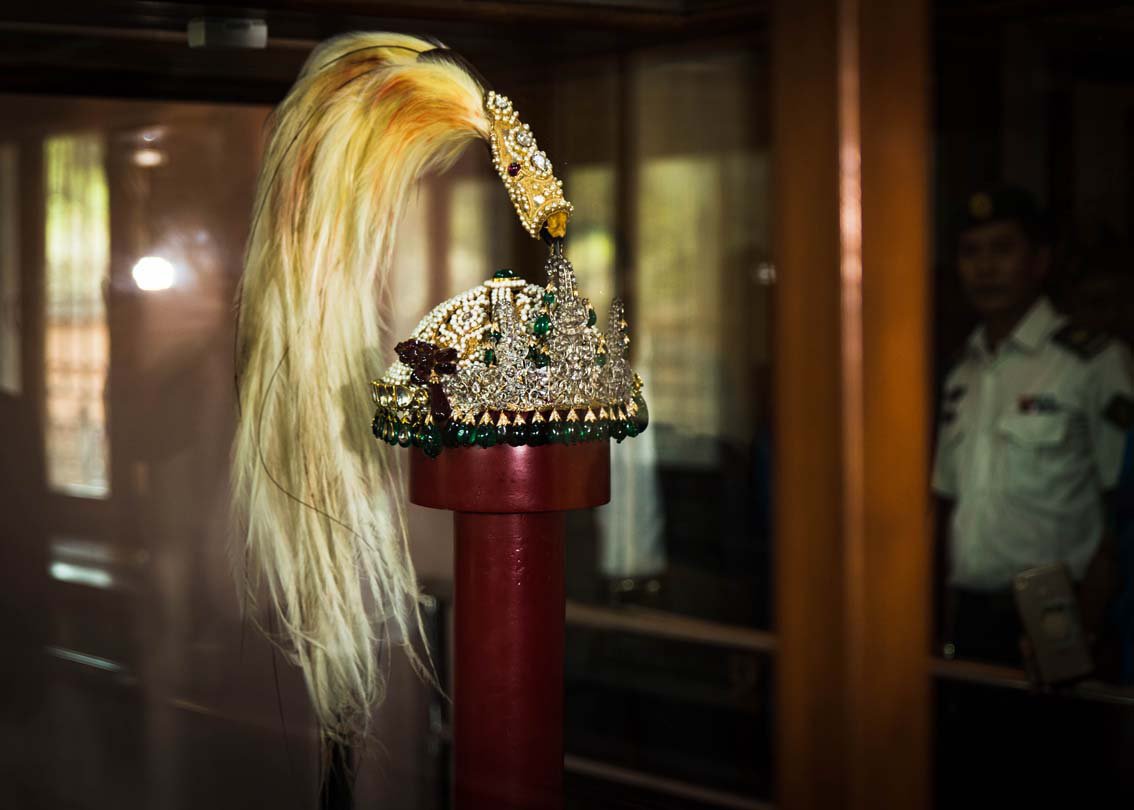
Located to the east of the famed Kaiser Mahal near Thamel, the Narayanhiti Palace Museum is a former royal palace that was home to the monarchs of Nepal. It is historically important because of the Royal Family Assassination of 2001. The stunning museum showcases the old furniture, art pieces, and ornaments of the royal family and their lthat avish lifestyle once adorning the durbar or main hall of the exquisite palace. The name Narayanhiti is a blend of two words: Narayan signifies the Hindu god Lord Vishnu, and Hiti translates to water spout. The name is particularly significant because of the temple of Lord Vishnu, which is situated right opposite the palace complex. A water spout does adorn the eastern side of the main entrance, thus adding further significance to it.
The Narayanhiti Palace witnessed what is popularly referred to as the greatest tragedy of Nepal. On 1st June, 2001, King Birendra, along with his wife Queen Aishwarya and their family members were slain in a massacre by the Monarch’s son, Prince Dipendra. After fatally injuring his family members, Dipendra shot himself in the head and was declared king while he was in a coma. He breathed his last three days later, after which, Gyanendra, his uncle, ascended the throne. Even though the mystery behind the massacre was not unveiled, it is widely believed that Dipendra assassinated his family because they opposed his marriage to Devyani Rana. In 2008, after the declaration of Nepal as a democratic and secular state, King Gyanendra was given only two weeks to vacate the palace so that the then Prime Minister Pushpa Kamal Dahal could take over the country. Narayanhiti Palace was turned into a museum open to the general public from 26th February, 2009.
Narayanhiti Palace is spread across 3794 sq m and is divided into three sections: the private wing, the guest wing, and the state wing. Built in the late Victorian style of architecture, the interior of the palace is home to 52 rooms which are collectively called Sadan, and are named after the districts of the country. Referred to as the Kaski Sadan after the Kaski district, the Reception Hall is adorned with two life-sized stuffed Royal Bengal Tigers which appear to be in their charging postures. The wall beside the staircase holds life-size portraits of the monarchs, each of them painted by Amar Chitrakar. Housed behind the beautiful Gaurishankar Gate, the Kaski Sadan is where the Shah Monarchs addressed the politicians in official matters.
The Throne Room of the Narayanhiti Palace referred to as the Gorkha Baithak, is the core of the palatial complex. This magnificent room is built upon the Hindu temple style of architecture, which includes a colossal 48 feet chandelier hung from a 60 feet high ceiling which resembles a Pagoda and is held by four pillars, each representative of the Naga. The room is ornate with gaudy idols of the Hindu gods Ashta Bhairava and Ashta Matrikas. It is beneath this ceiling where rulers announced their royal proclamations. Situated to the right of the Throne Room is the Dolpa Sadan, which was solely used for the guests of the royal family who were not invited but were allowed to view the proceedings of the Throne Room via a one-way mirror.
Narayanhiti Palace is closed on Tuesdays and on other days is open from 11 am to 3 pm while timings may differ on Wednesdays. Entry fees are NPR 100 for Nepalis, NPR 20 for students, NPR 250 for SAARC nationals and NPR 500 for other foreigners. Cameras and bags are not allowed inside but lockers are available.
The War Below: Lithium, Copper, and the Global Battle to Power Our Lives – Ernest Scheyder
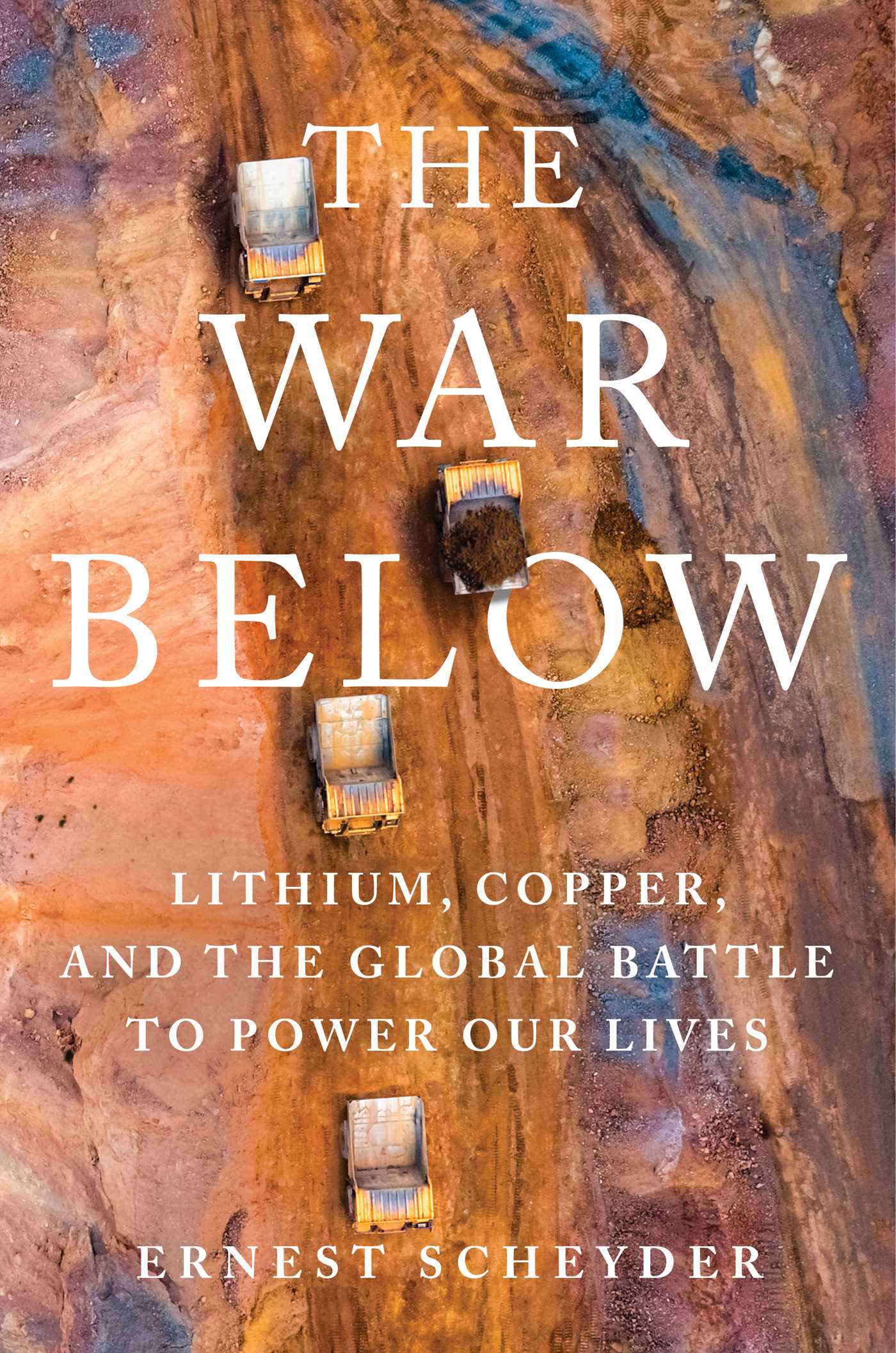
Tough choices loom if the world wants to go green. The United States and other countries must decide where and how to procure the materials that make our renewable energy economy possible. To build electric vehicles, solar panels, cell phones, and millions of other devices means the world must dig more mines to extract lithium, copper, cobalt, rare earths, and nickel. But mines are deeply unpopular, even as they have a role to play in fighting climate change. These tensions have sparked a worldwide reckoning over the sourcing of these critical minerals, and no one understands the complexities of these issues better than Ernest Scheyder, whose exclusive access has allowed him to report from the front lines on the key players in this global battle to power our future.
This is not a story of tree-hugging activists, but rather of industry titans, scientists, and policymakers jostling over how best to save the planet. Scheyder explores how a proposed lithium mine in Nevada would help global automakers slash their dependance on fossil fuels, but developing that mine could cause the extinction of a flower found nowhere else on the planet. A hedge fund manager’s attempt to resuscitate rare earths mining in California relies on Chinese expertise, exposing the paradox in Washington’s quest for minerals independence. The fight to end child labor in Africa’s mining sector is a key reason, supporters contend, to dig out a vast reserve of cobalt and nickel under Minnesota’s vulnerable wetlands. An international mining conglomerate’s plan to extract copper for electric vehicles deep beneath Arizona’s desert would destroy a Native American holy site, fueling tough questions about what matters more.
In The War Below , Scheyder crafts a business story that matters to everyone. If China continues to dominate production of these critical minerals, it will have a profound impact on the geopolitical order. Beyond China, countries such as Bolivia, Indonesia, and the Democratic Republic of the Congo aim to wield their vast reserves of key minerals. There are no easy answers when it comes to energy. Scheyder paints a powerfully honest and nuanced picture of what is needed to fight climate change and secure energy independence, revealing how America and the rest of the world’s hunt for the “new oil” directly affects us all.