According to Jamaican singer, songwriter, and cultural icon, Bob Marley’s quote reflects a deep insight into the nature of contentment and fulfillment. Marley is saying that true success isn’t measured by competing with others or chasing society’s version of success. Often, we’re so focused on “winning” externally—whether that’s in career, wealth, or status—that we lose touch with what actually brings us peace and happiness. When we let go of the relentless drive to outdo others or to meet external expectations, we can finally achieve a sense of inner victory. Winning, in Marley’s perspective, is about finding joy, acceptance, and meaning in life without needing to constantly race toward an ever-shifting finish line. This perspective invites us to shift our focus inward and consider what truly makes us feel fulfilled and happy, rather than only striving to meet external standards or goals.
And this quote is very timely for me this week. I have been plagued by many aches and pains this week in multiple parts of my body. One of the pain points is one of my ankles which is very painful especially when I walk. So this week, I have decided to take it slow and not walk as much as I do so that I can heal from it.
GG is extremely busy with school as she has exams starting next week and that will be end of her third semester. The difficulty level is ramping up and during term time, I can hear her muttering and grumbling about the course! BB is enjoying his driving course which should end sometime this month. We are also enjoying BB’s time with us as this portion of his course is stay-out which means he stays at home and goes to camp in the morning and returns home in the evening.
That’s all from me today. Stay positive and keep smiling!
Code Dependent: Living in the Shadow of AI – Madhumita Murgia
A riveting story of what it means to be human in a world changed by artificial intelligence, revealing the perils and inequities of our growing reliance on automated decision-making
On the surface, a British poet, an UberEats courier in Pittsburgh, an Indian doctor, and a Chinese activist in exile have nothing in common. But they are in fact linked by a profound common experience—unexpected encounters with artificial intelligence. In Code Dependent , Murgia shows how automated systems are reshaping our lives all over the world, from technology that marks children as future criminals, to an app that is helping to give diagnoses to a remote tribal community.
AI has already infiltrated our day-to-day, through language-generating chatbots like ChatGPT and social media. But it’s also affecting us in more insidious ways. It touches everything from our interpersonal relationships, to our kids’ education, work, finances, public services, and even our human rights.
By highlighting the voices of ordinary people in places far removed from the cozy enclave of Silicon Valley, Code Dependent explores the impact of a set of powerful, flawed, and often-exploitative technologies on individuals, communities, and our wider society. Murgia exposes how AI can strip away our collective and individual sense of agency, and shatter our illusion of free will.
The ways in which algorithms and their effects are governed over the coming years will profoundly impact us all. Yet we can’t agree on a common path forward. We cannot decide what preferences and morals we want to encode in these entities or what controls we may want to impose on them. And thus, we are collectively relinquishing our moral authority to machines.
In Code Dependent , Murgia not only sheds light on this chilling phenomenon, but also charts a path of resistance. AI is already changing what it means to be human, in ways large and small, and Murgia reveals what could happen if we fail to reclaim our humanity.
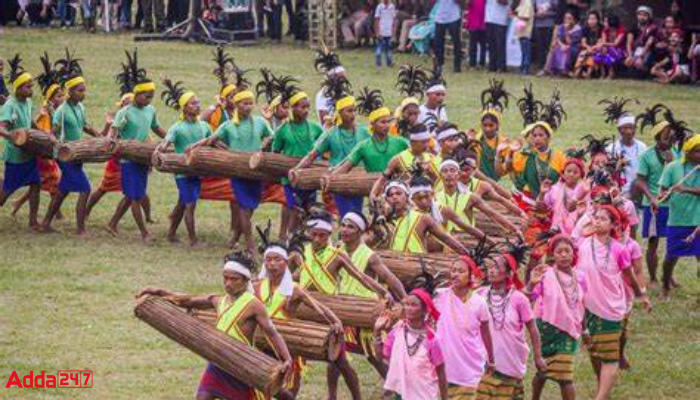
Also known as the Hundred Drums Festival, the Wangala festival is one of the most significant and colourful celebrations of the Garo tribe in Meghalaya. This post-harvest festival marks the end of the agricultural year. It is a thanksgiving ceremony for Misi Saljong, also known as Pattigipa Ra’rongipa or the Great Giver, the sun god of fertility. The Wangala festival is a vibrant display of Garo culture, traditions, and their deep connection to nature and agriculture.
The Wangala festival has its roots in the ancient agricultural practices and beliefs of the Garo people. The Garos, one of the major tribes of Meghalaya, are known for their matrilineal society and strong connection to the land. Agriculture has been the primary occupation of the Garos for centuries, and their festivals and rituals are closely tied to the agricultural cycle.
The exact origin of the Wangala festival is lost in the mists of time, but it is believed to have been celebrated for many generations. The festival’s name, “Wangala,” is derived from the Garo word “wanna,” which means celebration. It is a time when the community comes together to express gratitude for a bountiful harvest and to seek blessings for the coming year.
Historically, the Wangala festival was celebrated independently in every Garo village. Each village would have its dates and duration for the festival, which could last anywhere from a few days to a week. However, in recent times, efforts have been made to organise a centralised Wangala celebration to showcase Garo culture to a wider audience and preserve their traditions.
The Wangala festival is deeply rooted in Garo mythology and their traditional belief system. At the festival’s heart is the worship of Misi Saljong, the sun god, believed to be the provider of good harvests and prosperity. According to Garo mythology, Misi Saljong taught the Garo people the art of agriculture. He showed them how to clear the land, sow seeds, and harvest crops. The Garos believe that it is through Misi Saljong’s blessings that they receive abundant harvests. The Wangala festival is their way to express gratitude to this benevolent deity and to seek his continued favour. Another important mythological figure in the Wangala festival is Goera, the goddess of agriculture. Goera is believed to be the protector of crops and is often invoked alongside Misi Saljong during the festival rituals.
The Garos also believe in various nature spirits that inhabit the forests, rivers, and mountains. These spirits are thought to play a role in the success of their agricultural endeavors. During the Wangala festival, offerings are made to these spirits to appease them and ensure their cooperation in the coming agricultural year.
One of the myths associated with the Wangala festival tells of a time when the Garo people faced a severe drought. The crops were failing, and the community was on the brink of starvation. The village elders gathered to perform rituals and prayers to Misi Saljong. According to the legend, Misi Saljong appeared to them in a dream and instructed them to perform a dance with drums and to make offerings of rice beer. When the villagers followed these instructions, rain began to fall, and their crops were saved. This myth is said to be the origin of the drum dance that is now central to the Wangala celebrations.
The preparations for the Wangala festival begin well in advance of the actual celebration. As the harvest season nears its end, the village elders come together to decide on the dates for the festival. Traditionally, the festival is held in November, but the exact dates can vary depending on the completion of the harvest and other local factors. Once the dates are set, the entire community gets involved in the preparations.
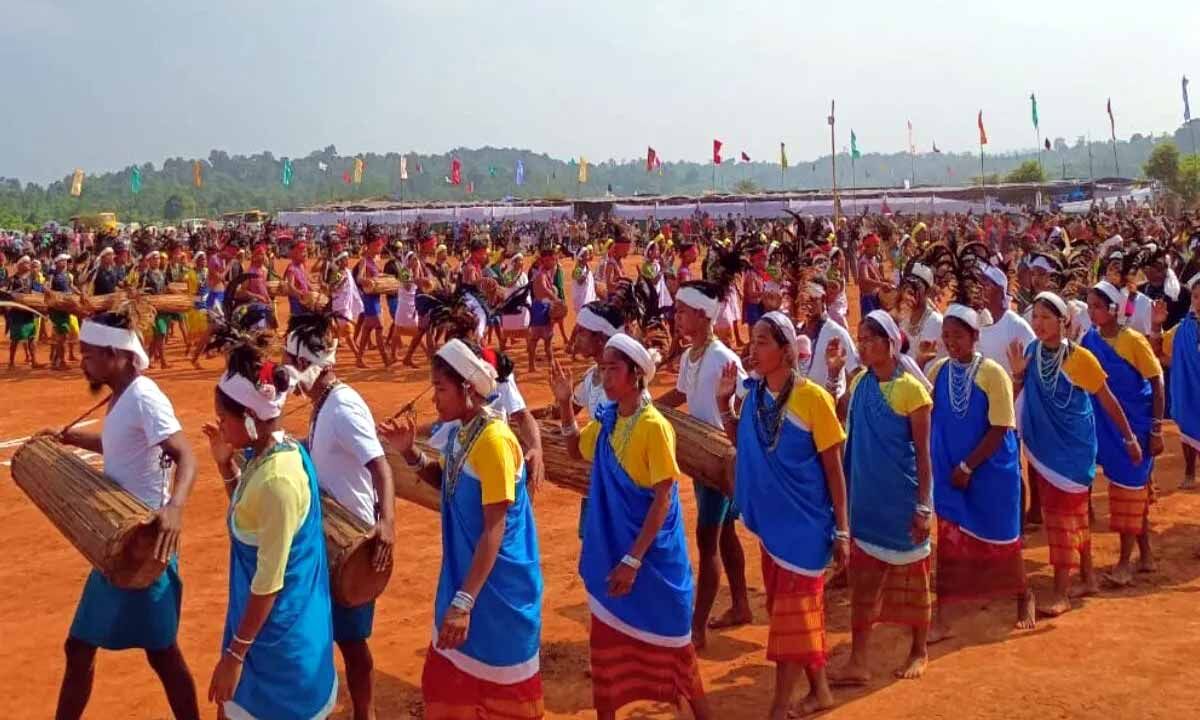
One of the most important preparations is the brewing of rice beer, known as “chu” in the Garo language. Rice beer plays a significant role in Garo rituals and celebrations. The brewing process begins several weeks before the festival to ensure that the beer is properly fermented by the time of the celebration. The Garos take great pride in their traditional clothing, and the Wangala festival is an occasion to showcase their finest attire. Women prepare colourful wraparound skirts called dakmanda and blouses kutchi. Men ready their traditional dhotis and vests. Special attention is given to the headdresses, often adorned with feathers and hornbill beaks.
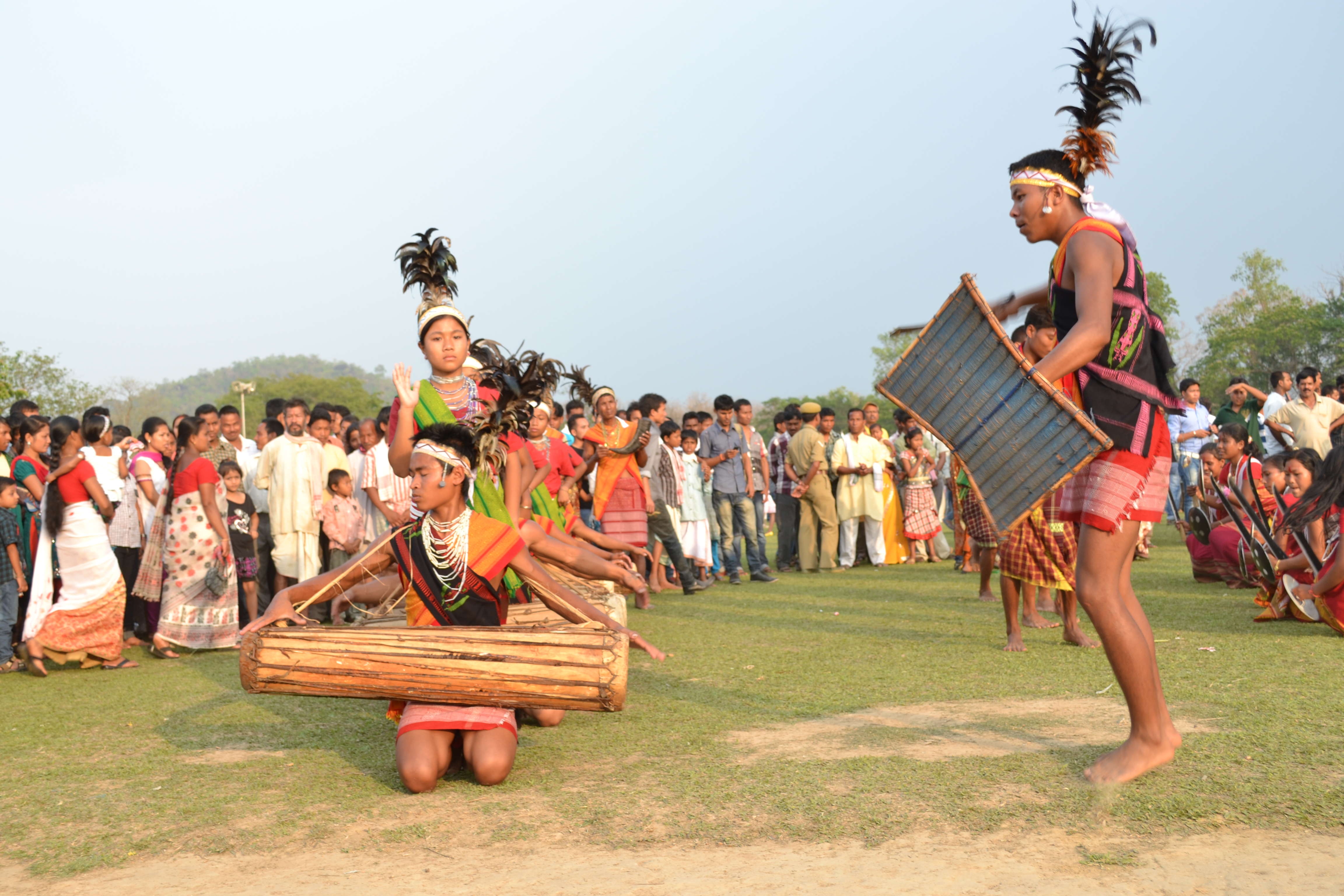
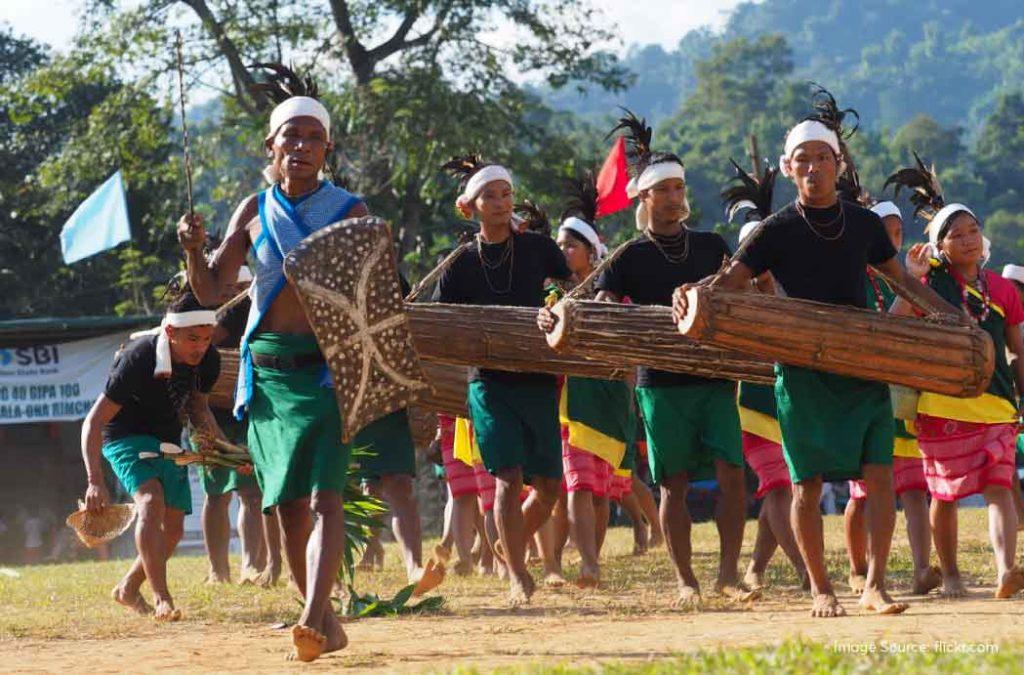
The festival’s alternative name, “Hundred Drums Festival,” highlights the importance of drums in the celebration. Skilled craftsmen in the village work on repairing old drums and making new ones. The primary drum used in the Wangala festival is the “dama,” a long, cylindrical drum made from hollowed-out tree trunks and animal hide. The entire village undergoes a thorough cleaning in preparation for the festival. Houses are repaired and whitewashed. The central area where the main celebrations will take place is cleared and decorated with bamboo structures, flowers, and leaves.
A significant amount of time is spent preparing food for the festival. Large quantities of rice, meat, and vegetables are readied for the communal feasts that will take place during the celebration. In the weeks leading up to the festival, the community, especially the youth, practice the traditional dances and songs that will be performed during the Wangala.
The Wangala festival typically lasts two to three days, although in some villages, it can extend up to a week. The celebration is a mix of solemn rituals and joyous festivities. The first day of the festival is known as Salgittal or Salgittoa, which means “thanksgiving.” This day is marked by several important rituals. The festival begins with the village priest, the “Kamal,” performing an invocation ceremony. The Kamal offers prayers to Misi Saljong and other nature spirits, seeking their blessings for the community. The first fruits of the harvest are offered to Misi Saljong. This typically includes newly harvested rice, vegetables, and fruits. The offering is made on a special altar set up for the occasion. In some villages, a ceremonial sacrifice of a rooster or a goat may be performed. This is done to appease the spirits and ensure their continued favour. The Nokma or village chief and other important members of the community are anointed with rice powder mixed with water. This symbolises purification and preparation for the festivities to come. A sacred fire is lit, which will be kept burning throughout the festival. This fire symbolises the presence of Misi Saljong among the people.
The second day, known as Kakkat or Kakket, is the main day of celebration. This is when the most iconic events of the Wangala festival take place. The day begins with the Rugala ceremony, where Nokma and his wife lead a procession to the central festival ground. They carry a basket of rice, which symbolises the community’s harvest. The highlight of the festival is the Wangala dance. Dancers, dressed in colourful traditional attire, form lines with men and women alternating. They dance to the rhythmic beat of drums, bamboo clappers, and gongs. The dance movements mimic various agricultural activities such as sowing, weeding, and harvesting. This is where the festival gets its alternative name. A hundred or more drums are played simultaneously, creating a thunderous and mesmerising rhythm. The sound of the drums is believed to reach Misi Saljong, carrying the community’s prayers and gratitude. A grand feast is held where the community comes together to share food and rice beer. This feast symbolises the abundance of the harvest and the spirit of community sharing. Various traditional games and sports are organised, including wrestling, tug-of-war, and archery competitions.
The final day of the festival is typically reserved for concluding rituals. The Kamal leads the community in offering final thanksgiving prayers to Misi Saljong and other deities. The sacred fire lit on the first day is ceremonially extinguished, marking the end of the festival. The community elders bless the younger generation, wishing them prosperity and good fortune for the coming year. In some villages, there are rituals to bid farewell to the spirits and deities, thanking them for their presence during the festival.
Music and dance are integral to the Wangala festival. The most important musical instruments used during the celebration include the Dama, a long, cylindrical drum that gives the festival its “Hundred Drums” moniker; the Nagra, a smaller drum used to provide counterpoint rhythms; the Gong which is used to provide additional rhythmic elements; and Bamboo Clappers which provides a distinctive clacking sound that complements the drums. The Wangala dance is a complex performance that tells the story of the agricultural cycle. The dancers move in synchronised patterns, their movements representing different farming activities. Swaying movements represent the swaying of rice plants in the wind while stomping feet mimic the act of threshing rice and hand movements show the sowing of seeds and the harvesting of crops. The dance is performed in lines, with men and women alternating. As the dance progresses, the tempo of the music increases, and the movements become more energetic, culminating in a joyous celebration of the harvest.
Food plays a central role in the Wangala festival. The celebration is an opportunity for the community to come together and share in the abundance of the harvest. Some traditional dishes served during the festival include Wak Pura, a dish made from pork and bamboo shoots, Nakham Bitchi, a chicken curry cooked with special herbs, Pura which are various types of smoked meat, Minil Songa, a dish made from fish and local vegetables, and Pitha which are rice cakes often served as dessert. Rice, being the main crop, features prominently in all meals. It is often served with various meat and vegetable side dishes. The traditional rice beer, “chu,” is essential to the celebration. It is consumed during the feasts and used in various rituals as an offering to the deities.
The Wangala festival holds immense social and cultural significance for the Garo community. The festival brings the entire community together, strengthening social bonds and reinforcing a sense of shared identity. Through the rituals, dances, and music, the festival helps in preserving and passing down Garo cultural traditions to younger generations. The festival marks the end of the agricultural year and the beginning of a new cycle, helping to structure the community’s annual activities. Today, the festival has become a tourist attraction, bringing economic benefits to the region. The festival’s focus on nature worship and agricultural cycles helps maintain an awareness of environmental issues among the community.
While the Wangala festival remains an important part of Garo culture, it faces several challenges in the modern era. As more young Garos move to cities for education and employment, there’s a risk of losing touch with traditional practices. The spread of Christianity among the Garo community has led to changes in how the festival is perceived and celebrated. There are concerns that the increasing tourism around the festival might lead to its commercialisation, potentially diluting its cultural significance. Changes in agricultural practices and environmental conditions pose challenges to the traditional agricultural cycle that the festival celebrates. Despite these challenges, the Wangala festival has shown remarkable resilience and adaptability.
In recent years, there have been concerted efforts to preserve and promote the festival. While individual villages still celebrate Wangala, there are now also centralised celebrations organized by cultural organizations and the state government. These larger events help in showcasing Garo culture to a wider audience. Efforts are being made to document the rituals, songs, and dances associated with the festival to ensure their preservation. Schools and colleges in the Garo Hills region often organise programs to educate students about the significance of Wangala and other traditional festivals. The festival is now promoted as a cultural tourism event, attracting visitors from across India and abroad. While this brings economic benefits, care is taken to maintain the festival’s authenticity. Some communities have adapted certain aspects of the festival to align with changing religious beliefs while still maintaining its core cultural significance.
The Wangala festival is more than just a harvest celebration; it is a vibrant expression of Garo culture, spirituality, and connection to the land. Through its colorful dances, rhythmic music, traditional attire, and communal feasts, Wangala offers a window into the rich cultural heritage of the Garo people.
As the festival continues to evolve in the face of modern challenges, it remains a testament to the resilience and adaptability of indigenous cultures. The Wangala festival serves as a reminder of the importance of preserving cultural traditions while also embracing change.
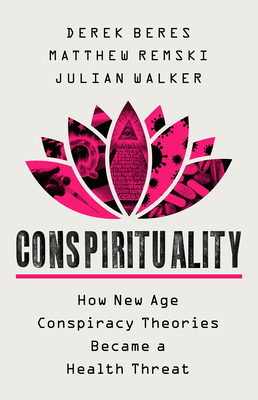
Conspirituality: How New Age Conspiracy Theories Became a Public Health Threat – Derek Beres, Matthew Remski, Julian Walker
Conspirituality takes a deep dive into the troubling phenomenon of influencers who have curdled New Age spirituality and wellness with the politics of paranoia—peddling vaccine misinformation, tales of child trafficking, and wild conspiracy theories.
In the early days of the COVID-19 pandemic, a disturbing social media trend a large number of yoga instructors and alt-health influencers were posting stories about a secretive global cabal bent on controlling the world’s population with a genocidal vaccine. Instagram feeds that had been serving up green smoothie recipes and Mary Oliver poems became firehoses of Fox News links, memes from 4chan, and prophecies of global transformation.
Since May 2020, Derek Beres, Matthew Remski and Julian Walker have used their Conspirituality podcast to expose countless facets of the intersection of alt-health practitioners with far-right conspiracy trolls. Now this expansive and revelatory book unpacks the follies, frauds, cons and cults that dominate the New Age and wellness spheres and betray the trust of people who seek genuine relief in this uncertain age.
Each of the three authors has witnessed firsthand the use of fear-based political agendas to manipulate the human desire for spiritual fulfillment. They throw a spotlight on the telltale signs of cult dynamics and expose how influencers have stoked suspicion of public health initiatives. And they show how charlatans and pseudo-doctors encourage their followers to oppose mainstream advice as a form of spiritual quest.
With analytical rigor and flashes of irreverent humor, Conspirituality offers an antidote to our times, helping readers recognize wellness grifts, engage with loved ones who’ve fallen under the influence, and counter lies and distortions with insight and empathy.
World Tsunami Awareness Day is observed annually on November 5th to raise awareness about the dangers of tsunamis and the importance of preparedness and early warning systems. Established by the United Nations General Assembly on December 22, 2015, this day serves as a reminder of the devastating impact of tsunamis and the need for proactive measures to mitigate their effects.
The Japanese delegation proposed the day, reflecting Japan’s long history of tsunami experiences and its commitment to disaster risk reduction. November 5th was chosen to commemorate the Japanese story of “Inamura-no-hi,” which translates to “burning of the rice sheaves.” This tale recounts the actions of a Japanese farmer, Hamaguchi Goryō, who, in 1858 set fire to his rice crop to warn his village of an impending tsunami following an earthquake. His foresight allowed many villagers to evacuate to safety, and he later built protective seawalls to safeguard against future tsunamis.
The establishment of WTAD came in the wake of numerous devastating tsunamis, most notably the Indian Ocean tsunami of December 26, 2004. This catastrophic event resulted in over 230,000 fatalities across 14 countries, including Indonesia, Sri Lanka, India, and Thailand. The sheer scale of destruction highlighted the urgent need for improved tsunami preparedness and early warning systems worldwide. In response, the UN and various organisations began to focus on raising awareness about tsunamis and promoting disaster risk reduction strategies.
World Tsunami Awareness Day serves several important purposes. The day aims to educate the public about the risks associated with tsunamis and the importance of preparedness. It highlights the need for communities, especially those in coastal areas, to understand tsunami risks and take proactive measures. The day encourages governments, organisations, and communities to develop and implement effective tsunami early warning systems and disaster response plans. Preparedness can significantly reduce the loss of life and property during a tsunami. The day serves as a solemn reminder of the lives lost in past tsunamis, particularly the 2004 Indian Ocean tsunami. It honours the resilience of affected communities and the ongoing efforts to rebuild and recover. World Tsunami Awareness Day fosters collaboration among governments, NGOs, and communities to share best practices and innovative approaches to tsunami risk reduction. The day provides a platform for advocating for policies that prioritise disaster risk reduction and enhance the resilience of vulnerable communities.
The theme for World Tsunami Awareness Day 2024 is “Agriculture and Food Systems: The Key to Ending Hunger and Achieving Food Security.” This theme emphasises the critical role of agriculture and food systems in addressing the challenges posed by tsunamis and other natural disasters.
The theme highlights how tsunamis can disrupt agricultural production and food supply chains, leading to food insecurity. Coastal communities often rely on agriculture and fishing for their livelihoods, making them particularly vulnerable to the impacts of tsunamis. The theme encourages the adoption of sustainable agricultural practices that can withstand the impact of natural disasters. This includes promoting resilient crop varieties, improving soil health, and implementing effective water management strategies.
The theme underscores the importance of integrating disaster risk reduction into agricultural policies and practices. This includes developing early warning systems for tsunamis and other disasters that can affect food production. The theme emphasises the need to build resilient communities that can adapt to the impacts of tsunamis and other natural disasters. This involves empowering local farmers and communities to take proactive measures to protect their livelihoods. It calls for collaboration among governments, NGOs, and international organisations to address the challenges of food security in the face of natural disasters. This includes sharing knowledge, resources, and best practices for disaster preparedness.
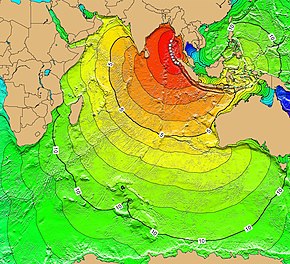
The Indian Ocean tsunami of December 26, 2004, remains one of the deadliest natural disasters in history. Triggered by a magnitude 9.1 earthquake off the coast of Sumatra, Indonesia, the tsunami struck several countries, including Indonesia, Sri Lanka, India, Thailand, and others. The impact was catastrophic, with over 230,000 lives lost and millions more affected.
The 2004 tsunami highlighted several critical lessons about disaster preparedness and response. The lack of a comprehensive tsunami warning system in the Indian Ocean region contributed to the high death toll. In the aftermath of the disaster, there was a global push to establish early warning systems to alert communities of impending tsunamis. The disaster underscored the need for communities to be prepared for tsunamis. Education and training programs that teach residents about tsunami risks and evacuation procedures are essential for saving lives.
The response to the 2004 tsunami demonstrated the importance of international cooperation in disaster relief efforts. Countries and organisations came together to provide aid and support to affected communities. The disaster highlighted the need for long-term resilience building in vulnerable communities. This includes infrastructure investments, disaster risk reduction strategies, and sustainable agricultural practices. Local knowledge and traditional practices play a crucial role in disaster preparedness. Engaging communities in planning and response efforts can enhance resilience and improve outcomes.
World Tsunami Awareness Day is observed through various activities and initiatives aimed at raising awareness and promoting preparedness. UNESCO plays a vital role in promoting tsunami awareness and preparedness through its Intergovernmental Oceanographic Commission (IOC). The IOC coordinates national and regional tsunami early warning services and raises global awareness about effective actions to reduce disaster risk.
As we look to the future, several trends and priorities are emerging in the field of tsunami preparedness and disaster risk reduction. The use of technology, such as satellite monitoring and early warning systems, is becoming increasingly important in tsunami preparedness. Innovations in data collection and analysis can enhance our understanding of tsunami risks and improve response efforts. Engaging communities in disaster preparedness efforts is crucial for building resilience. Local knowledge and participation can significantly enhance the effectiveness of preparedness initiatives. Climate change is expected to increase the frequency and intensity of natural disasters, including tsunamis. Integrating climate change considerations into disaster risk reduction strategies is essential for enhancing resilience. Addressing the needs of vulnerable communities is critical for effective disaster preparedness. Ensuring that marginalised populations have access to information, resources, and support is essential for reducing risk. Continued collaboration among countries, organisations, and communities is vital for sharing knowledge, resources, and best practices in tsunami preparedness and disaster risk reduction.
World Tsunami Awareness Day serves as a crucial reminder of the ongoing risks posed by tsunamis and the importance of preparedness and early warning systems. The lessons learned from the 2004 Boxing Day tsunami continue to inform the understanding of tsunami risks and the importance of proactive measures to mitigate their impacts. By raising awareness, promoting preparedness, and fostering collaboration, we can work towards a more resilient future for communities at risk of tsunamis.