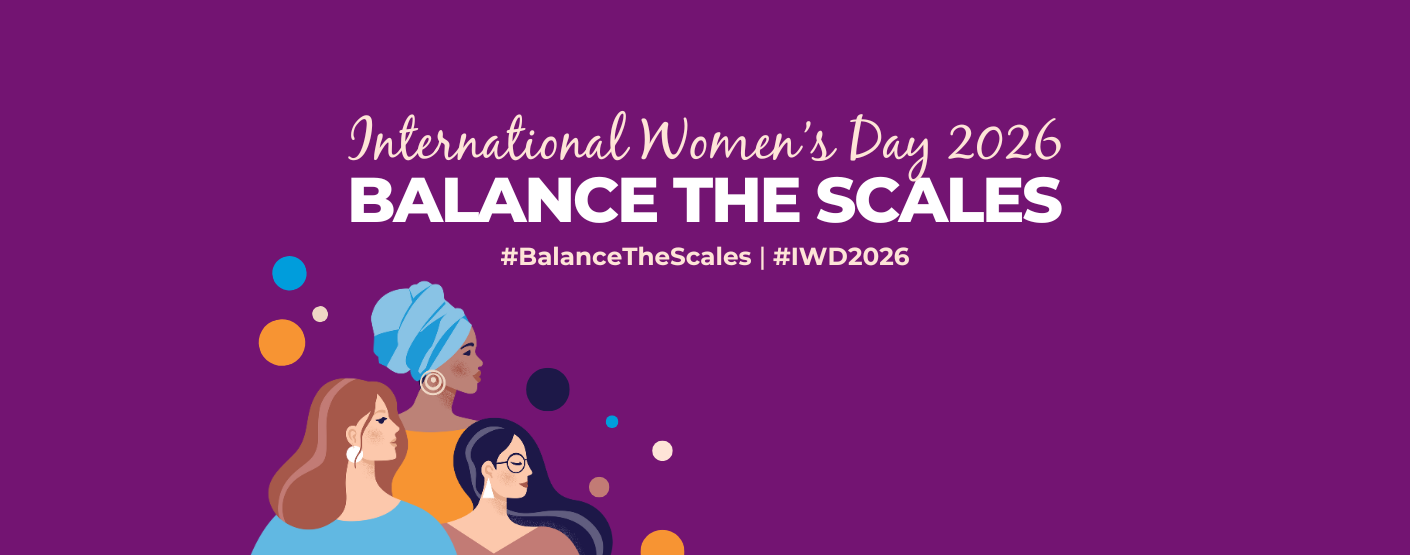
Yesterday was International Women’s Day (IWD). Around the world, people will mark this day with events that highlight women’s achievements and focus on the long road left for gender equality. This year’s themes, chosen by two of the main voices in the movement, say a lot about how the world talks about women’s rights today. The UN has set its banner around balancing the scales, while the IWD organisation has also chosen “Balance the Scales” as its call to action for 2026. It’s rare to see both align so closely, but it raises real questions. What exactly does “balance” mean? Is the metaphor useful? Or does it make things too simple in a world where the weight isn’t just on one side of the scale?
What Does “Balance the Scales” Actually Mean?
“Balance the Scales” sounds like a cliché at first. But both the UN and the IWD organisation are using it this year, so let’s unpack it. The clearest way to understand the phrase is as a demand for fair treatment. In blunt terms, too many rules, official or unspoken, still stop women and girls from being safe, heard, or free to make choices. Think of discriminatory laws. Think of violence. Think of missed jobs, unequal pay, or leadership doors shut in their faces.
The image of scales is meant to show justice. Balance implies fairness. But here’s the rub: real life rarely acts like a perfect set of scales. The problems aren’t all the same everywhere. For example, women in Afghanistan face different struggles than those in Norway. Not every barrier is visible, and not every answer is a change in law. The theme’s simplicity risks making the battles all seem equal when they aren’t.
Celebrating Progress, But Not Mistaking it for the End
IWD is, at heart, a day for both celebration and protest. There has been genuine movement. Women vote, lead, and shape their countries in ways their grandmothers couldn’t dream of in much of the world. But pointing out the progress often masks the scale of what’s left. The pay gap still hasn’t closed. Gender-based violence remains a fact of life for millions. Parliamentary seats and CEO chairs are mainly filled by men even in nations with free elections and stable economies.
Even the way we talk about “progress” can hide the truth. Some changes are surface-level. A woman named CEO isn’t a sign of equal opportunity if her company’s board is still stacked against her or if her appointment is used to hide the deeper bias that never vanished. When “balance” is claimed too soon, it keeps us from seeing that old habits and prejudices are only evolving, not disappearing.
Are the Scales the Right Metaphor?
Let’s be honest: the scales are easy to picture, but they flatten the complexity. What does a “balanced” world look like? Equal pay? Equal numbers in parliament? Or something deeper, where difference doesn’t mean disadvantage? Some would argue that perfect parity is neither possible nor desirable if it ignores choice and culture.
And then there’s backlash. The word “balance” draws protest from people who believe women are already favoured, or who see these campaigns as blaming all men. The metaphor of scales, if pushed too far, risks framing equality as a zero-sum contest. But gender justice isn’t a math problem where more for one side means less for the other. The metaphor would work better if it made room for nuances: race, class, sexuality, and culture. Power sits at intersections. Some women have more privilege than many men ever will. The risk is that we talk of “all women” as if they’re the same, when the real world is far more tangled.
Shifting the Narrative: Who Owns Women’s Day?
Both UN Women and the IWD organisation are pushing collective action this year. The language is everywhere: “shared ownership,” “movement powered by all.” It’s a way of trying to prevent top-down dictates, making IWD something that grows from millions of people acting in their own streets and workplaces. The idea is that the struggle belongs to no one person or group, but to everyone. In practice, of course, not all voices carry the same weight. Celebrities, corporate partners, and big NGOs often shape IWD in public, while local actions and unglamorous fights for justice are often drowned out.
That means a real challenge for “shared ownership.” When businesses use the day for branding, it dilutes the meaning. The risk is that companies pay lip service to gender equality while avoiding hard questions, like how they treat staff or whose stories get told. It’s not hard to imagine a world where IWD becomes another hashtag event, with slick meetings, speeches, and awards, while women on the margins see nothing change.
Beyond Slogans: What Needs Fixing?
So, what’s really stopping progress? It’s not just about the law. Sure, in some countries, girls still can’t go to school, and that’s a direct result of policy. But even where rights are protected, invisible barriers persist. Who does the housework? Who stops working when a child is born? Who gets believed when they report abuse?
Balance, if it’s more than a slogan, would mean real shifts in all these areas. Not just fairness in numbers, but also in attitudes. Research shows that just changing laws isn’t enough; cultures need to shift, too. That happens slowly and by constant pushback.
Why Do Some People Oppose International Women’s Day?
Any talk of IWD sparks anger in some circles. Some see it as divisive or outdated. Some claims celebrating women push aside men’s problems. But this kind of pushback often misses the point. Acknowledging women’s problems doesn’t mean ignoring others. In fact, a better balance for women often spills over to help society in general. For example, when women earn more or have safer workplaces, families as a whole benefit. Health outcomes improve, children thrive, and economies grow stronger.
But it’s important to address criticisms honestly. Not every IWD event is meaningful, and some do slip into empty virtue signalling. If a company signs on for IWD but pays its female workers less or sponsors events while ignoring harassment in its own ranks, the critique is fair. The day is not inherently radical or transformative. It only works when actions back up the slogans.
Is the Day Still Needed?
Some people claim that women have “made it” and that a special day is no longer necessary. The numbers tell another story. Globally, women still earn less than men and own fewer assets. They’re more likely to be in insecure work and more likely to do unpaid labour. In many parts of the world, violence against women remains common, and impunity often protects abusers.
If anything, the day matters more now than ever. It’s not just a time to repeat old victories but to reckon with unfinished business, sharpen the debate, and keep pressure on systems that claim equality while delivering little change.
What About Tradition and Culture?
Some critics argue that pushing for more equality upsets traditional cultures. But culture is not static. In many societies, the same people who defend “tradition” also benefit most from old power structures. That doesn’t mean all tradition is bad, but it does mean it’s worth asking whose interests are being served when someone says a change is “too much, too fast.”
Not every tradition by default deserves protection. And culture can adapt. In fact, history shows us that social norms change when enough people push for it. The very fact that IWD is mainstream now, rather than a fringe protest, shows how ideas can evolve.
Why “Balance” Isn’t the End Goal
Even if the scales were truly level, the work wouldn’t be done. Human relationships aren’t about perfect symmetry. The focus shouldn’t be on mathematical equality—one for one, fifty-fifty—but on dignity, respect, and the freedom for everyone, regardless of gender, to live fully and safely. “Balance” as a theme makes sense if it means breaking the old forms of bias and letting new, fairer arrangements emerge.
But if “balance” means small improvements while big patterns of inequality remain, it risks stopping progress dead. Slogans should guide, not chain, the movement.
What Would a Real “Balance” Look Like?
If we take the metaphor seriously, real balance is structural change. That means more than just more women in boardrooms. It means closing the pay gap, ending violence, making reproductive rights real, supporting care work, and making space for every kind of woman, not just those who match the dominant ideal.
It also means dismantling the systems that keep men from being full caregivers or that force gender stereotypes on everyone. True balance reshapes assumptions all the way down. It won’t happen overnight. And it won’t come from slogans alone.
What’s Next?
International Women’s Day will come and go, as it does every year. There’ll be speeches and banners and maybe even a few legal changes. But if the day is to be more than a yearly ritual, it needs more than words. Balance the Scales should be a starting point for a much tougher conversation, one where old ideas can be questioned, and the messy, lived experience of all women can guide the work.
So, when marking the day this year, or any year, don’t just settle for slogans. Ask hard questions. Demand real accountability. And respect that the “balance” many talk about still needs to be fought for, piece by piece, in changing rooms, offices, streets, and parliaments everywhere.







 Memories and Such