This week felt long! Not necessarily because anything went wrong, but because some weeks simply ask more of us than others. There were early starts, long days, important conversations, meetings that required concentration, and moments when the working day stretched well beyond its usual boundaries. By the middle of the week, tiredness had definitely entered the chat.
Professionally, though, it was a significant week. There were conversations about leadership and the future, opportunities to listen to different perspectives, and the interesting experience of evaluating not simply what someone has accomplished, but what they might bring to the next chapter of an organisation. Elsewhere, a major project continued moving from concept towards reality. Plans became more concrete, partnerships were explored, documents refined, and several small but necessary pieces fell into place. There were disappointments too, including an outcome that didn’t go the way we had hoped, but even that quickly became a question of: What can we do with this instead?
Personally, this week reinforced something I’ve been learning repeatedly this year: energy is finite. There is a difference between being capable of doing everything and needing to do everything, and perhaps wisdom lies somewhere in recognising that distinction.And underneath all the activity was the ordinary rhythm of life: family, routines, conversations, small pleasures, and moments of quiet squeezed between everything else. If last week was hectic, this one felt intense. But it was also purposeful. Things moved forward. Decisions came closer. And as the week ends, I think I’ve earned the right to do something wonderfully unproductive for a while. Sometimes rest isn’t what happens after the important work. Rest is part of the important work.
Today, English novelist and playwright, best remembered for The Hundred and One Dalmatians Dodie Smith’s quote is a gentle reminder that some of life’s greatest luxuries cannot be bought. In a world where luxury is usually associated with expensive possessions, beautiful places, or exclusive experiences, Smith offers something wonderfully simple instead: the freedom to sit quietly and think. Contemplation requires very little. We don’t need special equipment, money, or even a particular place. We simply need enough stillness to allow our minds to wander, reflect, question, remember, and imagine. Yet ironically, this completely free luxury can sometimes feel incredibly difficult to obtain. Our days are filled with responsibilities, notifications, conversations, deadlines, and endless distractions. Even when we have a few spare minutes, we often instinctively reach for something to occupy them.
Smith’s words suggest that perhaps we underestimate the value of doing nothing except thinking. Contemplation gives us space to process what has happened, understand how we feel, and decide what truly matters. It allows ideas to emerge without being forced and gives us an opportunity to notice things that become invisible when we are constantly rushing. There is also something quietly rebellious about choosing contemplation in a culture that celebrates constant productivity. Time spent thinking may appear unproductive from the outside, yet it can bring clarity, creativity, gratitude, and greater self-awareness. Perhaps that is why contemplation really is a luxury. Not because it costs money, but because it asks us to give ourselves something increasingly precious: undivided time and attention.
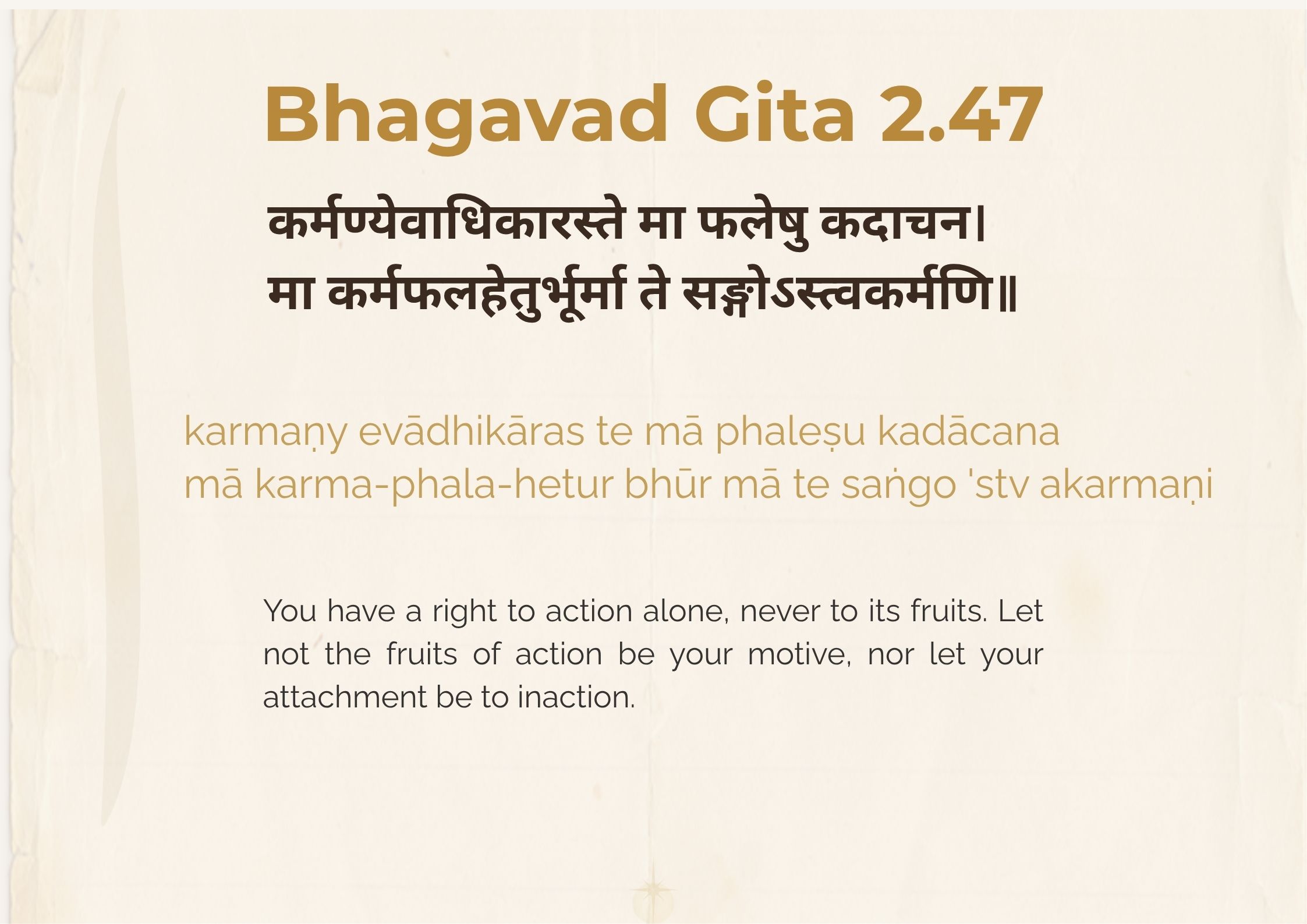
In verse 2.47 of the Bhagavad Gita, Lord Krishna says much of our stress comes from trying to control outcomes. We worry about results before the work has even begun. We become attached to specific endings and measure our worth according to whether those endings arrive. Krishna offers a liberating alternative. Focus on the work. Focus on the effort. Focus on what is within your control. The outcome is never entirely ours. Paradoxically, when we release our grip on results, we often perform better. Fear loosens its hold. Anxiety loses some of its power. We become fully present to the task before us. This verse is not an invitation to care less. It is an invitation to care differently. Do the work wholeheartedly. Let the outcome unfold.
This week, I learned that most of the pieces shift and fall into place behind the scenes. Everything is aligning in your favor in ways you’ll only understand later. Before those changes become visible, we often have to move through periods of waiting, confusion, and uncertainty. As difficult as it may feel, you have to fully trust the process through the delays. Trust that everything is unfolding exactly as it should. Your power lies in the sure belief in the natural flow of your life. Release the need to control. Let your inner wisdom lead the way. Life is shaping you for something greater.
That’s all from me this week. Stay safe, stay happy and stay positive! Speak soon!
What kind of happiness are we really chasing? The quick flashes that brighten a moment, or the quieter kind that slowly shapes a life?
Happiness is one of those words everyone uses confidently and few people define carefully. Ask ten people what it means, and you will probably hear ten different answers. Yet most of us recognise two very different forms of it in our own lives. One appears suddenly and fades almost as quickly. The other arrives slowly and lingers, shaping the background of our days without drawing much attention to itself.
Two Different Experiences of Happiness The first kind is happiness in the moment. The second is happiness that stays. We rarely stop to examine the difference between them, but the distinction quietly shapes many of our choices. Should we enjoy the small pleasures available today, or should we postpone them in the hope of building something deeper and more durable? Is delayed gratification the mark of wisdom, or simply another way of pushing happiness further into the future? The answers are not as obvious as they seem.
The tension between these two types of happiness sits quietly inside many of our daily choices. Should we prioritise the small joys available today, or should we work towards a more durable form of happiness later? Should we delay gratification in the hope of something better in the future? Or is that simply another way of postponing life? None of these questions have simple answer. But the distinction itself is worth examining.
The Happiness That Passes and the Happiness That Stays Momentary happiness has a particular power because it is tangible. You can feel it in real time. It does not require patience or interpretation. A meal enjoyed slowly, a message from a friend, a walk in the evening when the air finally cools. These experiences are small, but they anchor us in the present moment in ways that abstract goals rarely do. In difficult periods of life, these brief flashes of happiness can be essential. When responsibilities feel heavy or circumstances are uncertain, it is often the smallest pleasures that carry us through the day. They remind us that life is still happening now, not only in the distant future we are trying to build.
Yet momentary happiness can also make people uneasy. For some of us, happiness that arrives too easily raises suspicion. If something feels good immediately, we wonder whether it is superficial or temporary. Perhaps it will disappear as quickly as it arrived. Perhaps it was never real in the first place. This suspicion is not entirely irrational. Modern life offers endless forms of stimulation disguised as happiness. Social media notifications, impulse purchases, and constant entertainment. These experiences are engineered to create small bursts of pleasure while asking very little from us in return. The result is a curious paradox. Happiness in the moment is both essential and potentially misleading. It can either refresh us or distract us. The difference often lies not in the experience itself, but in the role it plays in our lives.
A quiet cup of tea can be a moment of rest. But endless scrolling through a phone is also a form of momentary pleasure. One restores attention. The other slowly erodes it. So the question is not whether happiness in the moment is good or bad. The more useful question is whether it leaves us clearer or more depleted afterwards.
Source
The Slower Happiness that Builds over Time The second type of happiness is harder to identify because it rarely feels dramatic. It develops slowly through repetition. A routine that supports your health. A relationship that deepens over the years. Work that gradually becomes more aligned with your abilities. Even something as simple as financial stability can create a form of happiness that is less visible but deeply reassuring. This kind of happiness tends to feel less like excitement and more like steadiness. It lowers the background noise of life.
When people talk about building a meaningful life, this is usually what they are referring to. It is the accumulation of choices that creates a structure in which life feels livable. But this form of happiness has its own complications. Sometimes it does not even feel like happiness while it is happening. It simply feels like life becoming a little easier to live.
First, it requires patience. Many of the habits that eventually produce lasting happiness feel neutral or even tedious while they are being built. Exercise rarely feels magical in the moment. Saving money requires restraint. Learning a skill involves long periods of feeling incompetent.
Second, the pursuit of lasting happiness can sometimes become rigid. In an effort to build a stable future, people can begin postponing every form of enjoyment in the present. Life becomes a sequence of conditions that must be met before happiness is allowed.
Once this project is completed, I will relax. Once this goal is achieved, then I will enjoy life.
The problem is that these conditions rarely end. There is always another milestone, another responsibility, another improvement that seems necessary before happiness can finally begin. When this happens, the pursuit of lasting happiness quietly transforms into permanent postponement.
The Question of Delayed Gratification Few ideas are praised more consistently than delayed gratification. It appears frequently in discussions about discipline, financial planning, education, and productivity. The logic seems straightforward. If we resist immediate pleasures, we will eventually gain something more valuable. In many situations, this is true. Choosing long term health over short term comfort, or saving money rather than spending it impulsively, can lead to real benefits.
But delayed gratification is not automatically virtuous. It depends on what exactly is being delayed and why. Sometimes we delay gratification because we genuinely value something in the future more than the pleasure available now. In these cases, the trade-off is clear and intentional. At other times, delay comes from a different place. It may come from fear of enjoyment itself. When happiness has disappeared before, learning not to trust it can feel like a form of protection.
For some people, happiness feels slightly dangerous. If something is good, perhaps it will be taken away. If something comes easily, perhaps it was never deserved. The safest option is to keep happiness at a distance. Under those circumstances, delayed gratification is not discipline. It is a form of emotional caution.
There is also another complication that receives less attention. Sometimes people delay gratification for goals that are not truly their own. They pursue milestones that society approves of without pausing to ask whether those milestones actually produce happiness in their own lives. Years later, the goal is achieved, and the anticipated happiness never quite arrives. The issue was not patience. The issue was direction.
Seen this way, the difference between momentary happiness and lasting happiness is not simply a question of time. It is a question of how we relate to our own lives. One invites us to experience the present. The other asks us to shape the future.
When Spending Creates Happiness Money introduces another layer of complexity. On the surface, spending money often looks like the purest form of momentary happiness. A purchase provides immediate satisfaction and the promise of enjoyment. But the value of spending depends heavily on context.
Some forms of spending genuinely enrich life. Travelling to a place you have long dreamed of visiting, for instance, can create memories that stay with you for decades. Shared experiences with family and friends often fall into this category as well. In these situations, spending money supports happiness that extends far beyond the moment of purchase. Other spending serves a different purpose. It temporarily relieves boredom or stress without addressing the underlying problem. The satisfaction fades quickly, leaving only the impulse to repeat the experience again.
The difference between these two forms of spending is not always obvious at the time. But over months and years, the patterns become clear. Some expenses become meaningful stories in our lives. Others become forgettable attempts to fill empty moments.
The Quiet Influence of Hustle Culture Modern culture often complicates our relationship with happiness even further. In many environments, happiness is treated as something that must be justified through productivity. Rest should improve performance. Hobbies should develop marketable skills. Even relaxation becomes a tool for becoming more efficient later. This mindset leaves little room for happiness in the moment. If enjoyment does not contribute to long term goals, it begins to feel wasteful.
But a life organised entirely around productivity risks becoming narrow. People may achieve impressive milestones while quietly losing contact with the everyday experiences that make life enjoyable. Ironically, the absence of small, immediate pleasures often makes long term goals harder to sustain. Without moments of rest, humour, or connection, discipline eventually begins to feel like punishment. Lasting happiness rarely grows out of relentless effort alone. It usually develops when effort is balanced with moments that remind us why the effort matters.
Balancing the Two Forms of Happiness Rather than choosing between momentary happiness and lasting happiness, most people need some combination of both. Momentary happiness keeps life vivid. It reminds us that the present moment is not simply a waiting room for the future. Lasting happiness provides structure. It ensures that life does not drift aimlessly from one pleasant distraction to another. When either form dominates completely, problems begin to appear.
A life focused entirely on immediate pleasures often becomes unstable. Without deeper commitments or routines, satisfaction remains shallow and temporary. A life focused entirely on future happiness can become rigid and joyless. When enjoyment is constantly postponed, the future becomes a moving target that never quite arrives. The challenge is not choosing one type of happiness over the other. The challenge is recognising when one has quietly replaced the other.
A Slightly Uncomfortable Ending There is a final possibility worth considering. Sometimes our relationship with happiness says less about happiness itself and more about what we believe we deserve. People who distrust quick happiness often believe that good things should require effort. If something arrives easily, it feels suspicious. Perhaps it will vanish. Perhaps it was never real. At the same time, people who constantly delay happiness may be practising a form of protection. If you never fully allow yourself to enjoy something, you never have to risk losing it.
But life does not always follow these rules. Some of the most meaningful experiences in life arrive unexpectedly. A conversation, a friendship, a moment of clarity. They appear without careful planning and remain long after the moment itself has passed.
The deeper question may not be whether happiness lasts or disappears. The deeper question may be whether we allow ourselves to recognise it when it appears. Because happiness in the moment and happiness that stays are not always separate things. Very often, the happiness that remains with us began as a small moment we almost dismissed.
Life rarely delivers happiness in the neat categories we invent for it. And sometimes the difference between the two lies simply in whether we were willing to receive it. Happiness that stays often begins as happiness we almost ignored.
This was a short week because of the National Day long weekend giving us an extra day away from the usual routine. Somehow, though, nobody seems to have informed the rest of the week that it was supposed to be shorter. If anything, it felt as though five days of activity had been determinedly squeezed into four. Work was particularly hectic, with deadlines, meetings, revisions, decisions, and the inevitable last-minute changes competing for attention. There were moments when something that appeared finished suddenly needed another round of thought, and plans continued to evolve as new information came in. Yet beneath all that activity, there was progress. Things that had existed as ideas and conversations are becoming increasingly tangible, and the months ahead are beginning to take clearer shape.
Outside work, life continued with its familiar collection of small decisions and everyday preoccupations. There was planning for the future, thinking about finances and upcoming travels, making practical choices for home and life, and finding time for creative interests amidst everything else. Family life, too, continues to shift as everyone settles into their own routines and new chapters. Perhaps what struck me most this week was how many different versions of life can exist simultaneously. We can be busy and grateful, tired and excited, uncertain about some things while feeling completely sure about others. Not every week needs a single defining emotion. So, despite being a short week, this one somehow managed to feel very full. And as I head into the weekend, I’m quite happy to exchange momentum for a little stillness. Sometimes the best way to prepare for everything waiting ahead is simply to stop for a while.
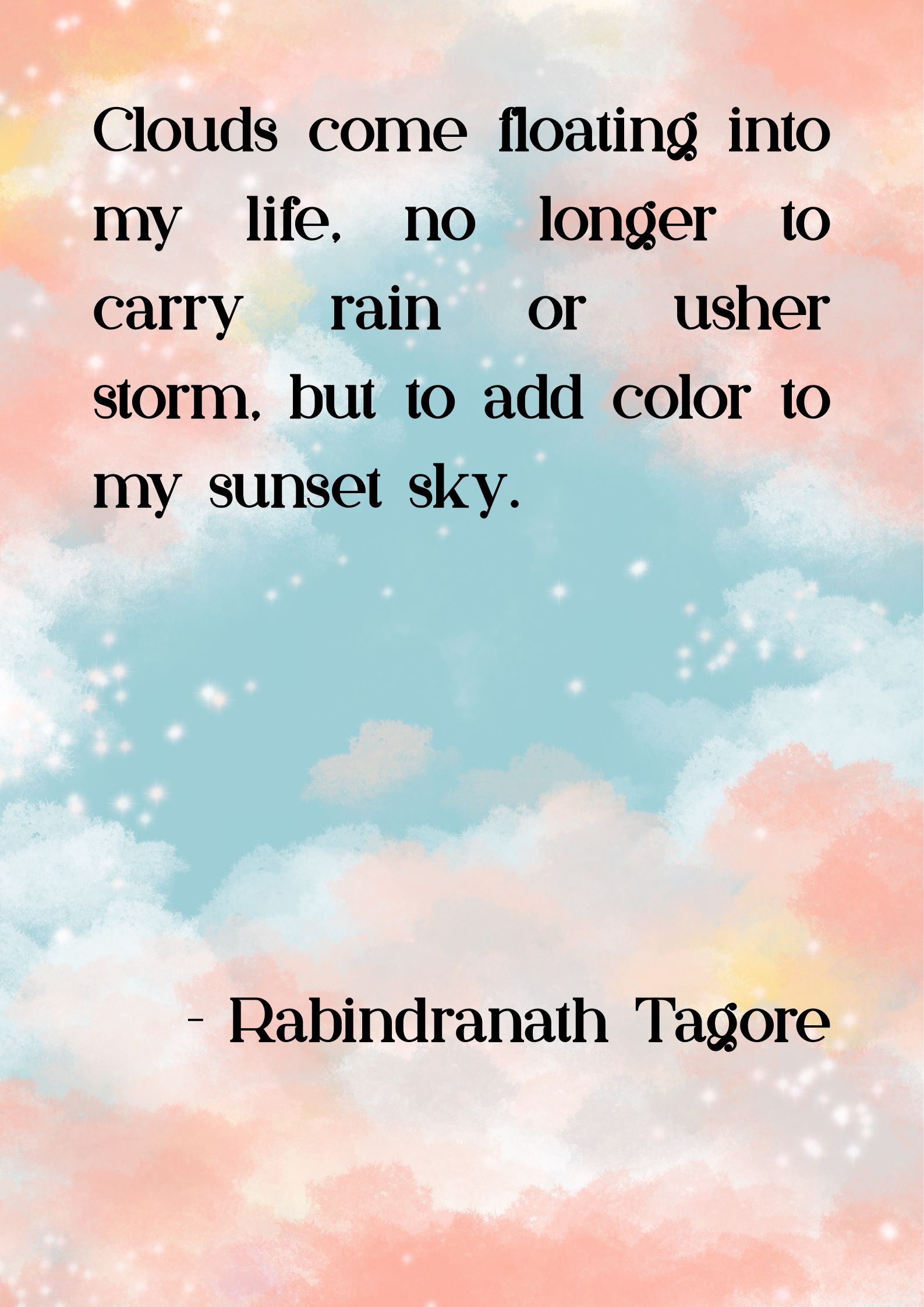
This week’s quote is from Rabindranath Tagore, a Bengali poet, writer, composer, philosopher, and artist whose work profoundly influenced Indian literature and culture. In 1913, he became the first non-European to receive the Nobel Prize in Literature, largely for his poetry collection Gitanjali. He also wrote the words that became the national anthems of both India and Bangladesh. Clouds are usually associated with approaching storms, darkness, and uncertainty. In Tagore’s imagery, however, they no longer represent something to fear. Instead, the same clouds become part of a beautiful sunset. Nothing about the clouds themselves has necessarily changed; what has changed is the way they are perceived.
Life often works this way. Experiences that once seemed painful, disappointing, or disruptive can acquire a different meaning when viewed from a distance. A failure may eventually redirect us towards something better. A difficult period may reveal strengths we didn’t know we possessed. Even loss, while never becoming something we would have chosen, can deepen our appreciation for what remains. The reference to the “sunset sky” also carries a sense of maturity. As we accumulate experiences, perhaps we become less frightened by every approaching cloud. We learn that storms pass, circumstances change, and difficult moments are only one part of a much larger landscape. Some of the experiences that complicated our lives may even add depth, wisdom, and richness to the people we eventually become.Tagore’s words therefore aren’t about pretending hardship is beautiful. They are about perspective. We may not be able to choose every cloud that enters our lives, but with time, healing, and understanding, we may discover that even some of our darker experiences have added unexpected colours to our story.
This week, in verse 18.58, the Bhagavad Gita tells us that every life contains obstacles. Some are external: difficult circumstances, losses, disappointments, and unexpected changes. Others are internal: fear, anxiety, pride, and self-doubt. Krishna’s message is not that obstacles will disappear. Rather, it is that we need not face them alone. Whether we understand this verse in a spiritual sense or as a reminder to trust something larger than ourselves, the lesson remains powerful. Strength often comes from recognising that we do not carry every burden by ourselves. When we stop trying to control everything, we create space for wisdom, support, and grace to enter. Inner courage is not the absence of vulnerability. It is the willingness to move forward despite it.
This week I learned that authenticity is the key to living a life of freedom. When you let yourself be guided by your own inner truth instead of trying to fit expectations, life feels more fulfilling. You no longer feel pressured to maintain a curated version of your life or chase external narratives. The energy you once spent seeking approval can be redirected toward designing a life that makes you feel fully alive. The right opportunities and connections flow naturally to you when you choose yourself and stay grounded in who you are.
That’s all from me this week. Take care and remain positive because life is authentic!
Happy birthday Singapore! Today is Singapore’s 61st National Day. Today, as I think back on my journey on becoming a Singaporean, I realise that every National Day is a reminder that a nation’s story is written not only through landmark moments, but through the everyday lives of the people who call it home. It’s found in neighbours looking out for one another, in hawker centres filled with conversations, in the many cultures that coexist so naturally, and in the quiet confidence that tomorrow can be better than today. Wishing Singapore many more years of peace, progress, and unity.
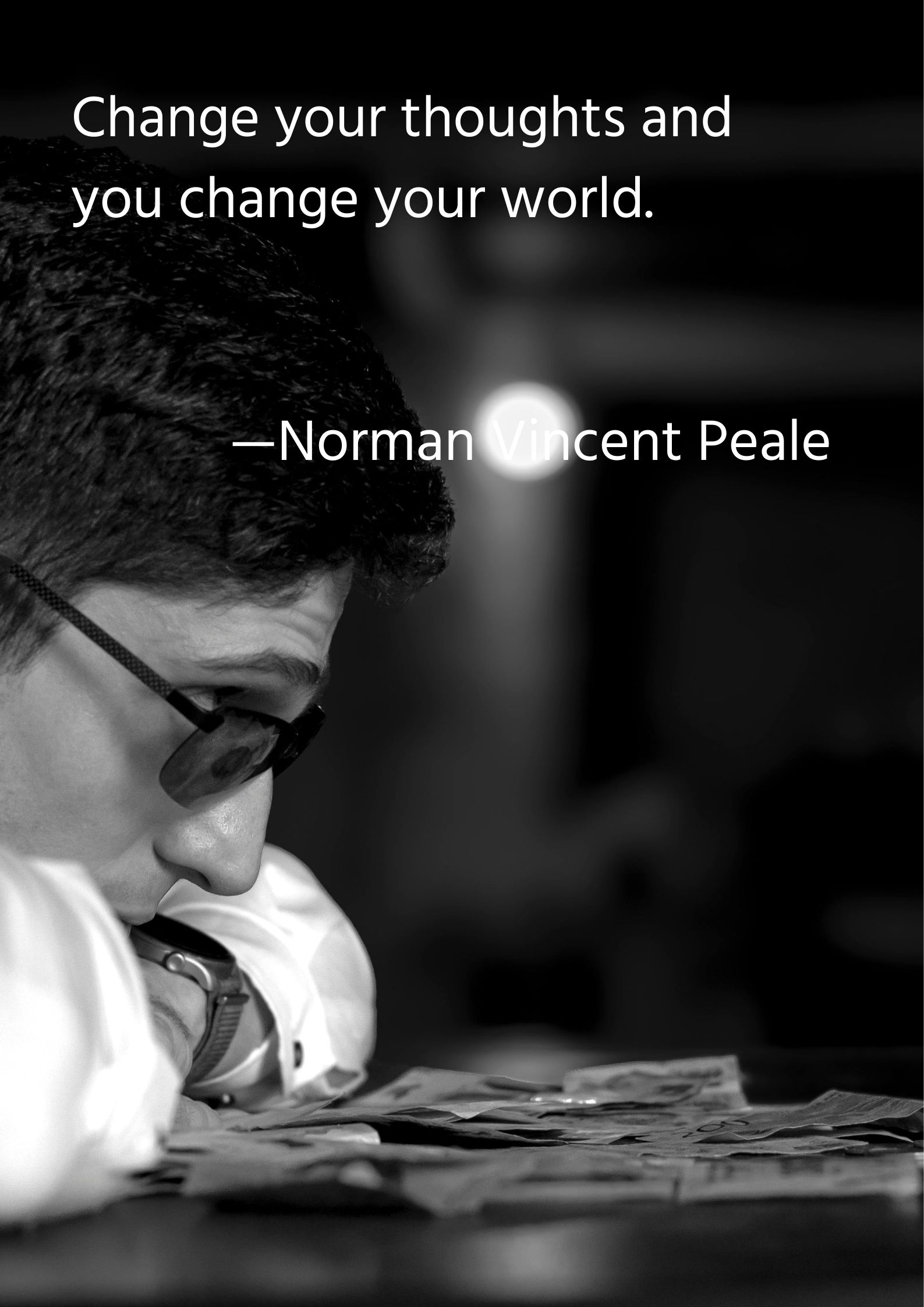
Today’s quote is from acclaimed American minister and author best known for his influential book, The Power of Positive Thinking, Norman Vincent Peale. His quote reminds us that while we cannot always control our circumstances, we do have influence over how we perceive and respond to them. Our thoughts shape our attitudes, our attitudes influence our actions, and our actions ultimately determine the direction our lives take. The quote is not suggesting that simply thinking positively will make problems disappear. Challenges, disappointments, and setbacks are an inevitable part of life. Rather, it highlights the power of perspective. Two people can face the same situation and experience it very differently because of the way they interpret it. One may see only obstacles, while the other sees possibilities for learning, adaptation, or growth.
Our thoughts also influence our behaviour. If we constantly tell ourselves that we are incapable, we are less likely to take risks or embrace opportunities. Conversely, when we cultivate thoughts of hope, resilience, and possibility, we are more willing to persevere, solve problems, and keep moving forward. Over time, these choices create meaningful changes in our lives. The quote also encourages mindfulness. Many of our thoughts are automatic, shaped by habit and past experiences. By becoming aware of them, we gain the ability to question unhelpful patterns and replace them with more constructive ones. This isn’t about denying reality; it’s about choosing a mindset that helps us respond to reality more effectively. Ultimately, changing our thoughts doesn’t alter the external world overnight, but it does change the way we engage with it. And that shift in perspective can transform our relationships, our decisions, and our sense of purpose.
This week also marked a quiet but meaningful milestone in our family as BB completed his first week at his very first full-time job. It was a week of introductions, orientation, learning new systems, and beginning to understand the rhythm of a completely new environment. There wasn’t much “real work” yet, but perhaps that’s exactly what first weeks are for — learning names, finding your footing, and slowly building confidence. Watching someone step into adulthood is a curious mix of emotions. There’s pride in seeing them begin a new chapter, nostalgia for the years that passed so quickly, and hope for everything that lies ahead. Every career begins with a first day, and every experienced professional was once the new person trying to remember where everything was. Here’s to the many lessons, friendships, and opportunities that will grow from this humble beginning.
This week, verse 4.42 talks about doubt having a way of appearing wise. It disguises itself as caution, preparation, or careful thinking. Yet there comes a point when endless questioning prevents us from moving forward. During the Kurukshetra war between the Pandavas and the Kauravas, as Arjuna stands paralysed by uncertainty, Krishna does not tell him to wait until every answer appears. Instead, he urges him to cut through doubt and act.
Many opportunities in life require us to move before certainty arrives. We apply for the role before knowing the outcome. We begin the project before knowing if it will succeed. We take the first step before seeing the entire path. The opposite of doubt is not blind confidence. It is trust. Trust that we can learn, adapt, and continue moving even when the future remains unclear. Sometimes courage is simply taking the next step despite not having all the answers.
This week, I also learned that detachment means making complete peace with the truth that life unfolds as it’s meant to. It allows you to move through life without getting caught in the web of fear. Instead of resisting the flow of events or trying to force outcomes, you release the need for control. You give your best to whatever comes your way, and then allow the rest to take shape on its own. When you’re in a state of true detachment, you align yourself with the natural harmony of life. All things change. We can’t make circumstances unfold exactly as we want. Once you internalize this, you achieve calmness and inner stability, and you become free to experience every beautiful moment without clinging or attachment.
Hello August! We are looking at the second half of the year and the countdown to the new year has already started.
This week has felt like one of quiet construction. Much of the work happened behind the scenes, where ideas were refined, relationships were strengthened, and plans gradually moved from possibility to action. There were meaningful conversations, careful follow-ups, and thoughtful decisions that may not seem significant on their own, but together they represent the kind of progress that lasts. Sometimes the most important work isn’t what everyone sees, but what quietly prepares the ground for what comes next.
It was also a week of building systems, not just completing tasks. There was satisfaction in creating structures that will make life simpler and more intentional in the months and years ahead. Whether organising work, refining personal projects, or thinking more deliberately about the future, the focus wasn’t simply on getting through the week, but on building something that will continue to serve long after it is finished.
Alongside all of this was a reminder that growth often comes through conversation. A new introduction, an unexpected exchange of ideas, or a collaborative discussion can quietly open doors that didn’t exist before. Not every opportunity announces itself with certainty; many begin as small connections that slowly gather momentum.
Looking back, this wasn’t a week defined by dramatic milestones. It was defined by intention. By choosing patience over haste, preparation over shortcuts, and consistency over spectacle. And perhaps that’s the quiet lesson these days have offered: the strongest foundations are rarely built all at once. They are created one conversation, one decision, and one thoughtful step at a time.
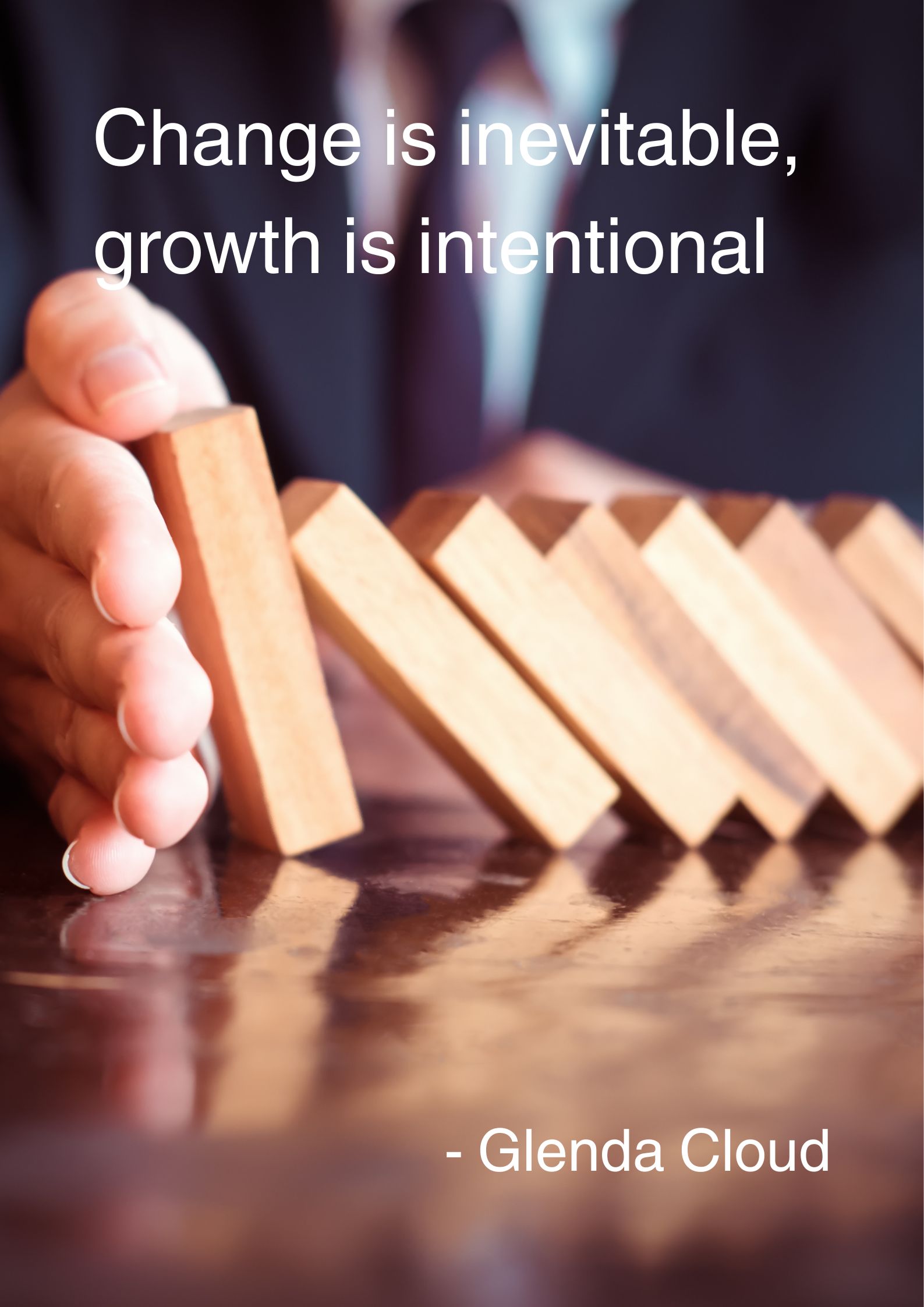
Today’s quote by author, speaker, and personal development coach, Glenda Cloud captures an important distinction about life. Change happens whether we invite it or not. Time passes, circumstances shift, relationships evolve, careers take unexpected turns, and seasons of life come and go. Change is a constant, woven into the fabric of our existence. We cannot stop it, no matter how much we might wish to. Growth, however, is different. It requires a conscious choice. We can experience the same challenges repeatedly without learning from them, or we can pause, reflect, and allow those experiences to shape us into wiser, stronger, and more compassionate people. Simply growing older is automatic; growing as a person is intentional.
The quote also reminds us that difficult experiences do not automatically make us better. Adversity offers the opportunity for growth, but it does not guarantee it. We grow when we ask ourselves what a situation can teach us, when we remain open to new perspectives, and when we choose to respond thoughtfully rather than react impulsively. There is also an encouraging message here. Since growth is intentional, it is available to all of us. We don’t need perfect circumstances to become better versions of ourselves. Small, deliberate actions—reading, learning, practising gratitude, developing healthy habits, admitting mistakes, or showing kindness—gradually shape our character over time. These choices may seem insignificant in the moment, but together they create lasting transformation. Ultimately, the quote reminds us that while we cannot control the changes life brings, we can choose how we meet them. And in that choice lies our greatest opportunity for growth.
The Gita begins this month’s journey with a powerful reminder: we are often far more capable than we believe. In verse 6.5, when faced with setbacks, disappointment, or uncertainty, it is easy to become our own harshest critic. We replay mistakes, magnify failures, and convince ourselves that we are not ready, worthy, or capable enough. Krishna challenges this way of thinking. He reminds us that the mind can either support our growth or become the very obstacle that holds us back. The battle is not always against circumstances. Often, it is against the stories we tell ourselves. This verse is not about self-reliance in isolation. It is about taking responsibility for our inner world. We cannot always control events, but we can choose how we respond to them. Every act of courage begins with a simple decision: to stop pulling ourselves down and start helping ourselves rise.
This week I learned that many things won’t work out the way you expected, but that doesn’t mean you’ve failed or that your efforts were wasted. You’ll make mistakes, but you’ll grow. You’ll face setbacks, but you’ll strengthen your resilience. There is still meaning, connection, and joy in your journey. You’ve got to explore new paths, take new chances, and embrace what comes your way. Some moments will change your life in beautiful ways, while others will simply teach you. Even when plans fall through, unexpected gifts emerge, new doors open, and you discover abundance beyond your expectations.
And on that note, here’s to a well-deserved August!