International Day of Yoga

Source

Celebrated on 21 June annually since 2015, the International Day of Yoga was first proposed by the Indian Prime Minister Narendra Modi in 2014. The date of the day, 21 June was suggested as it is the longest day of the year in the northern hemisphere and shares a special significance in many parts of the world. From the perspective of yoga, the summer solstice marks the transition to Dakshinayana, when the sun travels towards the south on the celestial sphere. The second full moon after summer solstice is known as Guru Poornima. Lord Shiva, the first yogi or Adi Yogi, is said to have begun imparting the knowledge of yoga to the rest of mankind on this day, and became the first guru.

Yoga is a group of physical, mental, and spiritual practices or disciplines which originated in ancient India and is one of the six orthodox philosophical schools of Hinduism. In the western world, yoga often denotes denotes a modern form of hatha yoga with yoga as exercise, consisting largely of the postures or asanas. The practice of yoga has been thought to date back to pre-vedic Indian traditions, possibly in the Indus valley civilization around 3000 BC and the practice is mentioned in the Rigveda and referenced in the Upanishads, though it most likely developed as a systematic study around the 5th and 6th centuries BC. Hatha yoga texts began to emerge sometime between the 9th and 11th centuries with origins in tantra. Yoga in Indian traditions is more than physical exercise, it has a meditative and spiritual core. Derived from Sanskrit, the root word for Yoga is yug which means to attach, join, harness or yoke and refers to uniting with someone or joining. The ancient Indian sage Patanjali is thought to be the Father of Modern Yoga because he is the person who codified all the aspects of Yoga into a certain format and introduced Yoga Sutras.

The International Day of Yoga aims to raise awareness worldwide of the many benefits of practicing yoga. It is important for individuals and populations to be able to make healthier choices and follow lifestyle patterns that foster good health. In this regard, it is important to reduce physical inactivity, which is among the top ten leading causes of death worldwide, and a key risk factor for non-communicable diseases, such as cardiovascular diseases, cancer and diabetes. Other than other physical activies one can do, yoga is is an activity which is more than just a physical activity. In the words of one of its most famous practitioners, the late B. K. S. Iyengar, “Yoga cultivates the ways of maintaining a balanced attitude in day-to-day life and endows skill in the performance of one’s actions.”

Yoga offers physical and mental health benefits for people of all ages and if one is going through an illness, recovering from surgery or living with a chronic condition, yoga can become an integral part of their treatment and potentially hasten healing. The benefits of yoga improves strength, balance and flexibility, helps with back pain relief, ease arthritis symptoms, benefits the heart health, relaxes the practitioner and help them sleep better, improve energy levels, better the mood and manage stress and promotes better self-care by providing a balance between the body, mind and soul.

So how can one celebrate this day? Create awareness about the benefits of yoga and take part in in a yoga class, preferably online or in a small group. You can also watch yoga videos on and correct your postures and share with family and friends the importance of yoga.


Lessons I learnt from the Corporate World

We have been spending some time recently talking about work and the working life, especially since GG & BB will start their six-month industrial attachment next year and I thought that some of what we discussed could be of use to others, especially someone who is either just entering the corporate space or are a few years in and want to succeed in their careers.

In no particular order, here’s what I have learnt:

  • Be good to those below you more than those above you. Treat everyone with the respect you expect from them for yourself. Be nice to everyone, you never know when you are being judged.
  • Be careful when you work with friends, it may sometimes end badly
  • Keep your opinions about others to yourself and never share it with anyone else at work
  • Don’t Gossip! Especially in the pantry and public spaces, you never know who could be listening
  • Office politics is a fact of life and you can’t escape it. Learn to play the game
  • Network, network and then network some more. As you grow in your career, your networks will become more and more useful and informative.
  • Make your boss look good. That’s the key to success because they are the only ones who will battle for you and promote you. Make sure you know what your boss needs to accomplish and do your best to help them accomplish it.
  • Document everything! Your wins, commendations, compliments and learnings.
  • Train someone else to do your job and do it well. Because if you are irreplaceable in your position, you will never move up because there is nobody else to do what you are doing and doing best.
  • Any organisation you work for is not running a charity, they are here to make money and you have also been hired for that reason. You are hired because you have something that the organisation needs and any employment is a two-way process, one where both parties benefit.
  • Be reliable, be punctual and if you give someone a deadline, make sure you stick to it and in fact try to finish your work before the deadline.
  • Under promise and over deliver. It’s very simple actually. If you think you need 2 days to get a task done, ask for three days. This way, you have an extra day for any unforeseen circumstances that may come up and you are prepared and if all goes well, you get the task done ahead of your deadline, making you look super-efficient.
  • Become friends with all the secretaries, PAs and other co-ordinators. They will help you in tight spots and are also a good source of information that may not be found elsewhere.
  • Stay calm, cool and collected even if you are a withering mass inside. Be like the swan who looks calm and placid above the water, but is furiously paddling below it.
  • Leave your emotions at the door when you enter your place of work. Always think twice when you send emails or make phone calls when you are angry or upset. One tip I use during these times is to type your email first without typing in the email address and keep it aside for a while. Then when you are in a better frame of mind, edit the email, add the email address and send it.
  • Be well-dressed at work. Stand out, but not in the wrong way. If your work environment is conservative, then don’t wear outlandish clothes and vice-versa. Discreet jewellery, perfume and clothes which are classic will be better than fast fashion.
  • You are your own brand, so everything you do, say, write, dress, behave showcases the brand. So, create the brand that resonates with your work environment and maybe a couple of steps above your current role and stay true to your brand image at all times.
  • Have a life outside the office. You are not just a corporate drone, you should and must have a life outside of work. Have a hobby and do something that is totally unrelated to what you do at work.
  • Ask and encourage feedback from your managers because sometimes there may be something that you don’t see, but someone more experienced may instantly see.
  • Share successes, especially when you work as a team. When you do this, you let others share the glory and they will feel part of the successful project. Also, it never helps to have people think positively about you and your ethics. Giving others a chance to claim credit is an easy and effective way to magnify results.
  • Never stop learning. Every opportunity, good or bad teaches you something, even if it is what not to do, so don’t stagnate and become too comfortable in your job.
  • Always look at the bright side, and the positive side of things. Don’t get bogged down by pessimism. When days, weeks or even months are difficult, take heart and the hardest times will pass.
  • Focus on what you do best and try to compensate for your weaknesses. Nobody is perfect and everyone has some areas they are not good at, so amplify your strengths and work on the weaknesses.
  • Procrastination is something all of us are prone to, but procrastination has clear repercussions in the workplace resulting in challenges such as falling behind tasks. So, make sure you have clear daily goals which you tick off before you start slacking.
  • Failure is not the death kneel of your career. You will fail and multiple times in your career, but don’t stress about them. With no mistakes, there would be no opportunity to learn. Every failure gives you the chance to grow both personally and professionally.
  • Speak up. In meetings, in discussions and anyplace where you may have some input. This is not the time to be shy and refrain from speaking. If you have something to add to the discussion, make sure you put your point across. It may not be accepted, but for every ten points you put across, maybe one will be the one that is what was needed. But also ensure that when you speak, you understand what is being said and don’t speak illogically and nonsense.
  • Proactively seek new responsibilities, but only if you can handle. Conversely, don’t take up anything and everything that is thrown your way. Learn to say no to those above you if you are unable to manage or are hitting way above your weight and expertise.
  • Learn that everyone is expendable. If you don’t go to work, your organisation will not shut down, they will move on. But if you are not around, your family will be extremely affected and will find it very hard to move on. So don’t prioritise your job over your family.
  • Never burn bridges. You never know when you may have to go back to someone you have fought with, bad-mouthed or just generally been unpleasant to. People remember and will take their revenge when its their turn.
  • Work hard when you are at work, and when you leave the office, try to turn off. Most importantly have fun doing what you are doing and the eight or nine hours you spend at work won’t feel very long.
  • Stay two steps ahead. No matter what we do, success is less about any given moment and more about the next. Learn to anticipate what your manager or customer needs before they know how to ask for it and that’s one of the quickest ways to distinguish yourself in the workplace. Take initiative and don’t wait around to be told what to do, but at the same time, don’t make any assumptions, either.
  • Don’t take anything personally. Be professional, even when you think someone is out to get you.
  • Don’t trust anyone, especially at work. Everyone is looking out for themselves and a someone you consider a friend can easily throw you under a bus to save themselves. And at the same time, there’s a well know saying which is apt here to keep your friends close and enemies closer and is 100% true in a corporate setting.
  • Listen more and speak less. We have been given two ears and a mouth for a reason. So listen more than you speak and actually listen instead of rehearsing what you are going to say. At the same time, pay attention to what is happening around you and you will never be caught off guard.
  • Never betray anyone’s trust. Keep other people’s secrets as well as your own, and don’t share information that was given to you in confidence
  • Keep your social media to your social circle. Don’t ever add your co-workers and bosses to your social media platforms. You wouldn’t want them to know what is going on in your life which can give them ammunition to hurt or harm you. This doesn’t include LinkedIn as that is a work social platform.
  • Be flexible. Have an opinion, but don’t have hard opinions.
  • Don’t run after money. No doubt having money in the bank and being financially independent is important, but don’t let money dictate what you are in life and what you want to do in life. Let money be an accessory, not the focus.
  • Go the extra mile. Nobody ever achieved success by doing the bare minimum. Go above and beyond and you will be rewarded in one way or another.
  • Last, keep your goal in front of you and remember that whatever you do, you need to be true to yourself

So, there you have it, 40 lessons I learnt while in the corporate world. I am going to share it with BB & GG and their friends. Hope this was useful to you too. If you have more lessons from the corporate world, please share in the comments below.

Poem: It is Darkest before the Dawn

The world world collectively has been in a depression for about a year now. Everytime we things things are getting better, it becomes worse. But with the world reaching herd immunity and many countries getting their people vaccinated, maybe things will get better. It’s possible we have not yet reached the darkest part of the night yet, when dawn will bring new hope to the world.

It is Darkest before the Dawn

When life throws you a curveball
When all you want to do is curl into a ball

That’s when you remember
It’s always darkest before the dawn

When you are steeped in despair
When all life needs is a prayer

You do realise that things can only get better
Things can only look up, life will be happier

The dawn brings a fresh ray of hope
Which mimics the hope that life gives you

When you hit rock bottom, there is just one way
And that’s the way up, life is not just grey

Get mentally strong, that’s the rule
Then life will not seem to be so cruel

A new day will dawn and things will get better
So much so, we will look back and wonder

Why we despaired and were sad and webegone
It’s so true when they say
It’s the darkest before the dawn

School Stories: Memories and an Alternate Reality

Source

As you now I studied in JB Vachha High School. What you don’t know was that my paternal grandparents were strictly against me and then my sister attending this school. They wanted me to attend the nearby South Indian school which was my father, his siblings and all his cousins alma mater. But my mother stood strong and in the face of intense opposition, went ahead and got me enrolled into my school. Amma, my mother, used to see my neighbours and other girls in our neighbourhood wear the blue and white uniform on their way to school and insisted her daughters also should be in the same school.

The biggest objection my grandparents had was that my father’s alma mater offered Tamil as the mother tongue language and this was not offered in my school, which offered French as the second language. They worried, and probably rightly, that if we didn’t learn the language of our ancestors, we would no longer be good Tamil girls. But amma had her way and we started school in the school of her choice.

The other day, I was thinking what if amma did not get her way and me and my sister ended up in the school of my grandparents choice? Actually I don’t have to look too far to see this, as I did have friends in the building and in the neighbourhood who did go to the school. I would say, we would be fluent in Tamil, which today, we can only speak, but can’t read or write. And this in turn, would have made me get BB & GG to take Tamil as their mother tongue language instead of Hindi which they took.

It’s quite likely that we would be slightly more conservative and not have too many friends from other community groups. In our school, we developed a more liberal mindset and because our classmates came from not only different strata of society, but also from different communities, we learnt to be able to have a live and let live attitude.

And the most important thing, according to me is our school is a girls school while the other school is a co-ed school. And if I think back, with the exception of our physical education teacher, a music teacher and some peons in the school, all our teachers and staff were women. This means that while in school, we had no filter! We spoke what we wanted, especially when teachers were not around and because there were no boys, we spoke about things that may have been either taboo or spoken in a hush-hush way in a co-ed school. Remember, this was the eighties India where the country was still in the throes of socialism and liberalisation was still at least four-five years away. The con, atleast for me was that I was unconfortable with boys, until I entered graduate school because my degree programme also had a higer percentage of girls compared to boys and so I barely interacted with them. Being in a single sex school does allow the school to tailor the teaching style according to the students and my school also offered a whole suite of extra curricular activities which in that day and age, hardly any school offered. Of course, the bulk of these extra curricular activities were geared towards making us good moms and housewives, but still in that India, when we used to speak with our friends and family from other schools, they barely had anything more than a library and physical education period. We used to have music, dance, cookery, laundry, stiching, embroidery, girl guides, social service and typing. I am probably missing some, but in hindsight, all these are things that probably would have made more sense half a century back.

If my amma had not had her way, I would not be the person I am today and because we spent a good portion of our early lives in school, we spent 12 to 13 years in the same school, the school and its ethos and philosophy have moulded us. For this I am so very thankful that amma took a stand and ensured she gave us the opportunities going to this school offered us.

So how did your school mould you? I would love to hear in the comments below.

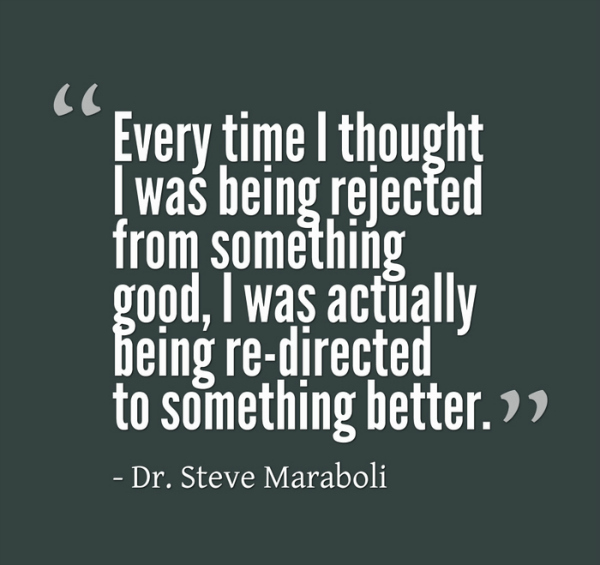
Not a Rejection, but a Redirection

This is a scenario that has probably happened to all of us. We are desperately waiting for an answer for either a dream job or a place in the course we yearn to be in. And then there comes a call or more likely an email that dashes our hopes to the ground – a rejection letter if we are lucky. The more likely scenario is ghosting and then slowly we give up hope. We are despondent and think our world has come to an end.

Bryant McGill said Rejection is merely a redirection: a course correction to your destiny. And this is true. Failure or rejection is just a delay in our plans, a temporary detour, not the end. It may be very difficult to see it then, but that rejection is a sign from the universe that there is something better waiting. But after some time, we have to get up, dust off the rejection and the pain it caused us and continue doing what we need to do to reach our goal. Rejection teaches us that hard work and tenacity will allow us to reap the ultimate reward.

Rejection forces us to dig deep and clarify our passions. Many times, failure and loss result from a diminished passion and we realise we weren’t as passionate as we first thought. The pruning effect is positive and as we clear your plate a little, we’ll make more room for what excites us and direct our energies toward that and it is clear that focused energy is when we’re most effective.

Challenges and losses compel us to gather up our resources and develop and uncover skills we didn’t know we had. It gives that jolt of adrenalin to our system which forces us to go beyond what we thought we were capable of. A rejection keeps us in check. There will always be someone who is better than us and deserves what we were hoping to get and a rejection shows us that. It pulls us down and if we are at that point arrogant or too sure of our abilities, that’s the universe telling us no, we aren’t. The rejection then becomes a lesson for us, reminds us to be better the next time round and strive harder. With pain, comes gain and when we are all out to reach a goal, then we should be prepared for rejection, criticism and hate and with each such prick, you start to develop a thick skin, which makes future rejections easier to handle. Rejection also eliminates what doesn’t serve us and we are also allowed to reject something that is not right for us, a sort of reverse rejection.

When faced with a large failure, you see who is there for you. When you hit rock bottom, it is your family and close friends, ones who are there in thick and thin, in sadness and happiness. So you can sieve those who are genuine from the freeloaders when rejection comes calling. During rejection, we can figure out where we are lacking, especially the habits and skills we have not yet acquired which a failure reminds us to go forth and get.

We are all plagued with the superhero syndrome and this becomes harmful when the candle is burning at both ends, drifting toward burnout. It is only when faced with rejection, that you start to learn to ask for help and then realise that asking for help is not a weakness but can be viewed in a positive light.

When we are rejected, we usually go back to the drawing board to take stock and reevaluate what went wrong. This is something that we need to do regularly, but when faced with success, we rarely do that, it’s only failure that compels us to rethink options and who knows the rethink may set us on a new path, something we had not considered previously.

Lastly, when we are rejected, our successes become sweeter. Value and meaning become heightened in the face of difficulty with the greatest celebrations coming from the toughest battles. When the journey to get to the peak includes getting back on our feet and dusting ourselves off, we’ll be more inclined to stop when we see roses and express a little more gratitude at the finish line.

When we are rejected or we are subject to failures, at that moment, we are so hurt and dejected that it is impossible to see past it. In retrospect, in many cases, failure would be the best thing that could have happened to us. Failure and rejection are what keeps us hungry, motivated, and allows us to shoot for the stars by bettering ourselves for the next opportunity that comes along. In short, the bitterness of every failure adds sweetness to every victory.