2026 Week 05 Update

The first month of 2026 is done and dusted, and I hope everyone is well. I am still in Bangalore and will return home soon. My mum’s both eye operations have been a success, and my aunt’s first eye was too. Next week, it will be her second eye, and what I came for will be fulfilled.

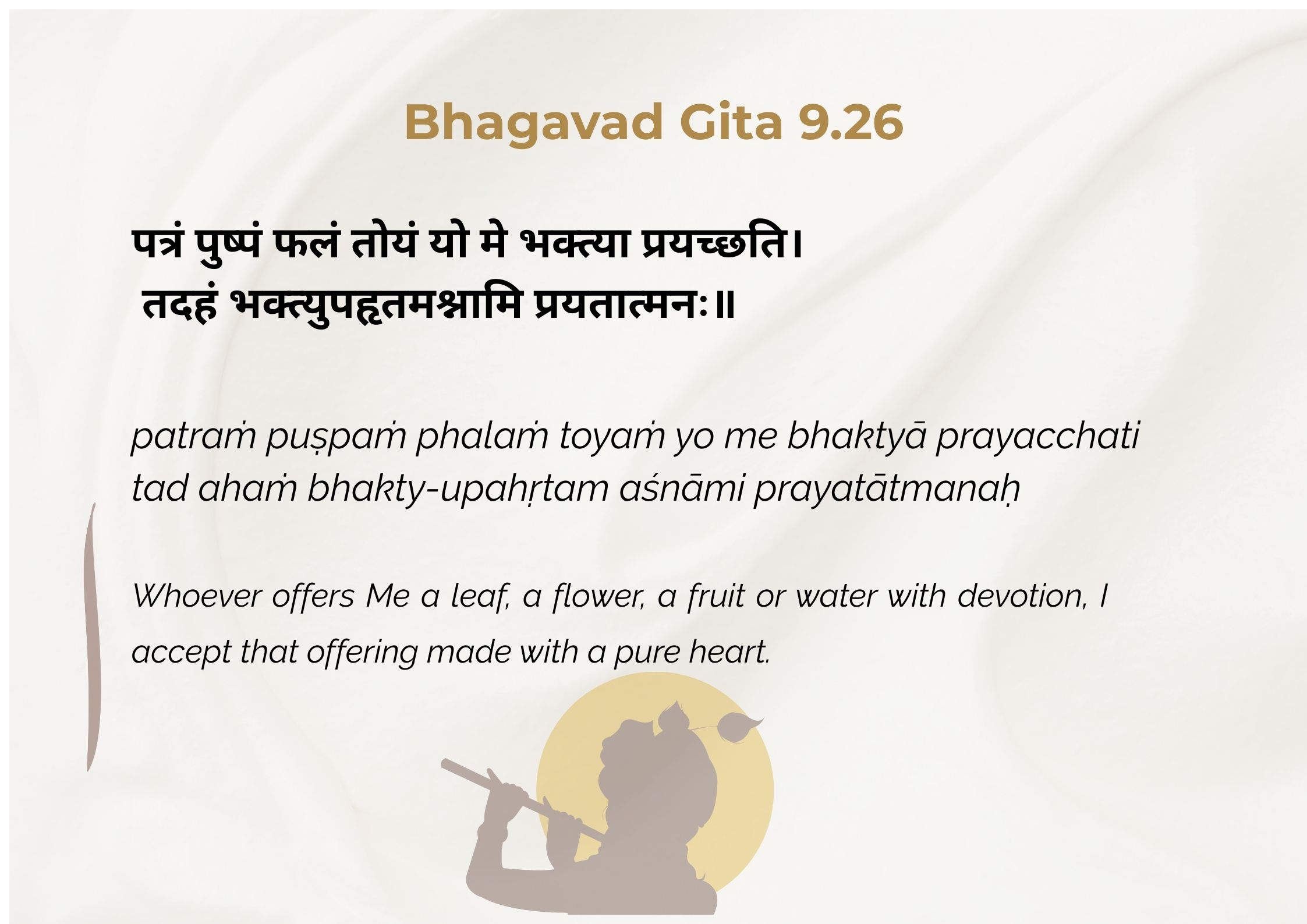
Today’s verse from the Bhagavad Gita is one of its most comforting verses. Krishna reassures Arjuna that sincere devotion, not ritual, not social norms, not perfection, is what draws support from the universe. Devotion here isn’t blind faith; it’s wholeheartedness. It’s the quality of committing to something deeply, honestly, without scattering yourself across a thousand fears. The verse teaches that when you show up fully for your path, life steps in to support you. The Sanskrit words yoga-kṣema are powerful: yoga is the gain of what you need, and kṣema is the protection of what you already have. In other words, you don’t walk alone. There’s a subtle reminder here: when your energy is fragmented, anxiety grows. But when your mind is anchored, you create inner spaciousness, and support naturally finds its way to you. This verse encourages trust, not passivity. It invites you to act with clarity while letting go of worry. Devotion becomes a way of moving through life with steadiness and grace rather than fear and grasping.

Today’s weekly motivation is about being patient. Whether it’s breaking free from old habits or adopting new ones, you have to be patient and embrace small steps. Habits and thinking patterns are built over many years. You’re training your mind to respond in a new way. You can’t go from 0 to 100 instantly! When you’re actively trying to undo old habits, you will face resistance, which can make you feel like your efforts are futile. That’s when you have to trust the passage of time. Small, consistent actions and little shifts in your perspective will lead to lasting transformation over time. The key is to remain consistent, despite the ups and downs.

Today’s quote from Ferdinand Foch, a French general and military theorist who served as the Supreme Allied Commander during the final stages of World War I, speaks to the extraordinary force of inner conviction. Foch is not talking about physical weapons or military strength alone. He is pointing to something far more enduring: passion, belief, and an unshakable sense of purpose. When the human soul is “on fire,” it becomes capable of perseverance, courage, and transformation that no external force can easily extinguish. A soul on fire is driven by meaning. It is animated by faith in a cause, an idea, or a vision larger than the self. History repeatedly shows that people fueled by conviction can endure hardship, overcome fear, and push beyond what seems physically or emotionally possible. Skills can be taught and resources can be gathered, but without inner fire, action lacks momentum. Passion turns effort into persistence and struggle into resolve.

The quote also reminds us that real power does not come from domination, but from inner alignment. A person deeply committed to what they believe in becomes difficult to defeat, because their strength is not dependent on circumstance. Even setbacks can reinforce that inner flame, sharpening focus rather than diminishing it. This is why movements, revolutions, and personal transformations often begin with individuals who carry intense inner clarity rather than external authority. Beyond conflict or leadership, the quote applies to everyday life. Creativity, resilience, and meaningful change are all born from this inner fire. When people care deeply, they act differently. They take risks, stay the course, and inspire others simply by showing up with authenticity and intensity.

That’s all I have the time for this week. Stay positive and see you next week!

In My Hands Today…

Stuck: How the Privileged and the Propertied Broke the Engine of American Opportunity – Yoni Appelbaum

How did America cease to be the land of opportunity?

We take it for granted that good neighbourhoods—with good schools and good housing—are only accessible to the wealthy. But in America, this wasn’t always the case.

Though for most of world history, your prospects were tied to where you were born, Americans came up with a revolutionary If you didn’t like your lot in life, you could find a better location and reinvent yourself there. Americans moved to new places with unprecedented frequency, and, for two hundred years, that remarkable mobility was the linchpin of American economic and social opportunity.

In this illuminating debut, Yoni Appelbaum, historian and journalist for The Atlantic, shows us that this idea has been under attack since reformers first developed zoning laws to ghettoize Chinese Americans in nineteenth-century Modesto, California. The century of legal segregation that ensued—from the zoning laws enacted to force Jewish workers back into New York’s Lower East Side to the private-sector discrimination and racist public policy that trapped Black families in Flint, Michigan to Jane Jacobs’ efforts to protect her vision of the West Village—has raised housing prices, deepened political divides, emboldened bigots, and trapped generations of people in poverty. Appelbaum shows us that these problems have a common people can’t move as readily as they used to. They are, in a word, stuck.

Cutting through more than a century of mythmaking, Stuck tells a vivid, surprising story of the people and ideas that caused our economic and social sclerosis and lays out common-sense ways to get Americans moving again.

Sacred Stones, Spaces, and Stories: Jyotirlingas Part 4 – Mahakaleshwar Temple

In the ancient city of Ujjain, perched on the banks of the holy Shipra River in Madhya Pradesh, stands the majestic Mahakaleshwar Temple, a storied sanctuary of Lord Shiva, honoured as one of the twelve Jyotirlingas in India. Mahakaleshwar, meaning “The Lord of Time and Death,” is unique for its south-facing linga or dakshinamukhi, a rare feature symbolising Shiva’s might over death itself. Throughout centuries, the temple has drawn kings, saints, poets, and millions of devotees, serving both as a spiritual epicentre and a monument to resilience amid cycles of destruction and renewal. In Ujjain, the cosmic rhythms of time and faith converge, making Mahakaleshwar a beacon in the Jyotirlinga pilgrimage and the soul of the city’s religious life.

The legends of Mahakaleshwar are at once magnificent and profound, revealing why the temple is revered as the guardian of time. One prominent tale is the Legend of King Chandrasena and Shrikhand: King Chandrasena of Ujjain, a devout Shiva worshipper, safeguarded the city while performing deep meditation. A simple farm boy, Shrikhand, inspired by the king’s devotion, discovered a buried Shiva lingam and began worshiping it. As the city faced invasion by enemies, Shiva appeared in his fearsome Mahakala form, answering the prayers of his devotees, vanquishing the oppressors, and promising to protect Ujjain henceforth. This miraculous event led to the formal enshrinement of the Mahakaleshwar Jyotirlinga, considered “Swayambhu” or self-manifested, offering devotees solace from fear and assurance of Shiva’s eternal guardianship.

Another powerful legend recounts the wrath of Lord Shiva during the cosmic Tandava dance at the death of his beloved Sati, after her father Daksha insulted him. Shiva’s dance of destruction in Ujjain led him to manifest here as Mahakaleshwar, “the mightier than time,” eternally transcending the cycles of birth and death. The temple also honours Kalabhairava, Shiva’s fierce aspect, as the guardian deity of Ujjain. According to lore, those who worship Kalabhairava here are protected, further cementing Mahakaleshwar’s reputation as a place to overcome fear and hardship.

Ujjain itself is ranked among the “Saptapuris”, the seven holy cities offering moksha or liberation from rebirth, making Mahakaleshwar a crucial gateway in Hindu eschatology. With roots stretching back over two millennia, Mahakaleshwar Temple is a living chronicle of Ujjain’s history.

Archaeological records and ancient coins suggest that the original temple may have been constructed during the rule of Prajapati Brahma, with concrete evidence pointing to the reign of the Paramara dynasty as a formative period. Multiple dynasties: Guptas, Mauryas, Paramaras, Mughals, Marathas, and Scindias, have presided over Ujjain, each leaving their mark on the temple and city.

The invasions over centuries were brutal: The temple was repeatedly razed by foreign aggressors. Prominent among these was the destruction during the 13th century by Iltutmish, Sultan of Delhi. Nevertheless, local rulers like Udayaditya and Naravarman spearheaded reconstructions, reinstating Mahakaleshwar as Ujjain’s spiritual heart.

A hallmark of Mahakaleshwar’s history is its Bhasma Aarti tradition—the offering of sacred ash to Shiva, rooted in tantric lore and embraced by successive generations. The continuously burning dhuni or sacred fire in the temple is believed to have blazed for centuries. Ujjain also hosts the grand Kumbh Mela every twelve years, fusing Mahakaleshwar’s ritual power with vast communal gatherings. Through cycles of devastation and revival, the temple has stood as a metaphor for time’s flow and the endurance of faith.

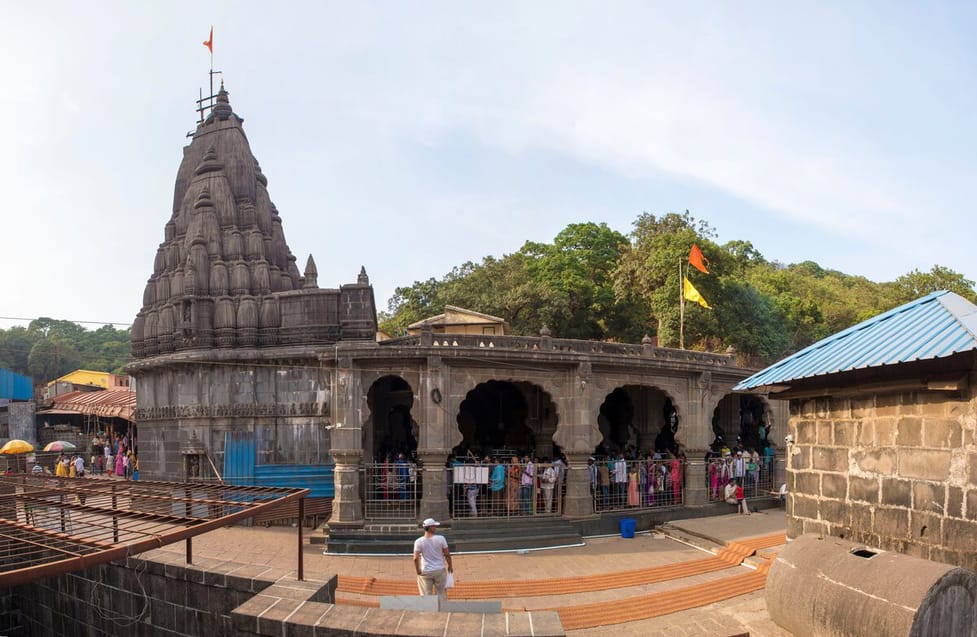
Mahakaleshwar’s architecture is an elegant fusion of Bhumija, Chalukya, and Maratha styles, shaped by the eras and rulers who rebuilt it. The sprawling five-level temple complex is centred on the sanctum sanctorum, the garbhagriha, housing the self-manifested lingam deeply embedded in the earth. Its south-facing orientation sets it apart, signifying Shiva’s power over death and time, a feature central to spiritual and ritual practices.

The temple towers, shikharas, are adorned with detailed carvings of mythological themes, while wide pillared halls or mandapas invite mass gatherings. Constructed of massive stone blocks and ornate marbles, the temple’s design blends durability with artistry. Within the precincts are shrines dedicated to Parvati, Ganesh, Kartikeya, and Nandi; exquisite reliefs cover walls and pillars depicting Shiva, his vahanas or vehicles, and attendant deities. A distinctive feature is the Kalabhairava sanctuary, reinforcing the temple’s role as a protectorial space. The eternal dhuni is both a literal and symbolic heart of the temple, its smoke infusing the daily bhasma aarti and connecting worshippers with cosmic cycles. The multi-storeyed structure allows for distinct ritual layers, each with its own atmospheric ambiance and spiritual significance.

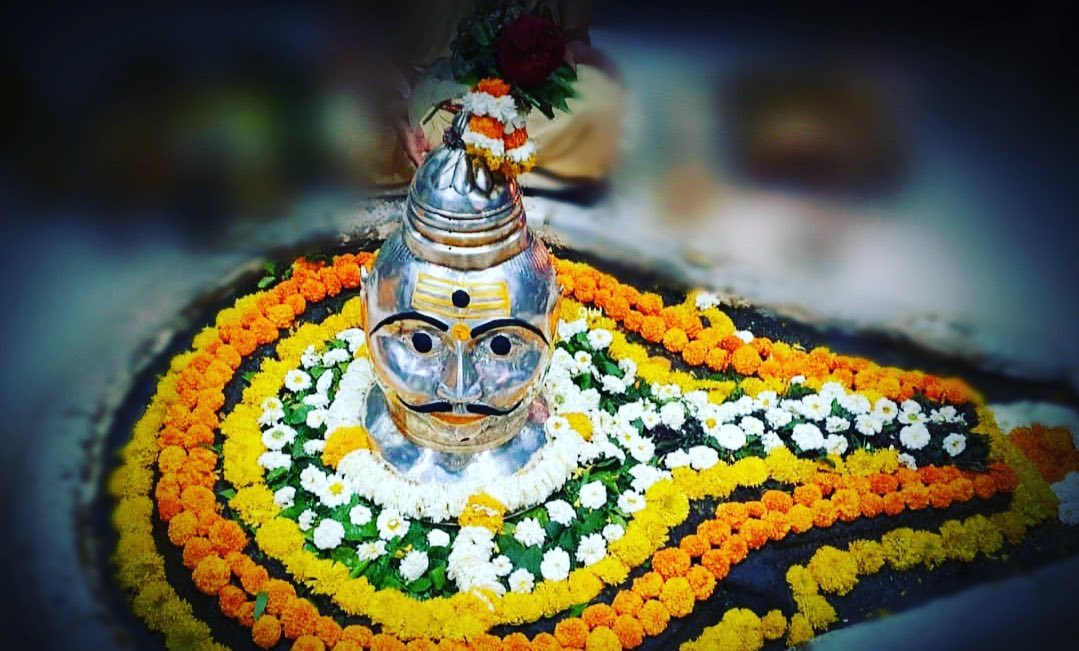
Mahakaleshwar is famed for its intense, immersive rituals. The most celebrated daily rite, performed at 4 am is the Bhasma Aarti. Priests douse the lingam with bhasma or ashes from the sacred funeral pyres, anoint and dress the deity, then awaken Lord Shiva with chanting, music, and offerings. Only men can witness the actual bhasma application, a tradition echoing the tantric emphasis on transformation through ash and fire. Daily pujas are a cycle of morning, afternoon, and evening prayers, including abhisheka which is the ritual bathing with water, milk, honey, aarti with lamps and conch shells, and the distribution of prasad or blessed food. Mahashivaratri draws throngs from across India for all-night vigils, fasting, and processions. The temple marks other local and national festivals with grandeur. As offerings to Kalabhairava, devotees present liquor, a rare permitted custom signifying liberation from taboo, fear, and the mundane. Local families and temple societies maintain centuries-old traditions, with inclusive efforts ensuring all strata of society participate in ritual cycles. The rituals here are elemental: fusing body, mind, and spirit in cycles reflecting the movement of time and the inevitability of death and renewal.

A visit to Mahakaleshwar is a transformative pilgrimage, set in the vibrant and historic city of Ujjain. Ujjain is accessible by rail and road, with the nearest airport at Indore about 55 km. Pilgrims arrive from across India and the world, often as part of Jyotirlinga circuits or during festivities like Kumbh Mela. Ujjain is known for its welcoming Dharmashalas or pilgrim hostels, bustling markets, and street-side eateries serving traditional cuisine. The city’s ancient lanes, ghats, and ritual spaces evoke the spiritual heritage of the region. Situated on the banks of the Shipra, Mahakaleshwar’s setting connects water, life, and cosmic cycles. Ujjain itself is considered a point of cosmic calibration, India’s ancient prime meridian, from which astronomical calculations are made. Pilgrims recount mystical dreams, moments of deep peace, and miraculous recoveries. The very stones of Mahakaleshwar seem to pulse with time’s rhythm, whispering stories from millennia past. The experience is one of immersion: in ritual, history, and spiritual community, leaving participants profoundly changed.

Mahakaleshwar Temple, beyond its religious role, has indelibly shaped literature, art, music, and identity in Ujjain and beyond. The temple and city feature in countless Sanskrit and Hindi works, from Kalidasa’s “Meghadoot” to medieval bhakti poetry and modern narratives. The myth of Shiva as Mahakala has inspired tales of divine power and cosmic cycles. Shiva-centered ragas and devotional songs echo in temple halls and city festivals, providing inspiration for classical and folk artists. Painted scrolls, sculptures, and murals throughout Madhya Pradesh reference Mahakaleshwar, his fiery dance, and the city’s sacred landscapes. For Ujjain’s inhabitants, Mahakaleshwar’s festival calendar structures civic life; local customs, crafts, and economies revolve around the temple. The city’s reputation as a “divine timekeeper” arises from the temple’s mythic and astronomical associations. Pilgrimage narratives and experiences are widely shared in contemporary literature and digital media, further expanding Mahakaleshwar’s cultural reach.

Today, the Mahakaleshwar Temple embodies both ancient resilience and adaptive modernity. Governed by the Mahakaleshwar Mandir Trust, the temple organises daily rituals, festivals, and infrastructural development. Ujjain has emerged as a major pilgrimage hub and a heritage destination. Infrastructure improvements have increased accessibility while retaining the temple’s historic ambience. Recent decades have seen extensive conservation: restoring sculptures, reinforcing the foundations, and managing the temple’s cultural landscape. Mahakaleshwar attracts a diverse, transnational array of pilgrims—youth, families, scholars, spiritual seekers—reflecting the broad appeal of Shiva and the enduring relevance of Jyotirlinga worship. Mahakaleshwar’s presence in popular media, documentaries, and digital platforms continues to widen its spiritual resonance in India and worldwide.

Mahakaleshwar Temple in Ujjain stands as the eternal keeper of time, a place where mythology, history, ritual, and humanity converge. As the only south-facing Jyotirlinga, it underscores Shiva’s power over mortality and time, offering liberation, protection, and renewal to all who seek it. In the labyrinthine lanes of Ujjain and the echoing halls of Mahakaleshwar, the cosmic cycles unfold, inviting generations of pilgrims into a dance with the divine. Through destruction and restoration, legend and lived experience, Mahakaleshwar continues to guard the passage of time, remaining a pillar of India’s spiritual heritage and a guiding light in the Jyotirlinga circuit.

In My Hands Today…

Who We Are and How We Got Here: Ancient DNA and the New Science of the Human Past – David Reich

A groundbreaking book about how ancient DNA has profoundly changed our understanding of human history.

Geneticists like David Reich have made astounding advances in the field of genomics, which is proving to be as important as archaeology, linguistics, and written records as a means to understand our ancestry. In Who We Are and How We Got Here, Reich allows listeners to discover how the human genome provides not only all the information a human embryo needs to develop but also the hidden story of our species.

Reich delves into how the genomic revolution is transforming our understanding of modern humans and how DNA studies reveal deep inequalities among different populations, between the sexes, and among individuals.

Provocatively, Reich’s book suggests that there might very well be biological differences among human populations but that these differences are unlikely to conform to common stereotypes.

Drawing upon revolutionary findings and unparalleled scientific studies, Who We Are and How We Got Here is a captivating glimpse into humankind—where we came from and what that says about our lives today.

Life Beyond the Highlight Reel

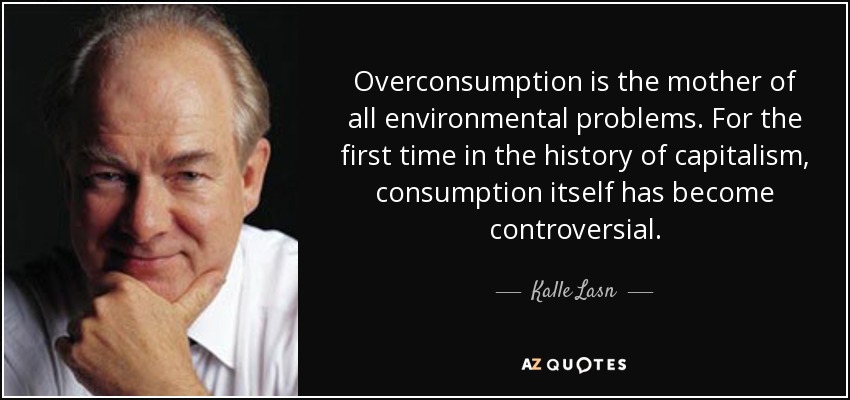
Social media runs our lives more than we admit. It feels like the place to be if you want to know what’s happening with people. But the truth is that what we see there isn’t the whole story. It’s not real life. It’s the highlights, the best parts, carefully chosen and polished. That’s why it feels so dangerous. It tricks us into thinking everyone else is living better, happier, more exciting lives than we are.

We scroll through pictures of vacations, smiling couples, perfect homes, and celebrations. But we don’t see bills, fights, loneliness, or self-doubt. And because we don’t see those things, it’s easy to believe they don’t exist. That gap between what’s shown and what’s real is what makes social media such a mind game.

The Nature of the Highlight Reel  

Think of a highlight reel in sports. A player’s best shots, biggest goals, or buzzer-beating scores. You don’t watch the missed shots, the mistakes, or the hours of practice. Social media works the same way. People show the most polished version of themselves. The good moments, not the daily grind.

Someone might post a picture of a romantic dinner, but not the argument that happened last week. A clip of their baby laughing, but not the sleepless nights or moments of frustration. The family holiday snaps, but not the stress of travelling.

This doesn’t mean people are lying. Most are just choosing what to share. But the result is the same. The feed looks like nonstop joy, success, beauty, and fun. The boring and painful moments are invisible. And because we see highlight after highlight, it shapes what we expect from life.

Comparison Is Unavoidable  

The biggest problem is that we can’t stop comparing. Even if we know in our heads that social media is curated, our feelings react differently. You see an old friend buying a house, and suddenly your apartment feels small. You see someone running marathons, and your walks around the block feel pathetic. The more you scroll, the more you feel like you’re behind.

We compare without meaning to. It just happens. And unlike TV or movies, which feel far away, social media feels personal. These are our friends, classmates, and coworkers. People our age, from our town, with the same opportunities. So their “highlight reel” feels like a challenge to our reality.

The Pressure to Perform  

Seeing other people’s highlights doesn’t just make us compare; it also makes us want to perform. We start to think about our own posts as if they were a product. We edit photos, tweak captions, and pick the best angles. We want to look like we’re winning, too.

You might spend an hour editing a picture that captures a two-minute moment. Or post a smiling selfie even when you felt anxious that day. This isn’t always conscious. Sometimes it’s just a habit. We want others to think our lives are good, so we highlight the good parts. In that way, everyone is performing.

But performance comes with pressure. If you show only wins, you feel like you can’t show losses. If you always smile in photos, you feel like you can’t admit sadness. Slowly, your online self becomes a version of you that’s hard to live up to in real life.

Missing the Full Picture  

When we only see highlights, we miss the messy reality. And in that gap, truth gets distorted.

Think about friendships. You might see your friend posting pictures of parties every weekend. You wonder why you weren’t invited. You think you’re left out. But maybe it was a cousin’s birthday or an office thing where they don’t actually know most people. You’re missing context.

Or careers. A coworker posts about getting promoted, but they don’t share the months of struggles or mistakes that came first. You just see the win, not the grind.

Even self-image suffers. People use filters and angles that make them look different from in person. When that’s all we see, it changes our idea of what’s normal or beautiful.

The biggest problem is forgetting that we’re not seeing the full movie, just the trailers.

Mental Health Struggles  

Scrolling through highlight reels has real mental health effects. Many people report feeling more anxious, more insecure, and lonelier after time on social media. Seeing other people’s joy can make our own problems feel bigger.

You might feel like everyone else is happier, more successful, or more loved. And when life feels hard, that contrast can be painful. Even if you know logically the truth is different, the feelings sink in. Your brain doesn’t shake it off so easily.

There’s also the addiction cycle. Likes, comments, and shares give little hits of dopamine. They feel good for a moment. So we keep posting. We keep checking. But the high fades quickly, leaving us wanting more. Meanwhile, when a post doesn’t get much engagement, it feels like rejection, even though it doesn’t really mean anything.

All of this makes social media feel both irresistible and draining.

Why We Keep Falling for It  

So why do we keep buying into the highlight reel, even when we know it’s not real? The answer is simple: humans have always wanted to be seen in the best light.

Think back before Instagram. People have always shown their best selves. Dressing nicely for family portraits. Bragging to relatives about new jobs. Showing off clean living rooms when guests came over. Social media just amplifies that tendency.

It also plays on our natural curiosity. We want to know what’s going on with people we know. And once we open the door, we can’t help but judge, compare, and react. The problem isn’t new. Social media just puts it in our pocket 24/7.

Escaping the Illusion  

The hard truth is you can’t control how other people post. You can only control how you respond. Here are a few ways to fight back against the illusion of the highlight reel:

  • Remind yourself it’s not the whole story. Every post is a moment, not a full picture. Nobody’s life is perfect.
  • Take breaks. Stepping away helps reset your mind. Even a short break can relieve the pressure. 
  • Set limits. Don’t scroll endlessly. Give yourself cut-off times.
  • Unfollow or mute. If certain people’s posts always bring you down, take control of your feed.
  • Focus on reality. Spend time with friends face-to-face. Notice the good in your own daily life, not just the online version.
  • Be honest when you post. Share things that feel real, not just staged. It takes courage, but it can also feel freeing.

When Social Media Helps  

It’s not all bad. Social media can connect people, spread awareness, and give support. It can be fun to see others’ moments, so long as you remember what they are: highlights, not daily reality.

It can help share ideas, art, and projects. It can also give people with small voices platforms they never had before. The issue isn’t the tool itself; it’s how we use it, and how we let it affect us.

Choosing Real Life First  

At the end of the day, social media is a tool. It doesn’t have to define how you see yourself. The highlight reel is fine as long as you remember it’s edited. Real life is happening off-screen, in conversations, in messy days, in struggles, and in small victories nobody posts about.

Your own life, with its ups and downs, is worth more than any curated feed. The challenge is to believe that when scrolling tempts you to think otherwise.

Social media will keep showing highlights. That won’t change. What can change is how you see them. Don’t measure your behind-the-scenes against someone else’s best moments.

The highlight reel isn’t the truth. It’s just the surface. Look beyond it. Choose to live in the real story, not the filtered one.