2026 Week 31 Update

Hello August! We are looking at the second half of the year and the countdown to the new year has already started.

This week has felt like one of quiet construction. Much of the work happened behind the scenes, where ideas were refined, relationships were strengthened, and plans gradually moved from possibility to action. There were meaningful conversations, careful follow-ups, and thoughtful decisions that may not seem significant on their own, but together they represent the kind of progress that lasts. Sometimes the most important work isn’t what everyone sees, but what quietly prepares the ground for what comes next.

It was also a week of building systems, not just completing tasks. There was satisfaction in creating structures that will make life simpler and more intentional in the months and years ahead. Whether organising work, refining personal projects, or thinking more deliberately about the future, the focus wasn’t simply on getting through the week, but on building something that will continue to serve long after it is finished.

Alongside all of this was a reminder that growth often comes through conversation. A new introduction, an unexpected exchange of ideas, or a collaborative discussion can quietly open doors that didn’t exist before. Not every opportunity announces itself with certainty; many begin as small connections that slowly gather momentum.

Looking back, this wasn’t a week defined by dramatic milestones. It was defined by intention. By choosing patience over haste, preparation over shortcuts, and consistency over spectacle. And perhaps that’s the quiet lesson these days have offered: the strongest foundations are rarely built all at once. They are created one conversation, one decision, and one thoughtful step at a time.

Today’s quote by author, speaker, and personal development coach, Glenda Cloud captures an important distinction about life. Change happens whether we invite it or not. Time passes, circumstances shift, relationships evolve, careers take unexpected turns, and seasons of life come and go. Change is a constant, woven into the fabric of our existence. We cannot stop it, no matter how much we might wish to. Growth, however, is different. It requires a conscious choice. We can experience the same challenges repeatedly without learning from them, or we can pause, reflect, and allow those experiences to shape us into wiser, stronger, and more compassionate people. Simply growing older is automatic; growing as a person is intentional.

The quote also reminds us that difficult experiences do not automatically make us better. Adversity offers the opportunity for growth, but it does not guarantee it. We grow when we ask ourselves what a situation can teach us, when we remain open to new perspectives, and when we choose to respond thoughtfully rather than react impulsively. There is also an encouraging message here. Since growth is intentional, it is available to all of us. We don’t need perfect circumstances to become better versions of ourselves. Small, deliberate actions—reading, learning, practising gratitude, developing healthy habits, admitting mistakes, or showing kindness—gradually shape our character over time. These choices may seem insignificant in the moment, but together they create lasting transformation. Ultimately, the quote reminds us that while we cannot control the changes life brings, we can choose how we meet them. And in that choice lies our greatest opportunity for growth.

The Gita begins this month’s journey with a powerful reminder: we are often far more capable than we believe. In verse 6.5, when faced with setbacks, disappointment, or uncertainty, it is easy to become our own harshest critic. We replay mistakes, magnify failures, and convince ourselves that we are not ready, worthy, or capable enough. Krishna challenges this way of thinking. He reminds us that the mind can either support our growth or become the very obstacle that holds us back. The battle is not always against circumstances. Often, it is against the stories we tell ourselves. This verse is not about self-reliance in isolation. It is about taking responsibility for our inner world. We cannot always control events, but we can choose how we respond to them. Every act of courage begins with a simple decision: to stop pulling ourselves down and start helping ourselves rise.

This week I learned that many things won’t work out the way you expected, but that doesn’t mean you’ve failed or that your efforts were wasted. You’ll make mistakes, but you’ll grow. You’ll face setbacks, but you’ll strengthen your resilience. There is still meaning, connection, and joy in your journey. You’ve got to explore new paths, take new chances, and embrace what comes your way. Some moments will change your life in beautiful ways, while others will simply teach you. Even when plans fall through, unexpected gifts emerge, new doors open, and you discover abundance beyond your expectations.

And on that note, here’s to a well-deserved August!

In My Hands Today…

To Have and to Hold: Motherhood, Marriage, and the Modern Dilemma – Molly Millwood

When Molly Millwood became a mother, she was fully prepared for what she would gain: an adorable baby boy; hard-won mothering skills; and a messy, chaotic, beautiful life. But what she did not expect was what she would lose: aspects of her identity, a baseline level of happiness, a general sense of wellbeing. And though she had the benefit of a supportive husband during this transition, she also at times resented the fact that the disruption to his life seemed to pale in comparison to hers.

As a clinical psychologist, Molly knew her experience was a normal response to a life-changing event. But without the advantage of such a perspective, many of the patients she treated in her private practice grappled with self-doubt, guilt, and fear, and suffered the dual pain of not only the struggle to adjust but also the overwhelming shame for struggling at all.

In To Have and to Hold, Molly explores the complex terrain of new motherhood, illuminating the ways it affects women psychologically, emotionally, physically, and professionally—as well as how it impacts their partnership. Along with the arrival of a bundle of joy come thorny issues such as self-worth, control, autonomy, and dependency. And for most new mothers, these issues are experienced within the context of an intimate relationship, adding another layer of tension, conflict, and confusion to an already challenging time.

As Molly examines the inextricable link between women’s well-being as new mothers and the well-being of their relationships, she offers guidance to help readers reclaim their identities, overcome their guilt and shame, and repair their relationships. A blend of personal narrative, scientific research, and stories from Molly’s clinical practice, To Have and to Hold provides a much-needed lifeline to new mothers everywhere.

Sacred Stones, Spaces, and Stories: Divya Desams Part 17

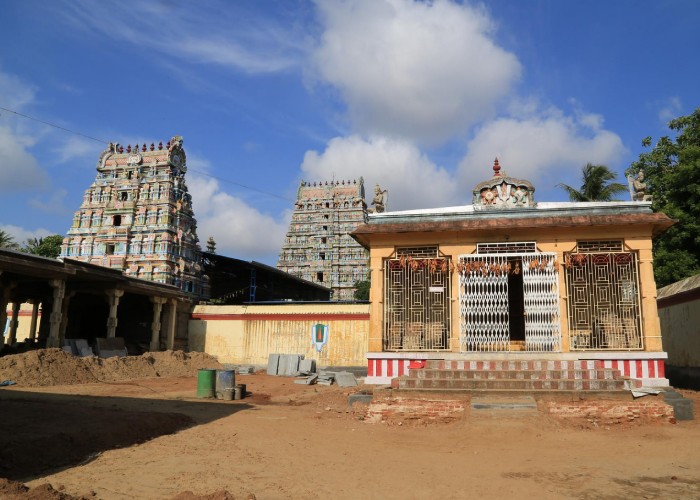
Thirunagari Temple, Thirunagari, Tamil Nadu
Thirunagari in Tamil Nadu is one of the most emotionally powerful Divya Desams because it represents the culmination of Thirumangai Alvar’s journey. Where Thiruvali marks the moment of awakening, Thirunagari represents fulfilment, where a devotee finally stands steady in devotion after struggle, confusion and transformation. The temple here is dedicated to Adhi Jagannatha Perumal, with Thiruvaragunamangai Thayar as the goddess. Together, they form a presence that is gentle, grounding and complete. This temple embodies the feeling of coming home after a long internal journey.

In the Vaishnavite tradition, Thirunagari cannot be separated from Thiruvali. The two temples form a pair, representing the start and end of Thirumangai Alvar’s spiritual path. Thiruvali is the moment of awakening, while Thirunagari is the moment of surrender. The mythology of Thirunagari centres around what happened after Thirumangai Alvar received the Ashtakshara Mantra from Vishnu.

After the divine whisper changed him, Thirumangai Alvar travelled to Thirunagari. Here, he began composing hymns, surrendering completely to Vishnu and taking on the role of a servant of the Lord. It is said that he wept in gratitude here, sang his deepest devotional verses here, and completed his transformation from warrior to saint here. In many ways, Thirunagari symbolises the moment the heart settles.

Adhi Jagannatha is worshipped as the ancient form of Vishnu who receives devotees without hesitation or judgment. The name Adhi Jagannatha comes from Adhi, the original, the first, and Jagannatha, the Lord of the universe. The myth conveys a simple idea: the one who created you welcomes you back, no matter the path you took.

In Thirunagari, the utsavar idol of Thirumangai Alvar is significant. This is the place most connected to his emotional life, where he lived, taught, composed and finally reached complete surrender. Some traditions say his final breath was taken in this region, though accounts differ. But spiritually, this is the place where his journey found its destination.

The temple carries strong historical resonance because of its connection to the Alvar. Even if the structure is modest compared to Chola giants, its devotional weight is immense. Architectural and historical influences include early structures likely dating to the Pallava or early Chola period. The Cholas supported the temple and ensured regular worship, while the Nayaks added mandapams, pillars and protective walls. Local chieftains gave land grants for lamps, pujas and annadhanam. Inscriptions in the region speak of donations from families to keep annual festivals and daily rituals running. Thirunagari’s importance comes not from kings, but from poetry, stories and the devotion of ordinary people. It is one of the few Divya Desams whose emotional weight outweighs its physical size.

Thirunagari Temple is built in a simple, traditional Tamil style. It does not try to overwhelm with scale. Its strength lies in its quietness. Key architectural features include a small gopuram marking the entrance, a courtyard with the open sky, stone mandapams with simple carvings, a compact sanctum housing Adhi Jagannatha, a shrine for Thiruvaragunamangai Thayar, shrines for Thirumangai Alvar and other Alvars, and space for annual festival processions. Adhi Jagannatha Perumal stands facing east. The posture is calm, firm and steady. Devotees often describe the idol as “still but alive,” carrying a sense of quiet protection. Thiruvaragunamangai Thayar’s shrine softens the atmosphere. Her presence adds warmth, compassion and reassurance. The temple tank nearby is used for ritual purposes. The pradakshina path is narrow but meaningful, and the floors are cool and worn smooth by generations of footsteps. Nothing here distracts you, nothing demands attention, and everything supports reflection. This fits the emotional theme of the temple: completion without drama.

Daily worship here follows the Vaishnavite tradition of Suprabhatam, Thirumanjanam, Alankaram, Neivedyam, and evening worship. The rituals are performed gently, without hurry. This temple is not a busy hub. It is a place of inwardness. Major festivals include the temple Brahmotsavam, which is Thirumangai Alvar’s Birth Festival, Thirumangai Alvar Garuda Sevai, *Vaikunta Ekadasi, Brahmotsavam for the Perumal, and Purattasi Saturdays. The Alvar festivals dominate the temple calendar. The region comes alive during these days. Garuda Sevai is the most important festival for the Thirunangur temples. Eleven Vishnu deities are brought on Garuda vahanams. Thirunagari becomes the central gathering space. The festival re-enacts the Alvar’s connection with Vishnu. Devotees chant his verses, carry offerings, and move between Thiruvali and Thirunagari. This event keeps the temple alive in the cultural memory of Tamil Nadu.

Travelling to Thirunagari means entering a region where devotion is woven into village life. The landscape is modest: fields, trees, simple homes, quiet roads. On first impression, the temple does not impress with height or ornamentation; instead, it feels familiar, like returning to a place you’ve known before. Inside, the sanctum is close, the space is cool, the lighting is soft, the chanting echoes lightly, and the deity feels accessible. Pilgrims often sit quietly in the mandapam after darshan. There is no rush; this temple invites slow breathing. The village community supports the temple in simple ways with flower stalls, tea shops, and small offerings sold outside homes. There is no commercial pressure, and pilgrims often say this temple feels honest and approachable.

Thirunagari sits at the heart of Tamil devotional culture because of Thirumangai Alvar. This temple is where he composed his deepest hymns, surrendered fully to Vishnu, and established the spiritual identity of the Thirunangur region. The Divya Prabandham frequently references the landscape around Thiruvali and Thirunagari. Local families retell the story of the thief who became a saint. The message is simple: grace doesn’t wait for perfection. This story shapes identity, culture and the emotional tone of the entire region. People come to Thirunagari when they seek closure, completion, peace after difficulty, acceptance, and a sense of belonging. The temple represents emotional settling, the moment where struggle becomes surrender.

The temple is well-maintained through a mix of administrative oversight and local support. Daily pujas continue without interruption. Recent improvements include repainting inner walls, strengthening the mandapam, repairing stone floors, enhancing lighting around the sanctum, and maintaining the temple tank. The temple has gained more visibility through social media and Divya Desam travel blogs. Younger pilgrims, especially those tracing the Alvars’ lives, make it a priority stop. Despite this increased attention, the temple remains modest and quiet. Its emotional power lies in stillness, not in activity.

Thirunagari is one of the most meaningful Divya Desams because it represents completion: the moment a devotee finally settles into devotion after a lifetime of searching. Adhi Jagannatha Perumal stands as a calm, welcoming presence, while Thiruvaragunamangai Thayar adds softness and grace. Together, they embody acceptance. The temple’s simplicity, mythology and connection to Thirumangai Alvar make it a landmark of the heart rather than architecture. In the Divya Desam circuit, Thirunagari is understated but profound. It teaches that devotion is not about perfection. It is about turning back toward the divine, even after wandering far. Here, ends become beginnings. And the journey that started in struggle finds its resting place.

Thiruthevanarthogai Temple, Thirunangur, Tamil Nadu
Thiruthevanarthogai, located in the quiet lanes of Thirunangur near Sirkazhi in Tamil Nadu, is one of the eleven Divya Desams tied to the dramatic legend of Shiva’s grief and Vishnu’s steadying grace. The presiding deity here is Devanayaka Perumal, with Kadalmagal Nachiyar as the goddess. The name Thevanarthogai roughly means the place where the gods assemble. Local belief says that many celestial beings gathered here to seek Vishnu’s reassurance after Shiva’s fierce dance shook the universe. The temple carries that tone even today: a sense of calm after intensity, gathering after scattering, grounding after upheaval. Thiruthevanarthogai is a temple of belonging. It feels like a place where you can bring whatever you are carrying, set it down quietly and feel held.

All eleven Thirunangur Divya Desams are tied to the same legend. After the death of Sati, Shiva was devastated. His grief triggered the Rudra Tandava, a cosmic dance that created powerful tremors across the region. From each strike of his matted locks, eleven forms of Shiva emerged. To calm this overwhelming energy, Vishnu appeared in eleven forms, one for each manifestation of Shiva. Thiruthevanarthogai represents one of these balancing forms.

Local lore says that after Shiva’s dance, the gods felt deeply unsettled. Unsure of how to restore balance, they assembled at this very spot to pray to Vishnu. Vishnu took the form of Devanayaka Perumal, meaning leader of the gods. This form represents steadiness, authority without aggression, gentle leadership, and reassurance. The idea is simple: when beings of all kinds feel shaken, they gather here and stand before the one who guides without force. The goddess here, Kadalmagal Nachiyar, is associated with the ocean (Lakshmi). Her presence adds emotional depth. The ocean is calm at times, rough at others, much like life. Here, she stands as a soothing balance to Perumal’s steady posture. Thirumangai Alvar composed verses about this temple, praising Perumal as the one who stands firm when the world trembles. His hymn places this temple within the Divya Prabandham, ensuring its status as a sacred Vaishnavite shrine.

Thiruthevanarthogai is part of a close-knit group of temples in Thirunangur that date back many centuries. Though modest today, the temple likely has early Chola origins, visible in its stone base and simple structural style. Historical patterns include local chieftains and families supporting daily worship, land grants for lamps, offerings and festivals, renovations during the Nayak era, especially strengthening pillars and mandapams, and festivals shaped by community participation rather than royal patronage. Because of its connection to the eleven-temple circuit, the temple has remained active even when political attention shifted to larger towns. Thirunangur’s identity is tightly woven with the mythology of Shiva and Vishnu, and all eleven temples, including Thiruthevanarthogai, survived largely through the devotion of local people.

Thiruthevanarthogai follows the architectural tone of the Thirunangur Divya Desams, simple, small and spiritually focused. The temple’s layout is clean, without unnecessary ornamentation. Key architectural elements include a modest entrance gopuram, a small courtyard, a stone mandapam with plain granite pillars, a compact sanctum, a separate shrine for the goddess, and a pradakshina path that hugs the sanctum walls. The temple tank lies close by, used mainly during annual festivals.

Devanayaka Perumal stands facing east. His posture is upright, composed, and quietly authoritative. This is not a dramatic form of Vishnu. It is a steadying one, fitting for the temple’s theme of divine assembly and reassurance. Kadalmagal Nachiyar’s shrine has a gentle, grounding presence. Many devotees spend time here seeking emotional balance, especially during phases of uncertainty. Unlike larger Vaishnavite temples, this one carries no grand towers or heavy sculptures. It reflects the quiet rural setting with cool stone floors, soft lighting, simple flower garlands, and murmurs of daily chanting. The simplicity allows the mythology and atmosphere to lead the experience.

Daily worship follows the Vaishnavite tradition, carried out in a steady and unhurried manner. Daily pujas include the morning suprabhatam, Thirumanjanam, Alankaram, Neivedyam, and the evening lamp worship. Major festivals include the Thirunangur Garuda Sevai, the most important, Vaikunta Ekadasi, Brahmotsavam, Purattasi Saturdays, Sri Krishna Jayanthi and Rama Navami. The Garuda Sevai festival defines the cultural identity of the region. Eleven deities from the Thirunangur temples gather on Garuda vahanams. Thousands of devotees walk between temples, singing the Alvar’s hymns. Thiruthevanarthogai plays a key role because of its theme of divine assembly. During Garuda Sevai, the temple becomes a living reenactment of its own mythology. People come to this temple when they feel emotionally scattered, need grounding, seek reassurance during turbulent times, want to feel belonging again, and need calm after conflict or stress. The temple reinforces the idea that even gods once gathered here for steadiness, and that humans can too.

The journey to Thiruthevanarthogai is peaceful. Pilgrims travel through narrow village roads lined with paddy fields and coconut trees. The temple blends naturally into the landscape. Stepping inside, the tone shifts. The sanctum is close and intimate, the air smells of sandalwood and flowers. The chanting echoes softly and the lighting brings a sense of stillness. It is the kind of temple where you instinctively lower your voice. Because the mythology emphasises gathering, the atmosphere often feels communal even when the temple is quiet. Small groups sit in corners chanting, and families come for calm. Older villagers share stories about the temple’s legends. Pilgrims often visit Thiruthevanarthogai as part of the larger Thirunangur circuit. But the emotional tone here stands out; it feels like a place of coming together, internally and externally. A few small shops outside sell flowers and snacks. The temple retains its rural simplicity.

Thiruthevanarthogai holds a strong place in Tamil Vaishnavite memory. Thirumangai Alvar’s hymns give the temple cultural identity. His verses describe Perumal as the leader of the gods, steadying them during cosmic disturbance. These hymns are central during festivals and community gatherings. Because the temple symbolises the gathering of gods, it influences local customs. Families pray here before major decisions, community groups meet here for blessings, and elders encourage people to visit when life feels scattered. The temple reinforces the idea that strength lies in unity. During Garuda Sevai, villagers decorate the streets, musicians recite the Prabandham, devotees from across Tamil Nadu participate, and the eleven deities converge symbolically as they once did mythologically. This festival keeps the temple’s stories alive in the cultural fabric of the region.

The temple continues to operate with daily pujas, supported by the administration and local devotees. Renovations occur periodically, mainly to strengthen structural elements without altering the original tone. Recent updates include repainting inner walls, reinforcing stone pillars, cleaning the temple tank, and maintaining the outer prakaram. The temple has gained visibility on Divya Desam travel routes and social media, drawing younger pilgrims who want to explore lesser-known temples. Despite this increase in visitors, the temple remains quiet and uncluttered. Its primary identity, as a place of grounding and gathering, remains unchanged. The temple’s message feels especially relevant in modern times. People today often feel isolated or overwhelmed. Thiruthevanarthogai offers a space where scattered thoughts and emotions can settle.

Thiruthevanarthogai stands as one of the gentlest yet most meaningful Divya Desams in the Thirunangur region. Its mythology of divine assembly, its steady deity, and its quiet architecture all point toward the same idea: you don’t have to carry everything alone. Devanayaka Perumal embodies guidance without pressure and authority without force. Kadalmagal Nachiyar adds the emotional softness that completes the temple’s tone. As part of the eleven temples formed to calm Shiva’s grief, Thiruthevanarthogai represents coming together, both emotionally and spiritually. It reminds devotees that gathering, grounding and reassurance are forms of grace too. And that sometimes, simply standing in a quiet place with the divine is enough.

In My Hands Today…

The Bose Deception: Declassified – Anuj Dhar, Chandrachur Ghose

What exactly is this controversy about Netaji’s ‘disappearance’?

Efforts by the authors led to the declassification of more than 1,300 secret files on Bose.

Does new material offer new evidence on Bose’s reported death in 1945?

The Bose Deception: Declassified opens a window to this and much more.

In January 2016, the Government of India began declassifying classified PMO, MEA, MHA and Cabinet Secretariat files related to the mysterious ‘disappearance’ of Subhas Chandra Bose at the end of the Second World War. No one could have imagined that even seventy years after Bose’s disappearance, the government had been holding hundreds of files related to him in utmost secrecy.

The official view that Bose died in a plane crash in Taiwan never found public acceptance, leading to multiple inquiries. Claims, counter-claims and conspiracy theories continued to complicate the mystery for nearly seventy-five years, primarily because of keeping information hidden from public view.

In this fascinating investigative work, Dhar and Ghose have rummaged through more than two thousand files declassified in India, and in the UK, USA and Taiwan to unentangle the complex web of a deception plan, that has kept the whole country on tenterhooks for decades. They unravel the plot layer by layer to tell a story that is bound to shock the readers.

The Zettelkasten Method: A Quiet System for Managing Information Overload

There is a particular kind of tiredness that comes not from doing too much but from absorbing too much. You read. You save. You screenshot. You bookmark. You forward articles to yourself on WhatsApp so you do not forget. Your Notes app fills up. Your Trello boards multiply. At some point, something in you switches off. Not dramatically. Quietly.

You stop opening saved links. You skim instead of reading. You tell yourself you will “catch up” later. This is information overload. And for many of us, it does not look chaotic. It looks organised but unprocessed. Most advice focuses on consuming less. That is useful, but incomplete. The deeper question is not only how much we take in, but what we do with what we take in. The Zettelkasten method offers a different answer. Not faster consumption. Not better storage. A better way of thinking.

What Zettelkasten Actually Is
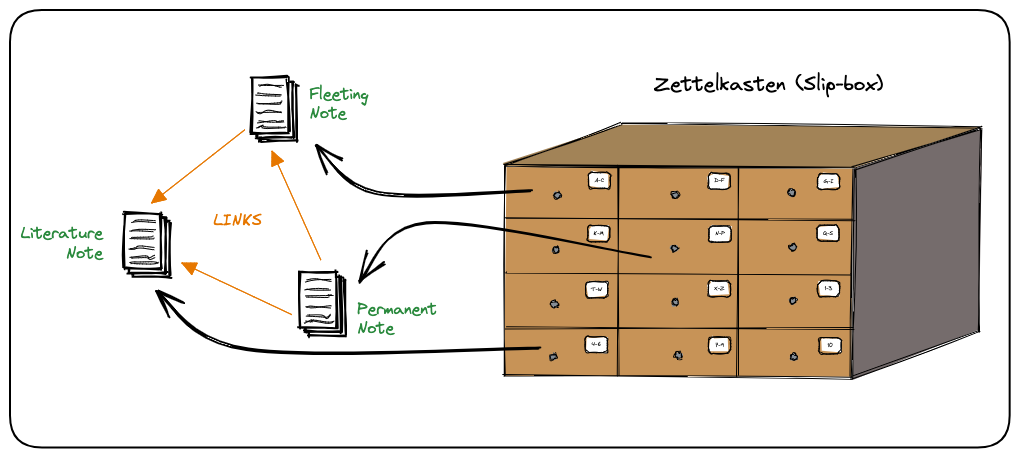
Zettelkasten is a German word meaning “slip box.” Originally, it referred to a box of index cards, each containing one idea, linked to other cards through references. But the physical box is not the point. The philosophy is simple: write one idea per note, in your own words, and deliberately connect it to other ideas. Not archive. Connect. This distinction matters. Most of us store information. Few of us build networks of thought. Zettelkasten assumes that knowledge is not static. It grows through relationships. An isolated note is a reminder. A linked note becomes part of a system. The goal is not to remember everything you read. The goal is to develop your own framework.

Why We Shut Down
When people feel overwhelmed, they often blame volume. Too many articles. Too many books. Too many podcasts. But consider this: if you read only one thoughtful essay today and never integrate it into your thinking, would you still feel unsettled? Often, the fatigue comes not from quantity but from unfinished processing. Your mind does not like loose ends. Saved articles are loose ends. Highlighted paragraphs are loose ends. Good ideas without integration are loose ends. Eventually, the mind protects itself. It slows down. It avoids. It shuts down. This is not laziness. It is cognitive self-preservation. Zettelkasten addresses this at the level of integration.

The Core Habits
You do not need specialised software. You do not need a numbering system that requires a tutorial. You need three habits.

  • First, capture one idea per note. Not a summary of a chapter. One idea.
  • Second, write it in your own words. If you cannot rephrase it, you have not understood it.
  • Third, connect it to an existing idea. Ask where it fits. Does it support something you already believe? Challenge it? Extend it?

That is the method. It is deceptively modest. But modest systems tend to last longer.

A Full Example From Start to Finish
Let us make this concrete.

  • You read a sentence: “Clarity reduces anxiety more effectively than motivation.”
  • Instead of highlighting it and moving on, you pause. You create a note: Clarity reduces anxiety more effectively than motivation because uncertainty creates cognitive tension.
  • That is your thinking note. Now you ask: what does this connect to? Perhaps you already have a note that says: When I feel stuck, I look for motivation instead of defining the next specific action. You link them.
  • A week later, while reviewing your notes, you see another idea about decision fatigue. You connect that too.
  • Now three ideas form a cluster. Clarity. Motivation. Decision fatigue.
  • You are no longer collecting quotes. You are tracing patterns in your own behaviour.

This is where the system begins to feel alive.

Using Trello Without Turning It Into a Task List
If you already use Trello for weekly lists and schedules, you can adapt it.

  • Create a separate board purely for thinking notes. Not tasks. Not projects.
  • Each card contains one idea. The card title holds the core claim. The description expands slightly if needed, but do not turn it into an essay.
  • Avoid workflow columns. This is not “To Do,” “Doing, “Done.” That structure encourages completion, not connection.
  • Instead, let all cards live in a single list, or at most a few thematic lists. The power lies in linking.
  • When one idea connects to another, paste the related card’s link inside it. Over time, certain cards will accumulate multiple links. Those are anchor ideas. Revisit them.
  • If you find yourself colour-coding excessively or reorganising columns frequently, pause. You may be drifting back into productivity theatre.
  • The method is not about visual control. It is about intellectual continuity.

Apple Notes works just as well. Paper works just as well. The tool is secondary. The discipline is primary.

Managing Overload in Practical Terms

  • If your overwhelm leads to shutdown, start small.
  • Limit what you process. Do not try to convert every article into notes. Choose selectively.
  • Process immediately. When something feels meaningful, write the note at once. Delayed processing becomes a backlog.
  • Keep notes short. If a note feels long, it probably contains more than one idea. Split it.
  • Review weekly. Not to admire your collection, but to add links. The connections are the system.
  • Most importantly, reduce passive saving. A saved link you never process is mental clutter disguised as organisation.

Where People Complicate It
There are predictable traps.

  • One is turning Zettelkasten into an elaborate digital setup. Complex numbering schemes. Hierarchies. Colour systems. The original method used index cards in a box. If your setup feels heavier than that, simplify.
  • Another trap is perfectionism. Waiting until you fully understand something before writing a note. Understanding often emerges through writing.
  • A third trap is hoarding notes without linking them. A large archive of disconnected thoughts is not a network. It is a storage room. The method only works if ideas are in conversation.

A Brief Comparison
You may have heard of PARA, which organises information into Projects, Areas, Resources and Archives. That system is excellent for managing tasks and responsibilities. Zettelkasten is different. It does not organise by category. It organises by relationship. Commonplace books, historically, collected quotations and passages worth remembering. Zettelkasten moves one step further. It requires interpretation and linkage. If PARA manages your external life, Zettelkasten manages your internal thinking. They can coexist. But they serve different purposes.

System or Boundary?
Before adopting any method, ask yourself a harder question. Is your overwhelm coming from poor integration or from excessive input? If you are constantly consuming news, scrolling social media, or signing up for courses you do not complete, no note-taking system will solve that. Zettelkasten assumes selectivity. It deepens what you choose to engage with. It does not filter for you. If what you need are boundaries, start there. Reduce input. If what you need is integration, build the slip box. Clarity about this distinction prevents the system from becoming another layer of noise.

A Gentle Acknowledgement of Shutdown
When overwhelm leads to shutdown, it can feel like failure. Especially for those who enjoy structure and systems. But shutdown is often the mind saying, enough unfinished loops. A small daily practice of integration can reduce those loops. One idea processed. One link made. That is manageable.

Over time, instead of feeling chased by information, you begin to recognise your own recurring themes. You see what you return to. You notice what truly matters to you. The volume outside may not decrease. But the internal noise often does.

A Reflective Closing
Information is not the same as understanding. In a time when knowledge is everywhere, depth requires intention. The Zettelkasten method is not about efficiency or optimisation. It is about continuity. It allows ideas to mature instead of disappearing into saved folders and forgotten links. You do not have to overhaul your digital life to begin. One idea is written clearly. One connection made deliberately. That may be enough to see whether this way of thinking suits you.