When Things Don’t Go Your Way: Zen Wisdom for Difficult Times – Haemin Sunim, translated by Charles La Shure
Have you ever felt like life has thrown you a curveball? Are you struggling to overcome unexpected challenges and setbacks?
While loss, heartbreak, and loneliness are all part of the human experience, in this warm guide, internationally bestselling author Haemin Sunim shows us that these moments can actually be rare opportunities for self-discovery, serving as stepping stones to greater things in life.
Drawing on Zen Buddhist philosophy and Sunim’s own experiences, When Things Don’t Go Your Way helps you navigate life’s challenges with resilience and grace. Whether you’re dealing with rejection, uncertainty, loneliness, conflicts in relationships, or burnout–or simply seeking to improve your mental and emotional well-being–Sunim offers a new spiritual perspective, one that helps us face life’s challenges with greater ease and understanding, and offers solace and courage when we need it the most.
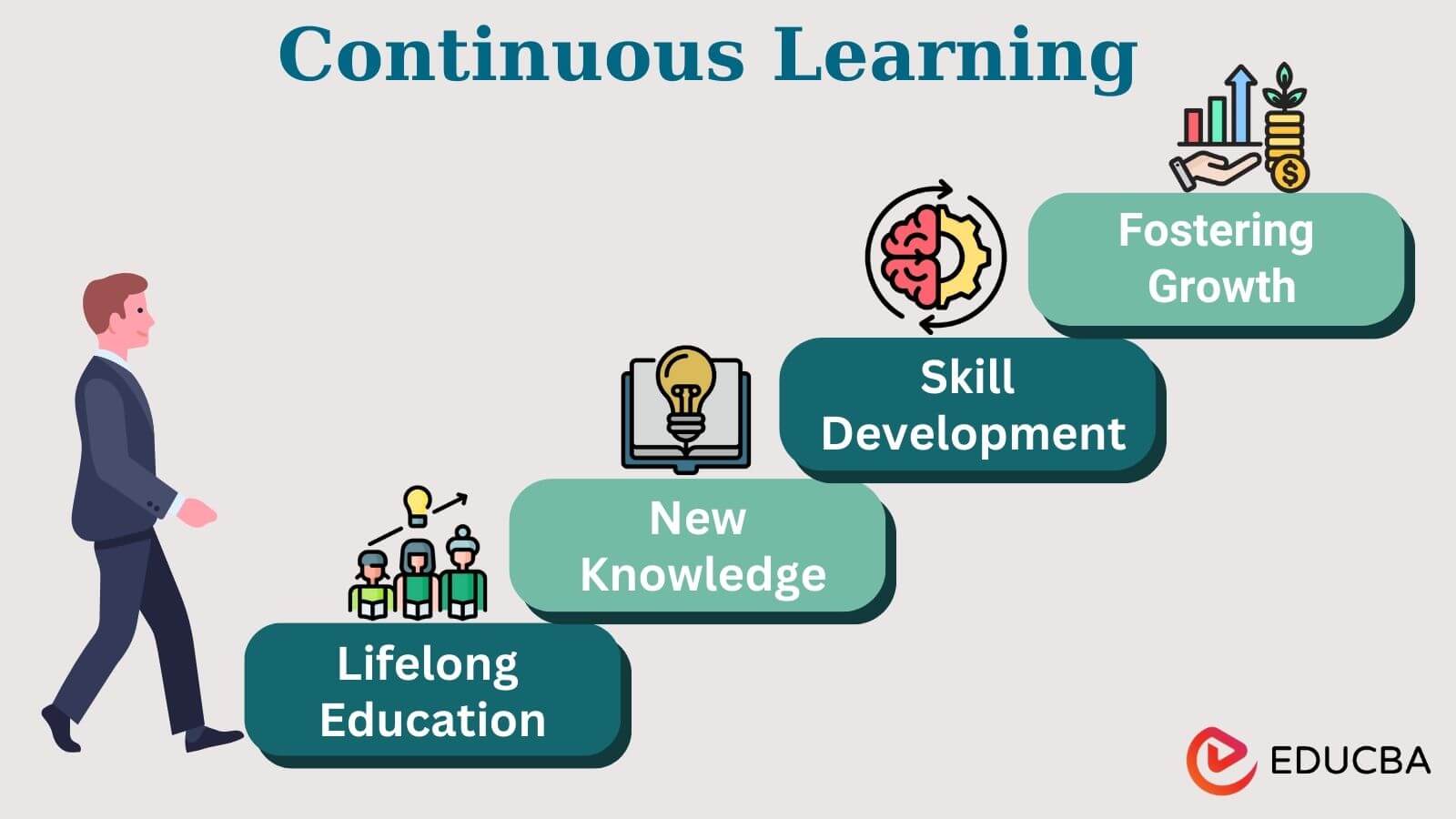
In a rapidly changing world, the concept of continuous learning has become more important than ever. For young adults, especially those who have recently graduated from university, there can be a misconception that formal education marks the end of their learning journey. However, embracing a mindset of lifelong learning is essential for personal and professional growth.
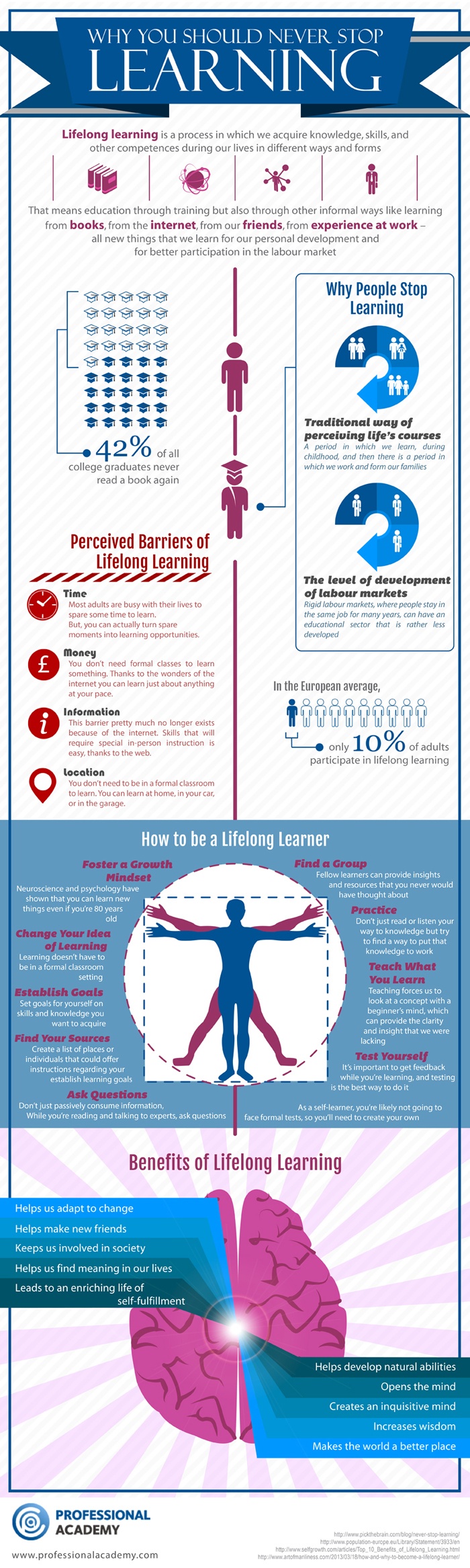
What is continuous learning? Continuous learning refers to the ongoing, voluntary, and self-motivated pursuit of knowledge for personal or professional development. It encompasses various forms of learning beyond formal education. These include self-directed learning by taking the initiative to learn independently through reading, online courses, or exploring new interests, professional development by engaging in training programmes, workshops, or seminars to enhance skills relevant to one’s career, informal learning where one gains knowledge through everyday experiences, conversations, and interactions with others, and peer learning where one collaborates with colleagues or peers to share knowledge and skills. Continuous learning is not confined to any specific age or stage in life; it is a lifelong process that encourages individuals to adapt to new challenges and opportunities.
Why is continuous learning important? The world is constantly evolving due to technological advancements, globalisation, and shifting job markets. Continuous learning equips young adults with the skills necessary to adapt to these changes. In many industries, skills can become outdated quickly. Engaging in continuous learning helps individuals stay current with industry trends and developments. A commitment to learning fosters a mindset that embraces innovation and change rather than fearing it.
For young adults entering the workforce, continuous learning can significantly impact career advancement. Acquiring new skills can open doors to promotions or new job opportunities. Employers often seek candidates who demonstrate a commitment to professional growth. Engaging in continuous learning often involves attending workshops or conferences where individuals can connect with industry professionals and expand their networks.
Continuous learning contributes to personal development and overall life satisfaction. Gaining new knowledge and skills enhances self-esteem and confidence in one’s abilities. A commitment to lifelong learning encourages curiosity and exploration of new interests, leading to a more fulfilling life.
Continuous learners develop critical thinking and problem-solving skills. Engaging with diverse subjects encourages analytical thinking, enabling individuals to approach challenges from multiple perspectives. Exposure to new ideas fosters creativity and innovation, allowing individuals to generate unique solutions to problems.
In an ever-changing world, resilience is crucial for overcoming challenges. Continuous learners are better equipped to navigate setbacks and adapt their strategies based on new information or circumstances. Embracing a growth mindset, one that believes that abilities can be developed through dedication, helps individuals view challenges as opportunities for growth rather than obstacles.
How can young adults become lifelong learners? Embracing continuous learning requires intentionality and commitment. Here are practical strategies for young adults looking to foster a culture of lifelong learning:
Set learning goals: Establishing clear goals helps guide your continuous learning journey. Reflect on topics or skills you are passionate about or want to explore further. Create SMART goals by using the SMART criteria. These are goals that are specific, measurable, achievable, relevant, and time-bound to set concrete learning objectives.
Explore online learning platforms: The internet offers a wealth of resources for self-directed learners. Platforms like Coursera, edX, and Udacity offer courses from top universities on various subjects, with many that are free or low-cost. Websites like LinkedIn Learning or Skillshare provide access to tutorials and courses on practical skills ranging from graphic design to coding.
Read widely: Reading is one of the most accessible forms of continuous learning. Explore books on topics that interest you or are relevant to your career. Consider both fiction and non-fiction for a well-rounded perspective. Stay updated with industry news by reading articles from reputable sources or academic journals related to your field.
Attend workshops and seminars: Participating in workshops and seminars provides opportunities for hands-on learning. Look for workshops hosted by community centres, libraries, or professional organisations in your area. Attend industry conferences where you can learn from experts while networking with peers.
Join professional associations: Becoming a member of professional associations related to your field offers numerous benefits. Many associations provide members with access to exclusive resources such as webinars, publications, and networking events. Many professional organisations offer continuing education programs that allow members to earn certifications or credits toward professional development.
Engage in peer learning: Learning from peers can enhance one’s understanding of various topics. Form study groups with classmates or colleagues where you can share knowledge and discuss concepts collaboratively. Seek out mentorship opportunities where you can learn from someone more experienced in your field while also offering support in return.
Embrace new experiences: Stepping outside your comfort zone can lead to valuable learning experiences. Travelling exposes you to different cultures and perspectives; consider taking short trips or participating in study abroad programs if possible. Engaging in volunteer activities allows you to learn new skills while contributing positively to your community.
Reflect on your learning journey: Regular reflection helps reinforce what you’ve learned. Document your experiences, insights gained from courses or readings, and areas where you’d like further growth. Periodically review your goals and assess what you’ve accomplished; adjust your plans as needed based on your reflections.
What are some tips for overcoming barriers to continuous learning? While the desire for continuous learning is essential, young adults may encounter barriers along the way. Here are some tips for overcoming common obstacles:
Time management: Finding time for continuous learning amidst busy schedules can be challenging. Treat your learning goals as important commitments; schedule dedicated time each week for focused study or skill development. Look for opportunities throughout your day, listen to educational podcasts during commutes, or watch short tutorial videos during breaks.
Motivation challenges: Staying motivated can be difficult when pursuing long-term goals. Break larger goals into smaller milestones that provide a sense of accomplishment along the way. Celebrate achievements by treating yourself when you reach specific milestones—this reinforces positive behaviour!
Fear of failure: Fear of failure can deter individuals from pursuing new challenges. Understand that failure is often part of the learning process; view setbacks as opportunities for growth rather than reasons to give up. Share your fears with friends or mentors who can offer encouragement; knowing you’re not alone helps alleviate anxiety around failure.
Continuous learning is an essential practice that empowers young adults throughout their lives! By embracing this mindset while implementing effective strategies—such as setting clear goals, exploring online resources, attending workshops, and engaging in peer collaboration—you’ll cultivate greater knowledge & skills necessary for success!
Remember—it’s never too late (or too early!) To start investing in yourself through lifelong education! Embrace curiosity & exploration as you navigate this journey towards personal & professional growth! With dedication & perseverance, you’ll find yourself thriving not only today but also well into the future!
How To: Absurd Scientific Advice for Common Real-World Problems – Randall Munroe
For any task you might want to do, there’s a right way, a wrong way, and a way so monumentally complex, excessive, and inadvisable that no one would ever try it. How To is a guide to the third kind of approach. It’s full of highly impractical advice for everything from landing a plane to digging a hole.
Bestselling author and cartoonist Randall Munroe explains how to predict the weather by analyzing the pixels of your Facebook photos. He teaches you how to tell if you’re a baby boomer or a 90’s kid by measuring the radioactivity of your teeth. He offers tips for taking a selfie with a telescope, crossing a river by boiling it, and powering your house by destroying the fabric of space-time. And if you want to get rid of the book once you’re done with it, he walks you through your options for proper disposal, including dissolving it in the ocean, converting it to a vapor, using tectonic plates to subduct it into the Earth’s mantle, or launching it into the Sun.
By exploring the most complicated ways to do simple tasks, Munroe doesn’t just make things difficult for himself and his readers. As he did so brilliantly in What If?, Munroe invites us to explore the most absurd reaches of the possible. Full of clever infographics and amusing illustrations, How To is a delightfully mind-bending way to better understand the science and technology underlying the things we do every day.
Also known as Baruthani Ekadashi, Varuthini Ekadashi is a significant festival that holds deep spiritual and cultural importance. Falling on the 11th lunar day, or Ekadashi, of the waning moon in the Hindu month of Chaitra or Vaishakha, the festival typically falls in April or May of the Gregorian calendar.
The origins of Varuthini Ekadashi are rooted in ancient Hindu scriptures and mythology. The festival’s name, Varuthini, is derived from the Sanskrit word meaning armoured or protected, signifying the spiritual protection bestowed upon devotees who observe this sacred day. The day is dedicated to Lord Vishnu, particularly his fifth avatar, Vamana, and devotees believe that observing this Ekadashi is believed to bring devotees closer to the divine and offer protection from negative energies and evil influences.
The significance of this festival is highlighted in various Hindu texts, including the Bhavishya Purana, where Lord Krishna narrates its importance to King Yudhishthira. According to these scriptures, observing Varuthini Ekadashi brings numerous benefits, including protection from evil and good fortune, prosperity in this life and the next, liberation from curses and sins, and blessings equivalent to rigorous penance.
The celebration of Varuthini Ekadashi involves a series of rituals and practices that devotees follow with great devotion. The primary observance is fasting, which is considered crucial for reaping the spiritual benefits of this day. Devotees typically observe a strict fast on Varuthini Ekadashi, abstaining from certain foods and activities. Many choose to fast completely, while others may have a single meal while grains, certain vegetables, and specific foods are avoided. The consumption of Havishyanna, or boiled food without spices, salt, and oil from the previous day, is recommended.
The day is marked by various religious and spiritual activities. Devotees wake up during Brahma Muhurta, the auspicious pre-dawn hours, and take a purifying bath. This is the time before dawn that is considered a sacred time for meditation and spiritual practices. It is also known as the creator’s hour. Brahma muhurta is a 48-minute period that begins 1 hour and 36 minutes before sunrise, with the exact timing depending on the location and the time of sunrise, though it usually occurs between 3:30 and 5:30 am. A wooden platform is set up with an image of Lord Vishnu, covered in red or yellow cloth, and offerings of Panchamrit, a mixture of milk, curd, ghee, honey, and Ganga water, are made to Lord Vishnu. Incense, lamps, and camphor are lit as offerings, and mantras dedicated to Lord Vishnu are chanted by devotees, and an aarti is performed. Many engage in meditation and spiritual contemplation throughout the day.
Performing acts of charity is considered highly auspicious on Varuthini Ekadashi. Devotees are encouraged to donate various items, with the belief that different donations yield varying levels of spiritual benefits. Donating knowledge is considered the highest form of charity. Other beneficial donations include cows, gold, food grains, sesame seeds, land, elephants, and horses.
Several mythological stories are associated with Varuthini Ekadashi, each highlighting its spiritual significance and transformative power. One of the most prominent legends involves Lord Shiva and Lord Brahma. In a fit of rage, Lord Shiva cut off the fifth head of Lord Brahma. As a consequence, Lord Brahma cursed Lord Shiva. Seeking a remedy, Lord Vishnu advised Lord Shiva to observe the Varuthini Ekadashi fast. By following this advice, Lord Shiva was eventually released from the curse. Another tale speaks of King Mandata, who gained enlightenment through the observance of Varuthini Ekadashi. The legend of King Dhundhumara from the Ikshvaku dynasty is also associated with Varuthini Ekadashi. According to this story, the king was freed from a curse by Lord Shiva through the observance of this sacred day.
While not specific to Varuthini Ekadashi, the origin story of Ekadashi itself is worth mentioning. Lord Vishnu was in a state of deep sleep or meditation. A demon named Murdanav attempted to attack the sleeping Vishnu. A beautiful woman emerged from Vishnu’s 11th sense, the mind. Murdanav, infatuated, asked to marry her. She agreed on the condition that he defeat her in battle. During the fight, Murdanav was killed. Vishnu awoke and blessed the woman, naming her Ekadashi. He decreed that those who fast on this day would attain moksha or liberation. This legend explains the spiritual significance of all Ekadashi observances, including Varuthini Ekadashi.
Varuthini Ekadashi holds a special place among the 24 Ekadashi observances that occur in a lunar year Its importance is multifaceted, touching various aspects of Hindu spiritual and cultural life. The observance is believed to cleanse the soul and elevate spiritual consciousness. Devotees seek the grace of Lord Vishnu, believing that sincere observance brings immense spiritual benefits. It is thought to help individuals overcome the burden of past sins and negative karma. The festival is seen as a shield against evil influences and negative energies. Many believe that observing Varuthini Ekadashi can lead to the fulfilment of righteous wishes and aspirations. The festival also brings people together, strengthening social and cultural ties within the community.
In contemporary times, the observance of Varuthini Ekadashi continues to be an important part of Hindu religious practice. While the core spiritual principles remain unchanged, the way the festival is celebrated has adapted to modern lifestyles. Many temples now offer online darshan and puja services, allowing devotees to participate remotely. While traditional fasting practices are still followed by many, some adapt the fast to suit their health needs and work schedules.
Varuthini Ekadashi stands as a testament to the rich spiritual heritage of Hinduism. It embodies the principles of devotion, self-discipline, and the pursuit of spiritual growth. The festival’s enduring popularity and significance highlight its relevance in both ancient and modern contexts.
Through its rituals, myths, and spiritual practices, Varuthini Ekadashi offers devotees a path to connect with the divine, seek personal transformation, and contribute to the welfare of their community. As with many Hindu observances, it blends deep philosophical concepts with practical spiritual practices, making it accessible to devotees from all walks of life. In an increasingly fast-paced and materialistic world, festivals like Varuthini Ekadashi serve as important reminders of the eternal spiritual truths that have guided Hindu civilization for millennia. They offer a moment of pause, reflection, and renewal, allowing individuals to realign themselves with their higher purpose and spiritual goals. It is these festivals that stand as a bridge between the ancient and the contemporary, ensuring that the spiritual legacy of Hinduism remains vibrant and relevant for generations to come.
Today, in many parts of the world, we celebrate Mother’s Day. To all my readers who are mothers or mother figures, here’s wishing you a very Happy Mother’s Day. Here’s wishing you a day filled with love, laughter, and happiness. And I hope you are pampered and loved not just today, but every day of the year. My children have something planned for me, but they are keeping it a secret. My guess is that we will probably go for a nice dinner tonight. What about you? What did your family plan for you today?
Today’s quote by Wayne Dyer, a renowned American self-help author, motivational speaker, and spiritual teacher, offers a profound definition of enlightenment: not as an ecstatic or dramatic awakening, but as a state of inner peace and radical acceptance. Wayne Dyer suggests that true enlightenment doesn’t come from resisting or trying to change life’s circumstances but from learning to accept reality as it is, without judgment or struggle. Enlightenment is not noisy or filled with grand gestures; it’s calm, grounded, and still. It means no longer fighting against the things you cannot control or endlessly wishing for things to be different. Acceptance doesn’t mean resignation or giving up; it means acknowledging the present moment fully, without unnecessary resistance or mental turmoil.
When we stop arguing with “what is”, the events, feelings, or circumstances of life, we begin to live with greater clarity and peace. Suffering often arises not from the events themselves, but from our resistance to them. By practising quiet acceptance, we free ourselves from anxiety, anger, or disappointment that stems from unmet expectations or rigid control over outcomes. Dyer’s quote also aligns with many spiritual teachings, particularly in Eastern philosophy, which emphasise non-attachment, mindfulness, and presence. Acceptance doesn’t imply complacency; it empowers us to move forward with grace. Instead of reacting to life, we respond to it with awareness.
In essence, this quote is an invitation to live with inner harmony. Enlightenment isn’t a goal to chase in the future; it’s a way of being in the present. By accepting what is, we stop exhausting ourselves with resistance and start experiencing the depth, simplicity, and beauty of now.
Earlier this week, we also saw a new Pope. On May 8, 2025, Cardinal Robert Francis Prevost was elected as the 267th pope of the Roman Catholic Church, taking the name Pope Leo XIV. This historic election marks him as the first American-born pope and the first from the Order of Saint Augustine. Born in Chicago in 1955, Pope Leo XIV also holds Peruvian citizenship due to his extensive missionary work in Peru, where he served as the bishop of Chiclayo from 2015 to 2023.
GG starts her internship next week, and she is very excited about it. BB is moving through life as he normally does, with calm and silence.
That’s all from me this week. Stay positive and keep smiling!