Taiping
Located approximately 48 km northwest of Ipoh, Taiping is the second largest town in Perak after Ipoh, the state capital. Taiping took over Kuala Kangsar’s role as the state capital from 1876 to 1937 but was then replaced by Ipoh. Its growth slowed after that, but in recent years, the town has been developing rapidly again. Perak State Museum is located in the town.
Taiping is also known as Peninsular Malaysia’s wettest town, receiving an average rainfall of about 4,000mm in Taiping, while the peninsula’s average is 2,000mm–2,500mm. Its unusual rainfall has also led to a fertile collection of flora and century-old rain trees in the Taiping Lake Gardens.
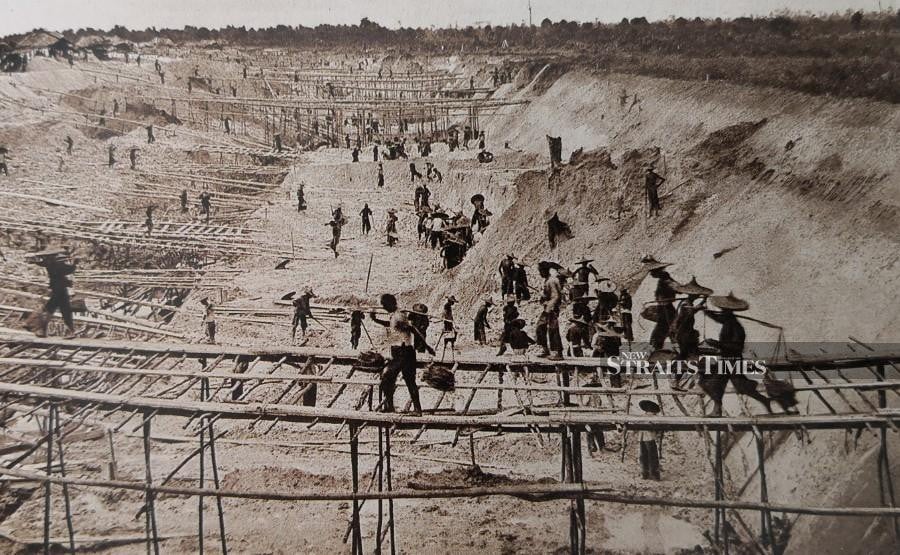
The area developed quickly in the 19th century, when tin was discovered. The mines attracted large numbers of settlers, particularly Chinese. Feuds began between the different groups of Chinese immigrants and became so bitter that, in the early 1870s, the British intervened and assumed control of the town. Before 1937, Taiping was the state capital and the centre of a long and drawn-out war resulting in a change of rulership for the state. Taiping used to be known as Klian Pauh – Klian meaning mine while Pauh is a type of small mango.
Long Jaafar has been historically credited with the discovery of tin in Larut in 1848. According to legend, Long Jaafar had an elephant named Larut and he used to take this elephant with him when journeying between Bukit Gantang and Lubok Merbau. One day the elephant went missing and when the elephant was eventually found three days later Long Jaafar noticed tin ore embedded in the mud that was on the elephant’s legs. It is said that this was how Larut got its name. Eventually, in 1850, Larut district was bestowed upon Long Jaafar by Raja Muda Ngah Ali and the Chiefs of Perak. Sometime later, the Sultan of Perak, Sultan Abdullah, died in 1857 and a series of succession disputes ensued. Unhappy with the abuse and favouritism of various royalties, rival Malay camps took sides with one or the other of the two great Chinese secret societies present at the time.
Long Jaafar established and developed his administrative centre at Bukit Gantang and made Kuala Sungai Limau at Trong the principal harbour of the Larut Settlement. In 1857 Long Jaafar was succeeded by his son Ngah Ibrahim. In the time of Ngah Ibrahim, the Chinese increased in number and by early 1860 two large groups were formed by the Chinese, the Five Associations whose members worked in the mines of Klian Pauh and the Four Associations whose members worked in the mines of Klian Baharu.
The capital of Perak was moved from Bandar Baru or New Town to Taiping after Datok Maharaja Lela assassinated the first British Resident of Perak Mr. James Wheeler Woodford Birch at Pasir Salak in 1875. In 1937, the capital of Perak was moved from Taiping to Ipoh.
The town’s mining industry continued to thrive; the country’s first railway was built to transport tin from Taiping to Port Weld, now known as Kuala Sepetang at the coast for export. The first train in Malaysia took its schedule on 1 June 1885. By 1900, an English language school, a newspaper, and the Perak Museum, the oldest in Malaysia had been established. Although Taiping’s economy declined with the dwindling tin deposits, tin mining remains an important industry in the area as is rubber and rice.
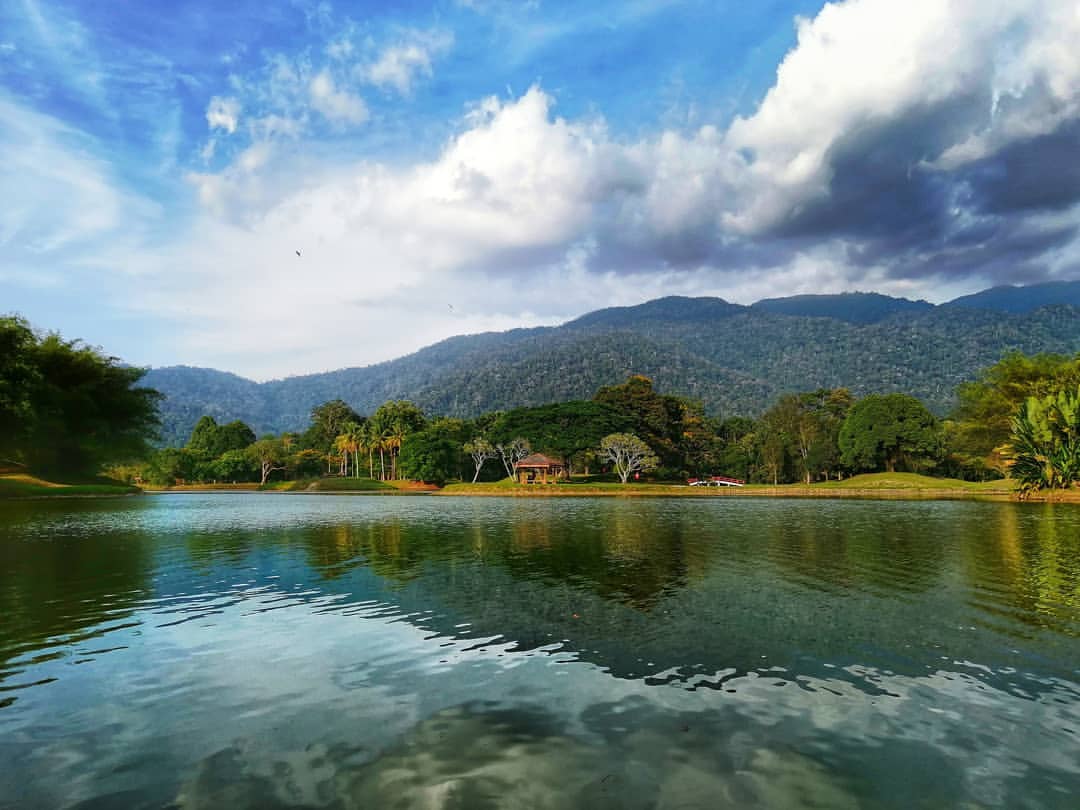
One of Taiping’s most famous attractions, the 64-hectare Taiping Lake Gardens is created on the site of an abandoned tine mine. Taiping’s first public garden was established during British rule in Malaysia, the garden is located near Bukit Larut and is equidistant to the town centre and the Taiping Zoo. Home to 10 man-made lakes and ponds, it is visited for its aesthetics and beauty and is a sight to behold during sunrise and sunset. The gardens are also home to the gigantic Rain Trees. The place is lit with tall bamboo, pines and other trees like Angsena and Hujan that are scattered all over.
There are few private and government houses located near the gardens; among them are the Old Residency, home of the Secretary to the Resident, the Raja’s House at the junction of Birch Road and Residency Road and the army officers’ residences on Batu Tugoh Road.
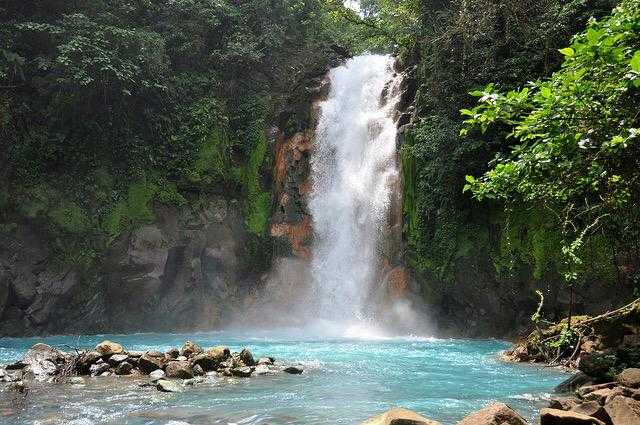
Popularly known as Kolam Renang Batu Besar, the Burmese Pool is a large rock pool along a stream. This rock pool is quite spacious but shallow. Burmese Pool is named after the natural rock pool fed by a waterfall, which continues from there as Sungai Larut. Since this pool is located in the rainforest, visitors are required to go through the Taiping Lake Gardens and search for the signboard pointing towards the Burmese Pool. Burmese Pool is a favourite local picnic spot and is open between 8 am and 5 pm every day. There is a parking fee of RM 2 per entry.
Located in Changkat Jering, Trong Hotsprings is part of three pools whose access is permitted to those who opt for the RM 10 package. It is open from midnight to noon and then between 4 pm and midnight. Entry fees are RM 2 to soak in hot spring water which can be changed up to three times and RM 10 for access to all three pools.
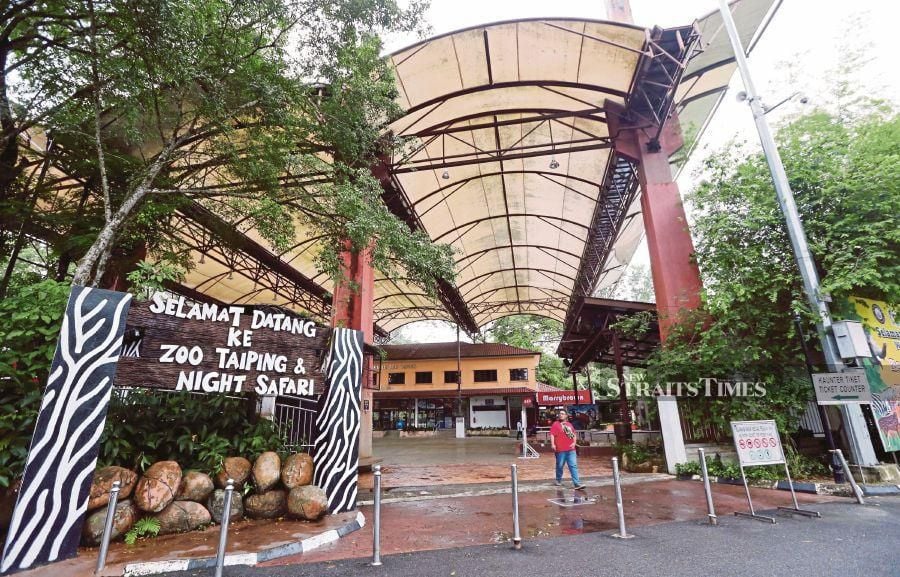
Taiping Zoo, also known as the Taman Mergastua Sultan Idris Shah enjoys a scenic location at the Taiping Lake Gardens and is positioned right at the foot of the Maxwell or Larut Hill. Dwelling over a vast area of 34 acres, this wildlife park is currently home to more than 2000 animals which includes 180 indigenous and exotic species of amphibians, mammals, and reptiles. There is a sizable African Savannah as well as the Australian exhibit and rare nocturnal animals.
The zoo is open from 8:30 am to 6 pm every day, including weekends and public holidays. The Night Safari is open from 8 to 11 pm daily and from 8 pm to midnight on Saturdays and public holidays. The entrance fee to the zoo is RM 16 for adults, RM 8 for children between 3 and 12 and for senior citizens above 60. The Night Safari costs an adult RM 20 while children and senior citizens need to pay RM 10. The mini train at the night safari is free to all.
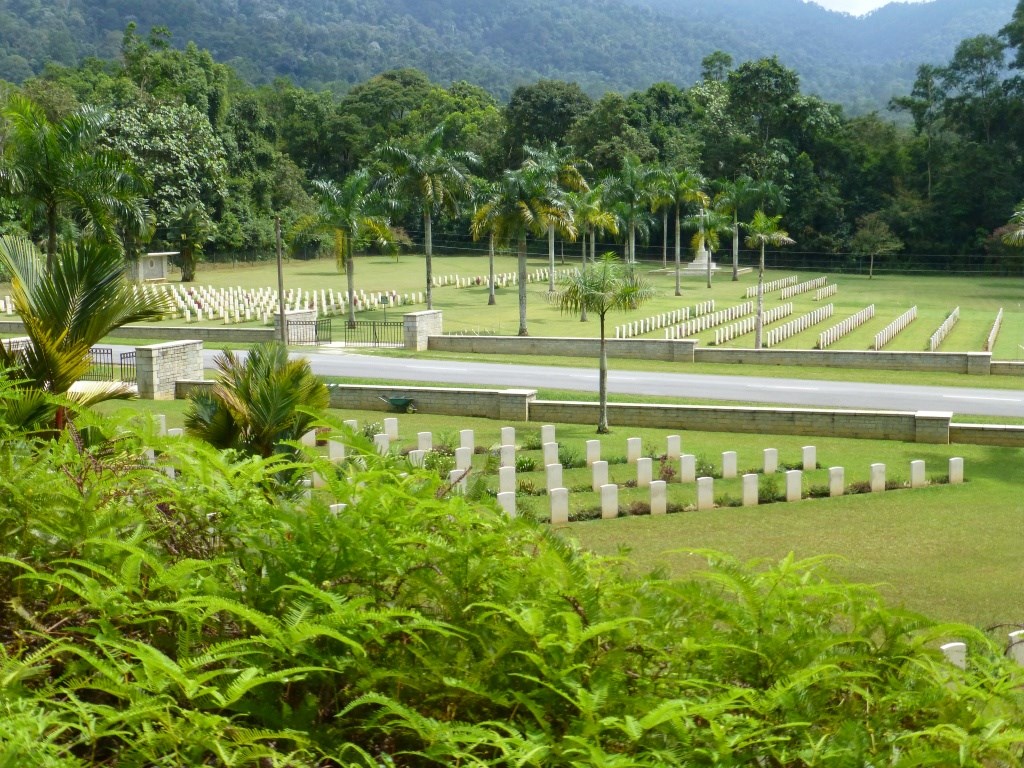
Taiping War Cemetery is a burial ground dedicated to the Allied office staff and servicemen martyred during the Second World War. Erected and maintained by the Commonwealth War Graves Commission, this cemetery is located in Bukit Larut. About 850 casualties from the Second World War are commemorated here out of which 500 remain unidentified. Most of these buried men originated from the UK, Australia, China, Malaysia, and the Gurkha Regiment.
Segregated into two segments of land, this graveyard has placed Christian graves located on the southeastern side of the road while non-Christian graves are buried on the opposite side. A cross of sacrifice stands on the southeastern boundary and a Stone of remembrance stands on the northwestern boundary. Jalan Bukit Larut is a road that serves as a boundary between these Christian and non-Christian sections of the cemetery. These graves are marked with white granite headstone depicting their regimental badge if known. Muslim graves are aligned in such a manner that they face Mecca, thus following Muslim religious convictions.
When the Japanese invaded the west coast of Peninsular Malaysia, Taiping was on the British line of retreat. Hosting a garrison of one Indian Army, the Taiping forces were reinforced with a casualty receiving station where 500 beds for the military patients were arranged by the civilian authorities. During the war, the 6th and 15th Indian brigades used Taiping as a resting and refitment centre. At the end of the Second World War, the Japanese surrendered. Major H.J. Ingram was assigned the task of identifying the dead who lost their lives in the British and Commonwealth wars. Major Ingram designed and supervised the erection of this cemetery for the reception of graves that were brought from the battlefields, numerous other temporary burial grounds, and the village and other civil cemeteries. Open all hours of the day, staff are available on the site from 8 am to 5 pm daily.
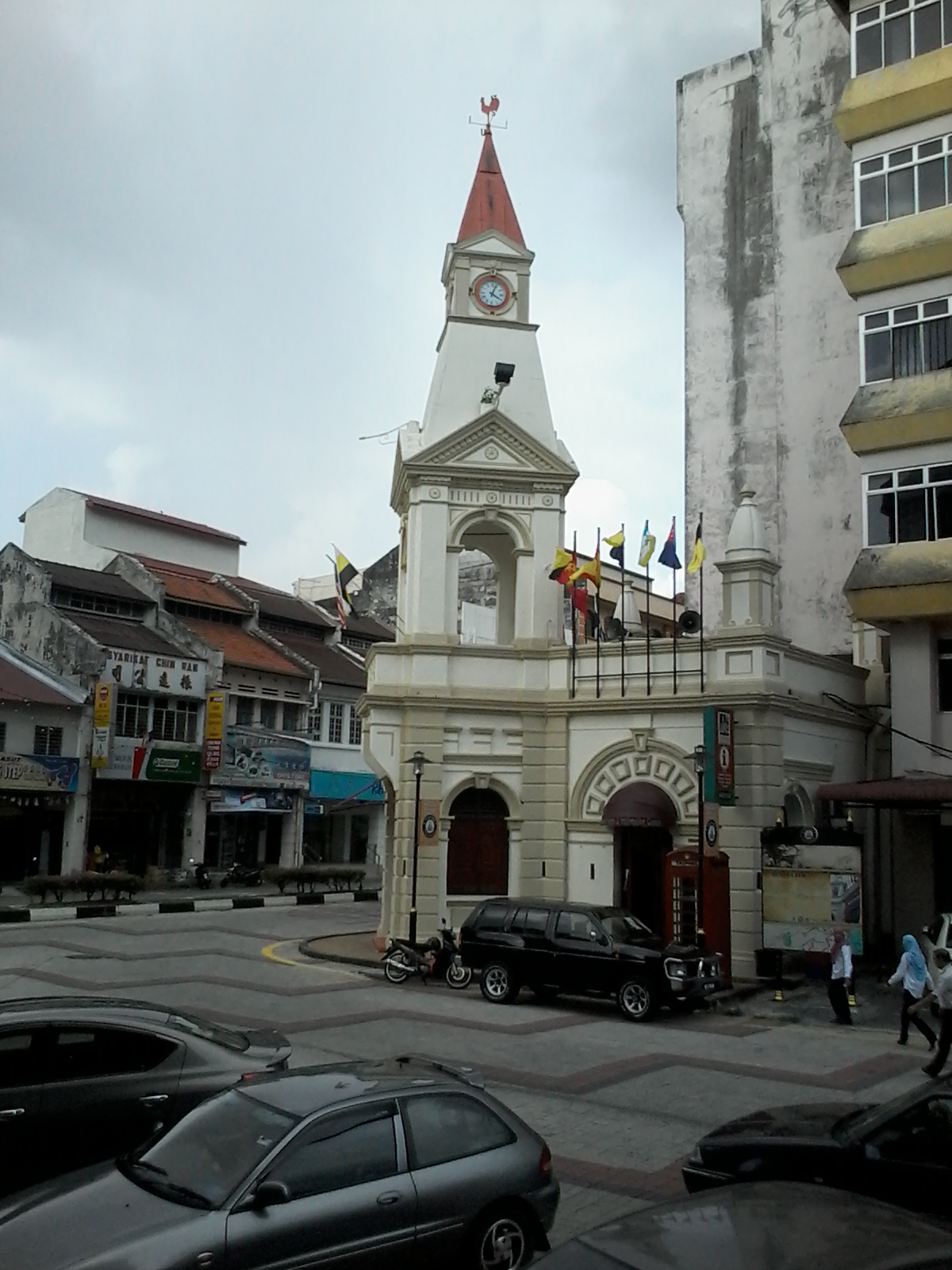
The Clock Tower is a historical landmark situated in the town’s heart. Originally built in 1881, it was initially constructed of wood and timber but rebuilt with bricks in 1890. Although there were many similar buildings in Penang and Kuala Lumpur, this is the oldest clock tower in Malaysia. The clock tower was originally shaped like a square fort but it has been demolished now. It is located in the Jalan Kota area and today, it is a tourist information centre offering maps and details of Taiping.
There is no provision to get to the top of the tower but the building is admirable from outside. Since it was built during British colonial rule, there is a replica of the medieval red-coloured telephone booth, now used as a kiosk just outside the visitor centre. The 20-metre-high tower has a brick-coloured pyramid-shaped roof with carefully chiselled archways, capped by a small weather vane in the form of a rooster. The middle of the building has a spacious and open balcony-like structure, decorated with flags, right above the main entrance which indeed has two red doors on each side.
Regarded as one of the oldest museums in Malaysia, Perak Museum is a small public museum that stands as a landmark in Taiping. It was founded by Sir Hugh Low, the fourth British Resident of Perak in 1883. This athenaeum is stacked with a whooping 8474 displays out of which 5074 are cultural collections, 523 are nature-based, and 2877 are miscellaneous collections.
Initially, this exhibition centre showcased artefacts based on ethnography, zoology, botany, and geology. The artworks here are segregated into four galleries: Nature Gallery, Cultural Gallery, Indigenous People Gallery, and Temporary Gallery. Rich in archaeological art pieces, this exhibition centre includes some hundred-year-old collections of animal species such as binturong and pulasan, animal skeletons, and extinct smoked clay. The Perak Museum boasts of ancient British-style art deco architecture.
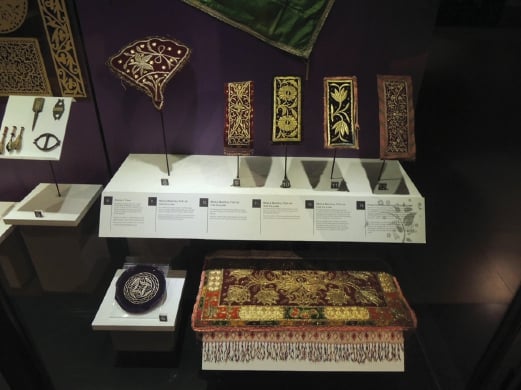
The Nature Gallery displays skeletons of animals like tigers and elephants. Also, there is much taxidermy highlighted with animals stuffed in jungle dioramas. In the Cultural Gallery, Malaysian handicrafts like woven bamboo items from Perak are displayed. Other exhibits of the cultural gallery include Mannequins wearing typical costumes worn at Malay, Indian and Chinese weddings. Over at the Indigenous People Gallery, one can view the lifestyle and physical characteristics of the Orang Asli community. This gallery also holds a fantastic collection of indigenous masks. You will also find old-style earthen pottery and utensils in this gallery. The Temporary Gallery rotates some of the unseen exhibits of the museum.
The basement of the museum is home to some vintage cars and other displays include a carriage of the Perak State Railway Company, a 19th-century steam engine, a Malaysian Air Force jet fighter, and an old anchor reclaimed from the Straits of Malacca. The Museum is open from Tuesday to Sunday between 9 am to 6 pm and is closed on the first day of Hari Raya Aidilfitri and Hari Raya Aidil Adha. Entry fees for adults are RM 2 while children below the age of 12 enter free.
All Saints Church is a wooden church that was founded in 1886 and consecrated in 1887. It is the oldest Christian church in Malaysia and boasts a Gothic architectural design. The church is built of meranti panels with hardwood frames and a louvred tower with four tubular bells. Featuring a timber facade, this church has a stained glass that was created in 1911. There is a small cemetery dwelling adjacent to this church. This cemetery is stuffed with finely crafted tombstones of some Europeans and young servicemen who lost their lives. This 120-year-old church has undergone some recent developments. It included a multi-purpose hall in 2008. Apart from an administrative office, this holy place of worship is well-equipped with washrooms, choir rooms, libraries, and vicarage quarters. The main hall in this church can comfortably accommodate 350 devotees at a time. The church is open from 8 am to 8 pm daily.
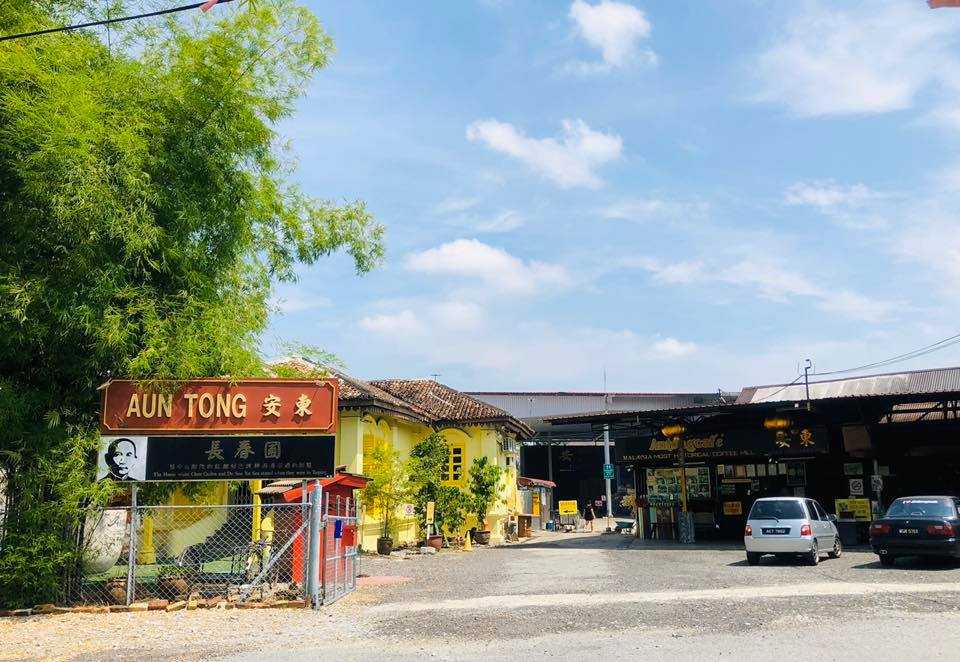
The Aun Tong Coffe Mill is the oldest coffee mill in Malaysia. The coffee factory located in the main town of Taiping produces the Antong Café brand of coffee. It is also known for some other excellent produce of locally brewed coffee like Ipoh and Durian. The factory displays the procedure of how coffee is produced, roasted and processed. A video is played at the mill explaining the coffee-making process in detail allowing some free coffee sampling and tasting before purchasing it. The factory has an adjacent shop that offers quality coffee powder, biscuits and roti kok and serves as a museum describing the history of Sun Yat Sen.
Orangutan Island is the world’s best rehabilitation and conservation centre for orangutans. Located in the heart of Bukit Merah, about 30 km north of Taiping, it is a 35-acre land neighboured by a beautiful lakeside resort. Started in 2000, Orangutan Island offers an amazing experience to visitors and is only accessible by a 15-minute jetty ride which can be boarded from near the lakeside resort-Bukit Merah Laketown resort. The entire tour of Orangutan Island will take one closer to nature through a steel cage walkway and will give one in-depth knowledge about the endangered yet interesting Orangutans. The entire walk is around 45 minutes to 1.5 hours long which is well guided by staff. Visit the orang-utan infant care unit to meet and see a baby orang-utan or feed and play with the orang-utans for a captivating yet fun experience. The best time to visit Orangutan Island depends on the weather conditions. Months between March to October are considered to be the best and one should avoid going on rainy days. Orangutan Island is open between 9 am to 5 pm and entry fees for foreigners are RM 40 for adults and EM 20 for children. Malaysians need to pay RM 30 for adults, RM 18 for children and RM 15 for senior citizens. Malaysians can also avail of a family package which will cost RM 100 for 2 adults and 3 children or RM 90 for 2 adults and 2 children.
Bukit Larut
Located 10 km east of Taiping, about 1250 m above sea level, Bukit Larut is Malaysia’s oldest and smallest hill resort. Offering a tranquil glimpse of Perak’s colonial past, it was established during the 1880s as a retreat from the lowland heat. Formerly, known as Maxwell Hill, Bukit Larut is popular for its fragrant, cool air, walking trails and foggy mornings.
Bukit Larut is rich in biodiversity and home to 621 highland plant species which accounts for 20.4% of the overall highland plant species found in Peninsular Malaysia, as well as 27 mammal, 227 bird, 9 reptile, and 56 amphibian species. The area receives the highest rainfall in Malaysia with precipitation reaching up to 5,800 millimetres (230 in) annually. Bukit Larut is the location for the annual North Face Malaysia Mountain Trail Festival, which is a qualifier event for the Ultra-Trail du Mont-Blanc (UTMB).
Reaching the top of Bukit Larut is fun. The 10 km hike from Taiping is a 2.5-hour trek one way If one has a good level of fitness. One can also arrive at the top via the government land rovers which is over a distance of 13 km and has 72 bends in the road, which costs RM10 for adults and RM5 for children for a round trip which is available at the base station. The trips by road are available between 8 am and 5 pm with some extra trips on weekends. The ride takes less than 30 minutes to reach the top from the base and is limited for each day up to 200. Online booking is not available.
Private vehicles are not allowed on the hill road. The telecom tower at the top of the upper station of Bukit Larut offers a stunning panoramic view. Surrounded by several bungalows, nature prevails at its best here with more than 600 varieties of plant species and 200 varieties of birds. Reservations are not accepted beforehand and visitors must go early at 8 am to buy tickets for the day. Visitors must specify what time they want to go up and what time to come down. The cost is RM 4 per person for a round trip.
The history of Bukit Larut dates to the Larut Wars which occurred in 1861 between Chinese underground societies Han San and Ghee Hin over tin mine control in Klian Pauh, the predecessor to Taiping, leading to British intervention into Taiping and later The Pangkor Treaty of 1874 which allowed the British to administer Perak. After the treaty was signed, the British found that tin mining activity could be easily observed from Bukit Larut and that the hill was also suitable as a place of retreat from the hot weather. Construction of the hill station took place in 1884 and the hill was named after George Maxwell, a British Malaya administrator. Maxwell Hill was renamed Bukit Larut in 1979. In early 1997, the government of Perak announced a RM 320 million plan to redevelop Bukit Larut with additional tourism facilities, to enhance its potential as a tourism area in Perak. However, due to opposition by residents and some non-governmental organisations in addition to political pressures, the redevelopment plan was cancelled on July 20, 1997, and the focus shifted to renovating the old colonial-era bungalows and rest houses for RM 2 million. At the same time, the Malaysian Public Works Department revealed that the road on Bukit Larut could not be widened further. It was also announced that construction of the cable car would overwhelm the tourism system in Bukit Larut and would also potentially erode the biodiversity in that area.
The economy of Bukit Larut is limited to tourism and hospitality, with accommodation services providing the main source of income. Accommodations for visitors mostly consist of colonial rest houses and bungalows. No high-rise hotels are available in the area. Historically, Bukit Larut had coffee and tea plantations on an experimental basis, but these were discontinued due to the inflexibility of the transportation system. However, the Tea Garden House, which was previously part of the tea plantation area, continues to operate.
Bukit Larut is the site for an annual international trail running event, The North Face Malaysia Mountain Trail Festival. It is usually held in December and attracts more than 2,100 runners from 35 countries. The trail running event is certified by the International Trail Running Association (ITRA) and is listed as one of the qualifying races for the Ultra-Trail du Mont-Blanc (UTMB). A portion of the registration fees is channelled to the Bukit Larut Tourism Department for the maintenance of Bukit Larut.
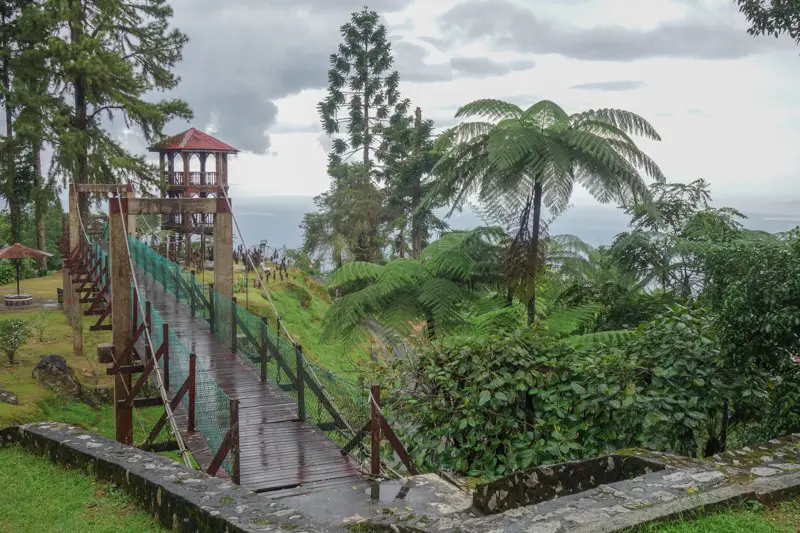
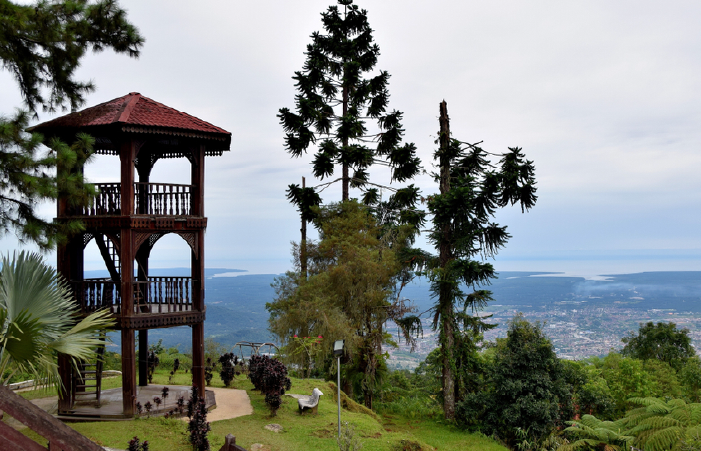
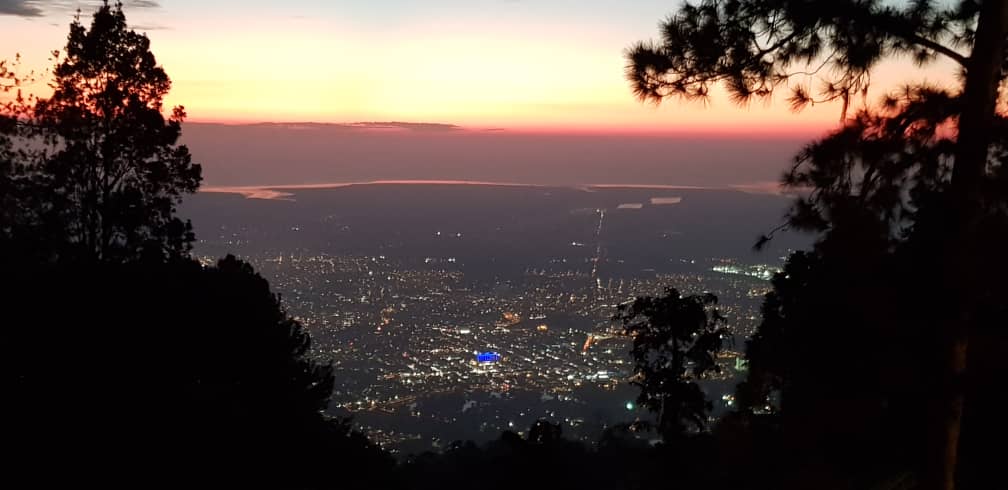
The Tulip Garden at Bukit Larut is the first tulip farm established in Malaysia. Admission to the tulip farm is RM1 outside the tulip season and RM2 during the season. Bukit Larut has a small park covered by tall pine trees and little swings to enjoy the misty mornings. The hanging bridge enhances the beauty of the place with options for photography. To get a panoramic view of Taiping city from above, forget not to experience the Lookout Tower. A nice place for family picnics, this hill has scattered seating arrangements with tables and chairs to serve the purpose.
The best time to visit Bukit Larut is between January to April. One should avoid visiting Bukit Larut in the rainy season, especially from September to December to avoid sudden afternoon showers. The hiking trail becomes slippery and risky to walk along. Landslides are likely to cause more disruption during the monsoon.
Pangkor Island
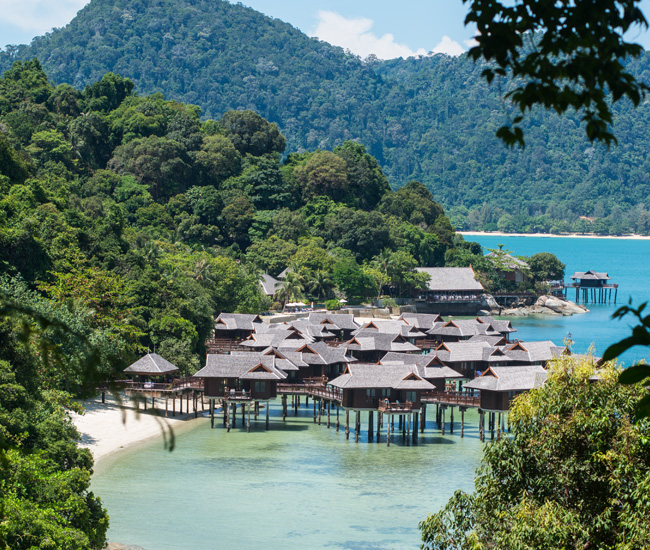
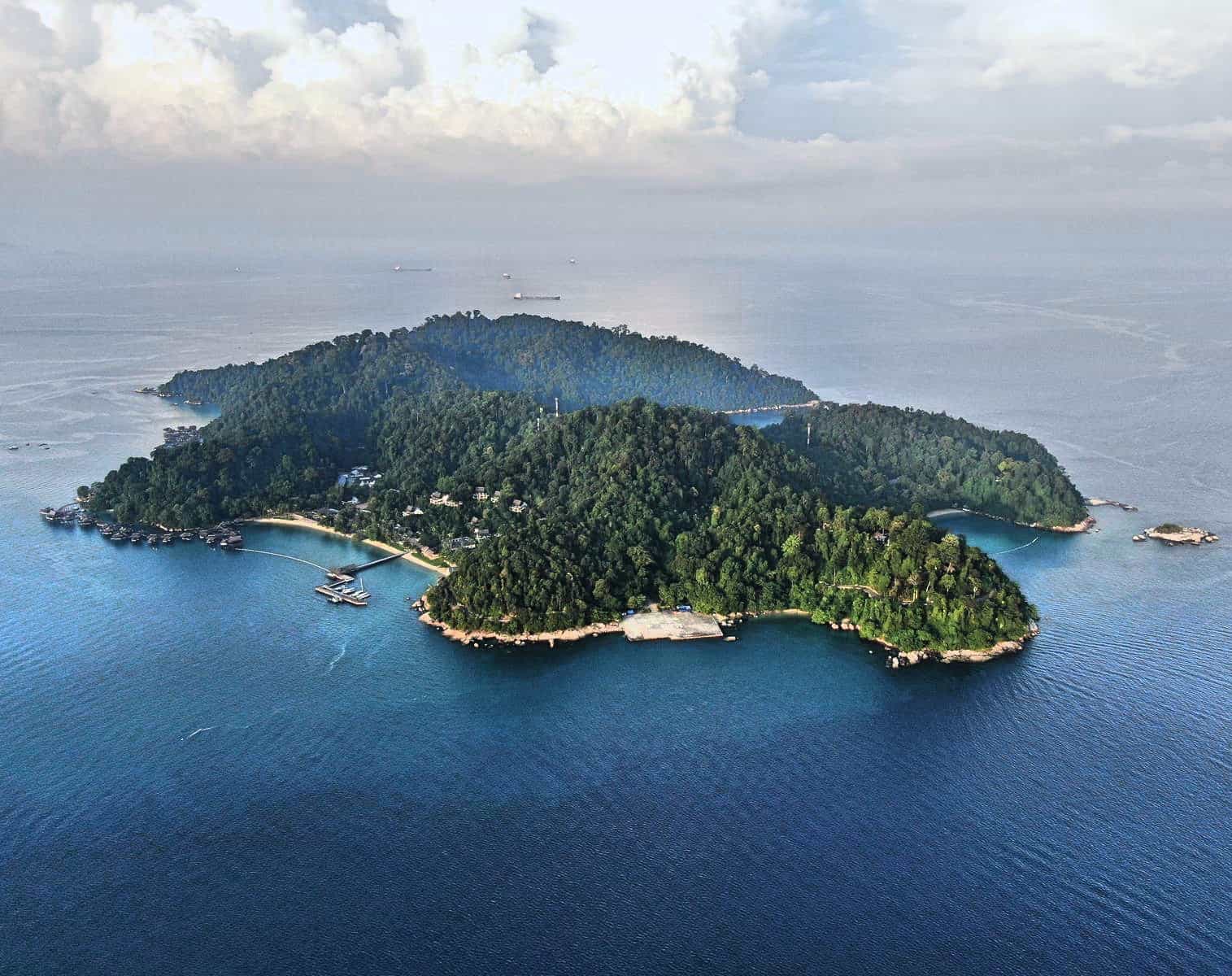
Pangkor Island or Pulau Pangkor is an island with a population of approximately 10,000. Nearby islands include Pangkor Laut Island, Giam Island, Mentagor Island, Simpan Island, and Tukun Terindak Island. The major industries of the island are tourism and fishing. Pangkor Island has a land area of 18 sq km and is 3.5 km from Peninsular Malaysia. The interior of the island is forested and is home to 65 reptile species, 17 amphibian species, and 82 total herpetofauna species.
Historically, Pangkor was a refuge for local fisherfolk, merchants and pirates. In the 17th century, the Dutch built a fort to control the Perak tin trade, known as the Dutch Fort. In 1874, it was the location of a historical treaty between the British government and a contender for the Perak throne, the Pangkor Treaty, which began the British colonial domination of the Malay Peninsula. The old British name for the Pangkor Island group was the Dindings.
Following the Federal Government’s move to grant the island duty-free status effective 1 January 2020, the island recorded a 40% increase in visitors. Public ferries depart from Lumut to Pangkor Island from the old Lumut jetty.
Batu Gong is a petroglyph or rock carving of an unknown age located on a headland at Pantai Pasir Bogak depicting a gong, which is 100 cm in diameter and is oriented directly north. In 2003, Marina Island, an artificial island was developed by the Marina Island Group of companies and began operation in 2010, with a private investment of RM250 million by 2013. The integrated mixed-development resort island consists of waterfront residential properties, a new jetty, Marina Island Jetty, a private commercial marina called Pangkor Marina Malaysia, service apartments, hotels and shop offices. The jetty has a ferry service that connects to the island.
The west coast of Pangkor is famous for its beaches, resorts and hotels for tourist accommodations. The famous beaches there include Pasir Bogak, Teluk Nipah and Coral Beach. The east coast of Pangkor is where all the residents live and where many of them work in the local food and fisheries activities, including the dry fish factory, boat workshops, and a fish farm. Other attractions on the island include the Fu Ling Kong temple, the Sri Pathirakaliamman temple in Sungai Pinang Besar village; Batu Bersurat, Tiger Rock, the Dutch Fort or Kota Belanda, the tombs in Kampung Teluk Gedung and Tortoise Hill and Batu Gong.
Bukit Pangkor is a forested hill climbing which will lead to Pangkor Island’s highest point at around 350 meters. The trek amidst the lush jungle in the company of hornbills, cicadas and macaques, through marked trails, will be quite a good jungle adventure with a moderate difficulty level.
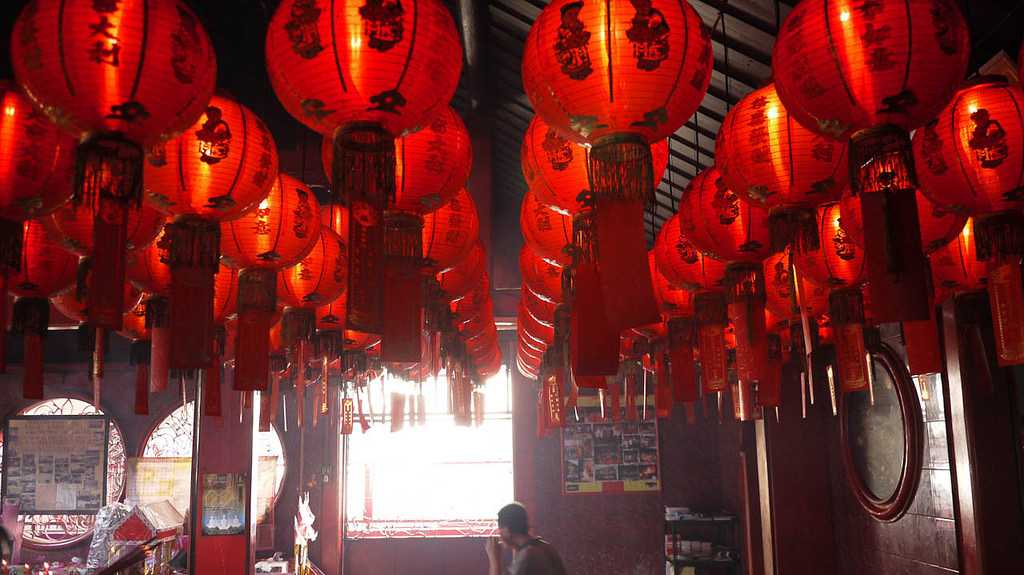
Pangkor Island’s Chinatown offers a vivid background for snapshots against the colourful traditional Chinese decorations. The restaurants on the red-block path streets of Chinatown serve delectable dishes. The place is good to explore as it exudes an altogether different vibe from the rest of the island.
Foo Lin Kong Temple is a Taoist temple set against a hill in a stunning landscape. Adorned with large rocks and stones, the temple is more than 100 years old and has some mysteries attached to it. The temple’s garden has a mini Great Wall of China. Also, visitors can climb the hill behind the temple for some fascinating views of the scenery around.
Dutch Fort is a 17th-century fortress initially built to store tin ore, now in a state of complete ruin. It consists of just 3 worn-out brick walls with some windows in between. The area around it has a park and some souvenir stores.
Located at Pulau Pangkor, Ling Je Kong Temple is a Chinese temple that sits on the top of a rocky ridge at Coral Beach. Initially, a small place dedicated to the Chinese Goddess of Mercy, Kuan Yin, it is now a religious temple with Chinese scriptures, figures and surprisingly statues of cartoon Mickey Mouse, Donald Duck, etc. The temple provides splendid views of the crystal waters of Coral Beach and Pangkor Island.
And that’s all from Perak! Look out for the next Malaysian state I will be exploring…