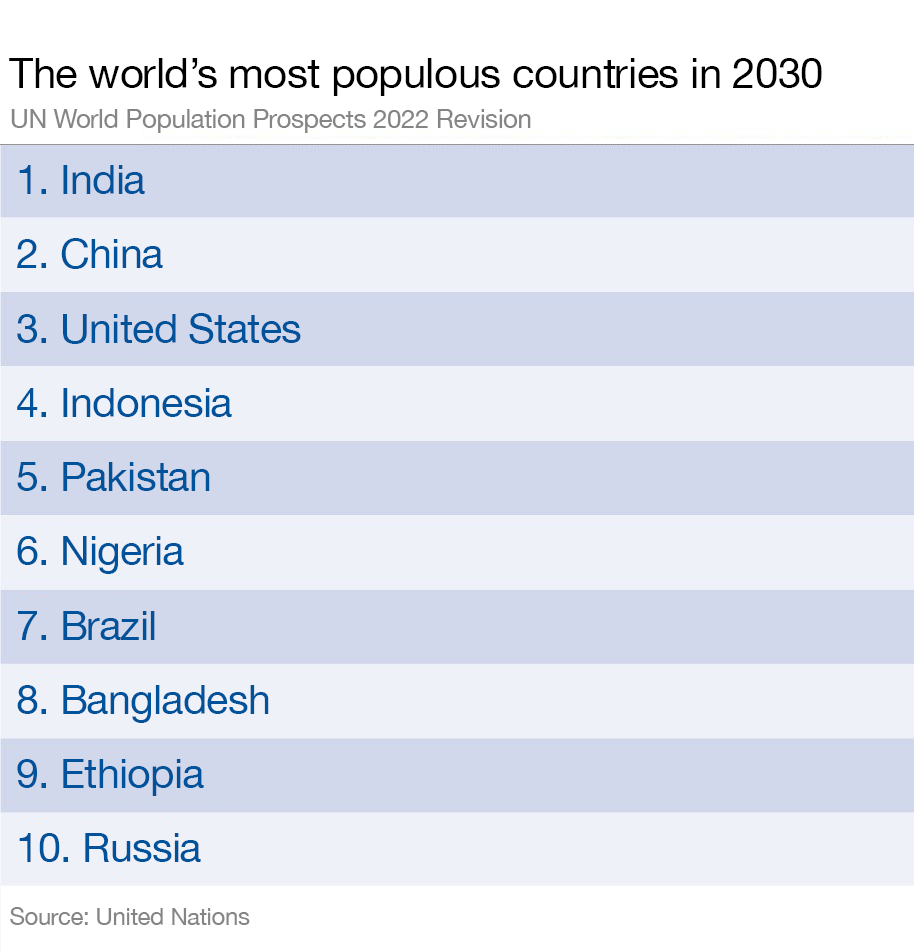
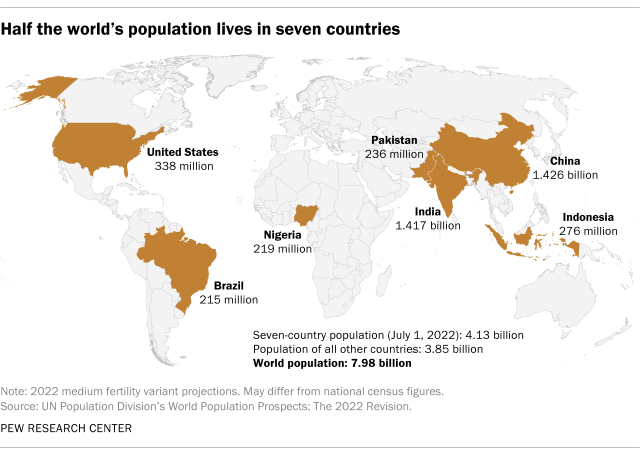
Sometime in 2023, according to the United Nations, India will officially overtake China as the world’s most populous country, a dubious honour I feel should have not happened in the first place. India probably already has overtaken China, but because the next census has not happened (the last was in 2011), it will only be confirmed sometime later this year.
India is fast becoming the world’s most populous country, surpassing China. According to United Nations projections, India’s population is expected to reach 1.7 billion by 2050, compared to China’s 1.4 billion. This shift in demographic dominance has significant implications for both countries and the world at large.
According to the U.N.’s World Population Dashboard, China still had slightly more people than India at the end of 2022: 1.4485 billion, compared to India’s 1.4066 billion. But China’s population has stabilized and is set to shrink, while India’s is still growing pretty fast.
More babies are born each year in India than in any other country in the world. The U.N. estimates more than 24 million annually, but the true number is likely higher because many births never get registered. Compared to previous generations, these newborn Indians are more likely to be born in a hospital than at home; more likely to survive to adulthood; more likely to become literate, educated and multilingual; and more likely to migrate within their lifetime, to different parts of their own country or the rest of the world. And if efforts to eradicate female feticide are successful, the next generation of Indians will have more females than in recent decades.
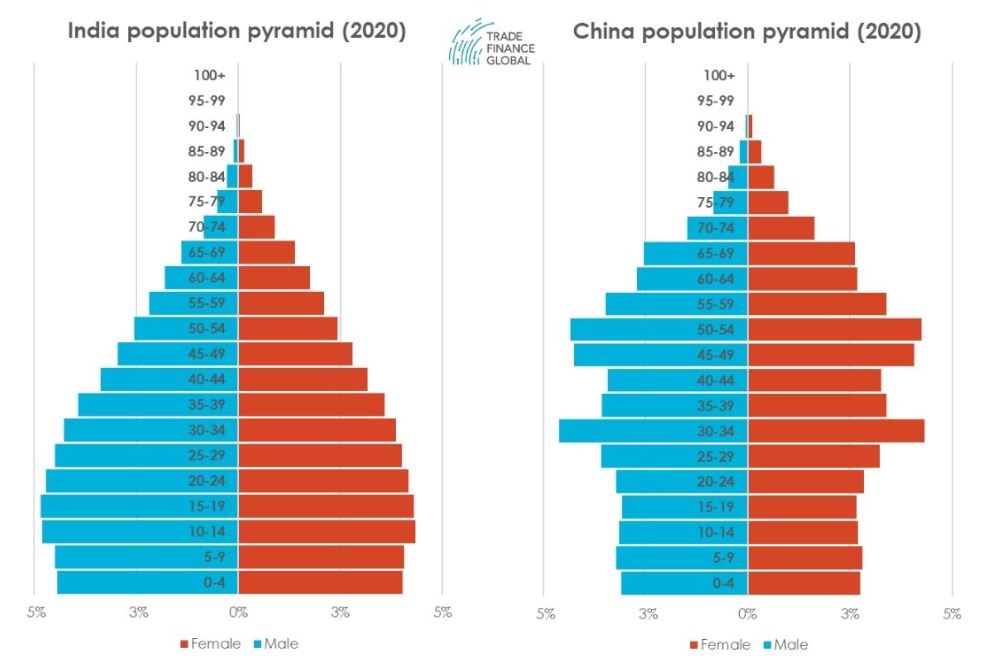
One factor driving India’s population growth is its young and rapidly growing working-age population. While China’s population is ageing, with a rapidly growing elderly population, India’s population is relatively youthful, with a large number of people in their prime working years. This demographic advantage is likely to fuel India’s economic growth in the coming years and support its rise as a major player in the global economy. Another factor contributing to India’s population growth is its high birth rate. Despite a decline in recent years, India still has one of the highest birth rates in the world, with an average of 2.5 children per woman. This high birth rate, combined with increased access to healthcare and improved living standards, has led to a rapid increase in life expectancy, further fueling population growth. However, India’s population growth also poses major challenges, including pressure on resources, infrastructure, and social services. The country is already facing major challenges in providing adequate housing, healthcare, and education to its rapidly growing population, and the government will need to address these issues to ensure sustainable economic growth.
The impact of India overtaking China as the most populous country in 2023 is likely to have several implications. As the world’s most populous country, India is likely to gain increased political and economic influence on the global stage, but with a rapidly growing population, India may face challenges such as providing adequate employment opportunities, housing, healthcare, and education to its citizens. The growing population is likely to put pressure on the country’s natural resources, such as water, land, and food, leading to potential resource scarcity and environmental degradation and there may be a population shift as a result of migration from rural to urban areas, leading to increased urbanisation and the need for infrastructure development in cities. Changes to the labour market, potentially affecting industries such as agriculture, manufacturing, and the service sector are also very likely.
From an economic perspective, the impact of India becoming the world’s most populous country will most likely be mixed. India’s large population could provide a significant labour force that could be an advantage for the economy in terms of increased productivity and economic growth. With a large and growing population, the country has the potential to become a major consumer market, attracting investment and driving economic growth. But the rapid population growth may put pressure on resources and infrastructure such as water, food, and energy, potentially leading to resource scarcity and inflation. Providing adequate infrastructure and services to a rapidly growing population, such as housing, healthcare, and education, can be a challenge and may require significant investments. If the population growth is accompanied by a favourable age structure, with a large proportion of working-age people, it could lead to a demographic dividend, driving economic growth. As the world’s most populous country, India may face increased competition with China for global economic influence and market share in various industries.
Having a large demographic of young people gives India an edge over many other economies, which are facing an ageing population. With more than half of the country under the age of 25, India has a massive potential workforce to propel economic growth. While India does not face an ageing workforce, the challenge is ensuring there are enough jobs, and that its people have the right education and skills for those jobs, according to experts.
Since 1947, India has transformed from a subcontinent impoverished by British colonial rule to an Asian regional power with big urban centres of technology, innovation, constant construction and growth. There are projections that India will overtake Germany and Japan to become the world’s third-largest economy, possibly by 2030. China will achieve its peak population size in 2022 whereas India will continue to experience momentum for several decades to come, before the population stabilizes and this represents a great opportunity for the country. But the challenge is for India to create enough opportunities in education and employment for all of these young people streaming into India’s big cities or being born in them. The country needs to keep pace with the growth of the population by providing health care, education, and the conditions for jobs. In a country where women and girls don’t have decision-making power, especially in rural and semi-urban areas where they have lower levels of literacy and where they’re not able to exercise their reproductive rights and choices, it is important to give them the voice the need and deserve.
India’s rise as the world’s most populous country has significant implications for both the country and the world. While its youthful population and high birth rate hold the potential for economic growth, the government must address the challenges posed by rapid population growth to ensure a sustainable future for its citizens.