Mumbai Memories: Our Music Journey

In Tamil Brahmin families, it is almost a rite of passage for children to begin learning music, dance, or both from a very young age. This practice, deeply woven into the cultural fabric, is not merely a hobby or extracurricular activity but a tradition that carries historical, spiritual, and social significance.

Carnatic music and Bharatanatyam are two of the most celebrated classical art forms in South India. Both have ancient origins and have been closely associated with temple rituals, devotional practices, and the cultural identity of the Tamil Brahmin community. Historically, Brahmin families became custodians and prominent patrons of these arts, especially as royal patronage declined and the arts transitioned from temples and courts to urban centres.

The Bhakti movement, which swept South India from the 7th century onwards, emphasised personal devotion to deities through poetry, music, and dance. Brahmins, with their access to education and Sanskritic traditions, played a leading role in this movement, using music and dance as vehicles for spiritual expression and community identity.

As Carnatic music and Bharatanatyam gained prestige, mastery of these arts became a symbol of social status among Tamil Brahmins. The ability to sing or play an instrument or to perform classical dance was seen as a marker of refinement, education, and cultural capital. Families took pride in their children’s artistic accomplishments, which were showcased during family gatherings, religious festivals, and community events.

The rise of music “sabhas” (cultural organisations) in urban centres provided platforms for performances and further cemented the association of these arts with Tamil Brahmin identity. Participation in these sabhas, both as performers and as audience members, became a way for families to assert their place in the social hierarchy and maintain connections within the community.

For many Tamil Brahmin families, enrolling children in music or dance classes is a way to honour their heritage and ensure the continuity of tradition. Parents, often themselves trained in these arts, see it as their responsibility to pass on this legacy to the next generation. In Tamil Brahmin culture, music and dance are not just artistic pursuits but acts of devotion. Many compositions in Carnatic music are devotional hymns, and Bharatanatyam originated as a form of temple worship. Learning these arts is seen as a way to connect with the divine, cultivate discipline, and develop a sense of humility and reverence.

Research and anecdotal evidence suggest that children who begin learning music or dance at a young age develop better memory, concentration, and coordination. The structured practice of swaras (notes), talas (rhythms), and choreography enhances cognitive abilities and fosters discipline. Stage performances, which are an integral part of music and dance training, help children overcome stage fright, build confidence, and learn to express themselves creatively. These skills are valued not just in the arts but in academic and professional spheres as well.
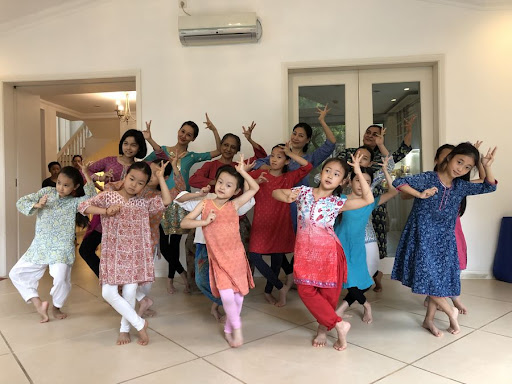
Growing up in the Bombay of the seventies and eighties, it was very common for most young girls and boys in our area to learn music or dance, or sometimes, even both. In my family, I leaned toward music while my sister chose to learn dance. I learned music in two stages. The first time I was probably 5-6 years old, and as all young girls were wont to do, my mother put me in a music class next to my home. This was a centre of Carnatic music, but after about 1.5 years, I wanted out. So I quit. But the seeds were sown, and slowly over the years, I started getting interested in music, and at about the age of 12-13, I restarted my music journey. This time, I learned from an independent teacher close to home. This time, I lasted about three years, and when I reached class 10, I dropped out again because of the demands of school.

My sister was interested in dance, and so she was enrolled on a Bharatanatyam class conducted by an independent teacher who taught many girls in our area. She learned this art for about 4-5 years, from the age of about 6-7 until she too dropped out because of the demands of school, extracurricular activities, and tuition.

I have always loved music, and I am someone who is constantly singing, irrespective of the genre. So when GG and BB were young, I also enrolled them in a local Carnatic music class. GG also chose to learn dance, but in her case, she learned classical ballet. GG has been consistent with going to music class since she started around the age of 7. Even during her PSLE and O-level years, she didn’t stop, as, according to her, this was her stress relief. BB, on the other hand, stopped learning music when he hit puberty and his voice broke. But he has a very good voice and is a great singer. In secondary school, when he was about 13-14, they had a music show in school, and he was the lead singer for the band that he and his friends came up with. He was so good that the day after, his school principal stopped him in the corridor to compliment him on his singing.

So that’s our music journey! It was nice walking down memory lane, remembering all the memories.

In My Hands Today…

The Girl Who Fell From the Sky – Emma Carey

From a terrible accident that left her paraplegic, Emma Carey has become an inspiration for hundreds of thousands online to live life to the fullest and remind us that if we can, we must.

There on that helicopter, somewhere over Switzerland on a Sunday in June, came the first tiny whisper. A voice that that would carry me for years to come. ‘I’m going to be okay. There’s still joy here.’

When Emma Carey was twenty, she fell from 14,000 feet and survived. In The Girl Who Fell From the Sky, Emma tells us the inspirational story of how, through what could be considered one of her greatest tragedies, she found her truest self.

From waking in hospital to the news that she was a paraplegic to learning how to use her legs again, through the six-year long court case and now being finally free to make the most of her life, Emma teaches us the importance of courage and resilience and how to appreciate the extraordinary beauty found even in the most ordinary moments of our lives.

This heartfelt book is more than a memoir, it’s a call to action that reminds us not to take our lives and abilities for granted but to live every day like it could be our last.

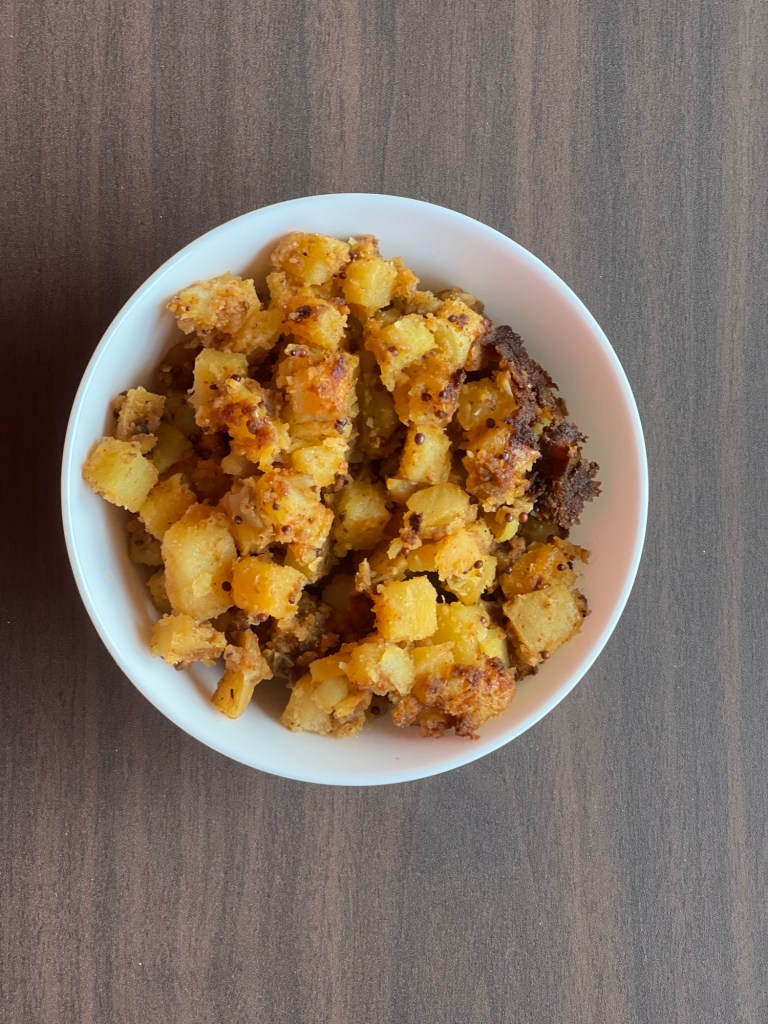
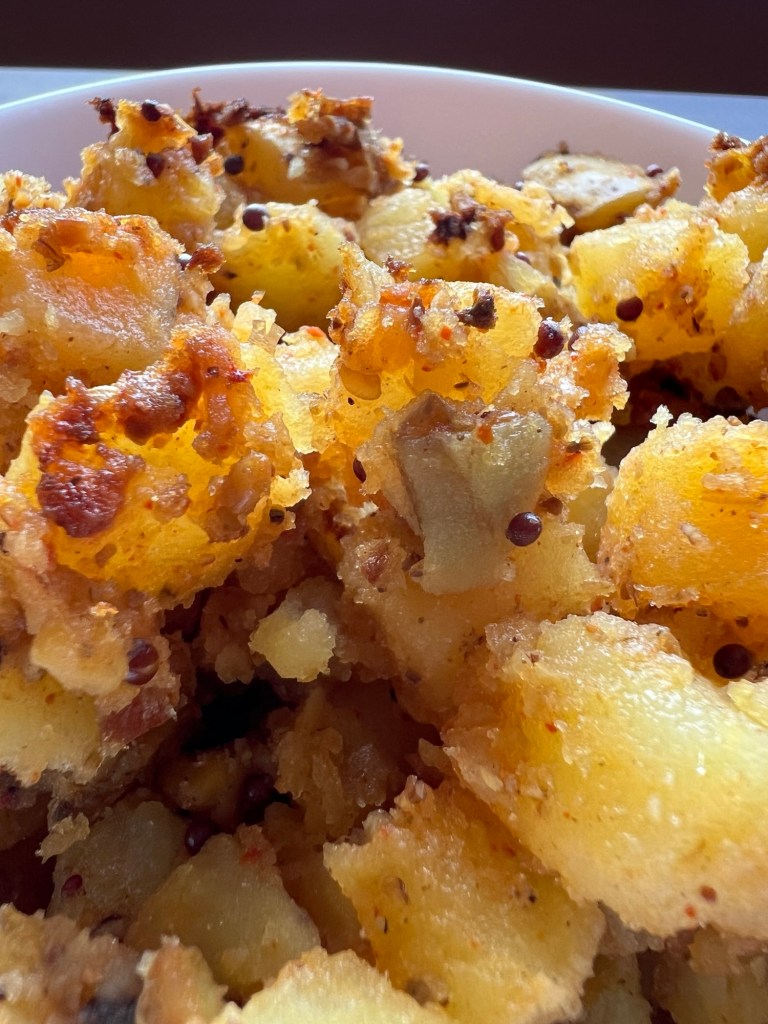
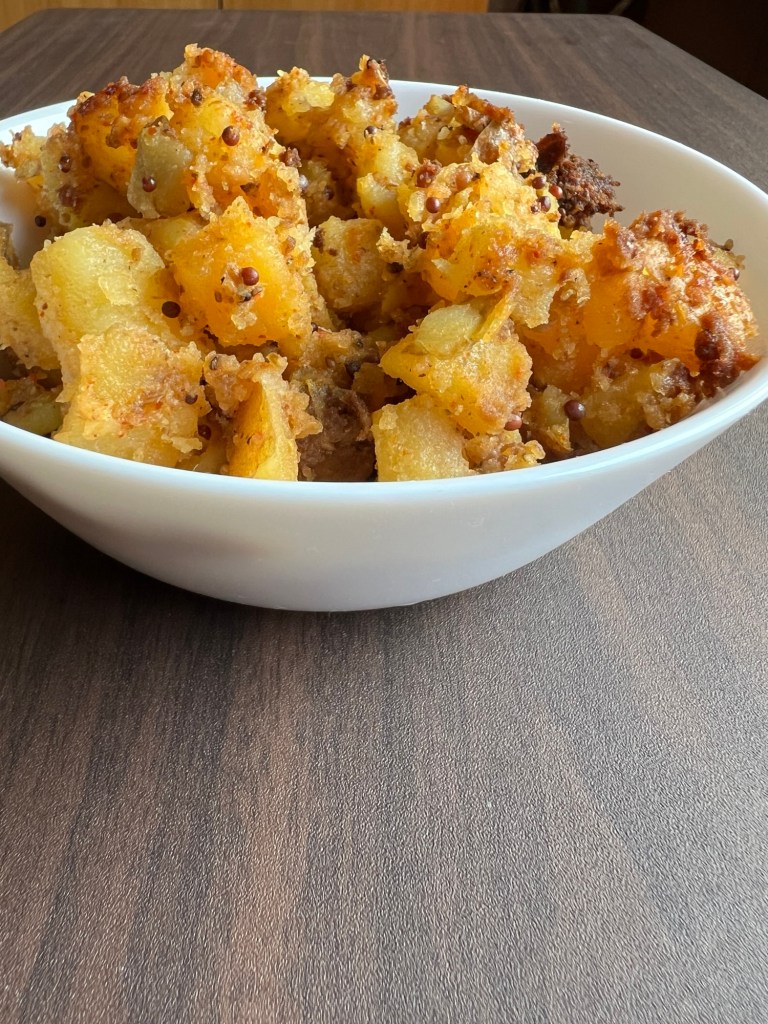
Recipes: Potato Podi Curry

A staple in Tamil Brahmin weddings, Potato Podi Curry, or Urulai Kizhangu Kara Curry, holds a special place in Tamil Brahmin cuisine. This flavourful and spicy potato curry is made without onions and garlic, making it suitable for festive occasions. 

Potato Podi Curry 

Ingredients:

For the potatoes:

  • 4-5 medium-sized potatoes
  • ¼ tsp turmeric powder
  • ¼ tsp asafoetida powder
  • Salt to taste
  • 1 tbsp chopped coriander leaves 
  • 1 tbsp oil
  • 2 tsp mustard seeds
  • 10-12 curry leaves

For the Podi Powder

  • 2 tbsp coriander seeds
  • 2 tbsp chana dal (split Bengal gram)
  • 2 tbsp urad dal
  • 2 tbsp fennel seeds
  • 2 tbsp black peppercorn
  • 2-3 tbsp Kashmiri chilli powder
  • ¼ tsp fenugreek seeds

Method:

  • Wash the potatoes thoroughly. This curry will have unpeeled potatoes, so make sure the potatoes are cleaned. 
  • Chop the potatoes into small, bite-sized pieces. Drop the potatoes in cold water to avoid oxidisation.
  • In the meantime, heat a small skillet and dry roast the ingredients for the podi powder one by one, until they are crisp. Keep aside and let them cool.
  • Once cool, grind the spices to a fine powder. Keep aside.
  • In a large saucepan, add about 4-5 cups of water, add ¼ tsp turmeric and some salt and once the water comes to a rolling boil, add the potatoes and cook the potatoes until they are about 80% done, stirring occasionally.
  • Check to see if the potatoes are done. This can be done by taking a piece and pressing it with your finger. If you can mash it with your fingers, it is cooked. At this point remove the potatoes from the saucepan, drain them and keep aside.
  • Heat about 2-3 tbsp oil in a large pan and once warm add in the mustard seeds. When the mustard seeds pop, add in the curry leaves and mix. 
  • Now add in the asafoetida powder and once that is mixed, add in the drained potatoes.  Season with salt.
  • Add the podi powder and Kashmiri red chilli and mix gently.
  • On a low flame let the potatoes finish cooking. This should take about 7-10 minutes. 
  • Serve the potato podi curry with any South Indian meal.

2025 Week 26 Update

This was a tranquil week as I had done a major chunk of this week’s ‘to-do’ list before the week began. This meant I had time to do a lot of reflection this week. So I spent time in mindful contemplation, read a bit, spent time on social media, and had some (not all) answers. Maybe I will do the same next week too, and then, hopefully, I will have a clearer picture of what I want and need to do in the next six months of the year.

Today’s profound quote by Joseph Goldstein, a co-founder of the Insight Meditation Society who has studied and taught Buddhist meditation for over 50 years, reframes humility not as a behaviour we adopt but as a natural state that arises when the ego dissolves. Often, humility is misunderstood as modesty or self-deprecation, something we consciously perform. But Goldstein, drawing from Buddhist insight, suggests that true humility isn’t about downplaying oneself; it’s about the absence of fixation on the self altogether.

When the sense of “I, me, mine” fades, what remains is not arrogance or pride, but a quiet openness and presence. In that state, we’re no longer comparing, competing, or needing validation. We act with compassion and clarity, not from a place of ego but from connection and awareness. Thus, humility isn’t a deliberate “stance” we take; it arises naturally when we stop centring everything around the self. In spiritual practice, this is often the essence of awakening: freedom from the illusion of a separate, fixed identity.

Other than my quiet solitude this week, life went on as usual. The children were busy with their work, as was S. So that’s my update for this week. Stay positive and keep smiling!

In My Hands Today…

Invention: A Life – James Dyson

Famously, over a four-year period, James Dyson made 5,127 prototypes of the cyclonic vacuum cleaner that would transform the way houses are cleaned around the world. In devoting all his resources to iteratively setbacks came hard-fought success. His products—including vacuum cleaners, hair dryer and hair stylers, and fans and purifiers—are not only revolutionary technologies, but design classics. This was a legacy of his time studying at the Royal College of Art in the 1960s, when he was inspired by some of the most famous artists, designers, and inventors of the era, as well as his engineering heroes such as Frank Whittle and Alex Issigonis.

In A Life, Dyson reveals how he came to set up his own company and led it to become one of the most inventive technology companies in the world. It is a compelling and dramatic tale, with many obstacles overcome. Dyson has always looked to the future, even setting up his own university to help provide the next generation of engineers and designers. For, as he says, “everything changes all the time, so experience is of little use.”