Instagram Interludes

Some pictures from the air when we flew in from Singapore to Mumbai


Mumbai as we land….

The first glimpse of the overcast Mumbai skyline

I could not resist this blue sky….somewhere above the Bay of Bengal

Boats dotting the coast off Singapore

A gorgeous morning as we took off from Singapore…


In My Hands Today…

Tsunami Kids: Our Journey from Survival to Success – Paul Forkan, Rob Forkan

23281201On December 26, 2004, Rob, Paul, Matty, and Rosie Forkan, ages 8-17, lost their parents in the tsunami that devastated Sri Lanka. They faced a 124 mile trek to get home to safety. The ingenuity, and resilience they displayed was the result of their unusual upbringing.

Taken out of school, they received an unconventional education, carrying out voluntary work for charities in India alongside their parents. Since the tsunami, Rob and Paul have created a multinational brand, Gandy’s Flip Flops, based in the front room of their rented home, and set up Orphans for Orphans, a charitable organization that uses 10% of the profits to support children deprived of education, nutrition, and medication. This is a heartbreaking yet uplifting journey, told by two inspirational survivors.

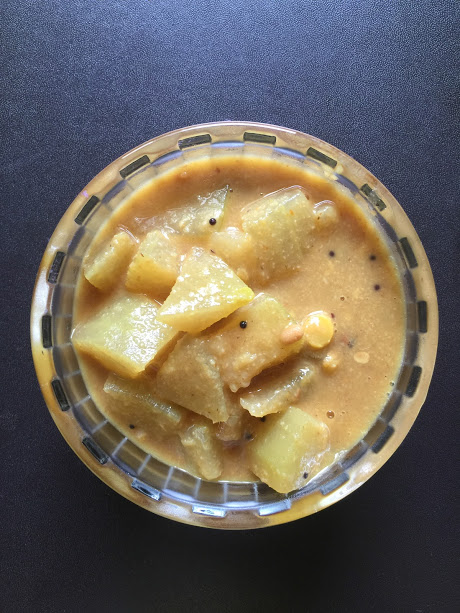
Recipe: Pooshnikai Kootu aka Ash Gourd Stew

img_6193

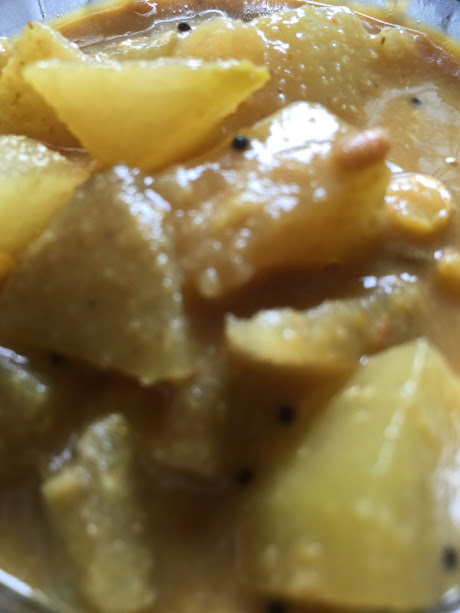
Another typical tambram food, which I made for the first time for the sumangali pooja. This was really good with a medley of tastes. A keeper which I plan to make often.

Pooshnikai Kootu aka Ash Gourd Stew

img_6195

Ingredients:

  • 1 medium sized pooshnikai or as gourd, chopped into small pieces with the seeds and fibres removed
  • 3/4 cup toor dal or red gram dal, cooked with a pinch of turmeric till mushy
  • 1/3 cup chana dal or bengal gram dal, cooked with a pinch of turmeric
  • 2 tsps coriander seeds
  • 1.5 tsps bengal gram dal
  • 6-8 dried red chillies
  • 4-5 tbsps grated coconut
  • a lime sized ball of tamarind, soaked in hot water for 30 minutes and the pulp squeezed and the juice removed and kept aside. Alternatively use 2-3 tsps of tamarind paste
  • 2 tsps oil
  • 1 tsp mustard seeds
  • 1 tsp urad dal or black gram dal
  • 4-5 curry leaves
  • 1/4 tsp asafoetida
  • 1/4 tsp turmeric powder
  • Salt to taste

Method:

  • In a large pan, take the chopped ash gourd and cook it with just enough water to cover the vegetable. Add some salt and turmeric powder.
  • When the ash gourd is half cooked, add the juice of the tamarind and let it cook till the raw smell of the tamarind goes away.
  • In the meantime, in another pan, with 1 tsp oil, fry the bengal gram dal,  coriander seeds, dried red chillies and the coconut until the coconut looses all it’s moisture and becomes dry. Blend this coconut mixture into a smooth paste. Add a bit of water if needed to do this.
  • When the ash gourd is cooked, add the cooked toor dal to the ash gourd and let it mix well. Bring it to a boil and then add the blended coconut paste and let it boil for around 5 minutes
  • In a seperate pan, heat the balance oil and when warm, add the mustard seeds, urad dal, asafoetida, curry leaves and red chillies and stir for a few seconds till the urad dal is brown the curry leaves are crisp.
  • Season the kootu with this and remove from the gas. Serve hot with a rice of your choice or any flatbread.

img_6194

2016 Week 50 Update

Another week in Mumbai and we are now counting down to the days before we return back to Singapore and our usual, humdrum life. We leave at the end of next week. 

I will do a detailed post on the poonal, but this will have to wait till I am back in Singapore to gather my thoughts together and put it down coherently. Though I am on holiday, here I realised that I don’t even get 30 minutes to myself. The past week has been a whirl of activities – shopping for things, catching up with my aunts and grandmother and visiting Temples. I also started meeting up old friends and so time has been literally slipping from my hands!

I’ve realised one thing though this trip which never bothered me before – Mumbai is incredibly noisy! My parents’ home is right next to two schools which run on two shifts – the first from 7:30 am to 12:30 pm and the next from 1 to 6 pm. So we have to contend with not only children talking and shouting (as children are vaunt to do) but also listen to them rote learning their lessons. And during both the starts and dismissals, you have children eager to get out of school. Now this is not as bad as the noise generated by horns. I realise now that Mumbaikars love their vehicle horns. Even when there’s no one in the street they are driving on, it’s a compulsion to use the horn a couple of times. And if you are caught in a traffic jam, unless you have incredibly strong eardrums, your ears will be subjected to the incessant noises that horns generate. I’m typing a draft version of this post while waiting for some friends at a mall and there’s a free open air concert by a Bollywood singer going on. The singer is not here yet, but my eardrums are going to pay for this for sure later. I knew there was a good reason I don’t like discotheques and loud pubs….

The meeting with old school classmates was good. We spent a couple of hours talking and catching up on each other’s lives.

As an early anniversary meal, the four of us plus my parents went for lunch at a mall. The place we ate, Barbeque Nation overlooks the descent of planes into Mumbai airport and BB and S had a good time planespotting. Both specifically requested to go to this particular outlet to have the lunch as we had gone here last year too and they had a ball looking at all the planes landing and trying to figure out the airline from their tail regalia and the type of planes. 

This marked week 2.5 of ours in Mumbai. I’m meeting another friend later today and also some more friends during the week. So am looking forward to those gossip and catching up sessions too!

In My Hands Today…

Ajaya: Roll of the Dice (Epic of the Kaurava Clan #1) – Anand Neelakantan

18684615The Mahabharata endures as the great epic of India. But while Jaya is the story of the Pandavas, told from the perspective of the victors of Kurukshetra; Ajaya is the narrative of the ‘unconquerable’ Kauravas, who were decimated to the last man.

At the heart of India’s most powerful empire, a revolution is brewing. Bhishma, the noble patriarch of Hastinapura, is struggling to maintain the unity of his empire. On the throne sits Dhritarashtra, the blind King, and his foreign-born Queen – Gandhari. In the shadow of the throne stands Kunti, the Dowager-Queen, burning with ambition to see her firstborn become the ruler, acknowledged by all.

And in the wings:

  • Parashurama, the enigmatic Guru of the powerful Southern Confederate, bides his time to take over and impose his will from mountains to ocean.
  • Ekalavya, a young Nishada, yearns to break free of caste restrictions and become a warrior.
  • Karna, son of a humble charioteer, travels to the South to study under the foremost Guru of the day and become the greatest archer in the land.
  • Balarama, the charismatic leader of the Yadavas, dreams of building the perfect city by the sea and seeing his people prosperous and proud once more.
  • Takshaka, guerilla leader of the Nagas, foments a revolution by the downtrodden as he lies in wait in the jungles of India, where survival is the only dharma.

Jara, the beggar, and his blind dog Dharma, walk the dusty streets of India, witness to people and events far greater than they, as the Pandavas and the Kauravas confront their searing destinies.

Amidst the chaos, Prince Suyodhana, heir of Hastinapura, stands tall, determined to claim his birthright and act according to his conscience. He is the maker of his own destiny – or so he believes. While in the corridors of the Hastinapura palace, a foreign Prince plots to destroy India. And the dice falls…