Short Story: Postcards to a Stranger

The library had always been her quiet rebellion.

While the world outside pressed with schedules, subway noise, and small talk she didn’t have energy for, the library stood untouched, shelved in silence, dust, and possibility.

Meera came every Sunday. Always at ten. Always with a thermos of masala chai tucked into her oversized tote, alongside whatever book she’d half-finished the week before.

It started as a whim.

She found the old postcard wedged between the pages of a poetry collection, ‘Love and Other Small Wars’. The card was blank, except for a faded red border and a tiny, hand-painted sunflower in one corner. The space where a stamp should’ve been was empty. The address lines had never been used.

She stared at it for a long moment. Then pulled out a pen.

Hello, stranger.

I don’t know why I’m writing this. Maybe because we’ve both reached for the same book, perhaps that makes us kindred in some tiny, bookish way.

If you’re reading this, I hope you’re okay. The world can feel a bit too much sometimes, can’t it? But right now, this moment, here in the library, this quiet, ink-scented bubble, it feels like enough.

Be gentle with yourself.

—M

She slid the postcard back into the book, tucked between pages 48 and 49, and returned it to the shelf.

It was silly. It was nothing. But it stayed with her the rest of the day like the warmth of the sun on skin.

Two weeks passed. Meera almost forgot about the card.

Then, on a damp April morning, she returned to her Sunday haunt and pulled out another poetry book, this time from the bottom shelf.

A postcard fell into her lap.

It was the same one. But there was new handwriting below hers.

Dear M,

I never expected to find a note like yours in a library book. It stopped me in my tracks, in a good way. Thank you.

I read that book after a very long day. I wasn’t sure what I needed. Turned out, it was your words. So… thank you for the kindness you didn’t know you gave.

I guess this makes me S.

P.S. I also love this part of the library. It always smells like rain and paperbacks.

Meera stared at the postcard, her fingers trembling.

“Someone replied,” she whispered, half in disbelief.

She didn’t know who S was. But suddenly, the silence of the library felt fuller.

She replied quickly:

S,
You caught me off guard. In the best possible way.
Can we make this a thing? A secret mailbox through books?

She placed the card into The Book Thief, tucked neatly between chapters. And waited.

Over the next two months, their postcard exchange became a ritual.

They never met. They didn’t ask for names or details. Only initials. Only thoughts.

They spoke about books, rainy days, favourite quotes, and small fears. One card from S read:

Sometimes, I think the loneliest part of my day is when I leave the library. Like I’ve borrowed someone else’s silence and now I have to give it back.

Another from Meera:

I saw an old couple holding hands near the bus stop today. It made my heart ache, in a beautiful sort of way. Is it strange to long for something you’ve never had?

They began to confide more.

One day, Meera wrote:

What would happen if we met? Would we break the spell? Would we recognise each other?

S replied:

I think I’d recognise you. Maybe not by face, but by pause. You write with quiet spaces. I think you live with them, too.

They didn’t need faces. Just words.

In late May, Meera left a card that read:

S,
There’s something deliciously heartbreaking about caring for someone you’ve never seen. Is that what this is? Are we writing versions of each other that don’t exist? And yet, it feels real. Like a tide, I can’t hold back.

Sometimes I find myself watching the door, wondering if you’ll walk in. Would I even know it was you? Would you?

The reply came the next week:

M,
I read your card five times. I don’t have a clever response. Only this: I’ve started showing up early, hoping to see who reaches for the books I’ve just left behind.

I think I want to meet you. But I’m scared that the magic might break if we do.

Still, maybe some magic is worth risking.

Would you ever want to meet me, too?

Meera’s breath caught in her throat. Her fingers trembled.

Yes.
Let’s meet next Sunday. Same place. 10 a.m. I’ll be in the poetry aisle. Yellow scarf. Nervous heart.

Sunday arrived, wrapped in golden light.

Meera stood in the poetry aisle, yellow scarf around her neck, pretending to read.

Her heart thudded.

At 10:11 a.m., he appeared.

He was tall, in a dark blue sweater, with soft brown eyes and ink-stained fingers. He looked nervous.

He was holding a postcard.

Their eyes met.

He smiled.

“Hi,” he said softly. “I’m S. Samir.”

“Hi,” Meera breathed. “I’m M. Meera.”

They laughed, a gentle, awkward laugh.

“I was afraid you wouldn’t come,” he said.

“I almost didn’t,” she replied. “But then I thought… if you were anything like your words, I had to meet you.”

He touched the postcard in his hand.

“You changed my Sundays,” he said.

They sat together on the carpet, backs against the bookshelf.

“What now?” she asked.

He smiled.

“Now we write a new chapter. Together.”

A year passed.

They still left postcards for each other. Sometimes in books. Sometimes in coat pockets.

You smiled in your sleep last night. I hope you were dreaming of something silly and soft. Like marshmallows. Or me. —S

I wasn’t dreaming. I was remembering our first postcard. And hoping we’d never stop writing our story. —M

They didn’t.

Two years later, the city library hosted *”Voices Between the Pages.”

Among the displays: a series of postcards, gently ageing, gently loved.

The first read:

Hello, stranger…

No names were given. But two visitors returned every Sunday, wandering shelves, sometimes laughing softly, slipping a new card into a random book…

For the next stranger to find.

Because stories, like love, are meant to be passed on.
In My Hands Today…

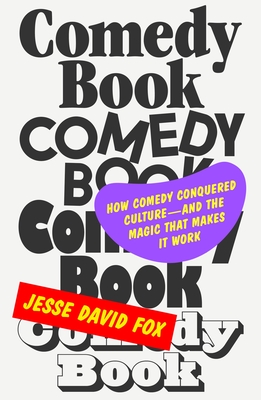
Comedy Book: How Comedy Conquered Culture―and the Magic That Makes It Work – Jesse David Fox

Comedy is king. From multimillion-dollar TV specials to sold-out stand-up shows and TikTok stardom, comedy has never been more popular, democratized, or influential. Comedians have become organizing forces across culture―as trusted as politicians and as fawned-over as celebrities―yet comedy as an art form has gone under-considered throughout its history, even as it has ascended as a cultural force.

In Comedy Book , Jesse David Fox―the country’s most definitive voice in comedy criticism and someone who, in his own words, “enjoys comedy maybe more than anyone on this planet”―tackles everything you need to know about comedy. Weaving together history and analysis, Fox unravels the genre’s political legacy through an ode to Jon Stewart, interrogates the divide between highbrow and lowbrow via Adam Sandler, and unpacks how marginalized comics create spaces for their communities. Along the way, Fox covers everything from comedy in the age of political correctness and Will Smith’s slap to the right wing’s relationship with comedy and, for Fox, comedy’s ability to heal personal tragedy.

With memorable cameos from Jerry Seinfeld, Dave Chappelle, John Mulaney, Ali Wong, Kate Berlant, and countless others, Comedy Book is an eye-opening education in how to engage with our most omnipresent art form, a riotous history of American pop culture, and a love letter to laughter.

Poem: Footprints at Sunset

At the meeting point of sky and sea, the sun bids farewell with a blaze of vibrant colours; a poignant reminder of life’s inevitable end. As its light fades, the footprints left in the sand tell stories of journeys taken, of moments cherished and forgotten, slowly erased by the relentless tide. This poem reflects on the delicate balance between our enduring imprints and the ephemeral nature of existence.

Footprints at Sunset

At sunset’s edge, the sky ignites,
A final burst of flame and light,
Each hue a whisper of the day’s goodbye,
As the golden orb sinks in the twilight sky.

Along the shore, our footsteps lie,
Etched in the sand where memories sigh;
They mark the paths of hearts once bold,
Now softly fading, silently told.

The sunset glows like life’s last page,
An ending penned by time and age;
A brilliant farewell, a fleeting gleam,
A reminder that endings often dream.

Our footprints speak of journeys made,
Of laughter, tears, and choices weighed;
Yet as the tide comes rolling in,
It washes away where we have been.

In this gentle wash, both loss and grace,
Lie the imprints of our transient trace;
For every step, we leave behind
It is swept away, yet etched in my mind.

So, in the light of the dying sun,
Let every footprint count as one,
A story written in the sand,
A cherished mark from a fleeting hand.

2025 Week 27 Update

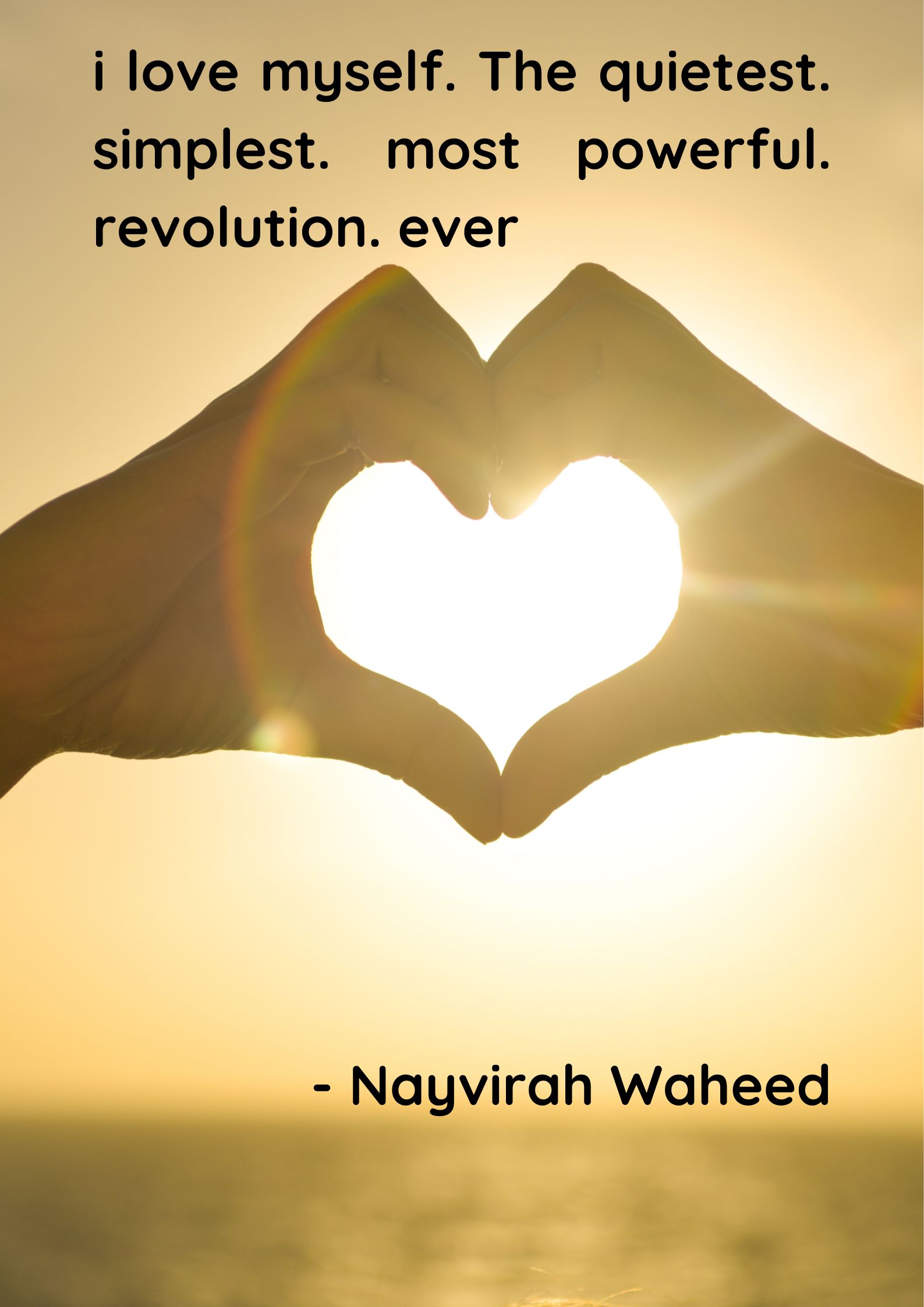
Contemporary American poet Nayyirah Waheed is known for her minimalist, emotionally resonant style. Her evocative quote captures the profound strength found in self-love, not as a loud declaration, but as a quiet and transformative act of inner revolution. In a world that often teaches us to seek validation externally, to conform, or to be self-critical, truly loving oneself becomes a radical, healing, and empowering act. 

Calling it a revolution suggests that self-love defies the norms and systems that profit from our self-doubt. When someone embraces their worth unapologetically, they shift their entire relationship with the world, from how they speak to themselves to how they set boundaries and pursue joy. And what makes it even more powerful is its simplicity and stillness: it doesn’t shout; it transforms from within.

Waheed’s intentional use of lowercase letters and fragmented structure reflects the quiet, poetic rhythm of introspection. The quote is a reminder that the most profound changes often begin in the most intimate and internal spaces. Loving yourself is not ego, it is a revolution of acceptance, healing, and truth.

At the end of June, I am about 1000 km away from home, somewhere in the Surat Thani province of Thailand. It should take me the rest of this year to finish this long journey of about 15,000 km which I started walking and documenting in January 2021. Now that the end is near, I am wondering where next should I set my sights on? If you have any ideas, let me know? I have some initial thoughts, but will take the rest of the time it takes me to reach home in Singapore. 

The children are doing well at work and GG’s internship will end by early August after which she will start her third year of school. BB will end national service in October and be ORD or Operationally Ready and then he has to figure out what he wants to do – work or apply to school. 

As for me, I have made a decision on what I want to do. I have decided that while I will still apply for open positions, I will make an effort to reach out and do more freelance work, be it writing or the other skills I have. I have this niggling feeling that maybe this is the way to move forward and that it is the universe giving me a nudge by not making me successful in any interviews all this time. So if a fantastic opportunity comes my way, I will give it a shot, otherwise, i will work on my freelance business and see where that takes me.

That’s all from me this week. Stay positive and please send positive vibes my way. I feel i am at the cusp of something, whether that is jumping off a cliff to the unknown or having a gust of wind to send me soaring, I don’t know, but I have hope and positivity, and that the most important thing of all!

In My Hands Today…

How to Think Like a Roman Emperor: The Stoic Philosophy of Marcus Aurelius – Donald J. Robertson

Roman emperor Marcus Aurelius was the final famous Stoic philosopher of the ancient world. The Meditations, his personal journal, survives to this day as one of the most loved self-help and spiritual classics of all time. In How to Think Like a Roman Emperor, cognitive psychotherapist Donald Robertson weaves the life and philosophy of Marcus Aurelius together seamlessly to provide a compelling modern-day guide to the Stoic wisdom followed by countless individuals throughout the centuries as a path to achieving greater fulfillment and emotional resilience.

How to Think Like a Roman Emperor takes readers on a transformative journey along with Marcus, following his progress from a young noble at the court of Hadrian—taken under the wing of some of the finest philosophers of his day—through to his reign as emperor of Rome at the height of its power. Robertson shows how Marcus used philosophical doctrines and therapeutic practices to build emotional resilience and endure tremendous adversity, and guides readers through applying the same methods to their own lives.

Combining remarkable stories from Marcus’s life with insights from modern psychology and the enduring wisdom of his philosophy, How to Think Like a Roman Emperor puts a human face on Stoicism and offers a timeless and essential guide to handling the ethical and psychological challenges we face today.