In My Hands Today…

False Allies: India’s Maharajahs in The Age of Ravi Varma – Manu S. Pillai
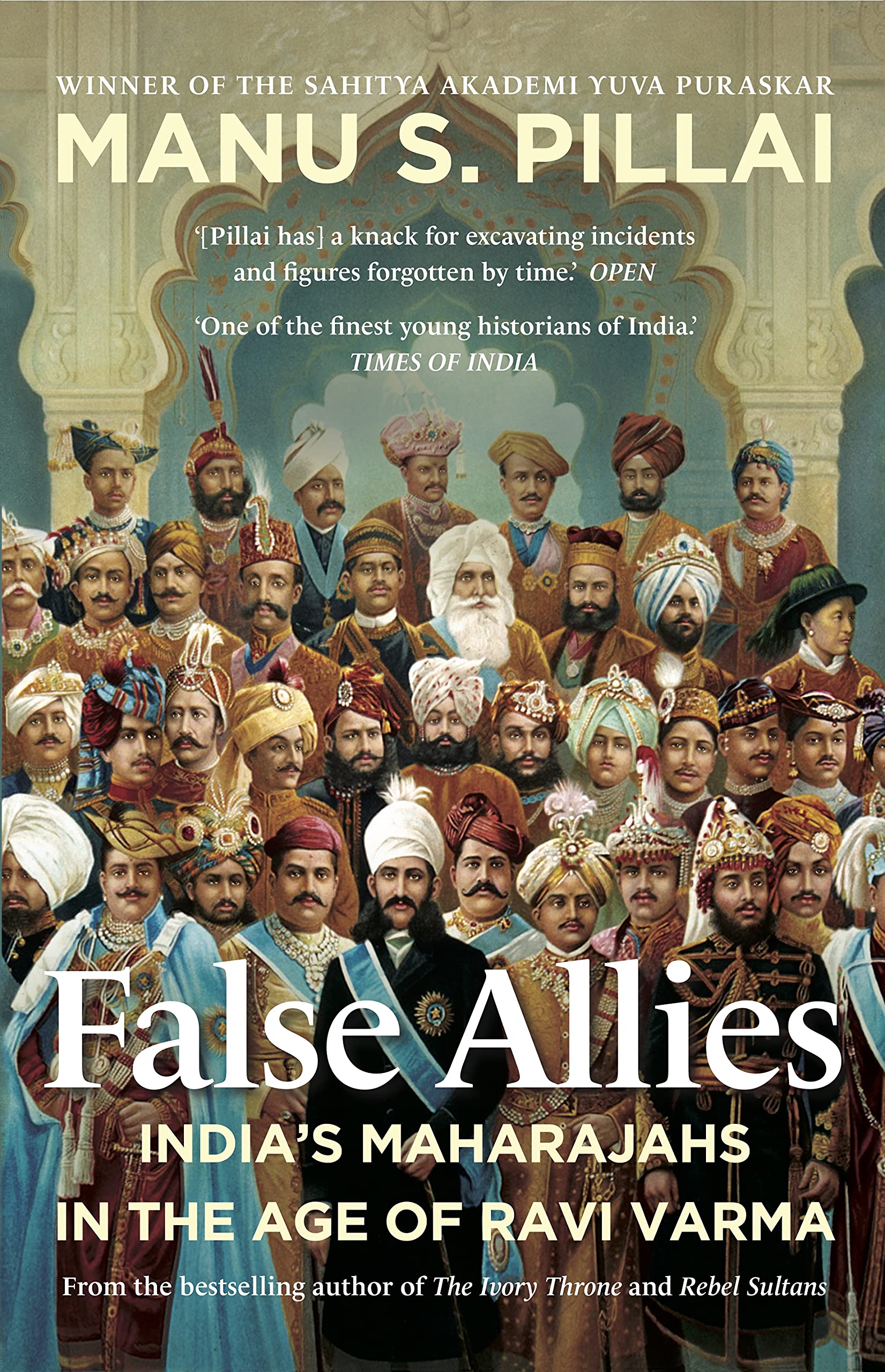
India’s maharajahs have traditionally been cast as petty despots, consumed by lust and luxury. Bejewelled parasites, they cared more, we are told, for elephants and palaces than for schools and public works.

The British cheerfully circulated the idea that brown royalty needed, enlightened, white hands to guide it, and by the twentieth century many Indians too bought into the stereotype, viewing princely India as packed with imperial stooges. Indeed, even today the princes are either remembered with frothy nostalgia or dismissed as greedy fools, with no role in the making of contemporary India.

In this brilliantly researched book, Manu S. Pillai disputes this view. Tracking the travels of the iconic painter Ravi Varma through five princely states from the 1860s to the early 1900s, he uncovers a picture far removed from the clichés in which the princes are trapped. The world we discover is not of dancing girls, but of sedition, legal battles, the defiance of imperial dictates, and resistance.

We meet maharajahs obsessed with industrialization, and rulers who funded nationalists, these men anything but pushovers for the Raj to manipulate. Outward deference aside, the princes, Pillai shows, forever tested the Raj from denying white officials the right to wear shoes in durbars to trying to surpass British administrative standards. Good governance became a spectacularly subversive act, by which maharajahs and the native statesmen assisting them refuted claims that Indians could not rule themselves.

For decades this made the princes heroes in the eyes of nationalists and anti-colonial thinkers a facet of history we have forgotten and ignored. By refocusing attention on princely India, False Allies takes us on an unforgettable journey and reminds us that the maharajahs were serious political actors, essential to knowing modern India.
In My Hands Today…

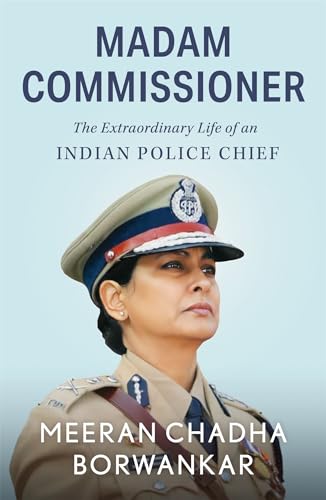
Madam Commissioner: The Extraordinary Life of an Indian Police Chief – Meeran Chadha Borwankar

The incredible memoir from one of India’s most uncompromising police officers.

Meeran Chadha Borwankar graduated from India’s National Police Academy as the sole woman of its 1981 batch. From there, she would go on to investigate a long string of sensitive and controversial cases, fighting crime together with corruption and discrimination, never compromising on her integrity.

Meeran’s steadfast efforts saw her become Maharashtra’s first female district police chief as well as its first woman police commissioner. She also held senior roles at the Central Bureau of Investigation and Mumbai’s crime branch, eventually retiring as Director General of the Bureau of Police Research and Development and the National Crime Records Bureau. All through she remained unafraid to critique the country’s criminal justice system, challenging even those in the highest echelons until the rule of law prevailed.

In this candid account of her thirty-six years in Indian law enforcement, Meeran details the sensational cases that defined her from the Jalgaon sex scandal to jewellery heists, highway dacoities to communal riots, brutal murders to gang rapes, port thefts to financial frauds, and brushes with notorious criminals such as Chhota Rajan and Dawood Ibrahim’s sister Haseena Parkar.

As the state prisons chief, she navigated intense media and government pressure while overseeing Sanjay Dutt’s imprisonment and the executions of Ajmal Kasab and Yakub Memon, thereby outlining both the significance and challenges of donning the khaki. Gripping, thought-provoking and always inspiring, Madam Commissioner is as honest a memoir can get about life as a woman officer of the Indian Police Service. It is essential reading for anyone interested in the uniform and indeed for concerned citizens everywhere.

In My Hands Today…

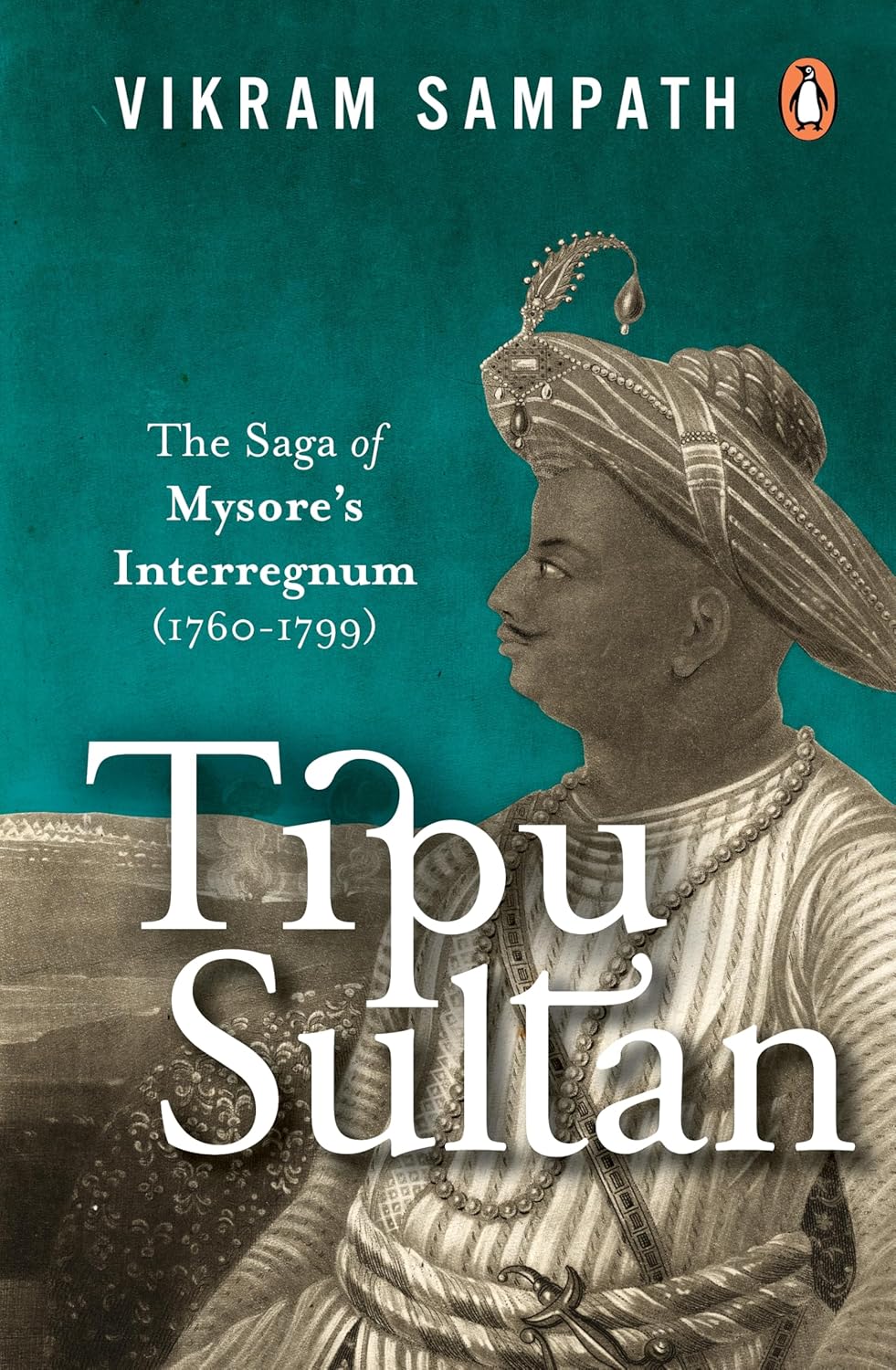
Tipu Sultan: The Saga of Mysore’s Interregnum, 1760–1799 – Vikram Sampath

Tipu’s ascent to power was accidental. His father Haidar Ali was a beneficiary of the benevolence of the Maharaja of Mysore. But in a series of fascinating events, the Machiavellian Haidar ran with the hare and hunted with the hounds; he ended up overthrowing his own benefactor and usurping the throne of Mysore from the Wodeyars in 1761. In a war-scarred life, father and son led Mysore through four momentous battles against the British, termed the Anglo-Mysore Wars. The first two, led by Haidar, brought the English East India Company to its knees. Chasing the enemy to the very gates of Madras, Haidar made the British sign such humiliating terms of treaties that sent shockwaves back in London.

In the hubris of this success, Tipu obtained the kingdom on a platter, unlike his father, who worked up the ranks to achieve glory. In a diabolical war thirst, Tipu launched lethal attacks on Malabar, Mangalore, Travancore, Coorg, and left behind a trail of death, destruction and worse, mass-conversions and the desecration of religious places of worship. While he was an astute administrator and a brave soldier, the strategic tact with opponents and the diplomatic balance that Haidar had sought to maintain with the Hindu majority were both dangerously upset by Tipu’s foolhardiness on matters of faith. The social report card of this eighteenth-century ruler was anything but clean. And yet, one simply cannot deny his position as a renowned military warrior and one of the most powerful rulers of Southern India.

In My Hands Today…

Dignity: The Essential Role It Plays in Resolving Conflict – Donna Hicks

The desire for dignity is universal and powerful. It is a motivating force behind all human interaction—in families, in communities, in the business world, and in relationships at the international level. When dignity is violated, the response is likely to involve aggression, even violence, hatred, and vengeance. On the other hand, when people treat one another with dignity, they become more connected and are able to create more meaningful relationships. Surprisingly, most people have little understanding of dignity, observes Donna Hicks in this important book. She examines the reasons for this gap and offers a new set of strategies for becoming aware of dignity’s vital role in our lives and learning to put dignity into practice in everyday life.

Drawing on her extensive experience in international conflict resolution and on insights from evolutionary biology, psychology, and neuroscience, the author explains what the elements of dignity are, how to recognize dignity violations, how to respond when we are not treated with dignity, how dignity can restore a broken relationship, why leaders must understand the concept of dignity, and more. Hicks shows that by choosing dignity as a way of life, we open the way to greater peace within ourselves and to a safer and more humane world for all.

In My Hands Today…

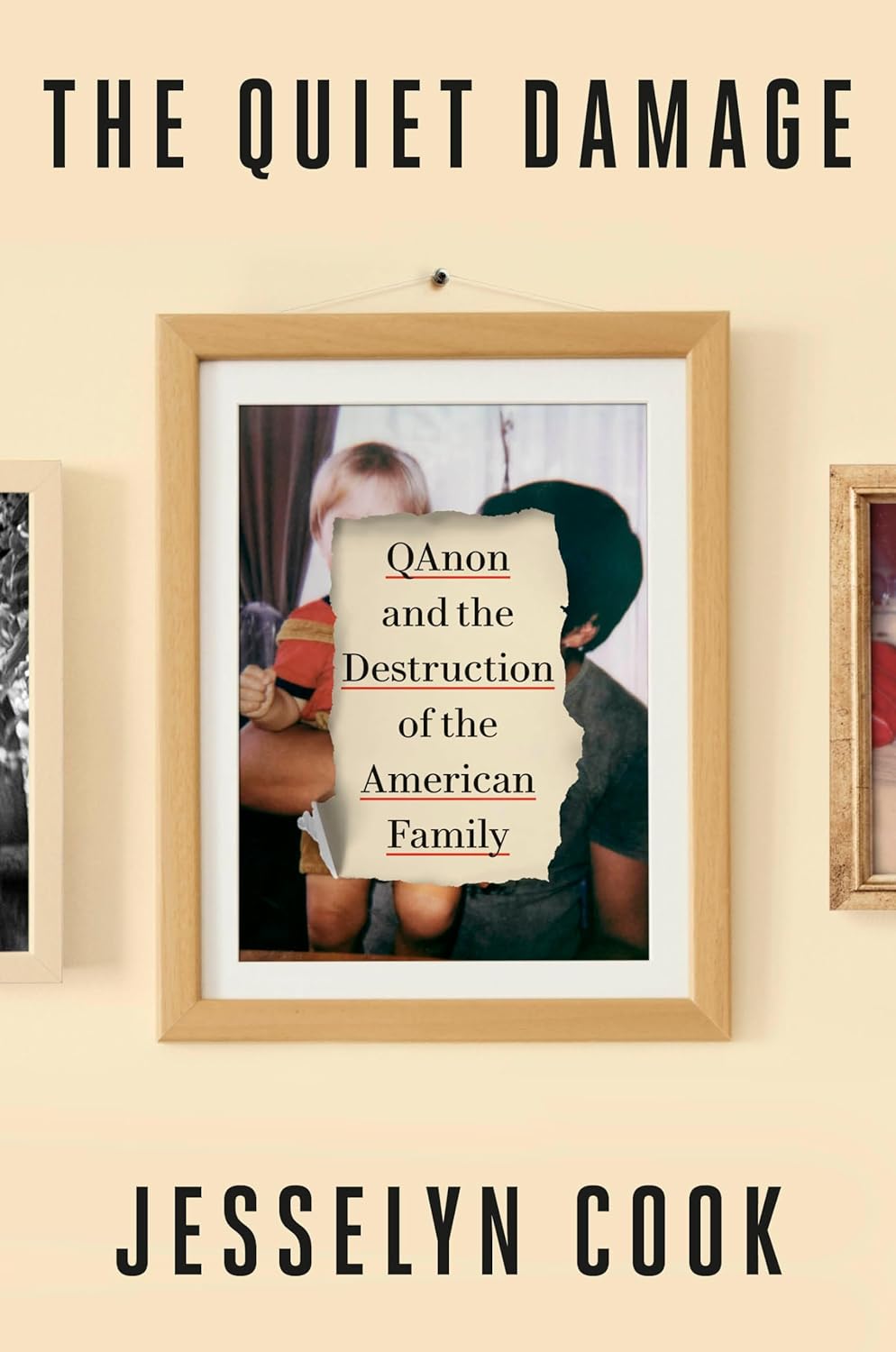
The Quiet Damage: QAnon and the Destruction of the American Family – Jesselyn Cook

The riveting story of five families shattered by pernicious, pervasive conspiracy theories, and how we might set ourselves free from a crisis that could haunt American life for generations.

“SHED MY DNA”: three excruciating words uttered by a QAnon-obsessed mother, once a highly respected lawyer, to her only son, once the closest person in her life. QAnon beliefs and adjacent conspiracy theories have had devastating political consequences as they’ve exploded in popularity. What’s often overlooked is the lasting havoc they wreak on our society at its most basic and intimate level—the family.

In The Quiet Damage, celebrated reporter Jesselyn Cook paints a harrowing portrait of the vulnerabilities that have left so many of us susceptible to outrageous falsehoods promising order, purpose, and control. Braided throughout are the stories of five American families: an elderly couple whose fifty-year romance takes a heartbreaking turn; millennial sisters of color who grew up in dire poverty—one to become a BLM activist, the other, a hardcore conspiracy theorist pulling her little boy down the rabbit hole with her; a Bay Area hippie-type and her business-executive fiancé, who must decide whether to stay with her as she turns into a stranger before his eyes; evangelical parents whose simple life in a sleepy suburb spirals into delusion-fueled chaos; and a rural mother-son duo who, after carrying each other through unspeakable tragedy, stop speaking at all as ludicrous untruths shatter a bond long thought unbreakable.

Charting the arc of each believer’s path from their first intersection with conspiracy theories to the depths of their cultish conviction, to—in some cases—their rejection of disinformation and the mending of fractured relationships, Cook offers a rare, intimate look into the psychology of how and why ordinary people come to believe the unbelievable. Profound, brilliantly researched, and beautifully written, The Quiet Damage lays bare how we have been taken hostage by grifters peddling lies built on false hope—and how we might release our loved ones, and ourselves, from their grasp.