More photos from Elephanta
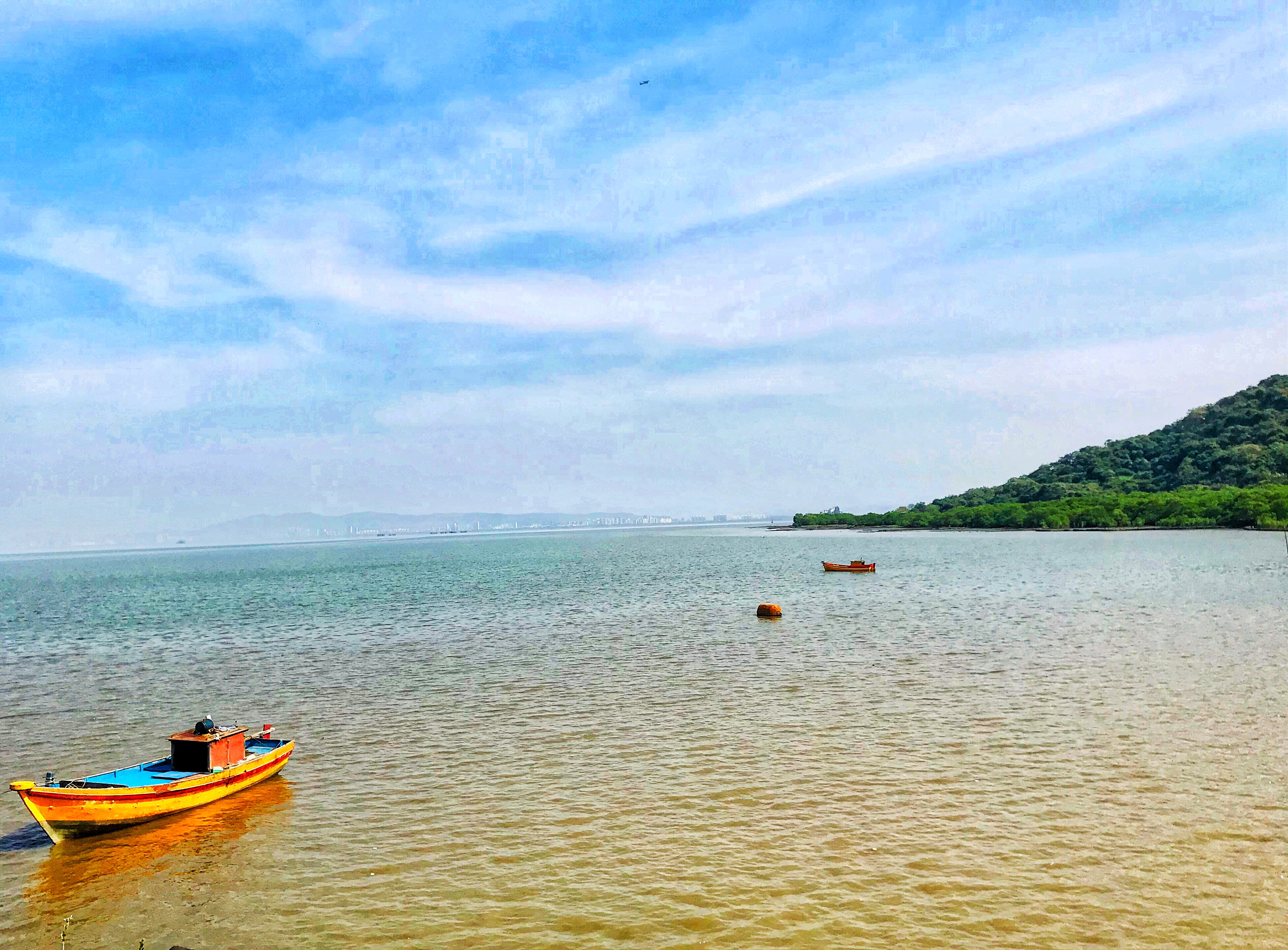

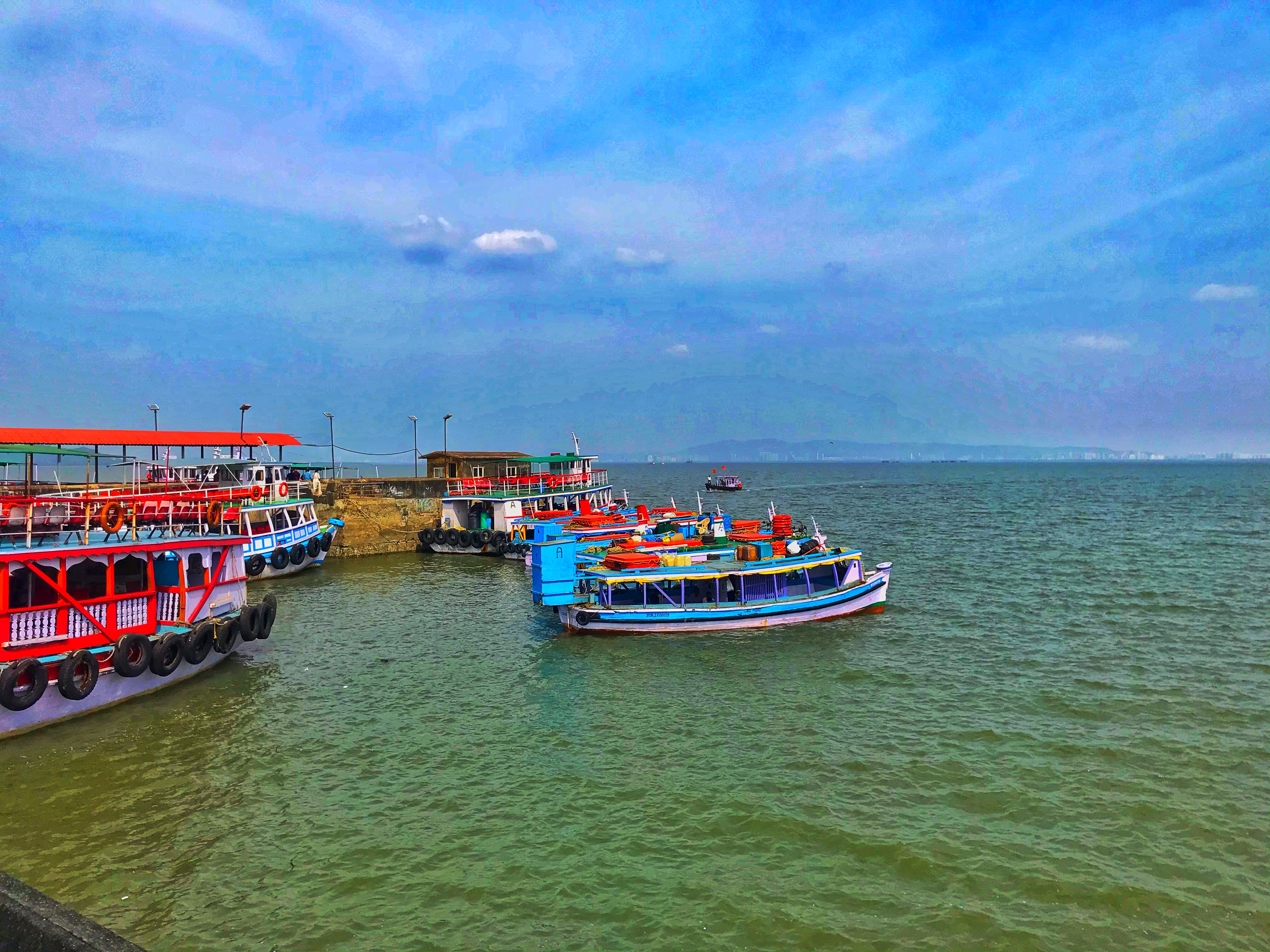


More photos from Elephanta
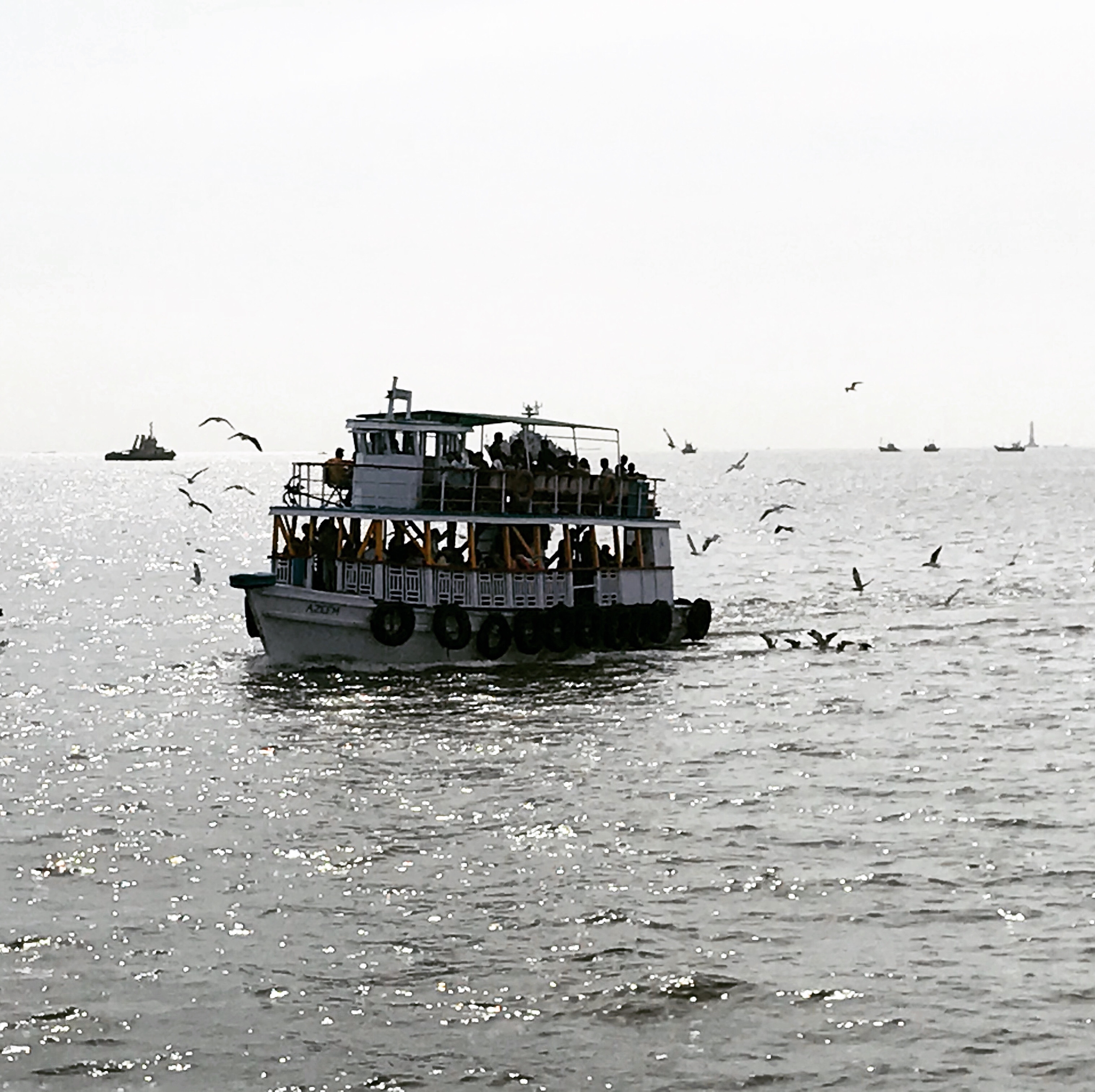
I took the children and S to see the iconic Gateway of India and we took a ferry from there to Elephanta Caves. Unfortunately, access to the Gateway was blocked due to the Navy Day celebrations, but I got some stunning shots of this iconic structure from the Arabian Sea!



I am in India now and was waiting for this opportunity to share my home state of Maharashtra with you. I have shared about the state in detail previously, so won’t go into too much detail now. You can read that blog post to learn more about the state.
Maharashtra, meaning ‘Great State’ lies in the western part of India and is the third largest state in terms of area in the Indian Union with about 9.36% of India’s land mass and can be compared to Italy in terms of size. If you take population as the parameter, Maharashtra is the second most populous state, having around 16% of India’s population, second only by the northern state of Uttar Pradesh. The state is also the world’s subnational entity and the population of Maharashtra can be compared to that of Mexico. The state’s population is almost evenly divided between urban and rural areas. This is one of the richest and most industrialised states in India, with the state (and especially the city of Mumbai) contributing the highest in terms of GDP to the Indian economy.
Maharashtra was formed by merging the western and south-western parts of the Bombay State, Berar and Vidarbha, and the north-western parts of the Hyderabad State and splitting Saurashtra (in present-day Gujarat) by the States Reorganisation Act. Its capital, Mumbai is the most populous urban area in India. The city of Nagpur hosts the winter session of the state legislature and the city of Pune is known as the ‘Oxford of the East’ due to the presence of several well-known educational institutions. Nashik is known as the ‘Wine Capital of India’ as it has the largest number of wineries and vineyards in the country.
Maharashtra was ruled by the Maurya Empire in the fourth and third centuries BC. Around 230 BC, Maharashtra came under the rule of the Satavahana dynasty for 400 years. The state was also ruled by Western Satraps, Gupta Empire, Gurjara-Pratihara, Vakataka, Kadambas, Chalukya Empire, Rashtrakuta Dynasty, and Western Chalukya before finally, the Yadava ruled the state. In the early 14th century, the Yadava Dynasty, which ruled most of present-day Maharashtra, was overthrown by the Delhi Sultanate ruler Ala-ud-din Khalji. Later, Muhammad bin Tughluq conquered parts of the Deccan, and temporarily shifted his capital from Delhi to Daulatabad in Maharashtra. After the collapse of the Tughluqs in 1347, the local Bahmani Sultanate of Gulbarga took over, governing the region for the next 150 years. After the break-up of the Bahamani sultanate in 1518, Maharashtra split into five Deccan Sultanates and this continued till around the early 17th century when Shahaji Bhosale, an ambitious local general who had served Ahmadnagar Nizamshahi, the Mughals and Adil Shah of Bijapur at different periods during his career, attempted to establish his independent rule. His son Shivaji Maharaj succeeded in establishing the Maratha Empire which was further expanded during the 18th century by the Peshwas (Pune), Bhonsles (Nagpur), Gaekwads (Baroda), Holkars (Indore) and Scindias (Gwalior). At its peak, the Maratha empire covered much of the subcontinent, encompassing a territory of over 2.8 million km². The Marathas are credited to a large extent for ending the Mughal rule in India. The Third Anglo-Maratha War (1817–1818) led to the end of the Maratha Empire and East India Company and then the British ruled the state and India from 1819.
On to exploring more of the state….
Mumbai
We start with the state capital of Mumbai (and my hometown) which will be the starting point for most tourists to the state. Mumbai is the second most populous city in India and fourth most populous city in the world. Mumbai is the financial, commercial and entertainment capital of India. It is also one of the world’s top ten centres of commerce in terms of global financial flow, generating 6.16% of India’s GDP and accounting for 25% of industrial output, 70% of maritime trade in India and 70% of capital transactions to India’s economy. Originally starting life as seven distinct islands, the city of Mumbai is now a huge metropolis which seems to only extend further each year. The city was ceded to the Portuguese by the sultan of Gujarat and then became part of the dowry of Catherine of Braganza when she married Charles II of England in 1661. At that point, it came under the control of the East India Company.
The name Mumbai is derived from Mumbā or Mahā-Ambā, the name of the patron goddess of Mumbadevi of the native Koli community. The Portuguese are said to have called Mumbai ‘Bom Baim’ which means ‘Good Bay’ as Mumbai has a very good natural harbour. When the British took over Mumbai through the East India Company, the name became anglicised to Bombay which was then changed officially to Mumbai in 1995 by the then state government.
I’ve written a blog post on unique places to visit in Mumbai, so this post will not talk about those places. Of course the must see places include:
The Gateway of India
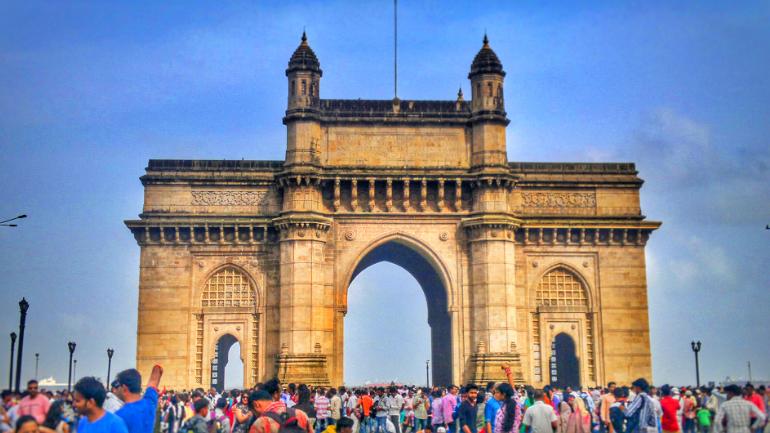
The Gateway of India in Colaba, which is a structure built to commemorate the visit of King George V and Queen Mary of England when they visited India in 1911. This place was also the scene where the last British soldiers left their most prized crown colony after India gained independence in 1947. The Gateway is now iconic and is a representation of the city.
Chhatrapati Shivaji Terminus

Chhatrapati Shivaji Terminus in Fort is a magnificent heritage building which is now a UNESCO World Heritage Site and which houses the headquarters of the Central Railway. Fondly called VT (for its erstwhile name of Victoria Terminus), the building was designed by Frederick William Stevens, a British architect and is wonderful example of the Indo-Victorian Gothic architectural style. Construction started in 1787 to mark the Golden Jubilee of Queen Victoria, hence the name. The terminus is extremely important with respect to transportation within the city and beyond. Today, at least 1250 trains leave the station every day from its 14 platforms, carrying around 3.3 million passengers in and out of the city. It is the hub of the suburban (local) railways as well as some of the long distance trains. A major part of the building houses the administrative section of the Central Railways. The building is also beautifully lit up for major festivals and public holidays and is a beautiful sight to see as you walk along DN Road in the Fort area.
Nehru Science Centre

Located in Worli, the Nehru Science Centre is another iconic structure in the Mumbai skyline. It is India’s largest interactive science centres and was first conceived as a Science & Technology Museum in late sixties and took final shape as India’s largest interactive science centre in 1977. A major highlight of Nehru Science Centre is the three-dimensional science show which is named ‘Monsters of the Deep’. It takes people into a seemingly realistic world of the underwater kingdom, where they can see mythical monsters closely. A science odyssey named ‘Grand Canyon Adventure’ is also organised at this centre. This 45-minute film is based on the famous Grand Canyons of Arizona and attempts at spreading awareness about saving freshwater resources of the world. This destination is a must-see for students and aspirants of science.
Hanging Gardens and Kamala Nehru Park
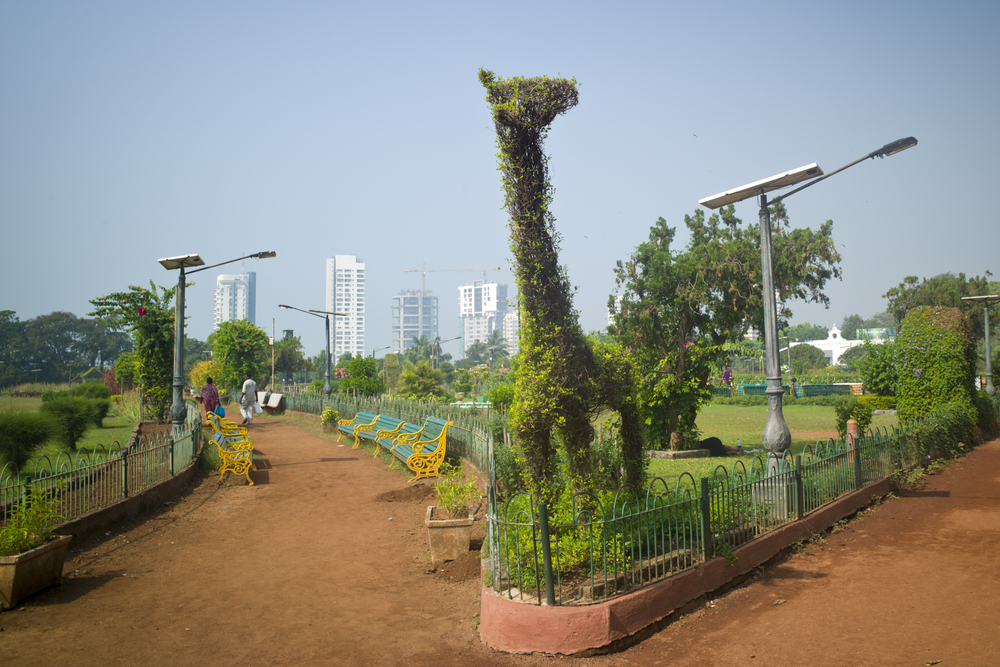
The Hanging Gardens and Kamla Nehru Park which are located in Malabar Hills overlook the stunning Marine Drive. Established in the 1880s, this garden was designed by Ulhas Ghapokar to protect a nearby reservoir from getting polluted and are named Perozeshah Mehta, who is also the father of Mumbai’s Municipal Charter. The garden has a vast area and well-laid pathways. The colourful flower clock at the centre and numerous animal-shaped hedges are the unique features of this park. Situated opposite the Hanging Gardens, Kamla Nehru Park is named after Jawaharlal Nehru’s wife, Kamala Nehru. It extends over an area of about 4,000 square feet and provides a glittering sight of the city of Mumbai. From this garden, one can also enjoy the spectacular sight of the Chowpatty Beach and Marine Drive. The Boot House or Old Woman’s Shoe, completely made up of stone, is another interesting feature of the park. The garden and park are open from 5 am to 9 pm and entrance is free.
Siddhivinayak Temple
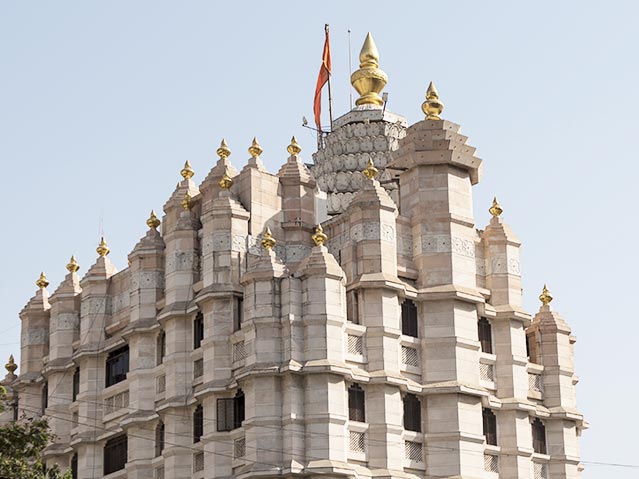
The Siddhivinayak Temple in Prabhadevi which was built in 1801, is a temple and God I believe in a lot. No visit to Mumbai is complete for me without a visit to the temple. Most worshippers believe that praying in this temple and sharing your desires to the Lord and his mount will lead to the fulfilment of the wishes and desires.
ISKCON Temple
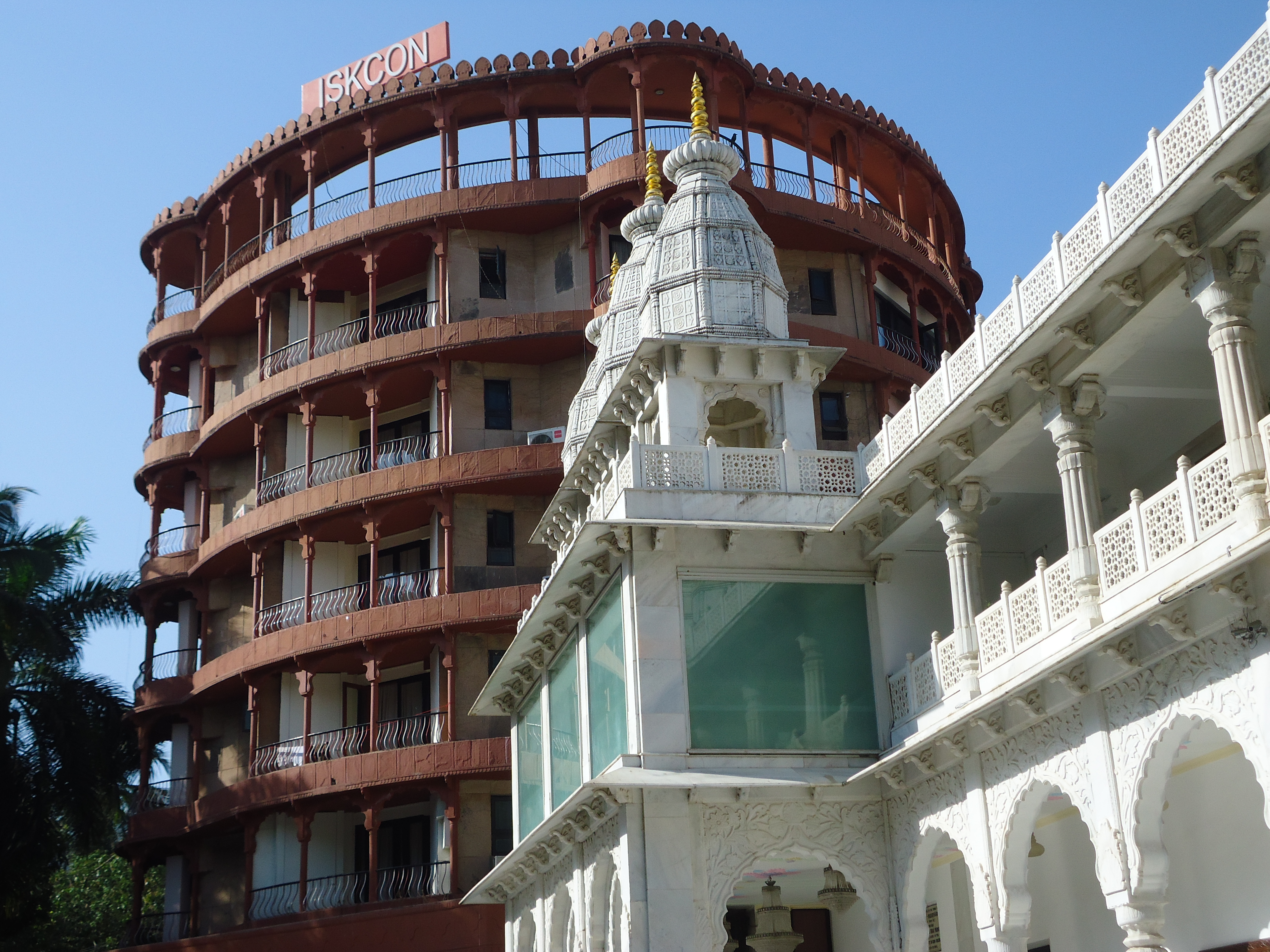
The ISKCON Temple located near Mumbai’s famous Juhu beach is also known as the Hare Rama Hare Krishna Temple. And is dedicated to Lord Krishna. The temple is one of the 400 ISKCON temples across the world and was built in 1978 under the Hare Krishna Movement founded Bhakti Vedanta Swami Prabhupada aimed to spread Krishna consciousness. The architectural splendour of the ISKCON Temple is worth-seeing. Both, its interior and exterior walls are adorned with murals and sculptures. In the central prayer hall, one will find paintings portraying the incidents from the life of Lord Krishna. The best time to visit the ISKCON Temple is during Krishnastami, which falls in the month of August or September. The temple is free to enter and is open from 4:30 am till 12:30 pm and again from 4:30 to 8:30 pm
Mahalakshmi Temple

The ancient Mahalakshmi Temple dedicated to the Goddess of Wealth, Lakshmi is located at Bhulabai Desai Road. Constructed in 1785, the temple contains idols of the Tridevi goddesses Mahakali, Mahalakshmi, and Mahasaraswati. The main idol of Goddess Mahalakshmi is placed on the far side of the ornamented gate and is seen on a tiger. In the month of March/April and September/October, the Sun rays of rising sun fall on the deities for few minutes. You used to be able to go down a flight of stairs and be able to sit on the rocks at the foot of the temple and contemplate the Arabian Sea, but now it has been cordoned off and you can only view the sea through a gate and some grills. You can also see the Haji Ali Dargah from this vantage point. As with most places of worship, entrance to the temple is free, and the temple remains open from 6 am to 10 pm.
Haji Ali Dargah
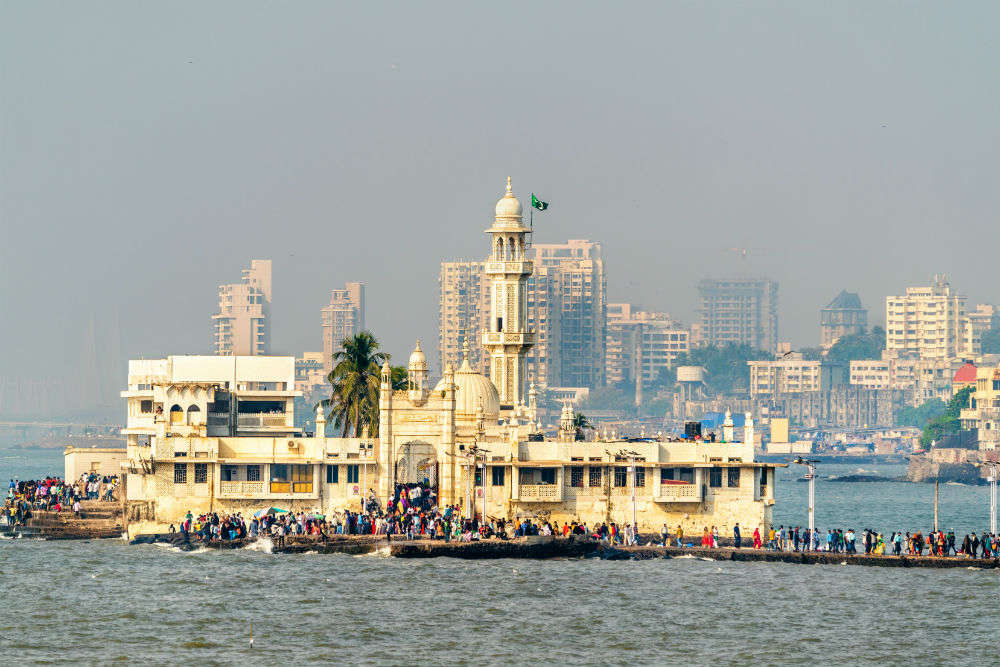
The Haji Ali Dargah is a renowned Islamic shrine nestled on a small island close to the sea shore of Worli in Mumbai. The Dargah was constructed in 1431, in the memory of a Muslim saint Sayyed Peer Haji Ali Shah Bukhari. Before his death, he expressed a wish that he wanted his shroud to be immersed in water rather than being buried underground. His followers obeyed his wish and constructed a tomb at the spot where his shroud rested after floating in the sea. Although the original dargah is more than 600 years old, its present structure was built between 1960 and 1964. This shrine witnesses a huge footfall of devotees who come here and offer homage to the saint, irrespective of their religion, caste, creed and social status. This shrine is visited by over 40,000 people on all days, particularly Thursdays and Fridays. The dargah can be reached by a narrow pathway across the Worli bay that connects the shrine with the city. It is just a 500 yard walk for the devotees from the bay to the shrine. The shrine is closed during high tide when walkway goes underwater and is open between 5:30 am and 10 pm.
Babulnath Temple

Located on a small hillock near Girgaum Chowpatty, is one of the oldest temples in Mumbai, the Shri Babulnath Temple. Dedicated to Lord Shiva, the lingams and idols in the temple were originally consecrated in the 12th century by the Hindu king Raja Bhimdev. Over a period of time, the temple was buried and lost. The idols were rediscovered in the 18th century. The temple was patronised by Hindu merchants and Gujarati community in 1780. A bigger temple was built in 1890 by contributions made by the Gujarati merchants. In the year 1900, a tall spire was added to this auspicious temple of Lord Shiva but a lightning strike damaged the spire in the 1960s. The temple is considered very unique and fascinating. It is nearly 1,000 feet above the sea level, and overlooks the Arabian Sea.
Mount Mary Church

The Basilica of Our Lady of the Mount, more commonly known as Mount Mary Church, is a Roman Catholic Church located in Bandra. Dedicated to Virgin Mary, the church was built in 1640. Jesuit priests brought the statue of Mary from Portugal and built a chapel in 16th Century. This small basilica was later renovated to its current semi-Gothic form. It was destroyed in 1738 during a raid by the Marathas and then rebuilt in 1761. It is believed that the church has unbelievable healing powers and for this reason, the church is visited by many devotees every day. People who suffer from any disease bring wax figures depicting their illnesses to the Mount Mary Church in the hope that they would be cured. Some also say that those who sincerely pray at the Mount Mary Church often get their wishes fulfilled. The church is popular for a festival of Mother Mary popularly known as Bandra Fair in the month of September. The feast is followed by a week-long celebration and is visited by thousands of people from all faiths. During the Bandra Fair, the entire area is decorated with festoons and buntings. One can get a spectacular view of sunsets from this church. The church is open from 8 am to 8:30 pm from Mondays to Saturdays and from 10 am to 7 pm on Sundays.
Juhu Beach
/GettyImages-92154218-596dbeeec412440010082443.jpg)
One of the most popular of Mumbai’s beaches, Juhu beach has been immortalised in countless Bollywood movies. The beach stretches for some six km with the southern end home a number of luxury hotels. The beach is most famous for its street-side food and is a must stop for most tourists in the city.
Chowpatty Beach/Girgaum Chowpatty
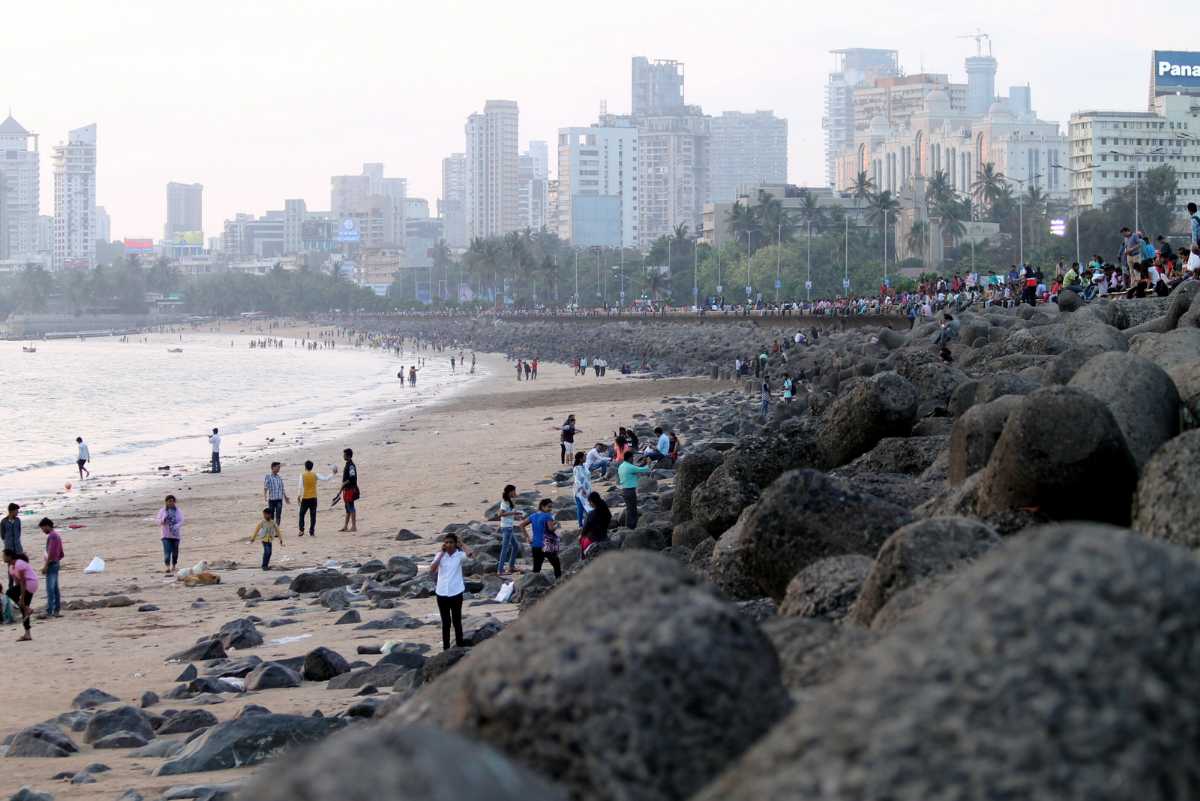
Another famous beach in Mumbai, the Chowpatty beach stands at the end of Marine Drive and is a popular haunt of both locals and tourists, especially during the weekends. The beach is famous for its street food and every evening, the beach is crowded by people of all ages, along with food kiosks, ferries and balloon sellers. Tourists can either sit under the shade of stunted trees to relax or taste the flavours of variety of street food. Take a stroll on the golden sands and admire the sunset as you much on the foods that are famous in the city.
Colaba Causeway

Famous for being a shopping paradise, Colaba Causeway was one of the scenes of the terror attack in 2008. It acts as the land link between Colaba and the Old Woman’s Island. From roadside vendors to glamorous boutiques, the street sells everything you can think of buying – in different quality and prices. You can start at the causeway and make your way to the Gateway, shopping and sightseeing as you go along.
Film City
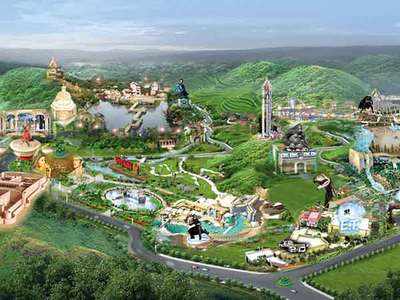
Spread across a vast area of 520 acres, Film City comprises of about twenty indoor studios and is located in the northwestern part of Mumbai. Film City is often regarded as a home of Bollywood. The place is so vast that about 1000 film sets can be erected here simultaneously. Over the years, it has been the locations for a number of Bollywood films. Almost over 900 movies and many more television shows have also been shot here. Today, Film City has grown to be one of the best film studios, well-equipped with all the essential amenities and world-class facilities. Not only is it a great place for film shoots, but it is also filled with verdant greenery and refreshing expanses. Built on the lines of the Film City of California, today it is considered as synonymous to Bollywood. There are various tours available which you can go on to see live shooting as well as the back-end aspects of filmmaking, if you are so inclined.
Sanjay Gandhi National Park
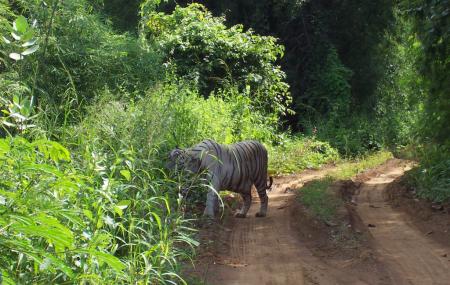
The Sanjay Gandhi National Park, previously known as the Borivali National Park covers approximately 20% of Mumbai’s geographical area and is home to a staggering thirteen hundred species of flora and more than five hundred species of fauna respectively. Covering an area of 104 square kilometers, it is one of Asia’s most visited National Parks with over 2 million visitors every year. The park is also said to be the largest park in the world located within city limits. There are two artificial lakes within the forest thriving with crocodiles and migratory birds all year. The lakes supply drinking water to the city. The park was first introduced in 1974 and helps to have a change from the usual sights, attractions, and rush of the big city. The Sanjay Gandhi National Park is known for its evergreen dense forests, bird population, butterflies, and the small population of tigers. The Kanheri Caves are also located inside the national park and is another reason to visit this sprawling green lung in the concrete jungle that is Mumbai.
Kanheri Caves
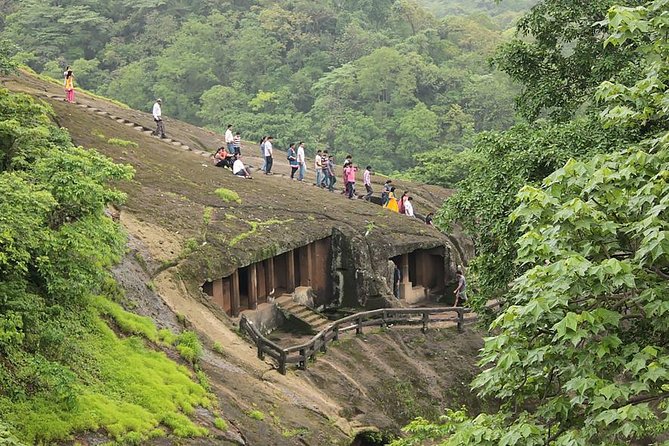
Located inside the Sanjay Gandhi National Park on the outskirts of the city in Borivali, the Kanheri Caves constitute a group of rock-cut monuments chiseled out of a massive basaltic rock. The name of these caves has originated from the Sanskrit word Krishnagiri, meaning black in colour. These caves were formed between 1st century BC and 10th century AD, with the earliest rocks comprising 109 tiny rock-cut cells. Most caves were used as Buddhist Viharas in ancient times and were meant for living, study and meditation. The site also served as a university during the rule of the Kushanas and the Mauryas. The Kanheri caves are divided into three different caves, each of which has a stone plinth for a bed. The caves have chaityagrihas with rock-cut stupas where Buddhists worshipped. There are single and multiple celled viharas or monasteries that were abode to Buddhist monks. The caves also had podhis or water cisterns which were dug skillfully to trap rainwater for use during summers. The most distinguished of these caves is Cave 3, which is India’s second largest chaityagriha, after Karla in Pune. The most impressive attractions of these caves are exquisite paintings of Gautam Buddha and a large Buddhist image known as Dagoba. Nearly 51 legible inscriptions and 26 epigraphs are found at Kanheri, which include the inscriptions in Brahmi, Devanagari and 3 Pahlavi epigraphs found in Cave 90. One of the significant inscriptions mentions about the marriage of Satavahana ruler Vashishtiputra Satakarni with the daughter of Rudradaman I. Cave 34 has unfinished paintings of Buddha on the ceiling of the cave. The caves are located about 5 km from the entrance of the Sanjay Gandhi National Park and are a delight for nature lovers with small waterfalls, natural streams and dense forests along with serene surroundings. Visitors must pay entry fees at the park gate and at the cave entrance. Tourists can travel to the park by buses or auto rickshaws. From the main gate one can take vans that shuttle between the main gate and the cave entrance. It is a 15 minutes ride, operated every 20 minutes. The entry fee is Rs. 40 for the national park and Rs. 5 for the caves and the park and Kanheri Caves are open on all days except Mondays with the park open from 7:30 am to 6 pm and the caves open from 9 am to 5 pm.
Mandapeshwar Caves
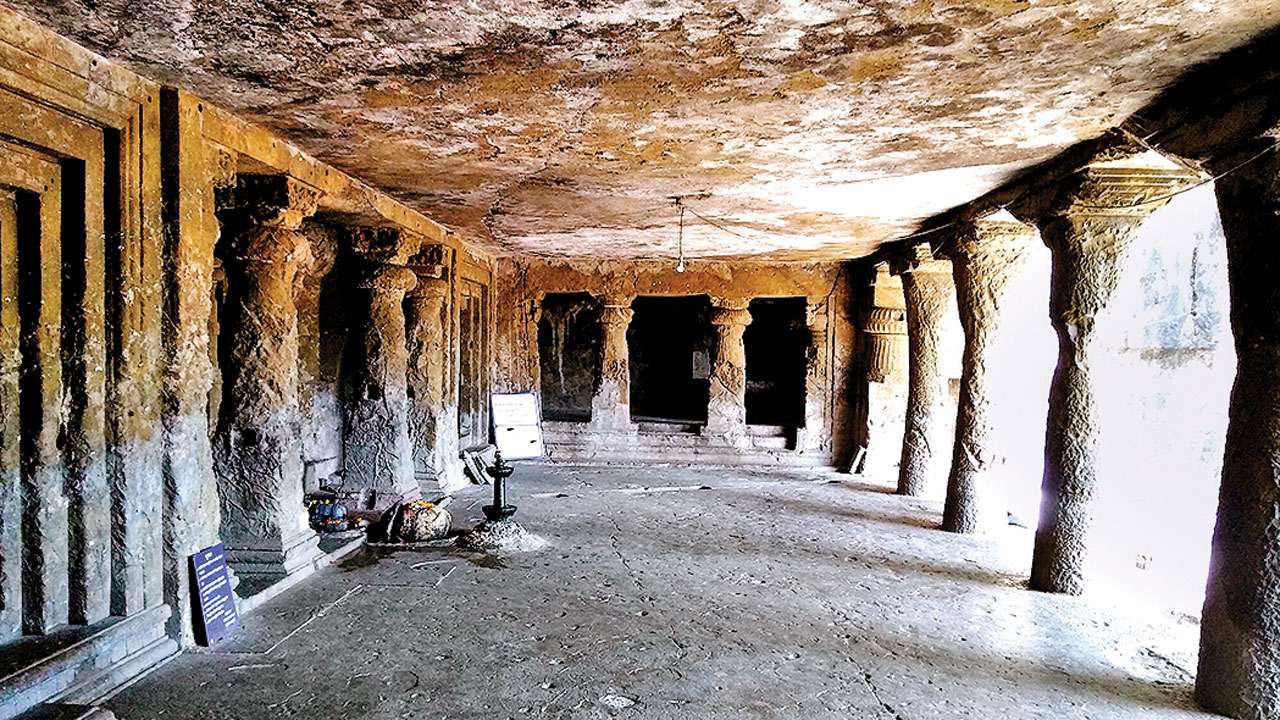
The Mandapeshwar Caves which means “The Hall of the Lord” were built around 520 by Buddhist Monks. The monks who stayed at the Mandapeshwar Caves would use the caves as a rest stops for merchants and also polytheise when travelling merchants would use the caves as rest stops. After the caves were built, the monks hired some Persian artists travelling through the mountains to paint the interiors. They created magnificent works of art on the walls of the caves that, unfortunately, can barely be seen today. The caves outlived the tests of time but their significance changed over the centuries. Archaeologists discovered that several sculptures of Hindu Gods and Goddesses were created inside the caves during the 8th century. Till the early 18th century, the Mandapeshwar Caves were used by locals, travellers etc. as a place of worship or to rest. In 1739, the Marathas invaded this part of Mumbai and the caves were left deserted. The caves were rediscovered in the 20th century and are now a UNESCO World Heritage Site.
There is much more to Mumbai than what most people think, but then the post about the state becomes a post about the city, so I will stop here. In the next part we will travel to other places in the state.
One more story from my school days. Last week I was speaking with GG and BB and we started talking about sports days in school. BB’s school usually alternates between sports day and cross country running every other year and so I shared some stories about sports days in my school.
In my school, sports day usually happened in the second term, which would be after the winter holidays (you could not schedule anything before that because of the Mumbai monsoon) so it would be sometime in December/January.
Our primary school races are the standard ones and happen without much fanfare. It’s the Secondary school that has all the fun in my opinion. I’ve mentioned before how our houses are allocated and during the main sports day, one half of the stadium is split into four parts – each section for a house. So we generally sit in our house section and not with friends, because that day it’s house loyalty before family and friends.
The sports day would usually be on a Sunday and would start around noon. Once we reached secondary school, we would go on our own and my parents would come by later to pick us up. It’s usually a festive air there with hundreds of school girls screaming and shouting.
There’s fierce competition to see which house comes first and a blackboard in the centre of the field will usually have the current point tally going on. The prize for the best house, in addition to the champions trophy is the honour to lead the march past at the end of the sports day and this would be fought relentlessly.
The house I was allocated to, Shenaz or the Green House used to always win the championship and we used to lead the March past each year. I can only remember one year we did not. I must have been in grade 5 then and was the first time in the Secondary bleacher when this happened. What happened was unprecedented in the history of the school. Three houses were joint first and since three houses can’t march together, they had to toss and Godafried or the Red House won the toss! I can still see the red house captain coming excitedly to the stands to the house teacher and shouting that they were going to lead the march past while our captain walked by crying. We were second in the march past that year.
In the last few years in school, I used to get pulled into the march past contingent. We used to march wrongly while practicing thinking we will be kicked out, but no such luck for us! Being in the march past meant that we had to wait all the way till the sports day ended and could not sneak out earlier.
But it also meant a month or so of missing the last few periods in school going for march past practise in the garden behind the school. As I type this, I can hear the commands in head and the one arm length we had to stand behind each other. We used to wear a strip of ribbon in the house colour on the sides of our white shorts (we were one of those rare schools at that time who had to wear white shorts for PE and sports) and a cap in the house colour.
I just checked my school website and Shernaz is still continuing to rule, they are still overall champions, though some of the uniforms we used to play in has changed over the years. The march past is no longer in shorts, but in black long pants and they wear a house tee shirt over it, while we used to wear our school uniform shirt. The cap still remains and the school head girls and captains and vice captains all wear black long pants and a blazer (with the captains and vice captains also wearing the house cap). During the the I was in school, they all used to only wear their usual school uniform. And we also have a school band now! That looks so much fun, wish that was there when we were studying too.
The march past would be like in major sporting events. The head would be the school head girl carrying the school flag with her deputies behind her followed by the junior head girl and her deputies. Then we would have the first contingent which would have one girl (usually a small grade 5 girl) carrying the house name, followed by the house captain with the house flag and her deputies behind her. Behind them would be 30 girls marching in three columns. This would be followed by the house which came second and then the third house and the last house bringing up the rear. We would make one circuit of the stadium and the guest of honour would get the salute after which would be the prize distribution ceremony including that for the best march past contingent (which I can’t remember us ever winning). We would go home late evening, tired but happy with the day. The next day would be a holiday from school which was very warmly welcomed by all.
As with other school memories, this post brought many smiles to me as I went back decades to relive my school days. For more stories about my school, click here and here

The other day, GG and I were checking out various junior colleges where she may be interested and we came across the house system there. She was very happy on seeing this since secondary schools here have now abolished the house system and it’s more interclass competitions.
So I started talking to her about the houses in my school and that talk is the root behind today’s post. I have written previously about my alma mater and thought this is a good time to share more about my school.
In the secondary section, we were all divided into four houses. Our house names were very unique in that unlike the traditional house names which consisted of Indian freedom fighters or names of flowers or something else, our house names consisted of names of ancient Persian princesses. I am not sure if I have mentioned it before, but my school is a Parsi school and was quite steeped into the Parsi culture. We used to be quite proud of our houses and were extremely competitive about it. This used to peak during sports day, more about it later.

As mentioned, our houses were named after ancient Persian princesses – green house is named Shernaaz, blue house is Purandokth, red house is Godarfried and yellow house is Faranakh
We were also very democratic in nature, with the entire secondary school voting democratically (just like in an election) to get our Head Girls, Junior Head Girls, House Captains and Vice Captains. If I remember correctly, grade five was not allowed to vote for the head girl, but when I was in grade five, we were allowed to vote for our house captains. For the head girls, the finalists had to give speeches in the school hall to the entire secondary school and also campaign with posters across the secondary school. On the voting day, we all queued up, according to class and cast our votes with one ballot for the head girl and one for the junior head girl. The votes use to be counted in the presence of the principal and winner in each category would be declared as winners. The two runner-ups would then be selected as the assistant head girls in their category.
For house captains, the process was slightly more casual. One day at the beginning of the year, each house would assemble in a pre-determined spot and teachers would start asking for students to either nominate their choices or ask students to self nominate themselves. Once they got a pre-determined number of students in each category – Captain and Vice Captain, they would hold elections.

The elections would be by show of hands and when the teacher who heads the house announces the name of each person, we would raise our hands and a head count taken. Then the winners announced and cheers and commiserations. It used to be a very fun atmosphere, especially since the periods after lunch would become free due to elections. When I was in grade five, I remember one of my classmates had a sister in grade nine and the class was just next to ours. So that class came to our class and literally brainwash us to vote for students in their class for Vice Captain and this trick worked! A few years later, teachers got wind of what the seniors were up to and stopped grade five students from voting. You only voted when you were in grade six and had some idea of the house system and the prominent girls there who may become house leaders.
Our rivalry and competitiveness really came to fore during our sports day. This would usually be held on a Sunday at a sports ground not too far from our school. While the primary and kindergarten students could sit with their parents in another section, secondary students had to sit according to their houses. So when the events started, everyone in the houses section would start cheering and booing. Points from each event would be added up and the house that scored the most points (from events on the sports day plus tournaments of indoor sports like chess, carrom, badminton etc. which would have already been calculated) would have the chance to lead the march past. In my years in school (including in primary school), my house did not lead the march past on only one occasion! And that was because that year something very unprecedented happened. Three houses had the exact same points and they had to toss to see which house would lead the march past and who would follow. Red house won the toss that year and my house, which was the green house was second! We were so disappointed that year. We would also practice for the march past for a couple of months before the sports day and this meant all those of us who were in the march past contingent (around 30 girls from grade five to grade ten) would practise after lunch and miss lessons which were also a bonus to us!
It was really fun writing this post and looking back in time when the most important thing was thinking about school and friends. I wish I could go back to those innocent times.
What are your favourite memories of school?

 Memories and Such