Poem: The Last Train Home

Late at night, when the world has quieted down and the hum of the tracks becomes a lullaby for the soul, the last train home offers more than just a ride; it provides a passage into memory and comfort. The journey on this solitary carriage is steeped in reflection and nostalgia, as familiar sights and soft city lights remind us of where we come from.

The Last Train Home

In the quiet of midnight, the train pulls away,
A soft exhale of metal and dreams in the grey.
Window reflections flicker like memories in flight,
Familiar scenes whispering in the pale moonlight.

The carriage hums a tune of distant, gentle farewells,
Carrying echoes of laughter, of secret, cherished spells.
Every station a chapter, every stop a familiar name,
In the silent journey home, nothing ever feels the same.

Nostalgia drifts like smoke in the air,
Of old roads travelled, of moments rare.
The rhythmic clatter of wheels on the track
Calls forth a tender longing for what we may not get back.

Yet, in this fleeting ride through the night,
There lies a quiet comfort, a soft, guiding light.
For in the last train’s journey, beneath starlit skies,
We rediscover the places where our true heart lies.

The dark outside cradles our reflective mind,
In the gentle sway of the train, solace we find.
A final embrace before the dawn’s gentle roam—
This journey, so transient, leads us always home.

Mumbai Memories: Mumbai’s Lifelines

Growing up in the 1980s and 1990s in Mumbai, we mostly took the BEST bus and the Mumbai train to school, college, or work.

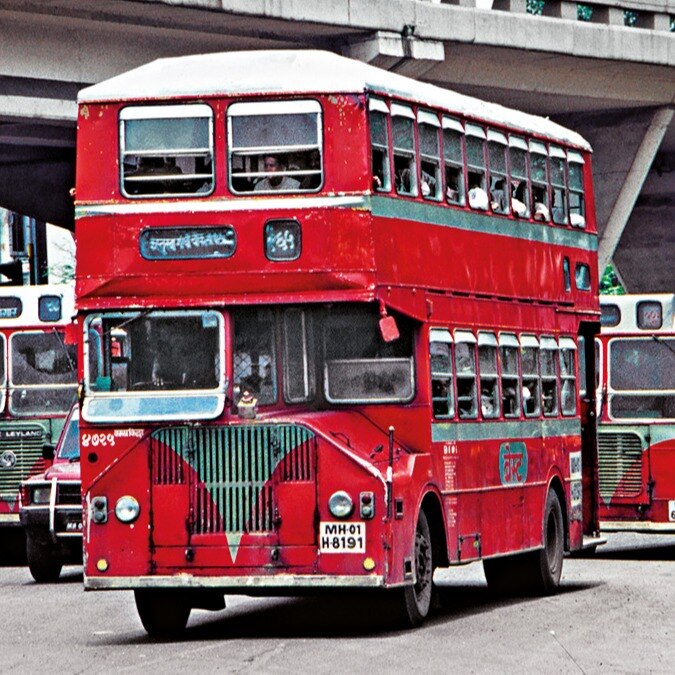
The red BEST or Brihanmumbai Electric Supply and Transport Undertaking, along with Mumbai’s train lines, are the lifeline and heartbeat of the city. For any Mumbaikar, the memory of the city is incomplete without recalling the daily dramas and quiet moments lived out aboard these iconic buses.

Since its inception in 1873, originally as a horse-drawn tram service, BEST has evolved into one of India’s most extensive bus systems, ferrying millions through the city’s bustling arteries every day. With over 3,800 buses and more than 440 routes, the system stretches far beyond the city’s traditional limits, reaching into the far suburbs like Thane, Navi Mumbai, and Mira-Bhayandar. Whether you’re braving the monsoon or the peak summer heat, the sight of a red double-decker lurching through traffic is a sign of Mumbai’s indomitable spirit. Stepping into a BEST bus is to step into a true cross-section of Mumbai society. Amidst the constant jostle, you hear the familiar clang of coins in the conductor’s pouch as they dispense paper tickets. There’s a heritage to BEST that transcends function. The city even hosts a dedicated BEST Transport Museum at Anik depot, where you can find miniatures and memorabilia tracing the journey from electric trams to today’s modern fleet.

When I was in school, we used to take a school bus and then started walking to school as we grew older. I used to take the bus sometimes when coming or going to tuition, but this was rare. It was only when I started college that I became a regular bus commuter. Every bus had a driver who sat up front and one or two conductors. If it were a single-decker, there would be a single conductor, while a double-decker would have two conductors, one on each deck. These conductors were responsible for collecting fares, giving out tickets and maintaining the decorum of the bus. Even though I had a few buses that would take me to the bus stop nearest my college, I almost always took one particular bus number. College started at 7:30 am, and I would take the bus from my bus stop at 7 am. And because I always took that particular bus, a double-decker where I would always sit in the lower deck, the conductor became a fixture in my life, and I became recognisable to him. We would greet each other, and if I didn’t take the bus for a few days at a time, he would check on me the next time I took the bus. Because of the bus’s timing, it was popular with students as there were multiple schools and colleges on its route. Two stories come to mind about this conductor.

Both stories took place in a three-year time period, when I was doing my degree. In the first instance, I boarded the bus as usual and paid my fare and took my ticket. I don’t know how it is now, but in those days, it used to be a paper ticket with your stop punched. Sometime between taking the ticket and halfway to college, a ticket checker got into the bus and immediately went to the upper deck to check. I checked my bag for my ticket so I could show it to the checker and get down, and that’s when I realised I had dropped my ticket somewhere. I was frantic and started checking my bag, between my books and inside my wallet. I didn’t want to get caught by the ticket checker as the fine would be too much for a poor college student, not to mention the humiliation that went with it. The conductor saw me being agitated and came to ask him what had happened. I mentioned that I couldn’t find my ticket and that the ticket checker was going to come down anytime to check tickets. At that moment, the bus stopped at a scheduled stop and someone started to get down. Immediately, the conductor asked him for his ticket and passed it to me. The fare would be something similar, as this person apparently got in a couple of stops before me and got off two stops before mine. I was thankful to both the conductor and the passenger, and showed the ticket checker my ticket before alighting to go to college.

The second story was also in the same period. My sister had purchased a new watch and I wanted to wear it. After pleading and cajoling her, I finally got permission to wear it to college. I proudly wore it and boarded my bus. The watch was shaped like a bangle, and unknown to me, the clasp was not very secure. I got on the bus and sat in one of the seats that face sideways, close to the entrance of the bus, in the lower deck. The same conductor as the story above was on duty that day. After a few stops, I looked down and to my horror, the watch was missing! I started looking everywhere, below the seat, in my bag and even patted my clothes, but the watch was not to be found. I was almost in tears. I knew not only would my sister blame me for losing her new watch, and rightly so, but my parents would also not let it go. I would hear about this for years to come. Again, the conductor came to my rescue. After asking me what happened and learning about the watch, he got more information from me about how it looked. Then he made an announcement to the lower deck about my lost watch and got everyone to look for it beneath their seats and near them. The whole bus was busy for the next few minutes trying to locate it. Finally, someone found it close to the other end of the bus. It seemed that the watch fell down when I was sitting and got kicked inside the bus as other passengers got in and found seats. Again, I was so thankful to the conductor when I was handed my watch and was able to go to college in a much lighter mood..

I only started taking the train when I started my second job. I used to take a local to Andheri and then a bus to work and the reverse in the evening. Because I only went to the office three days a week (the other days, I used to go to our office in the city, in the opposite direction), I was never a regular, and so I don’t have stories to share.

For every Mumbaikar, the local train is more than transportation; it is the pulse of daily life, dictating schedules, shaping friendships, and weaving together countless stories along the city’s expansive rail corridors. Regular train commuters, especially those travelling long distances, have created communities and train friend is a Mumbai special friendship. Some train friendships have traversed the divide, and these train friends have not only become friends in real life, but in many instances, they have become relatives, having siblings, children or other relatives married to each other or their relatives.

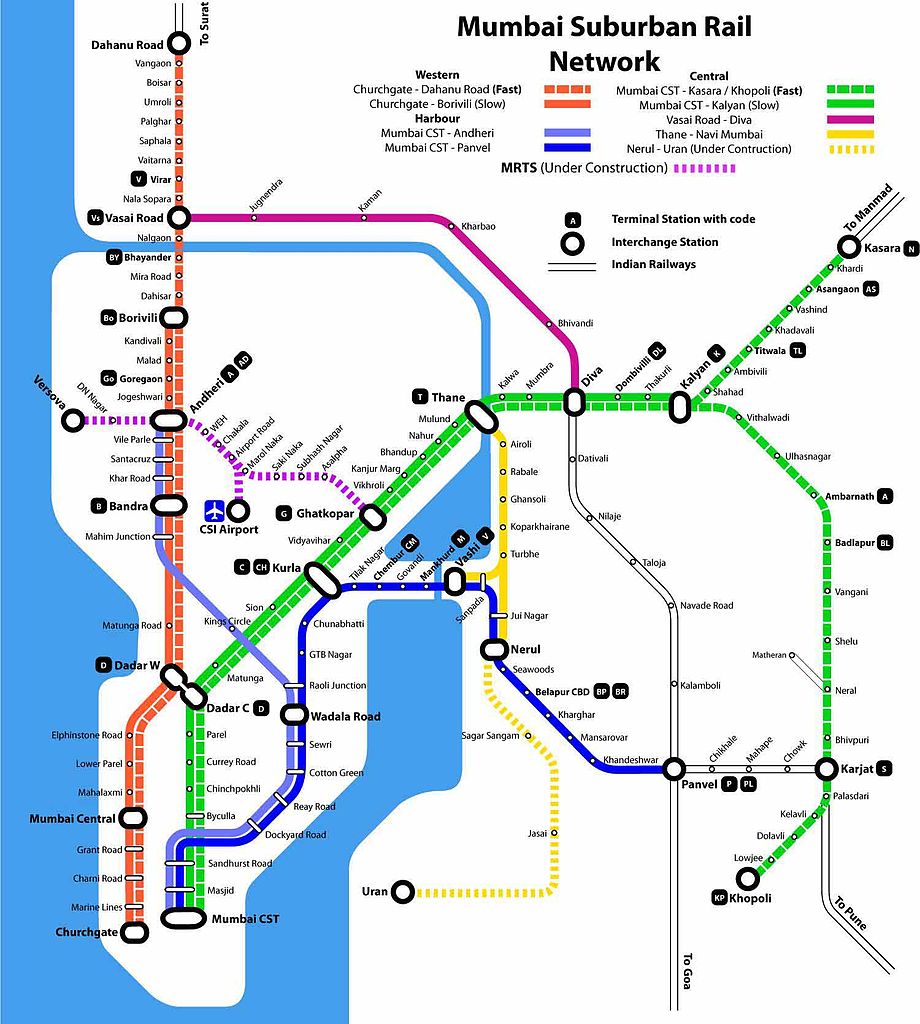
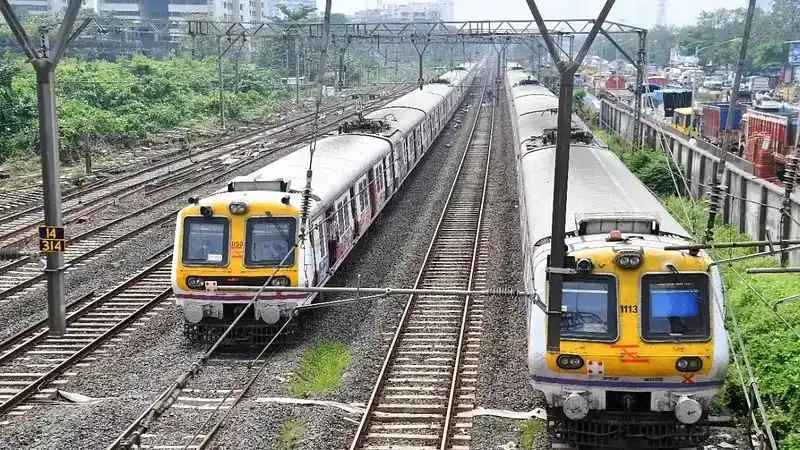
Mumbai’s suburban railway, often lovingly called the “local,” is the oldest and busiest commuter rail system in India and among the world’s top in daily passenger volume, ferrying over 7.5million commuters every single day. First run in 1853, the system stretches across approximately 465km and is divided among six major lines: the Western, Central, Harbour, Trans-Harbour, Vasai Road–Roha, and the Nerul–Uran lines. It connects the heart of Mumbai to distant suburbs like Virar, Dahanu, Kalyan, Khopoli, and Panvel, truly earning the moniker “the city’s lifeline.”

The western line: runs from Churchgate in South Mumbai through posh neighbourhoods northwards, ending at Dahanu Road. This route is a lifeline for thousands who journey from the extended suburbs into the southern business districts each day. The central line begins at Chhatrapati Shivaji Maharaj Terminus (CSMT), branching out at Kalyan toward Kasara and Khopoli, capturing the hustle of commuters travelling to and from eastern and northeastern corridors. The harbour line, which is the one that stops at the station closest to my home, links CSMT to Panvel through Navi Mumbai; less crowded but vital for east-west connectivity, this line opens up the satellite city for daily business and education. The harbour line also has a branch line that connects the central and western lines, branching out after Wadala and moving to the western line at Mahim, and when I used it, it used to end at Andheri. Today, the western branch of the harbour line ends at Goregaon.

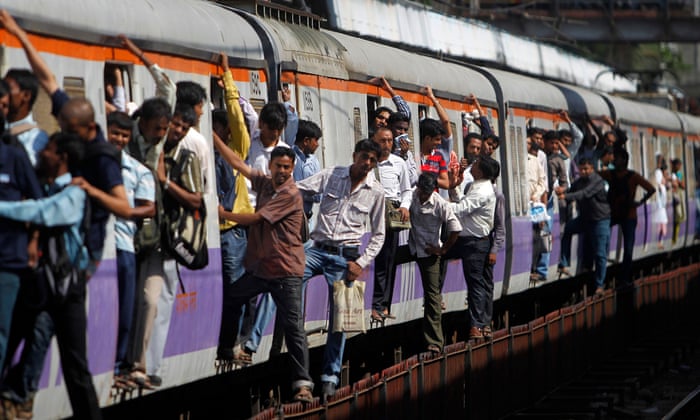
Locals run from before dawn with the first training rolling out at 4 am until late at night, with most lines’ last train running at 1 pm, and some services ending even later. The stations are the stages for daily dramas: the surge onto the platform as the train approaches, the precise choreography to catch a footboard, and the silent understanding to make space for one more commuter in the already-packed compartment.

Trains are designated “fast” or “slow,” with the former skipping minor stations to speed up long-distance travel, and the latter stopping at every halt, accommodating the needs of neighbourhoods, both big and small. Special ladies’ compartments offer safe passage for women, while luggage compartments are a godsend for vendors and small traders transporting goods across the city.

Each ride on a Mumbai local imprints memories, sights of the city whizzing past open windows, street vendors plying their trade at major junctions, or quiet philosophical moments watching the city transform in the monsoon. Rail maps stuck to station walls and painted on signboards become sacred: they are, to many, a navigational scripture. The fast local between Churchgate and Virar or the crisscrossing services out of CSMT are more than routes; they are lifelines, their rhythm marking the intervals of a Mumbai day.

What began with simple steam trains in the 19th century now operates as a massive, modern fleet of electrical multiple units (EMUs), seamlessly blending history with the scale demanded by a modern megacity. Indian Railways continues to advance, phasing out old rolling stock for modern, more efficient carriages and electrifying the entire network for speed and sustainability.

BEST buses don’t just move people, they move stories. For years, they have connected the city’s extremes, providing a democratic, affordable way to traverse the chaos and beauty that is Mumbai. It’s hard not to get nostalgic about the local. Even with the rise of metro lines and air-conditioned buses, the Mumbai train network remains unparalleled in its reach and spirit, a thread uniting millions in the great urban tapestry that is Mumbai.

Both the BEST buses and the local train network are more than functional necessities; they are an essential part of Mumbai’s memoryscape: resilient, chaotic, joyful, and eternally moving forward. So if you are ever in Mumbai, maybe you should take a trip in a BEST bus or a local, but be prepared for the chaos and the spirit of the city.

Train Travels

There’s something special about travelling by train. While I have travelled quite a bit in India, I have not travelled by train outside of India, so this blog post will be about train travel within India.

The Indian Railways is the world’s largest railway network by size, with a route length of 95,981 km as of March 2019 and is the word’s eighth largest employer employing about 1.4 million employees as of 2015. It runs more than 20,000 passenger trains daily, on both long-distance and suburban routes, from 7,321 stations across India.

The railways, a product of British colonisation has been in India since 16 April 1853 when the first passenger train ran between Bori Bunder and Thane between downtown and the suburban Mumbai of today. Today Bori Bunder is the majestic Chatrapati Shivaji Maharaj Terminus or CSMT, which locals still fondly call VT Station or Victoria Terminus in honour of the Empress of India, Queen Victoria.

As of 31 March 2019, the Indian Railways has electrified 50% of the route kilometers and 46% of the total running track. The first line to be electrified was between what is today the CSMT station and Kurla station in Mumbai’s suburban rail network way back in 1925.

The longest train route on the Indian Railways is the Dibrugarh to Kanyakumari Vivek express which covers India lengthwise from Dibrugarh in the north-east in the state of Assam to India’s mainland tip of Kanyakumari in the southern state of Tamil Nadu. The train covers a distance of about 4,282 kms in approximately 80 hours or roughly three and a half days, traversing eight Indian states. It crosses the states of Assam, Bihar, Nagaland, West Bengal, Jharkhand, Odisha, Andhra Pradesh, Tamil Nadu & Kerala. Another long distance train which also covers a distance of 4282 km is the Dibrugarh to Okha Weekly Border Service which travels across the breadth of India, from the East from Dibrugarh in Assam to India’s western borders, ending at Okha in the western state of Gujarat. Both these trains are currently tied for the 24th longest running trains in the world. The longest running train in the world today is the train that runs from Moscow in Russia to Pyongyang in North Korea. This train travels a distance of 10,267 km and if you travel from Moscow to Pyongyang, you will take approximately 206 hours or about 8.5 days!

Another interesting train on the Indian Railways route is the Navyug Express, a weekly train which runs from Mangalore Central in the south Indian state of Karnataka to the holy city of Katra which houses the very revered Mata Vaishno Devi shrine in the northern Union Territory of Jammu & Kashmir. This train takes about 68 hrs to cover a distance of 3,685 km and in this process covers about 14 states and union territories of India, viz. Jammu & Kashmir, Punjab , Haryana, Delhi, Uttar Pradesh, Madhya Pradesh, Maharashtra, Puducherry(Mahe), Telangana, Andhra Pradesh, Tamil Nadu, Kerala & Karnataka.

What I find most fascinating is that parts of India I never thought possible to connect have been connected by train and this connection is an end-to-end connection. For example the train which plies the route from Sri Ganganagar in Rajasthan to Tiruchirapalli in Tamil Nadu. Both are not big metro cities and the fact that there exists a demand for a fully airconditioned train, the Humsafar Express between these two cities is a measure of how popular and engraved the Indian Railways in the psyche of the Indian traveller.

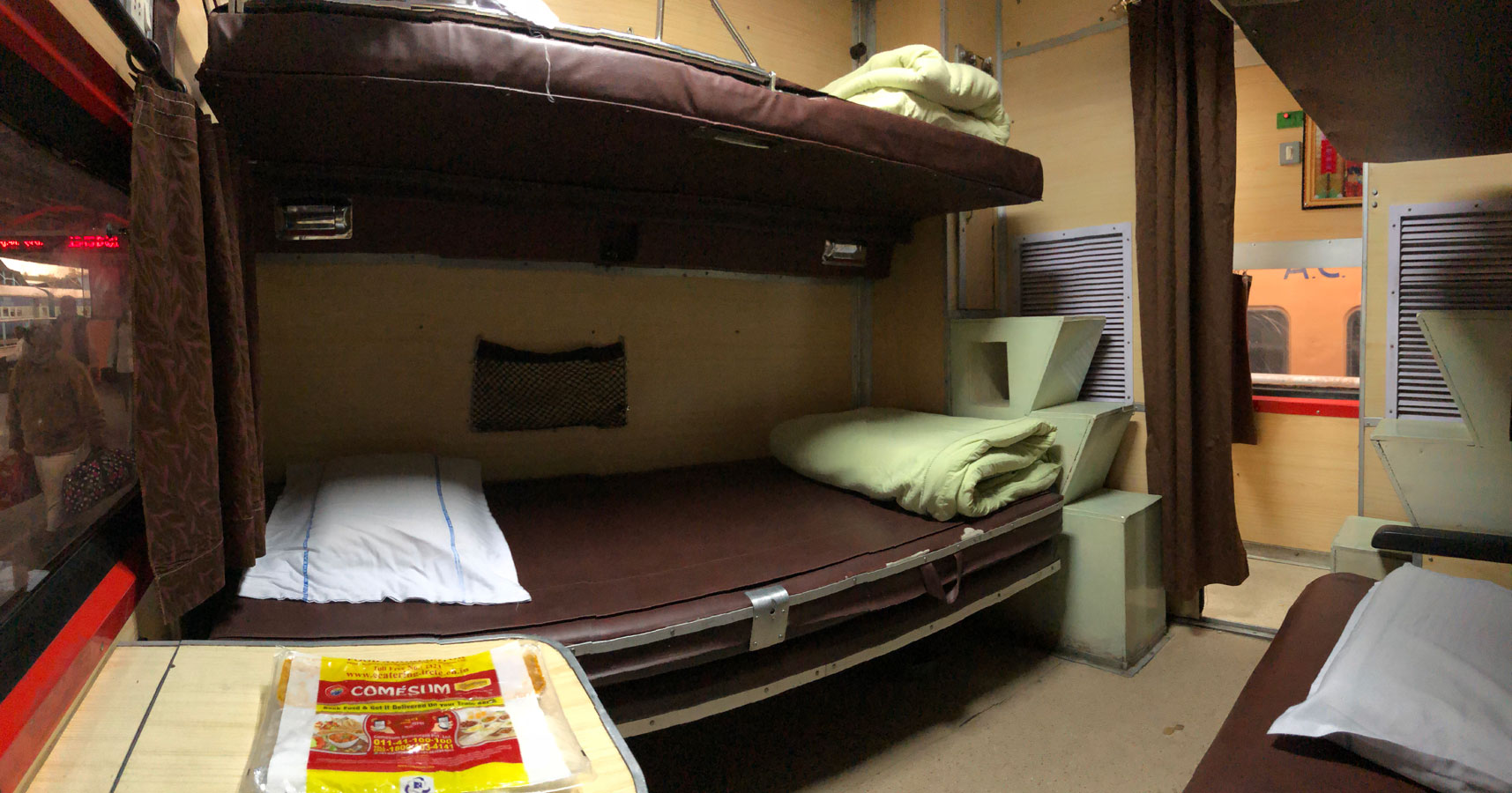
Source This is the closest I could find which corresponds to my memory of a coupe from the 70s

I have numerous memories of travelling by train. In my childhood, most summer holidays would be spent in Bangalore with my paternal grandparents and at some point when my maternal grandparents moved to Chennai, we would first travel to Chennai, spend a couple of weeks there and then take an overnight train to Bangalore to spend the rest of the holidays with my other set of grandparents.

I don’t have much memory of my first train travel, but have some fuzzy flashes. This was way back in the seventies and I must have been around three years old. I was travelling with my parents and my sister who must have been a toddler at that point to New Delhi. I do remember travelling in a coupe compartment. A coupe is first class compartment at a time when there was probably no air conditioning in the train. Today’s coupes are first class airconditioned compartments. My memory is very fuzzy for this trip, but if I think hard, I have flashes of memory of being in a closed compartment with my parents and sister and can see the scenary flying by.

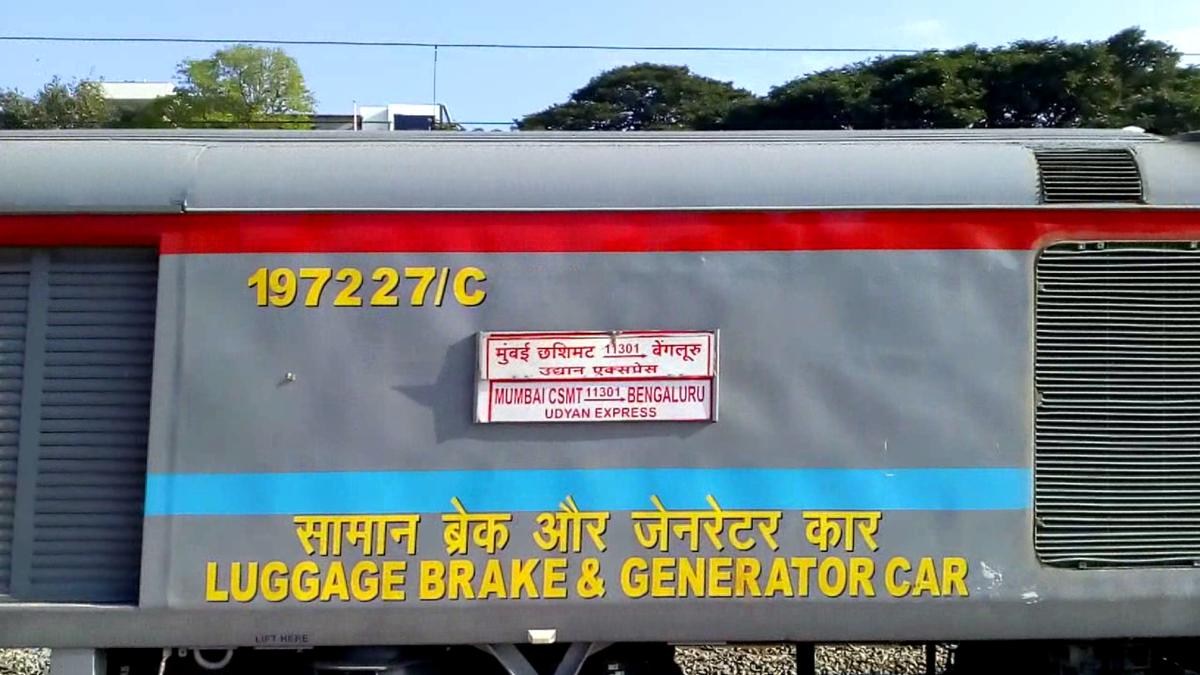
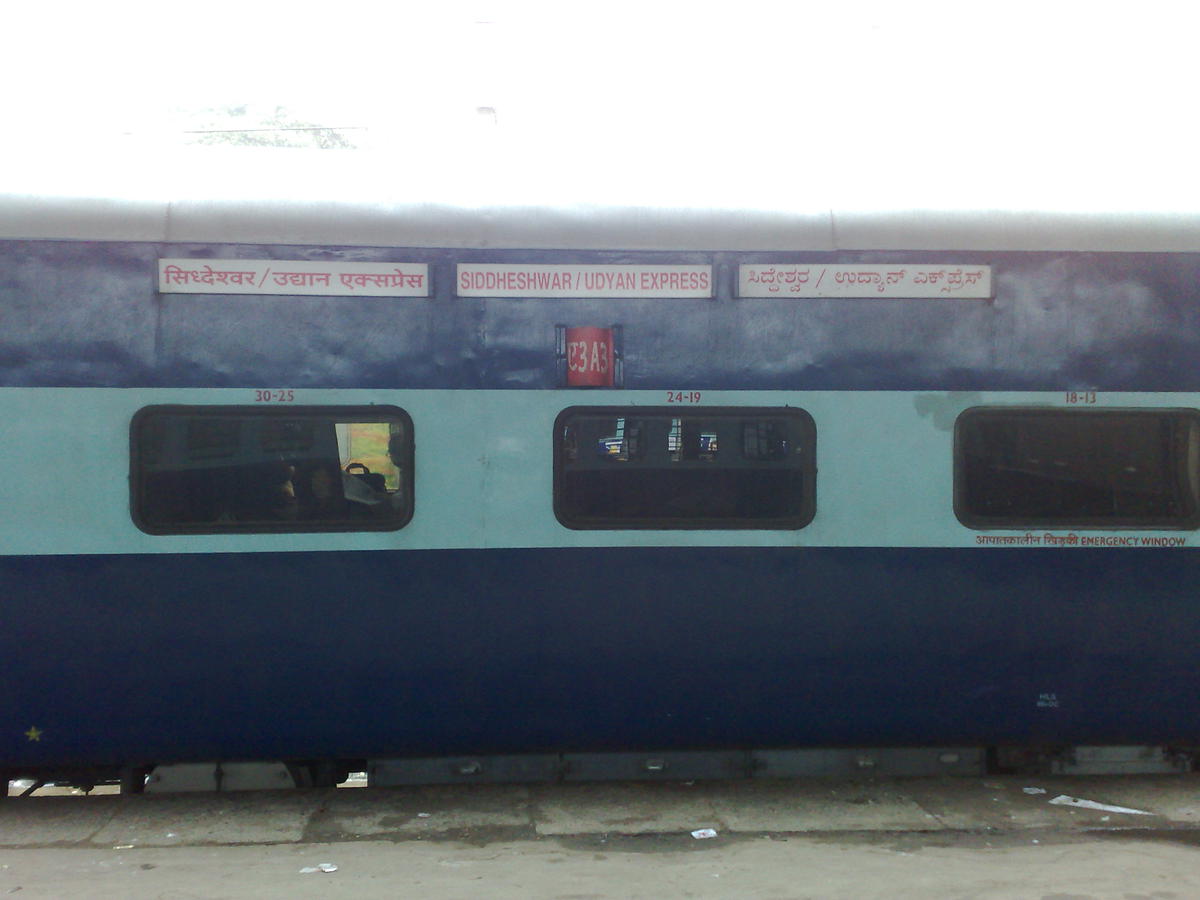
My biggest memories, however, are of the Udyan Express which is superfast train running between Mumbai’s CSMT and Bangalore’s City stations. The name is because Bangalore is called a Garden City and is famous for all the green spaces in the city, Udyan meaning ‘garden’ in pretty much all Indian languages. The train is probably 30 odd years old and I remember travelling from the time it started. Before this train started, there was no end-to-end service between Mumbai and Bangalore and you had to take trains on the Mumbai-Chennai route and get down in a station called Guntakal and then transfer to another train which took you all the way to Bangalore. I think this route between Guntakal and Bangalore used to be meter gauge while the Mumbai-Chennai route used to be broad gauge.

Once, when we were young adults, my sister and I travelled alone to Bangalore. We took what was a fairly new train then whose name escapes me now. That train used the Konkan Railway route and took a coastal route to get to Bangalore. I have searched quite a bit for the name of this train, but maybe this train has been either discontinued or merged with another train. I remember it being a very scenic route with lots of greenery and we passed many smaller towns and cities, unlike the Udyan Express which used to pass through mostly farmland and barren parts of Maharahtra, Andhra Pradesh and Karnataka. If anyone knows what is the name of this train, please put it in the comments below, I would love to know.

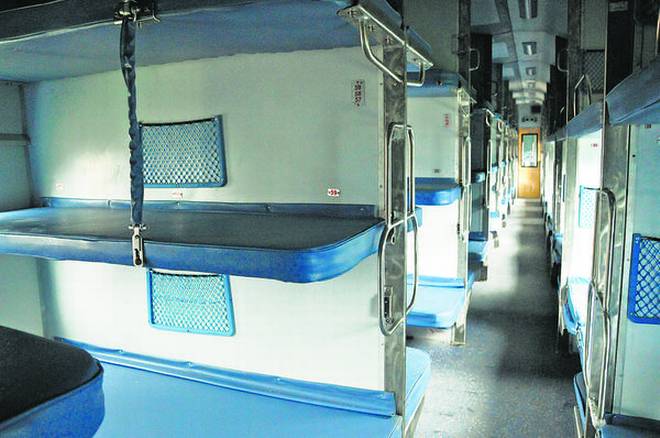
I loved travelling in the second class sleeper compartment where the windows would be bitterly fought with my sister. Both would want the window seat and if we were lucky to travel nice travelling companions, we would both get a window seat, otherwise, it would be up to my mother to play referee. The second class sleeper has six seats with three across each side and then across the aisle, two more seats. Most years, we would go ahead of my father who would join us later during the holidays. Also the sleeper class berths meant that the middle berth pulled out from the back rest of the lower berth and this also used to be a point of contention between us. After a few years, I started disliking the middle berth and used to want to sleep in the lower berth and my mum used to take the middle berth with my sister ensconcing herself in the top berth where she could sleep to her heart’s content.

I can’t sleep while travelling, so I was my family’s guard at night. Everytime the train stopped, my sleep would break and I would wake up. Because there was no airconditioning in the sleeper class, we would sleep with the windows open and a steel slatted cover over it. This, because there used to be heavy thefts in this class as the door used to not be locked and anyone can enter the compartment anytime of the day or night. The camadarie that you used to find in those days travelling by the sleeper class can’t be found today. We used to make friends during the 24 hours it would take to get to our destination and there are times when those fleeting friendships used to be continued. This is a time without any smart devices, not even mobile phones, remember and the only way to pass the time during the trip was to talk to people and share stories about your lives. We also didn’t have a lot of access to books and we would purchase a few magazines to read during the journey. Then you hope that your co-passengers would also have some reading material with them which you would then exchange to read. We would also play a lot of card games as well as games like anthakshari or similar games. And then when your destination arrives, you would smile at your new friends, promise to keep in touch and more often than not, slowly glide out of their lives.

My last train trip in India was this year during my India trip where we did back-to-back two trips, both overnight. The first was from Chennai to Thanjavur and the second from Mayiladuthurai to Bengaluru. Both trips were in AC 2 tier and this trip made me realise that I am growing old, I prefer my luxuries, slight as they are. The children were absolutlely fascinated by these short train trips and have been asking me when we can do this again. One train I absolutely want to travel in and in first class no less, is the Rajdhani Express which connects Mumbai to New Delhi. Rajdhani which means capital was meant to be a series of passenger trains which connect state capitals to India’s capital of New Delhi. This series of trains gets the highest priority in the Indian Railways network and is also considered as prestigious and premium, so when this train travels, it is not allowed to stop at any signals, other lesser important trains get shunted to the nearest station to wait and to make way for the Rajdhani to fly past. We were planning a trip this December, but with COVID-19, this is not possible and given how dire things are, I really don’t know when we can travel on the Rajdhani.

Something I love doing is watching train videos on YouTube. There are many people who patiently stand on the doorstep and share with the world their train journeys and each time I watch these videos, I am reminded of how much I love train travel. I also think if I was still living in India and younger, would I also be like one of these vloggers?

Travel is such a fascinating thing and you learn so much when you are out of your comfort zone. Train travel on the other hand, is a great equaliser, you meet such a diverse group of people in your travels that like it or not, there is some learning every single trip.

Train Journeys

indian-railways-2_660_090318041827I’ve always loved travelling by train. I love the feel of the wind against my face and seeing the landscape rush past me!
My first memory of travelling by train is to Delhi. I must have been around 3-4 years old and I remember travelling in a kind of a coupe for that journey. We were four of us then (my parents, my sister and me) and it was this closed kind of a room that we were in. That’s all I remember of this journey.

The next journey I really remember was when I was around 6 years old on a trip down south. We were supposed to go first to Mysore (as it was then known), then a trip to Bangalore and then finally Chennai to attend a family wedding. Those days, there was no direct train from Mumbai to Bangalore and Mysore and so we took probably a Chennai train and got down in a station in Andhra Pradesh called Guntakal and then changed from the broad gauge line to a narrow gauge line which took us to Bangalore. Then another change of train, most likely a commuter train from Bangalore to Mysore. The trip must have taken around 30-32 hours from Mumbai to Mysore with two transits. Then we came back to Bangalore and then took the Brindavan Express which used to be a double-decker train those days to Chennai. I remember standing on my seat trying to look out of the window since we were seated on the lower level and the windows were higher up.

280920132461Around the time I turned 9/10 years old, my paternal grandparents moved to Bangalore for their retirement years and we started travelling there every year on a train that was introduced then: Udyan Express. The first few years, the train left Mumbai around 8 pm and reached Bangalore 24 hours later with the return journey leaving Bangalore at 8 am in the morning and reaching Mumbai at 8 am the next day. After that, they switched the train timings with the train leaving Mumbai in the morning and leaving Bangalore in the evening.

Those were the days before the internet and smartphones were probably just a far-fetched idea in someone’s head. What we had for entertainment was the company of our co-passengers. We spoke and became friends with the eight people in the same bay, shared food and sometimes found common acquaintances and even relatives. Some of these friendships went on to become deeper and stood the test of time, while others were as transient as the train journey. We also couldn’t track the train in real time and relied on our own memory and the ever-present railway timetable to figure out if our train was late or not (more often late than not as it turned out). Frequent passengers knew which station the train would or rather should reach for meal times and what is special about that station. I remember drinking and eating special food at various stations on the way to Bangalore and the frequent cries of the tea vendors during the run at night.

But a train journey was not always nice and rosy. You also had instances of passengers molesting young and vulnerable female passengers, especially at night and of frequent cases of luggage being stolen, especially in the middle of the night. We were also exhorted not to eat or drink anything that a stranger gave you since it could be laced with sedatives and they would then strip you of your belongings when you fell unconscious.

Then when Bangalore was sighted and Bangalore East station was near, it used to be a big rush to gather all our belongings and as soon as the train left Bangalore East station to go and station ourselves near the door. We used to get down at Bangalore Cantt station and it used to be a big rush because the train stopped there just for 3-5 minutes. As soon as the train stopped, we would see our grandparents waiting for us. Then quickly get down and get home for a month-long holiday!

I really enjoyed writing this post and it brought back so many memories of our summer holiday trips to Bangalore. This post was actually triggered when I tried using google maps to chart out the Bombay-Bangalore route and couldn’t find the train and the various stations we used to be so familiar with. I haven’t taken a train ride in a very long time and I am sure any experience today will be significantly different from what I used to experience and have written above. I do hope that one day soon when holidays are no longer rushed, I can once again take the train and relive my childhood and teen years.