

If you are like me, you have probably heard the phrases ‘Gig Economy’ and ‘Gig Worker’ bandied about quite frequently, especially in the recent years. So what does this mean? And especially what it measn to our children who will join the workforce in a few years from now? I got to find out and share with you.
A gig economy is a free market system in which temporary positions are common and organizations contract with independent workers for short-term engagements. The term “gig” is a slang word meaning “a job for a specified period of time” and is typically used in referring to musicians. Examples of gig employees in the workforce could include freelancers, independent contractors, project-based workers and temporary or part-time hires. The freelancer economy (or freelance economy) differs from traditional employment in that jobs are not permanent, but more specifically, the term relates to many one-off tasks or individual shift assignments.
In the 2000s, the digitalization of the economy and industry was carried out rapidly due to the development of information and communication technologies such as the Internet and the popularization of smartphones. As a result, on-demand platforms based on digital technologies have created jobs and employment forms that are differentiated from existing offline transactions based on accessibility, convenience and price competitiveness, the so-called Gig economy has become a focus. In general, “work” is described as a full-time worker with a set working hours, including benefits. But the definition of work began to change with changing economic conditions and continued technological advances, and the change in the economy created a new labor force characterized by independent and contractual labor, such as well.
So how does this Gig Economy work? Individually, a gig (an individual task, assignment, or job) represents a small portion of a worker’s income. When workers aggregate a variety of tasks or shifts for different clients or companies, their cumulative earnings can be similar to that of full-time employment. Others leverage short-term gigs as a way to earn a part-time income or supplemental income on the side. It works both ways, with workers seeking flexible, short-term working arrangements and companies seeking to hire temporary contract workers in lieu of full-time employees. What is the gig economy?
Increasingly, the gig economy operates on technology platforms that aim to connect workers looking for flexible work arrangements with the companies who need them in a centralized location, such as an app or website. Some platforms are focused on certain niches, such as hospitality and warehouse workers, dog-walking services, or other specific services, while others are broader, connecting gig workers with companies and clients for tasks ranging from housekeeping services to writing.
In the freelance economy, workers operate as independent contractors, meaning their clients pay them an agreed-upon rate for services rendered. In an independent contracting arrangement, workers are responsible for saving and paying their own taxes and aren’t eligible for the typical benefits of full-time employment.

Hate waking up early and working in a cubicle? You are a perfect candidate to be a gig worker. Those who leverage the freelance economy to earn or supplement their incomes often cite flexibility as the biggest appeal. When a professional isn’t committed to a single employer in a full-time employment arrangement, they maintain greater control over their work schedules thanks to the ability to accept only the gigs, assignments, or shifts that don’t interfere with their other commitments. When you work full-time, but want to supplement your income, you can easily pick up a few gigs in the evening or over the weekends. Skilled professionals can exert more control over their career trajectory by engaging in challenging projects and building an impressive resume of results, enabling them to secure higher-level and better-paying full-time positions. Many, however, simply opt to remain a part of the independent workforce thanks to the flexibility and earnings potential it affords them.
The rise of the independent workforce benefits not only workers but also companies who can reap the cost savings of enlisting short-term help to accommodate demand without the administrative costs of hiring full-time staff. Companies aren’t making employer contributions to retirement savings accounts, for instance, or contributing to the cost of group health insurance coverage for gig workers, so the overall cost of hiring help is often less compared to the cost of hiring a full-time employee.
When companies hire gig workers, they can easily leverage skilled professionals for specific, short-term projects who would otherwise be too costly for a growing company to maintain as a full-time staffer. Additionally, it boosts the economy at large by making it possible to deliver goods and services faster and more efficiently. Studies estimate that by the end of this year, 43 percent of the American workforce will consist of independent contractors. With digitization and automation threatening some traditional jobs, the freelance economy can provide job security, but not in the traditional sense. While that may seem backwards – you may wonder how can embracing temporary work possibly contribute to long-term job security – it pays homage to the idea that you shouldn’t put all your eggs in one basket; in the independent workforce, having your position downsized doesn’t mean you’ve suddenly lost your entire income.
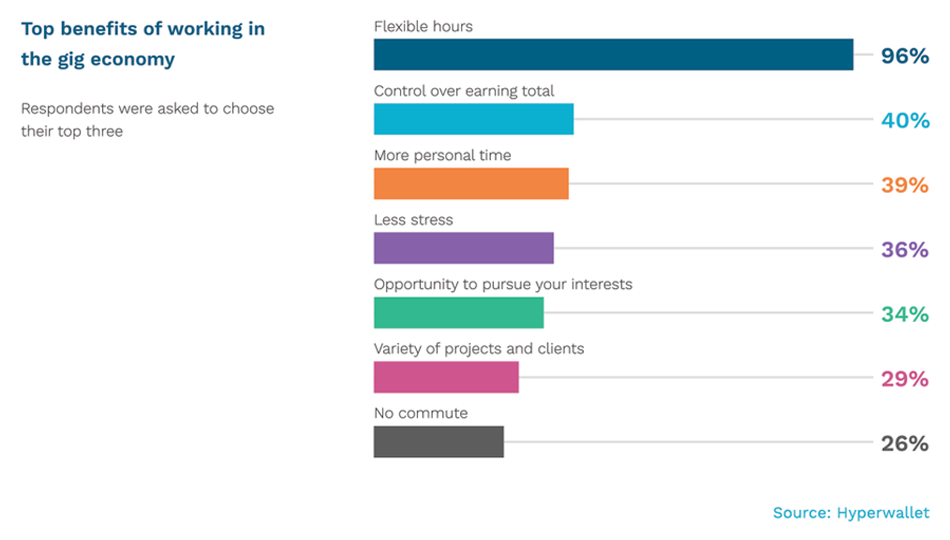
Gig work is growing almost exponentially in developing economies, with this type of work growing by around 30 percent annually in such countries. Certain industries like IT tend to have more freelancers or gig workers than say marketing, but these industries are also showing a growing trend.
However, if you want to be a successful gig worker, you have to balance vitality and viability. What this means is that in most cases, being a gig worker can be a very lonely life, especially if you are used to being in a bustling office space with co-workers to chat with and have coffee and lunch breaks with. Of course, technology like Whatsapp and other messaging services have to a large extent mitigated this issue, but the human touch is still missing in most gig work.
You must also find your niche and utlise your existing skills and interests, but also follow your passions. Once you have done that, leverage on available technology and platforms, especially those that connect freelancers with the skills you posses to those who need them. Have a schedule. While most gig workers start freelancing because of the flexibility it offers them, having a daily schedule makes it easy for you to determine if you can complete the work in the timeframe either provided by the company or what you have promised your client. You also have to have a strict watch on your finances. You no longer have the stability of a regular job, so incomes may fluctuate month to month. Develop a system for documenting income and expenses and you will thank yourself during tax time. Also save what you can in months of plenty, so you can sit back and not worry during the lean times.
The gig economy offers abundant opportunities for the workforce and employers alike. The rise of the independent workforce is here to stay, thanks to technology advancements that make it easier than ever for workers to find temporary jobs that afford them the freedom and flexibility they want.
Lastly most gig workers work that way because they want to balance their lives and to them success is not just making a lot of money. So find the path that works best for you and you will be very successful in the Gig Economy.







 Memories and Such