Travel Bucket List – India: Goa Part 1

Located just south of my home state of Mahashtra, the state of Goa is the smallest Indian state by area and the fourth smallest by population. Goa has the highest GDP per capita among all Indian states – two and a half times that of the country. It was ranked the best-placed state by the Eleventh Finance Commission for its infrastructure and ranked on top for the best quality of life in India by the National Commission on Population based on the 12 Indicators

Rock art engravings found in Goa exhibit the earliest traces of human life in India. In the 3rd century BC, Goa was part of the Maurya Empire, ruled by the Buddhist emperor, Ashoka of Magadha. Between the 2nd century BC and the 6th century AD, Goa was ruled by the Bhojas of Goa. The rule later passed to the Chalukyas of Badami, who controlled it between 578 and 753, and later the Rashtrakutas of Malkhed from 753 to 963. From 765 to 1015, the Southern Silharas of Konkan ruled Goa as the feudatories of the Chalukyas and the Rashtrakutas. Over the next few centuries, Goa was successively ruled by the Kadambas as the feudatories of the Chalukyas of Kalyani. In 1312, Goa came under the governance of the Delhi Sultanate. The kingdom’s grip on the region was weak, and by 1370 it was forced to surrender it to Harihara I of the Vijayanagara empire. The Vijayanagara monarchs held on to the territory until 1469, when it was appropriated by the Bahmani sultans of Gulbarga. After that dynasty crumbled, the area fell into the hands of the Adil Shahis of Bijapur, who established as their auxiliary capital the city known under the Portuguese as Velha Goa (or Old Goa). In 1510, the Portuguese defeated the ruling Bijapur sultan Yusuf Adil Shah with the help of a local ally, Timayya. They set up a permanent settlement in Velha Goa. This was the beginning of Portuguese colonial rule in Goa that would last for four and a half centuries, until its annexation in 1961. In 1843 the Portuguese moved the capital to Panaji from Velha Goa. By the mid-18th century, Portuguese Goa had expanded to most of the present-day state limits. Simultaneously the Portuguese lost other possessions in India until their borders stabilised and formed the Estado da Índia Portuguesa or State of Portuguese India. After India gained independence from the British in 1947, India requested that Portuguese territories on the Indian subcontinent be ceded to India. Portugal refused to negotiate on the sovereignty of its Indian enclaves. On 19 December 1961, the Indian Army invaded with Operation Vijay resulting in the annexation of Goa, and of Daman and Diu islands into the Indian union. Goa, along with Daman and Diu, was organised as a centrally administered union territory of India. On 30 May 1987, the union territory was split, and Goa was made India’s twenty-fifth state, with Daman and Diu remaining a union territory.
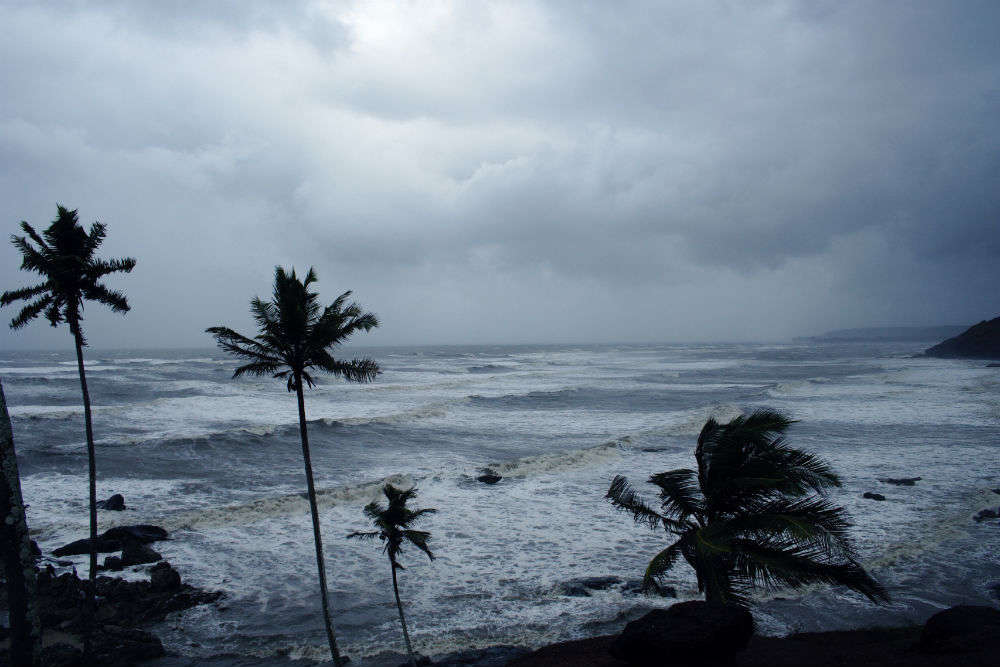
Goa features a tropical monsoon climate and being in the tropical zone and near the Arabian Sea, has a hot and humid climate for most of the year. The month of May is usually the hottest, seeing daytime temperatures of over 35 °C coupled with high humidity. The state’s three seasons are: Southwest monsoon period (June – September), post-monsoon period (October – January) and fair weather period (February – May). Over 90% of the average annual rainfall is received during the monsoon season.

The state is divided into two main regions – North Goa and South Goa. Panaji, which is the capital of the state is also the district headquarters of North Goa. The headquarters for South Goa is the city of Margao, which is the second largest city as well as the commercial and cultural capital of the state.

Goa is a state with highest proportion of urban population with 62.17% of the population living in urban areas. Even though the state was under Portugese occupation for more than four centuries, Hindus dominate the state. They are around two thirds the population in the state, while Christians account for a quarter of the population. Of the balance population, Muslims account for about 8.5% and the balance 0.5% are the Sikhs, Jains and other communities.

Tourism is the the biggest industry in the state, which accounts for around 12% of all foreign tourist arrivals in India. There are also scores of domestic tourists who love visiting Goa, especially for it’s beaches and nightlife. You generally see western or foreign tourists come to Goa in the winter months while domestic tourists visit Goa during the summer. One of the biggest tourist attractions in Goa is water sports. Beaches like Baga and Calangute offer jet-skiing, parasailing, banana boat rides, water scooter rides, and more. Over 450 years of Portuguese rule and the influence of the Portuguese culture presents to visitors to Goa a cultural environment that is not found elsewhere in India. Goa is often described as a fusion between Eastern and Western culture with Portuguese culture having a dominant position in the state be it in its architectural, cultural or social settings. The state of Goa is famous for its excellent beaches, churches, and temples.[61] The Bom Jesus Cathedral, Fort Aguada and a new wax museum on Indian history, culture and heritage in Old Goa are other tourism destinations.

Rice with fish curry (xit koddi in Konkani) is the staple diet in Goa. Goan cuisine is famous for its rich variety of fish dishes cooked with elaborate recipes. Coconut and coconut oil are widely used in Goan cooking along with chili peppers, spices, and vinegar is used in the Catholic cuisine, giving the food a unique flavour. The Goan cuisine is heavily influenced by Portuguese cuisine. Goan food may be divided into Goan Catholic and Goan Hindu cuisine with each showing very distinct tastes, characteristics, and cooking styles. Pork dishes such as Vindalho, Xacuti, chouriço, and Sorpotel are cooked for major occasions among the Goan Catholics. An exotic Goan vegetable stew, known as Khatkhate, is a very popular dish during the celebrations of festivals, Hindu and Christian alike. A rich egg-based, multi-layered sweet dish known as bebinca is a favourite at Christmas. Ros omelette is one of the most popular snacks and street foods in Goa, it is traditionally sold on food carts on streets. The most popular alcoholic beverage in Goa is feni; cashew feni is made from the fermentation of the fruit of the cashew tree, while coconut feni is made from the sap of toddy palms. In fact the bar culture is one of the unique aspects of the Goan villages where a local bar serves as a meeting point for villagers to unwind. Goa also has a rich wine culture, as a nod to its Portugese and Catholic heritage.

2020 Week 08 Update

Yet another week where we were housebound. The children are now climbing the walls because they are so bored. Some of their friends have started school and from those who are waiting to enter poly, their parents like me don’t want them to meet in malls and other crowded places, hence the boredom.

Things have become slightly better this week and I am hopeful that the virus will blow off in a few more weeks and life becomes more normal.

I didn’t do much reading this week, it was one of those weeks where I didn’t really feel like doing much, so I am still stuck where I was last week.

I am also seriously thinking of expanding my little business. Since the children are now in tertiary education, I have more time in my hands, and so can now start working on a full-time basis. I have mentioned this to my major client and if they pass me working for them on a full-time basis (I am currently working part-time for them), then it’s time to network and make new contacts and see where this leads me to.

Stay safe folks and have a great week! We’re ending month two of 2020 and spring is on the horizon!

In My Hands Today…

The Condition – Jennifer Haigh

This image has an empty alt attribute; its file name is 2180222.jpg

The year is 1976, and the family, Frank McKotch, an eminent scientist; his pedigreed wife, Paulette; and their three beautiful children have embarked on their annual vacation at the Captain’s House, the grand old family retreat on Cape Cod.

One day on the beach, Frank is struck by an image he cannot forget: his thirteen-year-old daughter, Gwen, strangely infantile in her child-sized bikini, standing a full head shorter than her younger cousin Charlotte. At that moment he knows a truth that he can never again unknown something is terribly wrong with his only daughter. The McKotch family will never be the same.

Twenty years after Gwen’s diagnosis with Turner’s syndrome, a genetic condition that has prevented her from maturing, trapping her forever in the body of a child, all five family members are still dealing with the fallout. Each believes himself crippled by some secret pathology; each feels responsible for the family’s demise.

Frank and Paulette are acrimoniously divorced. Billy, the eldest son, is dutiful but distant, a handsome Manhattan cardiologist with a life built on compromise. His brother, Scott, awakens from a pot-addled adolescence to a soul-killing job, a regrettable marriage, and a vinyl-sided tract house in the suburbs. And Gwen is silent and emotionally aloof, a bright, accomplished woman who spurns any interaction with those around her. She makes peace with the hermetic life she’s constructed until, well into her thirties, she falls in love for the first time. And suddenly, once again, the family’s world is tilted on its axis.

International Mother Language Day

If you talk to a man in a language he understands, that goes to his head. If you talk to him in his language, that goes to his heart – Nelson Mandela

Source

21st February 1952, around 9 am, students began gathering in the premises of University of Dhaka in defiance of Section 144 which banned public gathering. This gathering was because the then Pakistan government led by Jinnah’s successor, Governer-General Khawaja Nazimuddin staunchly defended the ‘Urdu only’ policy during a speech on 27 January 1952. Then later that month, at a meeting, the central government’s proposal of writing the Bengali language in Arabic script was vehemently opposed and the meeting’s action committee called for an all out protest on 21 February, including strikes and rallies, to prevent which the government imposed section 144 in Dhaka.

Later that morning, as armed police surrounded the campus, students gathered at the university gate attempted to break the police line. In retaliation, the police fired fired tear gas shells towards the gate to warn the students. A section of students ran into the Dhaka Medical College while others rallied towards the university premises cordoned by the police. The vice-chancellor asked police to stop firing and ordered the students to leave the area. However, the police arrested several students for violating section 144 as they attempted to leave. Enraged by the arrests, the students met around the East Bengal Legislative Assembly and blocked the legislators’ way, asking them to present their insistence at the assembly. When a group of students sought to storm into the building, police opened fire and killed a number of students, including Abdus Salam, Rafiq Uddin Ahmed, Sofiur Rahman Abul Barkat and Abdul Jabbar. As the news of the killings spread, disorder erupted across the city. Shops, offices and public transport were shut down and a general strike began.

Soon dissorder spread across the then East Pakistan as large processions ignored section 144 and condemned the actions of the police. During the continued protests, police actions led to the death of four more people.

Today, 21 February, which is a public holiday in Bangladesh is also called State Language Day or Language Martyrs’ Day which was also proclaimed by the United Nations in November 1999 as International Mother Tongue Language Day. In Bangladesh, on this day, people visit the Shaheed Minar, a solemn and symbolic structure erected at the location of the massacre in memory of the language movement which led to the country’s independence.

Languages, especially what we refer to mother tongue languages, which are the ones we first learn to speak with our parents and family are one of the most powerful ways to preserve and develop culture and to promote it all across the world.

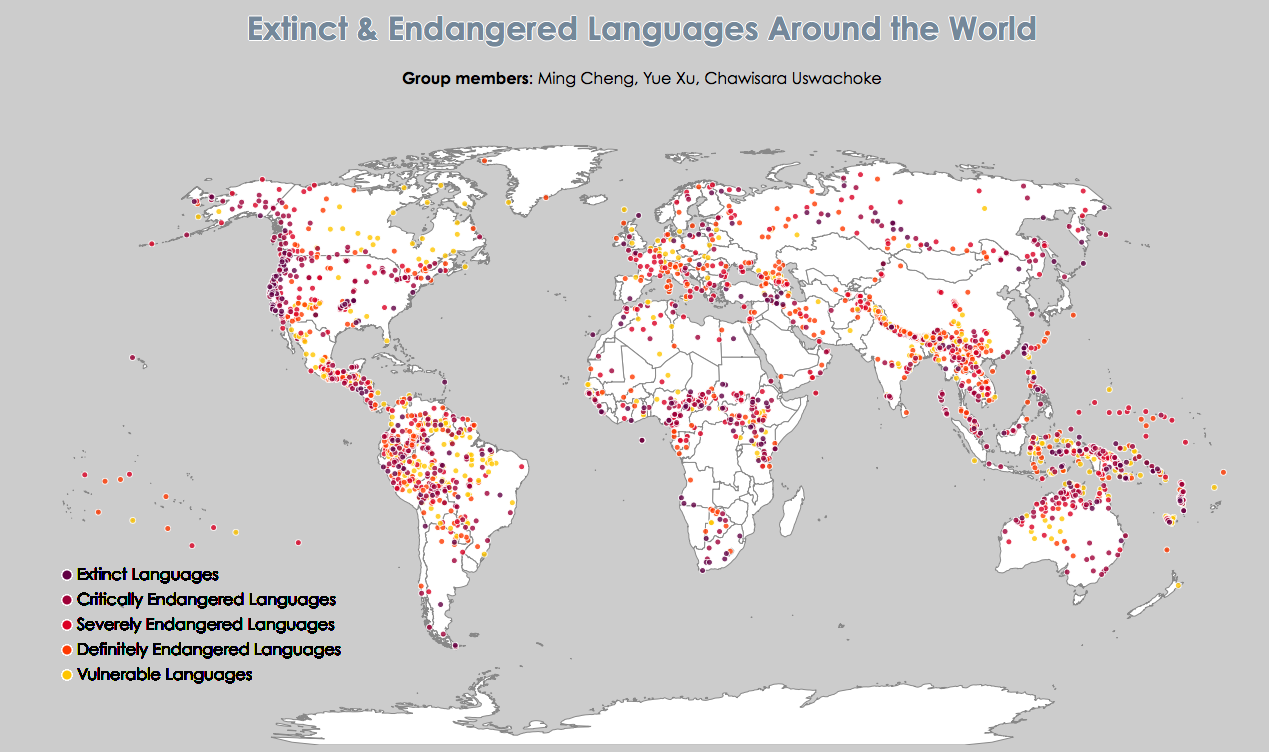
With their complex implications for identity, communication, social integration, education and development, languages are of strategic importance for people and planet. Yet, due to globalization processes, they are increasingly under threat, or disappearing altogether. When languages fade, so does the world’s rich tapestry of cultural diversity. Opportunities, traditions, memory, unique modes of thinking and expression — valuable resources for ensuring a better future — are also lost.

At least 43% of the estimated 6000 languages spoken in the world are endangered. Only a few hundred languages have genuinely been given a place in education systems and the public domain, and less than a hundred are used in the digital world.

Source

International Mother Language Day has been observed every year since February 2000 to promote linguistic and cultural diversity and multilingualism.

Languages are the most powerful instruments of preserving and developing our tangible and intangible heritage. All moves to promote the dissemination of mother tongues will serve not only to encourage linguistic diversity and multilingual education but also to develop fuller awareness of linguistic and cultural traditions throughout the world and to inspire solidarity based on understanding, tolerance and dialogue.

Every two weeks a language disappears taking with it an entire cultural and intellectual heritage.

Linguistic diversity is increasingly threatened as more and more languages disappear. Globally 40 per cent of the population does not have access to an education in a language they speak or understand. Nevertheless, progress is being made in mother tongue-based multilingual education with growing understanding of its importance, particularly in early schooling, and more commitment to its development in public life.

Multilingual and multicultural societies exist through their languages which transmit and preserve traditional knowledge and cultures in a sustainable way.

Today there is growing awareness that languages play a vital role in development, in ensuring cultural diversity and intercultural dialogue, but also in strengthening co-operation and attaining quality education for all, in building inclusive knowledge societies and preserving cultural heritage, and in mobilizing political will for applying the benefits of science and technology to sustainable development.

The theme for the 2020 edition is “Languages without borders”. Today, make it a point to communicate in the language you were first exposed to, your Mother Tongue. And if it is a language or dialect that is in danger of becoming extinct, then all the more, you owe it to yourself and the future generations to preserve it.

Here’s an interesting Youtube video from a TEDx talk by Dr. Colleen Fitzgerald who speaks about the future of endangered languages. Do watch it!

And another TEDx talk by linguist Mandana Seyfeddinipur on why endangered languages matter.

In My Hands Today…

The Gifted Gabaldón Sisters – Lorraine López

This image has an empty alt attribute; its file name is 3315248.jpg

Having lost their mother in early childhood, the Gabaldón sisters consider Fermina, their elderly Pueblo housekeeper, their surrogate Grandmother. The mysterious Fermina love the girls as if they are her own, and promises to endow each with a “special gift” to be received upon her death.

Mindful of the old woman’s mystical ways, the sisters believe Fermina’s gifts, bestowed based on their natural talents, magically enhance their lives. The oldest sister, Bette Davis Gabaldón, always teased for telling tales, believes her gift is the power to persuade anyone, no matter how outlandish her story. Loretta Young, who often prefers pets to people, assumes her gift is the ability to heal animals. Tough-talking tomboy, Rita Hayworth believes her gift is the ability to curse her enemies. And finally, Sophia Loren, the baby of the family, is sure her ability to make people laugh is her legacy.

As the four girls grow into women they discover that Fermina’s gifts come with complicated strings, and what once seemed simple can confuse over time. Together they learn the truth about their mysterious caretaker, her legacy, and the family secret that was nearly lost forever in the New Mexican desert.