In My Hands Today…

Pride, Prejudice, and Other Flavors – Sonali Dev

It is a truth universally acknowledged that only in an overachieving Indian American family can a genius daughter be considered a black sheep.

Dr. Trisha Raje is San Francisco’s most acclaimed neurosurgeon. But that’s not enough for the Rajes, her influential immigrant family who’s achieved power by making its own non-negotiable rules:

  • Never trust an outsider
  • Never do anything to jeopardize your brother’s political aspirations
  • And never, ever, defy your family

Trisha is guilty of breaking all three rules. But now she has a chance to redeem herself. So long as she doesn’t repeat old mistakes.

Up-and-coming chef DJ Caine has known people like Trisha before, people who judge him by his rough beginnings and place pedigree above character. He needs the lucrative job the Rajes offer, but he values his pride too much to indulge Trisha’s arrogance. And then he discovers that she’s the only surgeon who can save his sister’s life.

As the two clash, their assumptions crumble like the spun sugar on one of DJ’s stunning desserts. But before a future can be savored there’s a past to be reckoned with…

A family trying to build home in a new land.

A man who has never felt at home anywhere.

And a choice to be made between the two.

Festivals of India: Jagannath Rath Yatra

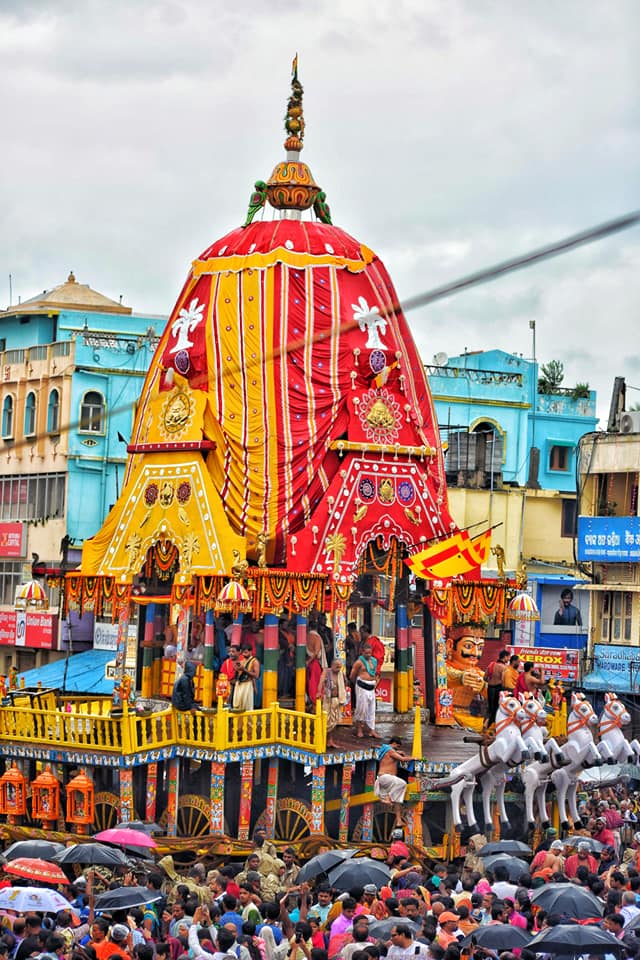
Yesterday, June 23, was the most important festival in the state of Odisha. It was the chariot festival or the rath yatra of its most famous dieties, the Jagannath of Puri.

The term Rath Yatra particularly refers to the annual Rathajatra in Odisha, Jharkhand, West Bengal and other East Indian states, particularly the chariot festival fof Puri that involves a public procession with a chariot with deities Jagannath, an avatar of Lord Vishhnu, his brother Balabhadra and his sister Subhadra, along with his weapon, the Sudarshana Chakra on a ratha, a wooden deula-shaped chariot. The rath yatra attracts over a million Hindu pilgrims who join the procession each year.

According to Knut Jacobsen, a Rathayatra has religious origins and meaning, but the events have a major community heritage, social sharing and cultural significance to the organisers and participants. Ratha Yatra processions have been historically common in Vishnu-related traditions in Hinduism across India, as well as in Shiva-related traditions, and amongst the Thirtankars in Jainism and the saints and goddesses in Nepal plus the tribal folk religions found in the eastern states of India.

Derived from two Sanskrit words, Ratha meaning chariot or carriage and yatra which means a journey or pilgrimage, the word Ratha Yatra means a pilgrimage which the deity will undertake in a chariot, accompanied by the public. The term appears in the medieval texts of India as the Puranas, which mention the Rathayatra of Surya or the Sun god, of Devi or the Mother Goddess, and of Vishnu. These chariot journeys have elaborate celebrations where the individuals or the deities come out of a temple accompanied by the public journeying with them through the Kshetra which refers to the region, city or even the local streets to another temple or to the river or the sea. Sometimes the festivities include returning to the sacrosanctum of the temple.

The Jagannath Ratha Yatra also called the Car or Chariot Festival is the oldest Ratha Yatra descriptions can be found in Brahma Purana, Padma Purana, Skanda Purana and Kapila Samhita. This annual festival is celebrated on Ashadha Shukla Paksha Dwitiya or the second day in bright fortnight of Ashadha month. This year it was on 23 June 2020. The festival commemorates Lord Jagannath’s annual visit to the Gundicha Temple via the Mausi Maa or the maternal aunt’s Temple near Saradha Bali in Puri.

As part of the Ratha Yatra, the deities Lord Jagannath, his elder brother Lord Balabhadra and younger sister Devi Subhadra, along with the Sudarshan Chakra, are taken out in a procession out of the main shrine of Jagannath Temple and placed in the Ratha or Chariot which are ready in front of the Temple in a process called ‘Pahandi’. The procession starts with ‘Madan Mohan’ then ‘Sudarshana’ Balabhadra, Subhadra, and Jagannath Deva.

After that, Gajapati Maharaja, the king of Puri, who is also known as the first servitor of the Lords, does the ‘Chhera Pahanra’ ritual or the holy cleaning of the chariots in which the king wears the outfit of a sweeper and sweeps all around the deities and the chariots. The Gajapati King cleanses the road before the chariots with a gold-handled broom and sprinkles sandalwood water and powder with utmost devotion. This ritual signified that under the lordship of Jagannath, there is no distinction between the powerful sovereign Gajapati King and the most humble devotee. After this ritual, finally the devotees pull the chariots up to the Gundicha Temple, which is also known as the birthplace of the Lords.

Once the deities reach the Gundicha temple, in the onward car festival, they are taken in the Pahandi and installed on the holy platform, called the Ratna Simhasan. The Lords remain at the Gundicha Temple for nine days. After that, the process of taking back the deities to the Main temple is observed. The return journey or return car festival of Puri Jagannath Ratha Jatra is known as Bahuda Yatra or Punar Yatra.

Three richly decorated chariots, resembling temple structures, are pulled through the streets of Puri called Badadanda. This commemorates the annual journey of Lord Jagannath, Lord Balabhadra, and their sister Devi Subhadra to their aunt’s temple, the Gundicha Temple which is situated at a distance of over 3 km from the main temple. The chariots are richly decorated with painted flower petals and other designs on the wheels, the wood-carved charioteer and horses, and the inverted lotuses on the wall behind the throne by local artists and painters. The huge chariots of Jagannath pulled during Rath Jatra is the etymological origin of the English word Juggernaut. The Ratha-Jatra is also termed as the Shri Gundicha jatra.This is the only time when devotees who are not allowed in the temple premises, such as non-Hindus and foreigners, get a glimpse of the deities.

The three chariots of Balabhadra, Subhadra and Jagannatha are newly constructed every year with wood of specified trees. They are customarily brought from the ex-princely state of Dasapalla by a specialist team of carpenters who have hereditary rights and privileges for the same. The logs are traditionally set afloat as rafts in the river Mahanadi. These are collected near Puri and then transported by road. The three chariots are decorated as per the unique scheme prescribed and followed for centuries. Covered with bright canopies made of stripes of red cloth and combined with those of black, yellow and green colours, the huge chariots are lined across the wide avenue in front of the majestic temple close to its eastern entrance, which is also known as the Sinhadwara or the Lion’s Gate.

Lord Jagannatha’s chariot is called Nandighosa. It is forty-five feet high and forty-five feet square at the wheel level. It has sixteen wheels, each of seven-foot diameter, and is decked with a cover made of red and yellow cloth. Lord Jagannatha is identified with Krishna, who is also known as Pitambara, the one attired in golden yellow robes and hence the distinguishing yellow stripes on the canopy of this chariot. The chariot of Lord Balarama, called the Taladhwaja, is the one with the Palm Tree on its flag. It has fourteen wheels, each of seven-foot diameter and is covered with red and green cloth. Its height is forty-four feet. The chariot of Subhadra, known as Dwarpadalana, literally “trampler of pride,” is forty-three feet high with twelve wheels, each of seven-foot diameter. This chariot is decked with a covering of red and black cloth – black being traditionally associated with Shakti and the Mother Goddess.

Around each of the chariots are nine Parsva devatas, painted wooden images representing different deities on the chariots’ sides. Each of the chariots is attached to four horses. These are of different colours – dark ones for Balarama, white ones for Jagannatha, and red ones for Subhadra. Each chariot has a charioteer called Sarathi. The three charioteers attached to the chariots of Jagannatha, Balarama and Subhadra respectively are Daruka, Matali and Arjuna.

During the annual event, devotees from all over the world throng to Puri with an earnest desire to help pulling the Lords’ chariots. They consider this as an auspicious act. The huge processions accompanying the chariots play devotional songs with drums, sounding plates of bell metal, cymbals, etc. The Ratha carts themselves are approximately 45 feet high and 35 feet square and it takes about 2 months to construct the chariots which are pulled by the thousands of pilgrims who turn up for the event; the chariots are built anew each year only from the Neem tree and the wood of no other tree is used.

There are 6 events which are considered as the key activities of this annual spectacular event:

  1. The ‘Snana Yatra’ is the one where the Deities take bath and then fall sick for almost 2 weeks. They are thus treated with ayurvedic medicines and a set of traditional practices.
  2. On ‘Sri Gundicha’, the Deities are taken in the onward car festival from the main shrine to the Gundicha Temple.
  3. On the Bahuda Yatra, the return car festival, the Lords are brought back to the main Temple.
  4. The Suna Besha or Golden Attire is the event when the Deities wear golden ornaments and give darshan from the chariots, to the devotees.
  5. The ‘Adhara Pana’ is an important event during Ratha Yatra. On this day sweet drink is offered to the invisible spirits and souls, who would have visited the celestial event of the Lords, as believed by the Hindu tradition.
  6. And finally the Deities are taken back inside the main shrine i.e. the Jagannath Temple and installed on the Ratna Simhasan, on the last day of the Ratha Yatra activity which is called as ‘Niladri Bije’.

This year, because of the coronavirus panademic and the Covid-19 situation in India and especially in the state of Odisha, with many states under lockdown, uncertainty looms large over the conduct of the annual Rath Yatra for the first time in 284 years. The festival even took place during the great famine of 1766 which was believed to have killed millions and during the cholera epidemic. The festival which took place in Puri this year, was just a token festival which was shorn of all the guander and pomp and pageantry it usually has. The rituals leading to the festival which usually takes place outside took place inside the temple and the festival was short of its usual pomp and splendor without devotes in a historic first, a day after the Supreme Court of India allowed the state to hold the seven-day chariot festival in a restricted fashion amid the coronavirus.

I hope in the near future, when things are more normal, I can make it to Puri to witness this grand spectacle. If you want to read more about the state of Odisha, which I have written in detail, please read Part 1, Part 2, Part 3, Part 4 and Part 5.


In My Hands Today…

Natalie Tan’s Book of Luck and Fortune – Roselle Lim

This image has an empty alt attribute; its file name is 42051103.jpg

At the news of her mother’s death, Natalie Tan returns home. The two women hadn’t spoken since Natalie left in anger seven years ago, when her mother refused to support her chosen career as a chef.

Natalie is shocked to discover the vibrant neighborhood of San Francisco’s Chinatown that she remembers from her childhood is fading, with businesses failing and families moving out. She’s even more surprised to learn she has inherited her grandmother’s restaurant.

The neighborhood seer reads the restaurant’s fortune in the leaves: Natalie must cook three recipes from her grandmother’s cookbook to aid her struggling neighbors before the restaurant will succeed. Unfortunately, Natalie has no desire to help them try to turn things around–she resents the local shopkeepers for leaving her alone to take care of her agoraphobic mother when she was growing up. But with the support of a surprising new friend and a budding romance, Natalie starts to realize that maybe her neighbors really have been there for her all along.

Father’s Day

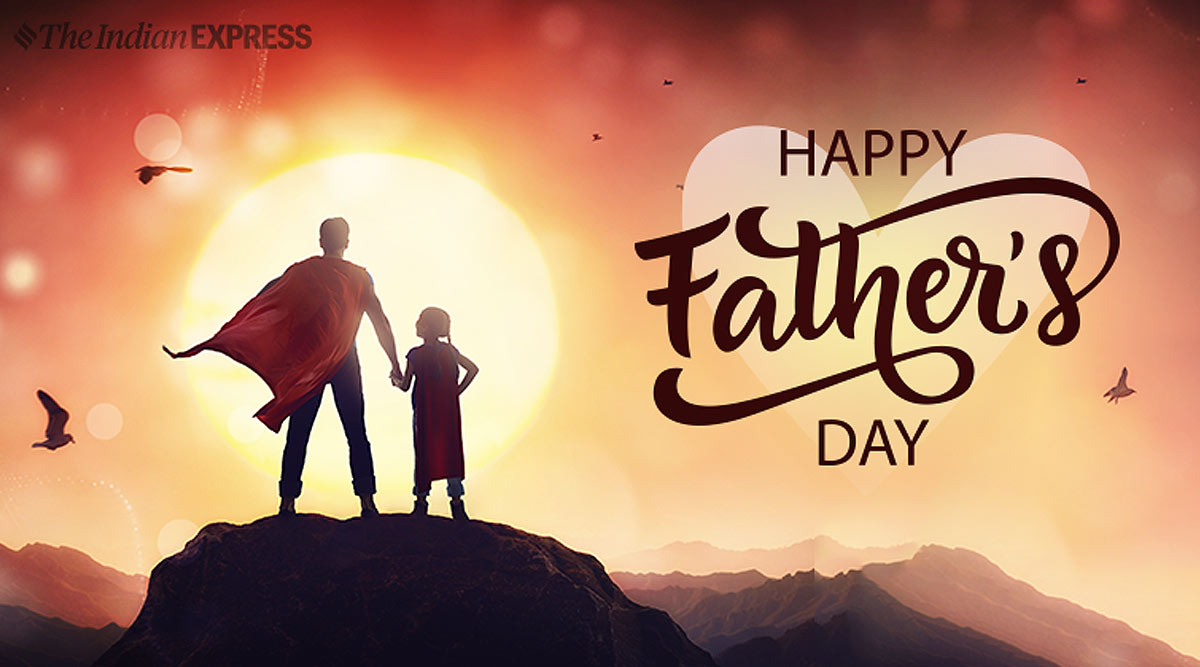
When there is a day dedicated to mothers, can fathers be far behind? Yesterday was Father’s Day, a day of honoring fatherhood and paternal bonds, as well as the influence of fathers in society. Yesterday was the Father’s Day, a day when we honour not only our fathers, but also our grandfathers, uncles and the other father figures in our lives.

Anyone can father a child, but being a dad takes a lifetime. A father is a girl’s first hero and the importance of a father can’t be underestimated. He is like a superhero who is always ready to take on everyday troubles for his children. The significance of a father is beyond words as he is the person who works tirelessly to fulfil the requirements of his family. Fathers play a role in every child’s life that cannot be filled by others. This role can have a large impact on a child and help shape him or her into the person they become. To honour the contribution of all such fathers and fatherly figures and to celebrate the paternal bonding, a special day is observed every year as Father’s Day.

Children look to their fathers to lay down the rules and enforce them. They also look to their fathers to provide a feeling of security, both physical and emotional. Children want to make their fathers proud, and an involved father promotes inner growth and strength. Studies have shown that when fathers are affectionate and supportive, it greatly affects a child’s cognitive and social development. It also instills an overall sense of well-being and self confidence.

Fathers not only influence who we are inside, but how we have relationships with people as we grow. The way a father treats his child will influence what he or she looks for in other people. The patterns a father sets in the relationships with his children will dictate how his children relate with other people. For a young girl, her father shows her what a good relationship with a man is like. If a father is someone who loving, gentle, strong and valient, a perfect foil to her mother, his daughter will look for those qualities in men when she’s old enough to choose her life partner. For a son though, he would model himself after his father’s character. Boys will seek approval from their fathers from a very young age. As human beings, we grow up by imitating the behavior of those around us; that’s how we learn to function in the world. If a father is caring and treats people with respect, the young boy will grow up much the same. When a father is absent, young boys look to other male figures to set the “rules” for how to behave and survive in the world.

In Catholic countries of Europe, it has been celebrated on March 19 as Saint Joseph’s Day since the Middle Ages. In America, Father’s Day was founded by Sonora Smart Dodd, and celebrated on the third Sunday of June for the first time in 1910. It is held on various days in many parts of the world all throughout the year, often in the months of March, May and June. Complementing other days like Mother’s Day, Siblings Day and Grandparents Day, Father’s Day is celebrated across the world in many forms.

A customary day for the celebration of fatherhood in catholic Europe is known to date back to at least 1508. The day is usually celebrated on March 19 as the feast day of Saint Joseph, who is referred to as the fatherly Nutritor Domini or Nourisher of the Lord, in Catholicism and the putative father of Jesus in southern European tradition. This celebration was brought to the Americas by the Spanish and Portuguese. The Catholic Church actively supported the custom of a celebration of fatherhood on St. Joseph’s Day from either the last years of the 14th century or from the early 15th century, apparently on the initiative of the Franciscans. In the Coptic Orthodox Church, the celebration of fatherhood is also observed on St Joseph’s Day, but the Copts observe this on July 20, in a celebration which may date back to the fifth century. In addition to Father’s Day, International Men’s Day is celebrated in many countries on November 19 in honor of men including boys.

The day which is mostly celebrated today originated in the United States. This day was not celebrated in that country until the 20th century outside of the catholic traditions. People started celebrating in the early 20th century to complement Mother’s Day by celebrating fathers and male parenting. After Anna Jarvis’ successful promotion of Mother’s Day in Grafton, West Virginia, the first observance of a day honoring fathers was held on July 5, 1908, in West Virginia. In 1911, Jane Addams proposed that a citywide Father’s Day celebration be held in Chicago, but she was turned down. On June 19, 1910, a Father’s Day celebration was held in Washington state by Sonora Smart Dodd to honour her father Willday and felt fathers should also have a similar holiday to honour them. Although she initially suggested June 5, her father’s birthday, the celebration was deferred to the third Sunday in June and on June 19, 1910, the first Father’s Day was celebrated.

However, in the 1920s, Dodd stopped promoting the celebration because she was studying and it faded into relative obscurity, but she started promoting the celebrations again in the 1930s. She had the help of retailers who realised that such a celebration would help promote their products and services, which are specifically targeted at men.

Other countries celebrate the day in different dates across the year. In the southern hemisphere, Australia, New Zealand, Fiji and Papua New Guinea celebrate it on the first Sunday in September. So irrespective of when you celebrate this day, on the day you do celebrate it, do thank your father and the father figures in your life for everything they have done for you, for moulding you to become the person you are today.

To all the fathers and father figures who read this piece, Happy Father’s Day to you!

2020 Week 25 Update

Singapore has now moved to Phase 2 which means more places are open. This is because community infection rates have generally remained stable, cases in migrant worker dormitories have declined, and there are no new large clusters emerging. The past week, we saw the numbers reduce greatly and this has given all of us hope for the future.

In this phase, retail outlets are allowed to open their doors after two long months, people can dine-in at restaurants and home based services like tuition and private enrichment classes are allowed to restart. Sports and other public facilities are also allowed to open as well as all healthcare services including face-to-face visits at residential facilities for the elderly. In all this, safe distancing measures still apply as well as masking up when outside the house. However, large spaces like malls must still restrict capacity and have tracking systems set up.

Companies have still been encouraged to ask employees to work from home for as long as possible with only essential employees to be in the office.

The total number of cases in Singapore is slightly short of 42,000 cases with about 33,500 cases completely recovered from COVID-19 and 26 deaths. India on the other hand, is seeing an explosion of cases in the past week with the country recording nearly 400,000 cases, 214,000 recoveries and 13,000 deaths.

Though I am itching to go out, I am also wary and cautious. I have heard most of the restaurants in Singapore over this weekend have been fully booked, what with people wanting to get out of the house and the fact it is the Father’s Day weekend. Speaking of which, to all the fathers and father figures reading this blog, here’s wishing you a very Happy Father’s Day!

Stay home as much as possible, stay masked and most importantly, stay safe!