Gopeng
Gopeng was the most important town in the Kinta Valley until 1890, when Ipoh became more prominent. The town was intensively mined by both European and Chinese miners, the latter having significant Hakka representation under Chung Keng Kwee, the leader of the Hai San secret society during the Larut War. He was appointed as the Kapitan Cina after the Pangkor Treaty, and although his main homes were in Taiping and Penang, he maintained his foothold in Gopeng, securing contracts for street lighting there in 1892 as well as building quarters for civil servants thereafter.
For the first few decades after British intervention, Gopeng was run by a tripartite: the Europeans, the Chinese, led by the Eu family, and the Sumatran, led by Assistant Penghulu Imam Prang Ja Barumun. Gopeng is also one of the first places where large numbers of Orang Asli met outsiders in the 19th century.
Seated amidst lofty limestone cliffs, rivers, and historical caves, Gopeng lies approximately 18.5 km south of Ipoh and is known for its lush green rainforests that house the subgroup of Orang Asli called the Semai tribe. The main attractions of Gopeng are its rivers and waterfalls. Guided activities at Gopeng include river boarding and whitewater rafting, caving, wet abseiling, and guided walks to the Rafflesia blooming site. Most of the activities and accommodations go hand in hand at Gopeng and are available as packages. Other prominent sites to visit include Gua Tempurung Cave, Kinta Nature Park and Gaharu Tea Valley.
A place welcoming spelunkers or cave enthusiasts, Gua Tempurung is one of the oldest caves in Peninsular Malaysia. A part of this 3-kilometer-long cave has been developed as a show cave, complete with walkways and electric lighting. It is quite easy to explore and has a 1.6-kilometer-long river passage running through the hills. The hills above the cave are known as Gunung Tempurung and are about 500 m in height.
Popularly known as the Coconut Cave because of its dome-like structure, it is segregated into 5 different caverns that are stacked with stalagmites and stalactites. The Golden Flowstone cavern rises to about 90 m in height and displays a smoothed stone cascade that dazzles in gold when the river flows. The Gergasi, or Giant Cavern, displays a massive 15-meter-high column, whereas the Universe Cavern massively rises to a height of 72 metres. Another cavern is the Battlefield Cavern, where fallen stalactites and rock formations are littered on the ground. A lot of bats reside in these caves, especially during the mating season between March and May. In fact, even these bat droppings have created some bat guano artwork on the ceilings of the domes.
Entry fees are RM 20 for adults and RM 10 for children. If one chooses to take a guided tour, it will cost RM 40 for adults and RM 20 for children. The cave is open between 9 am and 5 pm on Saturdays and Thursdays, from 9 am to 12:30 pm and then again between 2:30 and 5 pm on Fridays.
Kinta Nature Park is known for its 1381 aquatic birds in the wetland, which comprise stork-billed kingfishers, baya weavers, otters, and butterfly lizards. Clouded leopards and foxes are also sheltered in this park. Lake Pucung, expanding over 41 hectares, is the largest pond in this aviary and serves as a visitor’s area. There’s an observation tower here where bird enthusiasts can catch a glimpse of herons and egrets that wander above the clear waters. The nature park has free entrance and is open from 8 am to 6 pm daily.
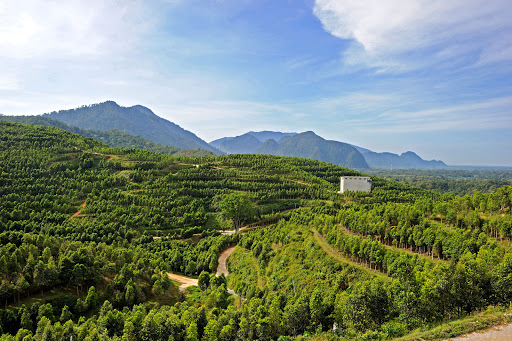
The Gaharu Tea Valley is a 300-acre agarwood plantation. Agarwood or Gaharu in Malay is an aromatic resinous wood that forms within Aquilaria trees and has medicinal and healing properties. The tea valley is also home to many other small attractions like The Great Wall of Gopeng, Hilltop Viewing Stage, Lover’s Park, and Tree Hugging Park. The Great Wall of Gopeng in the valley allows sightseers to take amazing snaps. The Hilltop Viewing Stage offers a sight of tourists to view the lush green Gaharu trees and the hilly region in the Titiwangsa range. The valley has an RM 10 entrance fee and is open from 9 am to 6 pm daily.
Nestled amidst the most picturesque views of Gopeng, the Kampar River is a whitewater rafting site. It has some 22 rapids ranging from grade 1 to grade 3. Here, the rafting activity lasts for about 3 hours and is guided by experts. During the rafting activity, sight-seekers are accompanied by breathtaking natural beauty and Rajah Brooke butterflies. Many companies are offering this river rafting package, of which some allow visitors to stay overnight followed by a fun activity. The rafting timings are 9 am trip and 2 pm for the afternoon trip.
Located along Jalan Eu Kong, the Gopeng Museum narrates the history of Gopeng. Among the 300 antiques are some vintage objects like old-school sewing machines, watches, clocks, radios, gas lamps, typewriters, cameras, and gramophone records. Visitors can also peep into the lives of the original natives in Gopeng with a wall covered with beautiful old black-and-white pictures. The museum is open on Saturday and Sunday between 9 am and 5 pm and has no entrance fees.
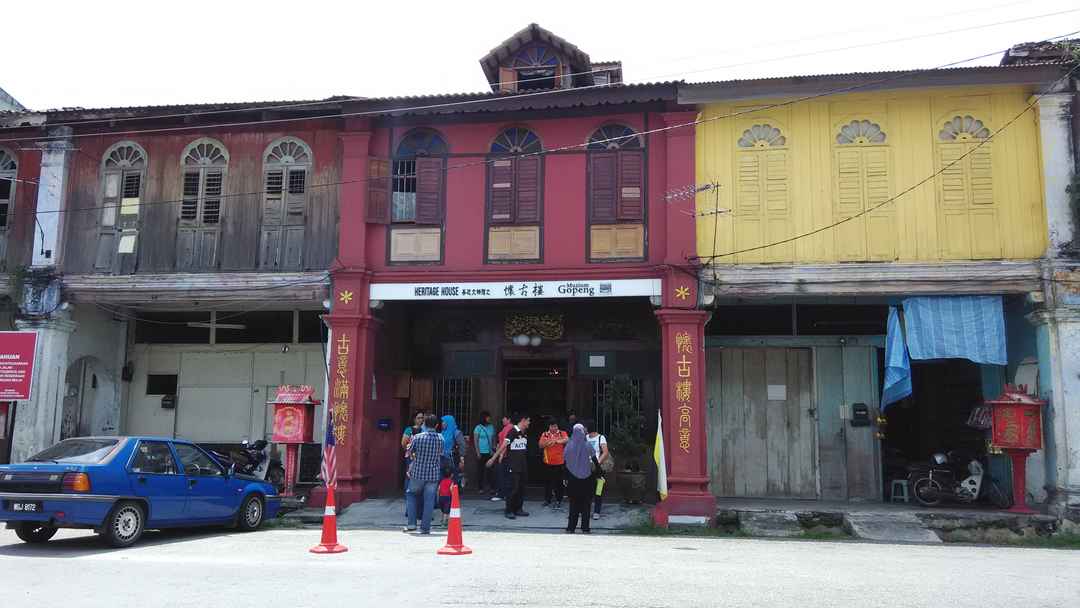
Serving as the annexe of the Gopeng museum, the Gopeng Heritage House is filled with artefacts, antiques, old furniture, and calligraphy paintings that give visitors an insight into the lives of those who lived more than 125 years ago. It has two floors dedicated to unique and traditional exhibits. The ground floor is filled with Chinese furniture, ornaments, and ceramics. The exhibits arranged upstairs include old fur stoles, hats, old radios, clocks, suitcases, beer bottles, vintage cigarette packets, musical instruments, and gramophone records. Entry is free and the heritage house is open from 9 am to 3 pm every Saturday and Sunday.
Kuala Kangsar
Kuala Kangsar is the royal town of Perak, located downstream of the Kangsar River where it joins the Perak River, approximately 25 km northwest of Ipoh. The name Kuala Kangsar is believed to be derived from Kuala Kurang-Sa, which means 100 minus one, usually interpreted as ‘the 99th small tributary to flow into the Perak River.
The Sultan of Perak officially resides in Kuala Kangsar, and it has been Perak’s royal seat since the 18th century. It is one of four towns that play a role in Perak’s complex succession system. The town is also known as the site where the first Conference of Rulers of the Federated Malay States, the Durbar, was held in 1897. By the 1890s, the growth of the tin mining towns of Ipoh and Taiping had eclipsed Kuala Kangsar. The town is also the site of the first rubber tree planted in Malaysia. The first Malaysian scout troop was established in Kuala Kangsar. Consequently, its squad number is 001.
Kuala Kangsar’s signature dish is Kangsar-style laksa, which are wheat noodles dipped in a coconut and tamarind broth. The other must-try dish here includes cendol, or shaved ice, topped with green noodles, coconut milk and toppings.
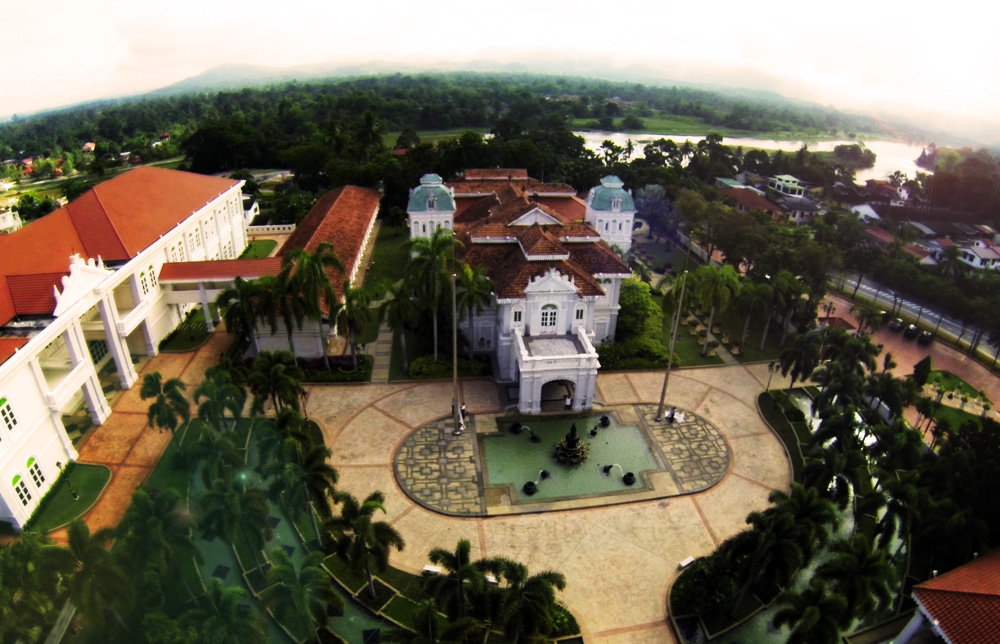
Istana Iskandariah, or Iskandariah Palace, is the royal palace of the Perak Sultanate and the official residence of the Sultan of Perak since its completion in 1933. All the Sultans of Perak have been installed in the palace since its completion. The palace is named after Sultan Iskandar Shah Ibni Almarhum Sultan Idris Murshidul Azzam Shah I Rahmatullah, who initiated its construction.
The royal town of Kuala Kangsar was said to have had a strange effect on Sultan Mudzaffar Shah of Perak, who ruled from 1877 to 1887. Unlike many rulers who protected their royal places and strongholds by selecting their vantage points carefully so that they could detect enemy approaches from afar, the Sultan had his first royal palace built beside the riverbank and named it Istana Sri Sayong. Apart from being exposed to the impending threat of invasion, the other problem was the force of monsoon seasons, which led to numerous floods as water gushed down from the jungles above through the many tributaries. One flood was so severe, it almost swept the palace away. Finally, after the Big Flood or Air Bah, in 1926, it was decided to move the place further up onto the knoll where it stands today.
Istana Iskandariah is located at Bukit Chandan on the left bank of Sungai Perak upstream from Hilir Perak on the site of the former Istana Negara or State Palace, which was built in 1895 by the late Sultan Idris Murshidul Azzam Shah I Ibni Almarhum Raja Bendahara Alang Iskandar. It occupies an area of 10,435 square meters.
The design of the palace combines colonial European architecture with the pointed arches and onion-shaped domes of the Middle East and Central Asia. The building is rectangular and faces the sunrise and the river. The roof is designed with one main dome in the centre and four subsidiary domes, one on each of the palaces. The palace is three storeys high. Above the second floor and under the main dome is a minaret. The hall measures 9.8 square meters and is used by the Royal family as a family hall.
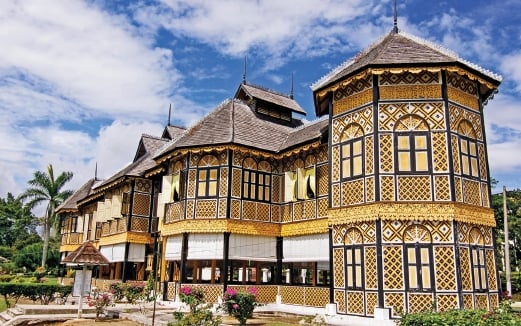
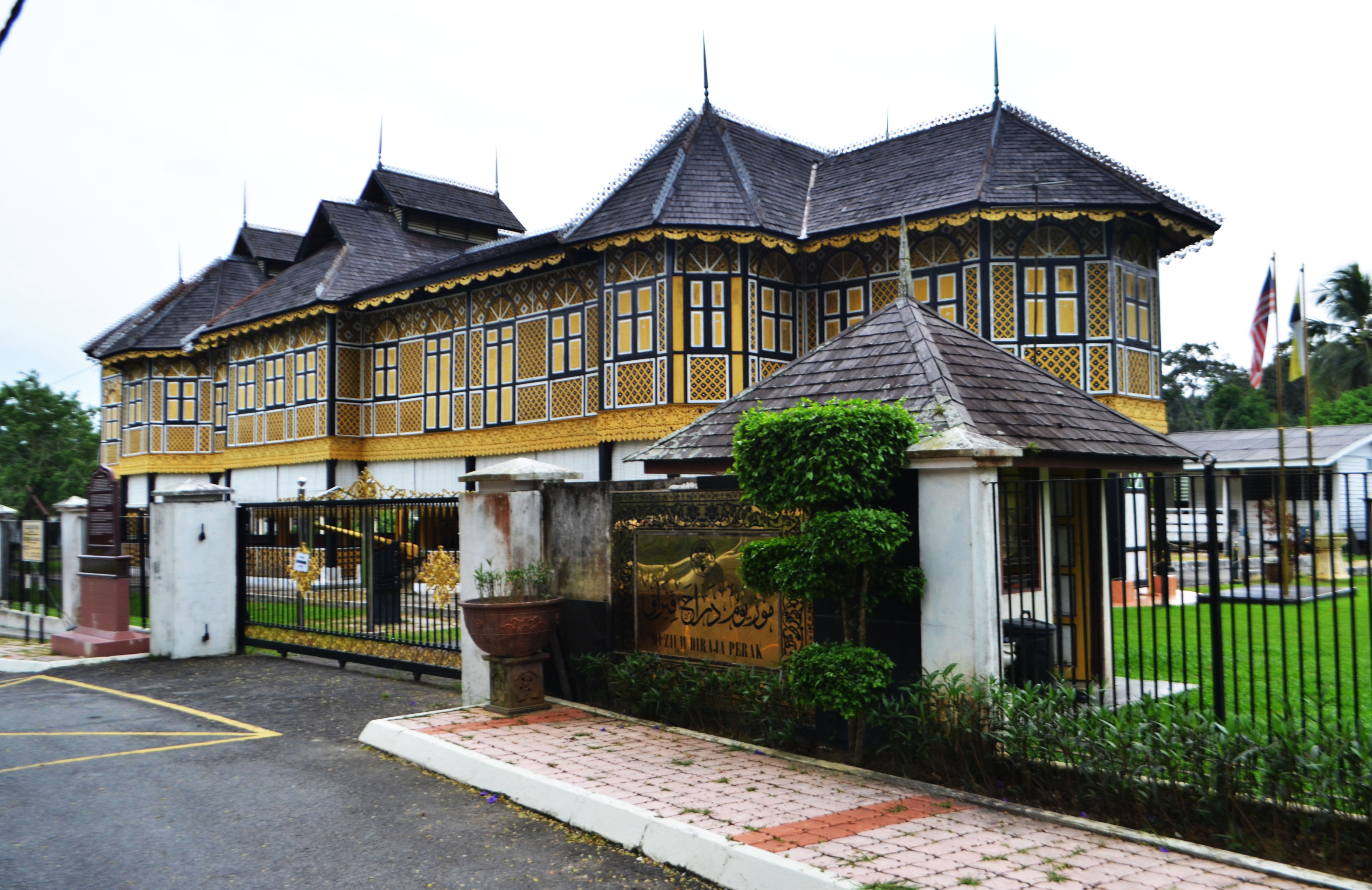
Istana Kenangan, or the Palace of Memories, is the former residence of the royal family of Kuala Kangsar. Made of wood without a single metal nail, the exterior of the museum is breathtaking. Today it houses the Royal Museum of Perak. It was built in 1926 for Sultan Iskandar Shah and was previously known as the Valley Palace due to its location. The palace had been the official residence between 1931 and 1933. However, upon completion of Istana Iskandariah, the Istana Kenangan was used to host royal receptions and where the palace guests stayed.
Istana Kenangan is two storeys high, with the top floor consisting of bed chambers, family bedrooms and a dining hall. The ground floor was once used as the official royal office, and its original floor was made out of solid wood. The wooden floor, however, had been replaced by marble.
Sultan Azlan Shah Gallery, the former royal palace, is now a heritage museum. Also known as Istana Kota and Istana Hulu, it is designed to showcase the essence of Renaissance, neoclassical and Moorish styles of architecture. Established in 1903, the museum celebrates the life of Sultan Azlan Shah and houses his items like gem-crusted watches, his Rolls-Royces, and items from his school days. The most fascinating part of the gallery is Malaysia’s largest recorded fungus, which is still preserved.
The gallery building was originally built in 1898 and completed in 1903 to be used as the residence of Perak Sultan Idris Shah I and the gallery was officially opened on December 9, 2003. Housed at the Ulu Palace building, the building was made from wood carving inspired by the natural plants within the surrounding region. The architectural design of the building has common features from the National Palace, Ipoh High Court and Ipoh railway station buildings, along with elements from Moorish, Neoclassical and Renaissance architecture. The gallery is closed on Sundays and from Saturday to Thursday, it is open from 10 am to 5 pm, while on Fridays, one can visit the gallery between 10 am and noon and then again between 2:45 and 5 pm.
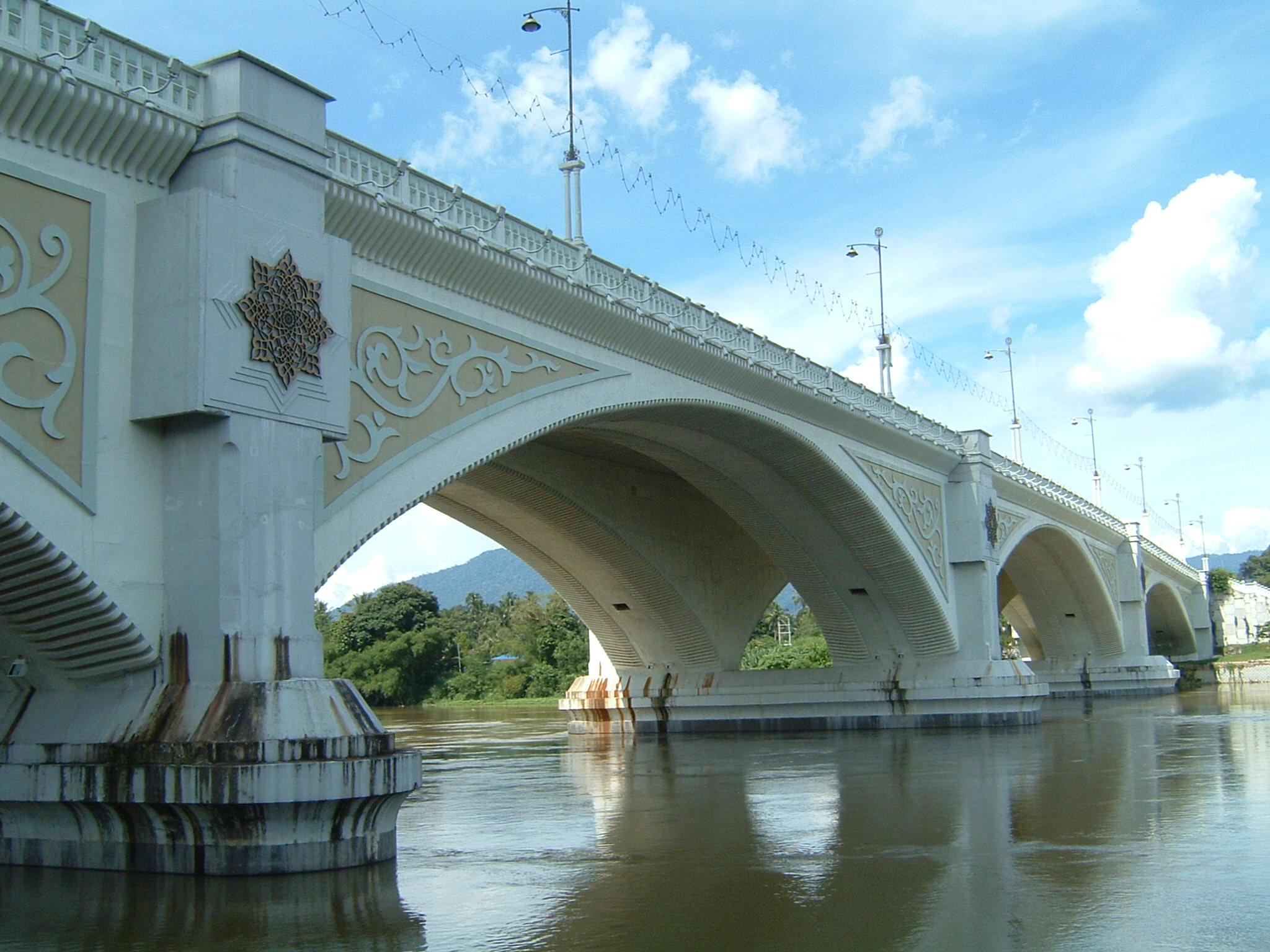
The Sultan Iskandar Bridge, or the Iskandariah Bridge, is the longest steel arch bridge in Malaysia, constructed over the Perak River. It was designed in London and constructed by a company based in Klang. It is a beautiful scenic destination that ferries both pedestrians and vehicles. It can be best experienced from the river bank that oversees it, especially during sunset and sunrise. The 308-meter bridge made out of steel is one of four major bridges in Kuala Kangsar. Traffic on the bridge, however, was greatly reduced when the Sultan Abdul Jalil Shah Bridge or the Sayong Bridge a little further downstream was opened to traffic in 2003 in conjunction with the completion of the North-South Expressway.
The bridge was constructed in 1932 to replace the Enggor Ponton bridge which was washed away during the big flood in December 1931. The Iskandariah Bridge has 7 steel arches mounted on concrete piers with a maximum span of 45.11 metres. Its total length is 308 metres and it has an overall width of 10.2 metres.
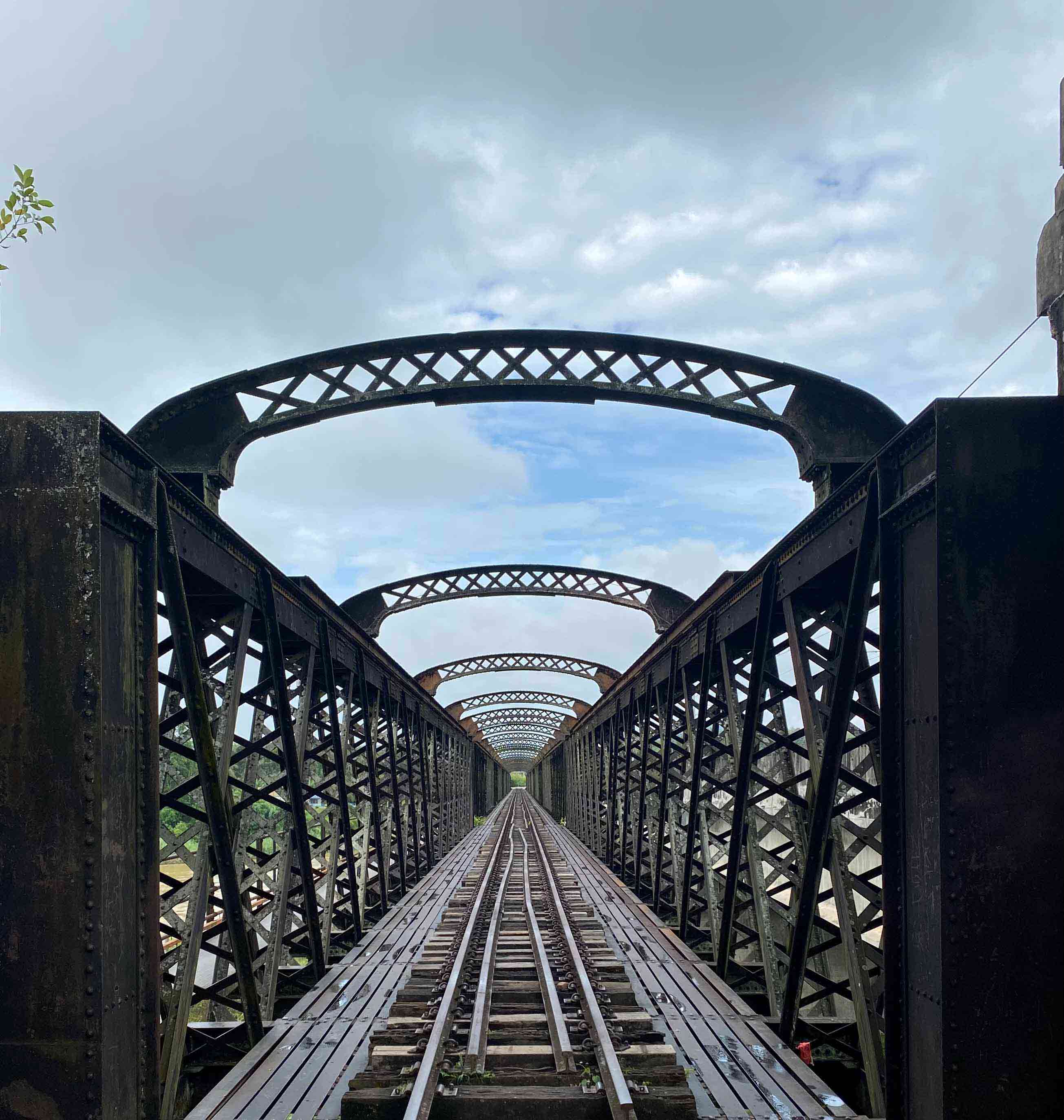
Victoria Bridge is a single-lane railway situated in Karai, about a half-hour drive away from Kuala Kangsar, to serve the local tin mining industry. Encompassing the Perak River, it is one of the oldest railway bridges and was given a gazette of national heritage. The bridge remained in use until 2002 when a wider concrete girder bridge built parallel to the old bridge was completed to take over the role of handling rail traffic. The new bridge is significantly wider, with room to support a second track, but in its early life, it was only required to handle a single track until double tracking and electrification were conducted between the Ipoh-Padang Besar line during the late 2000s and early 2010s. While the old bridge is closed to rail traffic, its adjoining footbridge is still publicly open to motorcycles and pedestrians. Victoria Bridge has become a minor tourist attraction, with signage set up to inform visitors about its history. It is a popular spot for photoshoots.
The Sultan Abdul Jalil Shah Bridge is one of two bridges that cross the Perak River in Kuala Kangsar. The other bridge is the Iskandariah Bridge. The bridge connects Kuala Kangsar with the Sayong village, spanning 330 meters across the river. It was officially opened by the late Almarhum Sultan Azlan Shah of Perak in June 2002. This bridge has five 60-meter spans and is an integral arch bridge without expansion joints and bearings. It is thus a state-of-the-art design for bridges built in tropical climatic conditions where temperature variation is minimal.
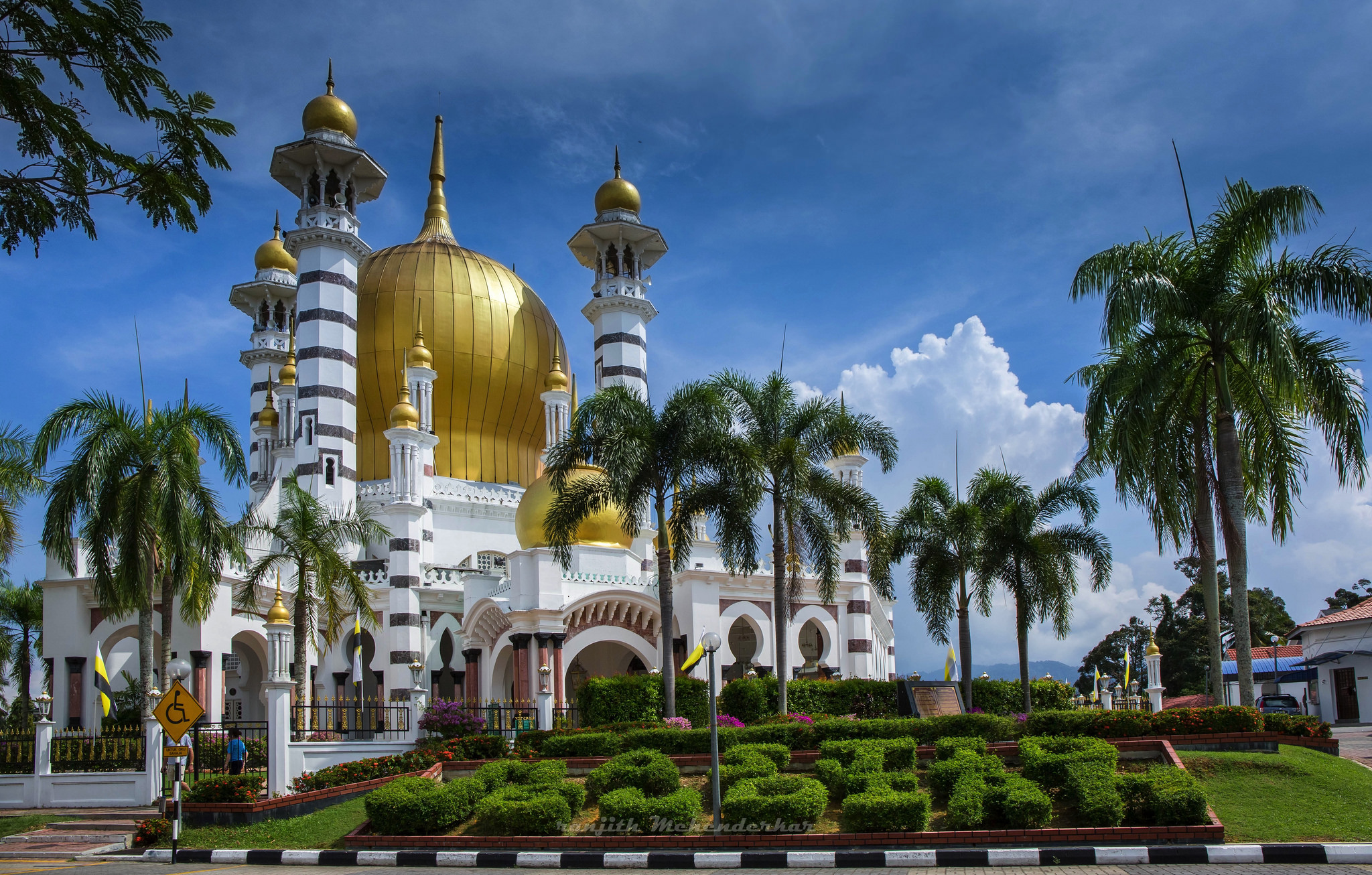
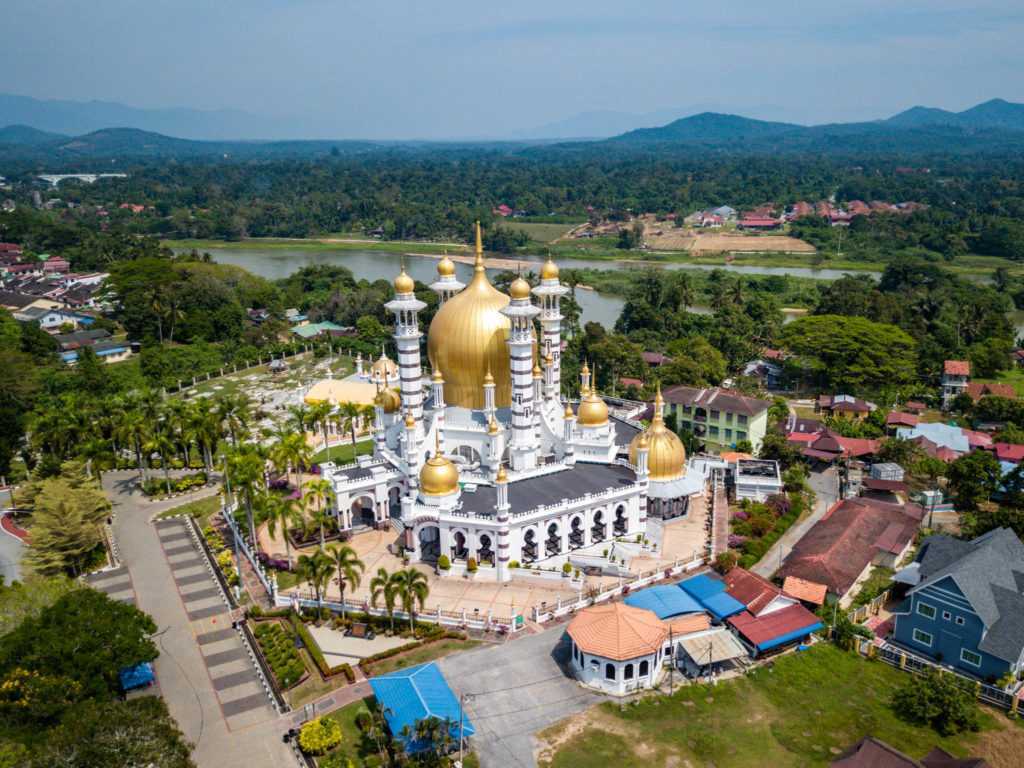
The Ubudiah Mosque is regarded as one of the most beautiful mosques in Malaysia. Also referred to as Masjid Ubudiah, it means the mosque of self-surrender to Allah. Built in the Mohgul-Gothic style of architecture, this mosque is adorned with a ginormous central dome, four minarets, small gold domes and white Italian marble. The main prayer hall of the mosque is rather small, however; its unique octagonal shape is to look out for. It is adorned with red Italian marble. An exquisite Persian carpet and an intricately decorated chandelier further accentuate the beauty of the mosque. While the structure rises to a height of about 126 ft, the domes breathe at a height of about 60 ft. The mosque was commissioned by the 28th Sultan of Perak, Idris Shah. While the construction began in 1913, it was completed in 1917.
The mosque is located beside the Royal Mausoleum on Jalan Istana at Bukit Chandan. The construction of the mosque was interrupted several times, once when two elephants belonging to the sultan and Raja Chulan fought, ran over and damaged the Italian marble tiles. The outbreak of WWI also affected its construction. The mosque was renovated in 2003. The mosque is open to visitors from Saturday to Thursday between 9 am to 12 noon, 3 to 4 pm and 5:30 to 6 pm.
The Al-Ghufran Royal Mausoleum is Perak’s Royal Mausoleum, located near Ubudiah Mosque. The first Sultan of Perak to be buried here was Sultan Idris Murshidul Azzam Shah I in 1916. Built in 1915, the mausoleum’s architecture is Moghul-style and similar to the Taj Mahal in India.
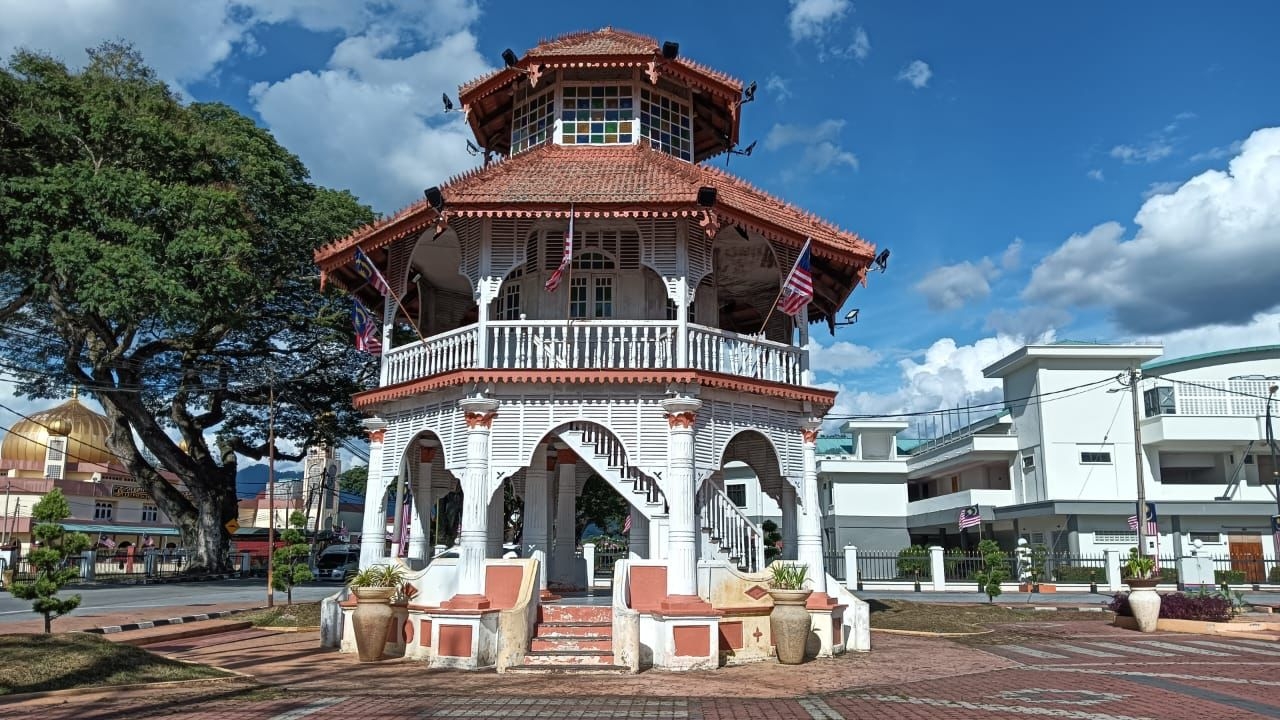
Overlooking the sports field of Kuala Kangsar Malay College at Jalan Bendahara, the Pavilion Tower is a significant traditional Malay-style monument. Built in 1920, it was once the resting place for the king after polo matches and a recreational centre for court officials and dignitaries. Now it is part of the Pavilion Tower public park.
The Coronation Memorial Clock Tower is a clock tower that was unveiled in September 1939 and constructed as a memorial to the coronation of King George VI and Queen Elizabeth. It was financed mainly from funds from the British administration’s Coronation Fund with some contributions from private donors and was designed by Charles Geoffry Boutcher, an architect from Penang. The clock tower is located on a traffic island in the town’s main street, Jalan Kangsar, and is 25 feet tall. It was built in the Arte Deco style with a granite, plaster finish, and topped with a golden dome. Around the four clock faces are black marble facings imported from Italy.
Dotted with palaces, forts, mosques and historical sites, the Kuala Kangsar Heritage Trail connects all the 22 heritage assets in the town. The trail’s most famous sites include the Perak War Memorial, Masjid Ubudiah, Istana Kenangan Palace, the Baitul Annur and Baitul Rahmah Mansions, Air Raid Shelter Fort, Victoria Bridge, and Pavilion Tower. Several handicraft hubs, mausoleums, museums and traditional Malay houses are also along the trail. A symbol of Malay art, the Labu Sayong is a traditional clay-built water pitcher shaped like a gourd. They are used to store cool liquids and are said to have healing properties. In Kuala Kangsar, visitors can use moulds or traditional wheels and learn how to craft their Labu Sayong at Labu Sayong Craft Centre, Win Kraf Labu Sayong, and Kilang Labu Sayong, who offer workshops and souvenirs.
Kuala Sepetang
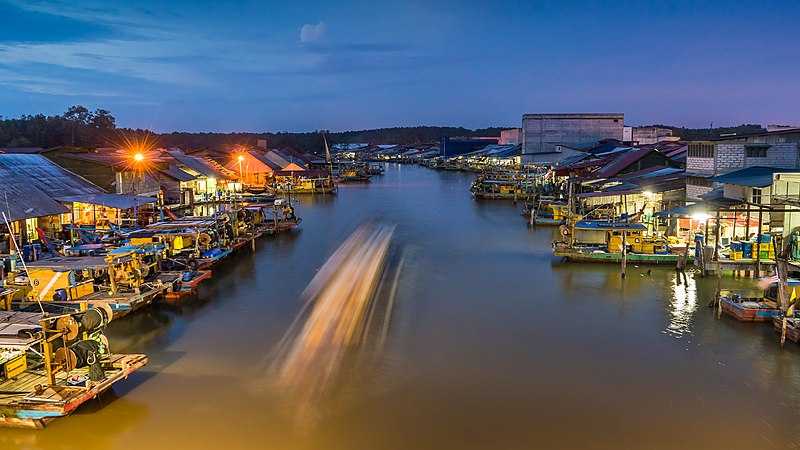
Kuala Sepetang is a coastal town located about 72 km northwest of Ipoh and about 16 km east of Taiping. It is also popularly known by English-speaking locals as Port Weld after a former governor, Frederick Weld. Kuala Sepetang is a thriving fishing village and the main jumping-off point to the river mouth community of Kuala Sangga, which is a Chinese fishing community at the river mouth that specialises in fish breeding in cages, more formerly known as cage culture.
Port Weld is notable for being the terminal station of the first-ever railway line to be built in what is today Malaysia. The Port Weld railway station was located in the centre of town. The railway line from here to Taiping was dismantled in the 1980s, and now only the ticketing booth and the multilingual Port Weld railway signboard remain. The ticket booth is now a Chinese coffee shop, and the shop owner has been maintaining the railway signboard.
Kuala Sepetang is well known for its seafood due to its proximity to the Straits of Malacca, and it has a restaurant situated on the upper floor of a shop lot overlooking the river. Kuala Sepetang is also well known for its mangrove swamp reserve park, the Matang Mangrove Forest Reserve, which is open to the public daily. A boardwalk was built over the swamp for tourist access, as well as chalets that tourists can rent to stay the night on the riverfront. Kuala Sepetang is also famous for charcoal production using sustainably farmed mangroves and traditional kilns, some of which are open for tourist visits. Besides fishing villages, charcoal kilns and mangroves to enjoy, one can take a boat tour along the mangrove river to see fireflies at night and eagles. The village is very popular with its curry mee, which is only sold at lunch and Pau. Kuala Sepetang is also famous for prawn Noodles also known as Mee Udang Banjir, sold by many Malay stalls.
Another major highlight of the town is the Charcoal Kilns in the Charcoal Factory where charcoal is still made traditionally. An exciting activity in Kuala Sepetang is the Mangrove river boat ride which offers spectacular views of luminous fireflies and feed eagles. The boat ride costs RM 28 and also includes a small trip to a floating fish farm. Kampung Seberang Chinese Village can be visited after crossing the Port Weld Bridge, which offers a perfect place for fishing and enjoying the eventide. The Chinese settlement of Kuala Sangga is accessible by a 30-minute boat ride which is ideal for experiencing archaic life. The lucky ones might spot pink river dolphins on this boat ride!
The winter season, between January to March, is the best time to visit Kuala Sepetang. The average temperature during these months ranges from 30℃ to 32℃. The summer months of May to July must be avoided as the weather is too hot and humid. The average temperature during summer ranges from 32℃ to 33℃. October to December is the rainy season which makes it impossible to explore places. It rains the most in December, reaching more than 130 mm.
Belum Temenggor Rainforest
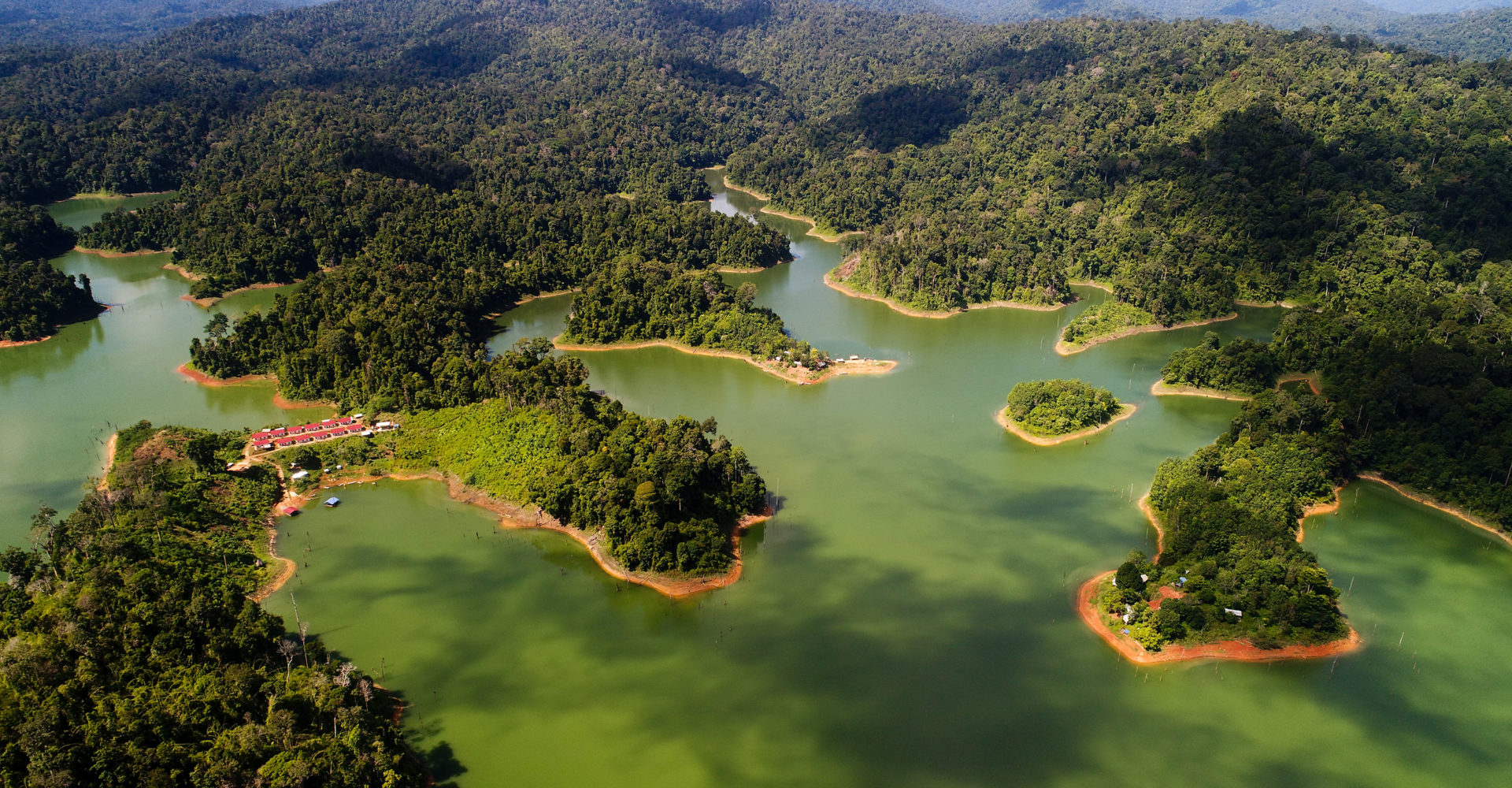
The Belum Temenggor Rainforest is the world’s oldest and largest rainforest. It borders Thailand to its north and Kelantan in Malaysia to its east. Thriving for 130 million years, it is divided into two sections – Belum is located on the Malaysia-Thailand border while Temenggor is located south of Belum. The Royal Belum State Park lies entirely in the Belum Temenggor Rainforest. A tour to Belum Temenggor includes hiking, rafflesia excursions and exploring Orang Asli village.
Belum Temenggor is a haven for the birdwatchers housing all 10 of Malaysia’s hornbills. The best time to spot these hornbills is August and September. To spot migratory birds, visit during October and November. Butterfly spotting is best experienced in April, May and November.
Permits and guides are required to visit protected areas in the rainforest as well as to explore the Royal Belum State Park which costs RM 20 per permit.
In the forests, one will also find about 3000 species of plants that flower, including You can also find Rafflesia, the world’s largest flower in three variants of species here while the fourth variant is protected by the Royal State Park.
Orang Ali is a collective form of referring to the indigenous natives of Malay and has around 18 ethnic groups. The Orang Asli tribes have lived in this rainforest for more than a millennium. They are the aboriginal or original people who have been natives of the Belum Temenggor. They used to be semi-nomads or nomads, traditionally since ancient times and later settled here to sustain and make a living for themselves. They were crafted in fishing, hunting and gathering, small-scale farming, and trading of herbs used for medicinal purposes and handicrafts and spices. The tribe still exists within the rainforest living in huts made of bamboo, hunting smaller animals, fishing and gathering edibles for their survival. Their villages are referred to as Orang Asli villages that one can visit. Their usual method of communication is through the Aslian languages.
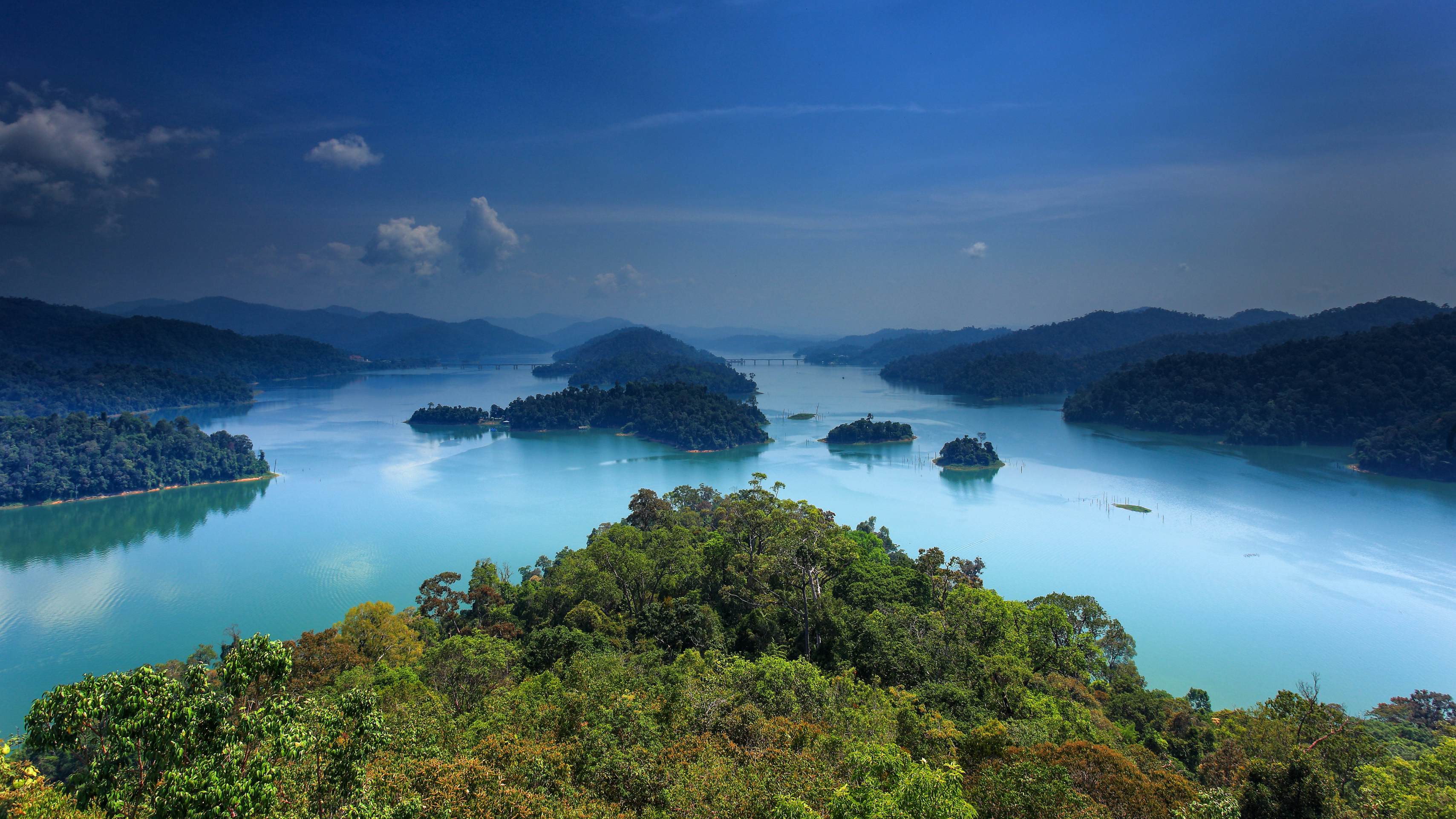
Trekking in the Belum Temenggor rainforest is an experience. Here, one should not miss the incredible boat ride trails on the Tesak Temenggor Lake which is Malaysia’s second-largest lake. The houseboat cruises are a must. All the boats are well equipped including a washroom, kitchen and rooms on all houseboats. These cruises are suitable for smaller groups or families who love being amidst nature. The basic/regular houseboats can accommodate up to 24 people and are usually an expedition of 2 days. These boats have good facilities and a skilled and trained crew. It costs about RM 245 for 2 days and 1 night.
Fishing in Belum Temenggor is a thrilling experience as tourists and locals all come here to spend the day in the angler fishing spot. The trip starts at the jetty of Pulao Banding. This destination provides chasing the Toman fishes that are popular all over the world. It is known as the Giant Snake Head fish or the Fishzilla. The fishing trip is usually very rewarding as the Lake is rich with large fish. You can cruise with the skilled crew, by the streams and waterfalls of the rainforest. The fishing trips usually end by dusk.
A part of the Belum Forest Reserve or Hutan Simpan Belum has been identified as The Royal Belum State Park. It is present inside the Belum Temenggor complex and is a hotspot of diverse species as it hosts multiple ecosystems. The Royal Belum State Park is known for tigers, tapirs and panthers. A permit and guide are mandatory to explore this park. The State Park is was declared a National Heritage Site and gazetted under the Perak State Forestry Enactment or the Enakmen Perhutanan Negeri Perak. Topographically, it falls under the tip of Banjaran Titiwangsa or the Main Range. It divides the east coast and the west coast of the Malaysian Peninsula.
In our next final part on Perak, we’ll explore the historical town of Taiping and Malaysia’s smallest hill resort, Bukit Larut. Stay tuned



















 Memories and Such