

Kuala Perlis
A suburb of Kangar, Kuala Perlis is the second-largest town and the main port of Perlis. It is in extreme northwest Peninsular Malaysia, near the border with Thailand. The older part of town has houses and mosques built on stilts over mangrove swamps. Along with its Kedahan counterpart, Kuala Kedah, Kuala Perlis is a transit point for tourists to embark on a ferry ride to the resort island of Langkawi. One of the popular activities here is fishing. There are also many restaurants that offer fresh seafood that is relatively cheaper than in the capital city.
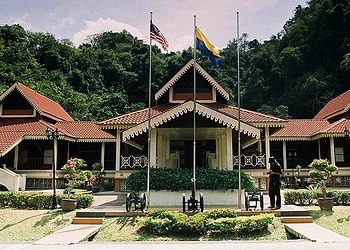
Surrounded by the Kayang, Lambing Panah, Wai, Minera and Jahat Hutang limestone hills in the Kayang region, the Kota Kayang Museum, or the Muzium Kota Kayang sits on a 2-hectare of land. Initially, the land was granted from King Syed Alwi to his younger brother Syed Salim bin Syed Muhammad Al-Jafri, at the time a senior minister to the King. At the end of the 19th century, Syed Salim constructed a residence for his family to stay until 1909 when the Anglo-Siamese Treaty of 1909 was signed. Afterwards, the building became the residence for British Malaya government officers. Between 1941 and 1943, the building was taken over by the Imperial Japanese Army administration. The Royal Thai Armed Forces took over the building between 1943 and 1945, and after Malaya’s independence in 1957, the building became the official residence of the Perlis Chief Minister. In 1991, the building was demolished to make the Kota Kayang Museum. A new building was reconstructed with an exactly similar design to the former building. During the soil excavation work, artefacts from the Neolithic period were discovered in the site. The museum is divided into three galleries, including the General Gallery, the Archaeological Gallery and the Kedah and Perlis Gallery.
The single-storied three-building structure depicts the Perlis-Malay architecture style with a touch of modernisation. The wickerwork walls, along with the beams and carvings on the doors, resemble traditional existing Malay homes. The tomb of the 15th Sultan of Kedah still lies on the grounds of the museum. Besides the galleries, the outside recreational garden is refreshing, offering a magnificent view for tourists to stop by. The museum is closed on Mondays and is open from 9 am to 5 pm on Tuesdays to Sundays. It has no entry fees.
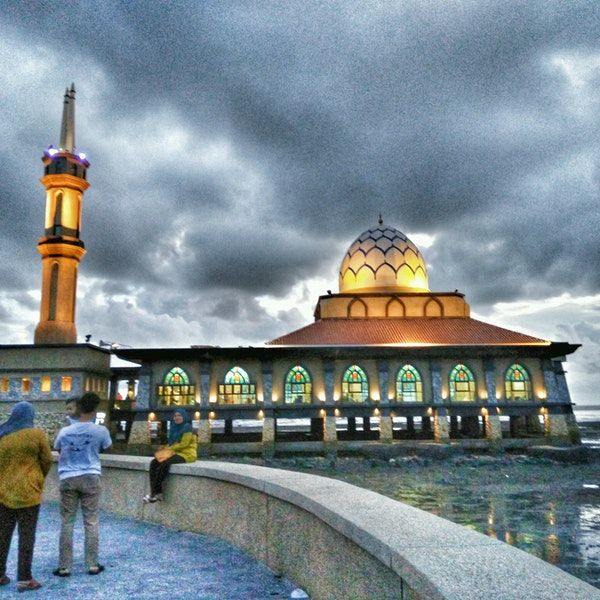
The Al Hussain Mosque is regarded as one of the most beautiful mosques in Kuala Perlis. This mosque is also referred to as the Floating Mosque since it is built on water. The 50-metre bridge that connects to the main prayer hall is the main feature of the Al Hussain Mosque. The mosque rises to a height of about 31.3m while its twin peaks breathe at a height of about 7.1m. The minarets radiate various colours at night, which is a true sight to behold. The various colours of the minaret signify a different prayer time. It is interesting to note that the walls of this breathtaking mosque are not painted but are adorned with granite, marble, corals, quartz, and pebbles. The golden-yellow-and-blue dome is made out of aluminium with a layer of Polyvinylidene Difluoride or PVDF used to protect the dome. The mosque is open daily between 4:30 am to 10 pm.

The Bukit Kubu Amenity Forest is a little more than a kilometre from Kuala Perlis. The forest is home to numerous caves and limestone formations that make for great photos. Visitors to the park can run or jog along the two pathways, one of which is an asphalt track and the other is a paved path. There are a few lookout points built throughout the forest that offer great views, and near the entrance to the cave within the forest is the natural lake of Tasik Puteri Kayangan. This forest is also home to the Dusky Leaf Monkey.
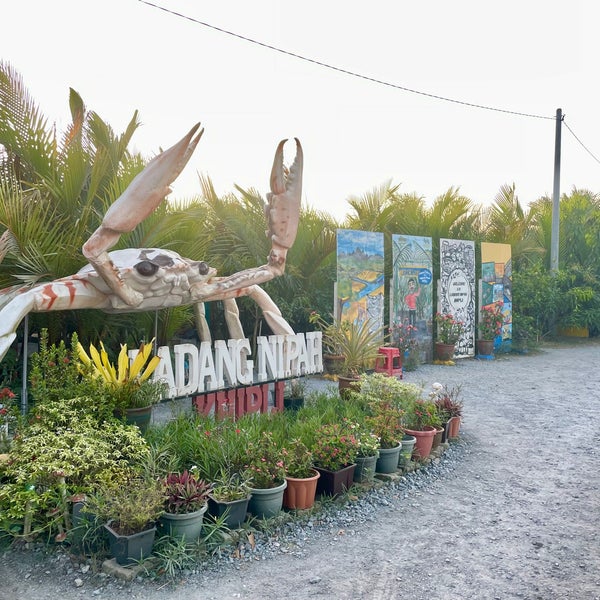
The Nipah Kipli Farm has over 2000 Nipah palm trees. Visitors can enjoy laksa and ricefield crab under palm trees in the farm and unwind at the numerous huts and swings dotted throughout it. Coconut meat and juices are also available, as is sweet Nipah juice from the trees on the farm.
Arau
Arau is the royal capital of Perlis, with a population of around 20,000. The red-roofed Istana or Royal Palace is a mixture of colonial and pseudo-Moorish architectural styles. This town is the disembarkation point for visitors travelling from Kuala Lumpur to Langkawi by train.

The Perlis State Mosque or Masjid Negeri Perlis is the state and royal mosque of Perlis. The mosque was built in 1972 on the site where the Old Arau Mosque used to stand. The mosque has a modern architectural style with Moorish influence. The floor is made of marble and covered with carpet. It is capable of accommodating 7,000 worshipers with its upper floor dedicated to a female prayer hall.
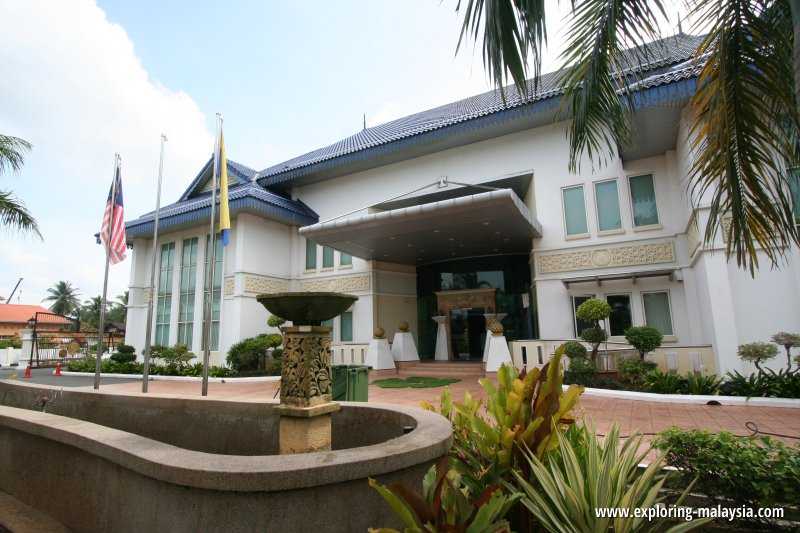
The Arau Royal Gallery is located right next to the Perlis Royal Palace and contains a history of Perlis’ rulers. At the gallery, there are artefacts like royal uniforms, glassware and bronze utensils belonging to Almarhum Raja Syed Alwi Ibni Almarhum Raja Syed Saffi, a former ruler of Perlis. The gallery offers a glimpse into the lives of the Perlis royals. While the entry is free, the gallery is not open to the public and requires a written request.
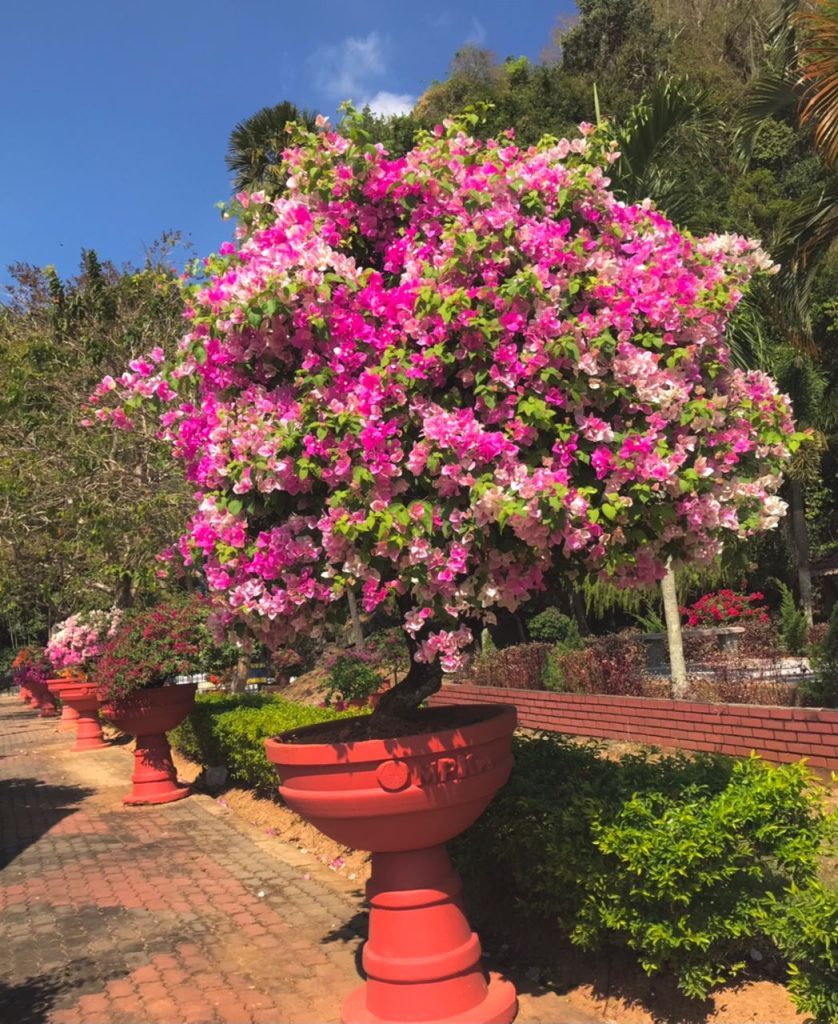
Taman Bunga Kertas Tuanku Lailatul Shahreen, or Tuanku Lailatul Shahreen’s Paper Flower Garden, is a great place to visit for all flower enthusiasts, specifically bougainvillaea enthusiasts. Dozens of colourful bougainvillaea, also known as paper flowers because they look like coloured paper, bloom in this four-hectare garden named after the Queen of Perlis. Inside the garden is a hut where visitors can rest and a running trail. There also is a pond of lilies within the premises.
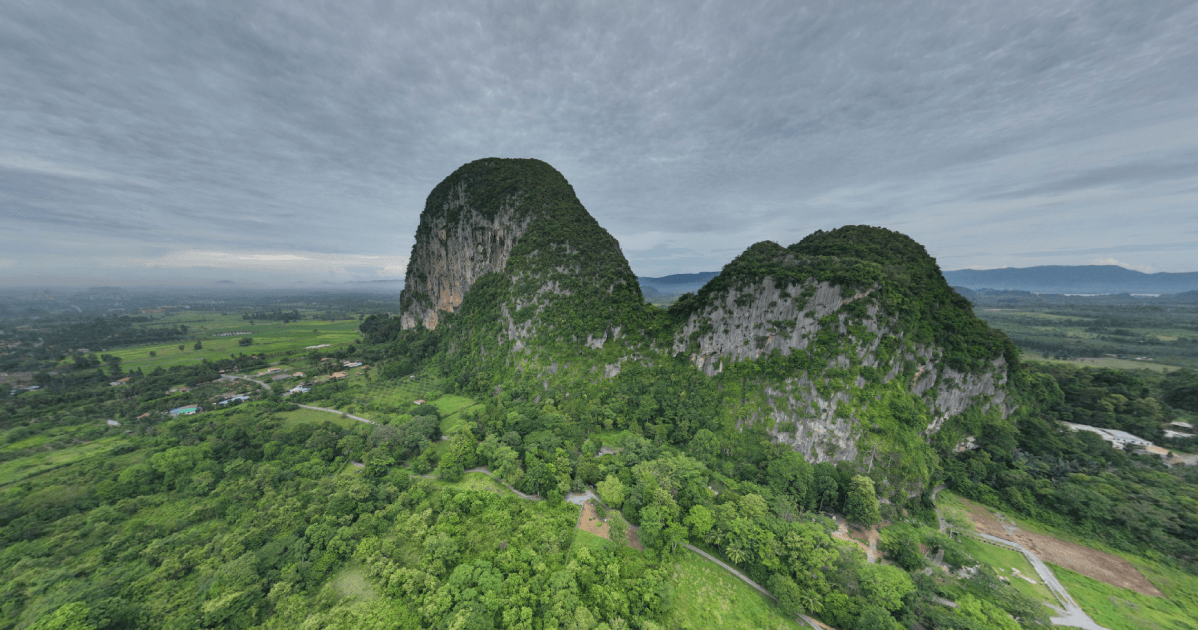
Padang Besar
Padang Besar, often abbreviated as Padang or PB is a border town located in the northern part of Perlis and is also the northmost town in Malaysia. It is situated on the border with Songkhla province, Thailand, 35 km northeast of Kangar, and about 57 km southwest of Hat Yai. The town opposite Padang Besar in Thailand is also known as Padang Besar, although the locals here usually refer to the town as Pekan Siam or Siamese town. The town is a shopping heaven and a popular destination for Malaysians because of the duty-free shopping complex in between the border checkpoints of the two countries. The town attracts several thousand visitors from Peninsular Malaysia and southern Thailand every weekend and during public holidays. The Malaysian checkpoint is located to the northeast of town, about 300 m from the actual border where the Thai checkpoint is located. Both the Malaysian and Thai checkpoints have drive-through lanes.
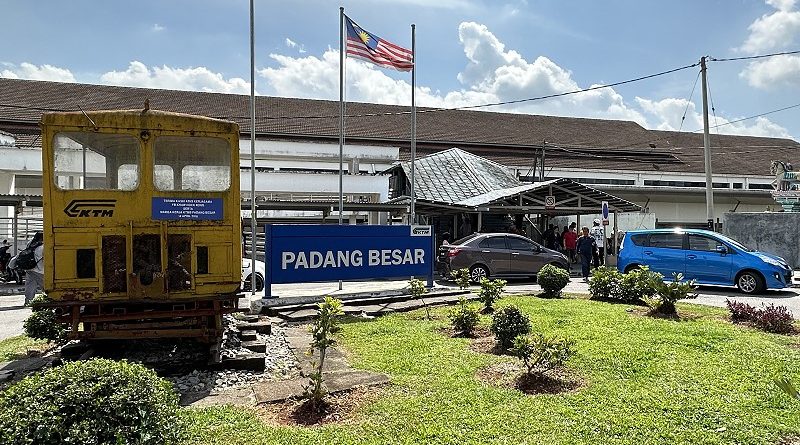
The Padang Besar railway station has Malaysia’s only co-located or juxtaposed customs, immigration, and quarantine facility for both Malaysia and Thailand, and rail passengers are processed for exiting Malaysia and entering Thailand, or vice versa if traveling in the other direction, in the station. The Padang Besar station in Thailand only serves as a domestic station. Tourism, international trading, and the logistics sector are the most important profit sources for local citizens if compared to agriculture. Padang Besar’s industry area is one of the most important industry areas in Perlis.

The Perlis Ostrich Farm is owned and run by the State Veterinary Association of Perlis. Visitors to the Farm can interact with the ostriches by patting and feeding them. They can even buy ostrich eggs to take back home. Along with ostriches, the Farm also houses peacocks, geese, buffaloes, horses and the like. It is open daily from 9 am to 6 pm.
Kaki Bukit
Kaki Bukit is a small town with an estimated population of 3,000. It is located 26 km north of the state capital, Kangar and a few miles away from Padang Besar, the boundary between Thailand and Malaysia. Kaki Bukit is famous for its local food such as Kaya Puff, Kaya Pao, and various types of Baozi, Lo mai gai, a mixture of chicken meat and pork with glutinous rice and many local desserts.
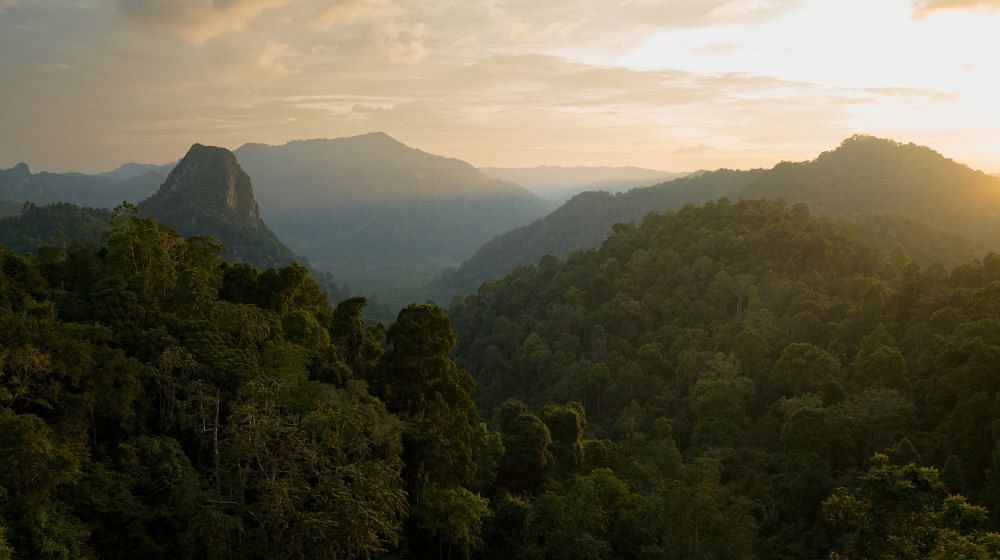
Situated on Malaysia’s longest continuous range of limestone hills, the Nakawan Range, Perlis State Park sprawls across an area of about 5,000 hectares. It consists of the Mata Ayer and Wang Mu Forest Reserves. The park houses 600 species of flora, 70 mammal species, 35 reptile species and 200 bird species. The 500-year-old Setul limestone formation is the main attraction of the Perlis State Park. This limestone formation houses two extensive caves namely the Gua Kelam Cave and the Gua Wang Burma Cave. One can find stalactites, bats, centipedes and scorpions inside the Gua Wang Burma cave. The Perlis State Park is the only semi-deciduous forest in Malaysia. During the visit to the park, one can also indulge in activities like hiking, night trekking, caving, and bird-watching. Hotel accommodations and guided tours are also available inside the park.

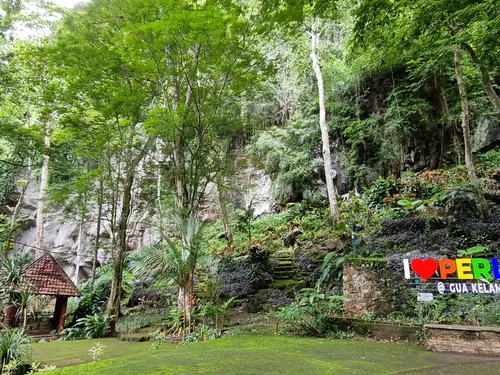
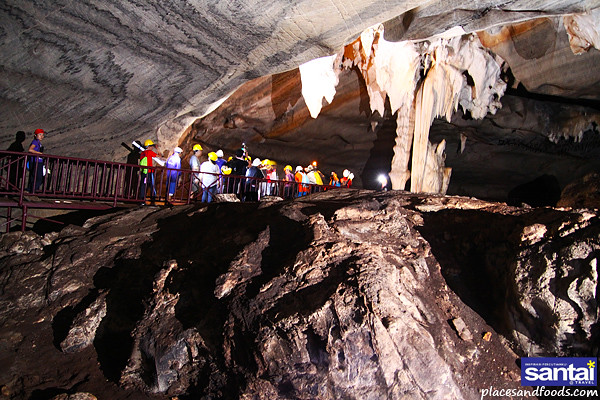
Located 33 km north of Perlis in Kangar, Gua Kelam Caves is one of the most unique limestone caves in Malaysia. Also known as the Cave of Darkness, adorned by stalagmites and stalactites, is maintained by the Perlis Forestry Department. The prime highlight of Kelam Caves is the 8-foot wide wooden suspension bridge leading through the illuminated limestone path, carved inside the cavern by an Englishman in the 1930s, for transporting tin from the nearby mine.
The Gua Kelam Gallery has artefacts and collectibles from past tin-ore mining operations, giving you a glimpse of the glorious past. The enticing Gua Kelam mini-train ride from the visitor’s centre into the man-made tunnel inside the cave, exploring the upper levels of the cave is a worthwhile experience. Also, one can rest in the resting hut, indoor hall, or cafeteria, or explore the campsite in Gua Kelam.
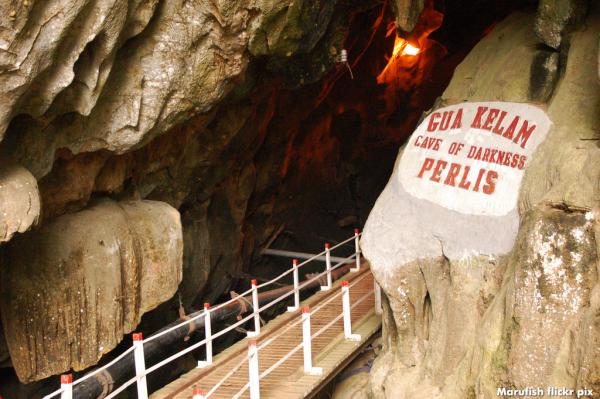
The Gua Kelam Mini Train Ride, accommodating 20 people at a time in its 10 coaches, is an elaborative ride through the nooks and corners of the 400 m in 30 minutes. Moving forward from the Visitor’s Centre and Mining Museum Display to the man-made tunnel, one can explore the upper levels of the cave, along with the stationed runway trolleys from the past. The voluminous upper levels exhibit proof of the old mining livelihood like wooden joists, walkways, anchor points, and metal wires. Also, the existing graffiti, writing, and drawings on the cave walls by the miners, especially in the Chinese language, tell stories of the untold. Spiders, snakes, and bats hovering around the cave region, will also accompany one in the journey.
An adventurous steep decline to the Gua Kelam river passage opens a new sight of the primitive cave. Moving through the 7 m long vertical pitch and a vertical ladder to reach the walkway is intriguing for travellers. Subject to the uneven cave floor, old pipes, and wooden joists, care should be taken while one excavates the lower-level river cave. Due to heavy floods in the monsoon, travellers cannot visit the Gua Kelam Lower Level River Cave Adventure in the monsoon time, owing to risks.
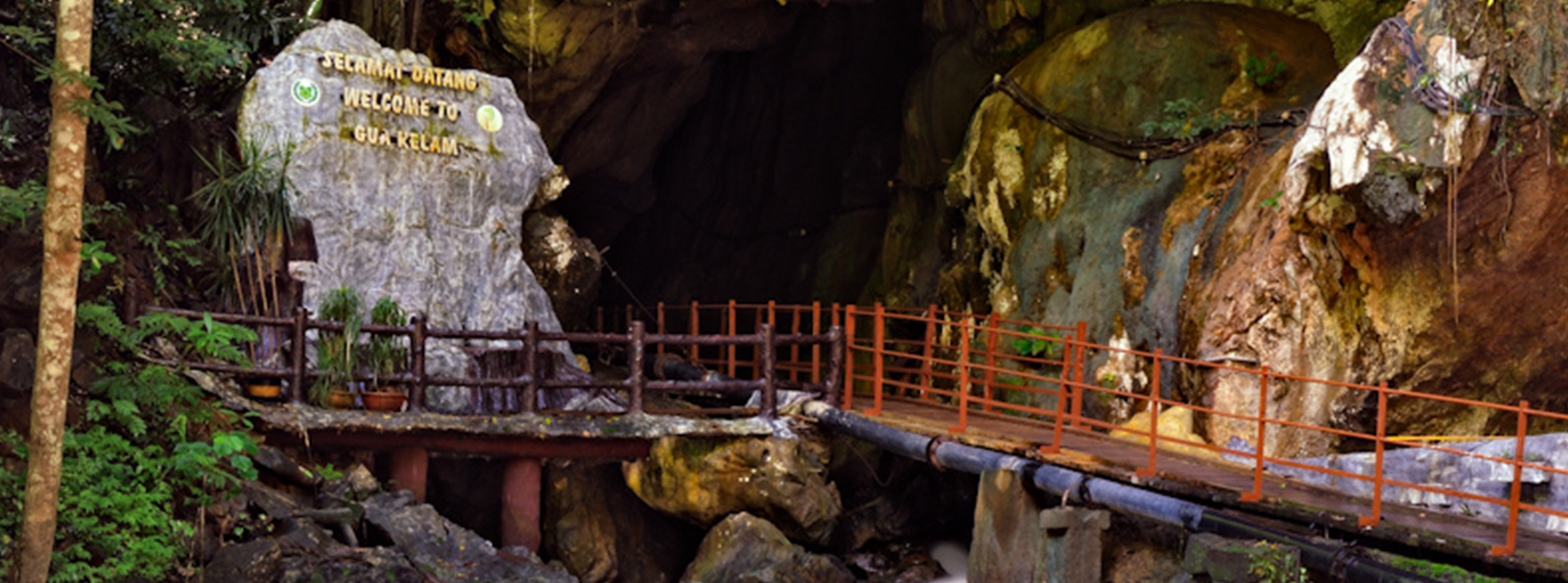
During World War I, this dark cave, as the name suggests, was the prime location for tin mining by the Chinese miners. It was in 1935, that an Englishman saw possibilities in transporting the tin ore mines from the stream entrance to Kaki Bukit, the nearest town to Gua Kelam, through an underground cavern. From there on, Gua Kelam earned rapid prominence. Also, the name of the cave was given by the workers due to the extreme inherent darkness the cave possessed. In those days, carbide lamps were used to light up the caves. However, now the well-lit cave still possesses few remnants of the past operations and cave-wall graffiti by the miners of the past. The cave is open from Monday to Friday between 9 am to 5:30 pm while it is open from 9 am to 6 pm on Saturdays and Sundays. Entry fees are RM 1 for adults and RM 0.5 for children aged 4 to 12.
Located within Perlis State Park, Wang Burma Cave is known for the variety of fungi and insects found inside it. There are numerous streams inside the cave as well. The Wang Burma Cave is divided into two, one of which features stalagmites, stalactites, columns and other rock formations and is the easier one to walk through. The other cave has narrow passages, muddy tunnels, and dark hooks and turns, beyond which are some beautiful rock formations worn out by water.
Hikers will love the 2.9-kilometre-long trek up Wang Gurung, on the border between Malaysia and Thailand. The trek starts along a stretch of dirt road lined with fruit orchards and some short, steep parts, eventually passing through a forest. Rock formations follow this, with challenging near-vertical climbs. Following this is a path over rocks and boulders. Finally, a ridge near the summit offers stunning views of the Malaysian landscape on one side and Thailand and the Strait of Malacca on the other.
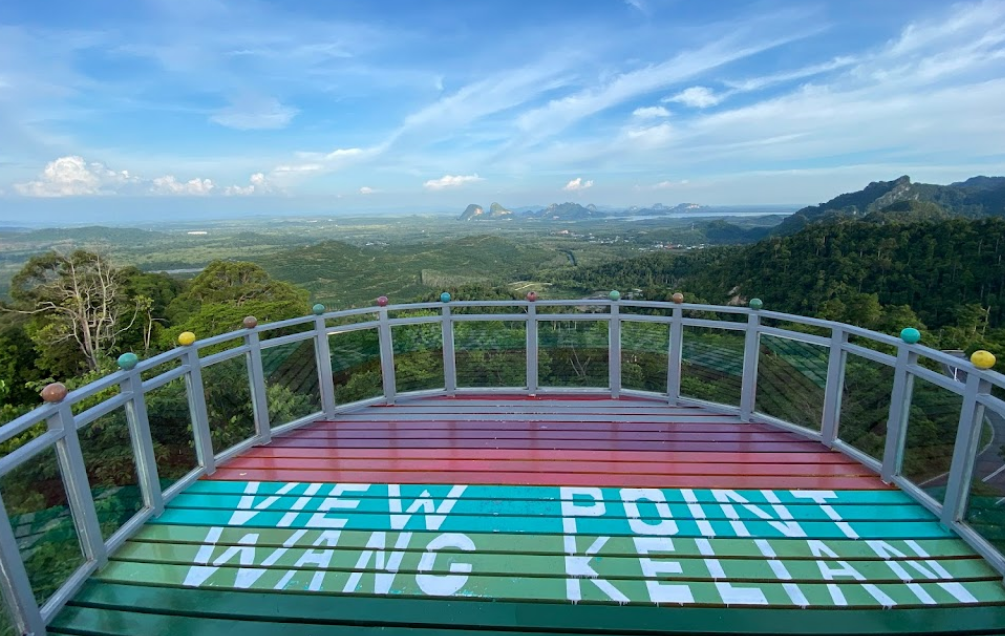
Located along the northern part of the Malaysia-Thailand border, the Wang Kelian View Point lets you experience the most gorgeous sunrises. The sunrises are accompanied by a carpet cloud phenomenon and cool breezes. 304 metres above sea level, the viewpoint offers panoramic views of the state of Perlis. The viewpoint is also known locally as Menara Pandang Wang Kelian.
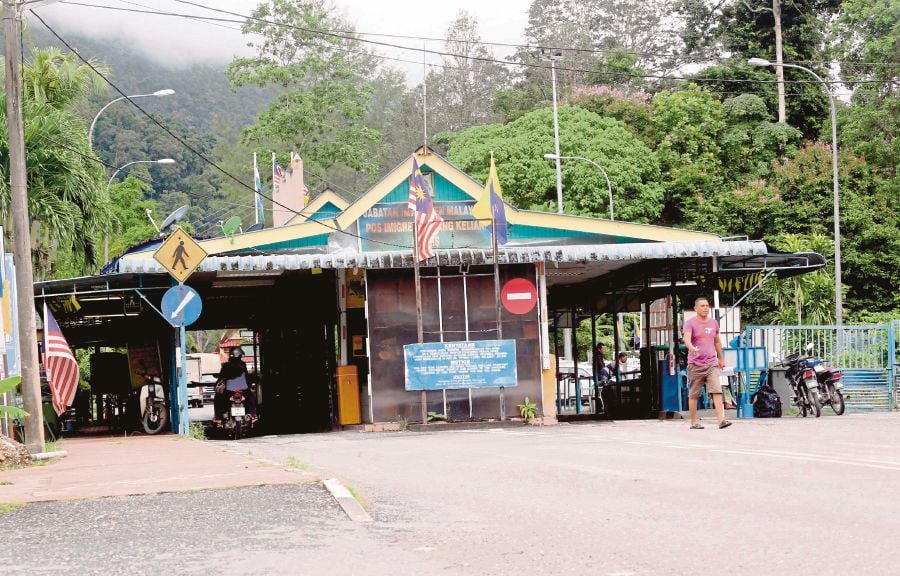
Situated in the Wang Kelian village of Perlis, at the Malaysian-Thai border, this weekend market is dotted with about 80 stalls. The Wang Kelian Weekend Market mainly has traders from Thailand who offer a huge variety of items to visitors. The market is quite famous since the products here are quite cheap compared to other Malaysian markets. Some of the items that are available at the Wang Kelian Weekend Market include jewellery, handicrafts, toys, clothing items, fresh fruits and other food items. Malaysian as well as Thai citizens can cross the border up to 1 km on either side of the Wang Kelian Weekend Market.
This brings us to the end of the states on Peninsular Malaysia. Next week, let’s start to explore East Malaysia.



)


